This lesson guides you through the interpretation of temporary traffic signs and roadworks configurations commonly encountered on French roads. As part of our Category B theory course, you will learn how to identify yellow-background signs and adapt your driving behavior to ensure safety for workers and road users alike.
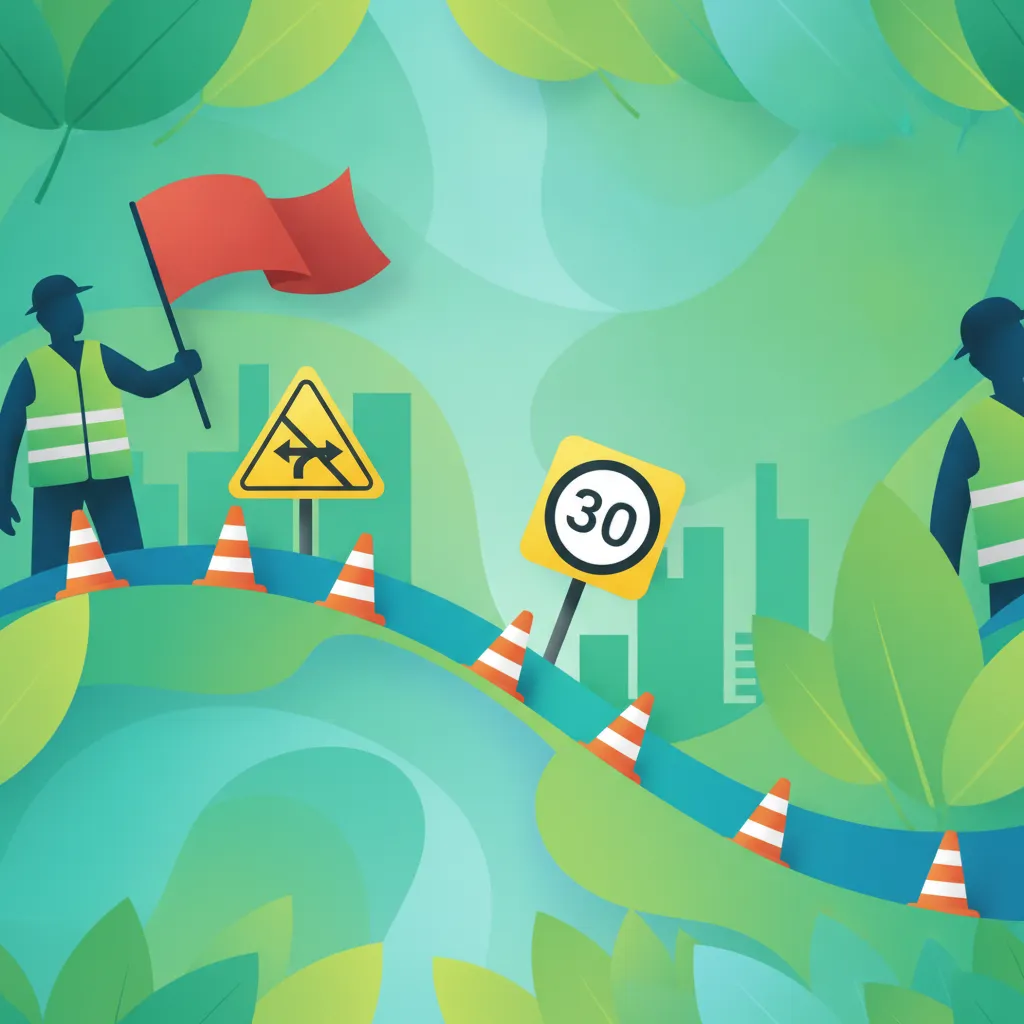
Lesson content overview
When preparing for the French Category B Driving Licence Theory Course (known officially as the ETG or Épreuve Théorique Générale), mastering temporary road signs (la signalisation temporaire) is crucial. Construction zones, public events, and unexpected road hazards dynamically alter the driving environment.
To ensure safety and maintain traffic flow, the French Code de la route employs a distinct system of temporary yellow-background signs and road markings. These temporary indicators take absolute priority over permanent ones.
This lesson provides a comprehensive breakdown of temporary signs, yellow markings, detour routes (déviations), and the essential safety protocols drivers must respect to protect road workers and avoid severe legal penalties.
The primary visual characteristic of temporary signage in France is its yellow background. While permanent warning signs feature a white background with a red border, and permanent information signs are blue or white, temporary configurations shift to high-contrast yellow.
The underlying logic of this color shift is immediate recognition. A yellow sign alerts drivers that the driving environment has been modified. Drivers must immediately increase their vigilance, expect sudden hazards (such as slow-moving machinery or workers close to the lanes), and be prepared to adapt their speed and positioning.
Rule of Priority: Under the French Code de la route, temporary signage (yellow) always takes precedence over permanent signage (white or blue) and permanent white road markings. If a permanent sign indicates a speed limit of 80 km/h, but a temporary yellow sign displays 50 km/h, you must obey the 50 km/h limit.
The French road network utilizes several classifications of temporary signs to regulate, warn, and guide drivers. Below are the primary signs you will encounter on the road and during your ETG theory exam.
These signs are triangular with a red border and a yellow background. They warn of hazards caused by temporary situations.
Speed limits within construction zones are strictly regulated to protect both drivers and road workers. These limits are displayed on circular signs with red borders, but they are either placed on mobile yellow backdrops or temporary metal supports.
The speed limit applies immediately from the position of the sign. It remains in effect until you pass an "End of Temporary Speed Limit" sign or a sign indicating a new permanent speed limit.
When roadworks occupy a portion of the road, lanes must be temporarily shifted, merged, or split.
To mark the exact physical boundaries of the work zone, specialized marker posts and beacon signs are used:
When a road is entirely closed due to construction or an event, local authorities set up a detour route (déviation).
Drivers must follow these yellow detour signs sequentially until they rejoin their original route. Ignoring a detour sign and entering a closed road segment is highly dangerous and illegal.
Physical blockages are marked clearly to prevent vehicles from entering hazardous areas.
These signs are typically paired with red-and-white striped barriers across the road. Drivers must never attempt to navigate around or squeeze through these barriers.
In addition to vertical signs, temporary road modifications often require altering the lines painted on the tarmac.
In France, temporary road markings are painted in yellow instead of the standard white. They define temporary lane boundaries, centerlines, and pedestrian crossings within a construction zone.
When yellow markings are present:
Navigating a temporary traffic configuration safely requires a specific sequence of driver actions. Use the following structured approach whenever you spot temporary yellow signage:
Scan Ahead and Identify: Look far down the road to spot the yellow background of warning signs (such as AK5 "Travaux") early.
Anticipate Speed Changes: Do not wait until you reach the temporary speed limit sign to slam on your brakes. Begin decelerating smoothly as soon as you see the speed reduction sign approaching.
Increase Following Distance: In construction zones, stopping distances can be compromised by gravel, mud, or water on the pavement. Double your following distance to the vehicle ahead.
Follow Lane Markings and Beacons: Keep your vehicle centered strictly within the yellow-marked lanes. Do not drift near the red-and-white K2 beacons or traffic cones.
Stay Alert for Workers and Machinery: Keep a high level of lateral vigilance. Road workers may be operating only centimeters away from active traffic lanes.
Non-compliance with temporary traffic regulations is treated with high severity by French law enforcement due to the extreme danger it poses to public works employees.
Temporary zones become significantly more dangerous under compromised driving conditions.
Temporary signs are highly retroreflective, meaning they bounce light back from your headlights. However, dust and dirt from construction can reduce their visibility.
Rain mixed with loose soil and dust from construction sites creates a slick mud layer on the road surface.
If you are towing a trailer or driving a heavily loaded Category B vehicle, your stopping distance is already extended.
To succeed on your ETG theory exam and drive safely on French roads, keep these core principles of temporary signage memorized:
Explore all units and lessons included in this driving theory course.
Lesson content overview
Explore all units and lessons included in this driving theory course.
Explore search topics learners often look for when studying Temporary Signs: Roadworks and Events. These topics reflect common questions about road rules, driving situations, safety guidance, and lesson level theory preparation for learners in France.
Browse additional driving theory lessons that cover connected traffic rules, road signs, and common driving situations related to this topic. Improve your understanding of how different rules interact across everyday traffic scenarios.
Understand how the priority a droite rule applies at different types of uncontrolled and controlled junctions. This lesson explains the legal requirements for yielding at intersections and how to interpret traffic signals when navigating complex road layouts in the French Code de la route.

Negotiating crossroads that lack active traffic light signals requires a clear reading of signs and painted stop or yield lines. This lesson details the obligations of stopping completely at stop signs and slowing down to yield at 'cedez le passage' markings. You will learn to assess cross-traffic speeds, determine priorities when multiple vehicles arrive, and execute turns safely.

In France, the default rule at any intersection without clear priority signage is priority-to-the-right (priorite a droite). This lesson explains how to identify unsignaled junctions in urban and rural environments and when you must yield to incoming vehicles. You will learn to spot the standard yellow diamond priority signs and triangular warning signs that indicate whether you hold the priority.

Controlled intersections use traffic lights and accompanying signs to manage busy crossings systematically. This lesson covers how to safely proceed on a green light, negotiate left turns when yielding to oncoming traffic, and obey flashing amber lights. You will also learn the hierarchy of traffic control, where police officer gestures overrule both traffic lights and priority signs.

Learners will study the fundamental priority rules that dictate right-of-way at intersections, focusing on the 'priorité à droite' principle prevalent in French road design. The lesson explains how to identify priority roads, interpret yield signs, and apply these rules safely when operating an AM vehicle. Understanding priority ensures orderly movement and reduces conflict points in mixed traffic scenarios.

Some crossroads feature complex layouts or specific signs that modify standard priority rules, such as schematic diagrams (panonceaux schematiques). This lesson teaches you how to read these auxiliary signs, which depict the thick line of the priority road and thin lines of secondary roads. You will learn how to maintain priority when the main road curves and how to navigate non-standard intersection layouts.

In France, pedestrians have clear legal priority when stepping onto or indicating an intent to use a crossing (passage pieton). This lesson details standard zebra crossings, refuge islands, and pedestrian crossings managed by synchronized traffic light systems. You will learn to scan crossings ahead, anticipate pedestrian movements, and safely come to a stop whenever a pedestrian attempts to cross.
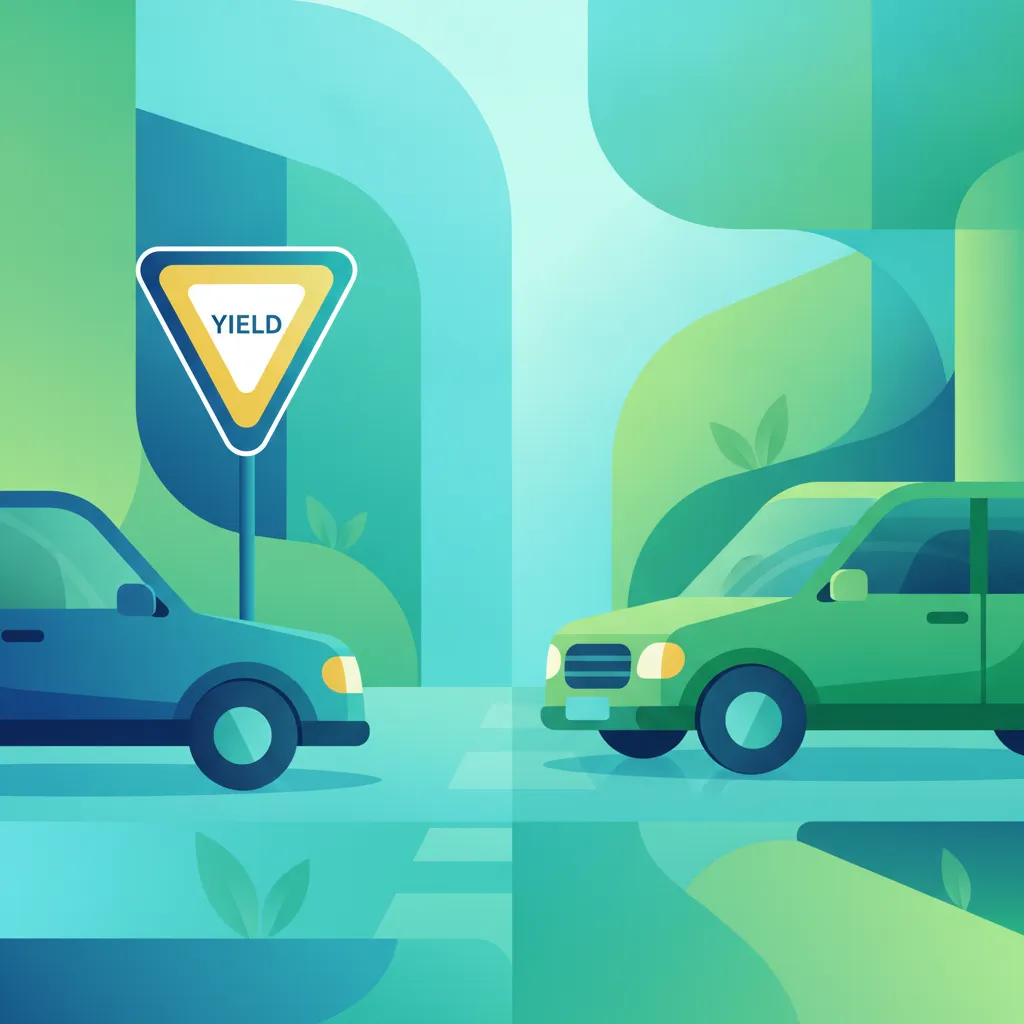
This lesson provides a comprehensive breakdown of priority rules under French law, with special focus on the default rule of priorité à droite. You will learn to recognize when this rule applies, even in the absence of explicit signage, and how to verify that entering vehicles see you. It also explains how to read priority road indicators, stop signs, and yield signs, helping you manage right-of-way safely and confidently.

Learners will explore the rules related to pedestrian crossings, focusing on the obligation to yield to pedestrians at zebra crossings and flashing pedestrian signals. The lesson highlights the importance of stopping before the stop line, reducing speed, and maintaining vigilance for pedestrian movement. Mastery of these practices ensures the safety of both pedestrians and AM riders at crossing points.

This lesson examines French Code de la route laws regarding pedestrian right-of-way, emphasizing the driver's legal duty to yield to any pedestrian engaged in crossing. It outlines proper approach speeds when approaching zebra crossings with obstructed views. Candidates will learn to maintain a safe physical buffer zone and verify that crosswalks are entirely clear of pedestrians before accelerating.

Learners will learn the critical steps for safely approaching and traversing intersections, emphasizing speed reduction, priority assessment, and adherence to right-of-way rules, including priorité à droite. The lesson covers recognizing stop lines, interpreting road markings, and maintaining a safe distance from other vehicles. By mastering these practices, AM riders can confidently navigate intersections while minimizing collision risk.
Learn the essential techniques for identifying and reacting to potential hazards on the road. This guide focuses on defensive driving strategies, maintaining safe following distances, and adjusting your speed appropriately when encountering unexpected situations or poor road conditions to ensure safety according to French driving regulations.

Proactive drivers scan the road constantly, detecting potential dangers before they turn into real-world emergency situations. This lesson teaches scanning techniques, the use of rear-view mirrors, and the interpretation of visual cues from other road users. You will learn to anticipate hazards like child play near roads, merging vehicles, and sudden lane changes, helping you drive defensively.

Learners will develop the ability to anticipate potential hazards on the road, enhancing reaction times and defensive riding strategies. The lesson emphasizes constant scanning, early identification of threats such as sudden stops, pedestrian crossings, or unexpected lane changes, and appropriate response measures. By cultivating proactive risk assessment, AM riders can significantly reduce accident likelihood.
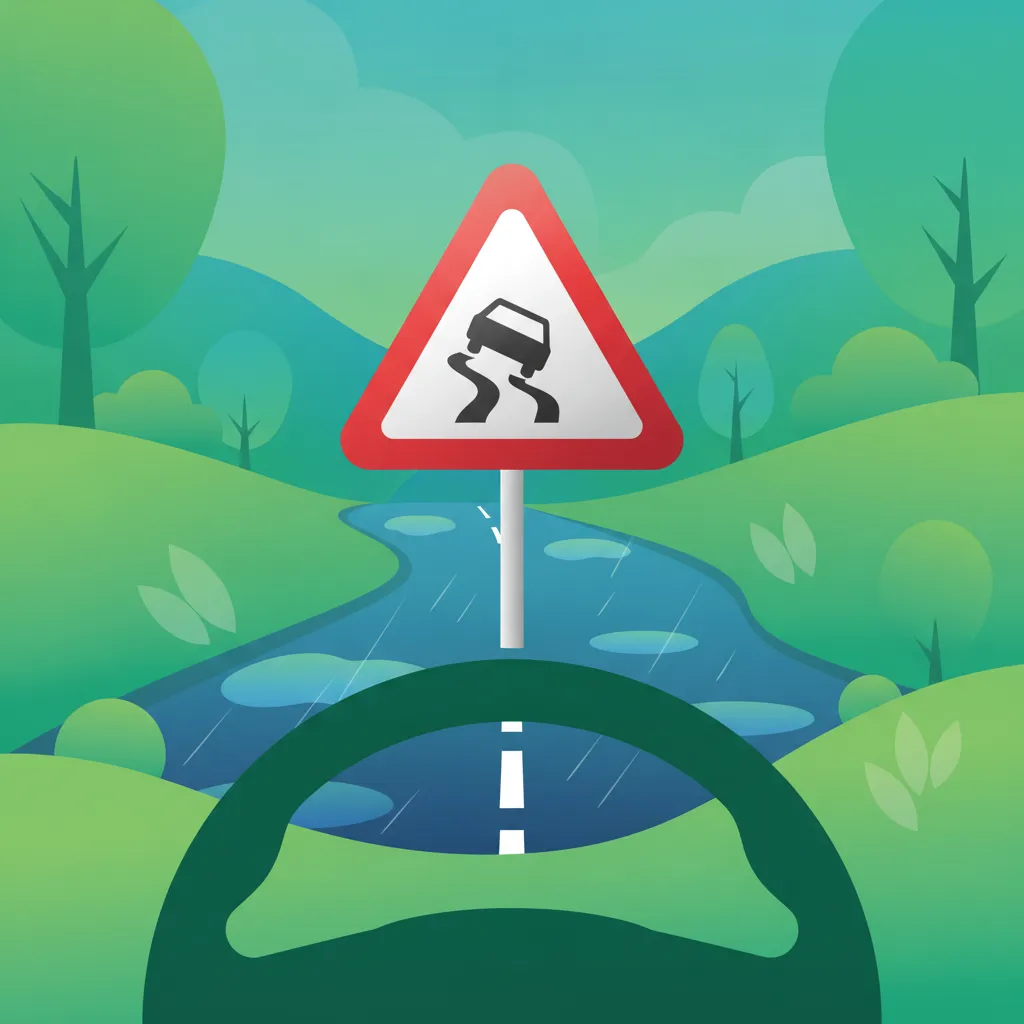
Warning signs on French roads are triangular with a red border, designed to alert drivers to upcoming dangers. This lesson teaches you how to interpret warnings for sharp curves, slippery surfaces, narrowing lanes, and wildlife or animal crossing hazards. You will understand the safety adjustments needed when approaching school zones, active roadworks, or crossings where vulnerable pedestrians are present.
This lesson focuses on French warning signs that alert drivers to potential hazards ahead, such as curves, animal crossings, or slippery surfaces, with particular attention to signs relevant to AM riders. Learners will examine how to interpret these signs, understand the associated risks, and adapt riding behavior accordingly. By mastering warning sign recognition, riders can proactively manage safety risks in diverse road conditions.

In this lesson, drivers will learn strategies to avoid conflicts with smaller vehicles, such as cars and vans, which may not be as visible in large vehicle blind spots. The content emphasizes maintaining adequate spacing, using proper lane discipline, and being aware of small vehicles' behavior during lane changes and turns. Learners will also be introduced to communication techniques, such as signalling and eye contact.
This final lesson integrates all course concepts into a single, cohesive approach to defensive riding and continuous risk assessment. You will study how to maintain a high-mileage visual lead, continuously scanning the road ahead for warning signs of conflict. By learning to assume that other motorists may not see you, you will build the proactive slowing habits and situational awareness needed to remain safe throughout your riding life.

Rural roads account for a high percentage of severe accidents due to narrow widths, winding geometries, and sudden hazards. This lesson teaches strategies for negotiating sharp bends, handling agricultural machinery, and reacting to wildlife warning signs. You will learn to manage your vehicle's lane placement on roads with soft shoulders and understand speed limits on rural networks.

In this lesson, drivers will explore the specific challenges presented by rural road environments, including narrower lanes, shared space with agricultural vehicles, and frequent wildlife crossings. The content emphasizes adapting speed to road curvature, surface conditions, and visibility while navigating hills and bends. Learners will also learn to interpret rural road signage and understand the importance of maintaining vigilance.

This lesson teaches specific visual scanning methods to detect vulnerable road users, such as children, elderly individuals, and cyclists near stops. Drivers will learn to anticipate sudden movements, like a passenger running to catch a bus or stepping off a sidewalk unexpectedly. Managing the massive blind spots around the front and right-hand sides of passenger vehicles is highlighted as a critical safety duty.

Adverse weather reduces tyre traction and limits visibility, dramatically raising the risk of multi-car accidents on highways. This lesson details speed reductions required during rainfall, techniques for avoiding aquaplaning, and demisting windshields for visibility. You will learn how to maintain extra stopping distance on snow-covered roads and the correct headlight adjustments to make during fog.
Find clear answers to common questions learners have about Temporary Signs: Roadworks and Events. Learn how the lesson is structured, which driving theory objectives it supports, and how it fits into the overall learning path of units and curriculum progression in France. These explanations help you understand key concepts, lesson flow, and exam focused study goals.
Yes. Temporary signs, which typically have a yellow background, are placed to account for specific, immediate changes in road conditions. They always take priority over permanent signage, and you must follow their instructions immediately.
A 'déviation' sign indicates a detour or diversion. You must follow the direction indicated by the yellow signs until you rejoin the main road or reach your intended destination, adjusting your driving speed as the road conditions may change.
Yes. When you see a temporary speed limit sign at a worksite, you must comply with that speed until you see a sign indicating the end of the restriction or the original speed limit sign. Failing to do so is a common cause for errors in the ETG exam.
Road workers are highly vulnerable. The French Code de la route mandates increased vigilance and often lower speeds near construction sites to ensure the safety of personnel. Ignoring these safety measures is both a major traffic violation and a frequent point of failure in theory exams.
Ready to focus your study? Use the practice search to find exactly the French driving theory questions you need for the Code de la route and permis de conduire ETG. Refine your knowledge on specific topics or challenging rules to boost your confidence and exam readiness.