
This lesson guides you in selecting a safe and legal speed based on current road conditions, not just the posted limit. It is a critical component of the Category B theory course that ensures you can handle diverse French traffic environments with confidence.
Lesson content overview
In the French driving system, passing your ETG (Épreuve Théorique Générale) and driving safely on public roads requires a deep understanding of one fundamental concept: the legal speed limit is a maximum ceiling, not a target speed.
Many novice drivers mistakenly believe that if a sign reads 80 km/h or 130 km/h, they are legally permitted—or even expected—to maintain that exact speed regardless of what is happening around them. Under the Code de la route, however, you are legally obligated to constantly evaluate your environment and adjust your speed downward to maintain complete control of your vehicle. This is known as vitesse adaptée (adapted speed).
This lesson will teach you how to analyze visibility, traffic density, road topography, weather conditions, and vehicle load to select a speed that guarantees safety for you and all other road users.
In ideal driving conditions—such as a dry road, clear daylight, a well-maintained vehicle, and light traffic—you may drive up to the maximum posted speed limit. However, ideal conditions are rare.
The safety rationale behind adjusting your speed is rooted in pure physics. As your speed increases, your kinetic energy grows exponentially. If you double your speed, your braking distance is multiplied by four. Consequently, any reduction in visibility, road grip, or space requires an immediate, proactive reduction in speed.
Under Article R413-17 of the French Code de la route, drivers must remain in control of their speed at all times and adjust it whenever conditions demand. Failing to do so can result in a fine for défaut de maîtrise de la vitesse (failure to adapt speed to conditions), even if you were driving below the absolute numerical speed limit.
A safe driver does not wait for a speed limit sign to change before slowing down. Instead, they continually read the road ahead and adjust their accelerator and brake inputs based on several dynamic factors.
Your visibility distance is the maximum length of road you can see clearly ahead of you.
The distance within which a driver can easily detect hazards, read signs, and perceive changes in the road surface or traffic ahead. It is heavily influenced by weather (fog, heavy rain, snow), lighting conditions (daylight vs. night), and road geometry (curves, hills).
The golden rule of safe speed selection is: your stopping distance must always be shorter than your visibility distance. If you cannot see far enough ahead to stop your vehicle in the event of an unexpected obstacle, you are driving too fast.
The shape and physical design of the road significantly limit how much of the path ahead you can see, as well as how your vehicle handles physical forces.
When approaching a curve where you cannot see the exit, you must treat it as a blind hazard. Centrifugal force will attempt to push your vehicle toward the outside of the curve. If your speed is too high, your tyres will lose traction, leading to understeer (sliding straight) or oversteer (spinning out).
Assess the curve: Look for warning signs, road markings, and the trajectory of the tree line or utility poles ahead.
Slow down before the turn: Complete all necessary braking and downshifting while your vehicle is still traveling in a straight line.
Maintain speed through the turn: Keep a steady, light foot on the accelerator through the curve to stabilize the weight distribution of the vehicle.
Accelerate out: Gradually increase speed once the front wheels straightens and you have a clear view of the road ahead.
A hill crest acts as a natural horizon block. You cannot see what lies immediately on the other side—it could be a broken-down vehicle, a slow-moving tractor, a pedestrian, or an animal.
As you approach a summit, you must reduce your speed. This ensures that if an obstacle is revealed as you crest the hill, your stopping distance fits well within your newly recovered line of sight. Additionally, as your vehicle reaches the top of a crest, it becomes momentarily "light" as gravity's downward force is offset, reducing tyre grip.
In heavy or congested traffic, driving at the maximum speed limit is highly dangerous and creates a "stop-and-go" ripple effect that leads to rear-end collisions.
When vehicles are packed tightly together, you must match the speed of the traffic flow while preserving your safe following distance. In France, the law requires you to maintain a 2-second safety gap (distance de sécurité) from the vehicle in front of you.
Water, ice, snow, loose gravel, and mud drastically reduce the coefficient of friction between your tyres and the road surface. When grip is compromised, your braking distance increases exponentially.
To account for this, the French Code de la route mandates reduced speed limits for wet weather across the entire road network:
| Road Classification | Standard Dry Limit | Mandatory Wet Limit |
|---|---|---|
| Motorways (Autoroutes) | 130 km/h | 110 km/h |
| Dual Carriageways (Routes à deux chaussées séparées) | 110 km/h | 100 km/h |
| Secondary/Rural Roads (Routes bidirectionnelles) | 80 or 90 km/h | 70 or 80 km/h |
| Urban/Built-up Areas (Agglomérations) | 50 km/h | 50 km/h (or slower depending on grip) |
Additionally, drivers must be alert to aquaplaning (hydroplaning). This occurs when a wedge of water builds up between your tyre tread and the road surface, causing the vehicle to lose steering and braking control entirely. If you see standing water or feel the steering wheel go "light," you must immediately ease off the accelerator to allow the tyres to regain contact with the pavement. Do not slam on the brakes.
Your vehicle's handling characteristics are directly tied to its weight and distribution. Carrying heavy cargo, packing a full complement of passengers, or towing a trailer changes the physics of deceleration and cornering.
Avoid these frequent mistakes made by learners during both the theory exam and practical driving tests:
Let's look at how a safe driver applies these rules in complex real-world situations:
In France, tailgating in dense traffic is highly penalized. If caught failing to respect the safe following distance, you face a class 4 fine (typically €135) and a loss of 3 points on your driving licence.
To master safe speed selection, keep this mental checklist active every time you sit behind the wheel:
By treating speed limits as a maximum legal ceiling rather than a mandatory target, you protect yourself, your passengers, and vulnerable road users like cyclists and pedestrians. You will also develop the smooth, defensive driving style required to pass the French Category B driving test successfully.
Explore all units and lessons included in this driving theory course.
Lesson content overview
Explore all units and lessons included in this driving theory course.
Explore search topics learners often look for when studying Safe Speed Selection and Adjustments. These topics reflect common questions about road rules, driving situations, safety guidance, and lesson level theory preparation for learners in France.
Browse additional driving theory lessons that cover connected traffic rules, road signs, and common driving situations related to this topic. Improve your understanding of how different rules interact across everyday traffic scenarios.
Learn how to actively scan the road and identify potential hazards before they become critical. This guide explains how to apply anticipation techniques to detect vulnerable road users, interpret road signals, and adjust your driving behavior in line with French traffic regulations for improved road safety.

Proactive drivers scan the road constantly, detecting potential dangers before they turn into real-world emergency situations. This lesson teaches scanning techniques, the use of rear-view mirrors, and the interpretation of visual cues from other road users. You will learn to anticipate hazards like child play near roads, merging vehicles, and sudden lane changes, helping you drive defensively.

Learners will develop the ability to anticipate potential hazards on the road, enhancing reaction times and defensive riding strategies. The lesson emphasizes constant scanning, early identification of threats such as sudden stops, pedestrian crossings, or unexpected lane changes, and appropriate response measures. By cultivating proactive risk assessment, AM riders can significantly reduce accident likelihood.
Warning signs on French roads are triangular with a red border, designed to alert drivers to upcoming dangers. This lesson teaches you how to interpret warnings for sharp curves, slippery surfaces, narrowing lanes, and wildlife or animal crossing hazards. You will understand the safety adjustments needed when approaching school zones, active roadworks, or crossings where vulnerable pedestrians are present.
This lesson focuses on French warning signs that alert drivers to potential hazards ahead, such as curves, animal crossings, or slippery surfaces, with particular attention to signs relevant to AM riders. Learners will examine how to interpret these signs, understand the associated risks, and adapt riding behavior accordingly. By mastering warning sign recognition, riders can proactively manage safety risks in diverse road conditions.

In this lesson, drivers will learn strategies to avoid conflicts with smaller vehicles, such as cars and vans, which may not be as visible in large vehicle blind spots. The content emphasizes maintaining adequate spacing, using proper lane discipline, and being aware of small vehicles' behavior during lane changes and turns. Learners will also be introduced to communication techniques, such as signalling and eye contact.

In this lesson, drivers will explore the specific challenges presented by rural road environments, including narrower lanes, shared space with agricultural vehicles, and frequent wildlife crossings. The content emphasizes adapting speed to road curvature, surface conditions, and visibility while navigating hills and bends. Learners will also learn to interpret rural road signage and understand the importance of maintaining vigilance.
This final lesson integrates all course concepts into a single, cohesive approach to defensive riding and continuous risk assessment. You will study how to maintain a high-mileage visual lead, continuously scanning the road ahead for warning signs of conflict. By learning to assume that other motorists may not see you, you will build the proactive slowing habits and situational awareness needed to remain safe throughout your riding life.

Rural roads account for a high percentage of severe accidents due to narrow widths, winding geometries, and sudden hazards. This lesson teaches strategies for negotiating sharp bends, handling agricultural machinery, and reacting to wildlife warning signs. You will learn to manage your vehicle's lane placement on roads with soft shoulders and understand speed limits on rural networks.

This lesson addresses the challenges of positioning near larger vehicles such as cars, vans, buses, and lorries on French roads. Learners will learn to identify blind spots (angles morts), maintain a safe distance, and position themselves to maximize visibility and predictability. Understanding these dynamics is crucial for AM riders to avoid dangerous situations and ensure safe overtaking and lane sharing.

This lesson details the dangerous blind spots (angles morts) that surround heavy passenger vehicles and explains how to mitigate them. Drivers will master the systematic mirror check sequence (retro-information) before executing any turns or lane changes. It also covers the mandatory French "Angles Morts" warning stickers displayed on the vehicle exterior to alert vulnerable road users of danger zones.
Understand the legal requirements for maintaining safe following distances on different road types in France. This lesson details how to calculate the two-second rule, interpret lane markings, and maintain appropriate spacing during motorway travel and heavy traffic to prevent collisions and ensure vehicle control.
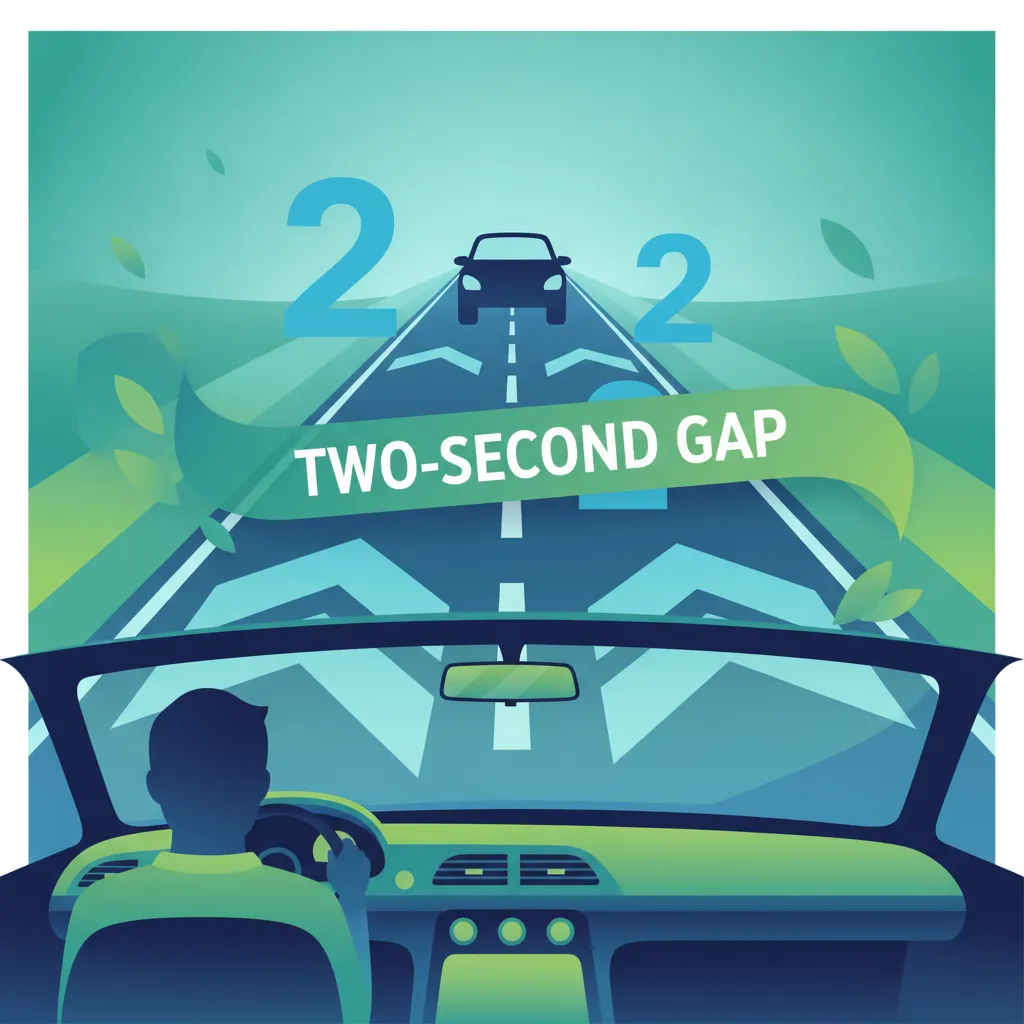
Maintaining a safe distance behind the lead vehicle is essential to prevent rear-end collisions during sudden braking maneuvers. This lesson teaches you the two-second safety rule and how to calculate this gap at different highway speeds. You will also study unique safety margin requirements, such as maintaining minimum distance intervals in road tunnels or doubling your following distance on wet roads.

In this lesson, drivers will learn how to calculate safe following distances based on vehicle speed, load, road conditions, and traffic density. The content explains the components of total stopping distance, including reaction time and braking distance, and how these are affected by factors such as wet road surfaces and heavy loads. Learners will also be introduced to French road safety guidelines for maintaining appropriate gaps to ensure sufficient time to react.

This lesson emphasizes the critical importance of maintaining a safe following distance when carrying dozens of passengers. Learners will study how vehicle weight and passenger load dynamically extend braking and total stopping distances compared to standard passenger cars. The lesson provides concrete spacing rules, such as adjusted safety gaps for highway driving and increased distances on slippery roads.
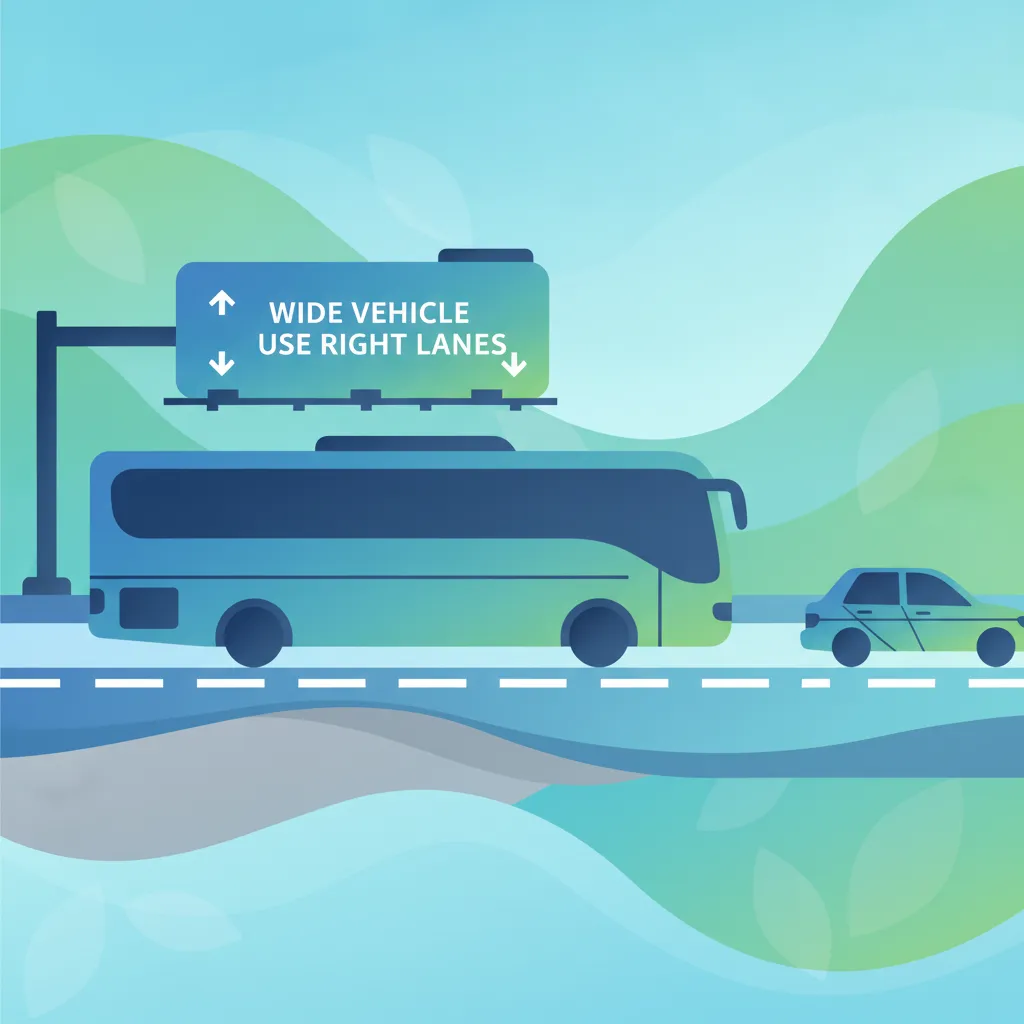
This lesson details the rules of lane discipline for operating wider and longer passenger transport vehicles on highway and city networks. Learners will explore proper lane positioning to prevent encroachment on adjacent lanes or sidewalks. It also covers the step-by-step visual and signaling sequence required to perform safe lane changes, avoiding sudden movements that could startle other drivers.

Longitudinal road markings are painted along the length of the road to divide lanes and regulate overtaking maneuvers. This lesson teaches the strict legal prohibition of crossing solid white lines and the specific spacing of broken lines that permit lane changes. You will also learn how to interpret dual lines, warning arrows, and how to maintain proper lane discipline in heavy traffic.

French motorways (autoroutes) are fast, controlled-access roads with unique laws regulating lane discipline and emergencies. This lesson teaches standard lane-use: cruising in the right lane and reserving the middle or left lanes exclusively for passing. You will study emergency procedures, the use of orange emergency call boxes, safety barrier rules, and navigating toll booths (peages) safely.
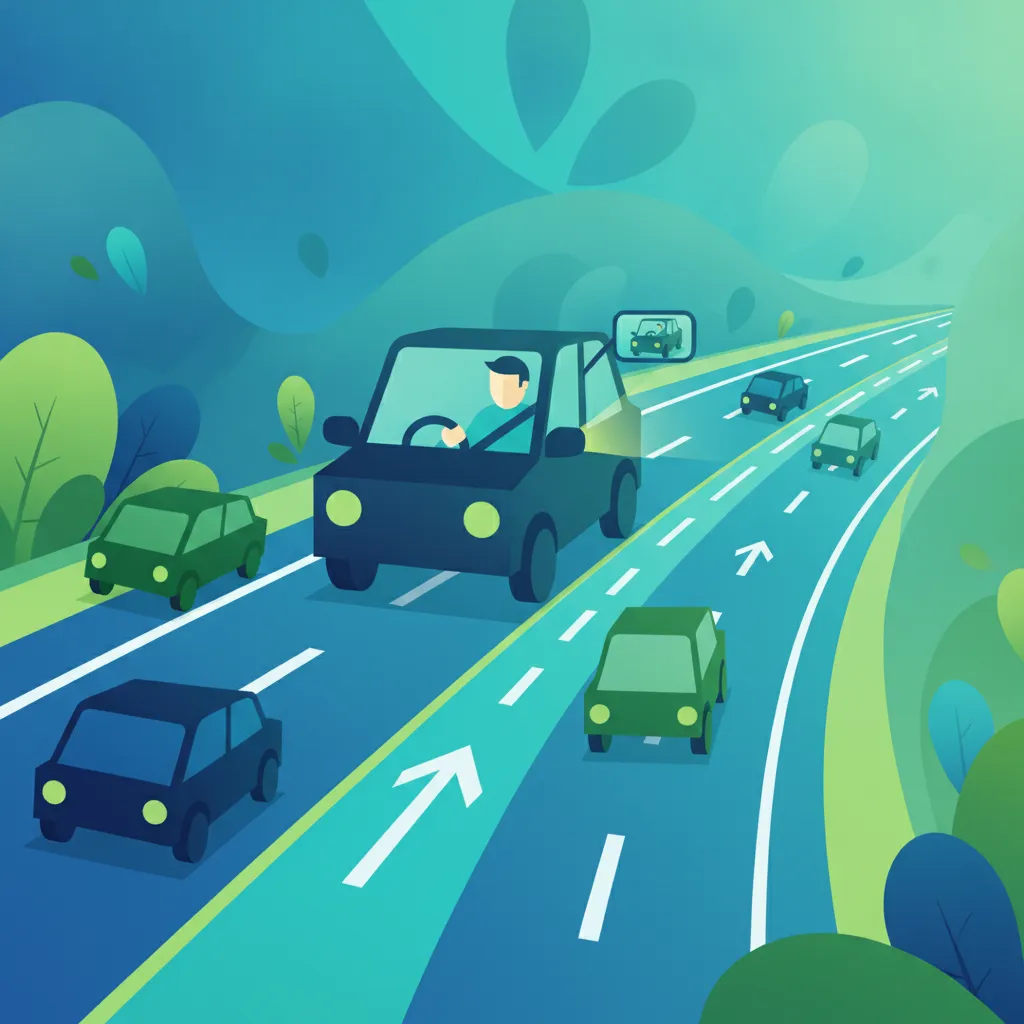
Changing lanes or executing turns requires a structured visual and physical procedure to prevent interrupting surrounding traffic. This lesson explains the key steps: checking the center mirror, exterior mirrors, turning on direction indicators, and performing blind-spot checks. You will learn correct vehicle positioning for both left and right turns, and how to execute safe turning circles without cutting corners.

France features a vast network of roundabouts (carrefours a sens giratoire) governed by specific entry and lane-use regulations. This lesson explains that vehicles entering a roundabout must yield to traffic already circulating inside. You will learn how to select the correct lane depending on your exit, use direction indicators properly, and yield to pedestrians and cyclists near roundabout exits.

This lesson covers the strict legal conditions under which you may overtake other vehicles on French roads, including necessary visibility criteria. You will master the step-by-step process of checking rearview mirrors, performing head checks, signaling, and maintaining a safe speed differential during the pass. It also details when overtaking is strictly forbidden, such as before intersections, near pedestrian crossings, or across solid lines.

This lesson details how to safely enter, cruise on, and exit French motorways, known as autoroutes, which feature high-speed traffic flows. You will master the process of matching highway speeds in the acceleration lane and performing blind spot checks before merging. The lesson also explains correct lane positioning to avoid aerodynamic turbulences from large semi-trucks, and how to safely prepare for decelerating at exit ramps.
Find clear answers to common questions learners have about Safe Speed Selection and Adjustments. Learn how the lesson is structured, which driving theory objectives it supports, and how it fits into the overall learning path of units and curriculum progression in France. These explanations help you understand key concepts, lesson flow, and exam focused study goals.
The speed limit is a maximum legal threshold under ideal conditions. You must always drive at a speed that allows you to stop within your visible field of vision, meaning you must reduce speed during rain, fog, or when visibility is limited by bends.
Novice drivers in France are subject to lower maximum speed limits on certain road types compared to experienced drivers. It is vital to recognize these differences, as they are a frequent topic in Category B theory exam questions.
Always reduce your speed and move slightly to the right of your lane if safe to do so. You must be prepared to stop or avoid an obstacle that might appear suddenly on the other side of the summit.
Yes, the French Code de la route requires lower speeds when visibility is less than 50 meters or when the road surface is wet, as these conditions significantly increase your braking distance.
Ready to focus your study? Use the practice search to find exactly the French driving theory questions you need for the Code de la route and permis de conduire ETG. Refine your knowledge on specific topics or challenging rules to boost your confidence and exam readiness.