
This lesson explores the physics of stopping your vehicle, a critical topic for the French Category B theory exam. You will learn how to calculate the sum of reaction distance and braking distance, ensuring you can identify safe following gaps and react effectively to road hazards.
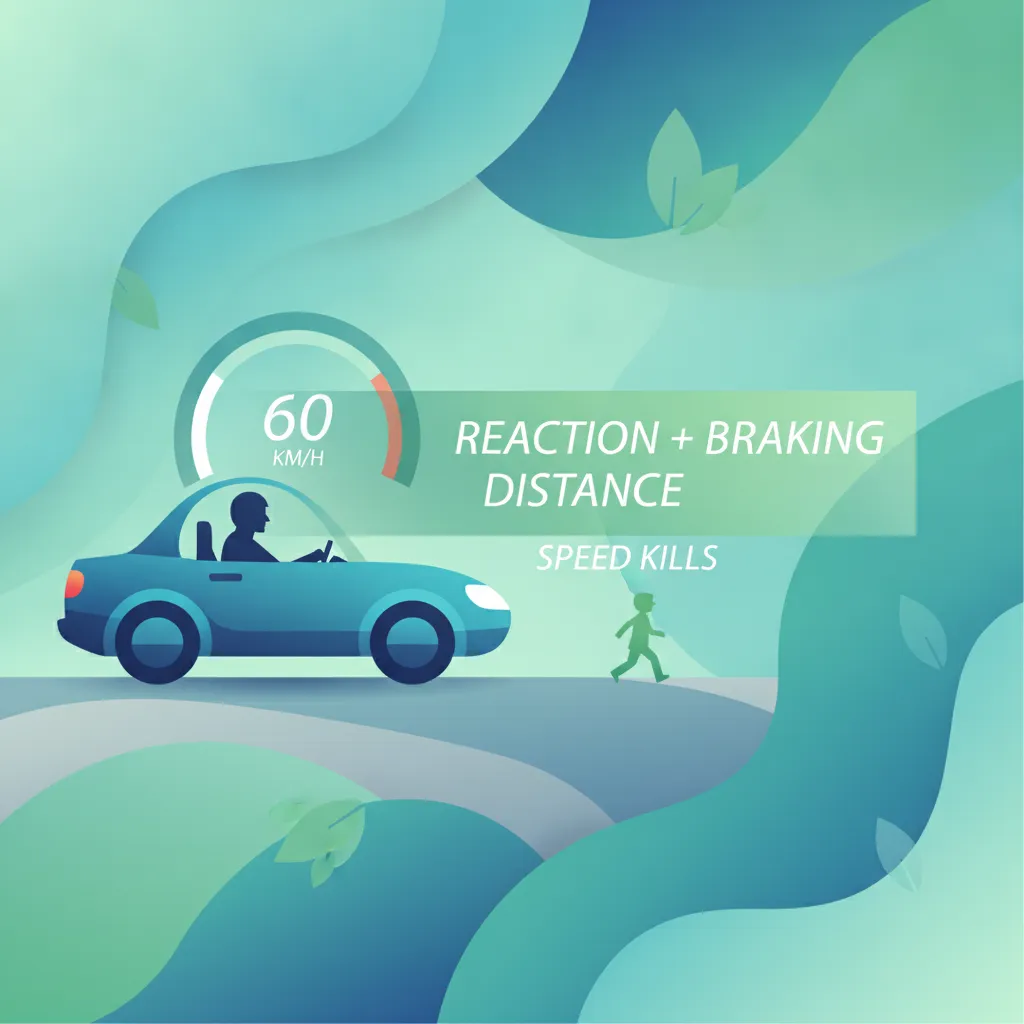
Lesson content overview
Understanding how a vehicle decelerates and comes to a complete stop is one of the most critical components of road safety. It is also a heavily tested topic on the French Category B driving theory exam, known as the Examen de l'Éthique Générale or Épreuve Théorique Générale (ETG).
Every driver must master the physical limits of their vehicle, understand how human limitations affect reaction times, and know how external environmental factors can compromise safety. Failing to maintain an appropriate safe following distance is not only a major cause of collisions but also a severe traffic violation under the French Code de la route.
To navigate roads safely, you must understand that bringing a vehicle to a halt is not an instantaneous event. It is a continuous process divided into two distinct physical phases: the human reaction phase and the mechanical braking phase.
The cumulative distance a vehicle travels from the exact moment the driver perceives a hazard to the moment the vehicle comes to a complete, stationary stop. It is calculated using the following formula:
This metric determines how much space must be maintained between your car and the vehicle ahead. If your total stopping distance exceeds the visual gap or the following distance you have allowed, a collision is physically unavoidable.
Before the brakes are ever mechanically applied, the vehicle continues to travel at its initial speed. This phase represents the human element of stopping.
The distance covered by the vehicle during the driver's reaction time—specifically, the interval between perceiving a hazard and physically pressing the brake pedal.
Under normal, healthy conditions, the average reaction time of an attentive driver is one second. This brief interval is chemically and neurologically complex, composed of three successive sub-phases:
Because your vehicle's brakes are not active during the reaction phase, your car travels at constant speed. Therefore, Reaction Distance scales linearly with speed. If you double your speed, you double your reaction distance.
French ETG Exam Rule of Thumb for Reaction Distance: To quickly estimate your reaction distance in metres during the exam, multiply the tens digit of your speed by 3.
Many drivers mistakenly believe their reaction time is always a fixed one second. In reality, several physiological and psychological factors can drastically increase your reaction time, thereby extending your Reaction Distance:
Once the driver's foot depresses the brake pedal, the vehicle enters the physical deceleration phase.
The physical distance a vehicle travels from the moment the brakes are applied until the vehicle comes to a complete stop.
Unlike reaction distance, braking distance does not increase linearly with speed. Instead, it scales quadratically (with the square of the speed). This is dictated by the laws of physics and kinetic energy:
To stop a vehicle, the braking system must convert all of its kinetic energy () into thermal energy (heat) via friction. Because kinetic energy is proportional to the square of the velocity (), doubling your speed quadruples your braking distance. Tripling your speed increases the braking distance by a factor of nine!
The French theory exam tests your ability to quickly calculate the Total Stopping Distance under dry conditions.
French ETG Exam Rule of Thumb for Total Stopping Distance (Dry Asphalt): To calculate the approximate total stopping distance in dry weather, multiply the tens digit of your speed by itself.
On a wet road surface, the braking distance doubles due to reduced friction. As a result, the total stopping distance increases significantly.
Calculating Stopping Distance on Wet Surfaces: To find the wet stopping distance on the ETG exam, calculate the dry stopping distance first, then add 50% to the result (multiply by 1.5).
Braking is ultimately limited by the contact patch between your tyres and the road surface. This contact patch is roughly the size of a human palm per tyre. The efficiency of this connection is described by the friction coefficient ().
The ratio of the frictional force between the tyre rubber and the road surface to the normal force (the weight acting downward on the tyres). A higher coefficient means better grip and shorter braking distances.
Typical Friction Coefficients (μ):
┌───────────────────────────┬──────────────┐
│ Surface Condition         │ Typical μ    │
├───────────────────────────┼──────────────┤
│ Dry Asphalt (Good Tyres)  │ 0.7 - 0.8    │
│ Wet Asphalt (Good Tyres)  │ 0.4 - 0.5    │
│ Snow-covered Road         │ 0.2 - 0.3    │
│ Icy Road                  │ 0.1 - 0.15   │
└───────────────────────────┴──────────────┘
As the table demonstrates, wet roads cut your grip nearly in half, doubling your physical braking distance. Ice reduces the coefficient of friction to near-zero, which can cause braking distances to skyrocket by up to ten times compared to dry conditions.
Another major hazard is hydroplaning (l'aquaplaning). This occurs when a wedge of water builds up in front of the tyre faster than the tyre's tread can displace it. The tyre is forced off the road surface and rides on a thin film of water, reducing the friction coefficient () to virtually zero and making steering and braking impossible.
An overloaded vehicle carries greater momentum and kinetic energy. While a heavier vehicle exerts more downward force (increasing normal force), tyre deformation and heat buildup in the brakes limit the maximum friction coefficient. Ultimately, a fully loaded vehicle or one towing a trailer requires a significantly longer distance to dissipate its kinetic energy and stop safely.
Your vehicle's safety relies on regular maintenance, which is heavily regulated under French law.
Modern vehicles are equipped with ABS (Système Antiblocage des Roues). ABS monitors wheel rotation speed. If a wheel is about to lock up (skid) during heavy braking, ABS momentarily releases and reapplies brake pressure up to several times per second.
This system prevents sliding, allowing the driver to retain steering control to bypass obstacles. However, a common driving theory misconception is that ABS dramatically reduces stopping distance. While it optimizes deceleration on low-friction surfaces, ABS does not overcome the laws of physics—stopping distances on wet or icy roads remain highly elevated.
French traffic regulations mandate strict safety margins to prevent rear-end collisions.
Under Article R413-1 of the French Code de la route, drivers must maintain a following distance that allows for a reaction time of at least 2 seconds. This safety margin accounts for:
This rule applies at all speeds. Because the required safety margin is time-based, the physical gap in metres increases automatically as your speed increases.
Choose a stationary roadside object ahead, such as a traffic sign, a tree, or a bridge pillar.
As soon as the rear bumper of the vehicle in front of you passes that object, begin counting: "One thousand and one, one thousand and two" (equivalent to 2 seconds).
If your front bumper passes the same object before you finish counting, you are driving too closely. Slowly release the accelerator to increase your following distance.
On French motorways (autoroutes), the outer edge line is painted with white dashes separated by gaps. The standard guideline is that you must leave at least two white bands (deux bandes de la ligne de rive) between you and the vehicle ahead. This corresponds to the required 2-second safety buffer at 130 km/h.
Under French law, speed limits are reduced automatically in adverse weather. This compensates for reduced traction and increased stopping distances:
Failing to maintain a safe following distance is a high-risk violation. If caught by police or automated traffic enforcement systems, the sanctions are severe:
Let's examine how these physical principles play out in real-world driving environments.
To avoid collisions and pass the driving theory exam, keep these core principles in mind:
Explore all units and lessons included in this driving theory course.
Lesson content overview
Explore all units and lessons included in this driving theory course.
Explore search topics learners often look for when studying Stopping Distance Considerations. These topics reflect common questions about road rules, driving situations, safety guidance, and lesson level theory preparation for learners in France.
Browse additional driving theory lessons that cover connected traffic rules, road signs, and common driving situations related to this topic. Improve your understanding of how different rules interact across everyday traffic scenarios.
Learn how rain, fog, and snow reduce tyre adhesion and force extended stopping distances. This guide explains legal speed reductions and safety adjustments mandated by the French Code de la route to maintain control under difficult environmental conditions.
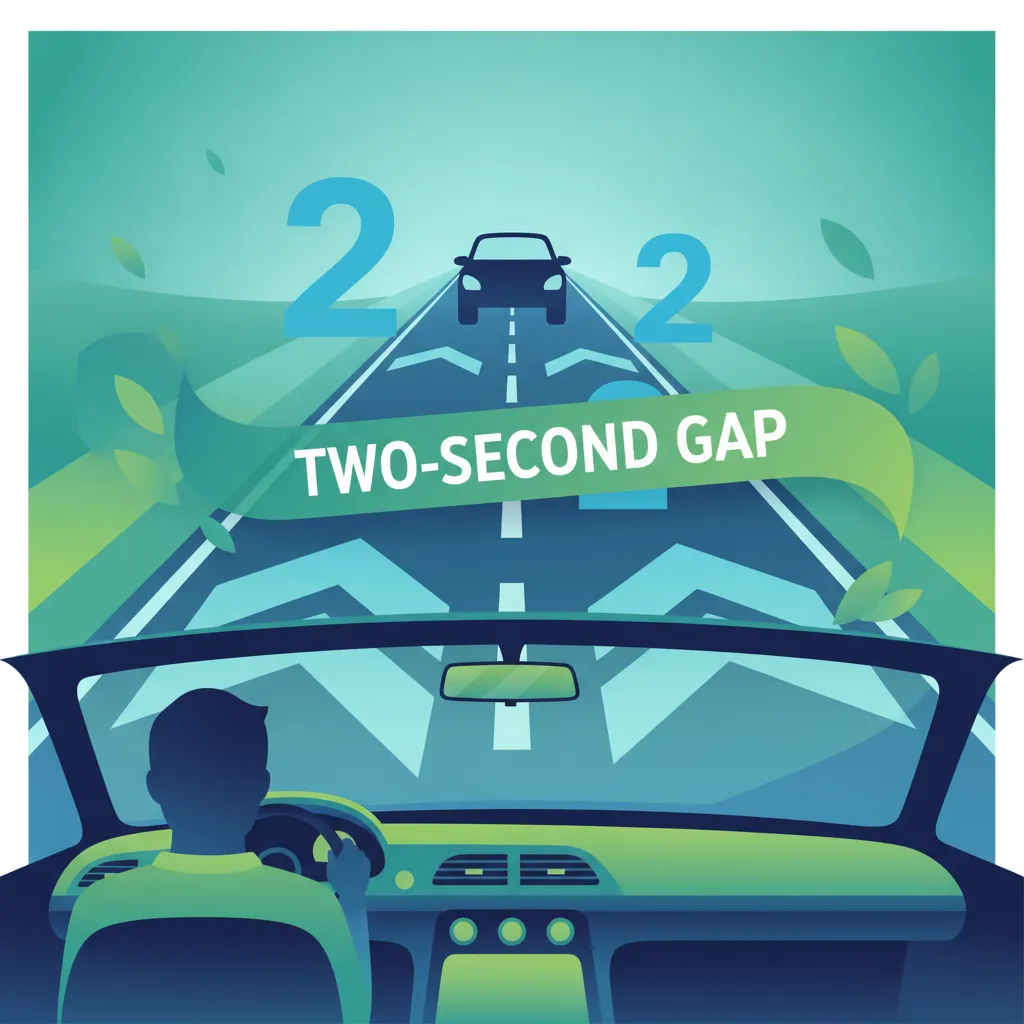
Maintaining a safe distance behind the lead vehicle is essential to prevent rear-end collisions during sudden braking maneuvers. This lesson teaches you the two-second safety rule and how to calculate this gap at different highway speeds. You will also study unique safety margin requirements, such as maintaining minimum distance intervals in road tunnels or doubling your following distance on wet roads.
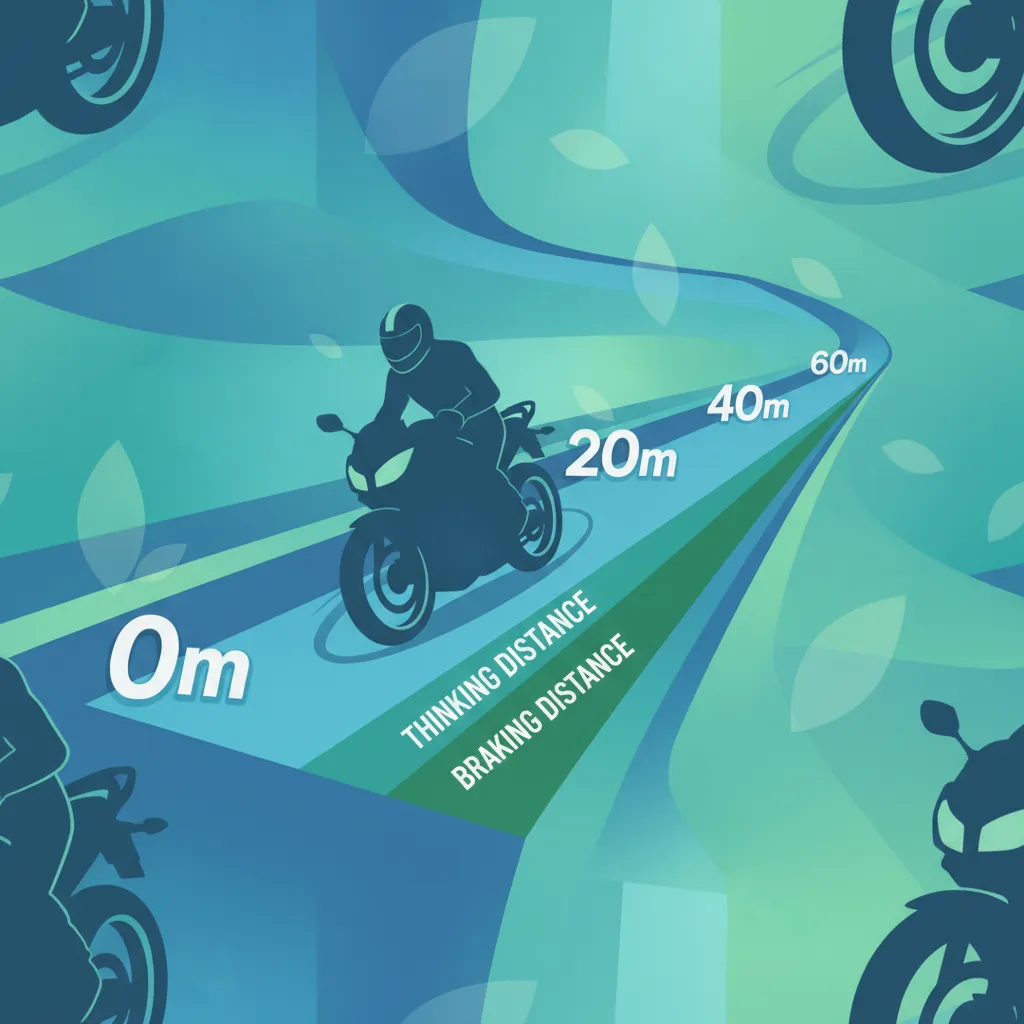
This lesson breaks down the physics of stopping a motorcycle, exploring how kinetic energy varies with the square of your speed. You will learn the mathematical components of total stopping distance, which includes both perception-reaction distance and physical braking distance. The lesson also explains how forward weight transfer during heavy braking increases traction on the front tire while reducing rear-wheel load.

Adverse weather reduces tyre traction and limits visibility, dramatically raising the risk of multi-car accidents on highways. This lesson details speed reductions required during rainfall, techniques for avoiding aquaplaning, and demisting windshields for visibility. You will learn how to maintain extra stopping distance on snow-covered roads and the correct headlight adjustments to make during fog.

This lesson emphasizes the critical importance of maintaining a safe following distance when carrying dozens of passengers. Learners will study how vehicle weight and passenger load dynamically extend braking and total stopping distances compared to standard passenger cars. The lesson provides concrete spacing rules, such as adjusted safety gaps for highway driving and increased distances on slippery roads.

In this lesson, drivers will learn how to calculate safe following distances based on vehicle speed, load, road conditions, and traffic density. The content explains the components of total stopping distance, including reaction time and braking distance, and how these are affected by factors such as wet road surfaces and heavy loads. Learners will also be introduced to French road safety guidelines for maintaining appropriate gaps to ensure sufficient time to react.

This lesson teaches advanced braking strategies, highlighting the correct application of progressive friction braking and auxiliary retardation systems like electric or hydraulic retarders. Drivers will learn to avoid abrupt braking inputs that could compromise passenger balance, particularly for standing passengers. It also covers emergency stop procedures, showing how to balance maximum deceleration with vehicle stability.

The physical composition of a road surface directly influences vehicle traction, braking performance, and tyre wear. This lesson explains how asphalt, cobblestones, and gravel impact your vehicle's handling, especially during wet or icy conditions. You will learn to recognize reduced friction signs, manage tyre adhesion, and adjust your speed to ensure stability and control on all road types.
This lesson covers the mechanical and physical adaptations required to drive a passenger coach in rain, heavy fog, snow, and crosswinds. Drivers will learn to recognize signs of aquaplaning and understand the dramatic traction loss associated with wet or icy roads. It also details French winter equipment regulations (Loi Montagne) requiring snow tires or chains in designated mountainous regions.
Learners will be introduced to effective braking techniques tailored for AM vehicles, emphasizing progressive pressure application and the importance of maintaining grip. The lesson covers how to estimate stopping distances, execute emergency stops safely, and understand the limitations of light vehicle braking systems in France. Mastery of these techniques ensures riders can stop promptly and maintain control in various traffic scenarios.

This lesson provides practical strategies for managing the physical demands of slow, heavily congested city traffic. You will learn how to maintain excellent low-speed balance through correct body posture, rear brake modulation, and smooth clutch control. It also emphasizes the importance of preserving an adequate safety buffer when stopping behind other vehicles, allowing an immediate escape route if you face a rear-end threat.
Understand how active observation and defensive driving strategies help you identify hazards earlier. This lesson covers the cognitive processes behind reaction time and practical methods to lower your total stopping distance by anticipating risks in urban and rural environments.

Proactive drivers scan the road constantly, detecting potential dangers before they turn into real-world emergency situations. This lesson teaches scanning techniques, the use of rear-view mirrors, and the interpretation of visual cues from other road users. You will learn to anticipate hazards like child play near roads, merging vehicles, and sudden lane changes, helping you drive defensively.
Learners will develop the ability to anticipate potential hazards on the road, enhancing reaction times and defensive riding strategies. The lesson emphasizes constant scanning, early identification of threats such as sudden stops, pedestrian crossings, or unexpected lane changes, and appropriate response measures. By cultivating proactive risk assessment, AM riders can significantly reduce accident likelihood.
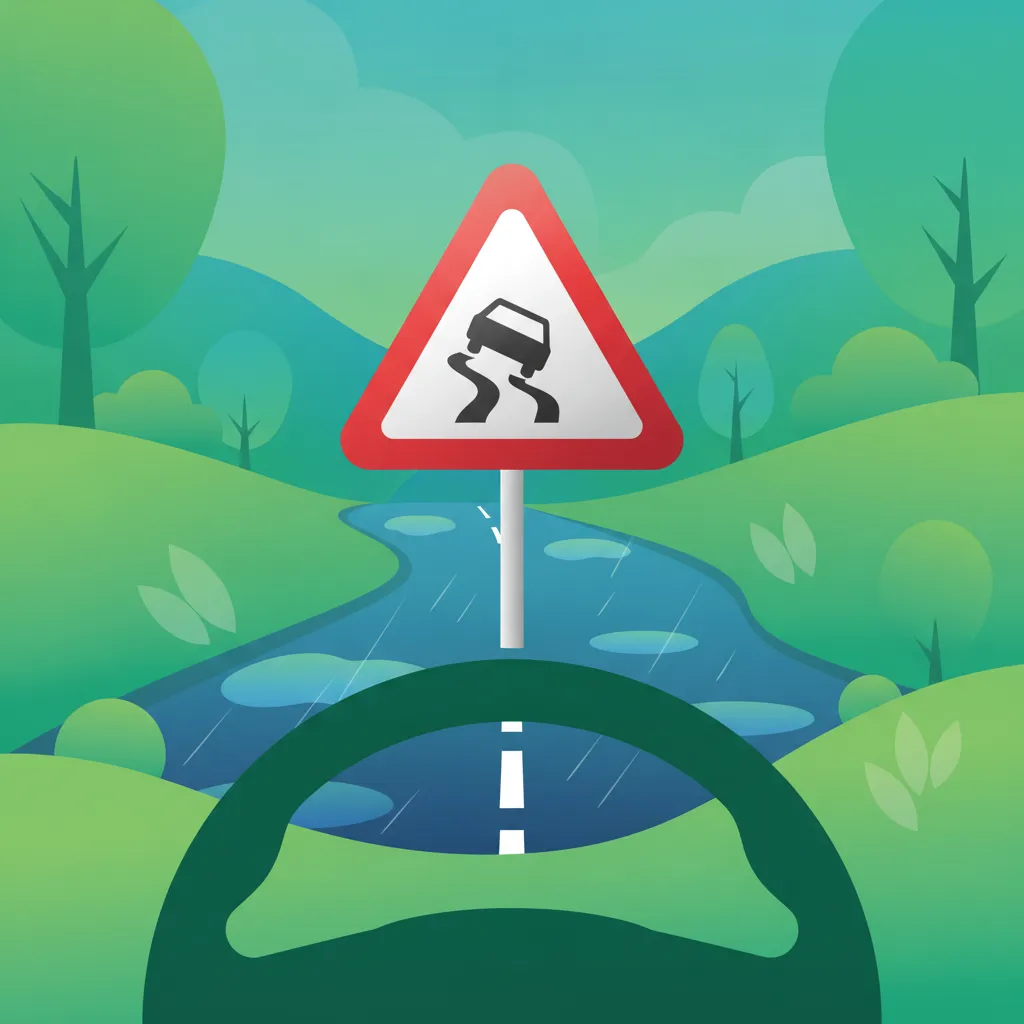
Warning signs on French roads are triangular with a red border, designed to alert drivers to upcoming dangers. This lesson teaches you how to interpret warnings for sharp curves, slippery surfaces, narrowing lanes, and wildlife or animal crossing hazards. You will understand the safety adjustments needed when approaching school zones, active roadworks, or crossings where vulnerable pedestrians are present.
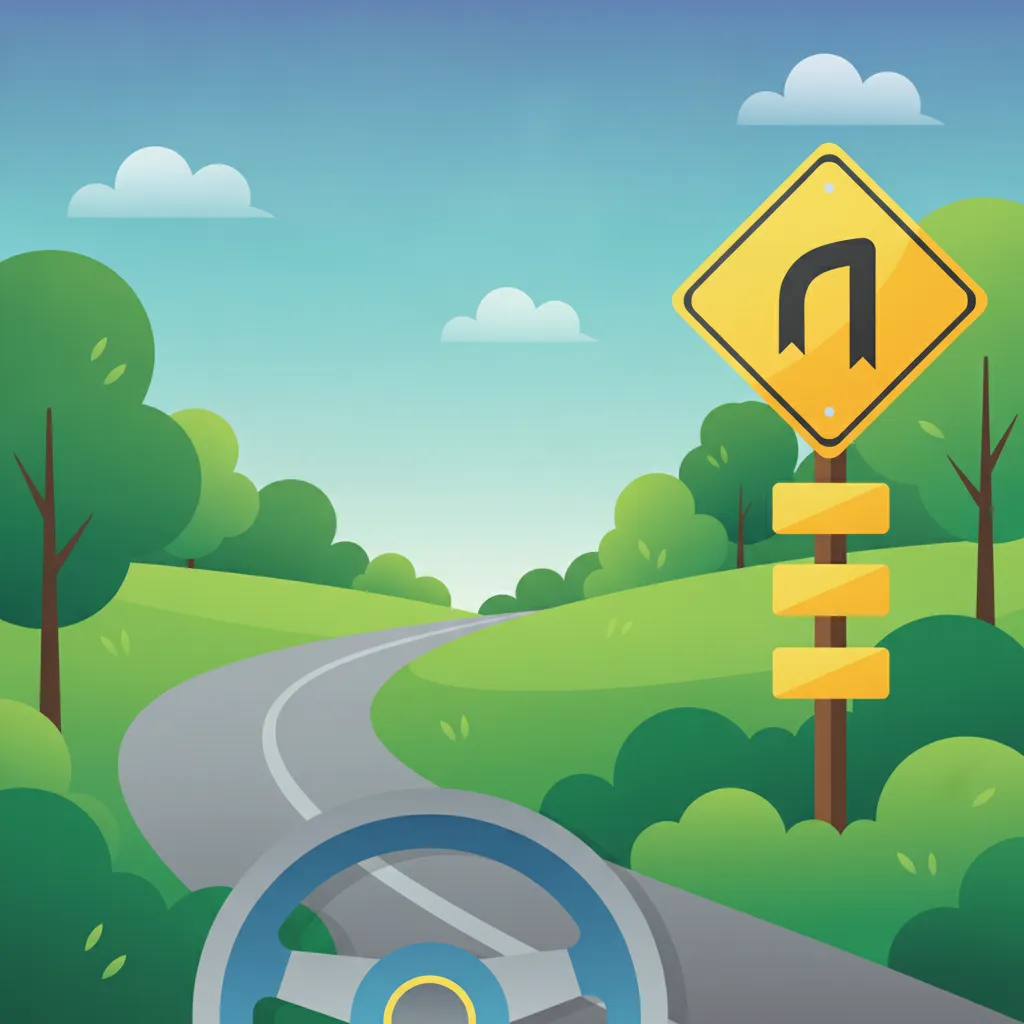
This lesson focuses on French warning signs that alert drivers to potential hazards ahead, such as curves, animal crossings, or slippery surfaces, with particular attention to signs relevant to AM riders. Learners will examine how to interpret these signs, understand the associated risks, and adapt riding behavior accordingly. By mastering warning sign recognition, riders can proactively manage safety risks in diverse road conditions.

In this lesson, drivers will learn strategies to avoid conflicts with smaller vehicles, such as cars and vans, which may not be as visible in large vehicle blind spots. The content emphasizes maintaining adequate spacing, using proper lane discipline, and being aware of small vehicles' behavior during lane changes and turns. Learners will also be introduced to communication techniques, such as signalling and eye contact.

In this lesson, drivers will explore the specific challenges presented by rural road environments, including narrower lanes, shared space with agricultural vehicles, and frequent wildlife crossings. The content emphasizes adapting speed to road curvature, surface conditions, and visibility while navigating hills and bends. Learners will also learn to interpret rural road signage and understand the importance of maintaining vigilance.
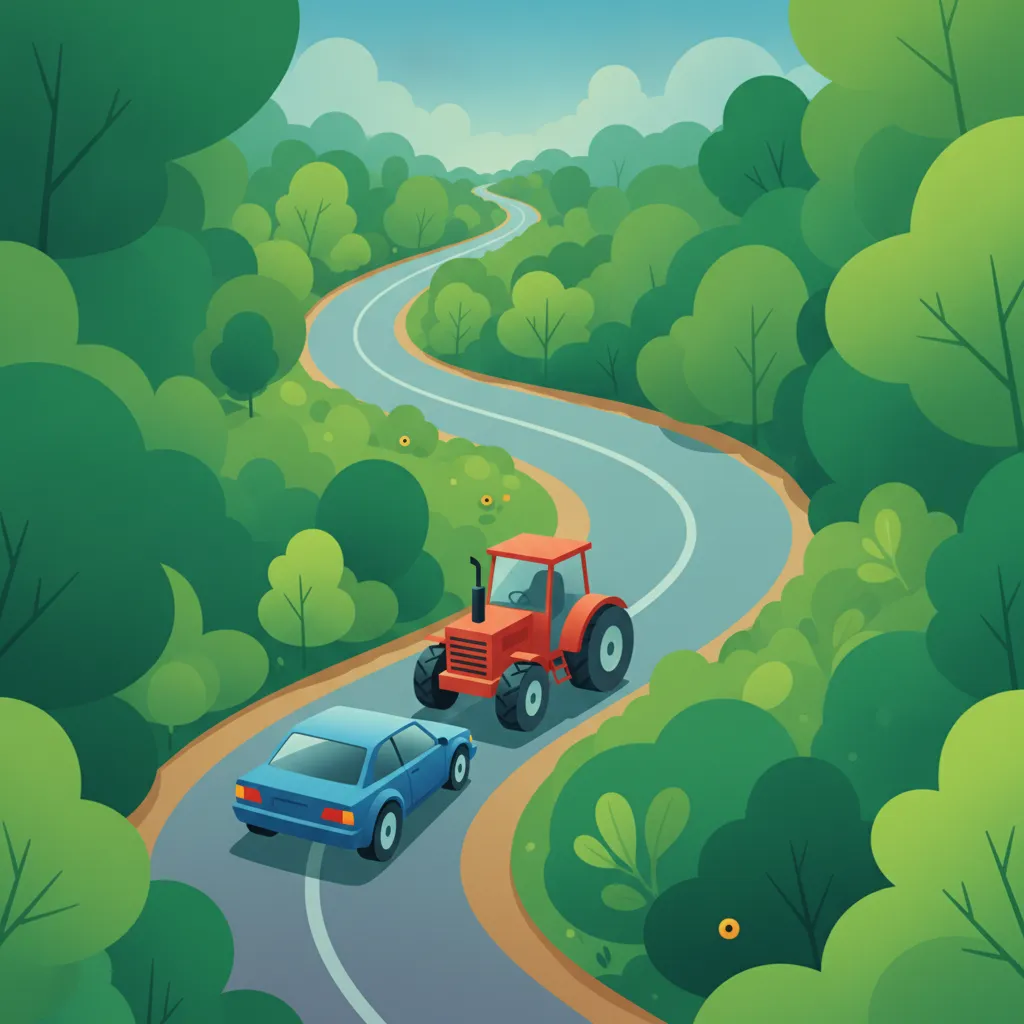
Rural roads account for a high percentage of severe accidents due to narrow widths, winding geometries, and sudden hazards. This lesson teaches strategies for negotiating sharp bends, handling agricultural machinery, and reacting to wildlife warning signs. You will learn to manage your vehicle's lane placement on roads with soft shoulders and understand speed limits on rural networks.

This lesson details the dangerous blind spots (angles morts) that surround heavy passenger vehicles and explains how to mitigate them. Drivers will master the systematic mirror check sequence (retro-information) before executing any turns or lane changes. It also covers the mandatory French "Angles Morts" warning stickers displayed on the vehicle exterior to alert vulnerable road users of danger zones.

This lesson teaches specific visual scanning methods to detect vulnerable road users, such as children, elderly individuals, and cyclists near stops. Drivers will learn to anticipate sudden movements, like a passenger running to catch a bus or stepping off a sidewalk unexpectedly. Managing the massive blind spots around the front and right-hand sides of passenger vehicles is highlighted as a critical safety duty.
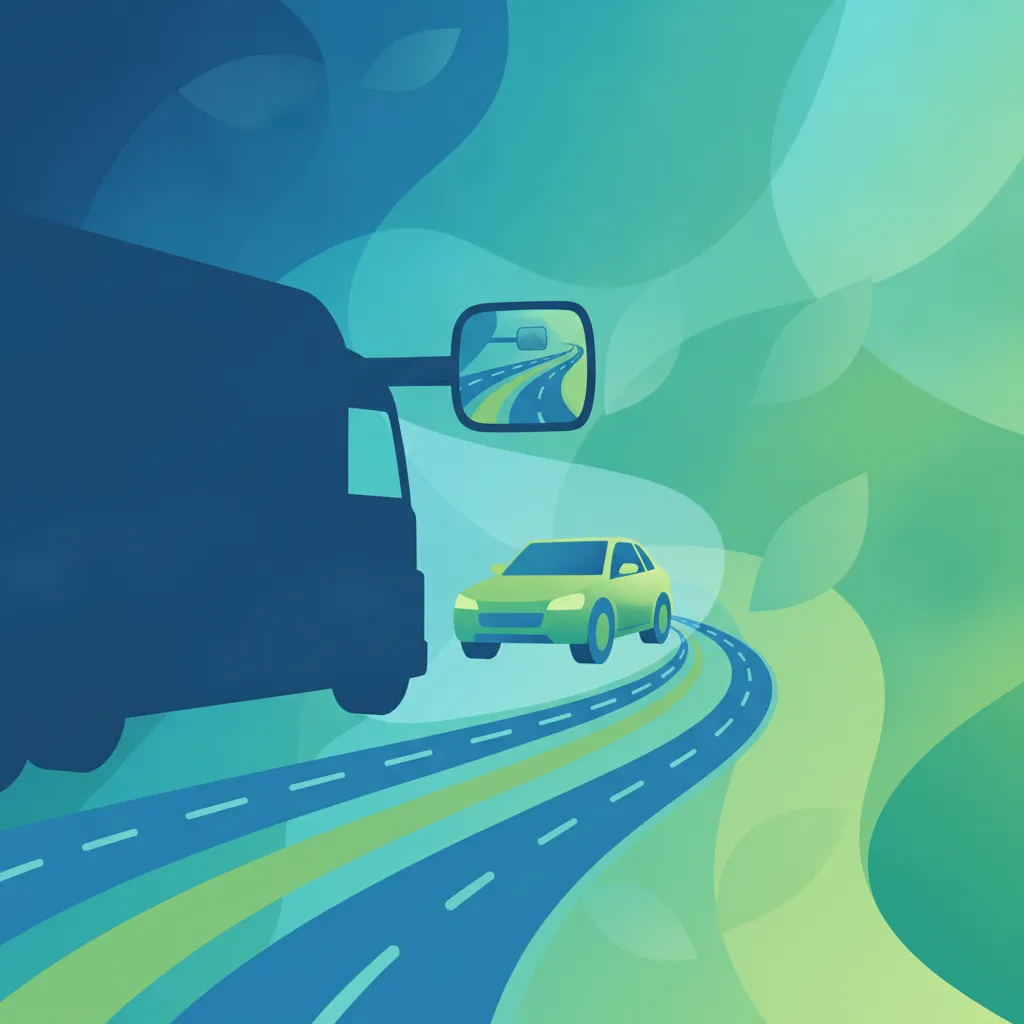
This lesson addresses the challenges of positioning near larger vehicles such as cars, vans, buses, and lorries on French roads. Learners will learn to identify blind spots (angles morts), maintain a safe distance, and position themselves to maximize visibility and predictability. Understanding these dynamics is crucial for AM riders to avoid dangerous situations and ensure safe overtaking and lane sharing.
Find clear answers to common questions learners have about Stopping Distance Considerations. Learn how the lesson is structured, which driving theory objectives it supports, and how it fits into the overall learning path of units and curriculum progression in France. These explanations help you understand key concepts, lesson flow, and exam focused study goals.
Braking distance increases by the square of the speed increase. If you double your speed, your kinetic energy increases fourfold, meaning your vehicle requires roughly four times the distance to stop on the same road surface.
No, reaction time only affects the reaction distance, which is the distance covered before your foot even touches the brake pedal. Total stopping distance is the sum of both reaction distance and braking distance.
Rain creates a layer of water between the tire and the road, significantly reducing friction (adhesion). This means your braking distance will be much longer than it would be on dry asphalt, requiring you to increase your following distance.
While you don't need a complex physics calculator, you must understand the relationship between speed and distance. The exam often tests your ability to recognize that higher speeds and adverse weather require much larger safety gaps.
Ready to focus your study? Use the practice search to find exactly the French driving theory questions you need for the Code de la route and permis de conduire ETG. Refine your knowledge on specific topics or challenging rules to boost your confidence and exam readiness.