
This lesson teaches you how to optimize your seating position and the onboard environment to ensure professional standards for passenger transport. Properly applying these ergonomic principles is essential for reducing driver fatigue and maintaining a safe, comfortable atmosphere for your passengers during transit.
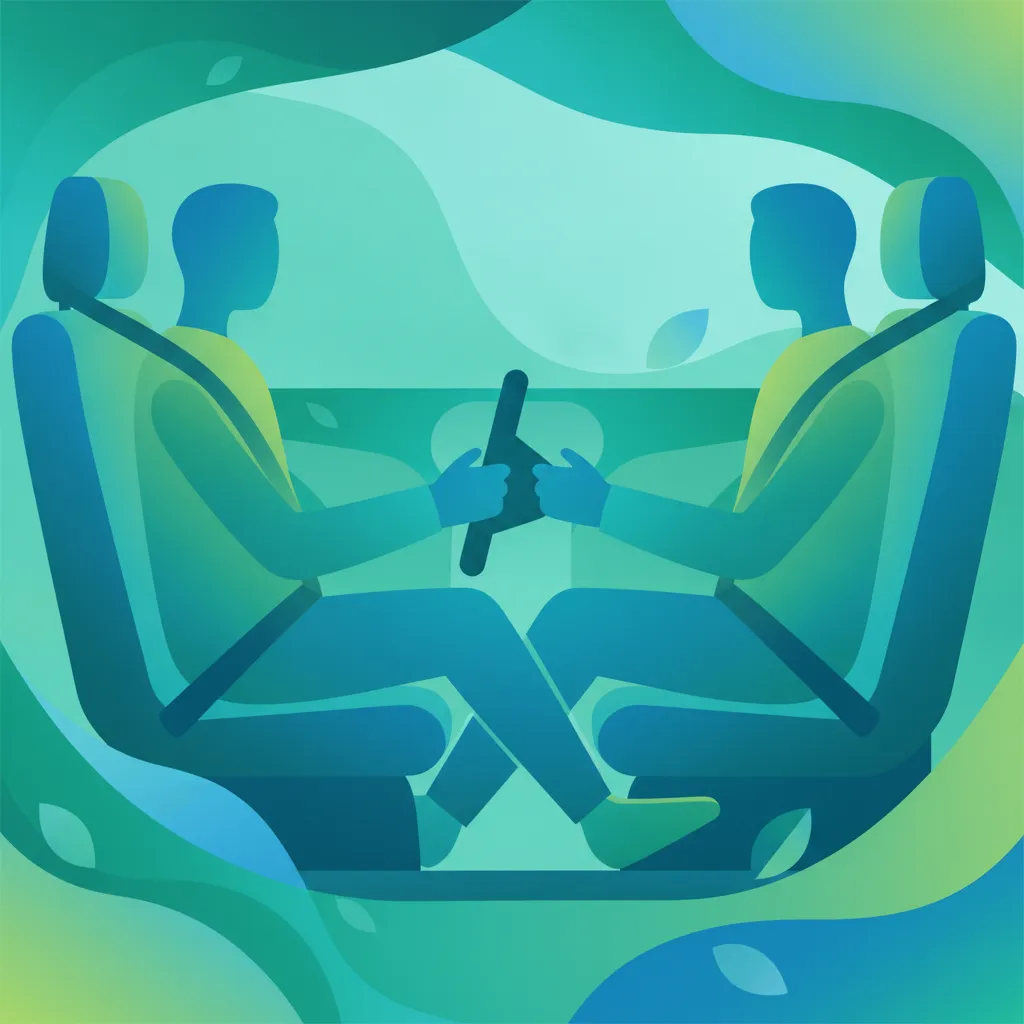
Lesson content overview
Operating a passenger vehicle professionally requires long hours behind the wheel. Whether you are aiming for a Category D1, D, D1E, or DE license in France, mastering vehicle ergonomics is not merely a matter of luxury—it is a fundamental aspect of road safety.
Poor physical posture and improper cabin environments directly contribute to premature driver fatigue, reduced cognitive performance, and musculoskeletal disorders (MSDs).
This lesson covers the principles of biomechanical alignment, vehicle controls adjustment, climate management, and cabin noise reduction to ensure a safe, alert, and comfortable journey for both the driver and passengers.
Achieving the correct posture is the first line of defense against physical exhaustion and injury. When driving professionally, your body is subjected to continuous low-frequency vibrations, joint compression, and repetitive muscle use. Proper biomechanical alignment minimizes these stresses by distributing your body weight evenly and maintaining the natural curvature of your spine.
The seat height must be set to ensure an unobstructed view of the road, all mirrors, and the dashboard instrument panel. However, raising the seat too high can reduce pedal feel and cause your thighs to press against the lower edge of the steering wheel, restricting circulation.
Conversely, setting the seat too low reduces your forward field of vision, particularly directly in front of the vehicle—a critical hazard in urban environments with vulnerable road users.
Your distance from the pedals dictates your control over the vehicle's speed and braking systems. When adjusting the forward-backward position of your seat, use the foot pedals as your reference point.
The optimal distance between the driver's seat and the accelerator, brake, and clutch pedals that allows full control throughout the entire range of pedal travel without stretching or over-flexing the joints.
The angle of your seat backrest influences the pressure exerted on your lumbar spine. Slouching or leaning too far back causes the lower spine to curve outward, leading to disc compression and muscle strain.
Adjust the seat height: Ensure your eyes are positioned high enough to see the road clearly while maintaining a comfortable view of the instrument cluster.
Set the slide position (Pedal Reach): Slide the seat forward or backward until your knees have a slight bend (approx. 120 degrees) when the pedals are fully depressed.
Incline the backrest: Position the backrest between 100 and 110 degrees. Avoid a completely vertical (90-degree) angle, which causes neck strain, and avoid leaning too far back, which forces you to strain your neck forward.
Engage the lumbar support: Adjust the lumbar cushion so that it firmly fills the natural hollow of your lower back, preventing slouching.
Verify thigh support: Ensure the seat cushion contours to your thighs without cutting off circulation behind the knees.
Ergonomic studies show that even a minor 5-degree deviation from the optimal lumbar spine curvature increases muscle fatigue by up to 10% over a standard two-hour driving shift. Always adjust your seat before starting your journey.
Once your lower body is positioned correctly relative to the pedals, you must adjust the upper cabin controls. Modern passenger transport vehicles feature highly adjustable steering columns and advanced head restraints.
Most heavy passenger vehicles allow you to adjust the steering wheel in two directions: height (tilt) and depth (telescoping).
The headrest (or head restraint) is a critical active safety device, not a comfort pillow. In a rear-end collision, your vehicle is pushed forward suddenly, causing your torso to accelerate rapidly while your head lags behind. This rapid back-and-forth motion causes whiplash (coup du lapin).
A neck injury caused by a rapid, forceful back-and-forth movement of the neck, commonly occurring during rear-end collisions. Proper headrest positioning can reduce the severity of these injuries by up to 45%.
Maintaining a stable thermal environment is essential for sustaining driver alertness and ensuring passenger satisfaction. Thermal extremes directly affect human cognitive function and physical comfort.
Extreme temperatures act as a major distractor and physiological stressor.
When driving in very hot summer conditions, avoid setting the air conditioning to more than 6°C below the outside temperature. An excessive temperature differential can cause thermal shock to passengers boarding and exiting, and puts unnecessary strain on the vehicle's engine and electrical systems.
According to French road safety regulations, clear visibility through all windows is a strict legal requirement. Condensation (fogging) on the inside of the windows occurs when warm, humid air inside the vehicle meets cold glass surfaces.
In passenger transport vehicles (buses, coaches, and large multi-purpose vehicles), the cabin is often split into distinct climate zones.
Continuous exposure to noise and physical vibration is a primary cause of fatigue and long-term health complications for professional drivers.
Heavy vehicles are susceptible to low-frequency vibrations transmitted from the road surface through the chassis.
High ambient noise levels degrade concentration and can mask emergency auditory signals, such as sirens or vehicle mechanical warnings.
The Code de la route (French Highway Code) contains explicit regulations regarding driver positioning, visibility, and control over the vehicle. Failing to comply with these rules can result in traffic violations, fines, or failure during the practical driving exam.
A driver must perform all seat, mirror, and steering wheel adjustments before putting the vehicle into motion. Adjusting your seat while driving is highly dangerous, as the sudden sliding of the seat can cause your feet to slip off the pedals, resulting in a loss of vehicle control.
French law mandates that the driver's field of vision must not be obstructed by physical structures, dirt, ice, or condensation. Operating a vehicle with a partially fogged windshield or side windows is a punishable offense.
During technical inspections (Contrôle Technique) and professional driving exams, the presence and functional adjustment of headrests are verified. Riding with missing or broken headrests is illegal for passenger-carrying vehicles.
Understanding where drivers commonly make mistakes can help you maintain safe habits throughout your career.
To help you quickly diagnose and correct common ergonomic issues, refer to the table below:
| Physical Indicator / Problem | Root Cause | Corrective Action | Safety Benefit |
|---|---|---|---|
| Lower back pain or cramping | Poor lumbar support or seat positioned too far back. | Adjust the seat slide forward; inflate or adjust the lumbar support cushion to fit your lower back spine curve. | Reduces fatigue on spinal discs; maintains consistent pedal force. |
| Shoulder tension or neck stiffness | Steering wheel too far forward or seat backrest reclined past 110 degrees. | Adjust the steering column telescoping feature closer; set backrest angle to 100–110 degrees. | Relieves stress on the trapezius muscles; ensures rapid steering capability. |
| Cold feet or unresponsive pedal control | Air ventilation directed solely to the upper body; cabin temperature set too low. | Adjust HVAC airflow distribution to target the footwells; raise the climate control temperature to 22°C. | Sustains normal blood circulation in extremities for precise brake and throttle inputs. |
| Windshield fogging during rain | Recirculation mode active; A/C compressor turned off. | Deactivate recirculation; turn on the A/C compressor and direct maximum airflow to the windshield. | Restores 100% forward and lateral visibility, preventing collisions. |
| Head bouncing or bottoming out over bumps | Pneumatic seat dampening suspension set too soft. | Adjust the air seat suspension setting to match your physical weight profile. | Minimizes micro-vibrations traveling up the spine, reducing cumulative fatigue. |
The relationship between cabin ergonomics and safety is backed by extensive physiological and cognitive research:
By treating ergonomics and cabin climate management as essential safety procedures rather than personal preferences, you protect your health, maintain optimal driving performance, and ensure a secure, smooth ride for every passenger on board.
Explore all units and lessons included in this driving theory course.
Lesson content overview
Explore all units and lessons included in this driving theory course.
Explore search topics learners often look for when studying Ergonomics for Driver and Passenger Comfort. These topics reflect common questions about road rules, driving situations, safety guidance, and lesson level theory preparation for learners in France.
Browse additional driving theory lessons that cover connected traffic rules, road signs, and common driving situations related to this topic. Improve your understanding of how different rules interact across everyday traffic scenarios.
Learn the official protocols for managing emergency situations in passenger vehicles. This guide details safety requirements for vehicle breakdowns, passenger evacuation techniques, and the use of emergency equipment, ensuring you are prepared to protect passengers and secure the vehicle in compliance with the Code de la route.
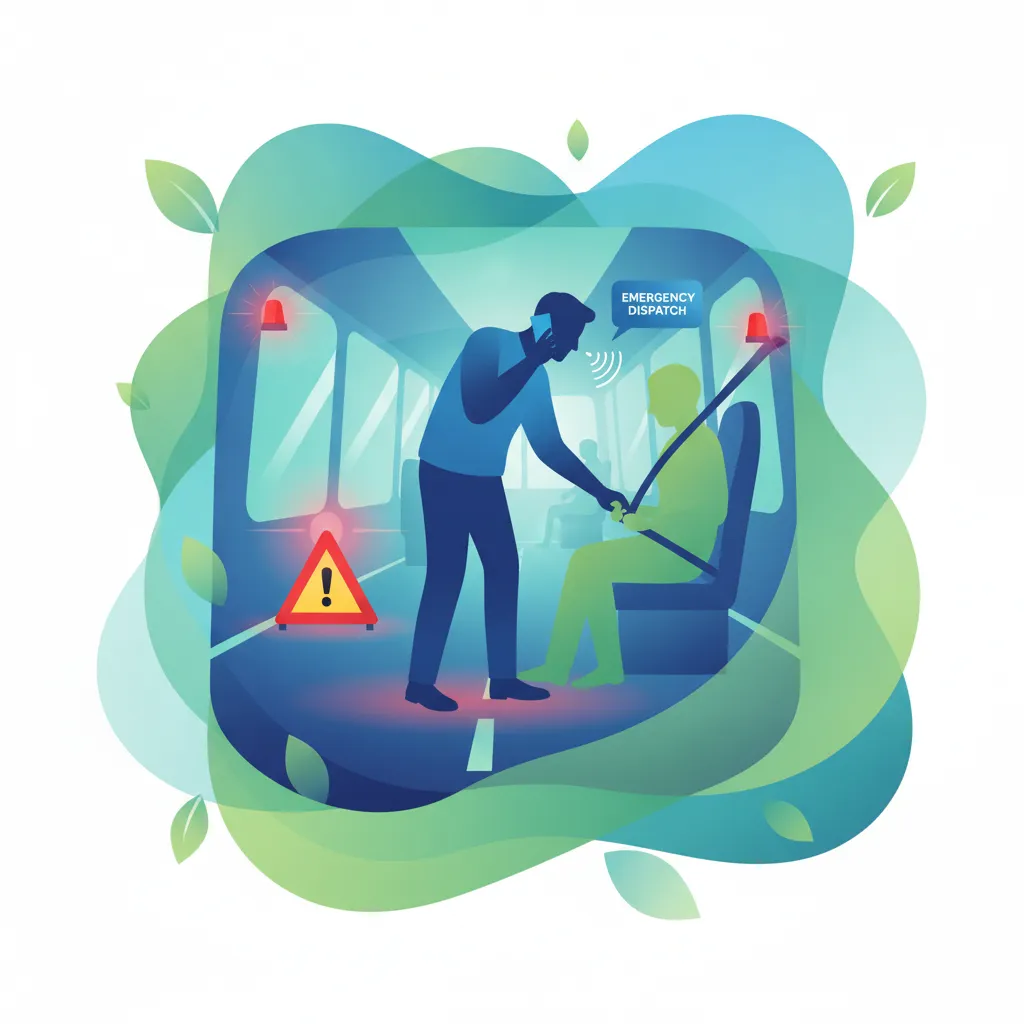
This lesson covers immediate response steps for critical on-board events, including passenger medical emergencies and engine compartment fires. Learners will study the location and proper application of fire extinguishers, safety hammers, and first aid kits. It also explains how to coordinate effectively with French emergency services (SAMU, Fire Brigade) and reassure passengers to maintain calm during an incident.

This lesson details the emergency protocols for handling mechanical breakdowns or tire blowouts on public highways and motorways. Drivers will learn how to park the vehicle in the safest possible location, activate hazard warning lights, and deploy the reflective warning triangle. It teaches precise commands and steps for evacuating passengers quickly through safety exits, positioning them behind protective guardrails.
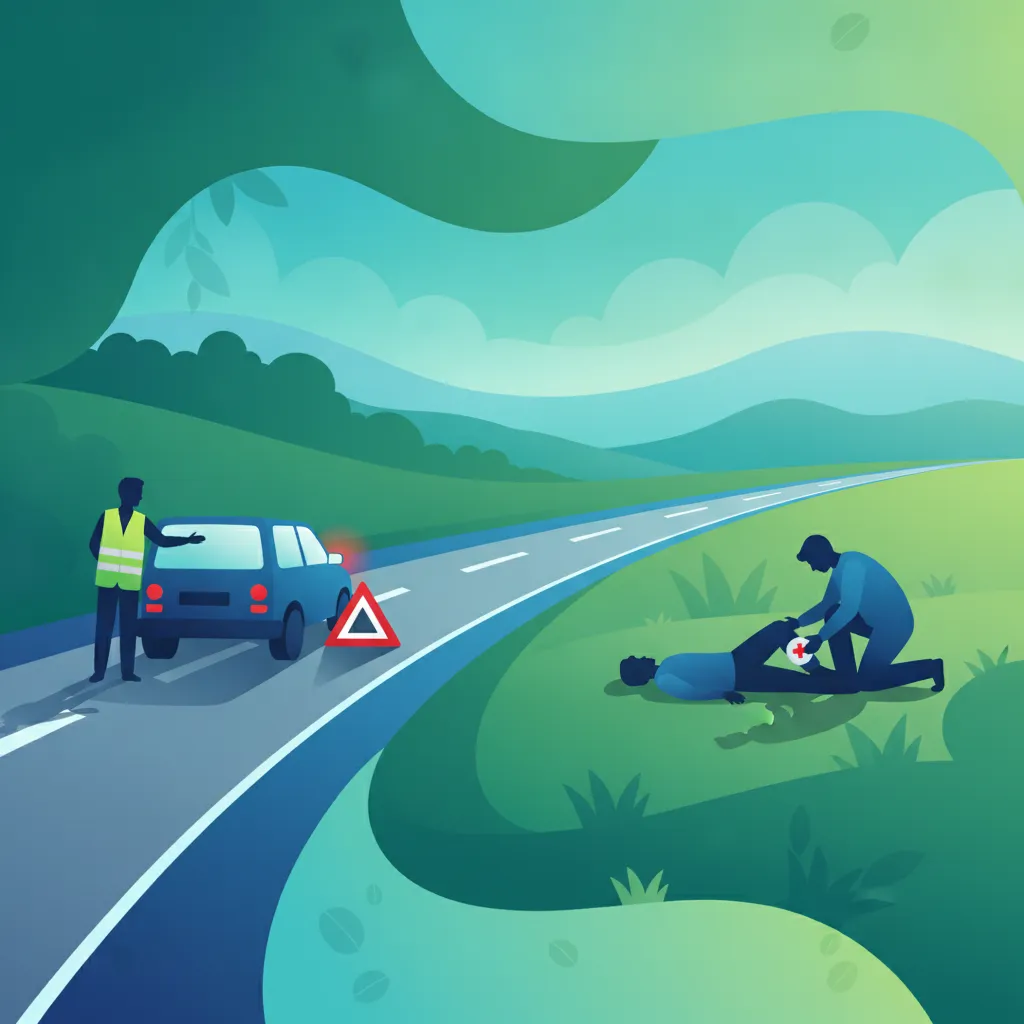
When encountering or participating in a road accident, following a strict safety protocol protects lives and prevents secondary crashes. This lesson covers the essential 'Protect, Alert, Rescue' (PAS) protocol, which involves wearing a yellow high-visibility vest, placing a warning triangle, and calling 112. You will also learn basic first-aid practices, how to secure victims, and the correct way to fill out an accident report.
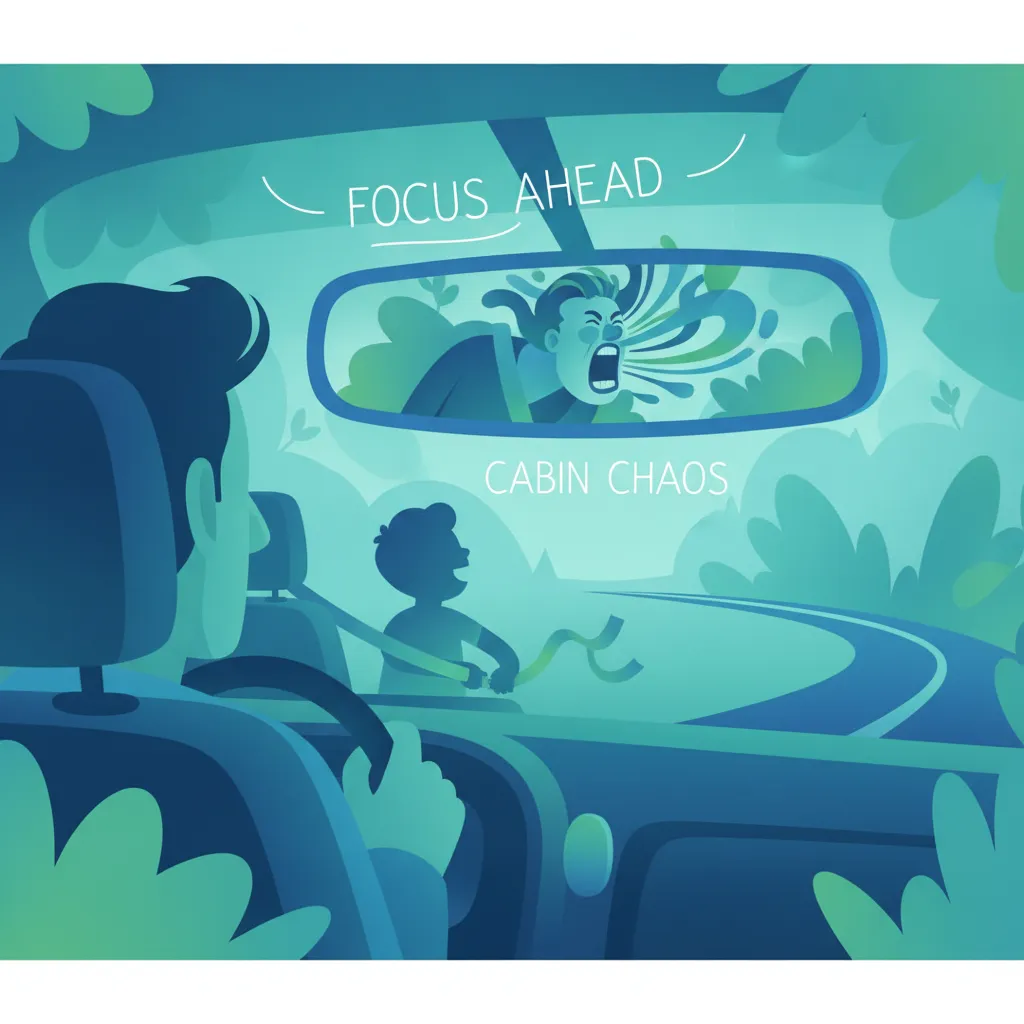
This lesson focuses on techniques for monitoring and managing passenger behavior to maintain a calm and safe environment during transit. Drivers will learn how to enforce seatbelt rules, manage noise levels, and de-escalate verbal conflicts between passengers. Proactive safety announcements and a confident, polite professional demeanor are highlighted as key tools to prevent behavioral issues before they compromise road safety.

In this lesson, learners will be equipped with the essential steps to take in the event of an emergency involving their goods vehicle, such as accidents, spills, or fires. The content covers the correct usage of the European emergency number 112, immediate safety measures to protect the scene, and the required use of driver emergency equipment like fire extinguishers and spill kits. Additionally, the lesson details the obligatory reporting processes, documentation of incidents, and cooperation with emergency services and law enforcement.

This lesson examines the flow of passengers entering and exiting the vehicle and how to organize this movement to reduce stop delays safely. Drivers will study the operation of door safety interlocks, sensitive edges, and onboard monitoring cameras to prevent boarding accidents. It also covers coordinating priority boarding for elderly, pregnant, or injured passengers in a polite and structured manner.

This lesson teaches critical emergency response maneuvers to help you avoid sudden, unexpected obstacles on the roadway. You will learn the exact step-by-step process of executing a rapid, controlled swerve, keeping braking forces separate from steering inputs to prevent a slide. Additionally, the lesson addresses the psychological challenge of 'target fixation' and provides techniques to keep your eyes focused on your clear escape route.
This lesson provides step-by-step instructions for utilizing vehicle accessibility systems, including wheelchair ramps, lifts, and specialized tie-down restraints. Drivers will study French regulatory frameworks mandating equal access to public transport services for all individuals. Crucially, the lesson covers respectful, safe, and efficient communication methods for guiding passengers with sensory, physical, or cognitive impairments.

This lesson teaches specific visual scanning methods to detect vulnerable road users, such as children, elderly individuals, and cyclists near stops. Drivers will learn to anticipate sudden movements, like a passenger running to catch a bus or stepping off a sidewalk unexpectedly. Managing the massive blind spots around the front and right-hand sides of passenger vehicles is highlighted as a critical safety duty.

This lesson teaches advanced braking strategies, highlighting the correct application of progressive friction braking and auxiliary retardation systems like electric or hydraulic retarders. Drivers will learn to avoid abrupt braking inputs that could compromise passenger balance, particularly for standing passengers. It also covers emergency stop procedures, showing how to balance maximum deceleration with vehicle stability.
Understand the physiological and legal aspects of fatigue in professional transport. This lesson covers the biological impacts of long-distance shifts, rest requirements, and essential wellness strategies to maintain high levels of alertness and safety for all passengers on board while adhering to French transport regulations.

This lesson addresses the physiological dangers of driver fatigue, a leading cause of severe commercial vehicle crashes. Drivers will learn to spot early physical warning signs of drowsiness, such as micro-sleeps, heavy eyelids, and slow reaction times. The lesson provides practical wellness tips, sleep hygiene guidelines, and structured rest-break strategies to maintain peak alertness throughout a shift.

This lesson focuses on identifying the signs of driver fatigue and understanding its impact on reaction times, decision-making, and overall safety. Learners will be introduced to legal limits on continuous driving and required rest periods as stipulated by French regulations. The content also provides practical strategies for managing fatigue, such as scheduling regular breaks, employing alertness techniques, and recognizing when to cease driving.

Fatigue and digital distractions are primary causes of motorway collisions, leading to severe lack of reaction time. This lesson teaches you to recognize early signs of drowsiness, such as heavy eyelids, frequent yawning, and wandering thoughts. It also highlights the strict bans on hand-held phone use or earphone kits, explaining the points penalties and safety risks associated with distracted driving.

This lesson equips riders with the skills to identify the early warning signs of physical and mental exhaustion, such as drifting attention or slow reflexes. You will study effective scheduling strategies for long-distance journeys, emphasizing the rule of taking active rests at least every two hours. Finally, the lesson explains the extreme dangers of cognitive and auditory distractions, focusing on French laws regarding Bluetooth intercoms.

This lesson focuses on passenger comfort and safety by teaching drivers how to control load transfers during acceleration and gear shifts. Smooth throttle control and progressive gear engagement reduce sudden cabin shifts, preventing standing passengers from falling. Candidates will also explore eco-driving techniques that reduce fuel consumption and wear on mechanical parts without compromising route timetables.

This lesson covers the secure loading, distribution, and stowage of passenger luggage inside designated holding areas and overhead storage bins. Candidates will analyze how physical load distribution directly influences vehicle stability, braking distances, and center of gravity during maneuvers. By learning to secure loose cargo effectively, drivers prevent unexpected load shifts that could endanger passengers or degrade vehicle control.

Driving at night introduces serious safety challenges, such as reduced visual range, headlight glare, and fatigue. This lesson explains how to correctly transition from high beams to low beams to avoid blinding oncoming traffic. You will learn to look toward the right-side edge line to minimize headlight glare and recognize signs of visual tiredness that necessitate immediate rest breaks.

This final lesson teaches drivers how to cultivate a personal and company-wide culture dedicated to absolute safety and passenger trust. It explains the relationship between smooth, professional driving habits and high customer satisfaction ratings. By committing to continuous safety training, responding constructively to passenger feedback, and performing strict daily pre-trip checks, drivers ensure a top-tier transport service.

This lesson emphasizes the critical importance of maintaining a safe following distance when carrying dozens of passengers. Learners will study how vehicle weight and passenger load dynamically extend braking and total stopping distances compared to standard passenger cars. The lesson provides concrete spacing rules, such as adjusted safety gaps for highway driving and increased distances on slippery roads.
This lesson focuses on techniques for monitoring and managing passenger behavior to maintain a calm and safe environment during transit. Drivers will learn how to enforce seatbelt rules, manage noise levels, and de-escalate verbal conflicts between passengers. Proactive safety announcements and a confident, polite professional demeanor are highlighted as key tools to prevent behavioral issues before they compromise road safety.
Find clear answers to common questions learners have about Ergonomics for Driver and Passenger Comfort. Learn how the lesson is structured, which driving theory objectives it supports, and how it fits into the overall learning path of units and curriculum progression in France. These explanations help you understand key concepts, lesson flow, and exam focused study goals.
Professional driving involves long periods at the wheel. Poor posture leads to rapid fatigue and loss of concentration, which significantly increases the risk of accidents. The exam tests this to ensure you understand how to maintain peak physical performance.
An improperly controlled cabin temperature can cause drowsiness or physical discomfort for both the driver and the passengers. Maintaining an optimal climate is part of your legal duty of care to ensure the safety and wellbeing of those on board.
Yes, unlike smaller vehicles, buses and coaches require specific positioning to manage large blind spots and complex steering inputs. Proper ergonomics ensure you can reach all secondary controls and mirrors without straining your body.
Ready to focus your study? Use the practice search to find exactly the French driving theory questions you need for the Code de la route and permis de conduire ETG. Refine your knowledge on specific topics or challenging rules to boost your confidence and exam readiness.