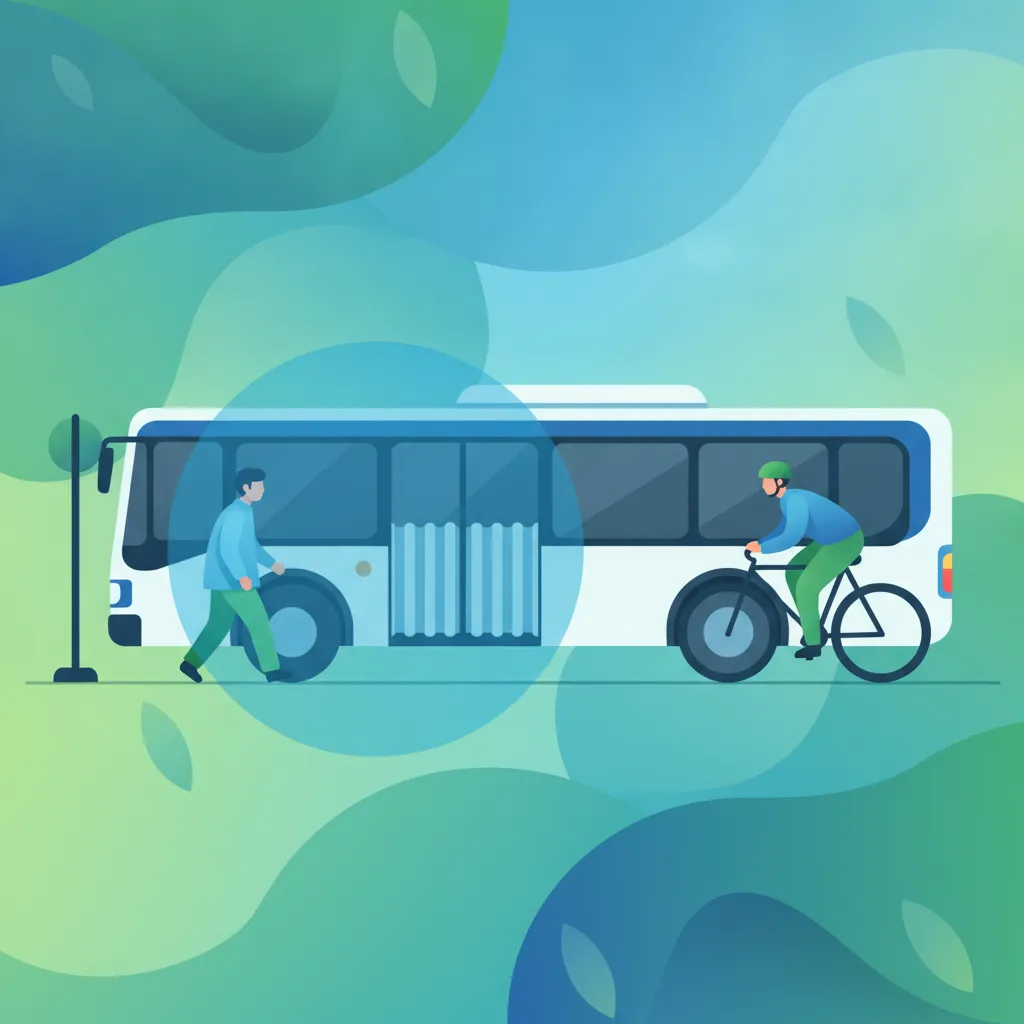
This lesson focuses on the critical skill of identifying vulnerable road users when operating large passenger vehicles on French roads. You will learn to monitor high-risk areas around bus stops, effectively managing your vehicle's blind spots to protect pedestrians, cyclists, and children. Mastering these techniques is essential for both your professional licence theory exam and for ensuring high standards of safety in daily commercial transport.
Lesson content overview
Navigating a passenger vehicle through busy urban corridors, residential zones, and transit hubs requires more than just mechanical control of the vehicle. It demands an advanced level of situational awareness, particularly in the immediate vicinity of bus stops, drop-off points, and passenger terminals. In France, these areas are recognized as high-risk zones where large passenger-carrying vehicles closely interface with pedestrians, cyclists, and other fragile participants of the road network.
Developing a systematic approach to identifying and protecting these individuals is a core professional responsibility. This lesson focuses on the physical mechanics of visual scanning, the management of massive vehicle blind spots, and the strict legal framework established by the French Road Code (Code de la Route) to protect vulnerable road users near stops.
Stop areas—including marked bus stops, roadside bays, school drop-off points, and multi-modal transit stations—are high-density convergence points. The physical dynamics of these environments make them highly volatile. Passengers boarding or alighting are often distracted, focused on schedules or connections rather than oncoming traffic. At the same time, other road users, such as cyclists and users of personal motorized travel devices (engins de déplacement personnel motorisés or EDPM, such as electric scooters), often try to bypass stationary buses or large passenger vehicles.
The spatial footprint of a passenger vehicle (such as a category D1 or D bus or coach) significantly alters the local traffic environment. When a vehicle stops to let passengers on or off, it creates a temporary barrier that blocks the sightlines of other drivers and pedestrians. This "shadow effect" means that a pedestrian stepping out from behind or in front of the vehicle is completely invisible to passing traffic, and conversely, the pedestrian cannot see oncoming vehicles.
For the driver of the passenger vehicle, the immediate surroundings of the stop represent a complex field of hidden hazards. The physical design of heavy passenger vehicles, characterized by elevated driving positions, structural pillars, and large body panels, introduces extensive blind spots (angles morts). Understanding how to mitigate these blind spots and anticipate human behavior is the first line of defense against severe urban accidents.
To protect vulnerable road users (usagers vulnérables), a driver must first understand who they are, how they perceive their environment, and how they typically behave around stops. Under French traffic law and safety standards, several distinct categories of VRUs require specialized scanning and behavioral anticipation.
Road users who lack a protective metal shell, airbags, or crumple zones, making them highly susceptible to severe injury or death in any collision. This category primarily includes pedestrians, children, elderly persons, cyclists, and users of micro-mobility devices.
Children represent one of the most unpredictable hazards near stops, especially in residential areas and designated school zones.
Elderly pedestrians and those with physical or cognitive challenges require patience and specialized physical monitoring.
Cyclists and electric scooter users represent a fast-moving, highly agile segment of urban traffic that frequently interacts with passenger vehicle stops.
Passengers transitioning between the vehicle and the sidewalk are temporarily highly vulnerable.
Large passenger vehicles are plagued by significant blind spots (angles morts) that can completely swallow pedestrians, cyclists, and even small passenger cars. Managing these blind spots is one of the most critical safety duties of a professional driver.
In France, heavy vehicles and passenger vehicles with a Gross Vehicle Weight Rating (GVWR) exceeding 3.5 tonnes must display authorized warning stickers indicating the positions of their blind spots. This visual warning helps external road users understand where the driver cannot see them, but the ultimate responsibility for safety remains with the driver.
Directly in front of the vehicle’s windscreen lies a critical blind spot. Because the driver sits high above the road surface, a zone extending from 1 to 1.5 meters directly in front of the bumper is completely invisible. A small child, a person bending over to tie a shoe, or a cyclist waiting closely at a stop line can be entirely hidden from direct view.
To mitigate this, drivers must make active use of proximity mirrors (antéviseurs) and wide-angle mirrors positioned above the windscreen, which project a view of the ground directly in front of the vehicle's bumper.
The passenger side (right-hand side in France) represents the most dangerous blind spot zone, particularly when preparing to pull up to or away from a curb. This area can easily conceal a cyclist trying to pass on the right or a pedestrian standing close to the edge of the curb.
Because mirrors cannot capture 100% of the adjacent space, drivers must never rely solely on reflective glass. A physical head check—turning the head to look through the side passenger window and passenger door glass—is mandatory to clear this zone before making any lateral movements or initiating acceleration from a stop.
While modern passenger vehicles may be equipped with blind-spot detection sensors, cameras, or collision-avoidance alarms, these technologies are supplementary. They are prone to system errors, lens contamination (especially in rainy French winter conditions), and sensor latency.
To ensure no hazard is missed, professional drivers must execute a structured, repetitive sequence of glances before, during, and after stopping. Relying on random glances is highly dangerous. A systematic scan guarantees that high-risk zones are checked in a logical order that matches the unfolding of the maneuver.
Begin scanning approximately 50 meters before reaching the stop. Check the rear-view mirror to assess following traffic. Scan the sidewalk ahead for pedestrians showing signs of rushing, children playing near the curb, or cyclists riding parallel to your path. Observe the physical layout of the stop: Are there obstacles blocking your view of the curb? Reduce your speed progressively to expand your peripheral vision field.
Once fully stopped and secured with the parking brake, monitor the boarding and alighting processes through your interior and door-mounted mirrors. Simultaneously, scan the external surroundings. Keep a constant eye on your right-hand side mirrors to detect any cyclists attempting to filter between your vehicle and the curb. Look ahead through the windscreen to ensure no pedestrians are preparing to cross closely in front of your bumper.
This is the most critical safety check. Before releasing the brakes, perform a full mirror sweep: left side, interior, right side, and front proximity mirror. Crucially, execute a physical head turn (direct vision check) to the right to clear the right-front blind spot. Ensure all doors are fully closed and locked. Only when you have confirmed a 360-degree clear zone should you signal and gently accelerate.
A defensive driver does not wait for a hazard to materialize; they anticipate it. By understanding the psychological and physical patterns of vulnerable road users near stops, you can preemptively adjust your vehicle's speed and position to maintain a safe buffer zone.
The average human reaction time under normal, alert conditions is approximately 1.0 to 1.5 seconds. If a driver is surprised by a pedestrian suddenly stepping off a curb, this reaction time can easily stretch.
At a typical urban speed of 50 km/h, a vehicle travels approximately 14 meters every second before the brakes are even applied. Add to this the physical braking distance of a heavy passenger vehicle (which is substantially longer than a standard passenger car due to its mass and pneumatic brake lag), and the stopping distance can exceed 35 meters on dry asphalt, and over 50 meters on wet surfaces.
By actively anticipating hazards—such as expecting a passenger to run across the street when a bus is boarding—you reduce the cognitive "surprise" factor. This drops your mental processing time, allowing you to cover the brake pedal preemptively (le pied devant le frein) and drastically shorten your total stopping distance.
When executing your visual scans, look for subtle behavioral cues that suggest an impending hazard:
The Code de la Route establishes strict legal duties for drivers regarding vulnerable road users, with severe administrative, financial, and criminal penalties for non-compliance.
Under French law, drivers must yield right-of-way to any pedestrian who has regularly stepped onto the roadway, or who clearly manifests the intention to do so. This applies at all marked pedestrian crossings (passages piétons) and within designated residential and meeting zones (zones de rencontre).
Severe Penalties for Failure to Yield: Violating Article R415-11 is treated as a highly serious traffic offense in France. It carries a class 4 fine (typically €135), an automatic deduction of 6 points from the driving license, and a potential suspension of the driving license for up to 3 years.
When approaching a stop with a nearby pedestrian crossing, you must be prepared to halt completely behind the stop line. Never nudge the vehicle forward or try to intimidate pedestrians into waiting.
French traffic law mandates that drivers must continuously regulate their speed based on road conditions, traffic density, and specific roadside hazards.
Specifically, Article R413-17 states that drivers must reduce their speed when passing stationary passenger vehicles, public transport vehicles, or school buses (transport scolaire) that are currently boarding or alighting passengers. This rule is designed to counter the "shadow effect" and ensure that if a pedestrian suddenly steps out from behind the stationary vehicle, your speed is low enough to allow an immediate, safe stop.
To ensure clear sightlines for both drivers and pedestrians, it is strictly forbidden to park, stop, or idle any part of your vehicle on or within 5 meters of a pedestrian crossing in the direction of traffic (except in designated parking spaces).
When pulling up to a stop, you must position your vehicle such that no portion of your bus or coach encroaches upon a zebra crossing. Doing so forces pedestrians to walk outside the protected crossing zone and enter your physical blind spots, significantly increasing the risk of a fatal squeeze accident.
Visual scanning and vehicle control must be dynamically adapted to environmental conditions. Rain, poor lighting, and infrastructure layout can severely degrade your ability to detect vulnerable road users.
The physical layout of the stop dictates specific safety considerations:
| Stop Type | Key Vulnerability | Defensive Action |
|---|---|---|
| Curbside Stop (In-Lane) | Following vehicles may attempt to overtake your vehicle aggressively, creating a collision risk for alighting passengers. | Monitor left-side mirrors closely; keep hazard warning lights off unless required by local school transport rules. |
| Bus Bay / Lay-by | Re-entering traffic requires checking the left blind spot; cyclists may try to slip past on the left. | Signal early, perform a direct head check to the left, and yield to oncoming vehicles before merging. |
| School Drop-Off Zone | Extreme density of highly unpredictable children; parents distracted while unloading. | Maintain crawling speed (walking pace); expect children to cross from any direction. |
To solidify your understanding, let us review several common tactical errors made by drivers near stops, paired with the correct safe behaviors.
Protecting vulnerable road users near stops is a non-negotiable safety duty. By mastering systematic visual scanning, keeping your vehicle out of pedestrian crossings, and proactively anticipating human error, you significantly reduce the risk of critical urban accidents.
In the next lesson, we will apply these scanning principles directly to school zones, exploring specific legal protocols, flashing sign requirements, and the unique behavioral traits of children in academic environments.
Explore all units and lessons included in this driving theory course.
Lesson content overview
Explore all units and lessons included in this driving theory course.
Explore search topics learners often look for when studying Identifying Vulnerable Road Users Near Stops. These topics reflect common questions about road rules, driving situations, safety guidance, and lesson level theory preparation for learners in France.
Browse additional driving theory lessons that cover connected traffic rules, road signs, and common driving situations related to this topic. Improve your understanding of how different rules interact across everyday traffic scenarios.
Learn the specific regulations and traffic requirements for driving through school zones in France. This lesson covers legal speed limits, pedestrian safety expectations, and the unique behavioral traits of children that professional drivers must account for when operating near educational facilities and crosswalks.
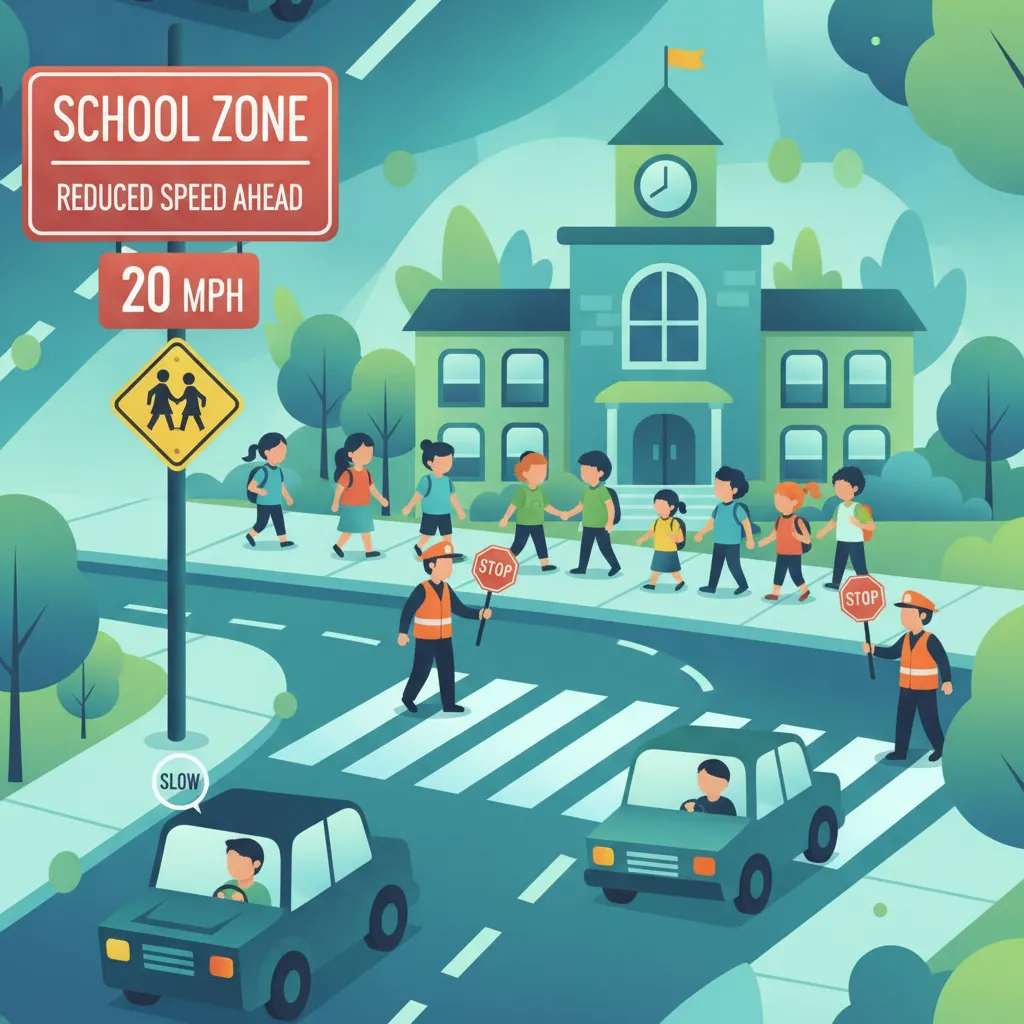
This lesson focuses on the legal rules and safety procedures required within school zones and during school transport (transport scolaire) services in France. Drivers will study strict speed limits, school bus warning sign applications, and mandatory stopping rules when children are boarding. It also details how to respond to official crossing guard signals and ensure students are safely clear before moving.
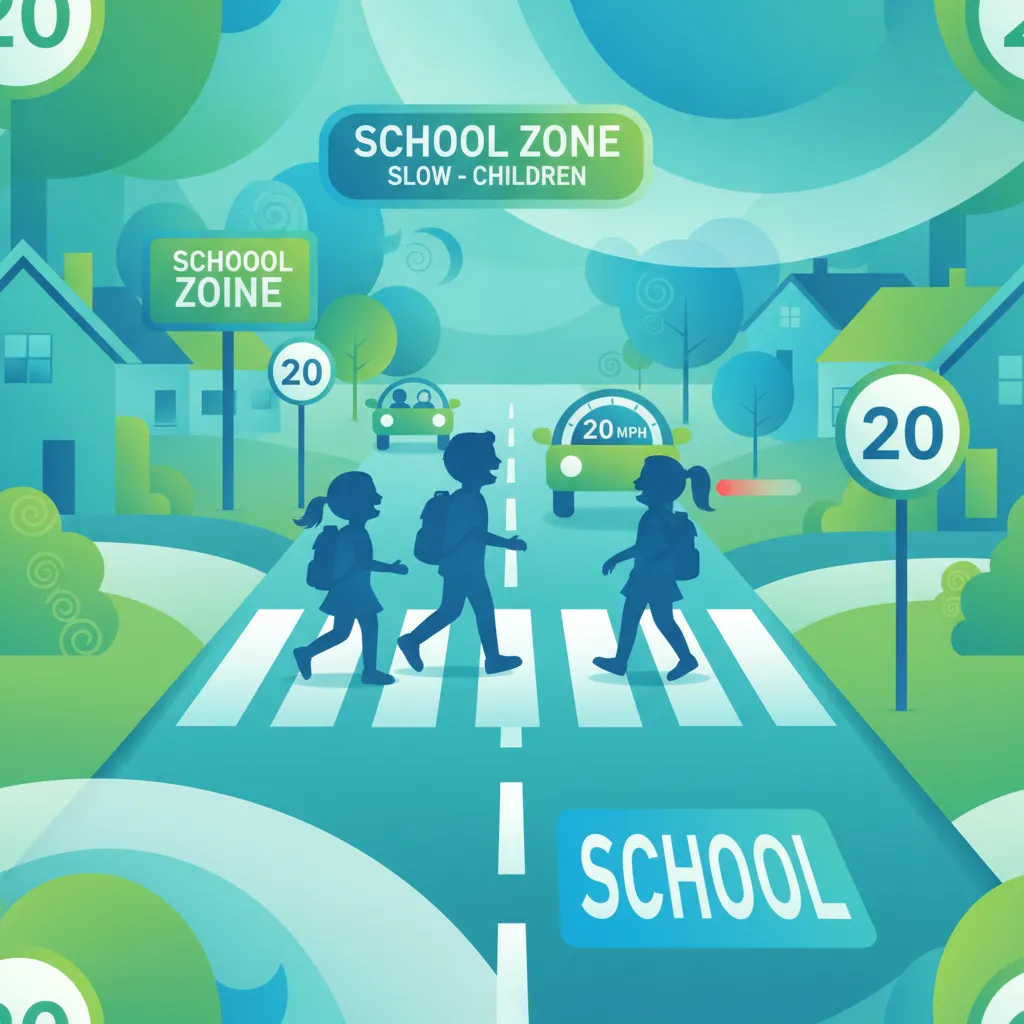
French municipalities utilize distinct low-speed configurations to foster pedestrian safety in residential and educational neighborhoods. This lesson details speed restrictions in 'zone 30', pedestrian-only districts, and shared 'zones de rencontre' where speed is capped at 20 km/h. You will learn how priority hierarchies shift in these zones, giving pedestrians legal priority to use the entire roadway.
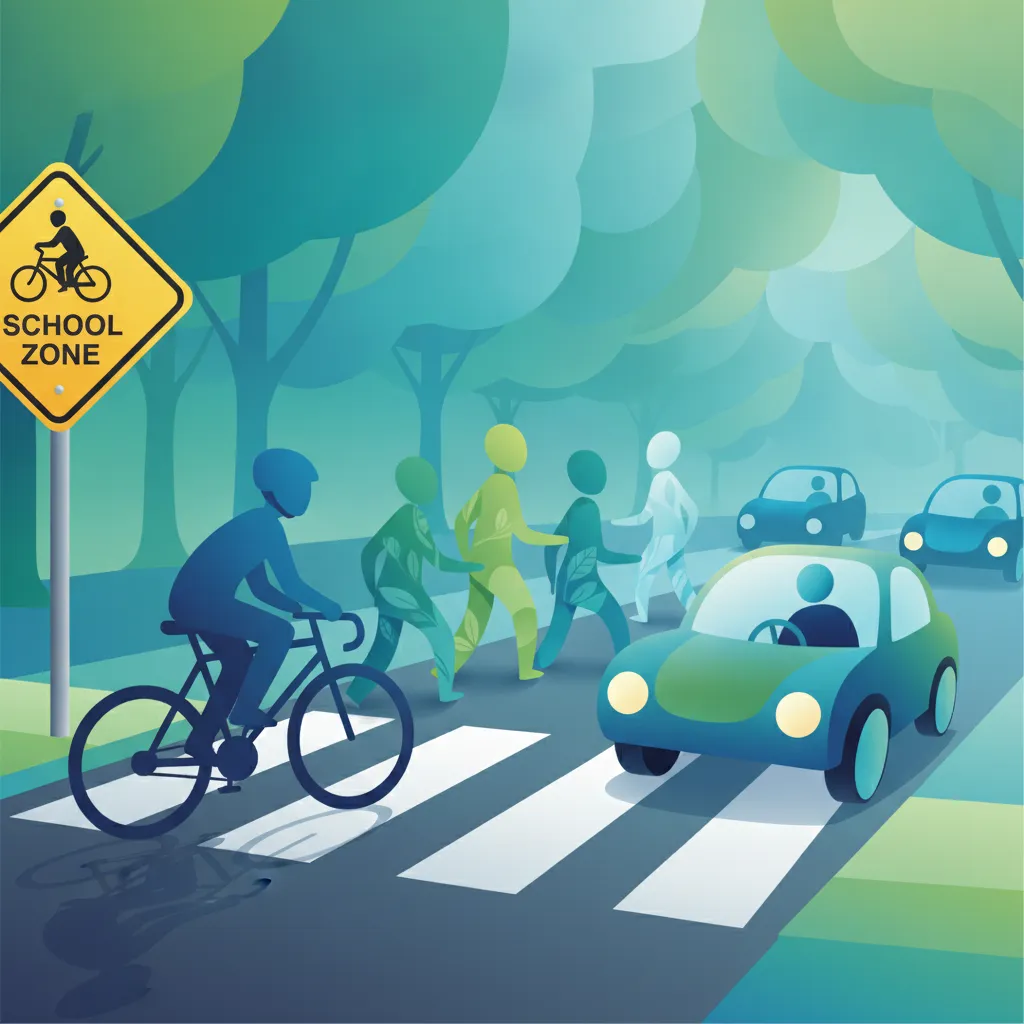
This lesson focuses on the legal requirement to yield to pedestrians on or about to step onto zebra crossings, a major focus of French road safety. You will learn how to approach school zones and pedestrian islands with heightened vigilance and reduced speed. Additionally, the lesson explores shared urban spaces, explaining how to maintain safe lateral distances when overtaking cyclists or personal electric scooters.
This lesson details the specific legal speed limits for passenger transport vehicles on motorways, rural trunk roads, and urban streets under French law. Drivers will learn how speed limits shift depending on overall vehicle weight, towing arrangements, and poor weather conditions like heavy rain. Developing a proactive approach to speed management helps maintain stable vehicle control and ensures full regulatory compliance.
This lesson examines the regulatory limits and environmental controls applied to large passenger vehicles operating in dense French urban centers. Drivers will study the Crit'Air clean air sticker system and low-emission zones (ZFE) that restrict access for older, high-polluting vehicles. It also addresses navigating physical constraints, such as narrow streets, tight turning radii, and strict municipal weight limits.
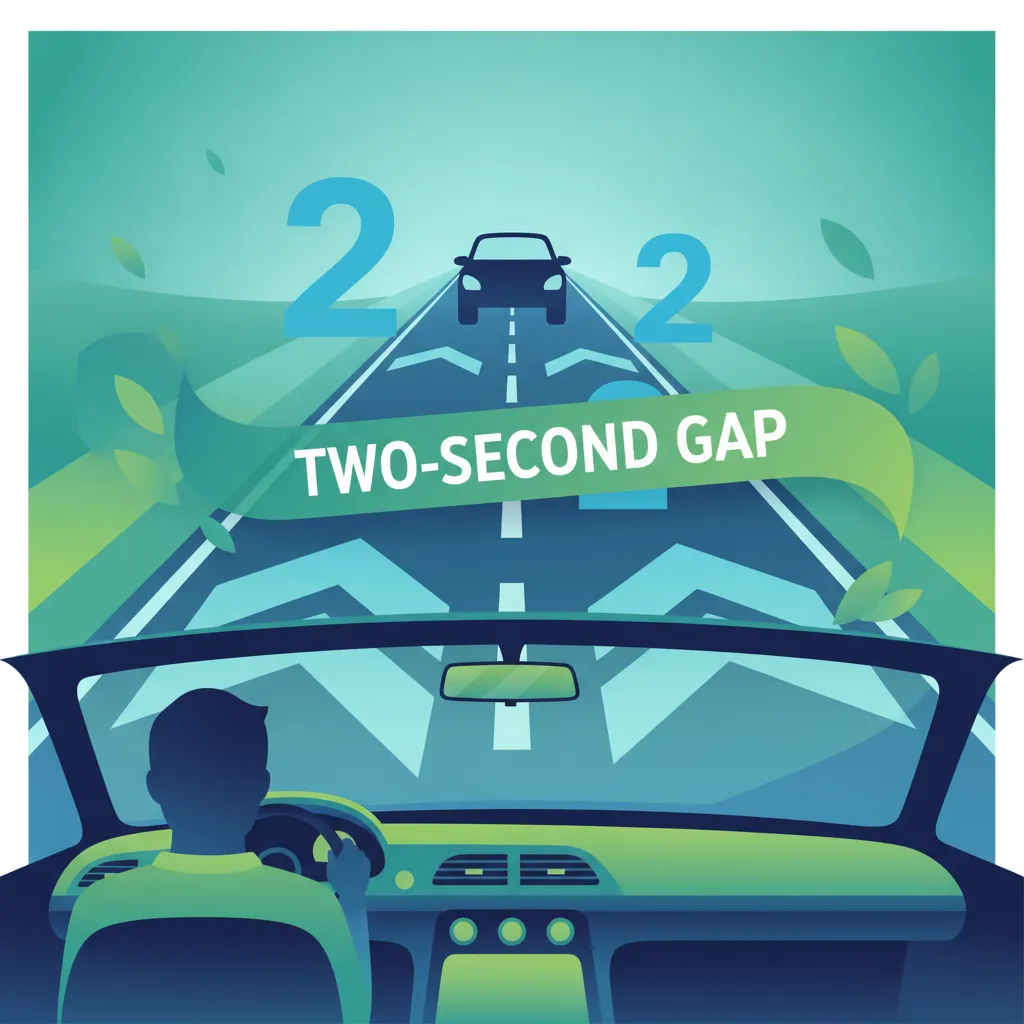
Maintaining a safe distance behind the lead vehicle is essential to prevent rear-end collisions during sudden braking maneuvers. This lesson teaches you the two-second safety rule and how to calculate this gap at different highway speeds. You will also study unique safety margin requirements, such as maintaining minimum distance intervals in road tunnels or doubling your following distance on wet roads.

French motorways (autoroutes) are fast, controlled-access roads with unique laws regulating lane discipline and emergencies. This lesson teaches standard lane-use: cruising in the right lane and reserving the middle or left lanes exclusively for passing. You will study emergency procedures, the use of orange emergency call boxes, safety barrier rules, and navigating toll booths (peages) safely.
This lesson covers the rules of driving passenger vehicles on high-speed French motorways (autoroutes). Learners will study entry-ramp merging protocols, lane restrictions for vehicles over 3.5 tonnes, and motorway-specific speed limits. The lesson also highlights the correct use of toll booths (péages), emergency hard-shoulder safety procedures, and accessing dedicated coach rest areas.

Learners will explore the rules related to pedestrian crossings, focusing on the obligation to yield to pedestrians at zebra crossings and flashing pedestrian signals. The lesson highlights the importance of stopping before the stop line, reducing speed, and maintaining vigilance for pedestrian movement. Mastery of these practices ensures the safety of both pedestrians and AM riders at crossing points.
Speed limits in France are strictly regulated based on road category, weather conditions, and the driver's licensing status. This lesson covers standard speeds: 50 km/h in urban areas, 80 km/h on two-lane rural roads, 110 km/h on dual carriageways, and 130 km/h on motorways. You will also learn how these limits drop during rain or fog, and the reduced speed limits applicable to probationary drivers.
Understand the complex dynamics of urban traffic environments for buses and coaches. This overview examines how to mitigate risks from cyclists, micro-mobility devices, and heavy pedestrian traffic, focusing on systematic scanning techniques to handle blind spots effectively in dense city centers and busy passenger terminals.

This lesson details the dangerous blind spots (angles morts) that surround heavy passenger vehicles and explains how to mitigate them. Drivers will master the systematic mirror check sequence (retro-information) before executing any turns or lane changes. It also covers the mandatory French "Angles Morts" warning stickers displayed on the vehicle exterior to alert vulnerable road users of danger zones.
This lesson focuses on the importance of recognizing and mitigating blind spots in goods vehicles, especially when towing trailers. Learners will explore techniques such as proper mirror adjustment, the use of blind spot mirrors, and visual checks to ensure that obstacles and vulnerable road users are detected before executing maneuvers. The content also discusses the limitations of blind spot monitoring systems and the need for supplementary visual checks.

In this lesson, drivers will learn strategies to avoid conflicts with smaller vehicles, such as cars and vans, which may not be as visible in large vehicle blind spots. The content emphasizes maintaining adequate spacing, using proper lane discipline, and being aware of small vehicles' behavior during lane changes and turns. Learners will also be introduced to communication techniques, such as signalling and eye contact.

This lesson analyzes the various traffic challenges unique to operating large passenger vehicles in historic and modern French urban areas. Drivers will learn to manage narrow street layouts, double-parked delivery trucks, and high-density multi-lane roundabouts safely. The lesson emphasizes defensive driving strategies, route adjustments, and maintaining mental focus under severe schedule and time pressures.
Find clear answers to common questions learners have about Identifying Vulnerable Road Users Near Stops. Learn how the lesson is structured, which driving theory objectives it supports, and how it fits into the overall learning path of units and curriculum progression in France. These explanations help you understand key concepts, lesson flow, and exam focused study goals.
Large passenger vehicles have significant blind spots at the front and sides that can easily obscure pedestrians or cyclists. As a professional driver, you are responsible for maintaining a heightened state of vigilance to compensate for these physical vehicle constraints.
Look for indicators like movement on the sidewalk, children near school zones, or cyclists filtering up. The theory exam often tests your ability to spot potential hazards before they cross into your path, so always prioritize scanning the areas not covered by your primary mirrors.
Yes, French law imposes strict protocols for school transport, including the use of specific hazard warning lights and signs. Drivers must demonstrate extreme caution when children are present, often requiring a total stop or reduced speed in designated areas.
Practice a regular scanning routine that involves checking all mirrors and the immediate road surroundings every few seconds. In the exam, look for 'hidden' cues like reflections in shop windows or movement near parked cars that could indicate a vulnerable user approaching.
Ready to focus your study? Use the practice search to find exactly the French driving theory questions you need for the Code de la route and permis de conduire ETG. Refine your knowledge on specific topics or challenging rules to boost your confidence and exam readiness.