This lesson details the specific regulations and best practices for driving goods vehicles on French motorways. You will build upon your foundation of vehicle dimensions and weight to understand how to navigate high-speed road networks safely as a professional driver. Mastering these motorway protocols is essential for both your theory exam and your future career as a heavy vehicle operator.
Lesson content overview
Navigating the high-speed environment of French motorways (autoroutes) in a heavy goods vehicle (HGV) requires a deep understanding of specialized traffic laws, physical dynamics, and defensive driving techniques. Operating vehicles within categories C1, C, C1E, or CE involves managing immense momentum, vast blind spots, and extended braking distances.
This lesson covers the critical rules and practical maneuvers required to safely operate commercial vehicles on the French motorway network. It details lane selection, speed restrictions, overtaking protocols, and emergency procedures to prepare you for both the French goods vehicle licence theory exam and real-world professional driving.
Motorways are designed to facilitate rapid, high-volume transit. However, for a professional driver piloting a vehicle with a gross vehicle weight (GVW) exceeding 3.5 tonnes, the high-speed differential between heavy trucks and passenger cars creates a complex safety dynamic.
Due to their massive kinetic energy, heavy vehicles pose a significant hazard if things go wrong. A minor miscalculation in speed management or lane positioning can result in severe multi-vehicle collisions. Professional drivers must maintain heightened situational awareness, plan maneuvers hundreds of metres in advance, and strictly adhere to the French Code de la route.
Speed management on French motorways is strictly regulated to account for the physical limitations of heavier loads. Unlike passenger cars, which can travel up to 130 km/h under dry conditions, heavy goods vehicles are subject to lower, highly specific speed caps.
When environmental factors degrade road grip or visibility, drivers must lower their speed immediately to maintain vehicle control.
Legal Mandate: Speed limiters (limiteurs de vitesse) are mandatory on commercial goods vehicles over 3.5 tonnes in Europe. These devices are calibrated and sealed to mechanically prevent the vehicle from exceeding 90 km/h. Tampering with a speed limiter is a serious criminal offense in France, resulting in severe fines, vehicle impoundment, and license revocation.
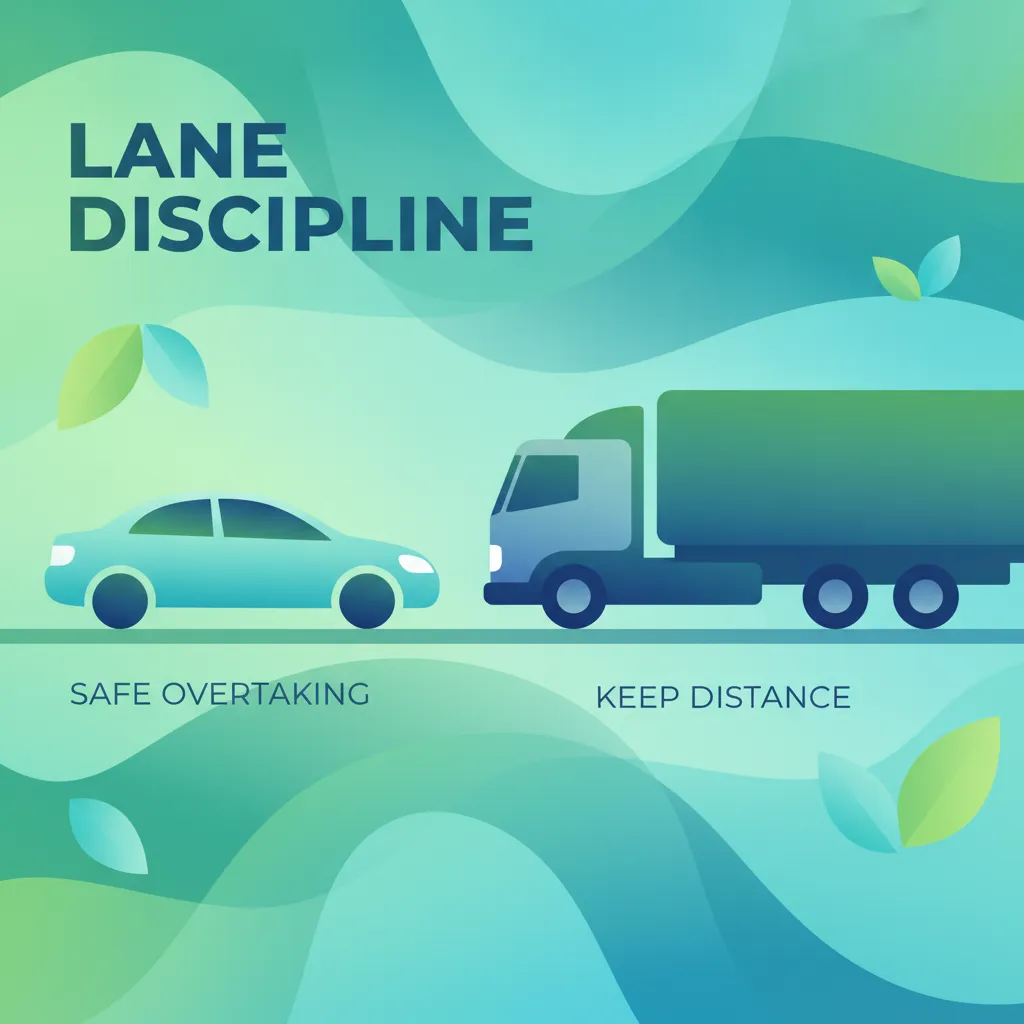
Maintaining proper lane discipline (tenue de voie) prevents traffic congestion and minimizes side-impact collisions. On French motorways, specific restrictions govern which lanes heavy vehicles are permitted to occupy.
Under normal driving conditions, heavy vehicles must travel in the lane furthest to the right (voie de droite). This lane is the standard cruising lane for all slow-moving transport, logistics vehicles, and long-distance haulers. Staying to the right allows faster passenger vehicles to use the left lanes safely, maintaining a smooth traffic flow.
On motorways with three or more lanes in a single direction of travel, vehicles exceeding 3.5 tonnes GVW or measuring more than 7 metres in total length are strictly prohibited from using any lane other than the two rightmost lanes.
This means that on a three-lane motorway, an HGV may only use the first (rightmost) lane for standard driving and the middle (second) lane for overtaking. The far-left lane is entirely off-limits.
Exceptions: The only exceptions to this rule are when lane control signs dynamically instruct drivers otherwise, or when preparing to exit the motorway from a left-side slip road (which is exceptionally rare on French networks).
Overtaking (dépassement) on a motorway in an HGV is a high-responsibility maneuver. Because heavy vehicles are speed-limited, overtaking another truck can take a substantial amount of time and distance—a phenomenon often called "elephant racing" (course d'éléphants). This can block the flow of traffic behind and create frustration among other road users.
Joining a high-speed motorway flow in an articulated lorry or rigid truck requires precise timing, rapid observation, and smooth acceleration. Heavy vehicles accelerate much slower than passenger cars, meaning you need a larger physical gap in the traffic flow to merge safely.
Assess the Traffic Flow Early: As you travel along the slip road (entry ramp), look through your left side mirrors and side window to gauge the speed and density of the motorway traffic.
Use the Entire Acceleration Lane (Voie d'Insertion): Do not merge immediately at the start of the lane. Use the length of the lane to build up your speed as close to your cruising speed (usually 80–90 km/h) as possible.
Signal Your Intentions: Activate your left indicator well in advance—at least 200 metres before the point where you intend to cross the dashed line. This alerts drivers on the main carriageway to create space or shift lanes to accommodate you.
Verify Blind Spots: Check your wide-angle and close-proximity mirrors. Be alert to smaller vehicles or motorcycles that may be traveling alongside your tractor unit or trailer.
Merge Smoothly: Once a suitable gap is identified, steer smoothly into the rightmost lane. Avoid braking on the acceleration lane unless absolutely necessary, as this destroys your momentum and makes merging highly dangerous.
The hard shoulder (bande d'arrêt d'urgence or BAU) is a critical safety feature reserved exclusively for absolute emergencies, vehicle breakdowns, or when directed by police and highway operators.
It is strictly illegal to use the hard shoulder for:
If your vehicle suffers a mechanical failure or tire blowout:
Warning Triangle Exception: On French motorways, placing a warning triangle on the road is not required if doing so would put the driver’s life in danger. Due to the high speed of motorway traffic, walking back 30 metres to place a triangle is considered an unacceptable safety risk.
Operating a heavy vehicle requires a thorough understanding of the physical laws of momentum. Stopping a vehicle weighing up to 44 tonnes takes significantly longer than stopping a 1.5-tonne car.
The formula for kinetic energy is:
Where is mass and is velocity. Because mass is exceptionally high in Categories C and CE, the kinetic energy that must be dissipated by the brakes is immense. If you double your speed, your braking distance increases fourfold. Under wet conditions, braking distance can double again due to reduced tyre-to-road friction.
To mitigate the risk of rear-end collisions, French traffic law mandates a strict following distance rule specifically for heavy vehicles.
Under Article R412-12 of the French Code de la route, when two heavy vehicles (with a GVW over 3.5 tonnes or a overall length over 7 metres) are driving at the same speed on out-of-town roads and motorways, they must maintain a minimum safe distance of at least 50 metres between each other. This physical gap allows faster passenger vehicles to safely cut in when overtaking and provides a sufficient buffer for emergency braking.
A heavy vehicle’s handling characteristics change drastically depending on its cargo weight, load distribution, and prevailing weather conditions.
High-sided vehicles, such as box trailers, tautliners (curtain-siders), and container carriers, act like large sails in strong winds. When traveling on open, elevated highway sections (e.g., viaducts or coastal bridges), crosswinds (vent latéral) can cause trailer sway, lane deviation, or even trailer rollover.
When water accumulates on the motorway surface, heavy tyres can lose direct contact with the asphalt, causing hydroplaning (aquaplaning).
To prepare for your theory examination, memorize the core rules outlined in this lesson:
Explore all units and lessons included in this driving theory course.
Lesson content overview
Explore all units and lessons included in this driving theory course.
Explore search topics learners often look for when studying Driving on Motorways with Heavy Vehicles. These topics reflect common questions about road rules, driving situations, safety guidance, and lesson level theory preparation for learners in France.
Browse additional driving theory lessons that cover connected traffic rules, road signs, and common driving situations related to this topic. Improve your understanding of how different rules interact across everyday traffic scenarios.
Learn the legal requirements for lane usage and the physical techniques for executing wide turns with articulated heavy goods vehicles. This guide details how to navigate intersections, roundabouts, and narrow urban streets while maintaining safety and respecting traffic flow rules for category C and CE heavy vehicles in France.

This lesson covers the specific lane usage rules and best practices for articulated goods vehicles, emphasizing the correct positioning within lane markings and the impact of vehicle length on lane width. Learners will understand how to navigate lane changes safely, the importance of maintaining appropriate gaps with other road users, and the challenges posed by narrow lanes in urban environments. The content also addresses the French road markings standard.
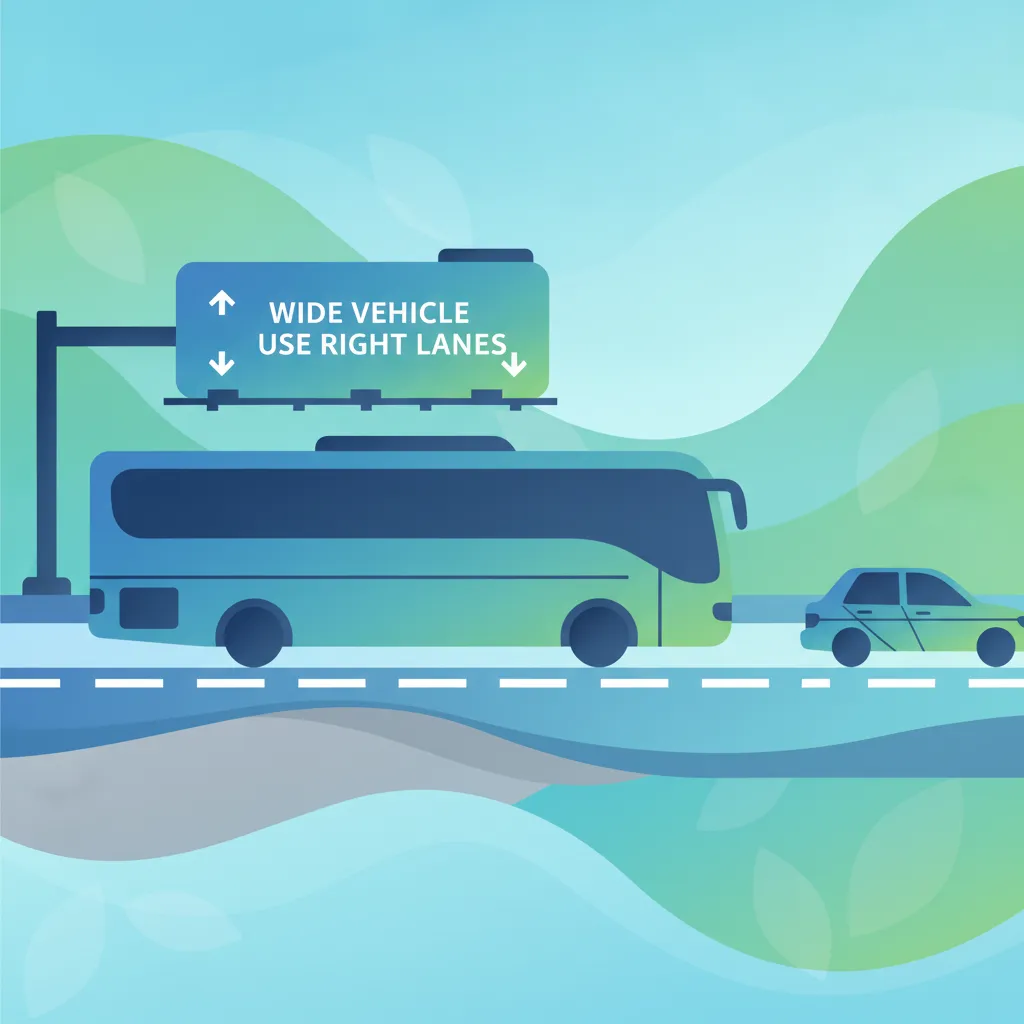
This lesson details the rules of lane discipline for operating wider and longer passenger transport vehicles on highway and city networks. Learners will explore proper lane positioning to prevent encroachment on adjacent lanes or sidewalks. It also covers the step-by-step visual and signaling sequence required to perform safe lane changes, avoiding sudden movements that could startle other drivers.

In this lesson, drivers will learn how to plan and execute wide turns with goods vehicles, taking into account turning radius, pivot points, and articulation angles. The content emphasizes the necessity of using the full width of the lane, correctly aligning the vehicle through the turn, and anticipating the movement of the trailer. Learners will also explore road marking guidelines for turning and the importance of giving clear signals to surrounding traffic.

This lesson examines how goods vehicle drivers should approach and navigate roadworks zones and temporary traffic restrictions. Learners will be taught to recognize temporary speed limit signs, follow detour routes safely, and respect lane closures. The content also highlights the importance of maintaining safe distances from workers, adjusting for reduced lane width, and ensuring compliance with temporary regulations to avoid penalties.
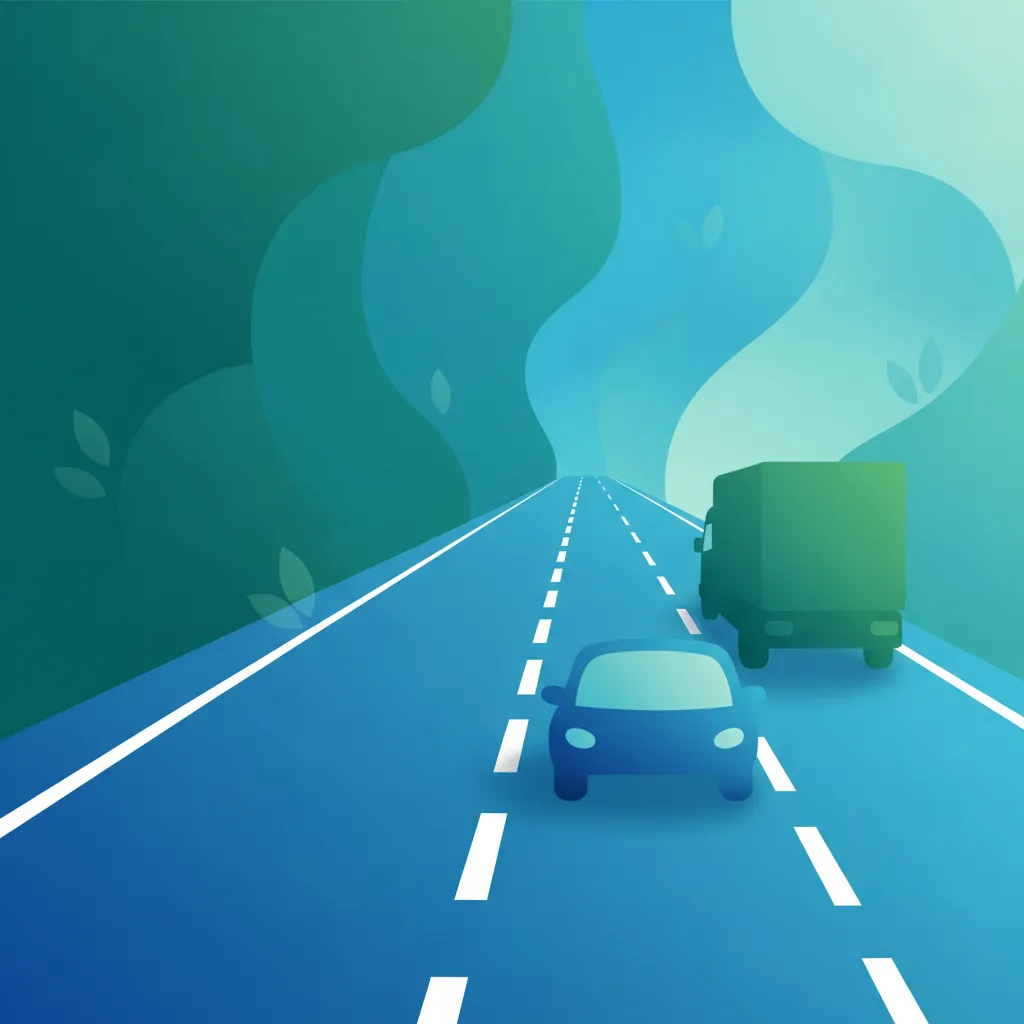
Longitudinal road markings are painted along the length of the road to divide lanes and regulate overtaking maneuvers. This lesson teaches the strict legal prohibition of crossing solid white lines and the specific spacing of broken lines that permit lane changes. You will also learn how to interpret dual lines, warning arrows, and how to maintain proper lane discipline in heavy traffic.
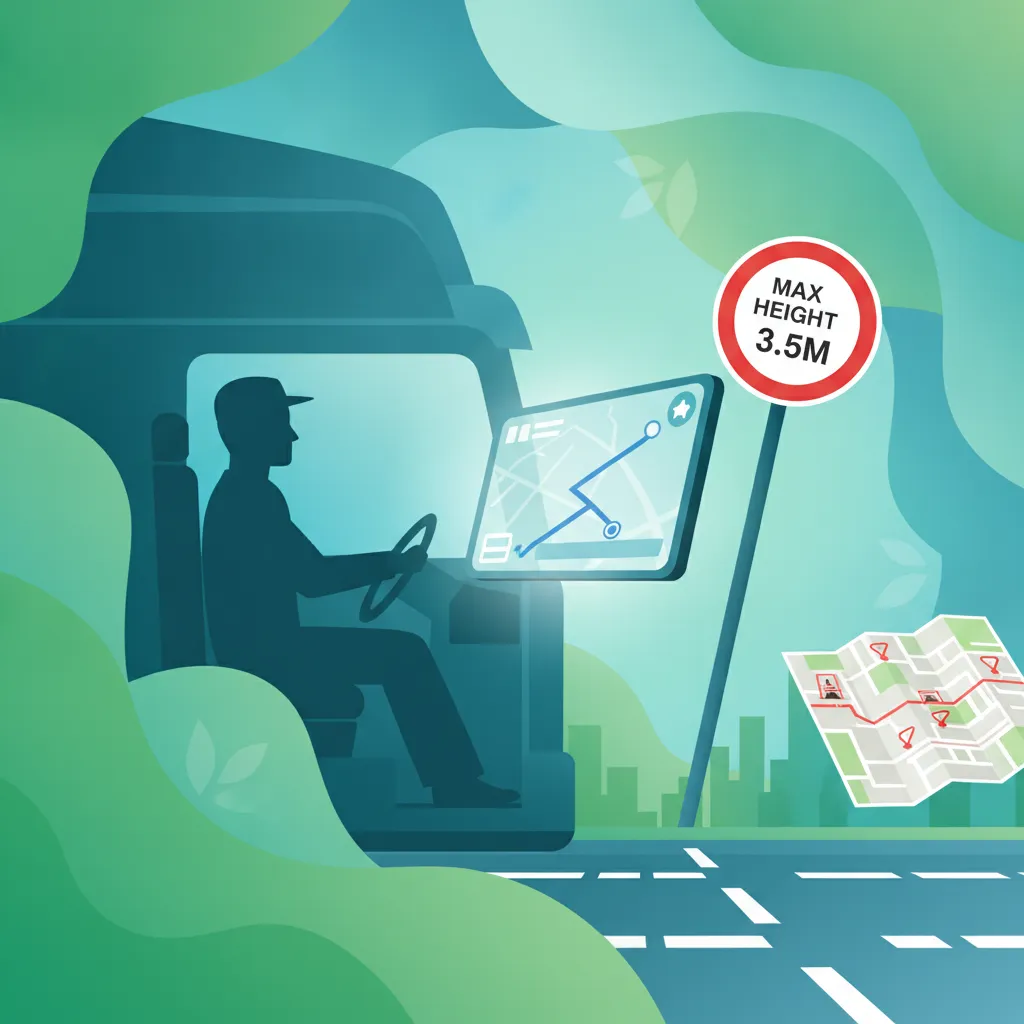
This lesson provides guidance on selecting preferred routes for heavy vehicles, taking into account freight corridors, toll roads, and restricted zones. Learners will be introduced to practical tools for route optimization, including GPS systems tailored for goods vehicles, and strategies for minimizing travel time while adhering to legal constraints. Emphasis is placed on balancing delivery efficiency with compliance to French transport policies.
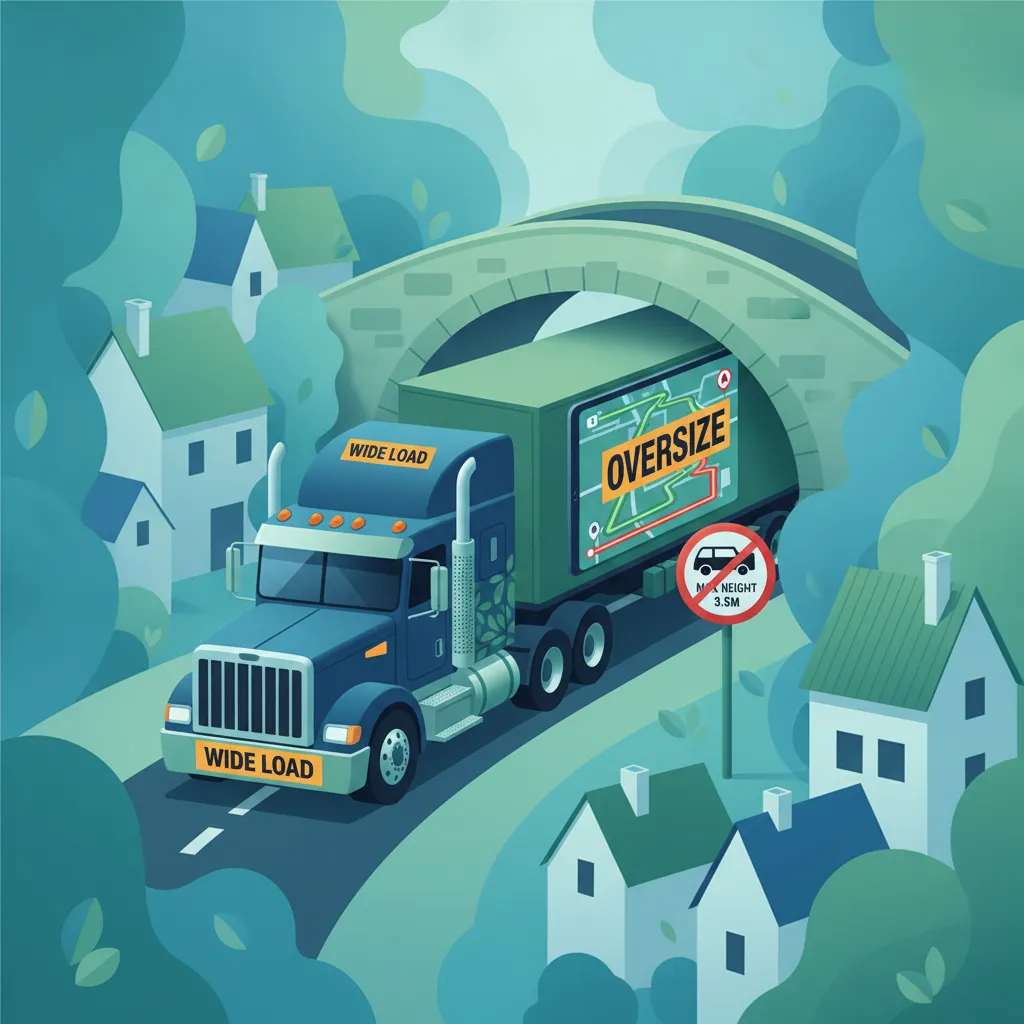
This lesson provides strategies for planning routes that accommodate oversized goods vehicles while complying with French road restrictions. Learners will learn how to identify prohibited routes, evaluate bridge and tunnel limitations, and obtain necessary access permits. The content also addresses the use of specialised GPS systems for heavy vehicle routing and the importance of contingency planning for detours, ensuring safe and efficient transport operations.
This lesson examines the effects that heavy goods vehicles have on road infrastructure, including pavement wear, bridge stress, and tunnel clearance issues. Learners will understand how increased weight and dimensions contribute to accelerated road degradation, leading to higher maintenance costs and potential restrictions on vehicle access. The material also highlights the importance of infrastructure capacity assessments and the role of weight restrictions in protecting road assets.
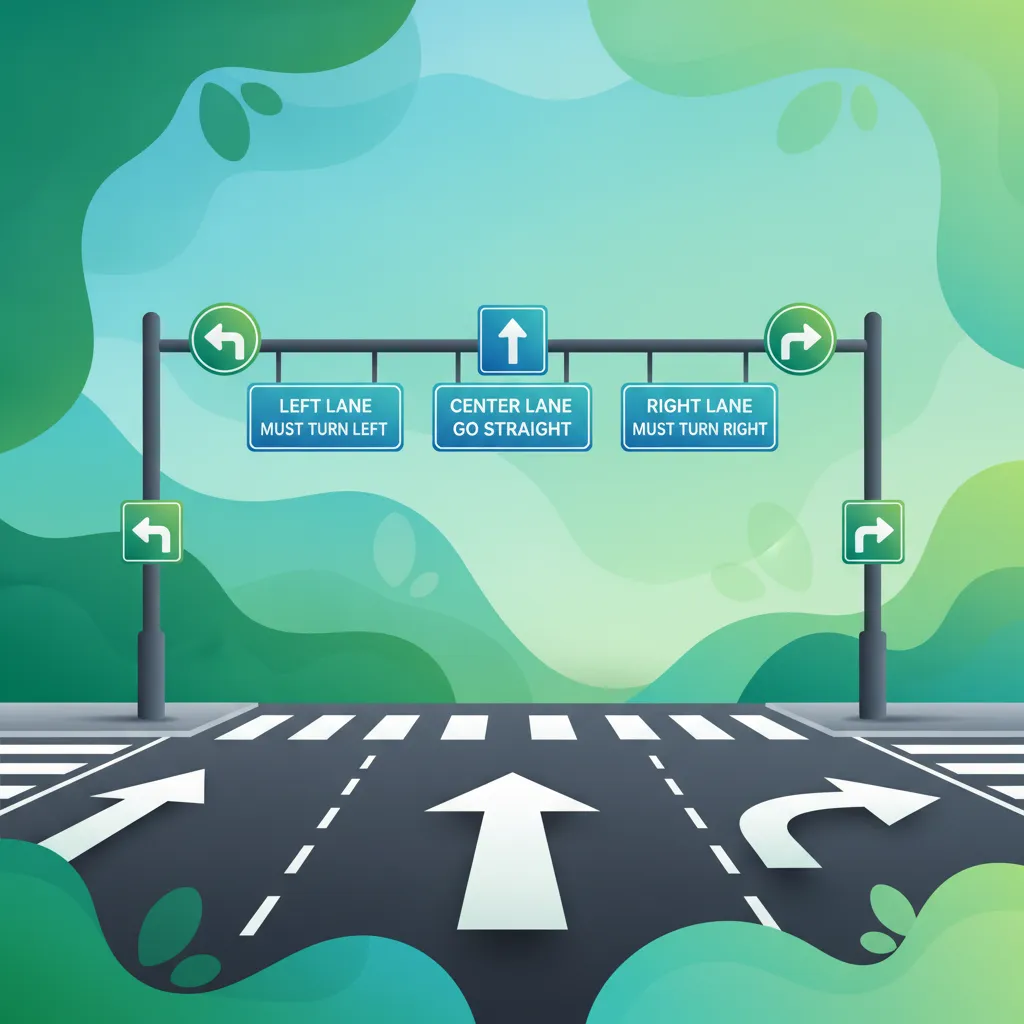
Preselection and direction arrows painted on the road surface instruct drivers on lane-specific movements at upcoming intersections or merges. This lesson teaches you how to interpret these arrows so you can position your vehicle correctly well in advance of a turn. You will learn the rules for lane merging, following curved guidance lines, and avoiding sudden, dangerous lane adjustments.

French motorways (autoroutes) are fast, controlled-access roads with unique laws regulating lane discipline and emergencies. This lesson teaches standard lane-use: cruising in the right lane and reserving the middle or left lanes exclusively for passing. You will study emergency procedures, the use of orange emergency call boxes, safety barrier rules, and navigating toll booths (peages) safely.
Understand the specific challenges of urban logistics, including identifying blind spots and safely sharing the road with pedestrians and cyclists. This theory lesson provides essential safety protocols for navigating delivery zones in French towns while managing vehicle dimensions in tight urban spaces and high-traffic pedestrian environments.

This lesson focuses on the importance of recognizing and mitigating blind spots in goods vehicles, especially when towing trailers. Learners will explore techniques such as proper mirror adjustment, the use of blind spot mirrors, and visual checks to ensure that obstacles and vulnerable road users are detected before executing maneuvers. The content also discusses the limitations of blind spot monitoring systems and the need for supplementary visual checks.

This lesson focuses on the unique challenges of performing deliveries in dense urban areas. Learners will explore best practices for loading and unloading safely, navigating traffic congestion, and minimizing risks to pedestrians and cyclists. The content also covers compliance with city regulations for delivery zones, scheduling considerations, and the importance of careful maneuvering to avoid accidents.

In this lesson, drivers will learn strategies to avoid conflicts with smaller vehicles, such as cars and vans, which may not be as visible in large vehicle blind spots. The content emphasizes maintaining adequate spacing, using proper lane discipline, and being aware of small vehicles' behavior during lane changes and turns. Learners will also be introduced to communication techniques, such as signalling and eye contact.
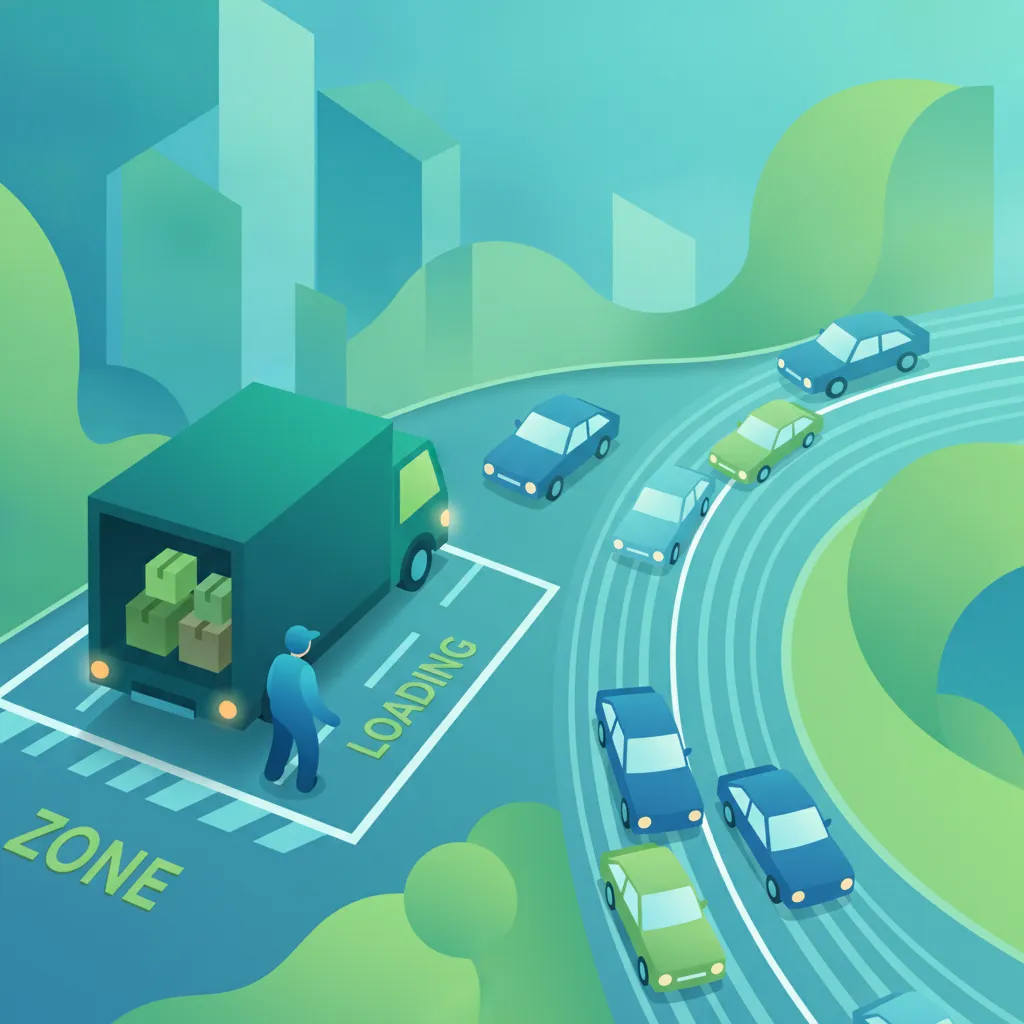
In this lesson, drivers will learn how to navigate urban delivery zones, understanding the rules surrounding loading bays, time windows, and restricted access areas. The content includes the process for obtaining delivery permits, strategies for safe maneuvering in congested city streets, and best practices for minimizing impact on pedestrian traffic. Learners will also be introduced to French city-specific regulations that govern goods vehicle deliveries.
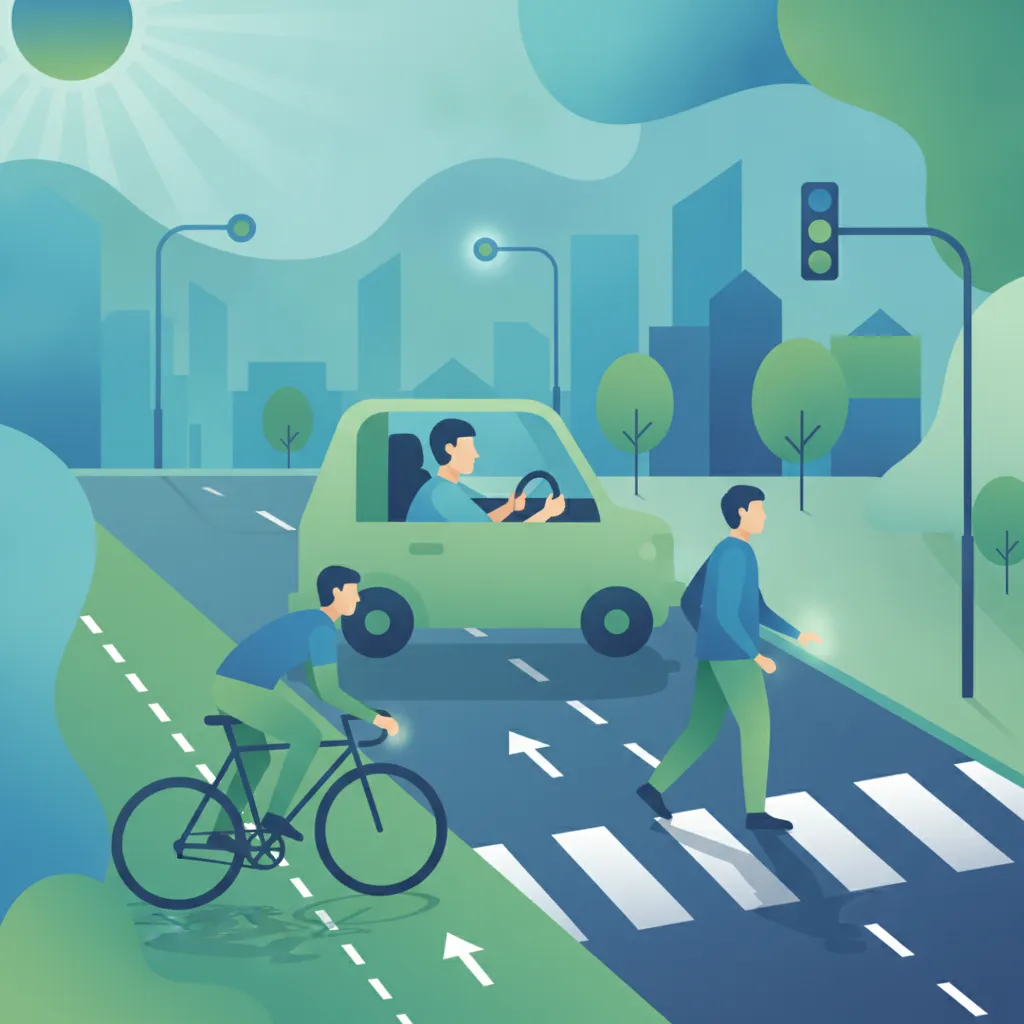
This lesson examines the specific challenges and responsibilities goods vehicle drivers face when interacting with pedestrians and cyclists in urban environments. Learners will understand right-of-way rules, the importance of yielding at pedestrian crossings, and safe turning practices that protect cyclists. The content emphasizes heightened driver vigilance, especially when navigating bike lanes and crowded sidewalks.
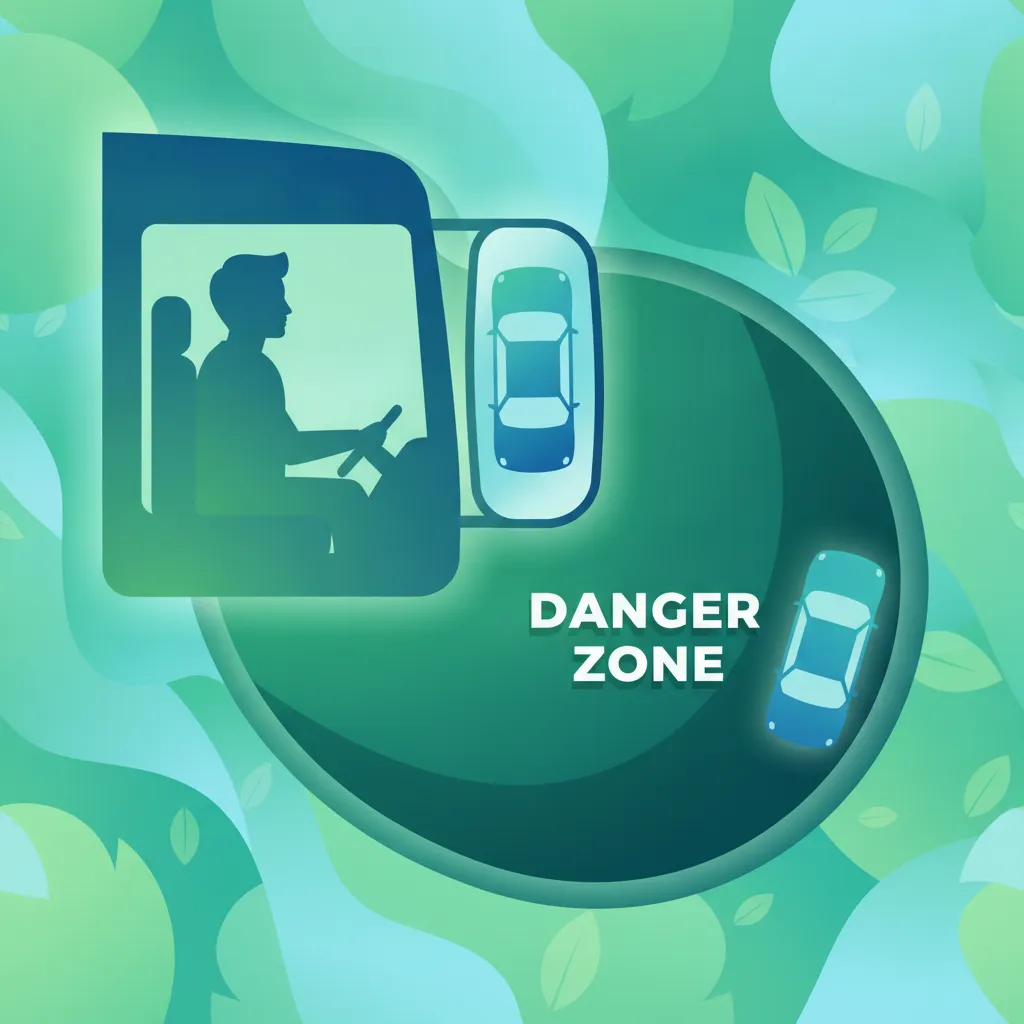
This lesson details the location and scale of blind spots around passenger cars and heavy goods vehicles, often referred to as the 'no-zone' or 'angles morts'. You will learn why truck drivers cannot see you directly behind or immediately adjacent to their cab doors. The lesson provides actionable strategies to minimize the time you spend in these dangerous zones, ensuring you always pass quickly and safely.

This lesson addresses the challenges of positioning near larger vehicles such as cars, vans, buses, and lorries on French roads. Learners will learn to identify blind spots (angles morts), maintain a safe distance, and position themselves to maximize visibility and predictability. Understanding these dynamics is crucial for AM riders to avoid dangerous situations and ensure safe overtaking and lane sharing.

This lesson details the dangerous blind spots (angles morts) that surround heavy passenger vehicles and explains how to mitigate them. Drivers will master the systematic mirror check sequence (retro-information) before executing any turns or lane changes. It also covers the mandatory French "Angles Morts" warning stickers displayed on the vehicle exterior to alert vulnerable road users of danger zones.

This lesson analyzes the various traffic challenges unique to operating large passenger vehicles in historic and modern French urban areas. Drivers will learn to manage narrow street layouts, double-parked delivery trucks, and high-density multi-lane roundabouts safely. The lesson emphasizes defensive driving strategies, route adjustments, and maintaining mental focus under severe schedule and time pressures.

This lesson teaches specific visual scanning methods to detect vulnerable road users, such as children, elderly individuals, and cyclists near stops. Drivers will learn to anticipate sudden movements, like a passenger running to catch a bus or stepping off a sidewalk unexpectedly. Managing the massive blind spots around the front and right-hand sides of passenger vehicles is highlighted as a critical safety duty.
Find clear answers to common questions learners have about Driving on Motorways with Heavy Vehicles. Learn how the lesson is structured, which driving theory objectives it supports, and how it fits into the overall learning path of units and curriculum progression in France. These explanations help you understand key concepts, lesson flow, and exam focused study goals.
No. Goods vehicles in categories C and CE are subject to specific, lower speed limits than passenger cars, especially on motorways. You must be prepared to identify these limits in the theory exam, as they vary depending on the vehicle's total weight and the road conditions.
Generally, heavy goods vehicles must remain in the right-hand lane. You are permitted to use the middle lane for overtaking if it is safe to do so, but you are typically prohibited from using the far-left lane on motorways with three or more lanes.
You must pull over to the emergency lane (bande d'arrêt d'urgence) if possible, activate your hazard lights, and wear your high-visibility vest before exiting the vehicle on the side away from traffic. Use the orange emergency phones to call for assistance; do not attempt to walk along the motorway to find help.
Because of the length and width of an articulated vehicle, your turning radius and mirror blind spots are significantly larger. Maintaining strict lane discipline ensures you do not inadvertently crowd other drivers or place your trailer in a position where it could strike lane dividers or other vehicles during wind gusts.
Ready to focus your study? Use the practice search to find exactly the French driving theory questions you need for the Code de la route and permis de conduire ETG. Refine your knowledge on specific topics or challenging rules to boost your confidence and exam readiness.