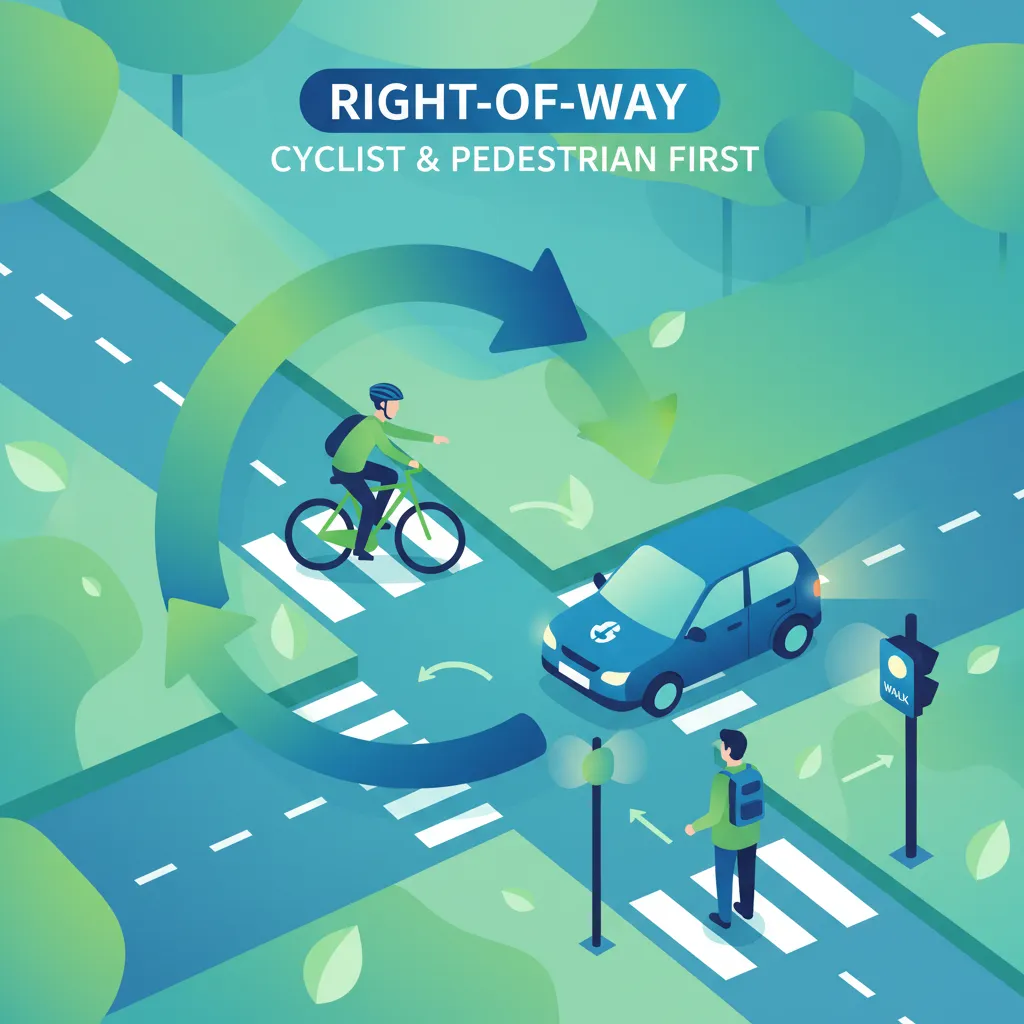
Welcome to the unit on navigating Icelandic junctions. This lesson focuses specifically on the critical principles of right-of-way at intersections, a key topic for your AM moped theory exam. Understanding who yields to whom is fundamental to safe riding and is extensively tested.
Lesson content overview
Understanding right-of-way principles is fundamental for safe and efficient travel on Icelandic roads, especially at intersections. This lesson provides a comprehensive guide to the legal framework governing priority, yielding responsibilities, and safe approaches for Category AM moped riders in Iceland. Mastering these rules is crucial for preventing collisions, ensuring smooth traffic flow, and successfully passing your Icelandic AM licence theory exam.
Right-of-way, also known as priority, is the legal concept that determines which road user has the entitlement to proceed at a conflict point, such as an intersection. In Iceland, traffic laws are designed to minimize uncertainty, protect vulnerable users, and reduce the risk of collisions by establishing a clear order of movement. By adhering to these rules, all road users can anticipate actions, react predictably, and contribute to overall road safety.
The fundamental logic behind right-of-way rules is multi-faceted. Firstly, it enhances safety by providing predictable gaps for movement, ensuring that those who must yield do so consistently. Secondly, it improves predictability, allowing riders to anticipate the actions of others without constant guesswork. Finally, these principles are codified in Icelandic traffic law (reglugerð um umferð) to legally define obligations for stopping, giving way, or proceeding with caution, creating a universal understanding for all road users. This knowledge forms a critical connection to understanding road signs (Lesson 3), navigating roundabouts (Lesson 4.3), and proper lane positioning (Lesson 5).
Navigating intersections safely requires a clear understanding of various right-of-way principles. These rules dictate when you have priority, when you must yield, and how to react to different traffic controls.
A priority road is a road where traffic generally has the right-of-way over intersecting roads. These roads are specifically designated by a priority road sign, which in Iceland typically features a yellow diamond shape with a white border. The purpose of priority roads is to maintain continuous traffic flow on major routes, reducing the need for vehicles to stop frequently.
Conversely, a secondary road is any road that intersects a priority road and does not have its own priority designation. Vehicles on secondary roads must yield to all traffic on the priority road, including pedestrians who are crossing the secondary road at the intersection. While on a priority road, a moped rider can generally proceed without stopping, unless other signs like a stop sign or a traffic light are present, or a pedestrian is crossing the priority road itself. It is a common misunderstanding to assume you must stop at every intersection even on a priority road; the law only requires stopping when explicitly mandated or if a vehicle from a secondary road has already entered the intersection.
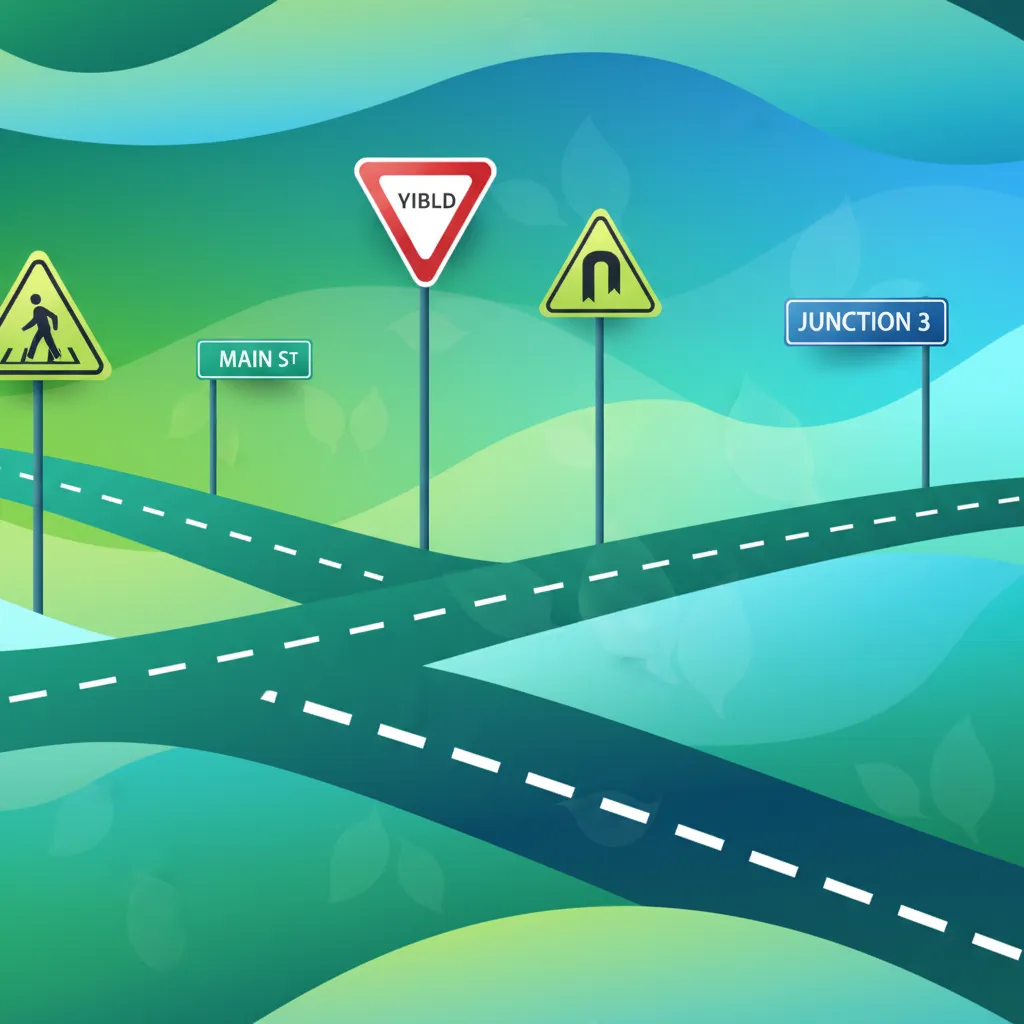
A yield sign instructs drivers to reduce speed, prepare to stop, and yield to traffic on the intersecting road. This triangular sign, with a red border and pointing downward, provides an explicit instruction to give way where right-of-way might otherwise be ambiguous or at uncontrolled intersections.
When approaching a yield sign, a moped rider must slow down and be ready to stop if any vehicle or pedestrian with the right-of-way is present on the intersecting road. If the intersecting road is clear, the rider may proceed without stopping, though caution is always advised. Failing to yield when required is a traffic violation. A common error is treating a yield sign as a mandatory full stop, which can cause unnecessary delays and confusion for following traffic.
The stop sign is an octagonal red sign that demands a complete halt before the designated stop line or before entering the intersection. Unlike a yield sign, a full stop is required regardless of whether there is visible traffic.
After coming to a complete stop, the moped rider must check all directions thoroughly, ensuring the way is clear before proceeding safely. Even if the intersection appears empty, a "rolling stop" where the vehicle does not completely cease movement is a violation of Icelandic traffic law and can lead to dangerous situations, especially where visibility is limited.
Traffic signals, commonly known as traffic lights, are crucial for managing vehicle and pedestrian movement at busy intersections. These signals use red, amber, and green lights to control traffic flow.
In Iceland, a right turn on red is generally not permitted unless a specific sign explicitly authorizes it. Riders must always obey the signal phase; failing to do so can lead to severe penalties and serious collisions. A flashing amber light signifies caution, indicating you should proceed only when safe, often found at less busy intersections or during off-peak hours.
A fundamental principle in Icelandic traffic law is pedestrian priority, which mandates that drivers must yield to pedestrians crossing at marked or unmarked crosswalks. This rule applies regardless of the vehicle's priority status or the road type.
Even if a moped rider is on a priority road, they must stop for a pedestrian who is crossing or is about to cross at a designated area. Marked crosswalks are typically identified by zebra stripes, but pedestrians also have priority at unmarked intersections where they are crossing the road in continuation of a sidewalk. Failure to yield to a pedestrian is a serious offense under Icelandic traffic law, carrying significant penalties. Special caution should be exercised around school zones or areas frequented by children, where any potential crossing should be treated as a pedestrian priority scenario.
At uncontrolled intersections, which lack traffic signs or signals, the right-hand priority rule applies. This rule dictates that the vehicle approaching from the right has the legal priority.
A moped rider must yield to any traffic approaching from their right in such situations. However, it is crucial to remember that this default rule is overridden if one of the roads is a designated priority road. In that case, the priority road rule takes precedence. For instance, if you are approaching an uncontrolled intersection and a vehicle is coming from your right, you must yield to them unless you are on a priority road. Always be prepared to stop, especially when visibility is limited.
When making a turn at an intersection, a moped rider must understand turning priority. Generally, vehicles turning across traffic must yield to oncoming vehicles proceeding straight or turning right (in countries with right-hand traffic like Iceland).
If a traffic light includes a protected left-turn arrow, this usually means you have priority for the turn and do not need to yield to oncoming traffic, but always verify the signal before proceeding.
Adhering to Icelandic Road Traffic Regulations (reglugerð um umferð) is mandatory for all road users. Violations of right-of-way rules can lead to fines, demerit points, and most importantly, dangerous situations and collisions.
| Rule | Statement | Applicability | Legal Status | Rationale |
|---|---|---|---|---|
| Priority Road Rule | Drivers on a road marked with the priority road sign have the right-of-way over intersecting roads unless otherwise indicated. | All intersections where a priority road sign is present. | Mandatory. | Ensures continuous flow on major routes. |
| Yield Sign Rule | At a yield sign, the driver must slow down, be prepared to stop, and yield to traffic on the intersecting road. | Any intersection with a yield sign. | Mandatory. | Prevents collisions where traffic streams conflict. |
| Stop Sign Rule | The driver must bring the vehicle to a complete stop at the line before entering the intersection. | All stop signs. | Mandatory. | Guarantees a safe decision point. |
| Traffic Light Rule | Drivers must obey the signal colour: red = stop, amber = stop unless already in the intersection, green = proceed when safe. | Intersections controlled by traffic signals. | Mandatory. | Regulates traffic flow and reduces conflict. |
| Pedestrian Priority Rule | Drivers must yield to pedestrians crossing at marked or unmarked crosswalks. | All crosswalks, regardless of road class. | Mandatory. | Protects vulnerable users. |
| Right-Hand Priority Rule | At uncontrolled intersections, traffic from the right has priority, unless a priority road overrides. | Intersections without signs or signals. | Mandatory. | Provides a default hierarchy. |
| Turning Priority Rule | Vehicles turning across traffic must yield to oncoming vehicles traveling straight. | Intersections where turning across traffic is required. | Mandatory. | Avoids side-impact collisions. |
| Emergency Vehicle Exemption | All road users must yield to fire, ambulance, or police vehicles with sirens or flashing lights. | Nationwide, all road types. | Mandatory. | Enables rapid emergency response. |
Dual-Carriageway Right-Turn on Red: In Iceland, a right turn on a red traffic light is only allowed where a specific sign explicitly permits it. Never assume you can turn right on red without this authorization.
Moped riders often make specific mistakes at intersections that lead to violations or accidents. Being aware of these common pitfalls can help you avoid them:
The rules of right-of-way remain constant, but the way you apply them must adapt to various conditions. Environmental factors, road characteristics, and even the state of your moped can affect your approach to intersections.
Icelandic weather can change rapidly, significantly impacting visibility and road conditions:
Intersections vary greatly depending on their location:
The condition and load of your moped also influence how you approach and navigate intersections:
Mopeds, while more vulnerable than cars, must prioritize even more vulnerable road users:
Understanding the consequences of your actions at intersections is vital for safe riding and responsible decision-making.
Let's look at practical situations to solidify your understanding of right-of-way principles.
Setting: A moped rider travels on a main road, marked with a priority road sign, approaching an uncontrolled intersection where a secondary road crosses. Rule: Priority Road Rule. Correct Behavior: The moped rider slows slightly, checks for any traffic that might unlawfully enter from the secondary road, and proceeds through the intersection without stopping, as they have the right-of-way. Incorrect Behavior: The rider unnecessarily stops at the intersection, disrupting the flow of traffic on the priority road, or fails to observe and collides with a vehicle that wrongly entered from the secondary road.
Setting: A moped rider approaches a yield sign on a secondary road that merges into a main road at a T-junction. Rule: Yield Sign Rule. Correct Behavior: The rider reduces speed, carefully checks the main road to the left and right for approaching traffic. Seeing a car approaching from the right on the main road, the moped rider stops before the yield line, waits for the car to pass, and then proceeds safely when a clear gap appears. Incorrect Behavior: The rider performs a "rolling stop" or does not slow sufficiently, merging unsafely and forcing the car on the main road to brake or swerve.
Setting: A moped rider is on a priority road and approaches a marked pedestrian crossing at an intersection with a secondary road. A pedestrian is visible, preparing to cross. Rule: Pedestrian Priority Rule. Correct Behavior: The rider decelerates, comes to a complete stop before the pedestrian crossing line, allows the pedestrian to cross safely, and only proceeds once the pedestrian has cleared the moped's path. Incorrect Behavior: The rider assumes their priority road status overrides pedestrian priority and continues through the crossing, forcing the pedestrian to stop or hurry.
Setting: A rural intersection with no signs or signals, experienced at night with low visibility and no street lighting. Rule: Right-Hand Priority (default). Correct Behavior: The moped rider approaches slowly, scanning all directions. Noticing another vehicle approaching from their right, the rider yields by stopping or slowing down significantly, allowing the vehicle from the right to pass first. They proceed only when the intersection is clear, using appropriate headlights. Incorrect Behavior: The rider assumes they have priority, failing to yield to the vehicle on the right, which could lead to a serious T-bone collision due to limited visibility.
Safe intersection navigation goes beyond simply memorizing rules; it requires understanding the underlying principles and human factors involved.
To ensure safe and compliant riding on Icelandic roads, especially at intersections, remember these core principles:
This lesson covers the fundamental right-of-way principles for Icelandic AM moped riders, explaining how priority roads, yield signs, stop signs, and traffic lights govern movement at intersections. It establishes that priority roads (yellow diamond) take precedence over secondary roads, that yield signs require preparation to stop rather than a mandatory stop, and that pedestrians always have absolute priority at crosswalks regardless of road status. The right-hand priority rule governs uncontrolled intersections unless a priority road designation applies. Conditional factors such as weather, visibility, vehicle load, and interaction with vulnerable road users require adaptive driving approaches beyond simple rule memorization.
A short set of high-value points that capture the most important learning from this lesson.
Priority roads (marked with yellow diamond sign) give traffic the right-of-way over all intersecting secondary roads
A yield sign requires you to slow down and be prepared to stop—it does not require a full stop like a stop sign
Pedestrians always have priority at marked or unmarked crosswalks, regardless of your road's priority status
At uncontrolled intersections, traffic approaching from your right has priority (right-hand priority rule), unless a priority road designation overrides it
In Iceland, a right turn on red is only permitted where a specific sign explicitly authorizes it—never assume it is allowed
Explore all units and lessons included in this driving theory course.
Priority road sign is a yellow diamond shape with white border; secondary roads must yield to it
Yield = slow and prepare to stop; Stop = complete halt before the line
Amber light means stop if safe to do so, but proceed if you are already in the intersection or too close to stop safely
Left-turning traffic must yield to oncoming straight-through vehicles
Always yield to pedestrians at any crossing, even when on a priority road
Treating a yield sign as a mandatory full stop, causing unnecessary delays and confusion for following traffic
Making a rolling stop at a stop sign instead of bringing the moped to a complete halt
Proceeding through a pedestrian crossing on a priority road without yielding to pedestrians
Misinterpreting right-hand priority by assuming they have priority when traffic from the right actually has the right-of-way
Accelerating through an amber light when it would have been safe to stop, risking collision with cross-traffic starting on green
Lesson content overview
A short set of high-value points that capture the most important learning from this lesson.
Priority roads (marked with yellow diamond sign) give traffic the right-of-way over all intersecting secondary roads
A yield sign requires you to slow down and be prepared to stop—it does not require a full stop like a stop sign
Pedestrians always have priority at marked or unmarked crosswalks, regardless of your road's priority status
At uncontrolled intersections, traffic approaching from your right has priority (right-hand priority rule), unless a priority road designation overrides it
In Iceland, a right turn on red is only permitted where a specific sign explicitly authorizes it—never assume it is allowed
Explore all units and lessons included in this driving theory course.
Priority road sign is a yellow diamond shape with white border; secondary roads must yield to it
Yield = slow and prepare to stop; Stop = complete halt before the line
Amber light means stop if safe to do so, but proceed if you are already in the intersection or too close to stop safely
Left-turning traffic must yield to oncoming straight-through vehicles
Always yield to pedestrians at any crossing, even when on a priority road
Treating a yield sign as a mandatory full stop, causing unnecessary delays and confusion for following traffic
Making a rolling stop at a stop sign instead of bringing the moped to a complete halt
Proceeding through a pedestrian crossing on a priority road without yielding to pedestrians
Misinterpreting right-hand priority by assuming they have priority when traffic from the right actually has the right-of-way
Accelerating through an amber light when it would have been safe to stop, risking collision with cross-traffic starting on green
Explore search topics learners often look for when studying Right-of-Way Principles at Intersections. These topics reflect common questions about road rules, driving situations, safety guidance, and lesson level theory preparation for learners in Iceland.
Browse additional driving theory lessons that cover connected traffic rules, road signs, and common driving situations related to this topic. Improve your understanding of how different rules interact across everyday traffic scenarios.
Explore advanced scenarios and specific regulations for navigating complex intersections, priority roads, and yield situations in Iceland. Understand the nuances of right-of-way beyond the basics to ensure safe theory exam preparation and confident riding.

This lesson explores the conduct required at uncontrolled crossings where the right-hand rule typically applies. It emphasizes the need to reduce speed, be prepared to stop, and establish clear communication with other road users. Riders will learn to assess the situation carefully and proceed only when it is confirmed to be safe, a critical skill for rural and residential areas.
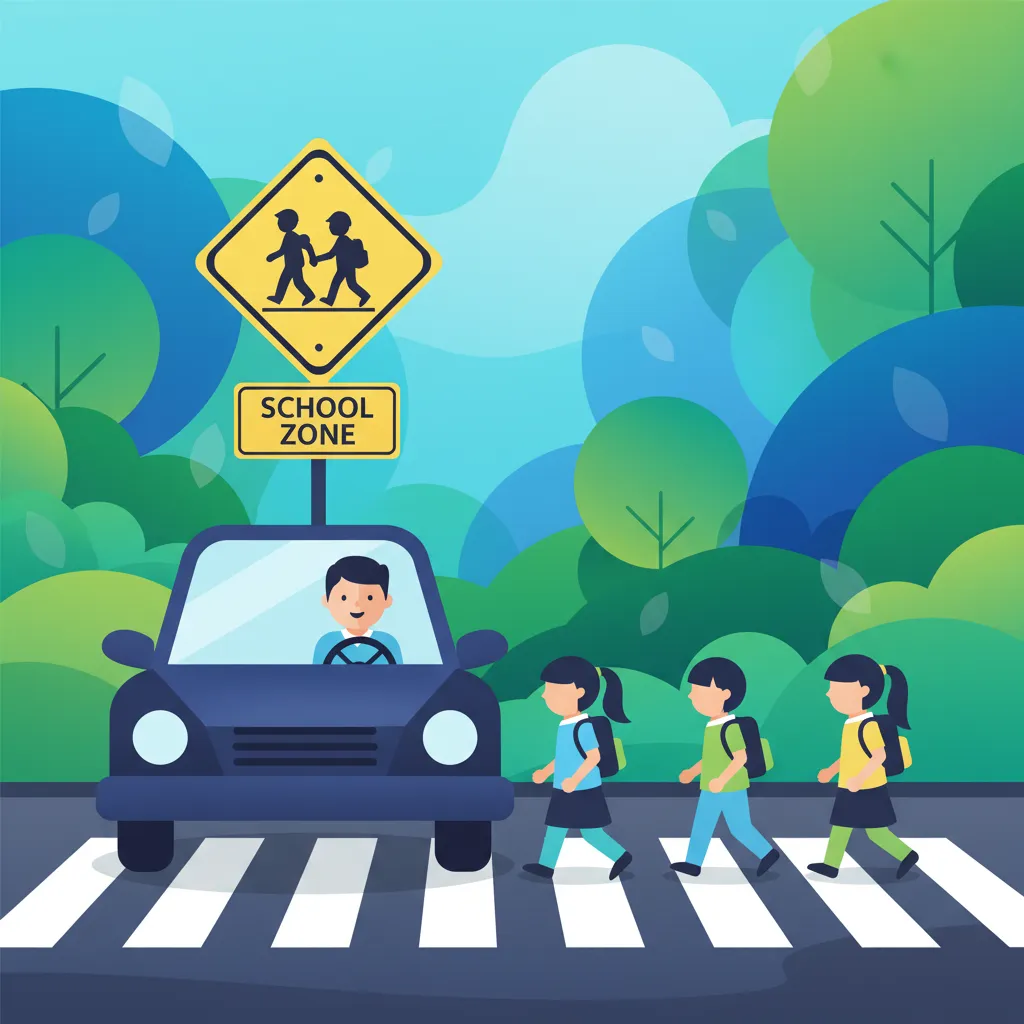
This lesson covers the strict rules governing pedestrian crossings and school zones, where riders have a heightened duty of care. It details the obligation to yield to pedestrians, recognize school zone signage, and reduce speed significantly. Riders learn to be extra vigilant for the unpredictable movements of children and other vulnerable road users in these sensitive areas.
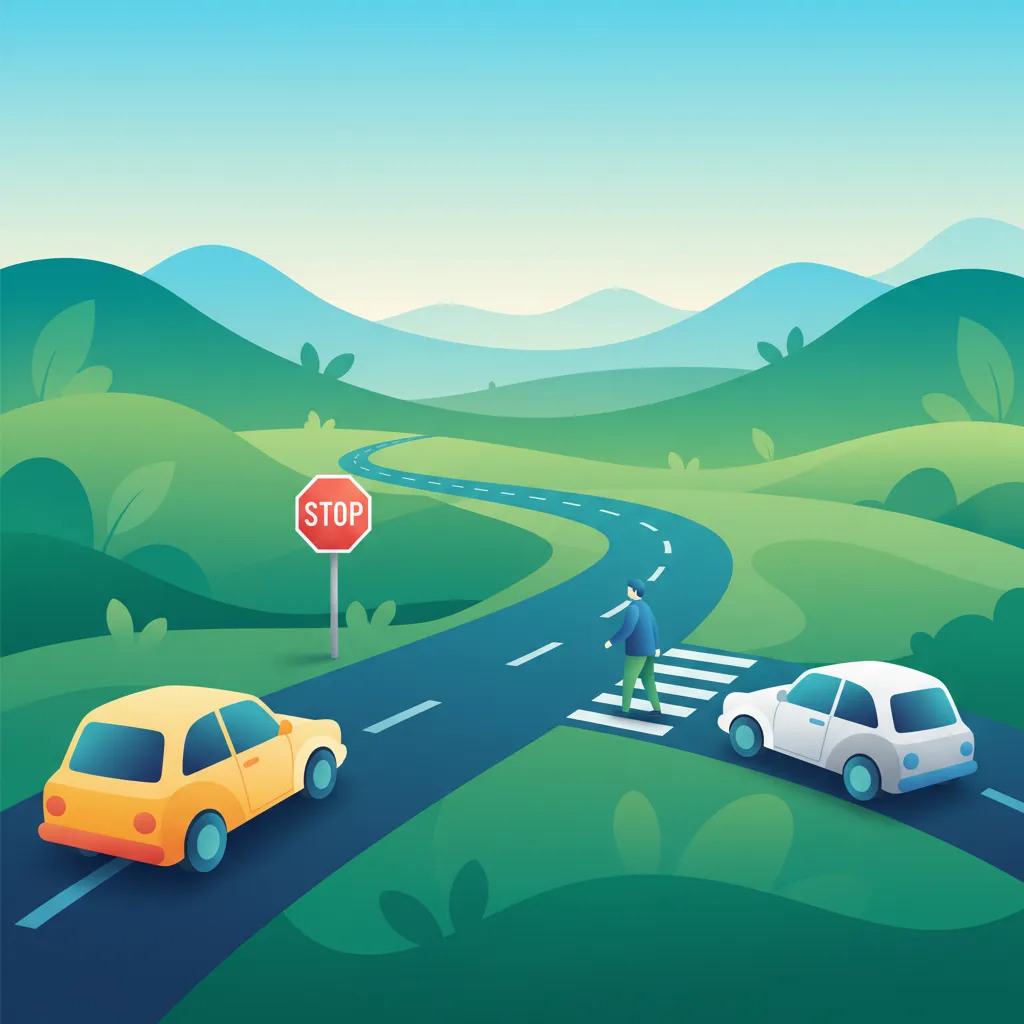
This lesson introduces the fundamental concepts of right-of-way in Iceland, explaining the priority hierarchy that dictates when a driver must yield to others. Learners study the meaning of give-way and yield signs, the distinction between main and side roads, and how stop signs and markings affect vehicle positioning. By understanding these legal obligations, students will be able to determine correct actions at any junction, reducing the risk of collisions.
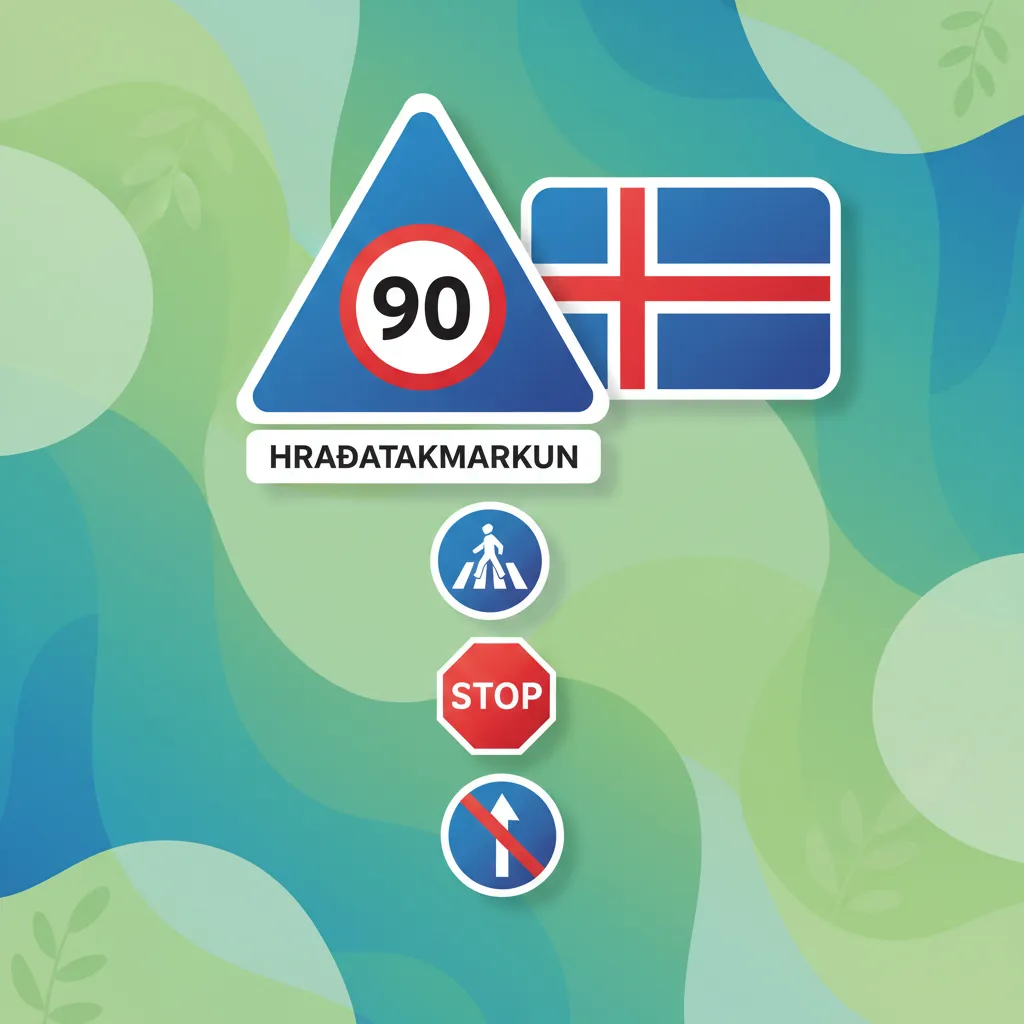
This lesson provides a contextual overview of Iceland's traffic law hierarchy, explaining how national statutes, road codes, and local rules interact. Learners will understand the precedence of national laws and how to interpret regulations in different jurisdictions. This knowledge ensures riders can correctly apply the relevant rules in any driving scenario, ensuring consistent legal compliance.
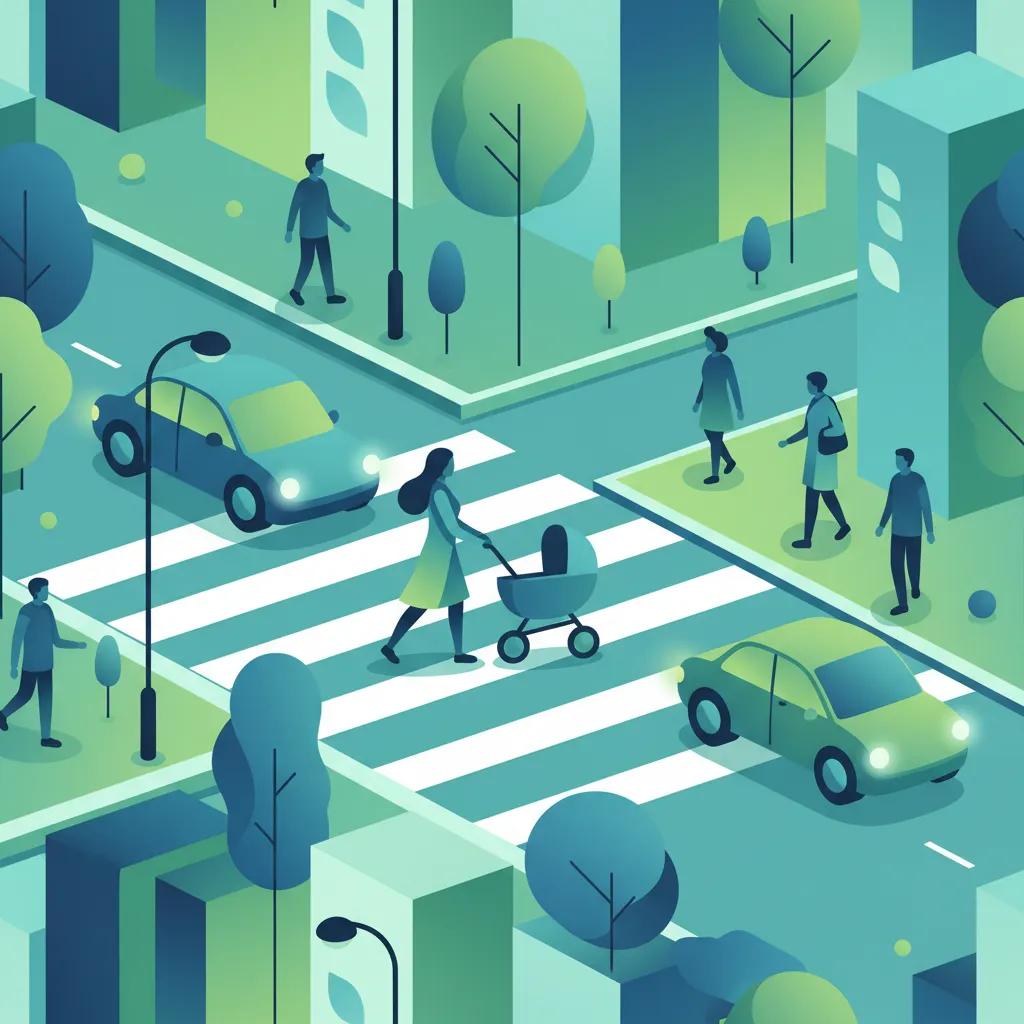
This lesson outlines the regulations governing pedestrian crossings, including zebra crossings, pedestrian traffic lights, and the driver’s obligations to yield. Learners will study how to identify crosswalk markings, interpret pedestrian signal phases, and understand the enhanced caution required in school zones and areas with high foot traffic. The content also emphasizes the need for drivers to anticipate vulnerable pedestrians and provide additional yielding in low-visibility conditions.
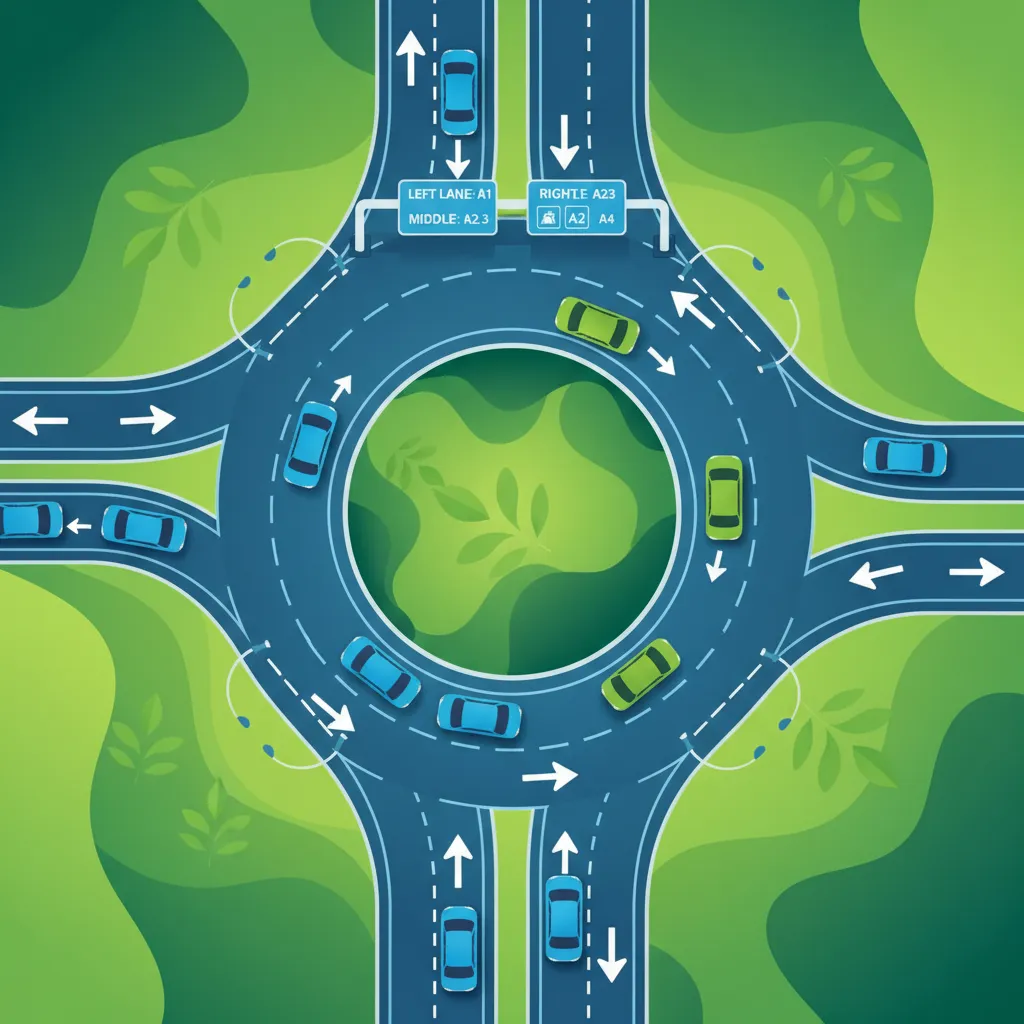
This lesson provides a detailed guide to navigating roundabouts, focusing on the rule to yield to circulating traffic before entering. It covers correct lane positioning for different exits, proper signaling, and maintaining a safe speed within the roundabout. Special guidance is provided for moped riders to enhance their visibility and safety among larger vehicles.
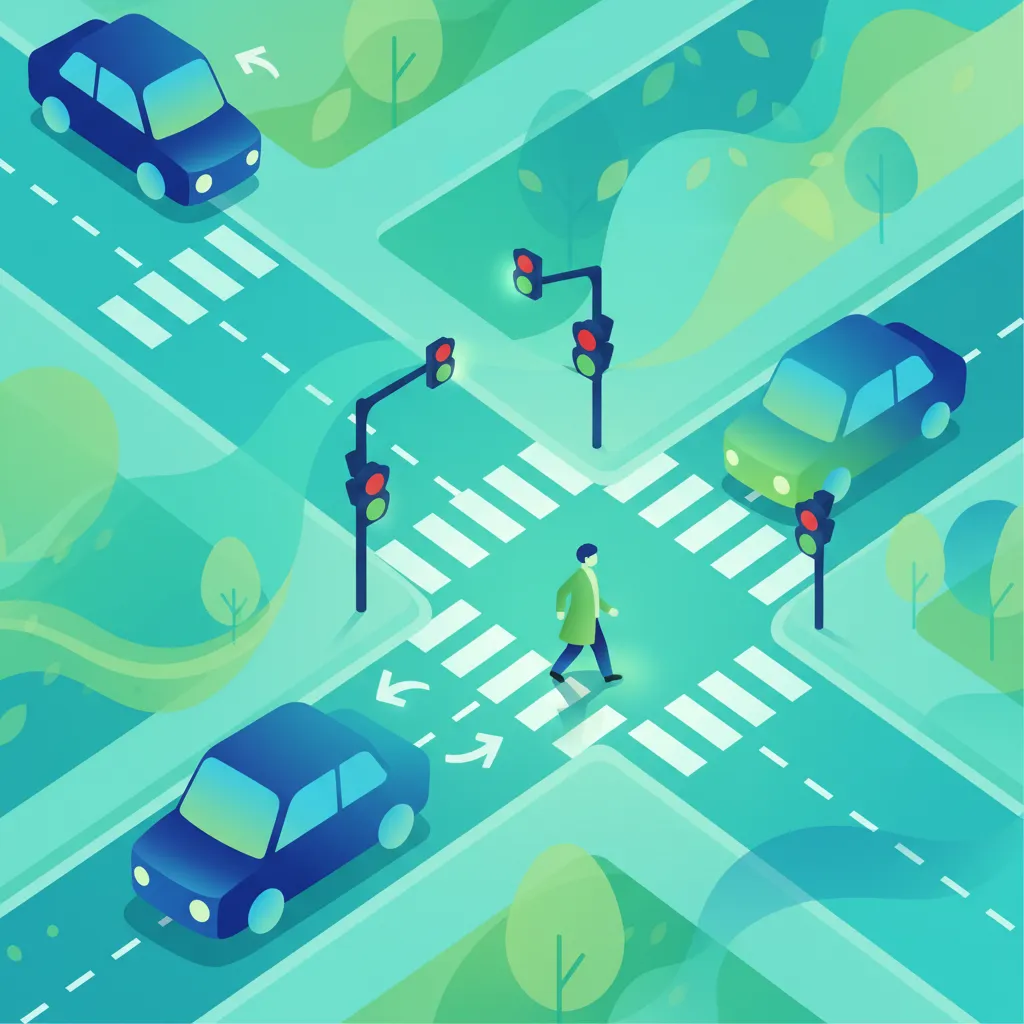
This lesson examines various intersection configurations in Iceland, including those controlled by traffic lights, four-way stops, and uncontrolled intersections without signals. Learners study how priority is determined in each scenario through signage, road markings, and the relative position of vehicles. The lesson also covers specific turning regulations and highlights the importance of assessing sight lines to ensure safe passage through complex junctions.
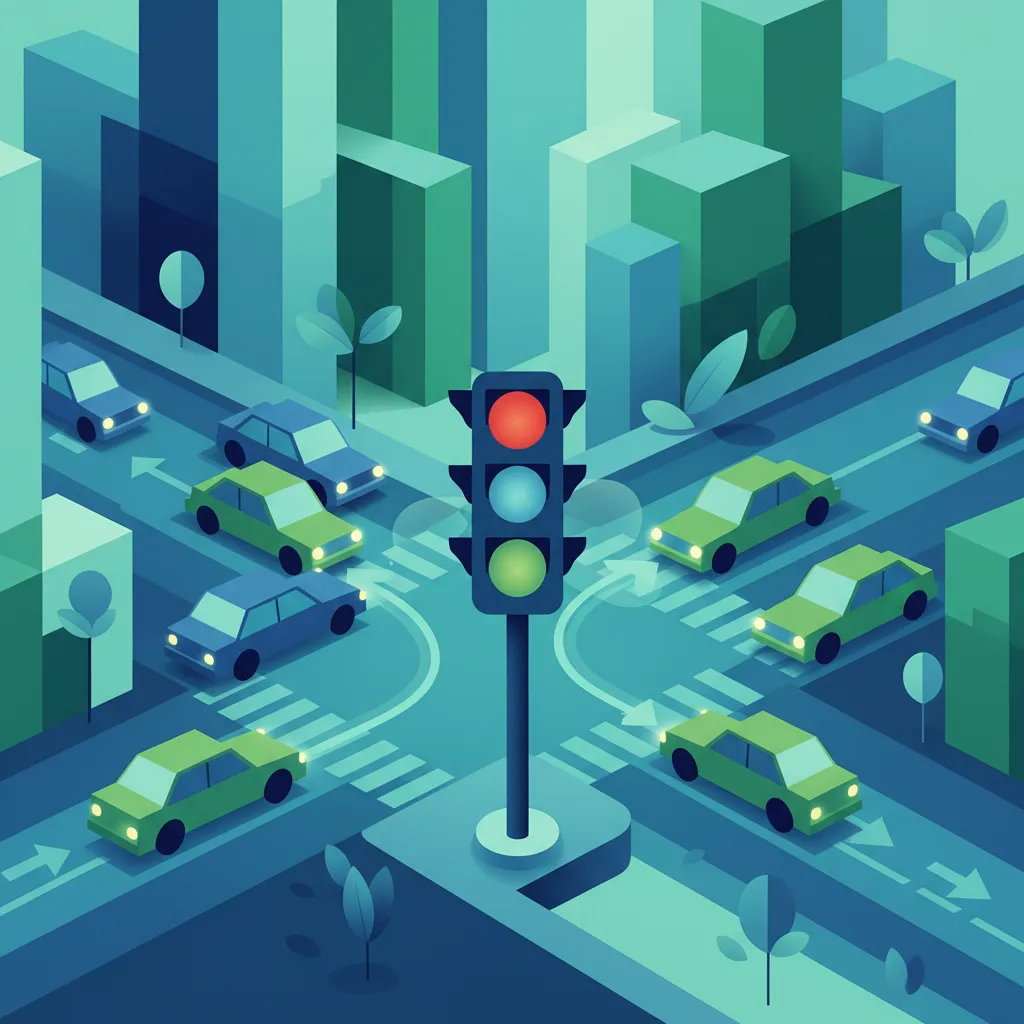
This lesson dissects the three-color traffic light system, detailing the meaning of red, amber, and green signals, including flashing lights and directional arrows. It explains how signal timing impacts moped riders and the legal requirement to obey all signals at intersections. Proper interpretation is crucial for navigating signalized junctions safely and avoiding conflicts with other traffic.
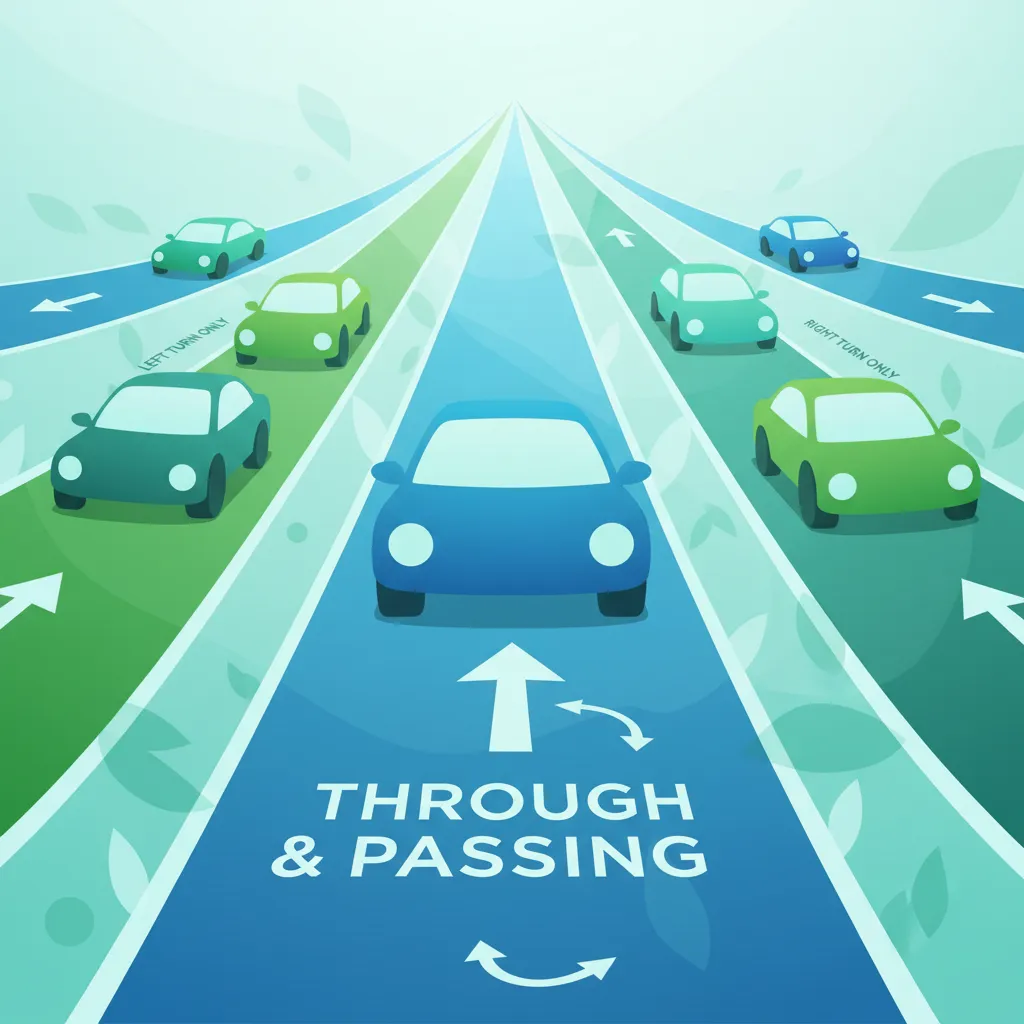
This lesson outlines best practices for positioning a moped on urban roads to maximize visibility and safety. It explains how to choose a lane position that makes you visible to drivers ahead and behind, while avoiding road debris and dooring hazards from parked cars. The content addresses adapting your position based on traffic speed, density, and road conditions.
This lesson covers the extensive obligations that come with riding a moped, emphasizing the duty of care to other road users. It details specific legal requirements, such as mandatory helmet use, adherence to speed limits, and correct signaling protocols. Understanding these responsibilities helps riders grasp the consequences of non-compliance and fosters a culture of safety on the road.
Learn about frequent errors and misconceptions moped riders make at intersections in Iceland. This lesson focuses on understanding why these mistakes occur and how to avoid them to improve safety and comply with traffic laws.
This lesson explores the conduct required at uncontrolled crossings where the right-hand rule typically applies. It emphasizes the need to reduce speed, be prepared to stop, and establish clear communication with other road users. Riders will learn to assess the situation carefully and proceed only when it is confirmed to be safe, a critical skill for rural and residential areas.
This lesson covers the strict rules governing pedestrian crossings and school zones, where riders have a heightened duty of care. It details the obligation to yield to pedestrians, recognize school zone signage, and reduce speed significantly. Riders learn to be extra vigilant for the unpredictable movements of children and other vulnerable road users in these sensitive areas.
This lesson provides a detailed guide to navigating roundabouts, focusing on the rule to yield to circulating traffic before entering. It covers correct lane positioning for different exits, proper signaling, and maintaining a safe speed within the roundabout. Special guidance is provided for moped riders to enhance their visibility and safety among larger vehicles.
This lesson provides a contextual overview of Iceland's traffic law hierarchy, explaining how national statutes, road codes, and local rules interact. Learners will understand the precedence of national laws and how to interpret regulations in different jurisdictions. This knowledge ensures riders can correctly apply the relevant rules in any driving scenario, ensuring consistent legal compliance.
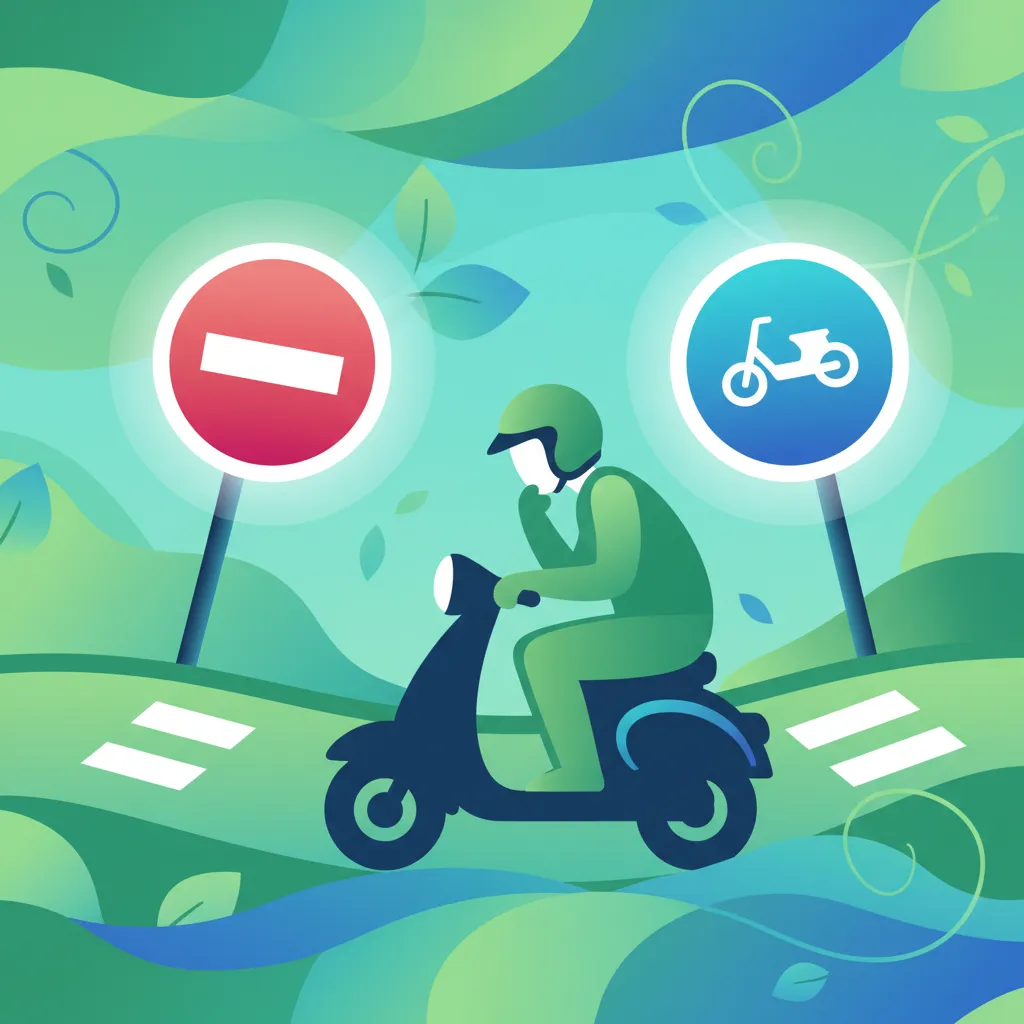
This lesson examines regulatory signs that impose legal obligations, focusing on those most relevant to moped riders like speed limits and mandatory direction signs. Learners will understand how sign shapes and colors convey specific commands or prohibitions. Attention is given to signs with vehicle-specific restrictions, ensuring riders know when rules apply directly to them.
This lesson covers the extensive obligations that come with riding a moped, emphasizing the duty of care to other road users. It details specific legal requirements, such as mandatory helmet use, adherence to speed limits, and correct signaling protocols. Understanding these responsibilities helps riders grasp the consequences of non-compliance and fosters a culture of safety on the road.
This lesson outlines the regulations governing pedestrian crossings, including zebra crossings, pedestrian traffic lights, and the driver’s obligations to yield. Learners will study how to identify crosswalk markings, interpret pedestrian signal phases, and understand the enhanced caution required in school zones and areas with high foot traffic. The content also emphasizes the need for drivers to anticipate vulnerable pedestrians and provide additional yielding in low-visibility conditions.
This lesson outlines best practices for positioning a moped on urban roads to maximize visibility and safety. It explains how to choose a lane position that makes you visible to drivers ahead and behind, while avoiding road debris and dooring hazards from parked cars. The content addresses adapting your position based on traffic speed, density, and road conditions.
This lesson familiarizes learners with signs that warn of upcoming hazards, such as sharp curves, slippery surfaces, or animal crossings. It emphasizes the importance of early hazard recognition and response, which is especially critical for vulnerable moped riders. Understanding these signs allows riders to anticipate road conditions and adjust their riding strategy accordingly for increased safety.
This lesson dissects the three-color traffic light system, detailing the meaning of red, amber, and green signals, including flashing lights and directional arrows. It explains how signal timing impacts moped riders and the legal requirement to obey all signals at intersections. Proper interpretation is crucial for navigating signalized junctions safely and avoiding conflicts with other traffic.
Find clear answers to common questions learners have about Right-of-Way Principles at Intersections. Learn how the lesson is structured, which driving theory objectives it supports, and how it fits into the overall learning path of units and curriculum progression in Iceland. These explanations help you understand key concepts, lesson flow, and exam focused study goals.
A priority road (or main road) generally has the right of way. Signs like the 'Priority Road' triangular sign indicate you are on one, or a junction sign shows a thick line representing it. Secondary roads (or side roads) must yield to traffic on the priority road unless specific signs indicate otherwise. As a moped rider, always be aware of which road you are on and which traffic has priority.
In Iceland, when there are no signs or signals to indicate otherwise, the general rule is that traffic coming from the right has priority. This means you must yield to vehicles or mopeds approaching from your right at an uncontrolled intersection. Always scan to your right before proceeding.
A 'Give Way' (or 'Yield') sign requires you to slow down and be prepared to stop if necessary to let other traffic pass. You must yield to all vehicles and mopeds on the road you are entering or crossing, regardless of their direction. Do not proceed until it is safe to do so.
Yes, at pedestrian crossings, mopeds must yield to pedestrians who are on or about to enter the crossing. Always slow down when approaching a pedestrian crossing, be ready to stop, and ensure pedestrians have priority.
Focus on understanding the hierarchy of rules: 1) Traffic signals, 2) Priority signs (Priority Road, Give Way, Stop), 3) General rule (traffic from the right), and 4) Specific situations like pedestrian crossings. Practice with mock tests that feature intersection scenarios to reinforce these principles.
Utilize our advanced practice set search to pinpoint the exact Icelandic driving theory topics you need to review. Filter by subject, difficulty, or question type to create a highly effective study plan and ensure you are fully prepared for your official driving licence test in Iceland.