
Welcome to the essential lesson on priority and yielding rules for your Icelandic Category B driving theory test. Understanding who has the right-of-way is crucial for safe navigation at junctions and intersections, forming a core part of the official exam. This lesson, part of the 'Priority Rules, Intersections & Roundabouts' unit, will equip you with the knowledge to make correct decisions and avoid potential hazards on Icelandic roads.
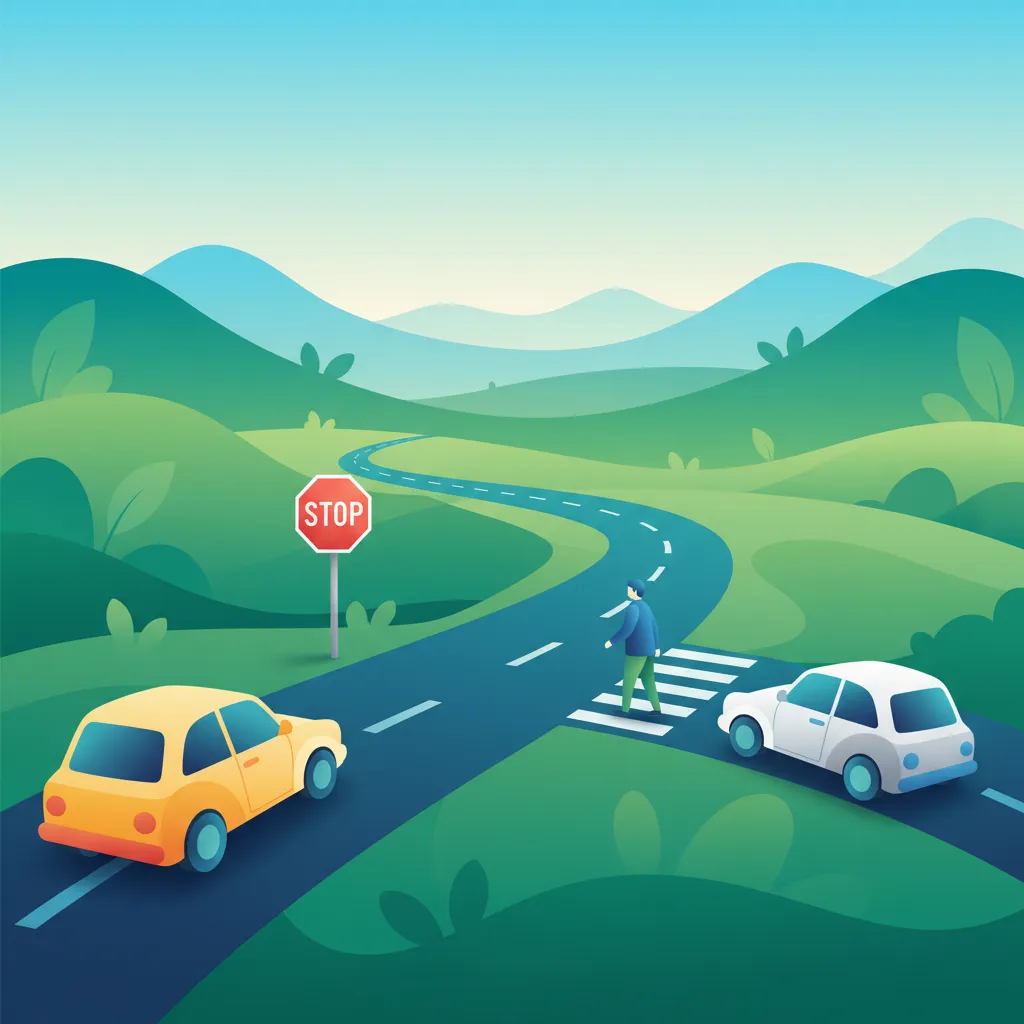
Lesson content overview
Understanding right-of-way is one of the most fundamental aspects of safe driving and a critical component of the Official Icelandic Driving License B Theory Course. These rules dictate which vehicle or road user has the legal authority to proceed first at an intersection, junction, or other point of potential conflict. By clearly establishing priority, right-of-way rules reduce ambiguity, prevent collisions, and ensure a smooth and predictable flow of traffic across Iceland's road network.
Mastery of these concepts is not just about avoiding fines; it is about preventing accidents that can lead to injury, property damage, and severe legal consequences. Every driver must be able to quickly assess a situation, identify who has priority, and act accordingly to maintain safety for themselves and all other road users. This lesson will introduce you to the core principles, specific signs, and practical applications of yielding in various Icelandic traffic scenarios.
Right-of-way, often referred to as "forgangur" in Icelandic, is the legal principle that determines who has the privilege to proceed ahead of another vehicle or pedestrian in a given situation. This privilege is not absolute; it comes with the responsibility to ensure safety and to communicate intentions clearly. The system of right-of-way is designed to create a predictable order on the roads, especially at points where vehicle paths might otherwise collide.
The importance of right-of-way rules cannot be overstated. Without them, every intersection would be a chaotic free-for-all, leading to constant uncertainty and a high risk of accidents. These rules help to:
Icelandic traffic law establishes a clear hierarchy of priority that drivers must learn and respect. While specific signs and markings can alter this hierarchy, a general order dictates which road users have precedence in typical situations. Understanding this basic structure is crucial for making correct decisions on the road.
A core principle of right-of-way in Iceland is the distinction between main roads and side roads. Generally, vehicles travelling on a main road have priority over vehicles entering or crossing from a side road. This rule applies to uncontrolled intersections, particularly T-junctions, where no traffic lights or signs are present to explicitly assign priority.
Drivers on a side road must always be prepared to yield to traffic on the main road, even if there isn't a visible yield sign, unless another traffic sign clearly indicates otherwise. This ensures that traffic flows smoothly on primary routes, reducing the need for constant stops and starts.
Certain vehicles are granted special priority due to the critical nature of their services.
Pedestrians are among the most vulnerable road users, and Icelandic law provides them with significant priority in specific situations.
Traffic signs are the primary means by which authorities communicate specific right-of-way rules at intersections and junctions. Drivers must be able to instantly recognize and understand these signs to make correct and safe decisions.
The Give-Way sign, also known as a Yield sign (Icelandic: "Vegaálagsskylti" or "gefðu eftir"), is one of the most common priority signs. It is a white triangle with a red border, pointing downwards. When you encounter this sign, you are obligated to:
It is a common misunderstanding to assume that the sign only applies to vehicles. You must yield to all road users with priority.
The Stop sign (Icelandic: "Stoppskilti") is an octagonal red sign with white "STOP" lettering. It imposes the most stringent yielding requirement. When you encounter a Stop sign, you must:
In addition to signs, road markings provide crucial visual information about right-of-way. These markings reinforce or clarify the rules, guiding drivers on where to stop or yield.
A yield line (Icelandic: "víkja-línur") is a series of inverted white triangles painted on the road surface, usually accompanied by a Give-Way sign. This marking indicates the precise point behind which you must yield to traffic on the intersecting road.
The practical meaning is that you should slow down and be prepared to yield to any traffic beyond this line. Unlike a stop line, you are not required to come to a full stop unless the traffic situation necessitates it (e.g., heavy cross-traffic). You may proceed cautiously if the way is clear without stopping. Confusing a yield line with a stop line can lead to unnecessary stops, potentially causing confusion or rear-end collisions.
A stop line (Icelandic: "stöðvarlínur") is a solid white line painted across a lane, usually at an intersection controlled by a Stop sign or traffic lights. This line marks the point where vehicles are legally required to come to a complete stop.
Your entire vehicle, including the front bumper, must be behind this line when you stop. Stopping beyond the line (creeping into the intersection) can obstruct the view of other drivers or pedestrians, and it is a common violation.
Traffic lights (Icelandic: "umferðarljós") provide a dynamic and highly effective way to manage right-of-way at complex and busy intersections. Their signals supersede all other signs and markings for priority when active.
Roundabouts (Icelandic: "hringtorg") are circular intersections designed to improve traffic flow and safety by converting direct conflict points into yielding situations. The fundamental rule for roundabouts in Iceland, as in most of Europe, is that vehicles already circulating within the roundabout have priority.
When approaching a roundabout, you will almost always encounter a Give-Way sign and a yield line at each entry point. This obligates you to:
The principles of right-of-way are enshrined in Icelandic law, specifically in the Road Traffic Act. Adherence to these regulations is mandatory for all drivers.
The Icelandic Road Traffic Act (Umferðarlög) provides the legal framework for all traffic rules, including right-of-way. While specific articles might be updated, the core principles remain constant. For instance, rules concerning priority at intersections, the obligations at Stop and Give-Way signs, and pedestrian rights are clearly defined. A key aspect often covered is the general rule for uncontrolled intersections where traffic approaching from the right typically has priority, unless it is a T-junction where the main road traffic has priority. It's crucial for drivers to understand that ignoring these statutory rules constitutes a traffic offense with potential fines and penalty points.
Even experienced drivers sometimes make mistakes regarding right-of-way, but new drivers are especially prone to common errors. Recognizing these pitfalls is the first step towards avoiding them.
While the rules of right-of-way are constant, the context in which they are applied can vary significantly. Drivers must adapt their approach to ensure safety under different conditions.
Icelandic weather can be unpredictable and severely impact visibility and road conditions.
The type of vehicle you are driving or the presence of vulnerable users can influence how you apply right-of-way rules.
In extremely rare and severe conditions, such as zero-visibility whiteout storms, the normal application of right-of-way might become impossible to strictly follow without causing an accident. In such extreme cases, the overriding principle is to act prudently to avoid a collision, which may involve stopping completely or proceeding at a crawl until visibility improves, regardless of formal priority.
The strict enforcement and understanding of right-of-way rules are cornerstones of road safety for several profound reasons:
Let's explore some common driving scenarios in Iceland to solidify your understanding of right-of-way.
The rules of right-of-way are the silent language of the road, enabling millions of interactions daily without chaos. In Iceland, where driving conditions can vary dramatically and intersections demand constant vigilance, a thorough understanding and consistent application of these rules are paramount. From interpreting a simple Give-Way sign to navigating a complex roundabout, every decision about priority impacts safety and traffic flow.
By diligently practicing these rules and understanding their underlying safety rationale, you will not only comply with Icelandic traffic law but also contribute significantly to the safety of all road users. Always be proactive in identifying priority, be prepared to yield, and communicate your intentions clearly. This disciplined approach will make you a competent and responsible driver, ready to handle the diverse driving challenges of Iceland.
Right-of-way rules in Iceland establish a clear hierarchy that determines who may proceed first at intersections, junctions, and roundabouts. The core principle distinguishes between main roads (which have priority over side roads) and between circulating traffic (which has priority over entering traffic at roundabouts). Traffic signs such as the Give-Way sign and Stop sign impose specific yielding or stopping obligations, while road markings like yield lines and stop lines reinforce these requirements. Pedestrians at zebra crossings have legal priority, and emergency vehicles with active signals always have absolute right-of-way. Understanding and applying these rules is essential for both passing the Category B theory exam and safe driving in Iceland.
A short set of high-value points that capture the most important learning from this lesson.
Main road traffic has priority over side road traffic at uncontrolled intersections in Iceland
Vehicles already circulating within a roundabout have absolute priority over vehicles attempting to enter
Stop signs require a full and complete stop; simply slowing down (rolling stop) is a serious violation
Pedestrians on or clearly intending to use a marked zebra crossing have priority and must be yielded to
Amber (yellow) traffic lights require you to prepare to stop; they are not a signal to accelerate through the intersection
Explore all units and lessons included in this driving theory course.
Give-Way sign (triangular red border) = slow down and yield; Stop sign (octagonal red) = complete mandatory stop
Yield lines (inverted white triangles on road) mean yield only; Stop lines (solid white) mean mandatory full stop
At unmarked intersections (non-T-junctions), traffic approaching from your right typically has priority
Emergency vehicles using audible or visual signals always have absolute right-of-way
Do not proceed on amber light unless you are already too close to stop safely
Confusing yield lines with stop lines and making unnecessary full stops, disrupting traffic flow
Performing a rolling stop at a Stop sign instead of bringing the vehicle to a complete stationary position
Entering a roundabout without yielding to vehicles already circulating, causing potential collisions
Failing to yield to pedestrians at zebra crossings who have legal priority
Accelerating through an amber light when it would be safe to stop, creating dangerous cross-traffic situations
Lesson content overview
A short set of high-value points that capture the most important learning from this lesson.
Main road traffic has priority over side road traffic at uncontrolled intersections in Iceland
Vehicles already circulating within a roundabout have absolute priority over vehicles attempting to enter
Stop signs require a full and complete stop; simply slowing down (rolling stop) is a serious violation
Pedestrians on or clearly intending to use a marked zebra crossing have priority and must be yielded to
Amber (yellow) traffic lights require you to prepare to stop; they are not a signal to accelerate through the intersection
Explore all units and lessons included in this driving theory course.
Give-Way sign (triangular red border) = slow down and yield; Stop sign (octagonal red) = complete mandatory stop
Yield lines (inverted white triangles on road) mean yield only; Stop lines (solid white) mean mandatory full stop
At unmarked intersections (non-T-junctions), traffic approaching from your right typically has priority
Emergency vehicles using audible or visual signals always have absolute right-of-way
Do not proceed on amber light unless you are already too close to stop safely
Confusing yield lines with stop lines and making unnecessary full stops, disrupting traffic flow
Performing a rolling stop at a Stop sign instead of bringing the vehicle to a complete stationary position
Entering a roundabout without yielding to vehicles already circulating, causing potential collisions
Failing to yield to pedestrians at zebra crossings who have legal priority
Accelerating through an amber light when it would be safe to stop, creating dangerous cross-traffic situations
Explore search topics learners often look for when studying Right‑of‑Way Basics and Yielding Rules. These topics reflect common questions about road rules, driving situations, safety guidance, and lesson level theory preparation for learners in Iceland.
Browse additional driving theory lessons that cover connected traffic rules, road signs, and common driving situations related to this topic. Improve your understanding of how different rules interact across everyday traffic scenarios.
Explore advanced right-of-way concepts for multi-lane junctions, unusual road layouts, and varied traffic control scenarios in Iceland. Understand how to safely navigate intricate intersections and apply yielding principles in challenging urban and rural settings.
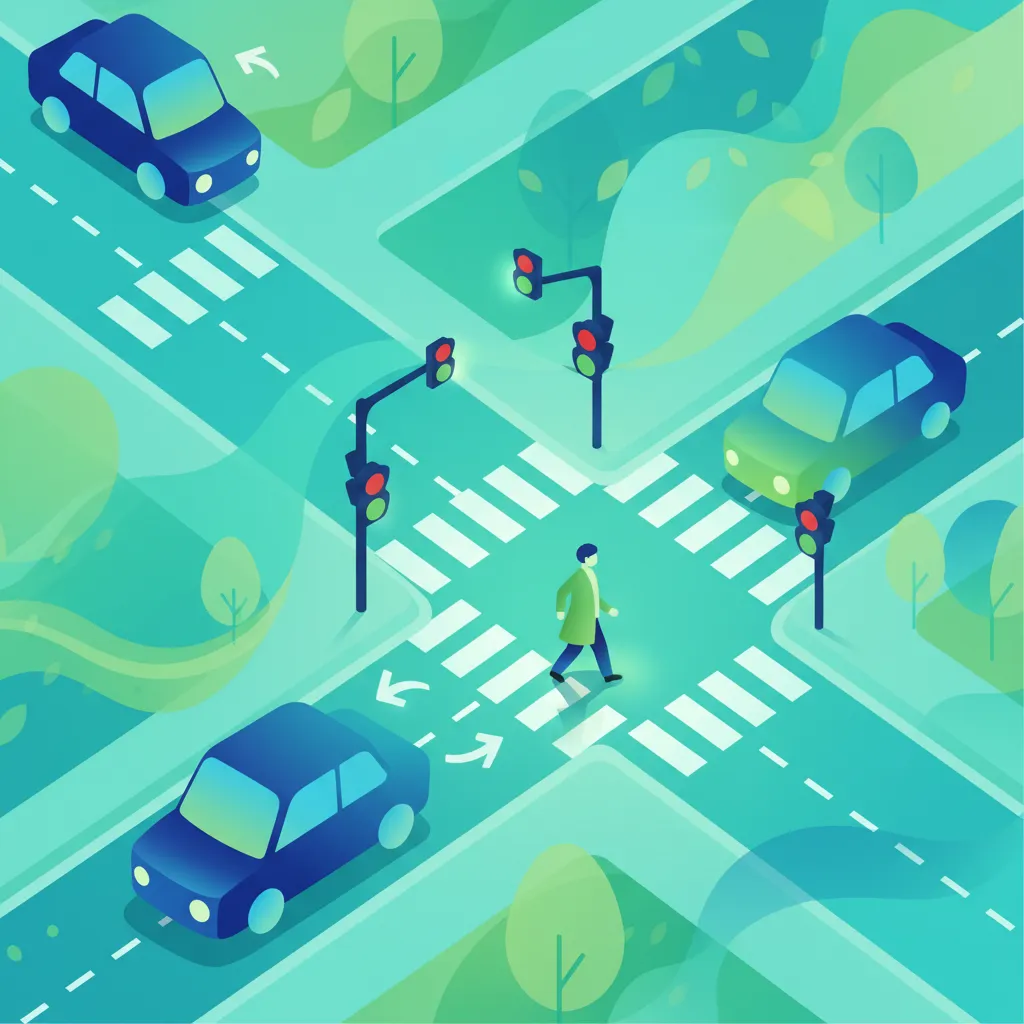
This lesson examines various intersection configurations in Iceland, including those controlled by traffic lights, four-way stops, and uncontrolled intersections without signals. Learners study how priority is determined in each scenario through signage, road markings, and the relative position of vehicles. The lesson also covers specific turning regulations and highlights the importance of assessing sight lines to ensure safe passage through complex junctions.
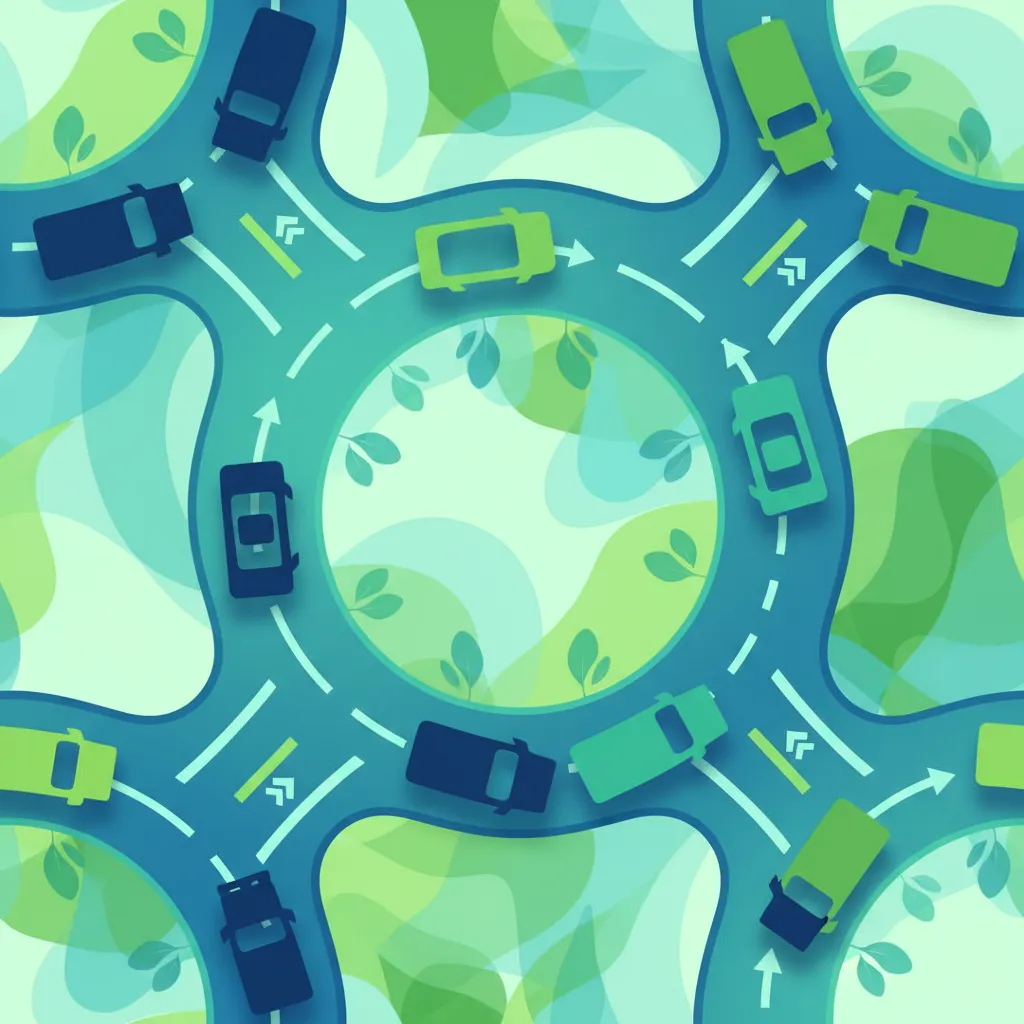
This lesson focuses on the operation of roundabouts, which are common in Icelandic towns and rural areas, and explains how drivers must yield to circulating traffic upon entry. The content covers how to interpret roundabout signage and follow lane markings to maintain correct positioning. Students also learn strategies for safe exit, handling multi-lane roundabouts, and recognizing deceptive entries that require heightened vigilance for smooth navigation.
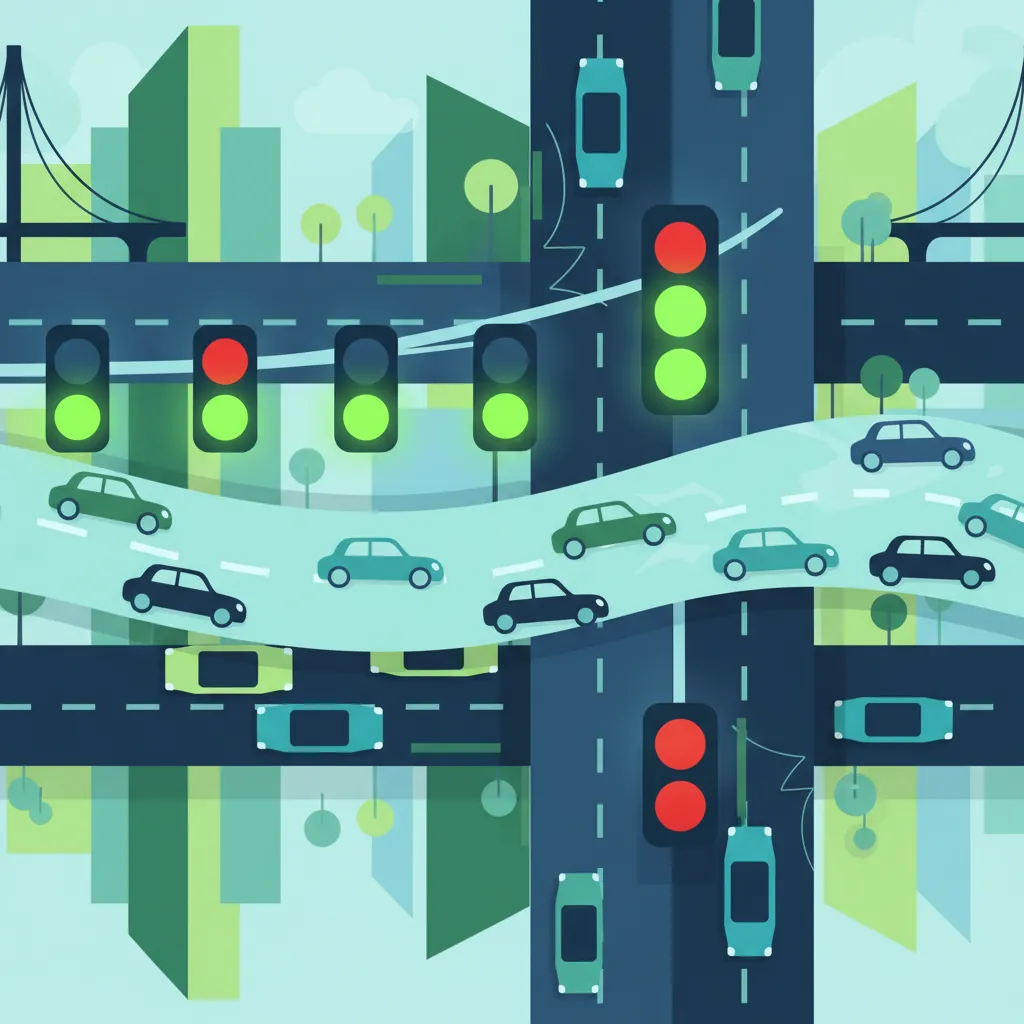
This lesson focuses on the operation of traffic lights in Iceland, describing standard three-phase cycles (red, amber, green) and variations such as flashing amber for yielding. Learners will also explore dedicated signals for pedestrians, cyclists, and turning movements, including arrow indications. The lesson explains how signal timing integrates with right-of-way rules at intersections, ensuring drivers can interpret and respond to each light state to maintain safety.
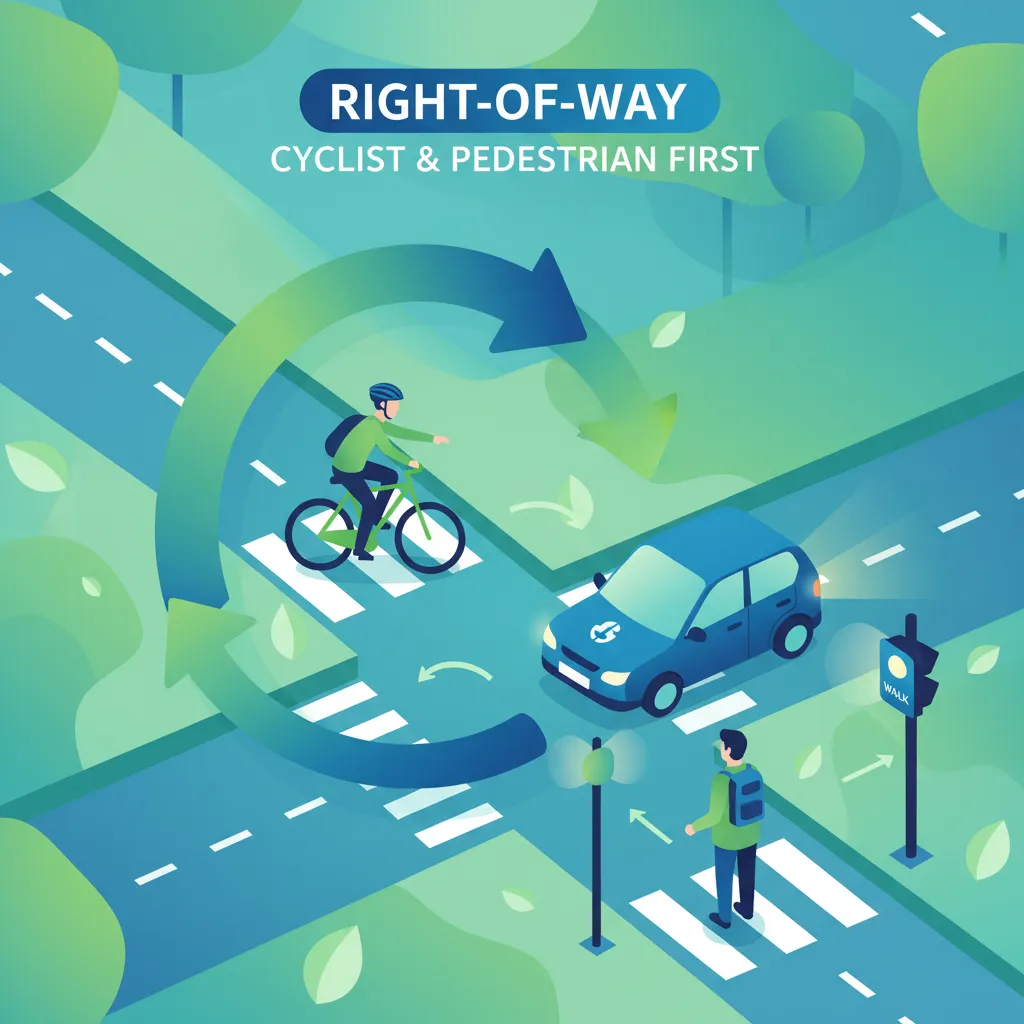
This lesson examines the legal framework defining right-of-way, distinguishing between priority and secondary roads, and detailing yielding responsibilities. It teaches riders how to assess intersections and approach safely based on Icelandic traffic law. Understanding these principles is critical for preventing collisions and ensuring smooth traffic flow at all types of junctions.
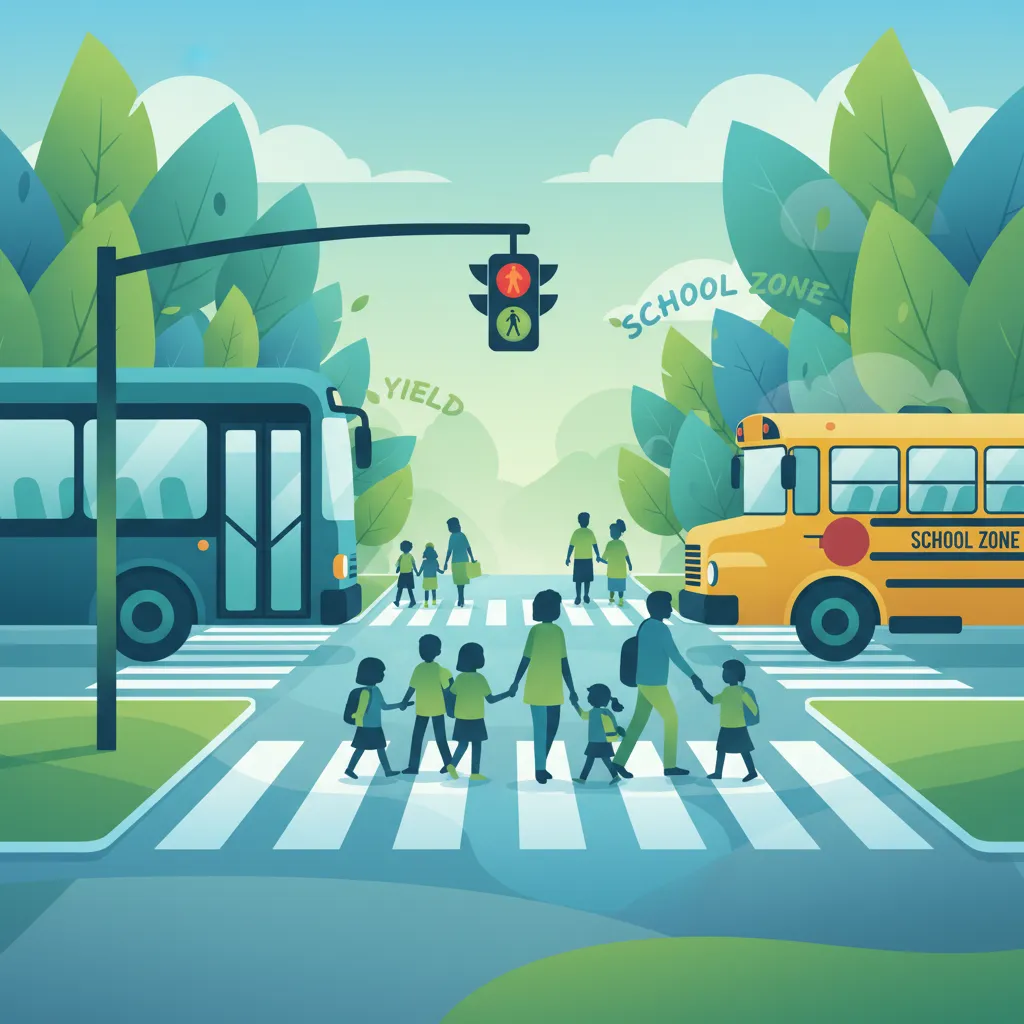
This lesson examines the broader dynamics of urban traffic flow, focusing on interactions with public transport, pedestrian islands, and traffic calming measures. Content includes the rules for navigating bus priority lanes, yielding to trams, and handling congested intersections safely. Learners also study speed restrictions in school zones and the use of pedestrian islands to manage cross-traffic, emphasizing the importance of anticipation in complex urban settings.
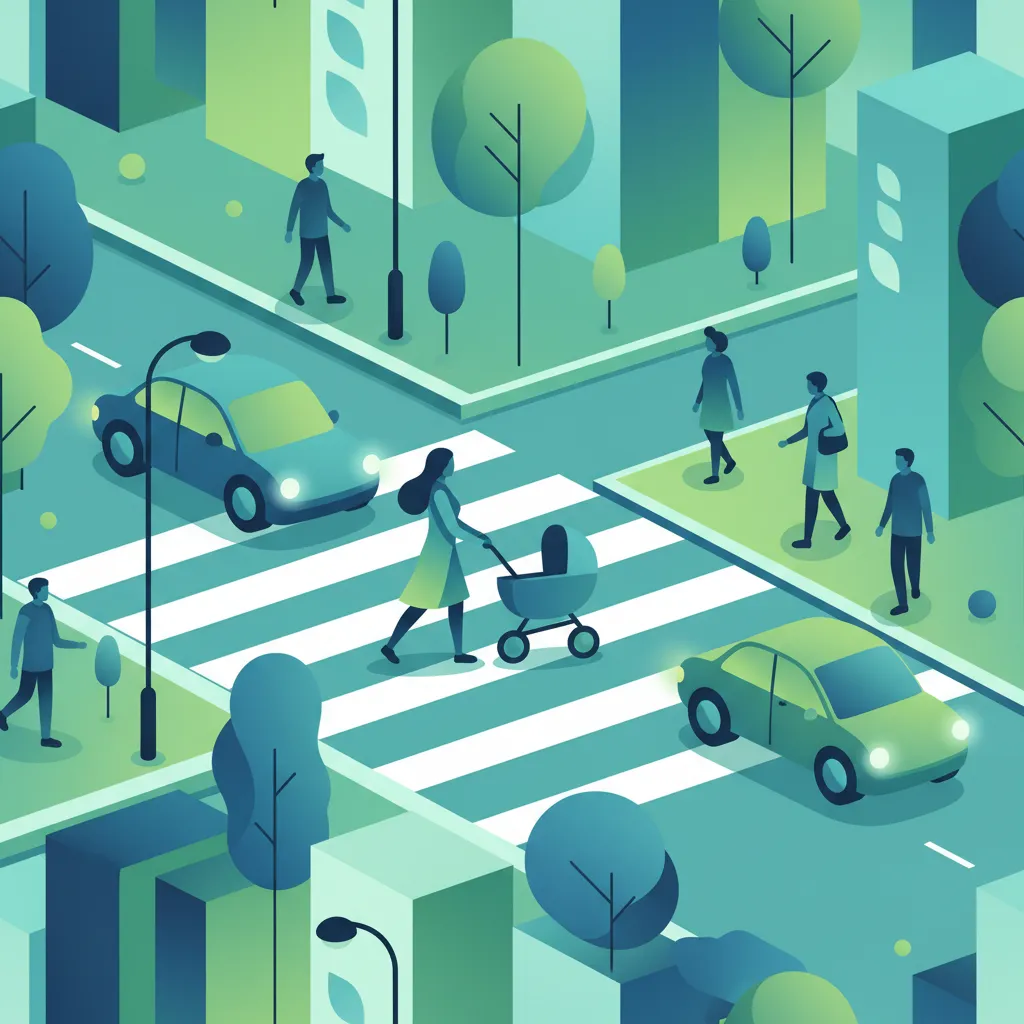
This lesson outlines the regulations governing pedestrian crossings, including zebra crossings, pedestrian traffic lights, and the driver’s obligations to yield. Learners will study how to identify crosswalk markings, interpret pedestrian signal phases, and understand the enhanced caution required in school zones and areas with high foot traffic. The content also emphasizes the need for drivers to anticipate vulnerable pedestrians and provide additional yielding in low-visibility conditions.

This lesson explores the conduct required at uncontrolled crossings where the right-hand rule typically applies. It emphasizes the need to reduce speed, be prepared to stop, and establish clear communication with other road users. Riders will learn to assess the situation carefully and proceed only when it is confirmed to be safe, a critical skill for rural and residential areas.
This lesson covers the conditions under which U-turns and three-point turns are permitted in Iceland, focusing on road width, visibility, and legal restrictions. The content outlines the step-by-step procedure for safely performing a three-point turn in confined spaces, including correct mirror usage and blind spot checks. Learners also explore scenarios where U-turns are prohibited, such as on narrow gravel roads or where signage explicitly bans such manoeuvres.
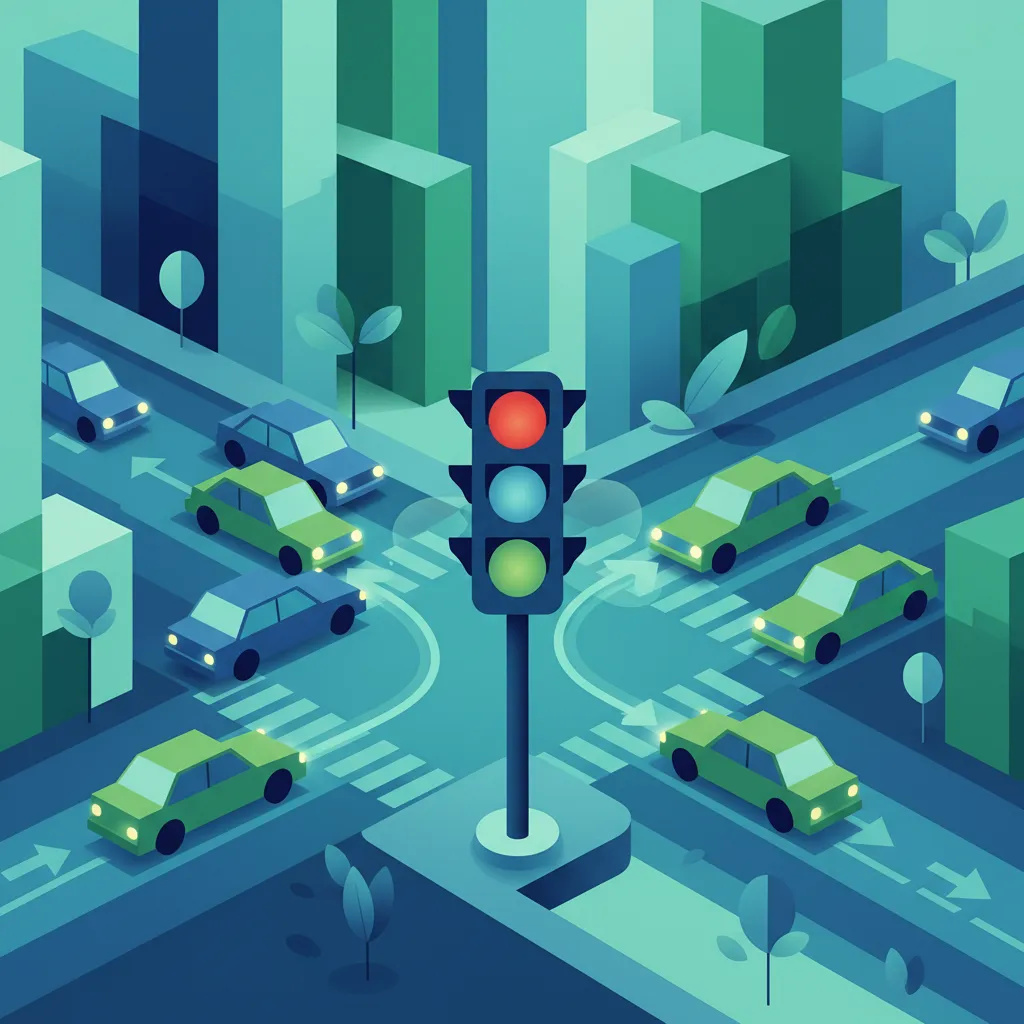
This lesson dissects the three-color traffic light system, detailing the meaning of red, amber, and green signals, including flashing lights and directional arrows. It explains how signal timing impacts moped riders and the legal requirement to obey all signals at intersections. Proper interpretation is crucial for navigating signalized junctions safely and avoiding conflicts with other traffic.
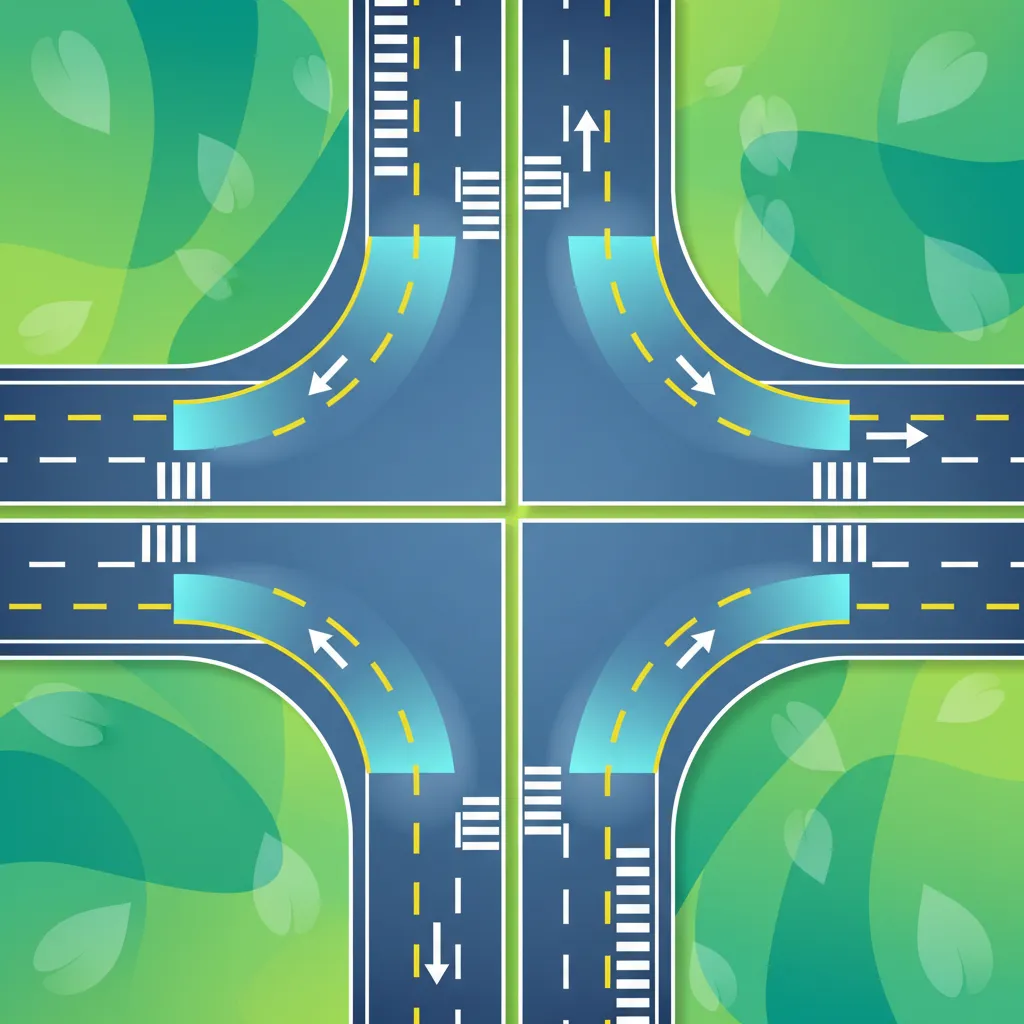
This lesson provides a comprehensive overview of the road markings found on Icelandic roads, from solid and broken lane lines to symbols indicating turning lanes and pedestrian crossings. The content details the visual meanings of each marking, such as solid lines indicating no crossing and broken lines permitting lane changes. Additionally, the lesson addresses the purpose of reflective markers and surface textures used in low-visibility or icy conditions, providing a framework for interpreting pavement cues.
Learn about frequent mistakes drivers make concerning right-of-way at junctions, roundabouts, and pedestrian crossings in Iceland. Understand the correct application of yielding and priority rules to prevent accidents and ensure legal compliance.
This lesson outlines the regulations governing pedestrian crossings, including zebra crossings, pedestrian traffic lights, and the driver’s obligations to yield. Learners will study how to identify crosswalk markings, interpret pedestrian signal phases, and understand the enhanced caution required in school zones and areas with high foot traffic. The content also emphasizes the need for drivers to anticipate vulnerable pedestrians and provide additional yielding in low-visibility conditions.
This lesson examines the legal framework defining right-of-way, distinguishing between priority and secondary roads, and detailing yielding responsibilities. It teaches riders how to assess intersections and approach safely based on Icelandic traffic law. Understanding these principles is critical for preventing collisions and ensuring smooth traffic flow at all types of junctions.
This lesson focuses on the operation of roundabouts, which are common in Icelandic towns and rural areas, and explains how drivers must yield to circulating traffic upon entry. The content covers how to interpret roundabout signage and follow lane markings to maintain correct positioning. Students also learn strategies for safe exit, handling multi-lane roundabouts, and recognizing deceptive entries that require heightened vigilance for smooth navigation.
This lesson explores the conduct required at uncontrolled crossings where the right-hand rule typically applies. It emphasizes the need to reduce speed, be prepared to stop, and establish clear communication with other road users. Riders will learn to assess the situation carefully and proceed only when it is confirmed to be safe, a critical skill for rural and residential areas.
This lesson focuses on interpreting road surface markings, including solid and broken lines that govern lane changes and positioning. Learners will understand the rules associated with turning arrows, pedestrian crossings, and markings for dedicated lanes. Correctly reading these markings is essential for maintaining proper lane discipline and navigating complex road layouts safely.
This lesson explores the proper use of lane markings to maintain correct vehicle centering and adherence to the prescribed traffic flow direction in Iceland. The content describes how to interpret solid and broken lines, maintain safe following distances within a lane, and avoid unintended lane departures. Learners also examine the legal prohibitions on using the road shoulder for general travel, ensuring compliance with lane discipline rules for overall traffic safety.
This lesson provides a comprehensive overview of the road markings found on Icelandic roads, from solid and broken lane lines to symbols indicating turning lanes and pedestrian crossings. The content details the visual meanings of each marking, such as solid lines indicating no crossing and broken lines permitting lane changes. Additionally, the lesson addresses the purpose of reflective markers and surface textures used in low-visibility or icy conditions, providing a framework for interpreting pavement cues.
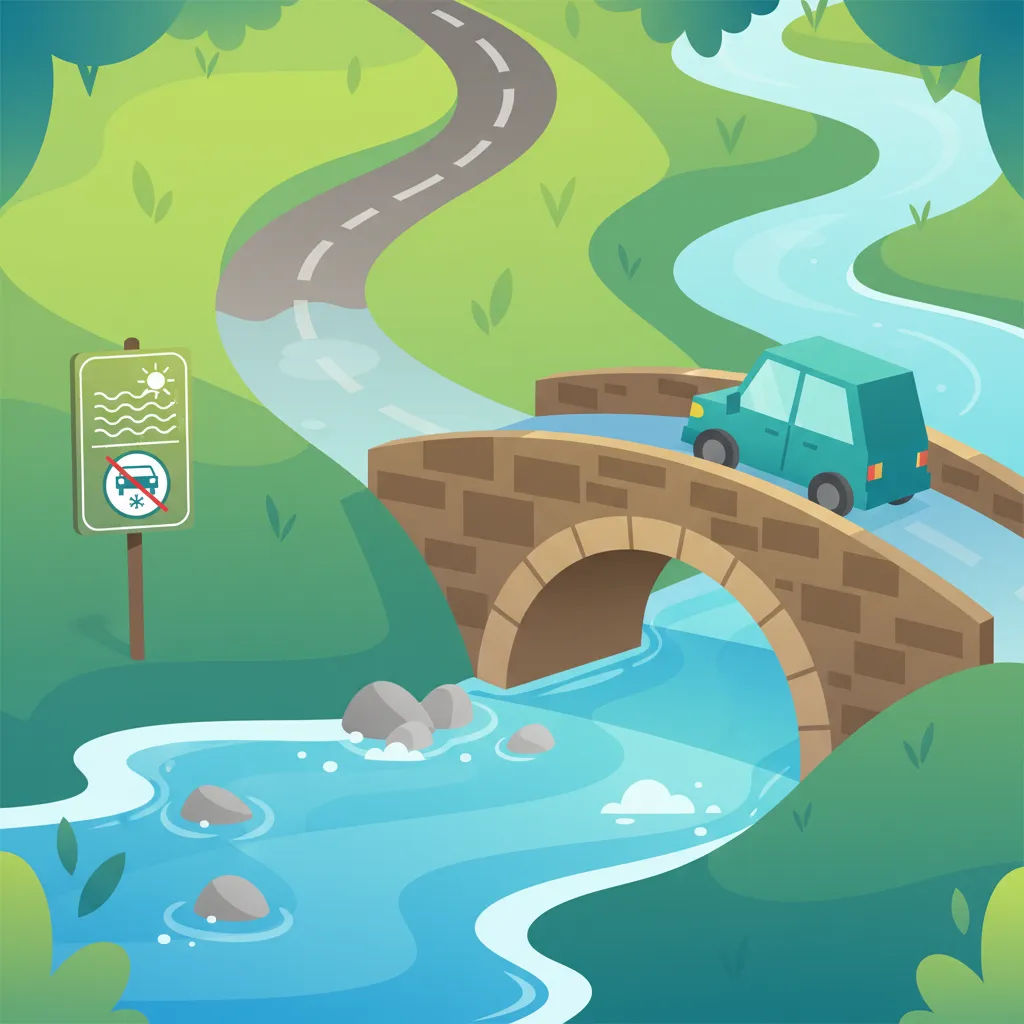
This lesson examines procedures for crossing single-lane bridges and water fords, paying particular attention to right-of-way rules and appropriate vehicle positioning. Learners will learn how to assess water depth before fording, understand seasonal restrictions that may affect access, and recognize signage indicating temporary closures. The lesson also covers the need for highland travel permits on certain routes and weight limits for bridges.
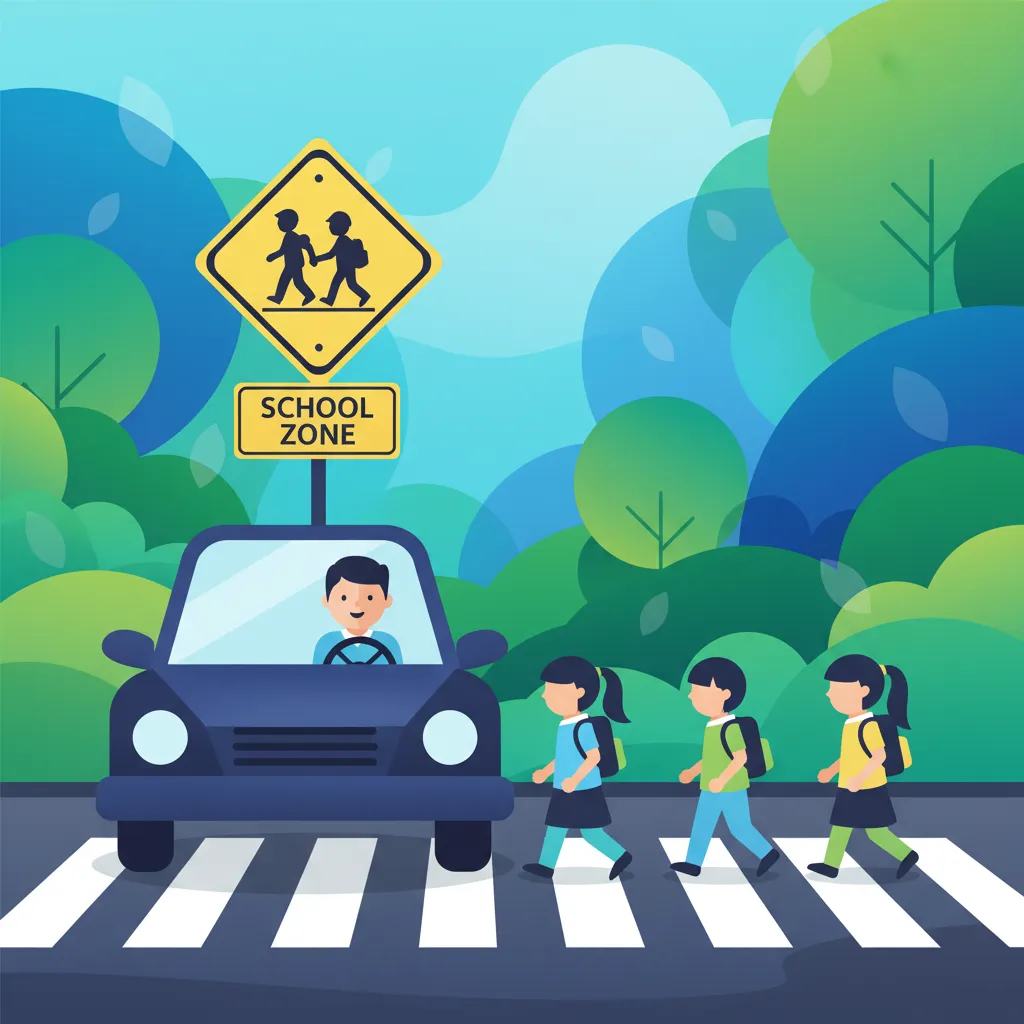
This lesson covers the strict rules governing pedestrian crossings and school zones, where riders have a heightened duty of care. It details the obligation to yield to pedestrians, recognize school zone signage, and reduce speed significantly. Riders learn to be extra vigilant for the unpredictable movements of children and other vulnerable road users in these sensitive areas.
This lesson examines various intersection configurations in Iceland, including those controlled by traffic lights, four-way stops, and uncontrolled intersections without signals. Learners study how priority is determined in each scenario through signage, road markings, and the relative position of vehicles. The lesson also covers specific turning regulations and highlights the importance of assessing sight lines to ensure safe passage through complex junctions.
Find clear answers to common questions learners have about Right‑of‑Way Basics and Yielding Rules. Learn how the lesson is structured, which driving theory objectives it supports, and how it fits into the overall learning path of units and curriculum progression in Iceland. These explanations help you understand key concepts, lesson flow, and exam focused study goals.
In Iceland, the terms 'yield' and 'give-way' are often used interchangeably, and they refer to the same obligation: to let other traffic pass if necessary. The triangular sign pointing down with a red border is the standard give-way (yield) sign. It means you must slow down or stop if necessary to let oncoming traffic or traffic from the right on the intersecting road pass.
Generally, yes. At intersections where there are no traffic lights, signs, or road markings indicating otherwise, Icelandic traffic law dictates that vehicles approaching from the right have priority. However, always assess the situation; if one road is clearly a main road and the other a side road, priority is given to the main road regardless of direction.
Priority roads are usually indicated by a diamond-shaped sign with a white centre and a thick blue border. Conversely, a yield or give-way sign at the intersection indicates that the road you are approaching is a secondary road, and you must yield to traffic on the priority road.
Drivers must always yield to pedestrians, especially at marked pedestrian crossings (zebra crossings). Cyclists also have priority in many situations, particularly when using designated cycle paths or when turning, where they have the right of way over vehicles turning in the same direction or crossing their path.
No, the general 'yield to the right' rule does not typically apply at roundabouts. When entering a roundabout in Iceland, you must yield to traffic already circulating within the roundabout, and usually to vehicles approaching from your right if there is no specific yield sign directing you otherwise. Always follow the signs and road markings present.
Utilize our advanced practice set search to pinpoint the exact Icelandic driving theory topics you need to review. Filter by subject, difficulty, or question type to create a highly effective study plan and ensure you are fully prepared for your official driving licence test in Iceland.