
This lesson dives into the specific rules for pedestrian crossings and school zones, crucial areas where moped riders must show extra caution. Understanding your obligations here is vital for both your AM licence theory exam and for protecting vulnerable road users on Icelandic roads.
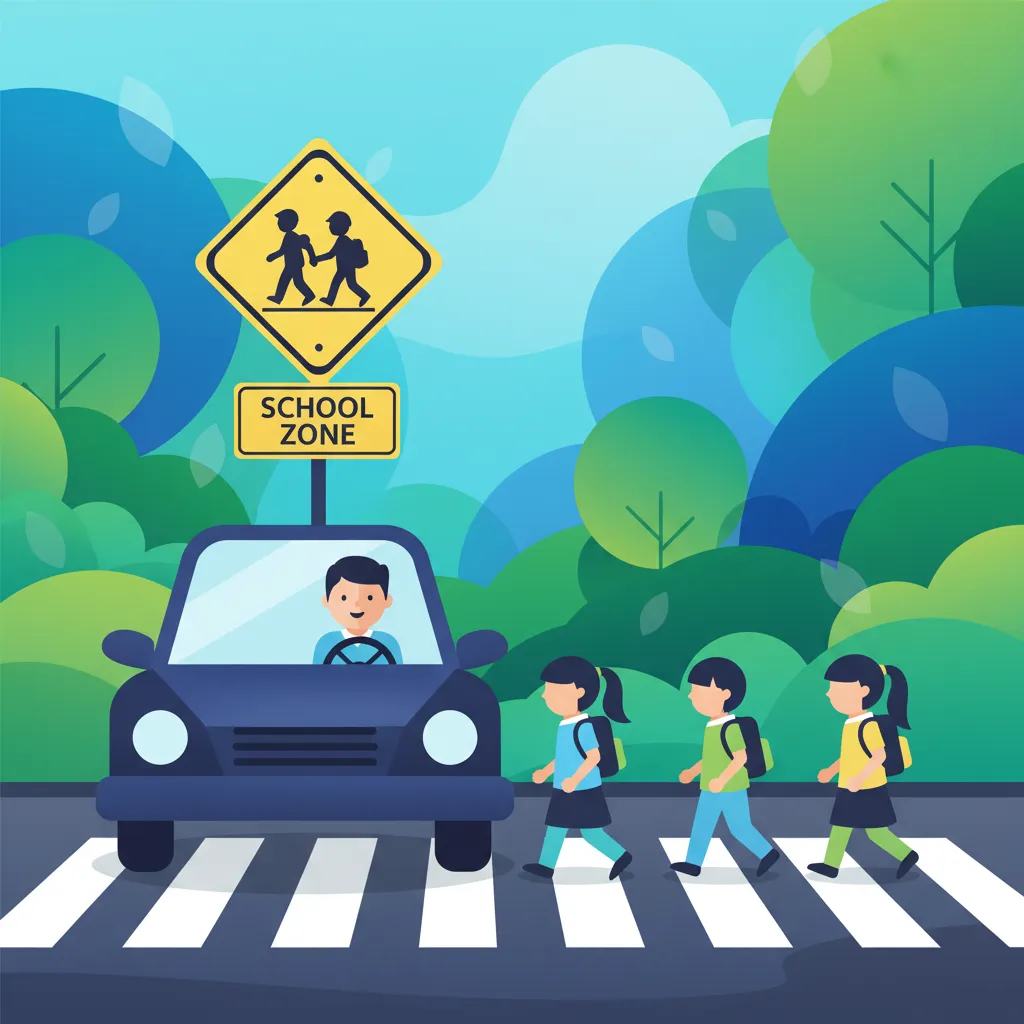
Lesson content overview
Navigating public roads safely requires a thorough understanding of all traffic regulations, especially those concerning vulnerable road users. This lesson focuses on pedestrian crossings and school zones, areas where Category AM moped riders have a significantly heightened duty of care. These zones are designed to protect pedestrians, particularly children, who are more susceptible to serious injury in traffic incidents.
Your ability to recognize these areas, adhere to specific rules, and adapt your riding behavior directly impacts road safety outcomes and your legal responsibilities as a moped rider in Iceland. Mastery of these concepts is crucial for passing your Icelandic Category AM moped license theory exam and ensuring safe riding practices.
Pedestrians, especially children, the elderly, and individuals with disabilities, are considered vulnerable road users due to their limited protection in a collision. Unlike vehicles, they lack physical barriers to absorb impact, making even low-speed collisions potentially fatal. Children, in particular, often exhibit unpredictable behavior, have limited spatial awareness, and struggle to accurately judge the speed and distance of approaching vehicles.
As a moped rider, you are obligated to exercise extreme caution in areas where these vulnerable users are likely to be present. This heightened awareness is not merely a suggestion; it is a fundamental principle enshrined in traffic law, underscoring the collective responsibility to prevent accidents and protect those most at risk.
Pedestrian crossings are designated areas on the roadway where pedestrians have the legal right-of-way to cross. These areas are clearly marked by road signs and specific road surface markings. As a moped rider, you must always be prepared to stop and yield to pedestrians at these locations.
Icelandic roads feature various types of pedestrian crossings, each with specific rules and markings that moped riders must understand.
Uncontrolled pedestrian crossings, commonly known as "zebra crossings," are marked by distinctive white stripes painted on the road surface, resembling a zebra pattern. They are often accompanied by blue circular signs featuring a white walking person. These crossings do not have traffic lights to regulate vehicle flow.
When approaching an uncontrolled crossing, you must be extremely vigilant. Pedestrians on or about to step onto the crossing always have the right-of-way. You must slow down, be prepared to stop, and yield to any pedestrian present.
Controlled pedestrian crossings are regulated by traffic lights, both for vehicles and for pedestrians. These crossings often feature red, amber, and green lights for vehicles, and separate red and green "walking person" signals for pedestrians. Some controlled crossings may also have flashing amber lights for vehicles, indicating that while vehicles may proceed, they should still be prepared to stop if pedestrians are crossing.
At signalised crossings, you must obey the traffic lights. If the vehicle light is green, you may proceed, but you must still watch for any pedestrian who might be crossing against their signal or who is still clearing the crossing. If the pedestrian signal is green, pedestrians have the right-of-way, and you must stop.
The principle of yielding to pedestrians at marked crossings is a cornerstone of Icelandic traffic law. Whenever a pedestrian is on a marked crossing or clearly indicating their intention to cross, you, as the moped rider, must stop and allow them to pass safely. This obligation applies whether the pedestrian is already in your path or is approaching from the side.
Always assume a pedestrian might step onto a crossing. Even if they are looking away or on their phone, you must be prepared to stop. Their unpredictability places a higher burden of responsibility on the rider.
Failure to yield can lead to severe consequences, including collisions, legal penalties, and significant liability. Always prioritize pedestrian safety over your progress.
At many pedestrian crossings and intersections, you will encounter painted lines on the road surface: stop lines and yield lines. These lines are crucial for managing traffic flow and ensuring safety.
A stop line is a solid white line across the lane, indicating the precise point where vehicles must stop when required. At a pedestrian crossing, you must stop behind the stop line if a pedestrian is present on or about to enter the crossing. This line provides a critical safety buffer, ensuring you do not encroach upon the pedestrian's crossing space.
A yield line, often consisting of a series of triangles painted on the road, indicates where you should give way to other traffic or pedestrians. While you might not always need to stop completely at a yield line, you must slow down and be prepared to stop if necessary to allow other road users with priority to pass.
To prevent dangerous situations and ensure maximum visibility for both riders and pedestrians, Icelandic traffic law prohibits overtaking in the vicinity of pedestrian crossings. Specifically, you must not overtake another vehicle within a certain distance before and after a marked pedestrian crossing.
This rule is vital because an overtaking vehicle can obscure a pedestrian from the view of another driver, or vice-versa, leading to a surprise collision. Always maintain your position behind the vehicle in front of you until you have safely cleared the crossing.
Effective visual scanning is paramount when approaching pedestrian crossings. You must actively scan the entire area, not just directly ahead, for potential hazards. This includes checking pavements, bus stops, and parked cars, as pedestrians might emerge from these locations.
Anticipation means predicting potential movements. For example, if you see a child near a crossing, anticipate that they might run into the road. If an elderly person is slowly approaching, anticipate they might take longer to cross. Always be prepared to stop, even if no pedestrian is immediately visible.
School zones are specially designated areas around schools and playgrounds where the presence of children necessitates additional safety measures. These zones are characterized by reduced speed limits and specific signage designed to alert drivers.
School zones are clearly identified by specific road signs. These signs typically depict children crossing or playing, often with a school bag. They may be accompanied by supplementary signs indicating the reduced speed limit (e.g., "30 km/h") and the duration of the zone (e.g., "during school hours" or "weekdays 8-16").
It is your responsibility to recognize these signs immediately and adjust your riding behavior accordingly. The reduced speed limit applies from the point of the sign and continues until you pass another sign indicating the end of the school zone or a different speed limit.
The most critical rule in a school zone is the mandatory reduction of your speed. While the general speed limit on a road might be 50 km/h, a school zone will typically impose a lower limit, often 30 km/h, or even 20 km/h in very sensitive areas. This reduction is not optional; it is a legally binding requirement.
Reducing your speed in a school zone serves multiple purposes:
Always begin decelerating before you enter the school zone. This ensures you are at or below the posted speed limit as soon as you pass the sign.
School zones can be either permanent or temporary.
The concept of "heightened duty of care" is especially relevant in school zones. This legal principle means that you, as a rider, bear a greater responsibility to protect children due to their inherent vulnerability and unpredictable behavior. Children may suddenly dart into the road, chase a ball, or not look before crossing, making it essential for you to anticipate such actions.
This heightened duty implies that in the event of an incident involving a child in a school zone, your liability may be greater, and penalties could be more severe if negligence is proven. It is a constant reminder to be extra vigilant and cautious.
In school zones, be particularly aware of school buses. When a school bus is stopped with its warning lights flashing to load or unload children, you must stop and wait. Do not proceed until the bus driver signals it is safe or the bus has moved on, and all children are clear of the roadway. Children might cross in front of or behind the bus, and your view may be obstructed.
Similarly, be aware of playgrounds, parks, and other areas where children might be playing near the road. Even if these are not officially designated "school zones," the presence of children always demands increased caution and reduced speed.
Adherence to specific rules and regulations is mandatory for all road users, including Category AM moped riders, when it comes to pedestrian crossings and school zones in Iceland. These rules are designed to safeguard vulnerable road users and ensure smooth, safe traffic flow.
Several articles within Icelandic Traffic Law (Umferðarlög) govern behavior at pedestrian crossings and in school zones:
Failing to comply with the rules regarding pedestrian crossings and school zones can result in severe legal consequences, including fines, demerit points on your license, and increased liability in case of an accident.
Some common violations include:
Understanding these rules and the rationale behind them is essential for safe riding and avoiding penalties.
Riding safely at pedestrian crossings and in school zones is not just about memorizing rules; it's about applying those rules dynamically based on changing environmental conditions and understanding the underlying safety principles.
Adverse weather conditions significantly impact your ability to stop and your visibility.
Always remember that other road users may also have reduced visibility and reaction times in poor weather.
The condition of your moped plays a critical role in your ability to stop safely.
Before every ride, ensure your moped is in good working order. Adjust your following distance and approach speed to crossings and school zones based on your vehicle's condition to ensure you can stop safely and promptly.
The relationship between speed and safety is governed by fundamental physics, specifically kinetic energy (E = ½mv²). This formula demonstrates that kinetic energy increases exponentially with speed.
Beyond legal mandates, a deep understanding of human behavior, especially that of children, is crucial. Children are still developing their perceptual and cognitive skills. They may:
Always assume the most unpredictable scenario when children are nearby. Maintain continuous visual scanning, reduce speed, and cover your brakes to be ready for an immediate stop. This proactive approach is the essence of defensive riding.
To solidify your understanding, consider these practical scenarios and how you would apply the learned principles:
Urban Zebra Crossing, Daylight, Dry Conditions: You are riding your moped at 40 km/h on a main road with a 50 km/h limit. You approach a zebra crossing. A person is waiting at the side, clearly looking to cross.
School Zone During School Hours, Light Rain, Dusk: You enter a residential street with a permanent school zone sign indicating 30 km/h. It's 15:30 on a Tuesday, light rain is falling, and visibility is starting to decrease.
Signalised Pedestrian Crossing at Night: You approach a controlled crossing. The traffic light for vehicles is green, but the pedestrian signal shows a flashing red 'walking person' indicating pedestrians are still clearing. There is also a right-hand stop line.
Overtaking Before a Crossing: You are following a car on a road where the speed limit is 50 km/h. Ahead, you see a pedestrian crossing sign, and the crossing itself is about 25 metres away. The car in front of you is driving slowly, about 35 km/h.
By consistently applying these principles and maintaining a proactive, defensive riding mindset, you will contribute significantly to road safety and ensure compliance with Icelandic traffic laws.
Pedestrian crossings and school zones in Iceland require moped riders to exercise heightened vigilance and specific legal obligations. At marked crossings, pedestrians always have priority and riders must stop behind stop lines to yield. School zones impose mandatory speed limits (typically 30 km/h) to protect children who may act unpredictably. Overtaking near crossings is prohibited by law (Icelandic Traffic Law §82), and riders must adapt their speed for weather conditions that affect braking distances. These rules are designed to protect vulnerable road users, with children receiving the highest level of protection due to their limited judgment of vehicle speed and distance.
A short set of high-value points that capture the most important learning from this lesson.
Pedestrians on marked crossings always have legal right-of-way; you must stop and yield even if they have only just stepped onto the crossing.
School zones impose mandatory reduced speed limits (typically 30 km/h) that apply from the sign location until officially ended.
Overtaking is prohibited within a specific distance before and after a marked pedestrian crossing to prevent dangerous blind spots.
Stop lines must be respected at crossings; you must stop behind the line when pedestrians are present or crossing.
Children in school zones require heightened duty of care due to their unpredictable behavior and limited spatial awareness.
Explore all units and lessons included in this driving theory course.
Zebra crossings are uncontrolled and marked with white stripes; signalised crossings use traffic lights for both vehicles and pedestrians.
Wet or icy conditions dramatically increase braking distances; reduce speed further in school zones during adverse weather.
Kinetic energy increases exponentially with speed (E = ½mv²); reducing from 45 to 30 km/h cuts energy by approximately 56%.
School zones may be permanent (24/7) or temporary (school hours only); check supplementary signs for active times.
Even with a green light at a signalised crossing, you must still stop if pedestrians are clearing the crossing.
Assuming a pedestrian waiting at a crossing does not intend to cross; they still have right-of-way if they step on.
Not reducing speed sufficiently in school zones or failing to begin deceleration before entering the zone.
Attempting to overtake another vehicle near a pedestrian crossing, which is explicitly prohibited by traffic law.
Crossing the stop line prematurely or encroaching on the pedestrian crossing space while pedestrians are present.
Underestimating stopping distances on wet or icy roads, leading to collisions in crossing areas.
Lesson content overview
A short set of high-value points that capture the most important learning from this lesson.
Pedestrians on marked crossings always have legal right-of-way; you must stop and yield even if they have only just stepped onto the crossing.
School zones impose mandatory reduced speed limits (typically 30 km/h) that apply from the sign location until officially ended.
Overtaking is prohibited within a specific distance before and after a marked pedestrian crossing to prevent dangerous blind spots.
Stop lines must be respected at crossings; you must stop behind the line when pedestrians are present or crossing.
Children in school zones require heightened duty of care due to their unpredictable behavior and limited spatial awareness.
Explore all units and lessons included in this driving theory course.
Zebra crossings are uncontrolled and marked with white stripes; signalised crossings use traffic lights for both vehicles and pedestrians.
Wet or icy conditions dramatically increase braking distances; reduce speed further in school zones during adverse weather.
Kinetic energy increases exponentially with speed (E = ½mv²); reducing from 45 to 30 km/h cuts energy by approximately 56%.
School zones may be permanent (24/7) or temporary (school hours only); check supplementary signs for active times.
Even with a green light at a signalised crossing, you must still stop if pedestrians are clearing the crossing.
Assuming a pedestrian waiting at a crossing does not intend to cross; they still have right-of-way if they step on.
Not reducing speed sufficiently in school zones or failing to begin deceleration before entering the zone.
Attempting to overtake another vehicle near a pedestrian crossing, which is explicitly prohibited by traffic law.
Crossing the stop line prematurely or encroaching on the pedestrian crossing space while pedestrians are present.
Underestimating stopping distances on wet or icy roads, leading to collisions in crossing areas.
Explore search topics learners often look for when studying Pedestrian Crossings and School Zones. These topics reflect common questions about road rules, driving situations, safety guidance, and lesson level theory preparation for learners in Iceland.
Browse additional driving theory lessons that cover connected traffic rules, road signs, and common driving situations related to this topic. Improve your understanding of how different rules interact across everyday traffic scenarios.
Understand your specific legal obligations at pedestrian crossings and in school zones in Iceland. This lesson clarifies yielding rules, speed limits, and safety duties for Category AM riders to ensure compliance with traffic legislation.
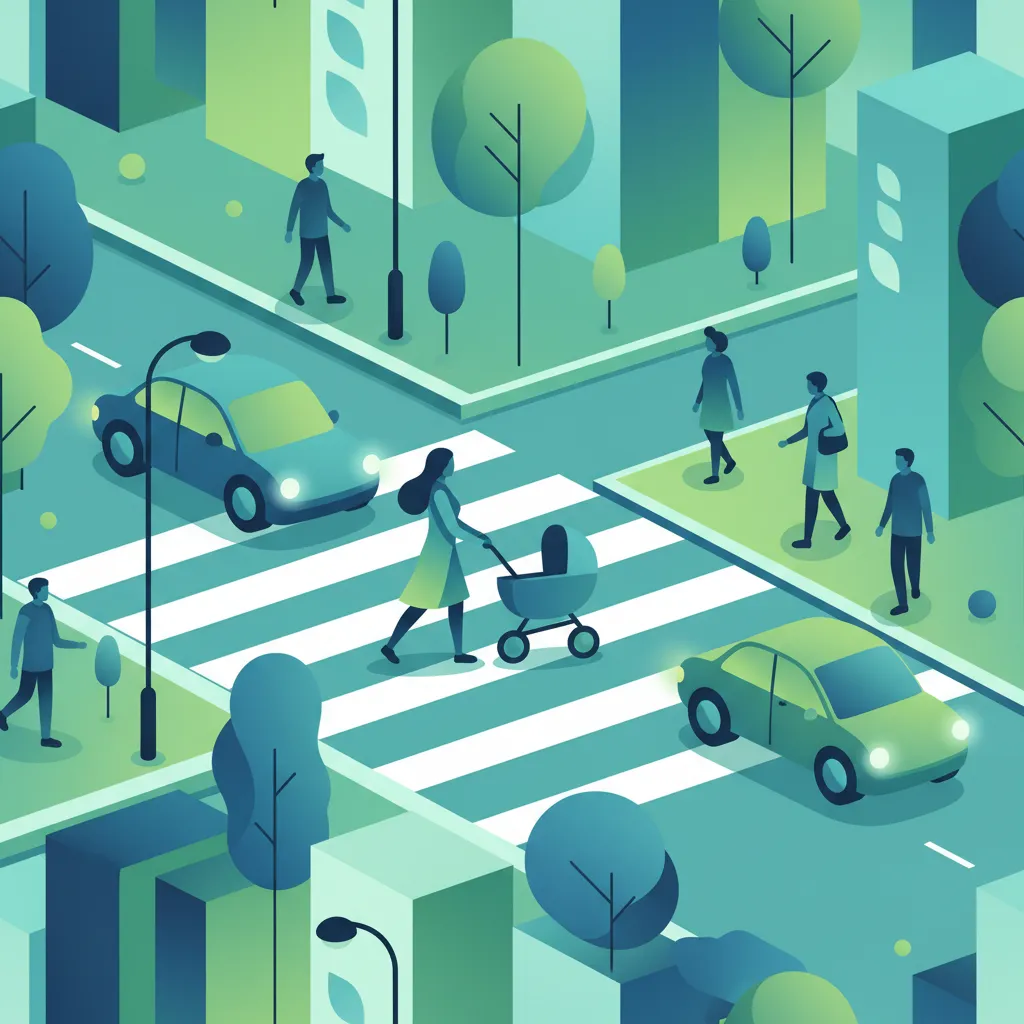
This lesson outlines the regulations governing pedestrian crossings, including zebra crossings, pedestrian traffic lights, and the driver’s obligations to yield. Learners will study how to identify crosswalk markings, interpret pedestrian signal phases, and understand the enhanced caution required in school zones and areas with high foot traffic. The content also emphasizes the need for drivers to anticipate vulnerable pedestrians and provide additional yielding in low-visibility conditions.
This lesson provides a contextual overview of Iceland's traffic law hierarchy, explaining how national statutes, road codes, and local rules interact. Learners will understand the precedence of national laws and how to interpret regulations in different jurisdictions. This knowledge ensures riders can correctly apply the relevant rules in any driving scenario, ensuring consistent legal compliance.
This lesson focuses on interpreting road surface markings, including solid and broken lines that govern lane changes and positioning. Learners will understand the rules associated with turning arrows, pedestrian crossings, and markings for dedicated lanes. Correctly reading these markings is essential for maintaining proper lane discipline and navigating complex road layouts safely.
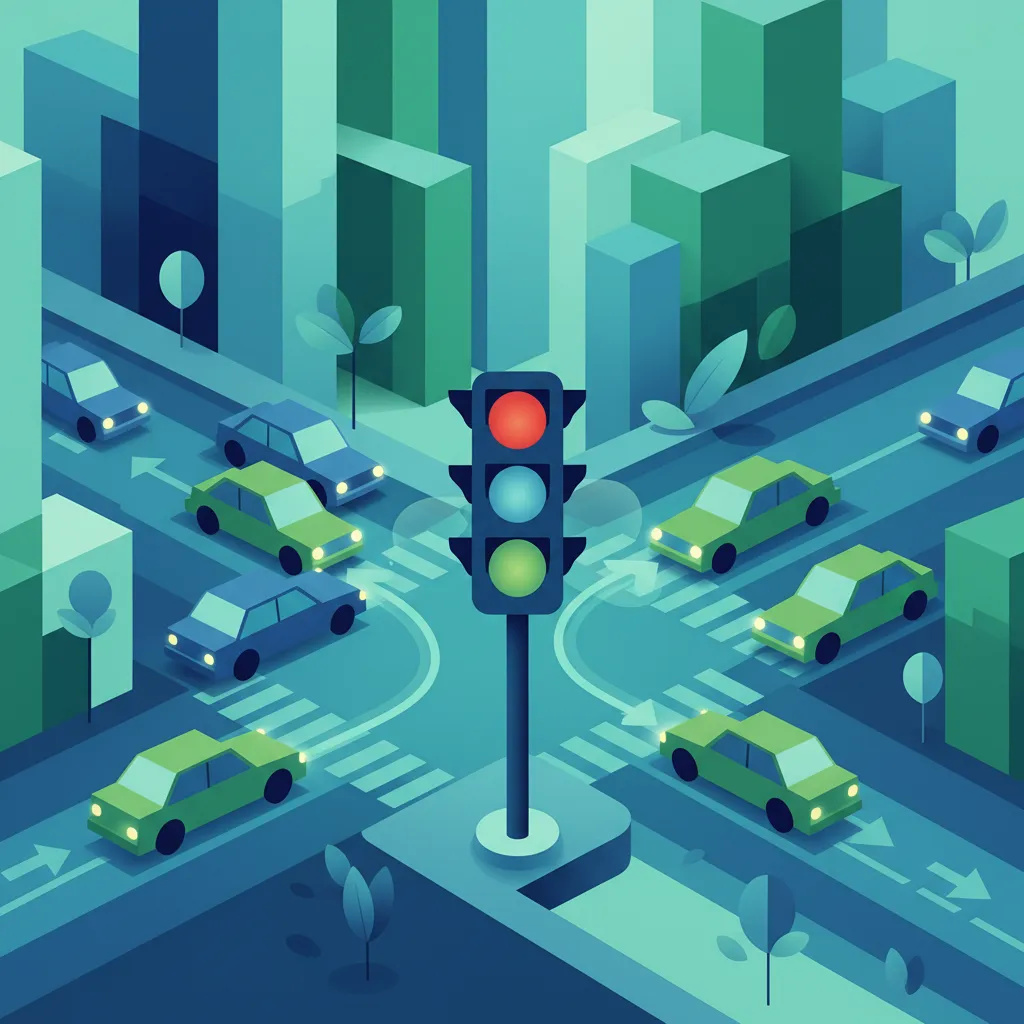
This lesson dissects the three-color traffic light system, detailing the meaning of red, amber, and green signals, including flashing lights and directional arrows. It explains how signal timing impacts moped riders and the legal requirement to obey all signals at intersections. Proper interpretation is crucial for navigating signalized junctions safely and avoiding conflicts with other traffic.
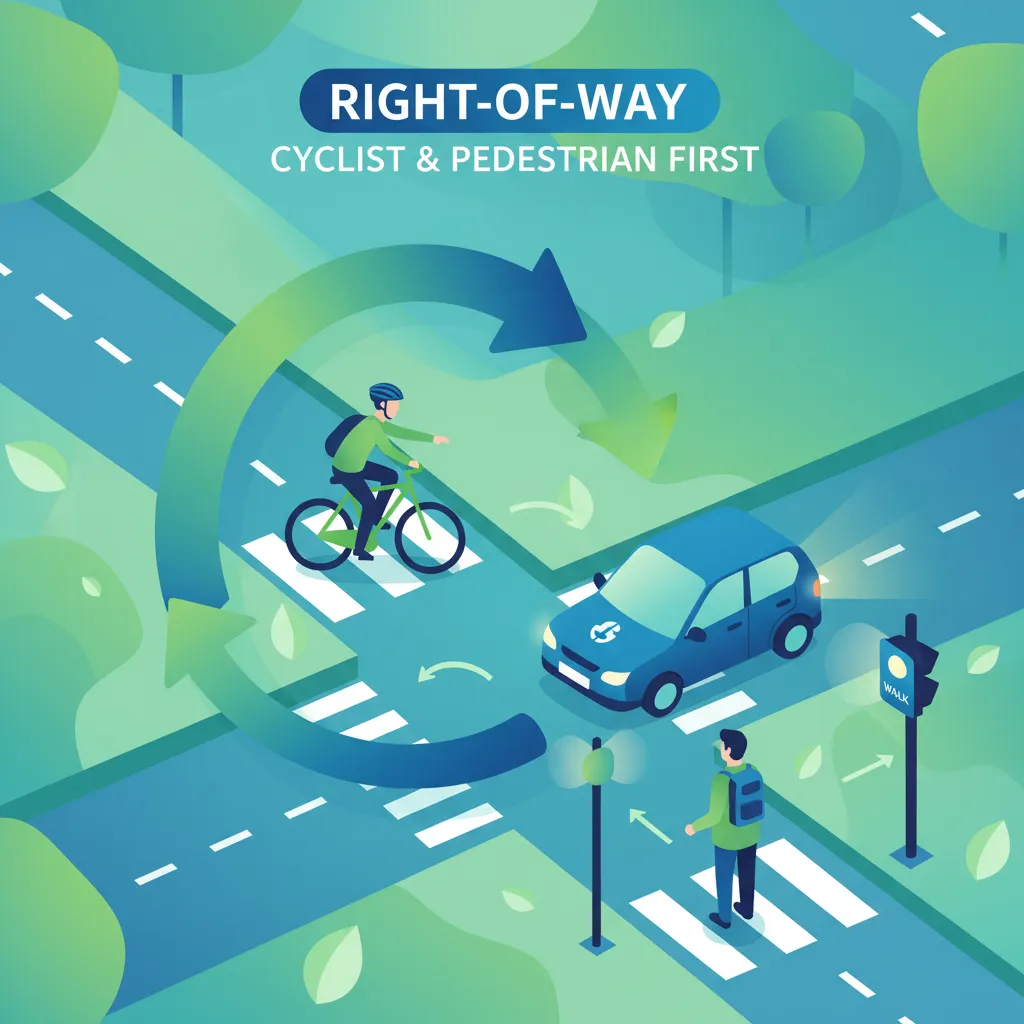
This lesson examines the legal framework defining right-of-way, distinguishing between priority and secondary roads, and detailing yielding responsibilities. It teaches riders how to assess intersections and approach safely based on Icelandic traffic law. Understanding these principles is critical for preventing collisions and ensuring smooth traffic flow at all types of junctions.
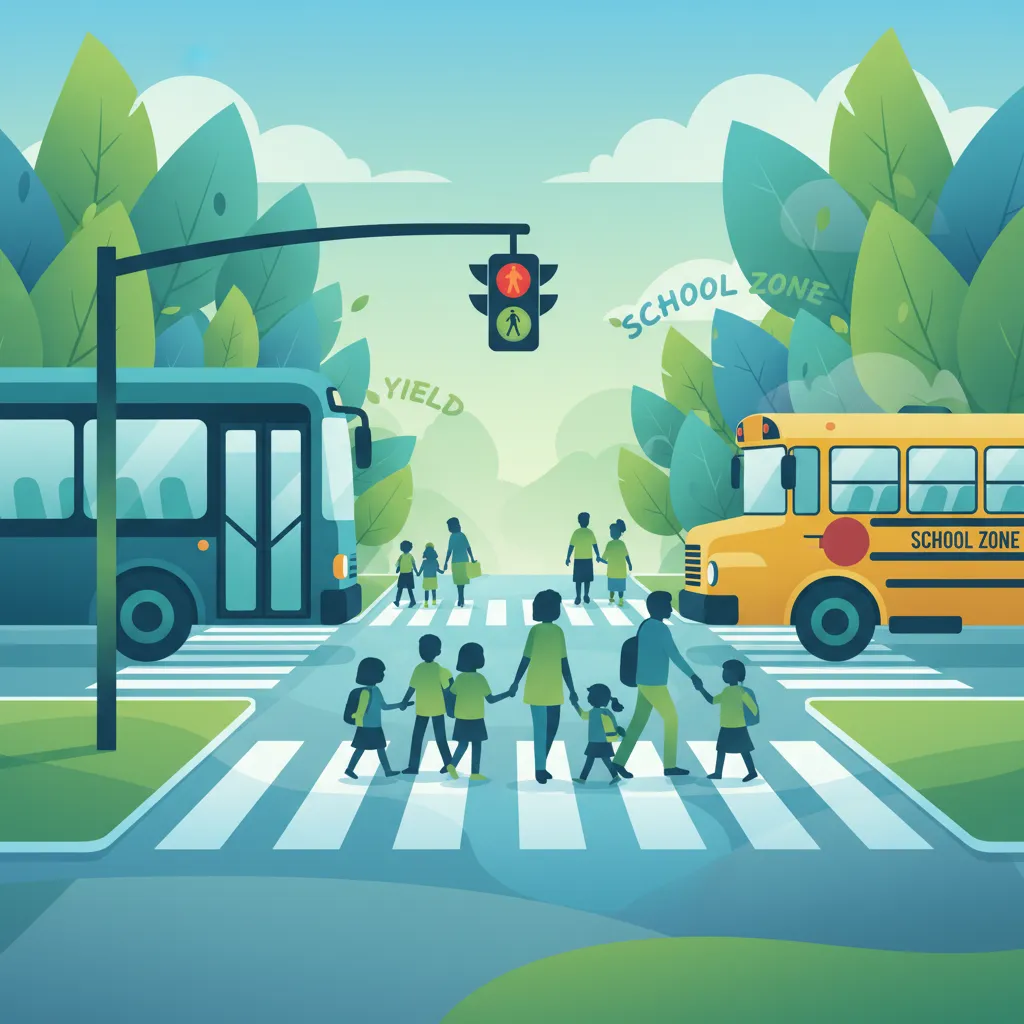
This lesson examines the broader dynamics of urban traffic flow, focusing on interactions with public transport, pedestrian islands, and traffic calming measures. Content includes the rules for navigating bus priority lanes, yielding to trams, and handling congested intersections safely. Learners also study speed restrictions in school zones and the use of pedestrian islands to manage cross-traffic, emphasizing the importance of anticipation in complex urban settings.
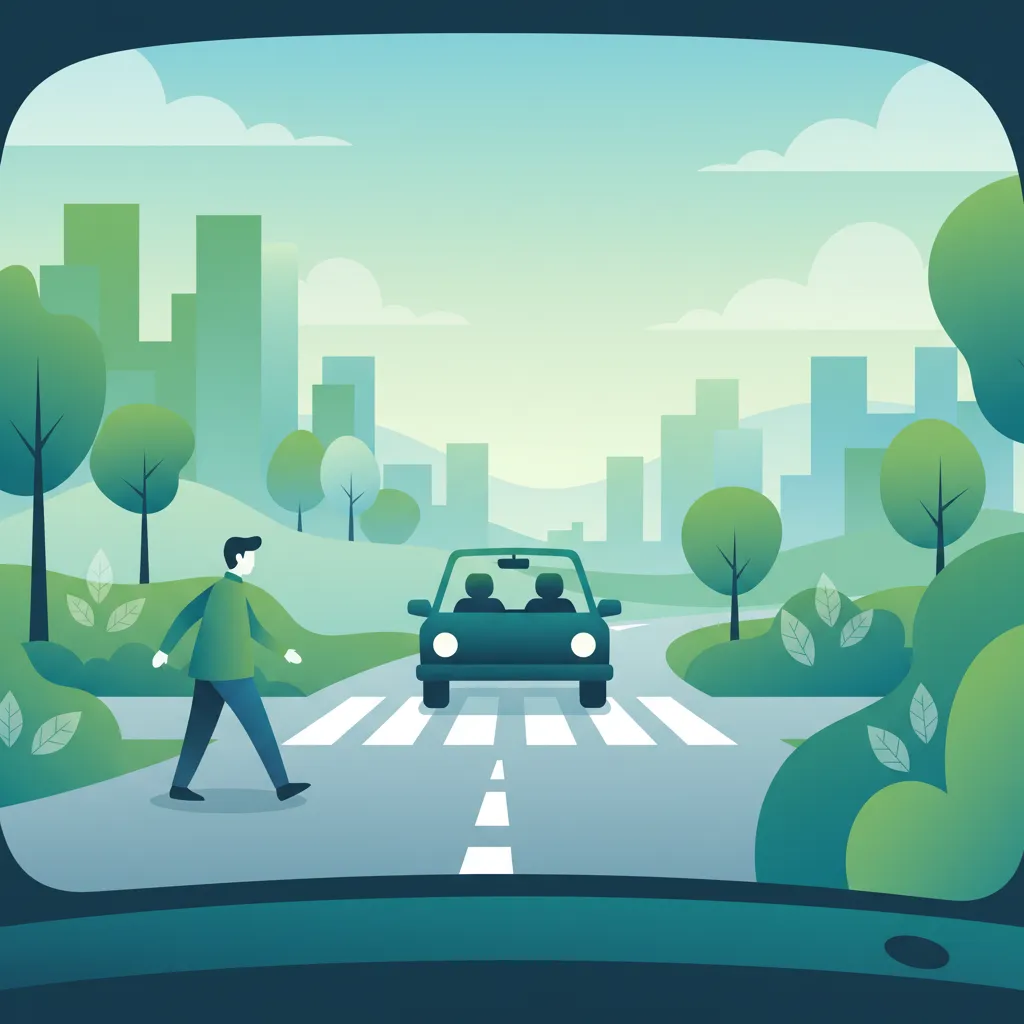
This lesson explores the conduct required at uncontrolled crossings where the right-hand rule typically applies. It emphasizes the need to reduce speed, be prepared to stop, and establish clear communication with other road users. Riders will learn to assess the situation carefully and proceed only when it is confirmed to be safe, a critical skill for rural and residential areas.
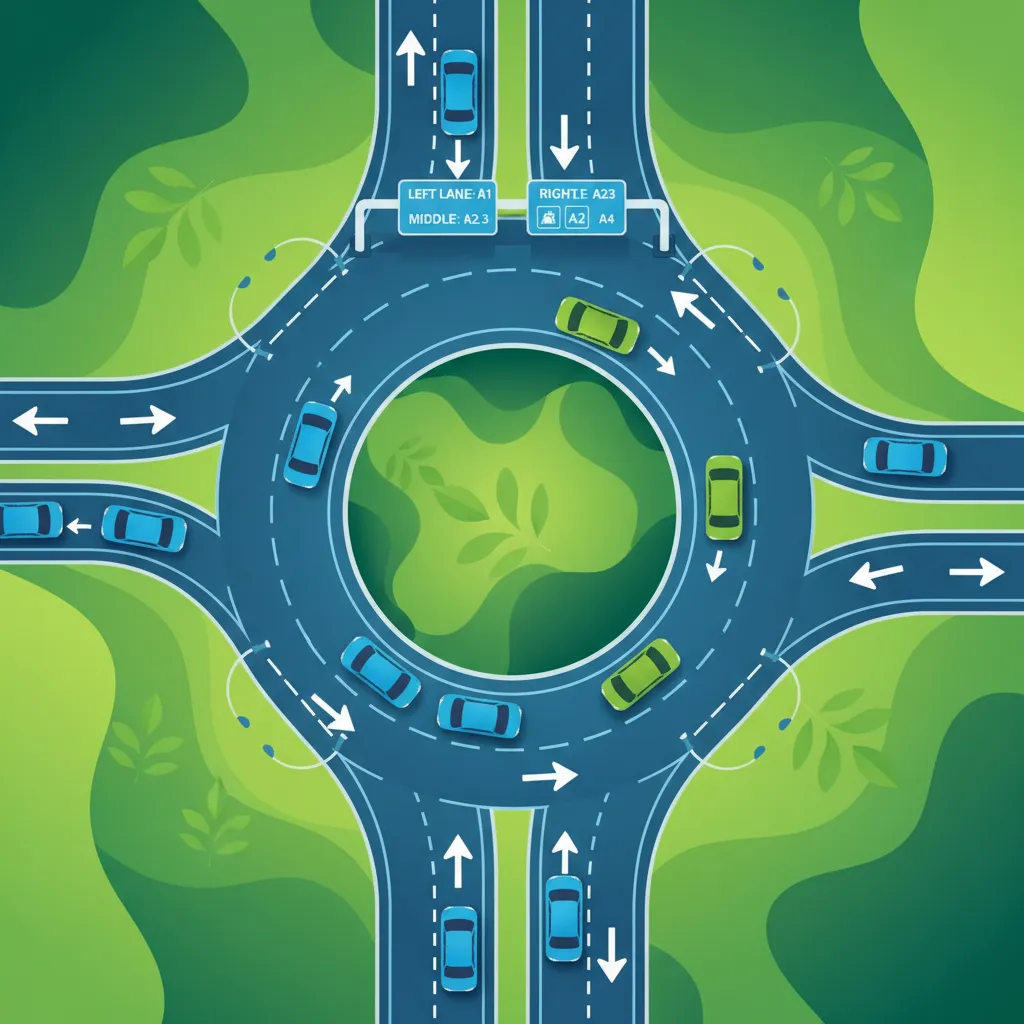
This lesson provides a detailed guide to navigating roundabouts, focusing on the rule to yield to circulating traffic before entering. It covers correct lane positioning for different exits, proper signaling, and maintaining a safe speed within the roundabout. Special guidance is provided for moped riders to enhance their visibility and safety among larger vehicles.
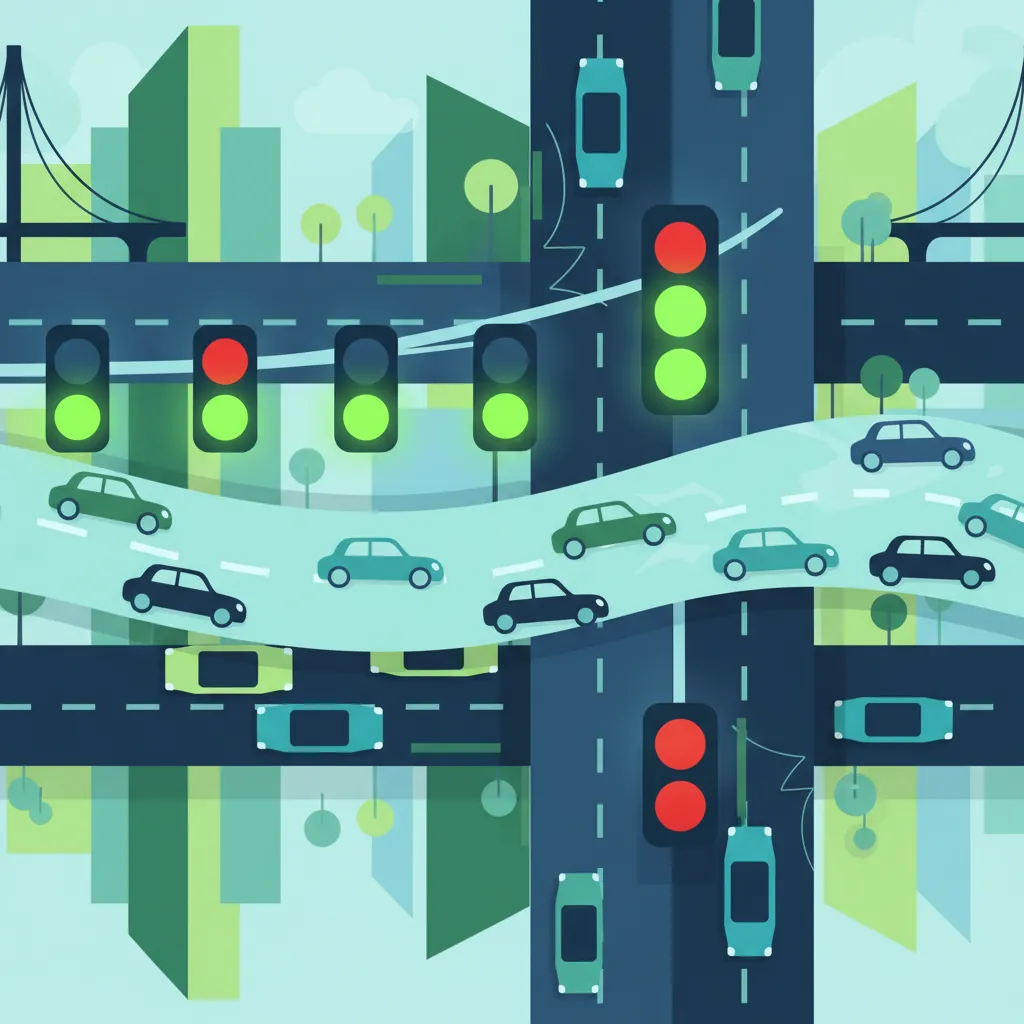
This lesson focuses on the operation of traffic lights in Iceland, describing standard three-phase cycles (red, amber, green) and variations such as flashing amber for yielding. Learners will also explore dedicated signals for pedestrians, cyclists, and turning movements, including arrow indications. The lesson explains how signal timing integrates with right-of-way rules at intersections, ensuring drivers can interpret and respond to each light state to maintain safety.
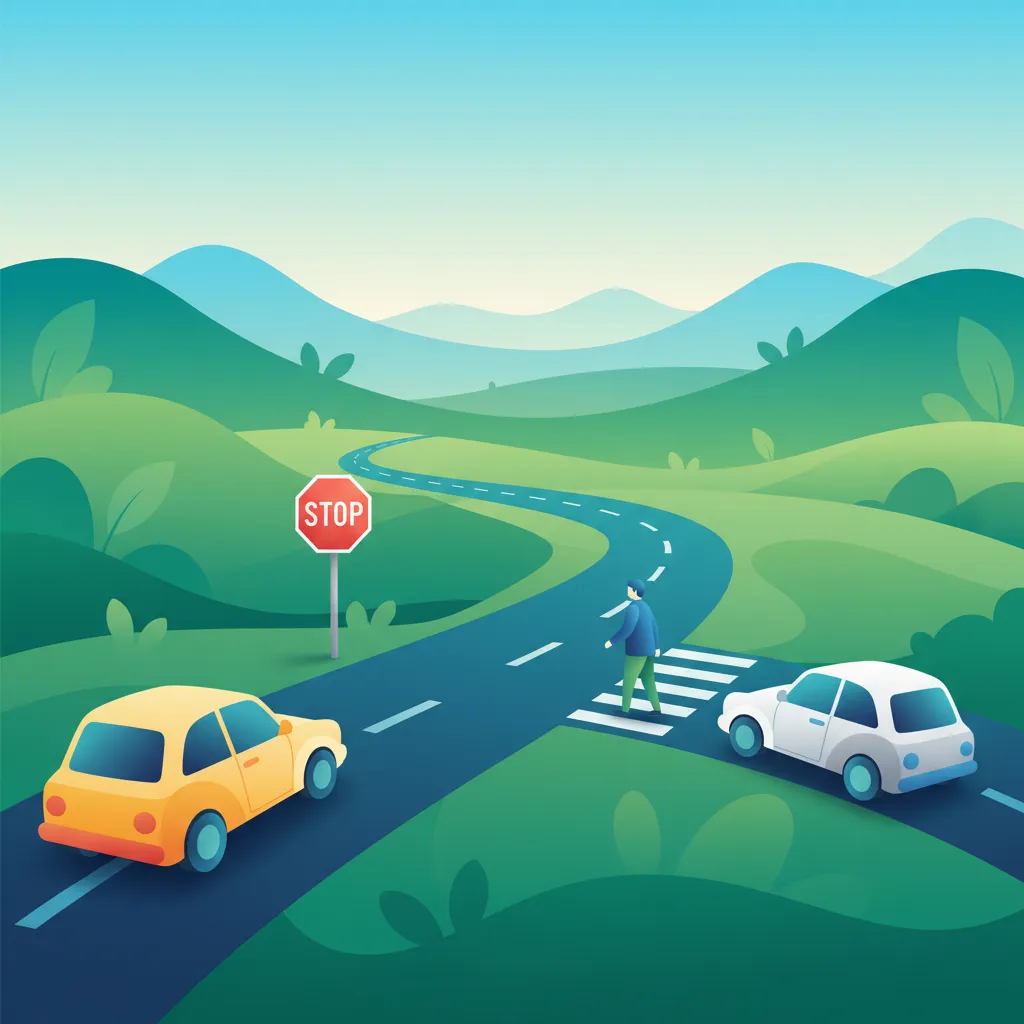
This lesson introduces the fundamental concepts of right-of-way in Iceland, explaining the priority hierarchy that dictates when a driver must yield to others. Learners study the meaning of give-way and yield signs, the distinction between main and side roads, and how stop signs and markings affect vehicle positioning. By understanding these legal obligations, students will be able to determine correct actions at any junction, reducing the risk of collisions.
Learn about the heightened duty of care for moped riders towards vulnerable road users, especially children, in Iceland. This lesson covers critical safety insights and defensive strategies for navigating pedestrian crossings and school zones effectively.
This lesson examines the psychological factors crucial for safe riding, promoting a defensive mindset and heightened risk awareness. It provides strategies for managing stress, identifying potential hazards early, and making proactive decisions to prevent dangerous situations. Cultivating mental discipline and a safety-conscious attitude is fundamental to long-term rider safety on Icelandic roads.
This lesson focuses on the interaction between motor vehicles and cyclists or e-scooter users on Icelandic roads, exploring the dedicated cyclist lane system and safe overtaking regulations. The content covers the required minimum passing distance, the legal status of e-scooters, and the importance of awareness when sharing narrow urban streets. Recommended signaling practices are also discussed to alert vulnerable users of your intentions, especially during nighttime riding.
This lesson helps learners develop an understanding of how drivers perceive and assess risks on Icelandic roads, particularly under variable weather and lighting conditions. The content discusses mental models used to anticipate the actions of other road users and the importance of identifying subtle hazards. By analysing environmental cues and applying systematic hazard perception strategies, students learn to enhance their situational awareness and make safer driving decisions.
This lesson outlines the regulations governing pedestrian crossings, including zebra crossings, pedestrian traffic lights, and the driver’s obligations to yield. Learners will study how to identify crosswalk markings, interpret pedestrian signal phases, and understand the enhanced caution required in school zones and areas with high foot traffic. The content also emphasizes the need for drivers to anticipate vulnerable pedestrians and provide additional yielding in low-visibility conditions.

This lesson focuses on methods to enhance a rider's visibility, covering high-visibility clothing, reflective materials, and strategic lighting. Learners will understand how to use daytime running lights and position themselves to minimize time in others' blind spots. These proactive techniques are essential for being seen by other road users, significantly reducing the risk of collisions.
This lesson outlines best practices for positioning a moped on urban roads to maximize visibility and safety. It explains how to choose a lane position that makes you visible to drivers ahead and behind, while avoiding road debris and dooring hazards from parked cars. The content addresses adapting your position based on traffic speed, density, and road conditions.
This lesson explores the conduct required at uncontrolled crossings where the right-hand rule typically applies. It emphasizes the need to reduce speed, be prepared to stop, and establish clear communication with other road users. Riders will learn to assess the situation carefully and proceed only when it is confirmed to be safe, a critical skill for rural and residential areas.
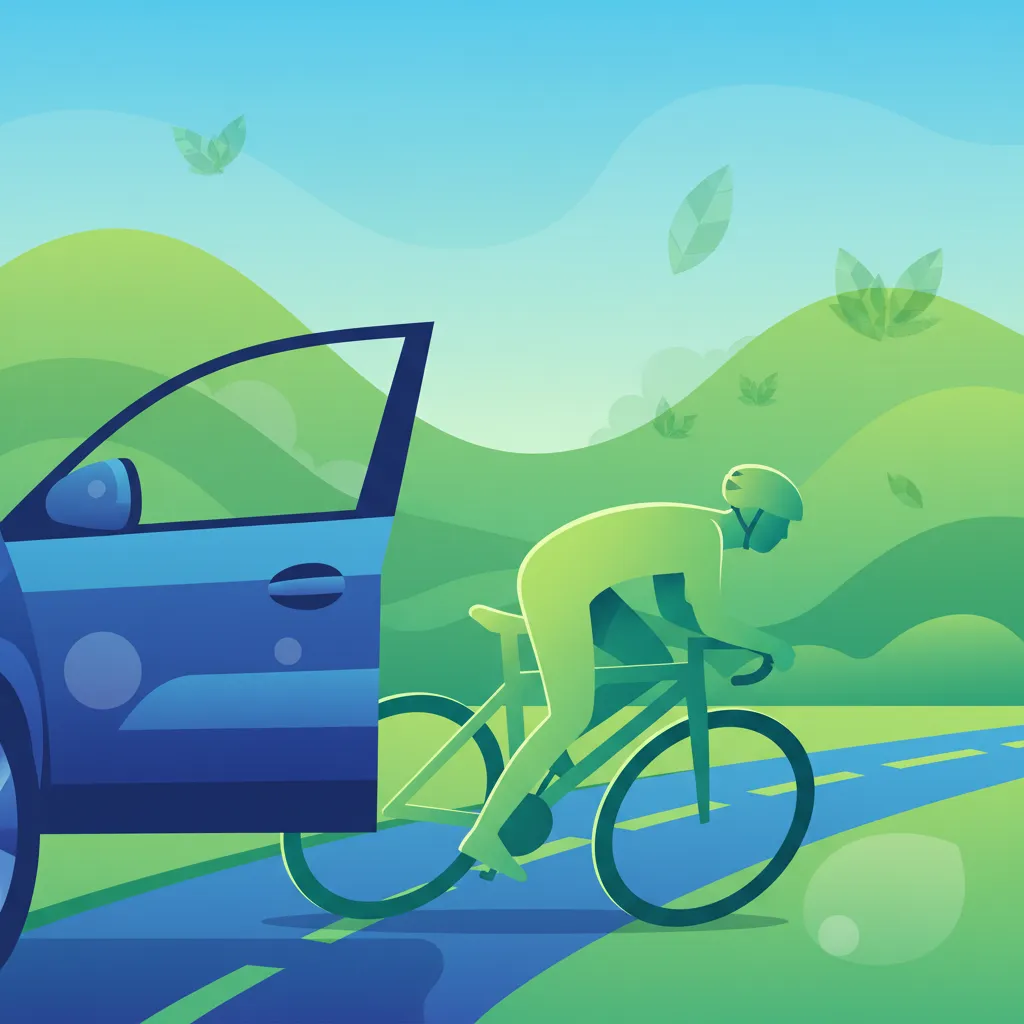
This lesson investigates the significant hazards posed by parked vehicles, particularly the risk of a driver opening a door into a rider's path. It teaches techniques for maintaining a safe buffer zone and scanning for signs of occupancy in parked cars. Riders will learn how to anticipate this common urban danger and plan escape routes to avoid sudden collisions.
This lesson focuses on the concept of maintaining a safe following distance using the time-gap method. It explains how to create a sufficient buffer zone to react to sudden stops by the vehicle ahead. Riders will learn to adjust this gap based on speed, weather, and visibility to prevent rear-end collisions and ensure adequate reaction time.
This lesson examines the legal framework defining right-of-way, distinguishing between priority and secondary roads, and detailing yielding responsibilities. It teaches riders how to assess intersections and approach safely based on Icelandic traffic law. Understanding these principles is critical for preventing collisions and ensuring smooth traffic flow at all types of junctions.
Find clear answers to common questions learners have about Pedestrian Crossings and School Zones. Learn how the lesson is structured, which driving theory objectives it supports, and how it fits into the overall learning path of units and curriculum progression in Iceland. These explanations help you understand key concepts, lesson flow, and exam focused study goals.
Yes, you must always yield to pedestrians who are on or about to enter a pedestrian crossing. For mopeds and all other vehicles, this is a strict rule. Slow down well in advance and be prepared to stop completely if a pedestrian is crossing or waiting to cross.
School zones have an extra emphasis on child safety due to the high probability of children's unpredictable movements. Riders must be exceptionally vigilant, significantly reduce speed below the general limit, and be prepared for sudden stops. Look out for school zone signs and markings.
Yes, Iceland uses standard warning signs depicting pedestrians to indicate pedestrian crossings ahead. There are also specific signs for school zones. Familiarize yourself with these signs as they are frequently tested in the AM theory exam.
While the general speed limit for mopeds might be higher, in school zones, you must always reduce your speed to a level that allows you to stop instantly if needed. This often means driving much slower than the posted speed limit, especially during school hours. Always obey any specific speed limits posted for school zones.
If a police officer or authorized traffic controller is directing traffic at a pedestrian crossing, their signals take precedence over all other traffic signs and rules. Always follow their instructions to ensure safety and proper traffic flow.
Utilize our advanced practice set search to pinpoint the exact Icelandic driving theory topics you need to review. Filter by subject, difficulty, or question type to create a highly effective study plan and ensure you are fully prepared for your official driving licence test in Iceland.