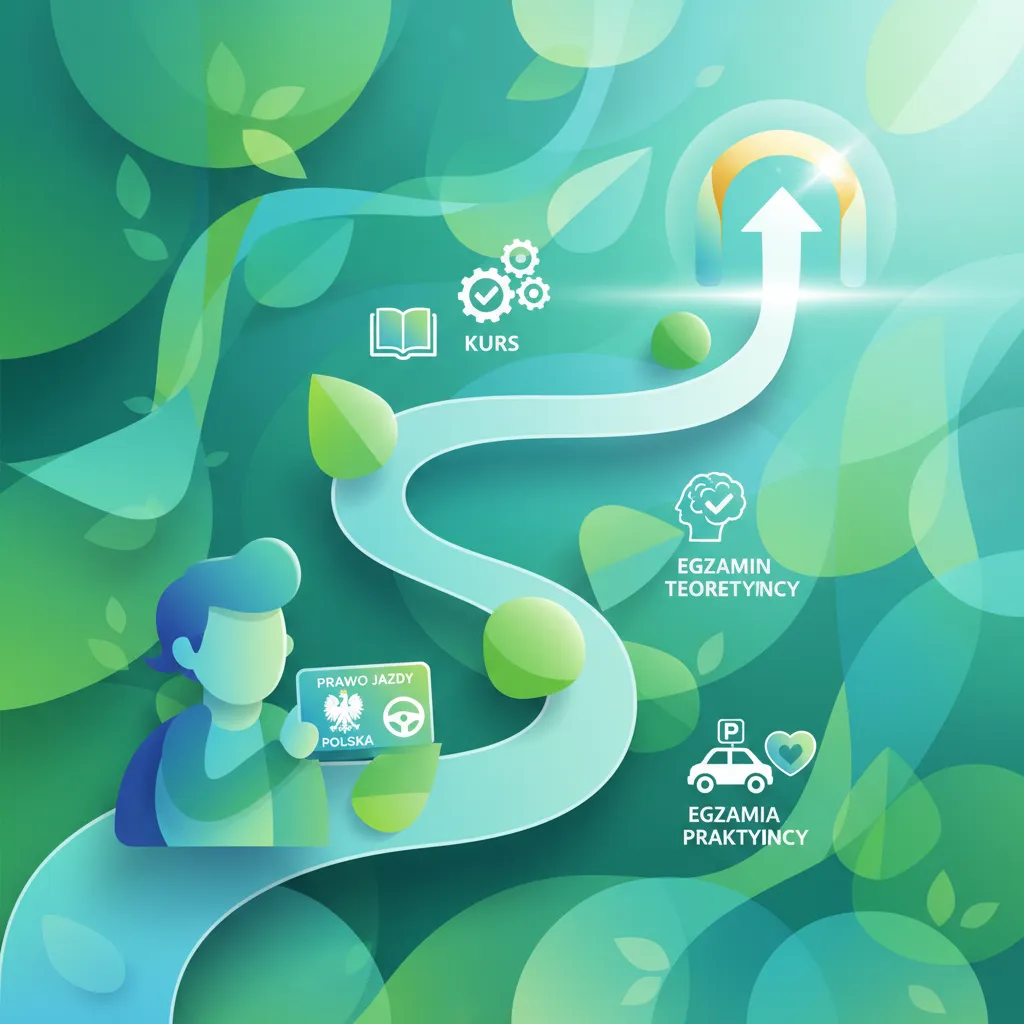
This lesson provides a clear roadmap to obtaining your Polish Category C driving licence. You'll explore all necessary legal prerequisites, from age and existing licence requirements, to the complete application and examination sequence. This foundational knowledge is crucial for aspiring HGV drivers, setting the stage for subsequent lessons on vehicle specifics, and ensuring you start your professional journey fully informed for the Polish theory exam.
Lesson content overview
Embarking on a career as a heavy goods vehicle (HGV) driver in Poland requires a structured approach to licensing. This lesson provides a comprehensive guide to the legal prerequisites and the step-by-step pathway to acquiring a Polish Category C driving licence. Understanding these requirements is crucial for aspiring professional truck drivers, ensuring compliance with national regulations and fostering a safe, competent driving environment for heavy vehicles.
Operating HGVs, due to their significant mass, extended braking distances, and complex cargo handling, necessitates a higher standard of driver qualification. The Polish legal framework, primarily governed by the Prawo o ruchu drogowym (Road Traffic Act), establishes stringent entry criteria. This ensures that every driver behind the wheel of a heavy truck possesses the requisite age, health, knowledge, and practical skills, thereby mitigating risks and enhancing overall road safety.
This guide will walk you through the entire journey, from meeting initial eligibility criteria to successfully passing both theoretical and practical examinations. It will clarify the roles of various institutions, explain essential documentation, and highlight key regulations you must adhere to at every stage.
The Polish Category C driving licence is specifically designed for individuals who intend to operate heavy goods vehicles. This section defines what the licence permits, differentiates between related subcategories, and addresses common misunderstandings.
A Category C licence permits its holder to drive vehicles with a maximum authorized mass (MAM) exceeding 3,500 kg. This covers a wide array of heavy vehicles, from standard freight trucks and rigid lorries to some specialized vehicles. Crucially, with a standard Category C licence, you may operate these vehicles with a light trailer, provided its MAM does not exceed 750 kg. For heavier trailers, a separate endorsement is required.
The Category C licence system includes specific subcategories and endorsements to cover different vehicle configurations. Understanding these distinctions is vital for knowing your driving privileges.
Category C1 is a subcategory that permits the driving of vehicles with a MAM between 3,500 kg and 7,500 kg, again with a trailer not exceeding 750 kg MAM. This category often serves as a stepping stone for drivers who might not immediately need to operate the largest HGVs but are progressing towards full Category C. It introduces drivers to heavier vehicle dynamics in a slightly more limited scope.
For professional drivers intending to tow heavy trailers, the CE endorsement is mandatory. This additional qualification is required when the combined MAM of the vehicle and trailer exceeds 3,500 kg, or when the trailer alone exceeds 750 kg MAM and requires specific heavy trailer handling skills. Acquiring a CE endorsement involves separate training and a practical examination focused on coupling, maneuvering, and driving with a large trailer. Many professional roles require the CE endorsement, as it allows for the operation of articulated lorries and road trains.
Always verify the specific MAM limits of both your vehicle and any trailer you intend to tow. Operating an HGV with an inappropriately heavy trailer without the CE endorsement is a serious legal violation, potentially leading to significant fines, licence points, and insurance invalidation.
A fundamental prerequisite for obtaining a Category C licence in Poland is holding a valid Category B driving licence. This ensures that aspiring HGV drivers possess a baseline level of driving experience and familiarity with general traffic laws before progressing to the complexities of heavy vehicle operation. Generally, you must hold your Category B licence for a minimum of two years before you can apply for a Category C licence, though an exception exists for professional drivers under specific conditions.
Before you can even begin the training and examination process for a Category C licence, you must satisfy several core eligibility requirements. These include age, prior driving experience, and a certified medical fitness assessment.
The minimum age requirement for a Category C licence is a critical regulatory aspect designed to align a driver's maturity and experience with the heightened responsibilities of operating a heavy vehicle.
For most individuals seeking a Category C licence, the standard minimum age is 21 years. This applies to drivers who are not pursuing a professional driver's qualification (kurs kwalifikacji zawodowej) or are operating HGVs for private use (though private HGV use is rare for Category C). This age threshold is deemed appropriate for ensuring a sufficient level of physical and cognitive development before handling such large and powerful vehicles.
An important exception allows individuals to apply for a Category C licence at 18 years of age, provided they meet specific professional qualification criteria. This accelerated pathway is available to those who have completed a kurs kwalifikacji zawodowej (professional drivers’ qualification course). This intensive course provides specialized training beyond standard driving instruction, covering areas like advanced vehicle systems, cargo securement, and compliance with professional driving regulations. In addition to the professional qualification, these younger applicants must also have held a Category B licence for at least two years.
A mandatory, specialized training course for aspiring professional drivers in Poland and the EU, covering advanced topics such as HGV systems, cargo handling, economic driving, and driver responsibilities. Its completion allows for earlier HGV licence acquisition and is essential for most professional driving roles.
Operating an HGV demands a high level of physical and mental fitness. To ensure drivers meet these standards, a medical fitness certificate is a mandatory prerequisite for Category C licensing.
The medical examination for a Category C licence is comprehensive, assessing various aspects of a candidate's health. It typically includes:
Do not assume a general health check is sufficient. The certificate must be specifically for Category C (and any other desired categories) and issued by an authorized physician (lekarz medycyny pracy) using a standard, legally prescribed form (druk 2-2-3).
The validity period of the medical certificate is critical and varies based on the driver's age. For drivers under 50 years old, the certificate is generally valid for 5 years. For those between 50 and 65, it typically requires renewal every 2 years. Drivers over 65 usually need an annual medical assessment. These intervals are subject to national regulations and may vary, so it is essential to always check the most current requirements.
A valid medical certificate must be presented before you can take both the theoretical and practical examinations, and its expiry means you are no longer legally permitted to drive or take further licence tests.
Once the initial eligibility criteria are met, the journey proceeds through mandatory training and rigorous examinations designed to equip you with the necessary knowledge and skills.
Before attempting the official state examinations, all Category C candidates must complete a specified amount of theoretical and practical instruction at an approved driving school.
Mandatory theory training involves a minimum of 30 hours of classroom instruction. This curriculum covers a broad range of topics crucial for HGV operation, including:
Prawo o ruchu drogowym), with specific regulations pertaining to heavy vehicles.Following theoretical instruction, candidates must complete a minimum of 14 hours of behind-the-wheel practical training. This hands-on experience is critical for developing proficiency in operating a large vehicle. The practical training must include specific elements to ensure comprehensive preparation:
All training must be conducted by an Ośrodek Szkolenia Kierowców (OSK), which is a certified driving school. Upon successful completion of both theory and practical modules, the OSK will issue a certificate of training completion, a vital document for your licence application.
A certified driving school in Poland that provides official driving instruction and training for various licence categories, including Category C. These schools are authorized to issue certificates of completion required for licence applications.
The theoretical examination is a computer-based test designed to assess your understanding of traffic law, vehicle mechanics, and safety regulations specific to heavy goods vehicles.
The Category C theoretical exam consists of 70 multiple-choice questions. To pass, you must correctly answer at least 35 questions. The test is divided into:
Before you can sit for the theoretical exam, you must:
The exam is administered by regional road traffic authorities. If you fail, a mandatory 7-day waiting period is usually required before you can attempt a retake, allowing time for further study.
The practical examination is the final test of your ability to safely and competently operate a heavy goods vehicle under real-world traffic conditions.
The practical exam is comprehensive, structured to evaluate a wide range of driving skills:
To be eligible for the practical examination, you must:
The vehicle used for the test must be road-worthy, meet all inspection criteria, and be appropriate for the Category C test. The exam is conducted by an authorized examiner from the regional road traffic authority.
Once you have completed your training and passed both examinations, the final step is to formally apply for your Category C driving licence at the appropriate administrative office.
A precise and complete submission of documents is crucial to avoid delays in receiving your licence. You will typically need to prepare the following:
druk ZUS-2 or similar, depending on the current administrative regulations), filled out completely.Always bring original documents; photocopies alone are usually not accepted for initial verification. Incomplete or falsified documents will lead to application denial and potential legal consequences.
The application process is centralized through your local Wydział Komunikacji (Department of Communication), which is typically part of the Starostwo Powiatowe (District Office) or Urząd Miasta (City Office).
Gather all required documents: Ensure everything is complete, up-to-date, and includes both originals and copies where requested.
Visit your local Wydział Komunikacji: Submit your application in person.
Pay the administrative fee: There is an administrative charge for processing your licence application.
Receive a Provisional Licence (if applicable): In some cases, a provisional licence may be issued while your final plastic licence is being produced. This allows you to legally drive under certain conditions before receiving the permanent card.
Await final licence issuance: The physical licence card will be mailed to your registered address or made available for pickup.
The entire Category C licensing pathway in Poland is governed by specific laws and regulations, primarily the Prawo o ruchu drogowym. Adherence to these rules is not merely bureaucratic but forms the foundation of safe and legal HGV operation.
Several articles within the Prawo o ruchu drogowym and related ministerial decrees (Rozporządzenia Ministra Infrastruktury) define the Category C licensing process:
Ustawa o kierujących pojazdami (Act on Drivers of Vehicles): Details the types of documents required for licence applications and the verification procedures.These legal provisions are non-negotiable and are consistently applied by licensing authorities and examiners across Poland.
Understanding common mistakes can help you avoid unnecessary delays or legal complications during your Category C licensing journey.
Wydział Komunikacji.Always verify the most current regulations, fee schedules, and required forms with your local Wydział Komunikacji or a reputable OSK, as minor updates can occur annually.
Beyond the basic pathway, certain contextual factors and specific endorsements warrant additional attention for comprehensive HGV driving.
As discussed, the CE endorsement is crucial for many professional HGV roles. It allows for the operation of vehicles in Category C with a trailer whose MAM exceeds 750 kg. The training and examination for CE focus on:
Failing to acquire the CE endorsement when operating vehicles with heavy trailers is not merely a technicality; it represents a significant safety risk due to the distinct operational challenges presented by articulated vehicles.
The physical act of driving an HGV is profoundly influenced by external factors, and the licensing process implicitly prepares drivers for these variations.
Adverse weather (heavy rain, snow, fog, ice) dramatically impacts HGV operation. Medical fitness requirements for Category C include robust vision standards, which are essential for navigating reduced visibility. Furthermore, training often includes modules on adapting driving techniques for slippery surfaces and ensuring longer stopping distances. The sheer mass of an HGV means it is more susceptible to hydroplaning and requires significantly more distance to stop safely in poor conditions.
HGV drivers must adapt their driving to different road environments. On motorways, HGVs often have lower speed limits than passenger cars (e.g., 80 km/h in Poland), requiring careful speed management and lane discipline. In urban areas, navigating tight corners, roundabouts, and sharing the road with vulnerable users demands enhanced spatial awareness and precise vehicle control. The licensing curriculum explicitly covers these adaptations.
The performance and handling characteristics of an HGV change dramatically depending on its load. A fully loaded truck requires substantially longer braking distances, has different acceleration capabilities, and exhibits altered stability compared to an empty vehicle. The practical examination specifically assesses a candidate's ability to manage vehicle dynamics under realistic load conditions, or at least with a representative test load. Understanding load distribution, securing cargo, and adjusting driving style based on vehicle weight are integral parts of the training.
Heavy vehicles pose a greater risk to vulnerable road users (pedestrians, cyclists, motorcyclists) due to large blind spots and immense kinetic energy. The theoretical and practical exams emphasize the need for increased caution, larger safety margins, and predictive driving when sharing the road with these users. Drivers are taught to compensate for HGV-specific blind spots through proper mirror use and active observation.
The stringent requirements for obtaining a Category C licence are not arbitrary; they are deeply rooted in safety principles and form a critical foundation for advanced HGV operation.
The rationale behind the strict licensing pathway for heavy goods vehicles is multifaceted:
This foundational lesson on legal prerequisites and the licence pathway is interconnected with many other aspects of your Polish Category C Heavy Goods Vehicle Theory – Full Curriculum.
kurs kwalifikacji zawodowej), continuous professional development, and other ongoing training requirements.By thoroughly understanding the pathway to your Category C licence, you build a robust framework for all subsequent learning, ensuring a holistic grasp of heavy goods vehicle operation.
Obtaining a Polish Category C driving licence requires meeting specific eligibility criteria: holding a Category B licence for at least 2 years, meeting the minimum age of 21 (or 18 with professional qualification), and obtaining a category-specific medical fitness certificate. The pathway involves completing mandatory training at an authorized OSK (minimum 30 hours theory and 14 hours practical), passing a computer-based theoretical exam (70 questions, pass mark 35), and successfully completing a practical driving examination covering vehicle checks, maneuvering, and on-road driving. All documentation must be submitted in person to the local Wydział Komunikacji, and drivers must remember that heavy trailers require a separate CE endorsement beyond the standard Category C licence.
A short set of high-value points that capture the most important learning from this lesson.
A valid Category B licence held for at least 2 years is mandatory before you can apply for Category C
Standard minimum age for Category C is 21 years, but 18-year-olds can qualify if they hold a professional drivers' qualification (kurs kwalifikacji zawodowej)
Medical fitness certificates are category-specific and must remain valid throughout training and examinations
The theoretical exam requires 35 correct answers out of 70 questions before you can proceed to the practical test
The CE endorsement is a separate qualification required when towing trailers exceeding 750 kg MAM
Explore all units and lessons included in this driving theory course.
Theory must always be passed before attempting the practical examination under Polish regulations
Training must be completed at an authorized Ośrodek Szkolenia Kierowców (OSK) to be valid for licensing
Medical certificate validity depends on age: 5 years under 50, 2 years for ages 50-65, annual for over 65
The Wydział Komunikacji is the local administrative office where final licence applications are submitted
Heavy trailers over 750 kg MAM require CE endorsement, not just a Category C licence
Submitting an application with an expired medical certificate, which results in immediate rejection
Applying before completing the required 2-year Category B holding period
Confusing Category C with Category C1 (vehicles between 3,500 kg and 7,500 kg MAM)
Attempting the practical exam without passing the theoretical examination first
Operating a vehicle with a heavy trailer (over 750 kg MAM) without the separate CE endorsement
Lesson content overview
A short set of high-value points that capture the most important learning from this lesson.
A valid Category B licence held for at least 2 years is mandatory before you can apply for Category C
Standard minimum age for Category C is 21 years, but 18-year-olds can qualify if they hold a professional drivers' qualification (kurs kwalifikacji zawodowej)
Medical fitness certificates are category-specific and must remain valid throughout training and examinations
The theoretical exam requires 35 correct answers out of 70 questions before you can proceed to the practical test
The CE endorsement is a separate qualification required when towing trailers exceeding 750 kg MAM
Explore all units and lessons included in this driving theory course.
Theory must always be passed before attempting the practical examination under Polish regulations
Training must be completed at an authorized Ośrodek Szkolenia Kierowców (OSK) to be valid for licensing
Medical certificate validity depends on age: 5 years under 50, 2 years for ages 50-65, annual for over 65
The Wydział Komunikacji is the local administrative office where final licence applications are submitted
Heavy trailers over 750 kg MAM require CE endorsement, not just a Category C licence
Submitting an application with an expired medical certificate, which results in immediate rejection
Applying before completing the required 2-year Category B holding period
Confusing Category C with Category C1 (vehicles between 3,500 kg and 7,500 kg MAM)
Attempting the practical exam without passing the theoretical examination first
Operating a vehicle with a heavy trailer (over 750 kg MAM) without the separate CE endorsement
Explore search topics learners often look for when studying Legal Prerequisites and Licence Pathway. These topics reflect common questions about road rules, driving situations, safety guidance, and lesson level theory preparation for learners in Poland.
Browse additional driving theory lessons that cover connected traffic rules, road signs, and common driving situations related to this topic. Improve your understanding of how different rules interact across everyday traffic scenarios.
Understand the complete step-by-step process for obtaining a Category C HGV licence in Poland. This lesson covers all legal prerequisites, age, health requirements, and the examination sequence for professional drivers.
This lesson provides a detailed overview of Polish driving licence classifications, focusing on the privileges and limitations of Category B. It clarifies the minimum age requirement, the necessity of a medical certificate, and the process of enrolling in a driving school. The content outlines the steps to pass both the theory and practical exams to obtain a full licence, ensuring candidates understand all prerequisites.
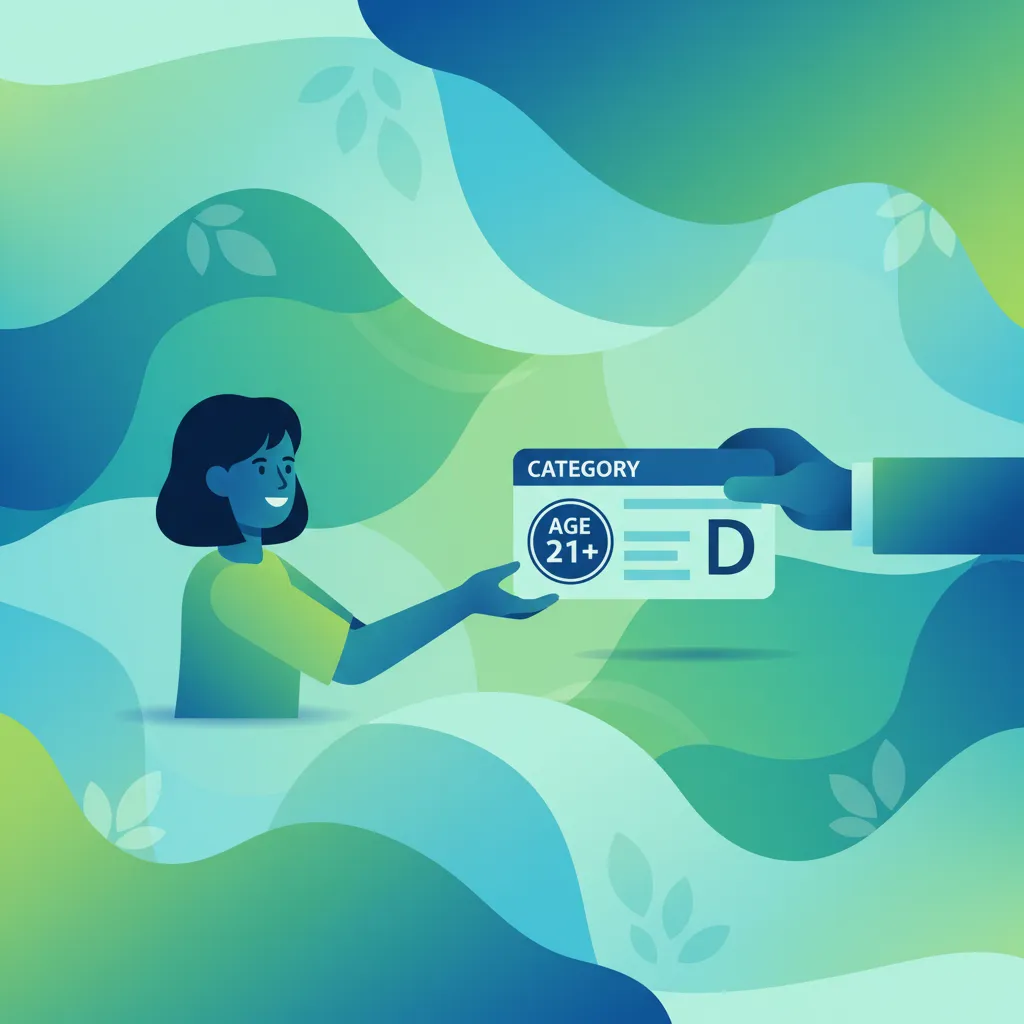
This lesson details the exact requirements to qualify for a Category D driving licence. It covers the minimum age, the mandatory medical examinations for health fitness, and the hierarchy of prerequisite licences like Category B and C. You will also learn about the accredited training process and the necessary documentation for certification.

This lesson details the documentation required for a Category B licence application and vehicle operation. It explains the function of the vehicle registration certificate (dowód rejestracyjny), the mandatory civil liability insurance (OC), and the certificate of technical inspection. Learners will understand the verification process and the importance of keeping these documents current and accessible.

This lesson delineates each motorcycle licence category defined in Polish law, explaining the technical specifications of vehicles allowed under AM, A1, A2, and A. It clarifies the age limits and competency criteria required for each category, highlighting how riders can progress from a light two-wheel vehicle to high-performance motorcycles. The content also outlines the mandatory training modules that must be completed to obtain each licence tier, ensuring learners understand the legal framework governing their riding privileges.
This lesson explains the scope of the Category T licence, distinguishing it from other categories and outlining the vehicles covered, such as agricultural and forestry vehicles. It details the legal basis for operating these vehicles on public roads, including specific provisions in the Prawo o ruchu drogowym. Learners will understand the regulatory environment defining where and how Category T vehicles may be driven within Poland.
This lesson examines the compulsory training structure for professional Category C drivers. It outlines the required components of certified training programs, including both theoretical instruction and practical driving experience. Learners will understand the standards for competence assessment, the structure of the official licensing examinations, and the legal obligation to maintain accurate training records to demonstrate compliance with professional driver qualifications.

This lesson defines the scope of vehicles permitted under a Category B licence, primarily passenger cars up to 3,500 kg maximum permissible mass. It clarifies the rules on seating capacity and the regulations for towing trailers, distinguishing between a standard B licence and a B+E entitlement. Understanding these classifications ensures drivers operate vehicles legally and safely.
This lesson outlines the statutory speed limits that professional drivers of Category C vehicles must adhere to on Polish roads. It clearly distinguishes the maximum permitted speeds in built-up areas, on single carriageways, and on motorways. The content also explains how to interpret road signs that may indicate temporary or vehicle-specific speed restrictions, ensuring drivers remain compliant with the law and avoid penalties from speed enforcement measures.
Explore the essential eligibility criteria for a Polish Category C HGV licence, focusing on minimum age requirements and the mandatory medical fitness certificate. Learn what it takes to qualify before starting your training.
This lesson details the exact requirements to qualify for a Category D driving licence. It covers the minimum age, the mandatory medical examinations for health fitness, and the hierarchy of prerequisite licences like Category B and C. You will also learn about the accredited training process and the necessary documentation for certification.
This lesson provides a detailed overview of Polish driving licence classifications, focusing on the privileges and limitations of Category B. It clarifies the minimum age requirement, the necessity of a medical certificate, and the process of enrolling in a driving school. The content outlines the steps to pass both the theory and practical exams to obtain a full licence, ensuring candidates understand all prerequisites.

This lesson details the formal prerequisites for obtaining a Category T licence, focusing on the minimum age and mandatory health assessment. It outlines the specific medical certificates required, the process for submitting proof of identity and residency, and the role of the local road transport office. The content also clarifies the importance of maintaining up-to-date health documentation and the legal consequences of non-compliance.

This lesson focuses on the stringent health standards mandated for operating heavy goods vehicles. It details the required medical assessments, including vision, cardiovascular, and neurological checks, that prospective drivers must pass. Learners will understand the process of obtaining a medical certificate, the requirements for periodic renewals to ensure ongoing fitness for duty, and the legal implications of failing to meet these essential health criteria for professional driving.
Find clear answers to common questions learners have about Legal Prerequisites and Licence Pathway. Learn how the lesson is structured, which driving theory objectives it supports, and how it fits into the overall learning path of units and curriculum progression in Poland. These explanations help you understand key concepts, lesson flow, and exam focused study goals.
In Poland, the minimum age to begin Category C training is generally 21 years old. However, there are exceptions; if you are undergoing professional qualification training (KWK) which allows for earlier qualification, you might start at 18. This is important to understand for both your application and potential exam questions.
Yes, holding a valid Category B driving licence is a mandatory prerequisite for applying for a Category C licence in Poland. This ensures you already have fundamental driving skills before progressing to larger, heavier vehicles. The exam assumes this prior knowledge.
Absolutely. Professional drivers in Poland, including Category C holders, must undergo specific medical and psychological examinations to ensure they are fit to drive heavy goods vehicles. These checks are more stringent than for Category B and are a critical part of the licensing process, often appearing in exam scenarios.
The typical sequence involves first passing the theoretical state exam, followed by the practical driving exam. You must successfully complete the theory component before you are eligible to take the practical test, which includes both yard maneuvers and on-road driving with a heavy goods vehicle. Understanding this order is key for planning your preparation.
If you hold a foreign driving licence from an EU/EFTA country, it is generally recognised. For non-EU/EFTA licences, you may need to convert it to a Polish Category B licence first. Always check with the local Starostwo Powiatowe (District Office) as specific regulations can apply, which can be a tricky point in theory questions.
Build custom practice sessions tailored precisely to your needs. Focus on areas requiring improvement, review specific Polish road signs, or master complex traffic rules to ensure full preparation for your official driving license exam.