
Welcome to the crucial lesson on driver documentation for your Polish Category C licence. This lesson is part of the 'Foundations of Category C Licensing and Vehicle Basics' unit and is vital for understanding your legal responsibilities and ensuring smooth operations. It builds on the initial understanding of licence requirements and sets the stage for compliance throughout your driving career.
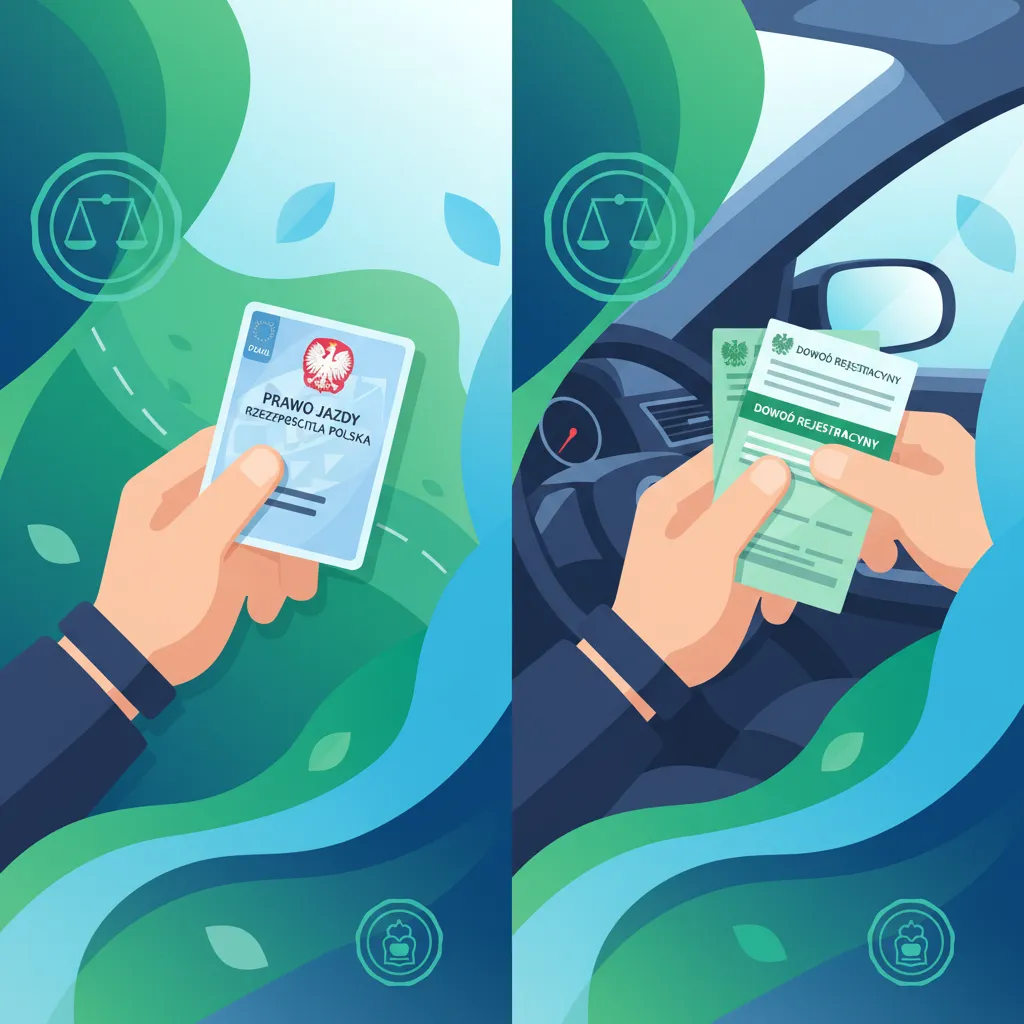
Lesson content overview
As an aspiring professional driver in the Polish Category C Heavy Goods Vehicle Theory curriculum, understanding the mandatory documentation is crucial. This lesson outlines all essential permits, certifications, and records that heavy goods vehicle (HGV) drivers must carry and meticulously maintain. Proper documentation not only ensures legal compliance but also facilitates smooth operations, prevents penalties, and underpins overall road safety within Poland and across the European Union.
The administrative framework of road transport relies heavily on documentation to ensure that drivers, vehicles, and cargo meet stringent statutory and safety standards. Each document serves as verifiable evidence of competence, roadworthiness, and regulatory adherence.
Polish traffic law, primarily the Ustawa o ruchu drogowym (Road Traffic Act) of 1997, alongside various EU directives such as Regulation (EC) No 561/2006 on drivers’ hours and Regulation (EU) 2020/1056 on digital tachographs, mandates specific documents for professional drivers. These documents are subject to inspection at any point by law enforcement, transport inspectors, or customs officials. Non-compliance can lead to significant fines, operational delays, vehicle detention, or even licence suspension.
Remember that documentation is not merely bureaucratic; it is a fundamental pillar of road safety, confirming that every aspect of a transport operation, from the driver's training to the vehicle's condition and cargo's nature, is legally sound and safe.
Effective documentation management for HGV drivers is built upon several foundational principles:
A document is only considered valid if it is current, free from alterations, and officially issued by the appropriate authority. Out-of-date documents are legally void.
This principle ensures that all information regarding the driver, vehicle, and cargo is up-to-date, meeting contemporary safety and legal standards. Driving with an expired licence or technical inspection certificate can lead to severe penalties.
The driver's licence and the Driver Qualification Card (CPC) are direct evidence of a driver's required knowledge, health status, and professional training.
These documents guarantee that only qualified individuals operate heavy vehicles, protecting both the driver and other road users. Driving a Category C vehicle without the correct licence or an expired CPC card is a serious offence.
Documents such as the vehicle registration certificate, technical inspection report, and insurance proof confirm the vehicle's legality and roadworthiness.
These certificates assure that the HGV meets safety requirements, preventing unsafe vehicles from posing a risk on public roads. A missing or falsified certificate can result in the vehicle being impounded.
Tachograph records, whether digital or analogue, provide a comprehensive log of driving, rest, and availability times.
This crucial principle enforces strict limits on driver fatigue, significantly reducing the risk of accidents caused by overtired drivers. Inaccurate or non-compliant tachograph records can lead to severe penalties and even invalidate transport permits.
Transport permits like the CMR consignment note, ADR certificates for hazardous materials, and customs declarations ensure correct loading, appropriate handling of dangerous goods, and compliance with customs regulations.
These documents prevent dangerous practices such as overloading, insecure cargo placement, and illegal transport of hazardous materials, thereby preventing accidents, environmental damage, and legal sanctions.
Professional HGV drivers must always carry specific personal documents that attest to their qualifications and fitness to drive.
The Category C driving licence is the fundamental legal document authorizing a driver to operate heavy goods vehicles.
An official document issued by the Polish Ministry of Infrastructure, confirming the holder's legal entitlement to drive vehicles over 3.5 tonnes (3,500 kg) of Gross Vehicle Weight (GVW) with a trailer weighing up to 750 kg.
For practical purposes, your Category C licence must be presented upon request during any roadside or office inspection. It must always be accompanied by a valid medical certificate, confirming your ongoing fitness to drive a professional vehicle. If lost, it must be reported and a replacement applied for within 30 days.
Subcategories:
A common misunderstanding is believing that a Category B licence with a "B+E" endorsement is sufficient for Category C vehicles. This is incorrect. The B+E endorsement only allows for heavier trailers with passenger vehicles or light goods vehicles, not HGVs exceeding 3.5 tonnes.
Beyond the basic driving licence, professional drivers must possess proof of ongoing professional competence.
A card proving the completion of periodic professional training (Certificate of Professional Competence or CPC) required every five years for professional drivers.
This card must be readily available during any inspection. Failure to produce a valid CPC card can result in a fine and potential suspension of the transport permit for the driver or the company. Professional drivers are required to complete a 35-hour refresher course every five years to keep their CPC valid.
The CPC is mandatory for all Category C drivers engaged in professional transport, regardless of how frequently they drive professionally. It is not optional for occasional drivers.
In addition to personal driver documents, every HGV must carry specific documentation proving its legality, roadworthiness, and insurance coverage.
The vehicle's identity card, the Dowód Rejestracyjny, is indispensable.
An official document containing the vehicle identification number (VIN), registration number, key technical specifications, and owner information.
This certificate must always be kept within the vehicle and presented upon request. It is required to be updated upon changes of ownership or significant technical modifications (e.g., engine alterations). Relying solely on an electronic copy is not sufficient; the physical document is legally required.
Roadworthiness is paramount for heavy vehicles.
A certificate confirming that the vehicle has successfully passed its mandatory periodic roadworthiness inspection, known in Poland as przegląd techniczny.
For heavy vehicles, this inspection is typically required every 12 months. The certificate, or proof of its validity, must be present in the vehicle, and its expiration date must be regularly checked. Driving with an expired technical inspection certificate can lead to significant fines and potential vehicle impoundment.
Do not assume that technical inspections are only for passenger cars. Heavy goods vehicles require rigorous and regular checks due to their size, weight, and the potential severity of accidents.
Every vehicle operating on public roads must be insured.
Proof that the vehicle is covered by compulsory third-party liability insurance, known as Ubezpieczenie Odpowiedzialności Cywilnej (OC) in Poland.
This document must be stored in the vehicle and displayed upon request. Driving without valid OC insurance is a serious offense, which can result in heavy fines and the seizure of the vehicle. While OC is mandatory, many professional transport operators also carry additional coverage such as cargo insurance, though this is not typically a mandatory roadside document.
Tachographs are fundamental for monitoring driver activity and ensuring compliance with working hours regulations.
An electronic or electromechanical device installed in a vehicle that records driver activity (driving, working, resting, availability) and vehicle parameters (speed, distance).
A personal smart card inserted into a digital tachograph, storing data specific to the driver's activities over time.
Digital tachographs are mandatory for most HGVs over 3.5 tonnes or over 9 tonnes with a trailer, as per EU regulations. Before beginning each shift, the driver must insert their personal driver card into the tachograph. This card stores data on driving times, breaks, rest periods, and other work. The data from the driver card and the vehicle unit must be regularly downloaded and retained for at least one year for inspection purposes.
A common misconception is that a tachograph is only needed when towing a trailer. The regulations apply based on the vehicle's Gross Vehicle Weight (GVW), not just the presence of a trailer.
Drivers must retain their tachograph records for a minimum of 28 calendar days for digital data and 12 months for physical records (e.g., analogue charts, printouts) and make them available to inspectors upon request.
Transporting goods, especially internationally or hazardous materials, requires specific permits and declarations.
For international transport, the CMR note is a standard requirement.
An international consignment note (Convention relative au contrat de transport international de Marchandises par Route) required for cross-border road transport of goods between countries that are signatories to the CMR convention.
The CMR note accompanies the cargo from the point of loading to delivery. It contains crucial details about the load's weight, nature of goods, sender and receiver information, and the vehicle's capacity. It serves as a contract of carriage and governs liability during transport.
Special cargo requires specialized documentation and procedures.
A declaration form (Accord européen relatif au transport international des marchandises Dangereuses par Route) required when transporting hazardous goods by road.
The ADR declaration certifies that the hazardous materials are classified, packaged, and labelled correctly according to international standards. It must accompany the cargo, and appropriate placarding (hazard warning labels) must be displayed on the vehicle.
Required for customs clearance of certain goods when crossing international borders, especially into or out of customs unions.
Customs declarations provide detailed information about the goods for taxation and regulatory purposes. While not always a roadside document, it is crucial for legal passage through customs checkpoints.
Assuming a simple receipt is enough for cargo verification is a critical mistake. Official CMR and ADR forms are mandatory for their respective types of transport and carry significant legal weight.
Ensuring cargo stability is vital for safety.
A document describing how cargo is fixed, its centre of gravity, and the securing equipment used.
This documentation confirms compliance with load-securing regulations, such as the Polish Rozporządzenie Ministra Infrastruktury nr 34/2019. It is particularly important for special loads (e.g., oversized cargo, heavy machinery) and during inspections of hazardous goods. A proper load securing plan prevents cargo shifts, which can lead to instability, rollovers, or sudden braking issues.
Adhering to the rules for carrying and maintaining documents is non-negotiable for professional drivers.
Dowód Rejestracyjny), technical inspection certificate (Badanie Techniczne), proof of insurance (OC), tachograph records (driver card and relevant printouts), and any required transport permits (e.g., CMR, ADR). This is mandatory under the Polish Road Traffic Act.Professional drivers often encounter roadside checks, and certain documentation lapses frequently lead to penalties:
Dowód Rejestracyjny or driving with an expired one can result in fines and potentially a temporary registration or even vehicle impoundment.Badanie Techniczne expiry date will lead to a fine and the vehicle being taken off the road until a valid inspection is performed.OC insurance during an inspection can lead to vehicle impoundment and significant financial penalties.The requirements and scrutiny of documentation can vary based on operational context, reinforcing the importance of meticulous adherence.
For professional Category C drivers in Poland and the EU, managing documentation is as critical as mastering driving skills.
Dowód Rejestracyjny), technical inspection certificate (Badanie Techniczne), proof of insurance (OC), tachograph driver card and records, CMR consignment note, ADR declaration (if applicable), and potentially a load-securing plan.This lesson covers all mandatory documentation for Category C HGV drivers in Poland and the EU, including personal documents like the driver's licence and CPC card, vehicle documents such as registration and technical inspection certificates, and cargo-related documents including CMR consignment notes and ADR declarations for hazardous materials. Key themes include document validity requirements, tachograph compliance with EU driver hours regulations, and the legal consequences of missing or expired documents. The lesson emphasizes that proper documentation management is as critical as driving skills for professional operations.
A short set of high-value points that capture the most important learning from this lesson.
Every Category C driver must carry their licence, CPC card, vehicle registration, technical inspection, and insurance certificate as baseline requirements
Tachograph records must be manually entered when technical issues occur and retained for at least 28 days
CMR and ADR documentation becomes mandatory for international and hazardous goods transport respectively
Load securing plans are required documentation for special cargo movements
All driver and vehicle documents must be physically present and valid on the day of operation
Explore all units and lessons included in this driving theory course.
Category C licence covers vehicles over 3.5 tonnes GVW with trailers up to 750 kg; Category C1 covers 3.5 to 7.5 tonnes
CPC training is mandatory every 5 years for professional drivers regardless of how often they drive professionally
Heavy vehicle technical inspections occur annually and are non-negotiable requirements
Drivers must retain tachograph records for 28 days minimum, with company retention for 12 months
CMR consignment notes apply to international transport between CMR convention signatories
Assuming a Category B+E endorsement covers Category C vehicles—it only applies to lighter vehicles with heavier trailers
Believing tachographs are only needed when towing trailers—regulations apply based on vehicle GVW
Thinking digital copies suffice for vehicle registration certificates—physical documents are legally required
Assuming occasional professional drivers don't need CPC cards—they are mandatory for all professional transport
Treating CMR and ADR documentation as optional for international or hazardous cargo—they carry legal weight
Lesson content overview
A short set of high-value points that capture the most important learning from this lesson.
Every Category C driver must carry their licence, CPC card, vehicle registration, technical inspection, and insurance certificate as baseline requirements
Tachograph records must be manually entered when technical issues occur and retained for at least 28 days
CMR and ADR documentation becomes mandatory for international and hazardous goods transport respectively
Load securing plans are required documentation for special cargo movements
All driver and vehicle documents must be physically present and valid on the day of operation
Explore all units and lessons included in this driving theory course.
Category C licence covers vehicles over 3.5 tonnes GVW with trailers up to 750 kg; Category C1 covers 3.5 to 7.5 tonnes
CPC training is mandatory every 5 years for professional drivers regardless of how often they drive professionally
Heavy vehicle technical inspections occur annually and are non-negotiable requirements
Drivers must retain tachograph records for 28 days minimum, with company retention for 12 months
CMR consignment notes apply to international transport between CMR convention signatories
Assuming a Category B+E endorsement covers Category C vehicles—it only applies to lighter vehicles with heavier trailers
Believing tachographs are only needed when towing trailers—regulations apply based on vehicle GVW
Thinking digital copies suffice for vehicle registration certificates—physical documents are legally required
Assuming occasional professional drivers don't need CPC cards—they are mandatory for all professional transport
Treating CMR and ADR documentation as optional for international or hazardous cargo—they carry legal weight
Explore search topics learners often look for when studying Documentation: Permits, Certifications, and Records. These topics reflect common questions about road rules, driving situations, safety guidance, and lesson level theory preparation for learners in Poland.
Browse additional driving theory lessons that cover connected traffic rules, road signs, and common driving situations related to this topic. Improve your understanding of how different rules interact across everyday traffic scenarios.
Explore the legal pathways and required documents for operating heavy goods vehicles in Poland and the EU. Understand the interplay of driver's licences, tachograph records, transport permits, and cargo declarations for smooth compliance.

This lesson outlines the essential legal paperwork associated with freight transport. It details the purpose and content of key documents like the load manifest, cargo declaration, and official weight certificates. Learners will understand their legal responsibility to verify that all documentation is accurate and complete before departure, and the importance of maintaining proper records for potential inspections by transport authorities or for cross-border customs procedures.

This lesson focuses on the stringent health standards mandated for operating heavy goods vehicles. It details the required medical assessments, including vision, cardiovascular, and neurological checks, that prospective drivers must pass. Learners will understand the process of obtaining a medical certificate, the requirements for periodic renewals to ensure ongoing fitness for duty, and the legal implications of failing to meet these essential health criteria for professional driving.

This lesson provides an overview of the key EU regulations that harmonize the road transport industry across member states. It focuses on the standardized rules for drivers' hours and rest periods, which are designed to combat fatigue and enhance safety. The content also explains the principles of cabotage—the transport of goods within one member state by a haulier from another—and the necessary documentation for smooth and legal cross-border operations.
This lesson examines the compulsory training structure for professional Category C drivers. It outlines the required components of certified training programs, including both theoretical instruction and practical driving experience. Learners will understand the standards for competence assessment, the structure of the official licensing examinations, and the legal obligation to maintain accurate training records to demonstrate compliance with professional driver qualifications.
This lesson details the critical pre-trip inspection routine that every professional driver must perform. It provides a step-by-step checklist for visually inspecting essential components such as tires, brakes, lights, and fluid levels to identify potential safety hazards. Learners will understand the importance of verifying that mirrors are correctly adjusted, emergency equipment is present, and cargo securing points are intact, thereby ensuring the vehicle's roadworthiness and preventing roadside failures.
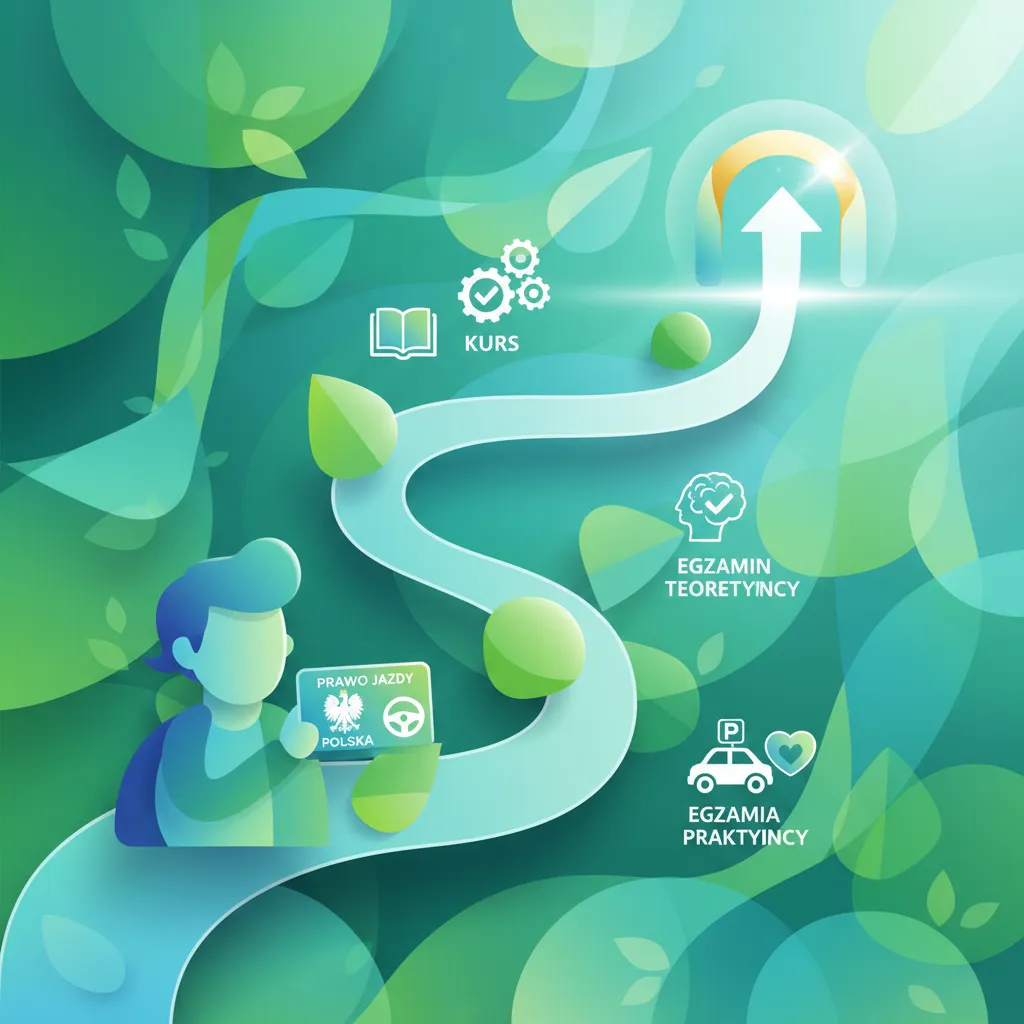
This lesson details the structured pathway to acquiring a Polish Category C driving licence. It explains the necessary eligibility criteria, such as holding a valid Category B licence and meeting the minimum age requirement. Learners will understand the sequence of the licensing process, from submitting the initial application to passing both the theoretical and practical examinations, ensuring full awareness of the regulatory journey to becoming a professional HGV driver.

This lesson addresses the increasingly common restrictions on HGV access to urban areas and designated low-emission zones. It explains how to identify these zones through specific signage and understand the criteria for entry, which may be based on the vehicle's emission standard or subject to time-of-day limitations. Learners will become familiar with the necessity of obtaining special permits for city center deliveries and the legal consequences of violating these access regulations.

This lesson provides a comprehensive breakdown of the right-of-way rules that govern intersections. It explains the clear directives given by traffic lights, stop signs, and yield signs, and clarifies the procedures at unmarked or uncontrolled intersections, where the 'priority to the right' rule often applies. Learners will understand the legal hierarchy of these rules to make correct, safe, and predictable decisions when navigating through any junction, reducing the risk of conflict with other traffic.
Understand frequent errors drivers make with essential documents like licences, tachographs, and permits. Learn the penalties and operational impacts of non-compliance with Polish and EU road transport regulations.

This lesson offers a detailed guide to the use of the tachograph, an essential tool for ensuring compliance with drivers' hours regulations. It explains how to operate both analogue and digital tachographs, correctly use the driver card, and accurately record all periods of work, availability, breaks, and rest. Learners will understand the specific legal limits on driving time and the minimum required rest periods, as well as the procedures followed during roadside inspections by transport authorities.
This lesson focuses on the stringent health standards mandated for operating heavy goods vehicles. It details the required medical assessments, including vision, cardiovascular, and neurological checks, that prospective drivers must pass. Learners will understand the process of obtaining a medical certificate, the requirements for periodic renewals to ensure ongoing fitness for duty, and the legal implications of failing to meet these essential health criteria for professional driving.
This lesson outlines the essential legal paperwork associated with freight transport. It details the purpose and content of key documents like the load manifest, cargo declaration, and official weight certificates. Learners will understand their legal responsibility to verify that all documentation is accurate and complete before departure, and the importance of maintaining proper records for potential inspections by transport authorities or for cross-border customs procedures.
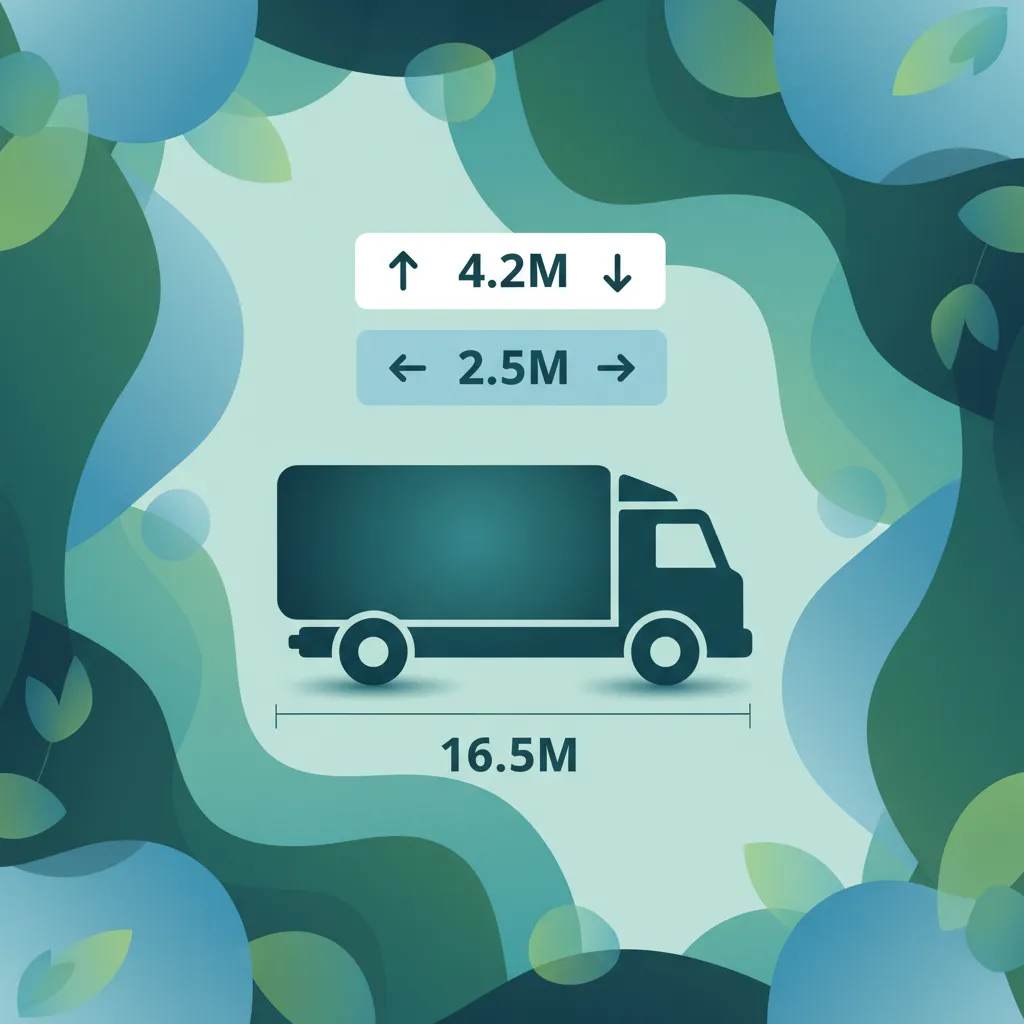
This lesson concentrates on the specific road signs that are of utmost importance to HGV drivers. It details how to interpret signs indicating maximum permissible weight, axle load, vehicle height, and overall length. Understanding these restrictions is crucial for effective route planning to avoid bridges with low clearance, roads with weight limits, or tunnels that cannot accommodate the vehicle's dimensions, thus preventing accidents and infrastructure damage.
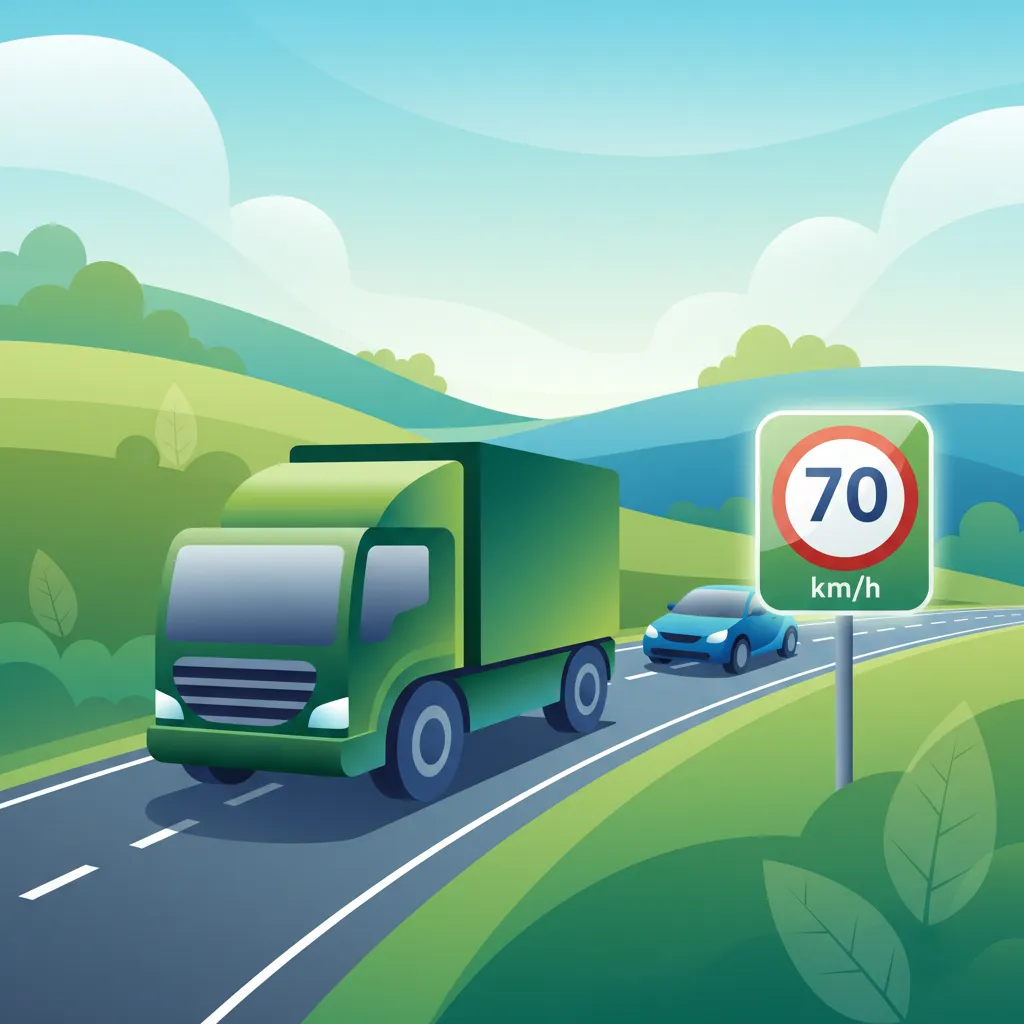
This lesson outlines the statutory speed limits that professional drivers of Category C vehicles must adhere to on Polish roads. It clearly distinguishes the maximum permitted speeds in built-up areas, on single carriageways, and on motorways. The content also explains how to interpret road signs that may indicate temporary or vehicle-specific speed restrictions, ensuring drivers remain compliant with the law and avoid penalties from speed enforcement measures.

This lesson addresses the critical safety issue of driver fatigue. It explains the physiological causes of fatigue, including disruption to circadian rhythms, and teaches drivers to recognize its early warning signs. The content reviews the legal requirements for breaks and rest periods in detail and provides practical strategies for managing sleep hygiene and using alertness techniques to ensure they remain focused and responsive while on duty, thereby preventing fatigue-related incidents.
This lesson addresses the increasingly common restrictions on HGV access to urban areas and designated low-emission zones. It explains how to identify these zones through specific signage and understand the criteria for entry, which may be based on the vehicle's emission standard or subject to time-of-day limitations. Learners will become familiar with the necessity of obtaining special permits for city center deliveries and the legal consequences of violating these access regulations.
This lesson details the critical pre-trip inspection routine that every professional driver must perform. It provides a step-by-step checklist for visually inspecting essential components such as tires, brakes, lights, and fluid levels to identify potential safety hazards. Learners will understand the importance of verifying that mirrors are correctly adjusted, emergency equipment is present, and cargo securing points are intact, thereby ensuring the vehicle's roadworthiness and preventing roadside failures.

This lesson explores the environmental impact of HGV operations and the regulations designed to mitigate it. It covers modern emission control systems and standards (e.g., Euro 6), and the importance of compliance with rules governing noise pollution. The content reinforces eco-driving techniques as a primary method for reducing fuel consumption and emissions, promoting the driver's role in achieving more sustainable and environmentally friendly logistics operations.
This lesson provides an overview of the key EU regulations that harmonize the road transport industry across member states. It focuses on the standardized rules for drivers' hours and rest periods, which are designed to combat fatigue and enhance safety. The content also explains the principles of cabotage—the transport of goods within one member state by a haulier from another—and the necessary documentation for smooth and legal cross-border operations.
Find clear answers to common questions learners have about Documentation: Permits, Certifications, and Records. Learn how the lesson is structured, which driving theory objectives it supports, and how it fits into the overall learning path of units and curriculum progression in Poland. These explanations help you understand key concepts, lesson flow, and exam focused study goals.
You must always carry your valid Category C driving licence, the vehicle's registration certificate (dowód rejestracyjny), and proof of mandatory third-party liability insurance (OC). For commercial transport, tachograph records covering the required period and any specific transport permits or declarations relevant to your cargo and route are also essential. Regular safety inspection reports should also be kept up-to-date.
According to EU regulations, drivers must keep their tachograph records (digital or paper printouts) for at least 28 calendar days. However, for regulatory purposes and during potential roadside checks, it is often recommended and sometimes required by employers or specific transport operations to retain them for a longer period, typically 90 days, especially for international journeys or when multiple types of documentation are involved.
A transport permit authorizes the carriage of specific types of goods, particularly when they exceed standard weight or dimension limits, or when transporting hazardous materials. A cargo declaration, on the other hand, details the nature, quantity, and origin/destination of the goods being transported, providing essential information for customs, authorities, and emergency responders.
Yes, international transport generally involves more complex documentation. This can include specific EU permits (like a Community Licence), CMR consignment notes for international road freight, and compliance with different national regulations along the route. Domestic transport requirements are generally simpler but still mandate the core documents like licence, registration, insurance, and tachograph records.
Failure to present the correct and valid documentation during a roadside inspection can lead to significant penalties, including fines, vehicle impoundment, or even prohibition from continuing your journey. It can also negatively impact your operator's licence and reputation. Ensuring all paperwork is current and readily accessible is critical for avoiding these disruptions.
Build custom practice sessions tailored precisely to your needs. Focus on areas requiring improvement, review specific Polish road signs, or master complex traffic rules to ensure full preparation for your official driving license exam.