
Welcome to the lesson on Driver Qualification and Training Obligations, a key part of your Polish Category C theory preparation. This section will guide you through the essential requirements for becoming a qualified professional truck driver in Poland, ensuring you meet all legal and practical standards before you hit the road.
Lesson content overview
Operating a heavy goods vehicle (HGV) professionally requires more than just a standard driving licence. In Poland, aspiring professional Category C drivers must complete a rigorous vocational training program designed to ensure they possess the in-depth knowledge and practical skills necessary for safe and compliant operation of large vehicles. This comprehensive lesson details the compulsory qualification framework, from the legal requirements to the issuance of the professional Driver Qualification Card (Karta Kierowcy), covering all mandatory training components, examination structures, and ongoing obligations.
Mastery of these requirements is not merely administrative; it is a fundamental prerequisite for obtaining and maintaining a Category C licence for professional use, directly impacting road safety, compliance with both Polish and European Union (EU) regulations, and eligibility for employment in the vital transport sector. This understanding builds upon foundational knowledge of Polish road traffic law, vehicle classification, and the general licensing pathway previously covered in this Polish Category C Heavy Goods Vehicle Theory curriculum.
Professional driving, particularly of heavy goods vehicles, is a highly regulated activity due to its significant impact on road safety and the environment. Both Polish national laws and broader European Union directives establish the legal basis for the stringent qualification and training obligations placed upon Category C drivers. These regulations aim to standardise driver competence across the EU, ensuring a high level of professionalism and safety for all commercial vehicle operators.
The primary legislative instruments dictating driver qualification for heavy goods vehicles in Poland include the Polish Road Traffic Act (Ustawa Prawo o ruchu drogowym) and various EU regulations and directives. Key among these is EU Directive 2003/59/EC, which introduced the requirement for initial qualification and periodic training for drivers of certain categories of vehicles used for the carriage of goods or passengers. This directive was transposed into Polish law, establishing the framework for vocational training programs. Another crucial piece of legislation is EU Regulation 561/2006, which sets out strict rules on drivers’ hours, driving periods, and rest breaks, demanding a thorough understanding by all professional drivers.
This regulatory framework defines who must undertake the training, the specific content that must be covered, and the procedures for certification and record-keeping. It ensures that professional drivers are not only skilled operators but also well-versed in complex areas such as vehicle technology, load securement, environmental considerations, and the intricate legal landscape governing transport operations.
A common misunderstanding among new drivers is the belief that simply obtaining a Category C driving licence automatically confers the right to drive a heavy goods vehicle professionally for commercial purposes. This is incorrect. While the Category C licence grants the privilege to operate certain heavy vehicles, professional use – meaning driving for hire or reward – necessitates an additional qualification: the Driver Qualification Card (Karta Kierowcy).
The qualification card serves as verifiable proof that a driver has successfully completed the mandatory vocational training program, demonstrating a validated level of vocational knowledge and competence beyond basic driving skills. Without this card, even a fully licensed Category C driver cannot legally transport goods for a company. This distinction underscores the dual nature of professional driving qualifications, separating private vehicle use from the commercial responsibilities of a heavy goods vehicle operator.
The Driver Qualification Card (Karta Kierowcy) is the cornerstone of professional driving in Poland and across the EU. It is a vital document that certifies a driver's vocational competence and compliance with mandatory training requirements, serving as their professional passport within the transport sector.
The Karta Kierowcy is an official, personal document issued by the competent authority in Poland, typically a Provincial Road Traffic Office (Wojewódzki Ośrodek Ruchu Drogowego). Its primary purpose is to provide traceable, standardised proof that the holder has successfully completed the vocational training required for professional driving. This card is distinct from the regular driving licence document.
The card typically includes essential components such as:
The Karta Kierowcy is not a permanent document. It has a defined validity period, typically five years. Drivers must carry this card at all times while driving professionally and be prepared to present it during roadside inspections, employment checks, and when renewing their driving licence or qualification.
The requirement for renewal is crucial. As regulations evolve and vehicle technology advances, professional drivers must ensure their knowledge and skills remain current. This is achieved through periodic re-qualification training, which then allows for the renewal of the Karta Kierowcy. Failure to renew the card before its expiration renders a driver unqualified for professional transport, leading to potential legal penalties and employment issues.
Always check the expiration date on your Karta Kierowcy well in advance. Plan your re-qualification training to avoid any gaps in your professional driving eligibility.
The core of professional driver qualification lies in the mandatory vocational training. This structured program is designed to equip drivers with both the theoretical knowledge and the practical skills specifically required for the safe and efficient operation of heavy goods vehicles. The training is comprehensive, covering a wide range of topics far beyond what is taught for a standard driving licence.
Theoretical training for Category C drivers is a classroom-based component providing the foundational knowledge necessary for professional operation. It covers a broad spectrum of topics prescribed by law to ensure drivers understand the complexities of their role.
The curriculum for theoretical vocational training is extensive and typically includes modules on:
Polish regulations mandate a minimum number of hours for theoretical vocational training. This ensures sufficient depth of legal, technical, and safety knowledge.
The current requirement specifies a significant number of hours, often around 150 hours of classroom instruction. Each module has defined learning objectives, aiming to provide drivers with a thorough understanding of the principles and their practical implications. For instance, a lesson on the effect of a high centre of gravity would move beyond simple definitions to practical scenarios, such as how it influences vehicle stability during cornering or emergency braking.
Alongside theoretical instruction, mandatory practical training provides the hands-on experience crucial for translating theoretical knowledge into safe and competent driving behaviours. This segment of the training involves driving Category C vehicles under the supervision of a certified instructor, both on closed tracks and public roads.
Practical training is structured to cover a wide array of driving scenarios and specific manoeuvres:
The practical training program also integrates lessons on adapting driving behaviour to various conditions:
It is imperative that all vocational training, both theoretical and practical, is undertaken at an accredited training centre. Only centres officially recognised and authorised by the transport authority can provide training that leads to a valid Karta Kierowcy. Enrolling in an unaccredited institution will result in unrecognised training records, making a driver ineligible to sit for the official examinations or obtain the qualification card.
The culmination of vocational training is a two-part examination process designed to validate that candidates possess both the necessary theoretical knowledge and practical driving competence to operate Category C vehicles professionally. Successful completion of both parts is essential for the issuance of the Driver Qualification Card.
The theoretical examination assesses a candidate's understanding of the vast amount of knowledge acquired during the mandatory theoretical training. It typically takes the form of a written or electronic test, often comprising multiple-choice questions. These questions cover all legal, technical, and safety topics relevant to professional HGV operation, including specific Polish traffic laws, EU regulations, vehicle mechanics, load securement, and driver hours.
A minimum passing score is mandated to ensure a high standard of knowledge. For example, a candidate might be required to achieve at least 85% correct answers to pass. Failing the theory test requires a retake, allowing drivers to re-study specific areas where they demonstrated weakness.
The practical driving test is an on-road examination where candidates demonstrate their ability to control a Category C vehicle safely and proficiently in real-world traffic conditions. This test evaluates vehicle control, observation skills, decision-making, and adherence to traffic laws and professional driving standards.
The practical test includes a range of essential manoeuvres that highlight the specific challenges of driving a heavy goods vehicle. These often involve:
Drivers must successfully perform all required manoeuvres and demonstrate consistent safe driving practices to pass the practical examination. Retakes are permitted under regulated conditions, allowing candidates to refine their skills before attempting the test again.
Compliance for professional Category C drivers extends beyond initial qualification. It involves diligent record-keeping of training and ongoing commitment to skill maintenance through periodic re-qualification. These elements are critical for legal compliance, road safety, and ensuring drivers remain competent throughout their careers.
Formal documentation of every training session is a mandatory requirement. This includes comprehensive training records or logbooks that detail:
These records serve as crucial evidence for authorities and employers during audits or inspections, proving that the driver has completed the required vocational training.
Training centres are legally obligated to retain these records for a minimum period, often five years, ensuring that verifiable proof of qualification is always accessible. Inaccurate or missing records can lead to serious penalties, potentially invalidating a driver's qualification.
To ensure ongoing competence, particularly as regulations evolve and vehicle technology advances, professional Category C drivers are subject to periodic re-qualification. This typically involves undertaking refresher training or re-assessment after a defined interval.
While specific details may be subject to amendments, re-qualification is generally required every five years in line with EU directives. This process aims to:
Non-compliance with re-qualification requirements can result in the suspension or invalidation of the Driver Qualification Card, rendering the driver ineligible for professional work. This continuous learning cycle is paramount for maintaining high safety standards in the heavy goods transport sector.
Furthermore, professional drivers must maintain a valid medical certificate, which typically also needs to be renewed periodically, often every five years, to confirm their continued physical and mental fitness for heavy-vehicle operation.
Failure to comply with driver qualification and training obligations can lead to significant legal and professional repercussions. Understanding these common violations and their consequences is vital for all aspiring and current professional Category C drivers.
The transport industry operates under strict liability laws. Non-compliance with driver qualification and training rules can lead to:
Understanding and strictly adhering to all training and qualification requirements is therefore not just a matter of passing exams, but a fundamental aspect of a professional driver's legal and ethical responsibility.
Vocational training for Category C drivers is deeply rooted in principles of safety and efficient operation. It systematically addresses the unique challenges posed by heavy goods vehicles, combining theoretical understanding with practical application to foster a safety-first mindset.
A core component of training involves understanding the fundamental physics governing heavy vehicles. This includes:
Beyond vehicle mechanics, training also addresses human factors that contribute to road safety:
Through this comprehensive approach, vocational training ensures that professional Category C drivers are not only skilled operators but also highly competent risk managers, contributing significantly to overall road safety.
Professional Category C driver qualification in Poland requires completing mandatory vocational training and obtaining a Driver Qualification Card (Karta Kierowcy), which is separate from a standard Category C licence. The training programme includes approximately 150 hours of theoretical instruction covering Polish and EU traffic law, vehicle systems, load management, and safety, combined with practical driving experience on closed tracks and public roads. Candidates must pass both a theoretical examination (requiring approximately 85% correct answers) and a practical driving test to receive their qualification card, valid for five years. Ongoing compliance requires periodic re-qualification every five years, maintenance of valid medical certificates, and diligent record-keeping of all training activities.
A short set of high-value points that capture the most important learning from this lesson.
The Driver Qualification Card (Karta Kierowcy) is mandatory for professional HGV driving, separate from a standard Category C licence.
Vocational training combines about 150 hours of theoretical instruction with practical on-road and closed-track driving experience.
Both a theoretical examination (requiring approximately 85% correct answers) and a practical driving test must be passed to obtain professional qualification.
The Karta Kierowcy and medical certificate both require renewal every 5 years to maintain professional driving eligibility.
All training must be completed at an officially accredited training centre to be recognised for certification.
Explore all units and lessons included in this driving theory course.
EU Directive 2003/59/EC and EU Regulation 561/2006 form the primary legal basis for professional driver qualifications in Poland.
A Category C licence alone does not permit commercial driving for hire or reward; the Driver Qualification Card is also required.
Training covers four key theoretical modules: traffic law, vehicle systems, load management, and safety & environmental principles.
Practical training includes maneuvers like reversing into loading docks, handling loaded versus empty vehicles, and driving in varied weather conditions.
Training centres must retain records for at least 5 years, and drivers must carry their qualification card at all times while driving professionally.
Assuming a Category C licence is sufficient for professional driving without obtaining the separate Driver Qualification Card.
Enrolling in an unaccredited training centre, which results in invalid training records and disqualification from examinations.
Failing to renew the Karta Kierowcy before its 5-year expiration, rendering the driver unqualified for professional transport.
Confusing the qualification card requirements with medical certificate requirements—both are separate mandatory documents.
Underestimating the braking distance and stability differences between loaded and unloaded heavy goods vehicles.
Lesson content overview
A short set of high-value points that capture the most important learning from this lesson.
The Driver Qualification Card (Karta Kierowcy) is mandatory for professional HGV driving, separate from a standard Category C licence.
Vocational training combines about 150 hours of theoretical instruction with practical on-road and closed-track driving experience.
Both a theoretical examination (requiring approximately 85% correct answers) and a practical driving test must be passed to obtain professional qualification.
The Karta Kierowcy and medical certificate both require renewal every 5 years to maintain professional driving eligibility.
All training must be completed at an officially accredited training centre to be recognised for certification.
Explore all units and lessons included in this driving theory course.
EU Directive 2003/59/EC and EU Regulation 561/2006 form the primary legal basis for professional driver qualifications in Poland.
A Category C licence alone does not permit commercial driving for hire or reward; the Driver Qualification Card is also required.
Training covers four key theoretical modules: traffic law, vehicle systems, load management, and safety & environmental principles.
Practical training includes maneuvers like reversing into loading docks, handling loaded versus empty vehicles, and driving in varied weather conditions.
Training centres must retain records for at least 5 years, and drivers must carry their qualification card at all times while driving professionally.
Assuming a Category C licence is sufficient for professional driving without obtaining the separate Driver Qualification Card.
Enrolling in an unaccredited training centre, which results in invalid training records and disqualification from examinations.
Failing to renew the Karta Kierowcy before its 5-year expiration, rendering the driver unqualified for professional transport.
Confusing the qualification card requirements with medical certificate requirements—both are separate mandatory documents.
Underestimating the braking distance and stability differences between loaded and unloaded heavy goods vehicles.
Explore search topics learners often look for when studying Driver Qualification and Training Obligations. These topics reflect common questions about road rules, driving situations, safety guidance, and lesson level theory preparation for learners in Poland.
Browse additional driving theory lessons that cover connected traffic rules, road signs, and common driving situations related to this topic. Improve your understanding of how different rules interact across everyday traffic scenarios.
Understand the legal basis for professional HGV driver training in Poland, covering EU directives, Polish road traffic law, and the mandatory requirements for obtaining a Category C Driver Qualification Card.

This lesson details the exact requirements to qualify for a Category D driving licence. It covers the minimum age, the mandatory medical examinations for health fitness, and the hierarchy of prerequisite licences like Category B and C. You will also learn about the accredited training process and the necessary documentation for certification.
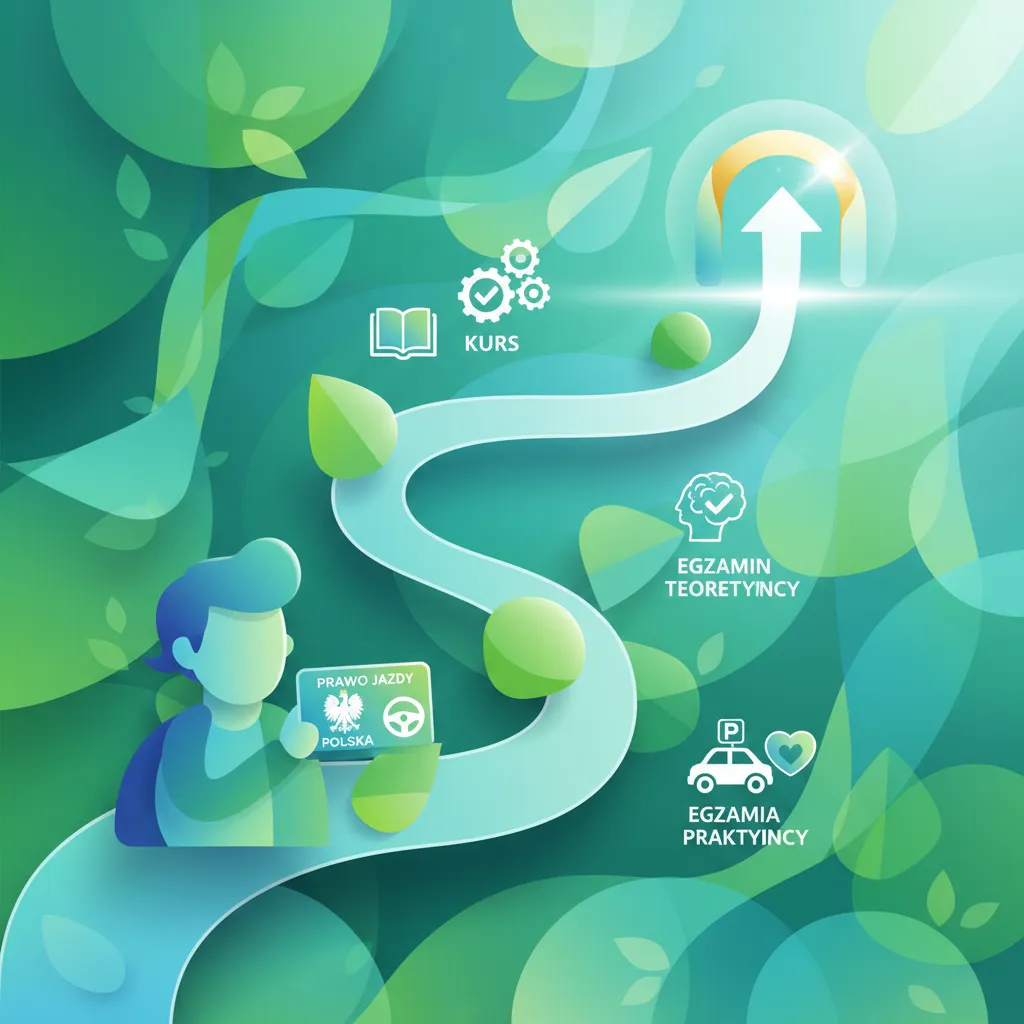
This lesson details the structured pathway to acquiring a Polish Category C driving licence. It explains the necessary eligibility criteria, such as holding a valid Category B licence and meeting the minimum age requirement. Learners will understand the sequence of the licensing process, from submitting the initial application to passing both the theoretical and practical examinations, ensuring full awareness of the regulatory journey to becoming a professional HGV driver.
This lesson outlines the statutory speed limits that professional drivers of Category C vehicles must adhere to on Polish roads. It clearly distinguishes the maximum permitted speeds in built-up areas, on single carriageways, and on motorways. The content also explains how to interpret road signs that may indicate temporary or vehicle-specific speed restrictions, ensuring drivers remain compliant with the law and avoid penalties from speed enforcement measures.
This lesson provides a detailed overview of Polish driving licence classifications, focusing on the privileges and limitations of Category B. It clarifies the minimum age requirement, the necessity of a medical certificate, and the process of enrolling in a driving school. The content outlines the steps to pass both the theory and practical exams to obtain a full licence, ensuring candidates understand all prerequisites.

This lesson focuses on the stringent health standards mandated for operating heavy goods vehicles. It details the required medical assessments, including vision, cardiovascular, and neurological checks, that prospective drivers must pass. Learners will understand the process of obtaining a medical certificate, the requirements for periodic renewals to ensure ongoing fitness for duty, and the legal implications of failing to meet these essential health criteria for professional driving.

This lesson details the documentation required for a Category B licence application and vehicle operation. It explains the function of the vehicle registration certificate (dowód rejestracyjny), the mandatory civil liability insurance (OC), and the certificate of technical inspection. Learners will understand the verification process and the importance of keeping these documents current and accessible.
This lesson focuses on the critical documentation every professional driver must carry and maintain. It covers the driver's licence, vehicle registration, and tachograph records, explaining their legal importance and proper management. Learners will also study the requirements for transport permits, cargo declarations, and safety inspection reports, ensuring full compliance with Polish and EU regulations to avoid penalties and operational delays during roadside checks.
This lesson explains the scope of the Category T licence, distinguishing it from other categories and outlining the vehicles covered, such as agricultural and forestry vehicles. It details the legal basis for operating these vehicles on public roads, including specific provisions in the Prawo o ruchu drogowym. Learners will understand the regulatory environment defining where and how Category T vehicles may be driven within Poland.
Learn about the examination structure for professional Category C drivers in Poland. This lesson covers the theoretical test format, passing criteria, and the practical driving test, including key maneuvers required for qualification.
This lesson outlines the statutory speed limits that professional drivers of Category C vehicles must adhere to on Polish roads. It clearly distinguishes the maximum permitted speeds in built-up areas, on single carriageways, and on motorways. The content also explains how to interpret road signs that may indicate temporary or vehicle-specific speed restrictions, ensuring drivers remain compliant with the law and avoid penalties from speed enforcement measures.
This lesson focuses on the stringent health standards mandated for operating heavy goods vehicles. It details the required medical assessments, including vision, cardiovascular, and neurological checks, that prospective drivers must pass. Learners will understand the process of obtaining a medical certificate, the requirements for periodic renewals to ensure ongoing fitness for duty, and the legal implications of failing to meet these essential health criteria for professional driving.
This lesson details the structured pathway to acquiring a Polish Category C driving licence. It explains the necessary eligibility criteria, such as holding a valid Category B licence and meeting the minimum age requirement. Learners will understand the sequence of the licensing process, from submitting the initial application to passing both the theoretical and practical examinations, ensuring full awareness of the regulatory journey to becoming a professional HGV driver.

This lesson provides a detailed breakdown of vehicle classifications relevant to the Category C licence. It explains the concept of 'dopuszczalna masa całkowita' (permissible total weight) and how it defines a vehicle's category. Learners will identify different truck types, such as rigid vehicles, based on their axle configurations and understand the specific roadworthiness and registration requirements for each class, ensuring correct vehicle operation under the law.
This lesson focuses on the critical documentation every professional driver must carry and maintain. It covers the driver's licence, vehicle registration, and tachograph records, explaining their legal importance and proper management. Learners will also study the requirements for transport permits, cargo declarations, and safety inspection reports, ensuring full compliance with Polish and EU regulations to avoid penalties and operational delays during roadside checks.

This lesson provides a comprehensive breakdown of the right-of-way rules that govern intersections. It explains the clear directives given by traffic lights, stop signs, and yield signs, and clarifies the procedures at unmarked or uncontrolled intersections, where the 'priority to the right' rule often applies. Learners will understand the legal hierarchy of these rules to make correct, safe, and predictable decisions when navigating through any junction, reducing the risk of conflict with other traffic.

This lesson teaches drivers how to adapt their speed, following distance, and control inputs to safely navigate adverse conditions. It covers the challenges posed by rain, snow, and ice, explaining the loss of traction and the increased risk of skidding or aquaplaning. The content provides specific strategies for driving in fog, which reduces visibility, and strong crosswinds, which can affect the stability of a high-sided vehicle, promoting a proactive and defensive driving mindset.
This lesson focuses on the specific challenges HGVs face when navigating roundabouts. It details the correct procedure for approach, including selecting the appropriate lane based on the intended exit and yielding to traffic already circulating. The content emphasizes the need to account for the vehicle's large turning radius and off-tracking to avoid encroaching on adjacent lanes or mounting curbs, ensuring a smooth and safe passage through the roundabout.

This lesson provides an overview of the key EU regulations that harmonize the road transport industry across member states. It focuses on the standardized rules for drivers' hours and rest periods, which are designed to combat fatigue and enhance safety. The content also explains the principles of cabotage—the transport of goods within one member state by a haulier from another—and the necessary documentation for smooth and legal cross-border operations.

This lesson outlines the essential legal paperwork associated with freight transport. It details the purpose and content of key documents like the load manifest, cargo declaration, and official weight certificates. Learners will understand their legal responsibility to verify that all documentation is accurate and complete before departure, and the importance of maintaining proper records for potential inspections by transport authorities or for cross-border customs procedures.
Find clear answers to common questions learners have about Driver Qualification and Training Obligations. Learn how the lesson is structured, which driving theory objectives it supports, and how it fits into the overall learning path of units and curriculum progression in Poland. These explanations help you understand key concepts, lesson flow, and exam focused study goals.
Theoretical training covers road rules, vehicle technology, and safe driving principles specific to HGVs, preparing you for the written exam. Practical training involves hands-on driving experience with a certified instructor, focusing on vehicle control, maneuvering, and road awareness, leading to the practical driving test.
Training records are legally mandatory in Poland for Category C drivers. They serve as official proof of completed training, qualifications, and adherence to regulatory requirements, such as driver qualification card (Karta Szkolenia Kierowcy) updates. Failure to maintain correct records can lead to fines or disqualification.
Competence assessment refers to the evaluation of a driver's knowledge and skills through official examinations. For Category C, this includes a theoretical test covering traffic law and vehicle specifics, and a practical test demonstrating safe driving and maneuvering abilities. Passing these assessments is crucial for obtaining the licence.
While self-study can supplement official training, the Polish Category C licence requires specific, certified theoretical and practical training programs. You must attend an accredited driving school and pass their internal assessments before being eligible for the official state examinations.
Key documentation includes proof of identity, a medical fitness certificate, a valid Category B driving licence, and a completed training course certificate from an accredited driving school. These documents are essential for applying for the Category C licence and the driver qualification card.
Build custom practice sessions tailored precisely to your needs. Focus on areas requiring improvement, review specific Polish road signs, or master complex traffic rules to ensure full preparation for your official driving license exam.