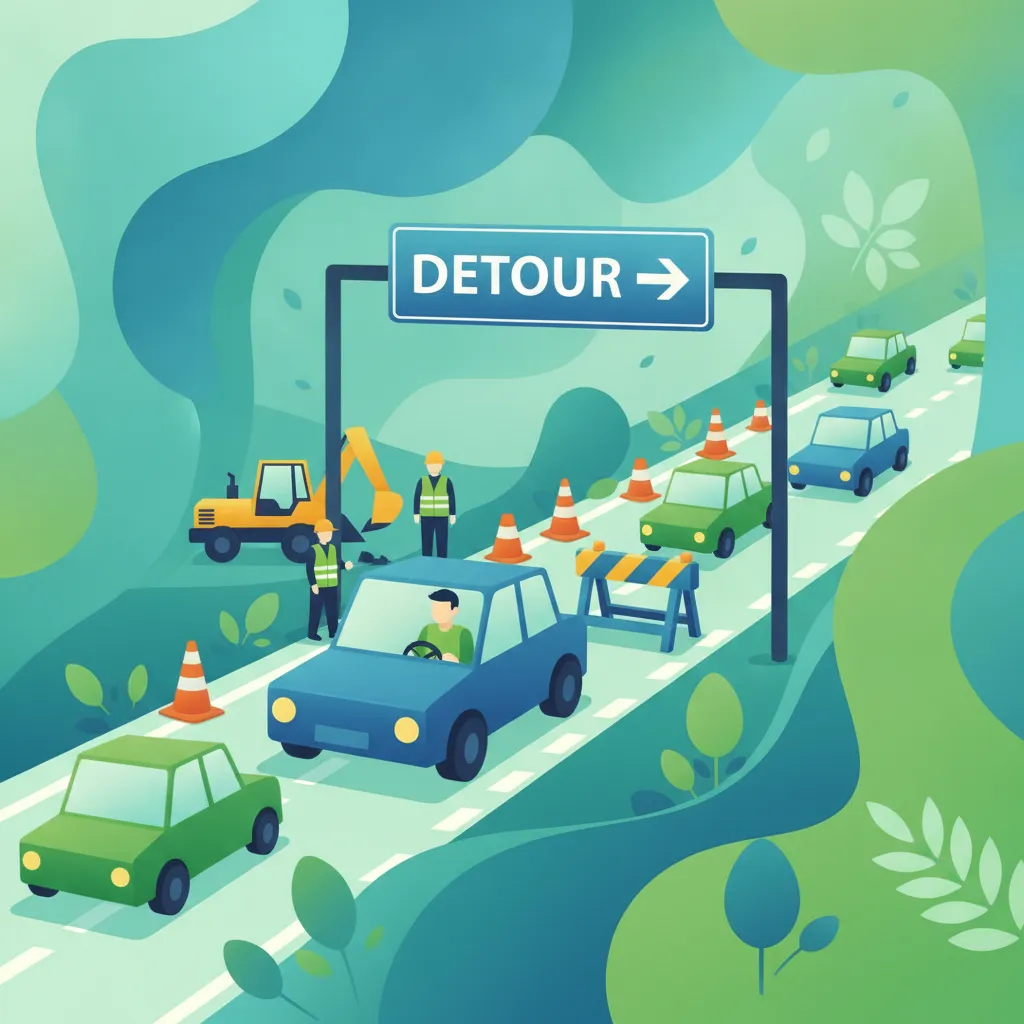
This lesson teaches you how to identify and safely navigate through temporary roadwork zones and detours on Turkish roads. Understanding these special traffic configurations is essential for maintaining safety and passing your Category B theory exam. You will learn to recognize specific construction signs and apply appropriate speed management techniques to protect yourself and road workers.
Lesson content overview
Navigating active roadwork zones and detours is one of the most demanding tasks a driver faces. In Turkey, infrastructure development, seasonal road repairs, and municipal maintenance mean that motorists regularly encounter altered traffic patterns. Under the regulations of the Turkish General Directorate of Highways (Karayolları Genel Müdürlüğü - KGM), construction zones require drivers to adapt their speed, follow temporary road signs, and pay close attention to temporary road markings.
Understanding how to drive safely through these zones is not only critical for passing your Category B theory exam (MTSK e-sınav) but also essential for protecting road workers and preventing accidents. This lesson covers the rules, signage, and defensive driving techniques needed to navigate roadworks safely.
Road construction sites are inherently dynamic and unpredictable environments. Standard road layouts are temporarily modified, which can confuse drivers who rely on memory rather than active observation.
Several factors make roadworks particularly hazardous:
Legal Responsibility: Under the Turkish Highway Traffic Regulation (Karayolları Trafik Yönetmeliği), drivers are legally required to adjust their speed to the road, weather, and traffic conditions. This obligation is strictly enforced in construction zones, where speed limits are legally reduced to protect life and property.
To safely traverse any roadwork zone, you must adhere to four core principles:
Lower speeds provide you with more time to react to sudden hazards, such as a worker stepping into the lane or a vehicle ahead braking abruptly. It also significantly reduces your vehicle's stopping distance. If a collision does occur, a lower speed dramatically reduces the severity of the impact.
You must actively scan the road ahead, to the sides, and in your mirrors. Look for yellow warning lights, hand signals from traffic controllers, and the brake lights of vehicles ahead. Avoid all distractions inside the vehicle, such as adjusting the radio or navigation system.
Construction workers and maintenance crews have absolute legal priority within active work zones. You must follow their instructions immediately, yield to their machinery, and maintain a safe lateral distance when passing them.
Standard traffic patterns are suspended inside roadworks. All temporary signs, traffic cones, and temporary road markings must be obeyed. These temporary measures override any permanent signs or markings that suggest a different rule.
In Turkey, temporary traffic signs used in roadwork zones are easily distinguished by their yellow background. While standard warning signs have a white background with a red border, temporary signs swap the white for yellow to signal to drivers that the hazard is temporary and requires immediate attention.
Here are the most common signs you will encounter and must master for the MTSK exam:
Other vital temporary signs include:
Yellow Overrides White: If you see a permanent white sign indicating a speed limit of 90 km/h, but a temporary yellow sign next to it indicates 50 km/h, you must obey the 50 km/h limit. Failing to do so is a prosecutable speeding offence.
When a road is undergoing major resurfacing or layout changes, the permanent white lane markings are often painted over or ignored. Instead, temporary road markings are applied.
In Turkey, temporary road markings are painted in yellow.
[Permanent White Line]  <-- IGNORE THIS
======================  (No longer valid in construction zone)

[Temporary Yellow Line] <-- FOLLOW THIS
----------------------  (Defines your current active lane)
Speeding in a work zone is one of the most common and dangerous traffic violations. In Turkey, temporary speed limits are designed based on the specific hazards of the site:
Under the Turkish Highway Traffic Law (Law No. 2918), exceeding temporary speed limits carries the same financial penalties and penalty points as exceeding permanent limits. Fines are graded depending on how much you exceed the limit:
Furthermore, if your speeding causes an accident that injures a highway worker, you can face severe criminal charges under the Turkish Penal Code (Türk Ceza Kanunu) for negligence and endangering public safety.
When a lane is closed due to roadworks, traffic must merge into the remaining open lanes. The safest and most efficient way to handle this is the Zipper Merge, known in Turkish as the Fermuar Sistemi (Zipper System).
A detour (sapma or servis yolu) is a temporary route designed to redirect traffic around a completely closed section of road. Detours are heavily signposted with yellow directional signs.
Scan for the Detour Warning: Watch for the initial sign indicating that the road ahead is closed and a detour is in effect (e.g., Yol Kapalı or Servis Yolu signs).
Reduce Your Speed: Detour routes often utilize minor roads, side streets, or unpaved temporary roads that are not built for high speeds.
Follow the Yellow Directional Arrows: Keep a close eye on the yellow arrows indicating the detour path. Do not trust your GPS or navigation system blindly if it contradicts the physical detour signs.
Watch for Vulnerable Road Users: Detours may divert heavy highway traffic through residential areas or village roads where pedestrians, children, and agricultural vehicles are common.
Re-enter the Main Route Safely: When the detour ends, follow signs directing you back to the main highway, yielding appropriately as you rejoin the traffic flow.
Work zones require different defensive driving tactics depending on the environment, weather, and time of day.
Driving through construction zones at night is highly dangerous due to glare from construction lights, flashing amber beacons, and reduced visibility of road workers.
Wet or muddy conditions exacerbate the dangers of roadworks.
Large construction vehicles need wider turning spaces and take much longer to stop.
To pass your driving exam and remain safe on Turkish roads, avoid these common pitfalls:
Explore all units and lessons included in this driving theory course.
Lesson content overview
Explore all units and lessons included in this driving theory course.
Explore search topics learners often look for when studying Navigating Roadworks and Detours. These topics reflect common questions about road rules, driving situations, safety guidance, and lesson level theory preparation for learners in Turkey.
Browse additional driving theory lessons that cover connected traffic rules, road signs, and common driving situations related to this topic. Improve your understanding of how different rules interact across everyday traffic scenarios.
Learn the official meanings of regulatory, warning, and informational traffic signs. This guide covers how to interpret vertical road signs and traffic light signals to ensure compliance with Turkish traffic regulations and improve your hazard perception while driving.
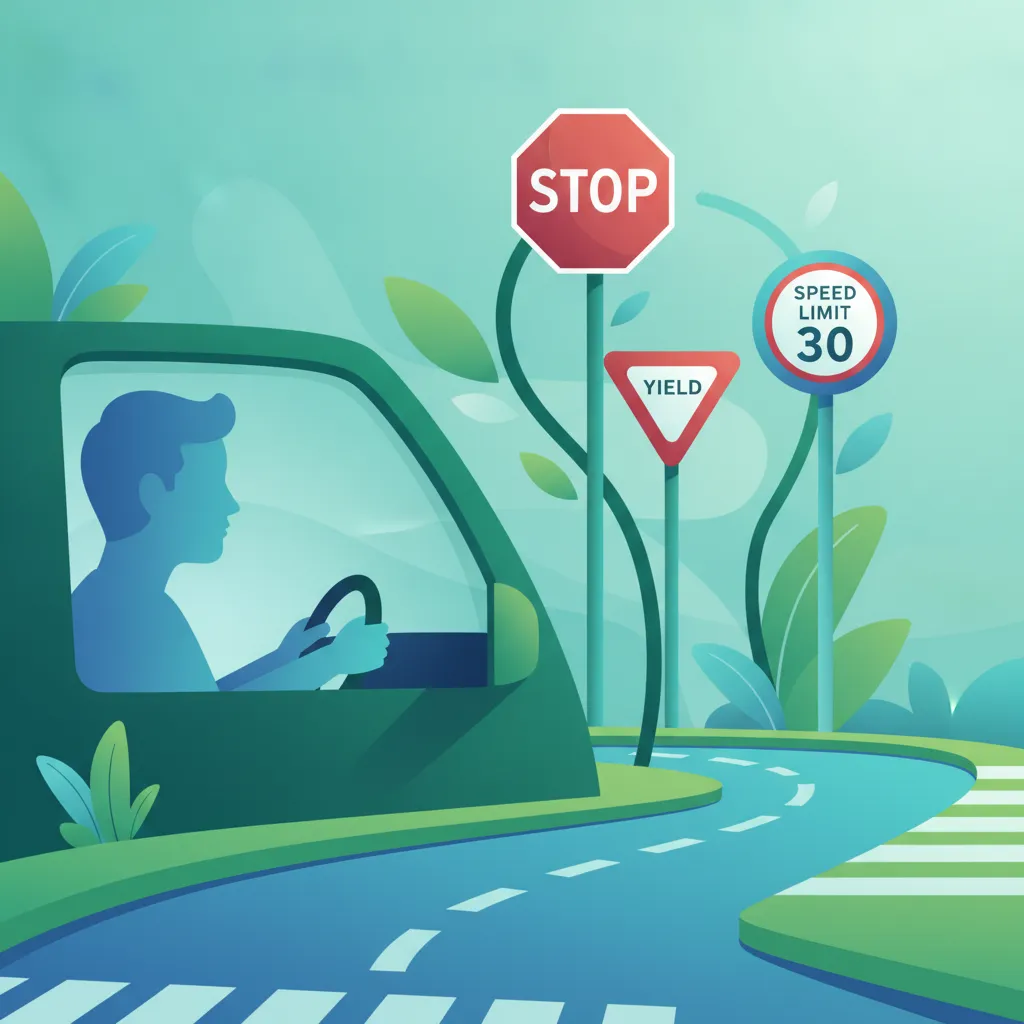
This lesson delves into the regulatory traffic signs that dictate mandatory and prohibited actions for drivers. Learners will study signs indicating speed limits, stop and yield requirements, no-entry zones, and lane usage directives. The lesson also covers temporary regulatory signs used in construction or special events, emphasizing the importance of adhering to these signs to avoid penalties.

In this lesson, learners explore warning traffic signs designed to alert drivers to potential hazards ahead. Topics include signs indicating curves, steep descents, slippery surfaces, pedestrian crossings, and school zones. The lesson emphasizes the importance of interpreting these signs correctly to adjust speed and driving behaviour, thereby preventing accidents.

In this lesson, learners will master the meanings of various traffic signs as defined by Turkish traffic legislation. The focus will be on understanding regulatory, warning, and informational signs, with particular attention to those that directly affect motorcyclists, such as speed limits and lane usage. By the end of this session, participants will be able to quickly recognize sign categories and apply the required actions safely.
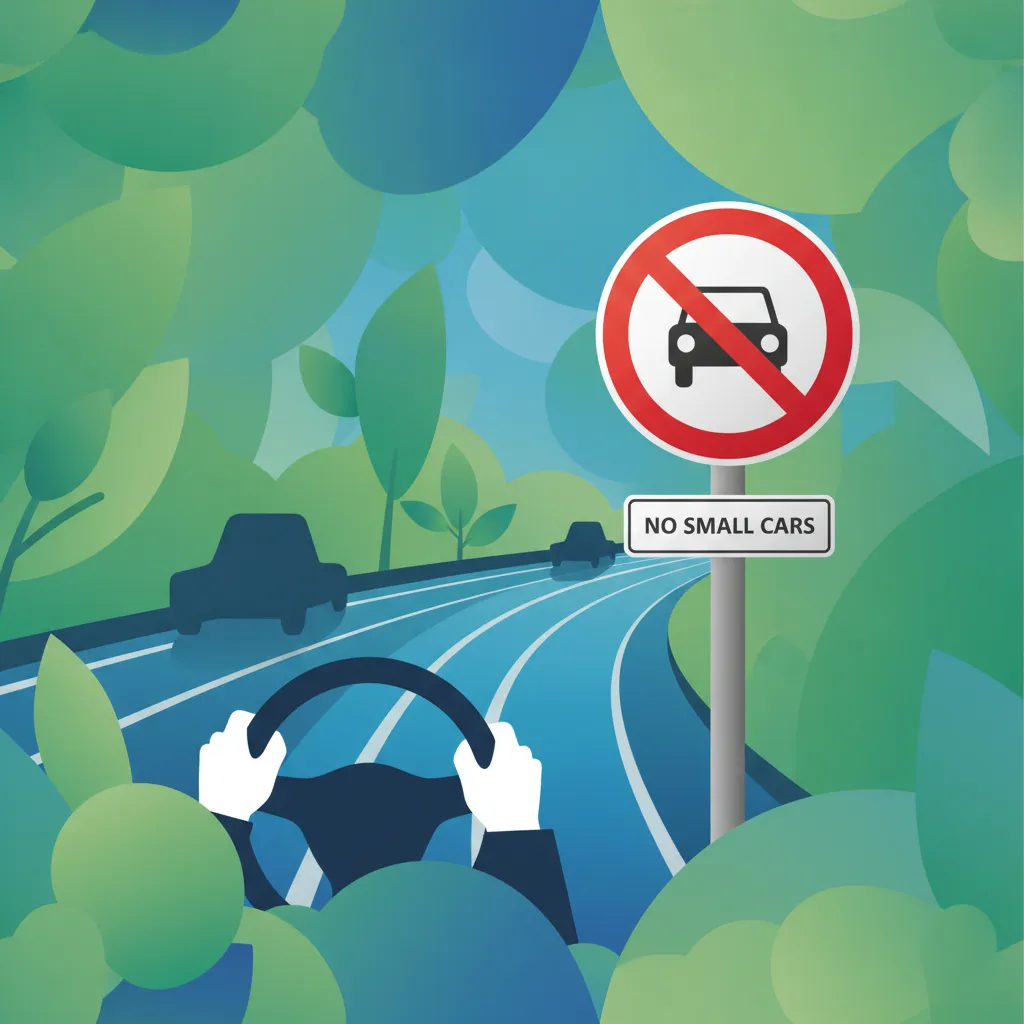
Regulatory traffic signs convey absolute legal commands that riders must obey to avoid heavy fines and ensure safe, orderly movement. This lesson walks through prohibitory indicators, mandatory speed limits, turn restrictions, and specific moped bans on motorways or designated high-speed corridors. You will learn to recognize the distinctive shapes and colors of these signs, enabling rapid, accurate decision-making while operating your lightweight vehicle under Turkish highway laws.
In this lesson, learners explore vertical road markings, primarily focusing on signs mounted on poles or overhead structures. Topics include direction indicators, speed limit signs, warning signs, and regulatory signs. The lesson emphasizes the importance of sign placement, illumination, and visibility in ensuring driver compliance. Real-world scenarios demonstrate how drivers should interpret and react to vertical markings.
This lesson focuses on informational traffic signs that provide guidance and essential information to drivers. Learners will examine signs indicating directions, distances to cities, service areas, fuel stations, hospitals, police stations, and tourist attractions. The lesson highlights the role of these signs in facilitating navigation and ensuring drivers can locate essential services safely.

Warning signs alert road users to impending physical conditions, dangers, or layout alterations that require immediate driver attention and speed adjustment. This lesson focuses on indicators of sharp bends, narrowing paths, slippery road surfaces, upcoming pedestrian crosswalks, and school warning zones. You will study how to interpret these yellow-and-red triangular signs to safely modify your approach speed and gear your attention toward potential hazards unique to lightweight mopeds.
This lesson examines portable and electronic warning devices used to inform drivers of temporary road conditions. Learners will explore the use of movable signs, electronic variable message signs, speed display devices, and reflective hazard cones. The lesson emphasizes the significance of these devices in construction zones, roadworks, and dynamic traffic situations.

This lesson provides an in-depth understanding of traffic light signals and their role in regulating intersection traffic. Learners will study the meanings of red, yellow, and green lights, as well as pedestrian and bicycle signals. The lesson also covers special conditions such as flashing signals and signal malfunctions. Emphasis is placed on the correct driver response to each signal phase.
This lesson focuses on the identification and interpretation of traffic signs and road markings that are particularly relevant to passenger vehicle drivers, such as bus lane indications, priority road signs, and specific speed limits. Learners will explore how these signs affect route planning, compliance, and the overall flow of traffic. Mastery of sign interpretation ensures safe and lawful operation in various traffic conditions.
Understand the principles of calculating safe stopping distances and the legal requirements for speed limits on various road types in Turkey. This lesson explains how to adjust your driving behavior according to environmental conditions to maintain safety and avoid common traffic violations.

This lesson focuses on the principles governing safe following distances between vehicles. Topics include understanding time and distance gaps, reaction times, and braking distances. Learners will explore guidelines for maintaining proper following distances based on speed and road conditions. Real-world examples demonstrate the importance of safe following practices in preventing rear-end collisions.
This lesson examines the speed limit regulations applicable in different road environments in Turkey. Topics include understanding posted speed limits, speed zones, and maximum and minimum speed requirements for urban, rural, and highway settings. Learners will explore the significance of complying with speed limits and the potential consequences of exceeding them.

This lesson focuses on the importance of maintaining safe following distances for goods vehicles, taking into account longer braking distances and increased load. Learners will learn how to calculate appropriate gaps based on speed, road conditions, and vehicle dynamics. The lesson emphasizes safe following practices to prevent rear-end collisions and improve overall traffic safety in Turkey.

In this lesson, learners explore the factors influencing the determination of a safe driving speed. Topics include adjusting speed for road conditions, weather, traffic density, visibility, and vehicle performance. The lesson emphasizes the importance of dynamic speed management and how to assess appropriate speeds for varying situations.
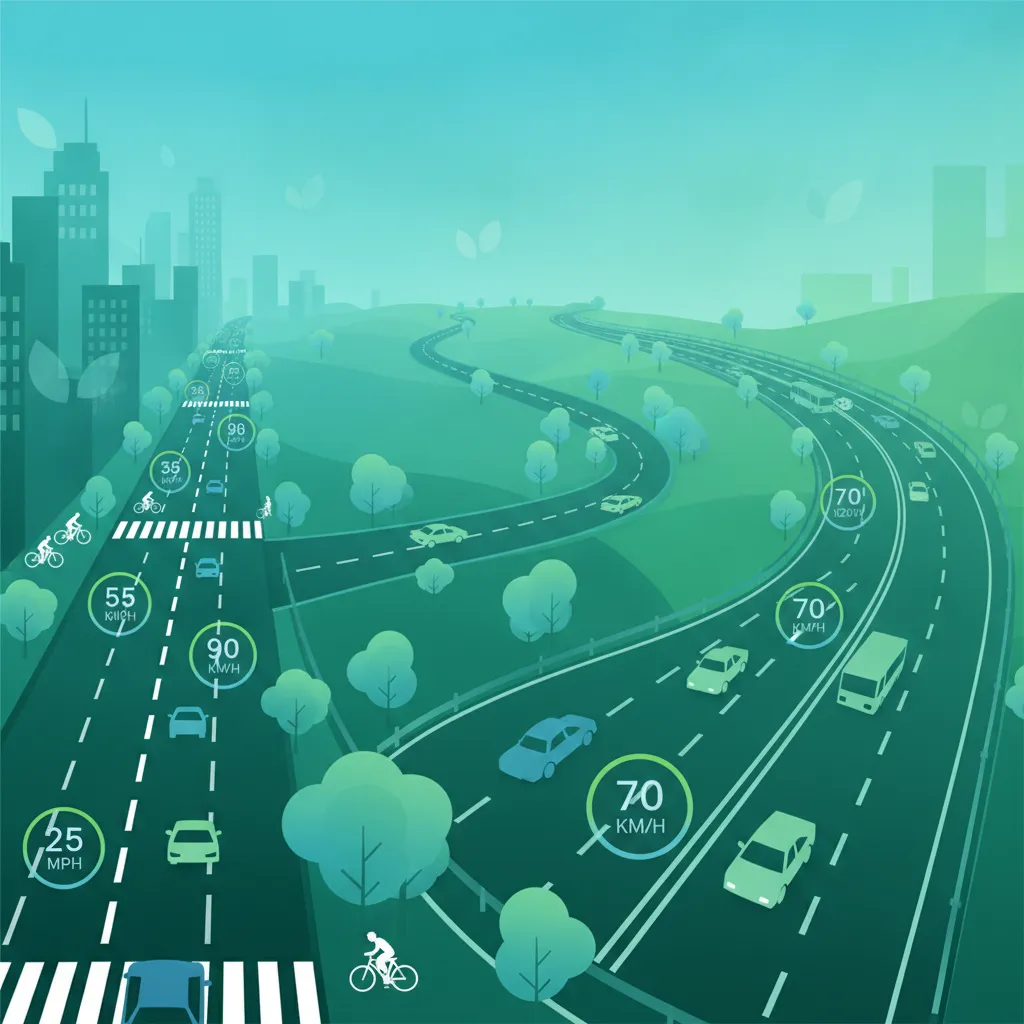
This lesson focuses on managing vehicle speed according to different road environments—urban, rural, and highways—while complying with legal speed limits and traffic flow. Learners will understand how to adjust speed for varying road conditions, traffic density, and safety considerations, ensuring a balance between efficiency and risk mitigation.
Learners will learn how to calculate and maintain safe following distances, accounting for the longer braking distances and reaction times inherent to larger passenger vehicles. The lesson emphasizes the importance of a sufficient time gap to allow for safe stopping and to prevent rear-end collisions, particularly in varying traffic conditions.
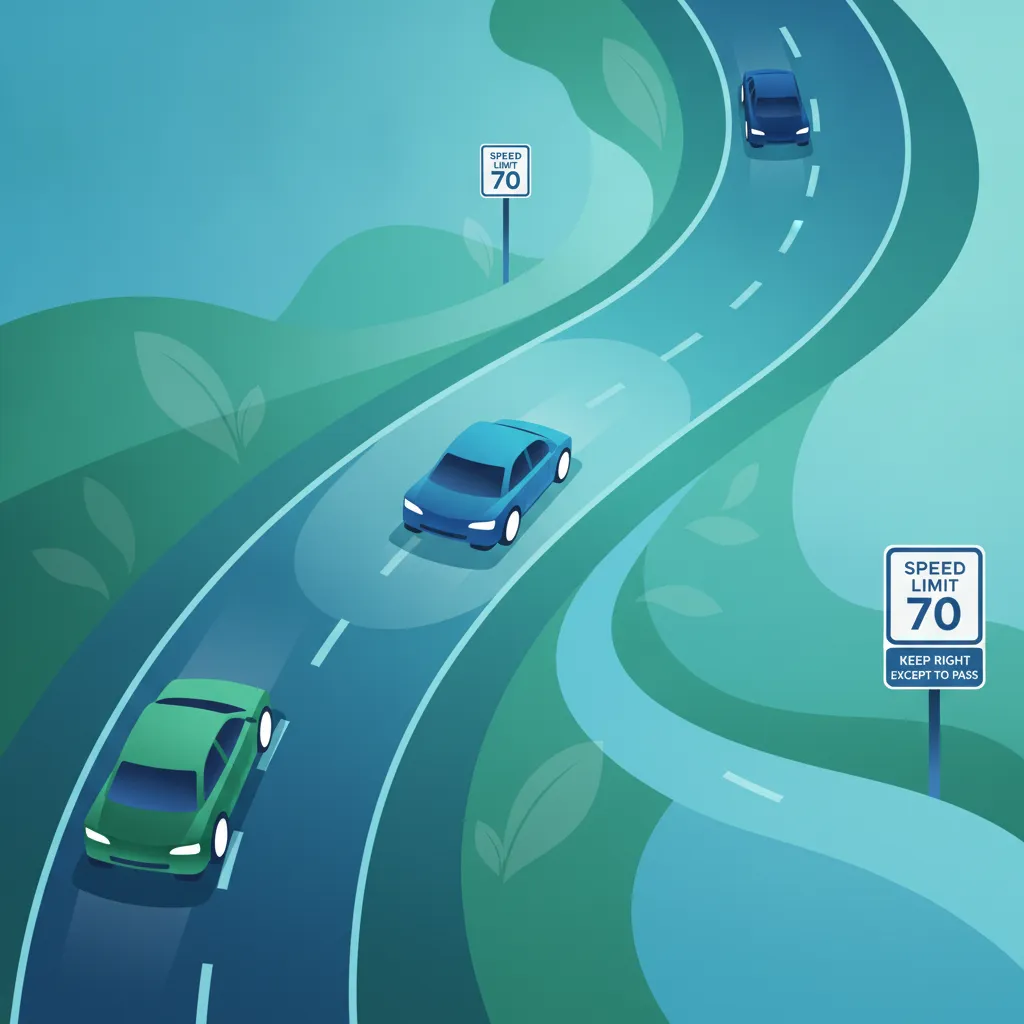
This lesson explains the specific rules, driving etiquette, and safety protocols for operating a vehicle on high-speed Turkish motorways. It covers correct lane usage, overtaking procedures, emergency lane restrictions, and how to maintain consistent high speeds safely. Drivers will learn to avoid dangerous tailgating and sudden lane changes.

This lesson focuses on the unique requirements and best practices for operating passenger vehicles on highways and expressways. Topics include maintaining appropriate speed, adhering to lane discipline, executing safe overtaking maneuvers, and managing merges and exits. Emphasis is placed on ensuring a smooth ride for passengers while integrating safely with faster-moving traffic.

Managing your speed effectively is not just about obeying posted legal limits; it is about adjusting your pace to the immediate traffic context. This lesson teaches you how to evaluate traffic density, pedestrian presence, and blind corners to select an appropriate speed that guarantees safe stopping distances. You will learn to anticipate flow fluctuations, allowing you to avoid sudden, unstable speed changes that can compromise your balance and traction in mixed traffic.
This lesson focuses on speed regulation for goods vehicles, highlighting how vehicle weight, load, and road conditions influence safe operating speeds. Learners will understand legal speed limits for various road types and the necessity of adapting speed to traffic flow and environmental conditions. The lesson also emphasizes the importance of maintaining appropriate speed to ensure vehicle control.
Find clear answers to common questions learners have about Navigating Roadworks and Detours. Learn how the lesson is structured, which driving theory objectives it supports, and how it fits into the overall learning path of units and curriculum progression in Turkey. These explanations help you understand key concepts, lesson flow, and exam focused study goals.
Yes. In Turkish traffic law, temporary signs and markings used in construction zones are designed to supersede permanent signs to reflect current road conditions. You must always follow the instructions provided by the temporary signage.
You must immediately reduce your speed, exercise extreme caution, and be prepared to stop if necessary. Providing extra space for road workers is a legal and ethical requirement to ensure their safety.
Yes, speed limits are frequently lowered in construction zones for the safety of drivers and workers. Always look for temporary speed limit signs and adhere to them strictly, even if you do not see active work at that exact moment.
Reduce your speed early, observe lane arrows and signs indicating the detour route, and signal your intentions clearly. Avoid sudden braking or lane changes by observing the directional signage well in advance.
Use our comprehensive practice search to find exactly the Turkish driving theory questions you need to master. Whether reviewing specific road signs, traffic rules, or first aid scenarios, select your perfect practice set and boost your confidence for the official ehliyet sınavı.