This lesson focuses on identifying hazardous bus stops characterized by poor sightlines, complex junctions, and high pedestrian activity. By applying proactive observation techniques, you will learn to adjust your driving and approach speeds to ensure passenger safety and meet the standards for the Austrian Category D theory exam.
Lesson content overview
As a professional driver undertaking the Austrian Driving Theory Course for Bus & Coach Licence (Category D), your primary responsibility extends beyond simply operating a vehicle. It encompasses the paramount duty of care towards your passengers and all other road users. This lesson delves into a critical aspect of urban and rural driving: identifying, assessing, and safely managing high-risk stop areas. Not all bus or coach stops are created equal; some present inherent hazards that demand heightened vigilance and adapted driving behaviour to prevent accidents and ensure safety.
A high-risk stop area is defined as any bus or coach stop location where environmental factors significantly increase the probability of a collision with vulnerable road users during passenger boarding or alighting. These factors often include obstructed sightlines, close proximity to busy junctions, or a frequent concentration of pedestrians, cyclists, and other vulnerable road users (VRUs). For Category D drivers, recognizing these dynamic hazards is not merely a recommendation; it is a fundamental aspect of professional duty of care and legal compliance under the Austrian Road Traffic Act (Straßenverkehrsordnung – StVO).
The identification of these hazardous locations requires continuous assessment. The typical safety assumptions, such as clear sightlines and low traffic conflict, often do not apply. This necessitates a proactive approach where drivers anticipate potential dangers and adjust their speed, vehicle positioning, and observation patterns accordingly, long before arriving at the stop.
High-risk stops are frequently implicated in collisions involving pedestrians, cyclists, and passengers. Proper management directly mitigates these risks, fulfilling your legal obligation and enhancing passenger safety. This topic builds directly on foundational lessons covering standard stop procedures, boarding, and alighting, and complements broader discussions on interactions with pedestrians, cyclists, and tourists. By mastering these principles, you contribute to a safer public transport network and uphold the highest standards of professional driving.
Effective management of high-risk stop areas relies on a set of core principles that guide a bus or coach driver's actions. These principles ensure a systematic and proactive approach to safety.
Hazard recognition involves continuous visual scanning and a thorough assessment of the entire environment surrounding a stop. This allows for the early detection of potential conflicts, such as blind corners, intersecting traffic, or areas where pedestrians might unexpectedly enter the roadway. Drivers must anticipate these hazards well in advance and adjust their speed and position before reaching the stop.
This principle means deliberately reducing speed when approaching stops identified as high-risk, independent of any posted speed limits. By slowing down earlier than normal, you provide yourself with crucial extra reaction time to respond to unexpected movements by other road users or sudden changes in traffic conditions. This often requires initiating braking sooner than you might for a standard stop.
Enhanced observation refers to an intensified pattern of checking mirrors, scanning the environment, and performing shoulder checks, with a particular focus on vulnerable users like children, cyclists, or tourists, and your vehicle's blind spots. This heightened vigilance improves the detection of unpredictable behaviour, demanding longer dwell times for observation both before and after passengers board or alight.
Drivers should develop the ability to classify stops based on specific risk factors. This might include categorising them by sightline obstruction, proximity to junctions, or areas with high concentrations of VRUs. Such a classification enables a systematic approach, allowing drivers to apply tailored safety procedures depending on the specific risk profile of each stop.
The duty of care is your legal responsibility to protect passengers and other road users whenever your vehicle is in operation, particularly during stopping, boarding, and alighting. This obligation is enshrined in the Austrian Road Traffic Act (StVO), specifically §§ 63 (regarding stopping and endangering other road users) and 38 (general driving behaviour). It mandates that drivers avoid negligence, such as stopping where visibility is insufficient or failing to anticipate common hazards.
Defensive driving is an overarching strategy that involves adjusting your driving behaviour to actively prevent accidents, especially in complex and challenging stop environments. It means reducing your reliance on other road users' compliance with traffic rules and always expecting the unexpected. Key elements include earlier braking, longer observation periods, and cautious positioning to maintain safety margins.
Certain environmental characteristics consistently contribute to a stop being classified as high-risk. Recognising these specific factors is the first step towards managing them safely.
Sightline impairment occurs when any obstruction prevents the driver from seeing approaching traffic or pedestrians when preparing to stop, or when pulling away. These obstructions can be:
When sightlines are compromised, your reaction time is significantly reduced. You must compensate by reducing your speed substantially and increasing your observation distance, peering around or past the obstructions. StVO § 65 (1) explicitly states: "The driver must ensure that stopping does not obstruct sight lines for other road users." A common mistake is stopping without first ensuring a clear view of approaching traffic or pedestrians, potentially leading to collisions with unseen vehicles or vulnerable road users.
A bus or coach stop located too close to an intersection, a priority crossing, or a merging lane, where traffic flow changes abruptly, presents a significant hazard. This is referred to as junction proximity. Most authorities, and best practice guidelines from organisations like the BVIB (Bundesvereinigung der Verkehrsunternehmen in Österreich), consider a distance within 30 metres (or the distance a vehicle travels in 3 seconds at the posted speed) as a critical zone.
Stopping too close to a junction can obstruct the intersection itself, block sightlines for cross-traffic, or force other vehicles to brake suddenly. StVO § 43 (1) requires vehicles approaching a junction to yield to traffic already in the intersection. Professional drivers must adhere to guidelines which often recommend a minimum clearance.
Certain areas naturally have a higher frequency of vulnerable road users (VRUs), including pedestrians, cyclists, e-scooter riders, children, and people with reduced mobility. These concentrations are common near schools, parks, shopping centres, tourist attractions, and residential areas. The presence of VRUs implies increased unpredictability; children may run into the road without looking, tourists might be distracted or hesitate, and cyclists may ride closely alongside the bus.
StVO § 12 (2) dictates that drivers must give precedence to cyclists and pedestrians approaching a stop. This means exercising extreme caution, anticipating sudden movements, and allowing ample time and space for VRUs to navigate the area safely.
To effectively manage high-risk stop areas, Category D drivers must employ a range of proactive driving strategies that go beyond standard procedures.
As established, proactive speed management is critical. Reduce your speed significantly earlier when approaching a known high-risk stop. This creates a larger buffer zone, allowing more time for observation and reaction. Gradually release the brakes as you near the stop, ensuring a smooth and controlled deceleration.
Enhanced observation involves:
In high-risk areas, defensive boarding and alighting practices are crucial.
Complete Stop Verification: Ensure the vehicle is fully stopped, stable, and properly positioned at a safe distance from the curb before activating doors. Avoid stopping where passengers would step into a puddle or onto uneven ground.
Door Safety First: Open doors only when it is safe for passengers to move. Never allow doors to close if there is any doubt about a passenger's safe movement. Use interior lighting at night or in low visibility to aid passenger visibility and orientation.
Monitor Passenger Movement: Observe passengers as they board and alight, particularly children, the elderly, or those with luggage, who may require more time or assistance.
Clear Before Departure: Confirm that all passengers are clear of the doors and the vehicle's immediate vicinity before attempting to pull away. This includes checking for any stray luggage or items left behind.
A critical aspect of pulling away from any stop, especially in a high-risk area, is blind spot management. These are areas around your large bus or coach that are not visible through your mirrors.
Adjust Mirrors Correctly: Ensure all mirrors are correctly adjusted to provide the widest possible field of view before starting your journey.
Mirror Checks: Regularly check all mirrors (interior, side, and convex) to scan for approaching traffic, particularly cyclists or smaller vehicles that can easily be obscured.
Shoulder Check: Before signaling and pulling away from the stop, perform a physical shoulder check (turning your head to directly look into the blind spot to the side you intend to move). This is essential to confirm no vulnerable road users are alongside your vehicle.
Signal Clearly: Use your turn indicators well in advance to communicate your intentions to other road users.
Safe operation of a bus or coach in Austria is strictly governed by the Straßenverkehrsordnung (StVO) – the Austrian Road Traffic Act. Adherence to these regulations is not just a matter of avoiding fines; it is fundamental to fulfilling your duty of care.
StVO § 63 (1) – Safe Stopping: "Vehicles must stop only when it is safe to do so and must not endanger other road users."
StVO § 65 (1) – Unobstructed Sightlines: "Stopping shall not obstruct sight lines for other road users."
StVO § 12 (2) – Priority for Vulnerable Road Users: "Drivers must give precedence to pedestrians, cyclists, and other vulnerable road users."
StVO § 46 (1) – No Stopping on Pedestrian Crossings: "Vehicles shall not stop on pedestrian crossings or just before them."
Beyond the StVO, organisations such as the Bundesvereinigung der Verkehrsunternehmen in Österreich (BVIB) often provide additional guidance and best-practice recommendations. These might include specific stop design recommendations or minimum clearance distances (e.g., 5 metres from junctions) that, while not always strictly legal requirements, represent best practices for safety and are important for professional drivers to follow. Always verify local ordinances, as some municipalities (e.g., Vienna) may have specific traffic regulations impacting bus stop placement and operation.
High-risk stop areas become even more complex when combined with challenging environmental or operational conditions. A professional driver must be able to adapt their strategies accordingly.
Even experienced drivers can fall into traps when dealing with high-risk stops. Understanding common violations and adopting best practices is essential for continuous improvement.
The concept of duty of care is central to professional driving under the Austrian Category D licence. It represents a legal and ethical obligation to operate your vehicle with reasonable care to avoid harming others. In the context of high-risk stop areas, this means:
Failure to adhere to these obligations can lead to severe consequences, including fines, license points, and significant civil and criminal liability in the event of an accident. As a professional bus and coach driver, you are expected to demonstrate a higher standard of care than a private driver, recognising the increased responsibility that comes with transporting many lives.
Mastering the identification and management of high-risk stop areas is a cornerstone of safe and professional bus and coach driving in Austria. It requires a systematic approach based on vigilance, proactive decision-making, and strict adherence to legal and best-practice guidelines.
By understanding the definitions of high-risk stops, identifying specific hazards like sightline impairment, junction proximity, and VRU concentrations, and applying proactive strategies such as careful speed management, enhanced observation, and defensive boarding/alighting, you significantly reduce the risk of accidents. Always remember your legal obligations under the StVO and your overarching duty of care. Continuous assessment of dynamic conditions—including weather, light, road type, and passenger characteristics—will enable you to adapt your driving behaviour effectively.
Ultimately, your ability to reliably recognise high-risk stop areas and implement these safe, legally compliant practices will not only protect lives but also uphold your reputation as a responsible and professional Category D driver.
This lesson teaches Category D drivers to identify and manage high-risk bus stops by recognising environmental hazards such as sightline impairment, junction proximity within 30 metres, and high VRU concentrations near schools, shopping centres, and tourist areas. Key strategies include proactive speed reduction well before reaching the stop, enhanced observation with systematic scanning and longer dwell times on conflict areas, and defensive boarding/alighting procedures that confirm passenger safety before departure. The Austrian Road Traffic Act (StVO) provides the legal framework, with specific obligations under §§ 63, 65, 12, and 46 requiring drivers to ensure safe stopping positions, maintain unobstructed sightlines, and yield to vulnerable road users. Adapting to challenging conditions including weather, light, road type, and temporal factors like rush hour or school dismissal times is essential for fulfilling the professional duty of care.
A short set of high-value points that capture the most important learning from this lesson.
A high-risk stop area is defined by environmental factors such as obstructed sightlines, proximity to junctions within 30 metres, and high concentrations of vulnerable road users.
Proactive speed management means reducing speed well before reaching a stop, independent of posted limits, to create reaction time buffers.
Hazard recognition requires continuous visual scanning of the entire environment, looking far ahead, near, to the sides, and in all mirrors for potential conflicts.
StVO § 65(1) explicitly prohibits stopping in a way that obstructs sightlines for other road users, making sightline assessment mandatory before committing to a stop.
Defensive boarding and alighting requires confirming all passengers are fully clear of doors and the vehicle's immediate vicinity before pulling away, especially for children, elderly, and those with luggage.
Explore all units and lessons included in this driving theory course.
Junction proximity becomes critical when a stop is within 30 metres (or 3 seconds of travel at posted speed) of an intersection, as this can obstruct cross-traffic and violate StVO § 43(1).
StVO § 12(2) mandates that drivers must give precedence to pedestrians, cyclists, and other vulnerable road users when they are approaching or near a stop.
A shoulder check is essential because mirrors alone cannot cover blind spots; drivers must physically turn their head to directly observe areas alongside the vehicle before pulling away.
In high-risk areas, always perform a complete visual sweep before stopping AND before pulling away, with longer dwell times on areas of potential conflict.
Weather conditions like rain, fog, snow, and ice significantly increase braking distances and require earlier speed reduction and longer observation times.
Stopping too close to an intersection, which obstructs cross-traffic sightlines and creates bottlenecks that increase side-impact collision risk.
Failing to account for obstructed sightlines caused by parked vehicles, buildings, or foliage before committing to a stop.
Moving the vehicle while passengers are still boarding or alighting, risking trips, falls, and injuries especially among children and elderly.
Relying solely on mirrors without performing a shoulder check before pulling away, which misses cyclists and e-scooter riders in blind spots.
Prioritising schedule adherence over safety by rushing decisions or cutting corners on observation checks at high-risk stops.
Lesson content overview
A short set of high-value points that capture the most important learning from this lesson.
A high-risk stop area is defined by environmental factors such as obstructed sightlines, proximity to junctions within 30 metres, and high concentrations of vulnerable road users.
Proactive speed management means reducing speed well before reaching a stop, independent of posted limits, to create reaction time buffers.
Hazard recognition requires continuous visual scanning of the entire environment, looking far ahead, near, to the sides, and in all mirrors for potential conflicts.
StVO § 65(1) explicitly prohibits stopping in a way that obstructs sightlines for other road users, making sightline assessment mandatory before committing to a stop.
Defensive boarding and alighting requires confirming all passengers are fully clear of doors and the vehicle's immediate vicinity before pulling away, especially for children, elderly, and those with luggage.
Explore all units and lessons included in this driving theory course.
Junction proximity becomes critical when a stop is within 30 metres (or 3 seconds of travel at posted speed) of an intersection, as this can obstruct cross-traffic and violate StVO § 43(1).
StVO § 12(2) mandates that drivers must give precedence to pedestrians, cyclists, and other vulnerable road users when they are approaching or near a stop.
A shoulder check is essential because mirrors alone cannot cover blind spots; drivers must physically turn their head to directly observe areas alongside the vehicle before pulling away.
In high-risk areas, always perform a complete visual sweep before stopping AND before pulling away, with longer dwell times on areas of potential conflict.
Weather conditions like rain, fog, snow, and ice significantly increase braking distances and require earlier speed reduction and longer observation times.
Stopping too close to an intersection, which obstructs cross-traffic sightlines and creates bottlenecks that increase side-impact collision risk.
Failing to account for obstructed sightlines caused by parked vehicles, buildings, or foliage before committing to a stop.
Moving the vehicle while passengers are still boarding or alighting, risking trips, falls, and injuries especially among children and elderly.
Relying solely on mirrors without performing a shoulder check before pulling away, which misses cyclists and e-scooter riders in blind spots.
Prioritising schedule adherence over safety by rushing decisions or cutting corners on observation checks at high-risk stops.
Explore search topics learners often look for when studying Identifying and Managing High-Risk Stop Areas. These topics reflect common questions about road rules, driving situations, safety guidance, and lesson level theory preparation for learners in Austria.
Browse additional driving theory lessons that cover connected traffic rules, road signs, and common driving situations related to this topic. Improve your understanding of how different rules interact across everyday traffic scenarios.
Understand critical Austrian driving theory for Category D regarding high-risk bus stops. Learn to identify hazards like junctions and VRUs, and apply defensive strategies to ensure passenger and pedestrian safety.
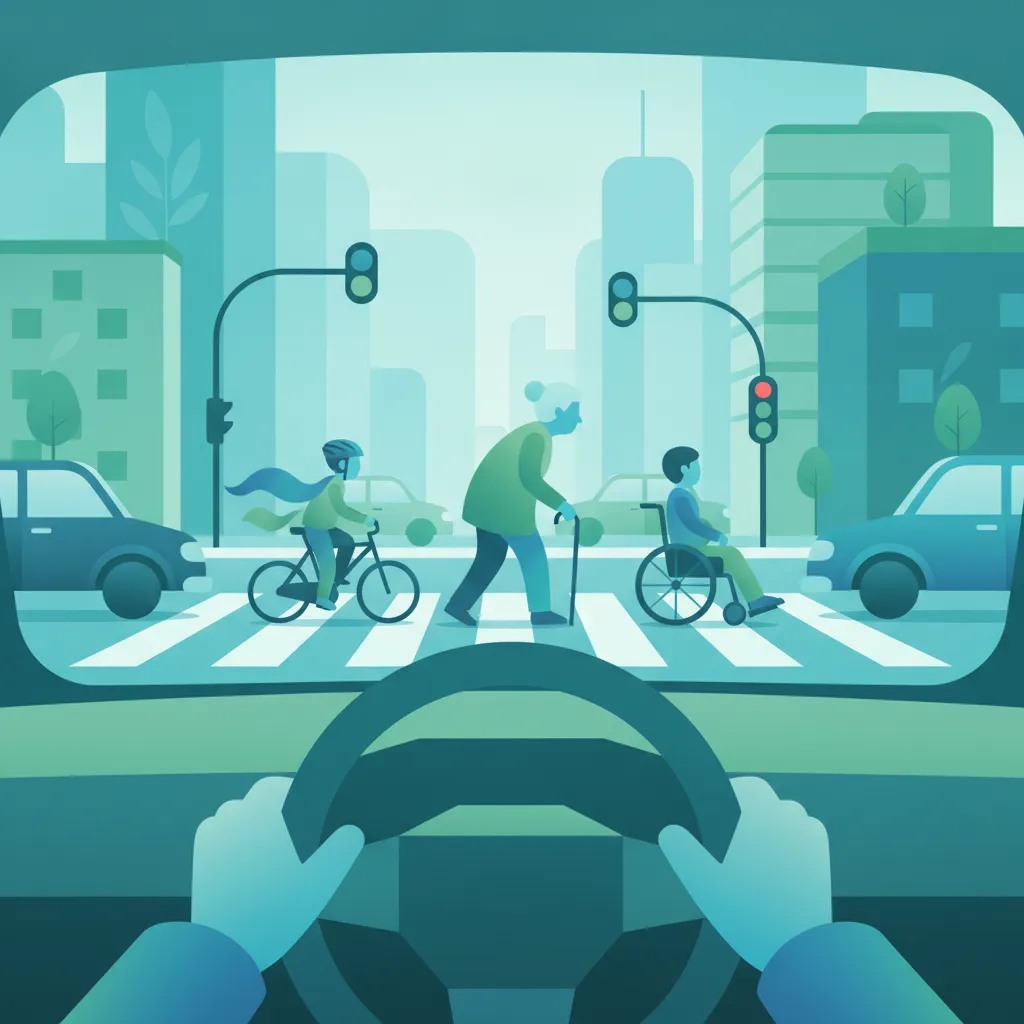
This lesson provides advanced strategies for proactively managing interactions with vulnerable road users to prevent conflicts before they arise. It teaches drivers to predict the likely behavior of pedestrians, cyclists, and e-scooter riders, especially at intersections and in congested areas. Key techniques include maintaining larger safety distances, covering the brake, and making eye contact to ensure mutual awareness and avoid accidents.
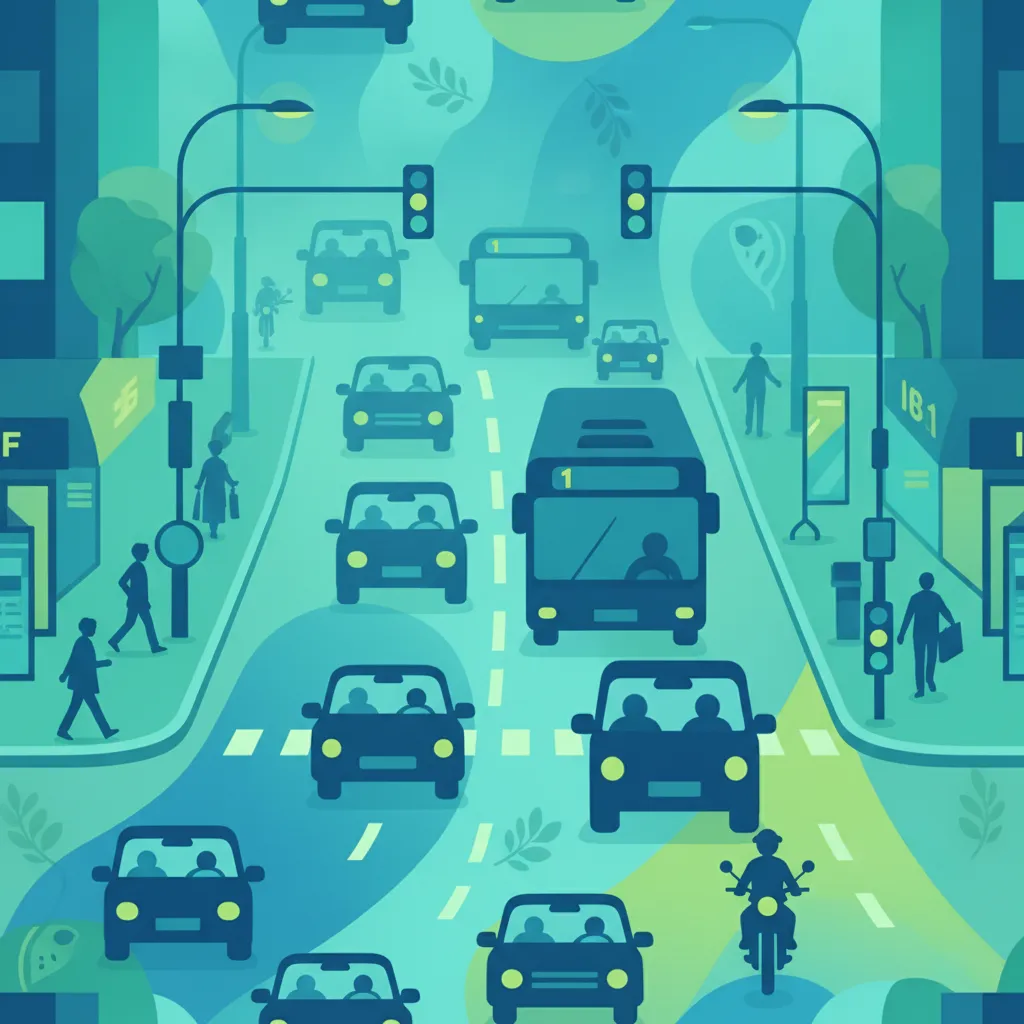
Driving a bus in a busy city like Vienna or Salzburg requires constant forward planning and anticipation. This lesson teaches techniques for maintaining adequate space around the vehicle, positioning correctly for upcoming junctions, and reading the flow of traffic. Adopting a defensive mindset is key to navigating complex urban environments without incident.

Driving in tourist hotspots in cities like Salzburg or alpine resorts requires extra patience and vigilance. This lesson explores common unpredictable behaviours, such as pedestrians stepping into the road to take photos or groups of tourists being unaware of traffic. It teaches drivers to slow down, be prepared for anything, and use communication tools like the horn sparingly and appropriately.
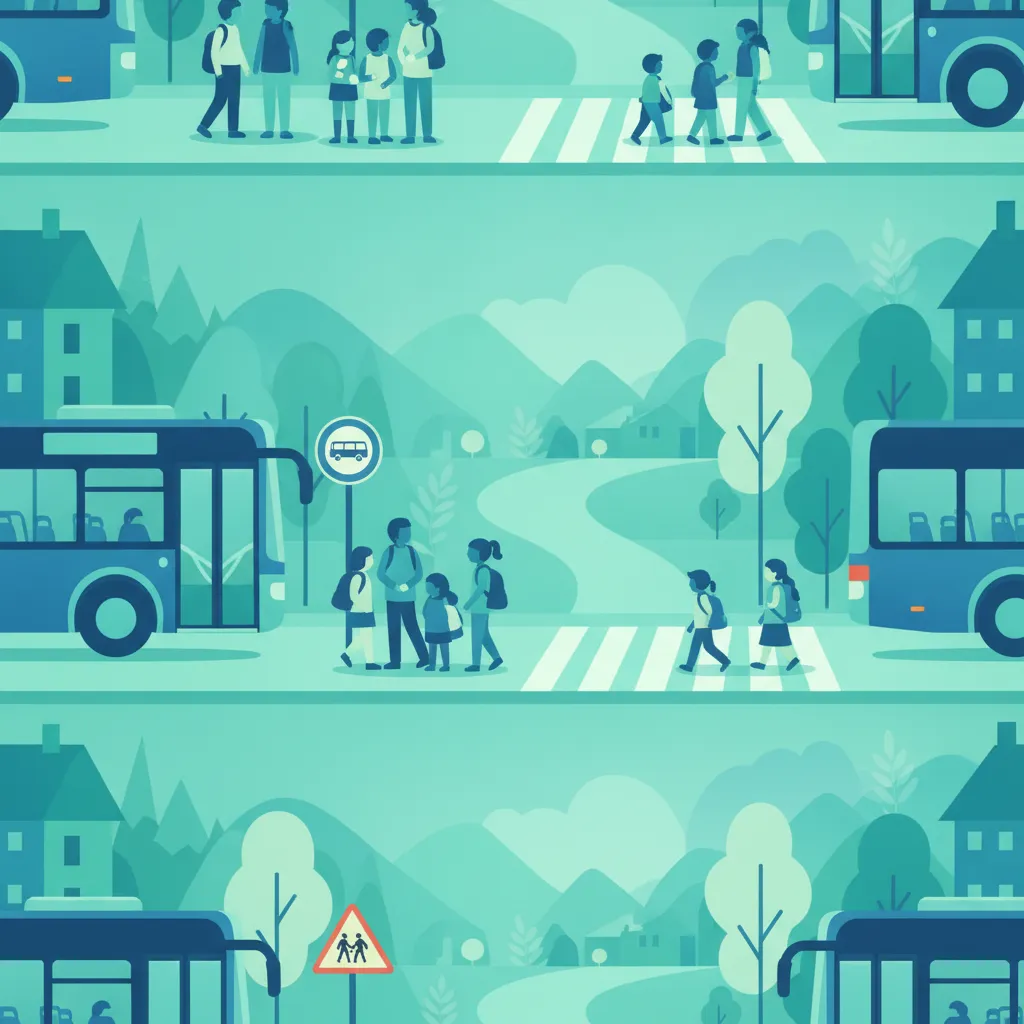
This lesson details the specific regulations and best practices for driving in areas with high pedestrian activity, such as bus stops and school zones. It explains the driver's obligation to stop for school buses with flashing lights and to yield to public buses pulling out from a stop. The content emphasizes the requirement to significantly reduce speed in marked school zones to ensure the safety of children.
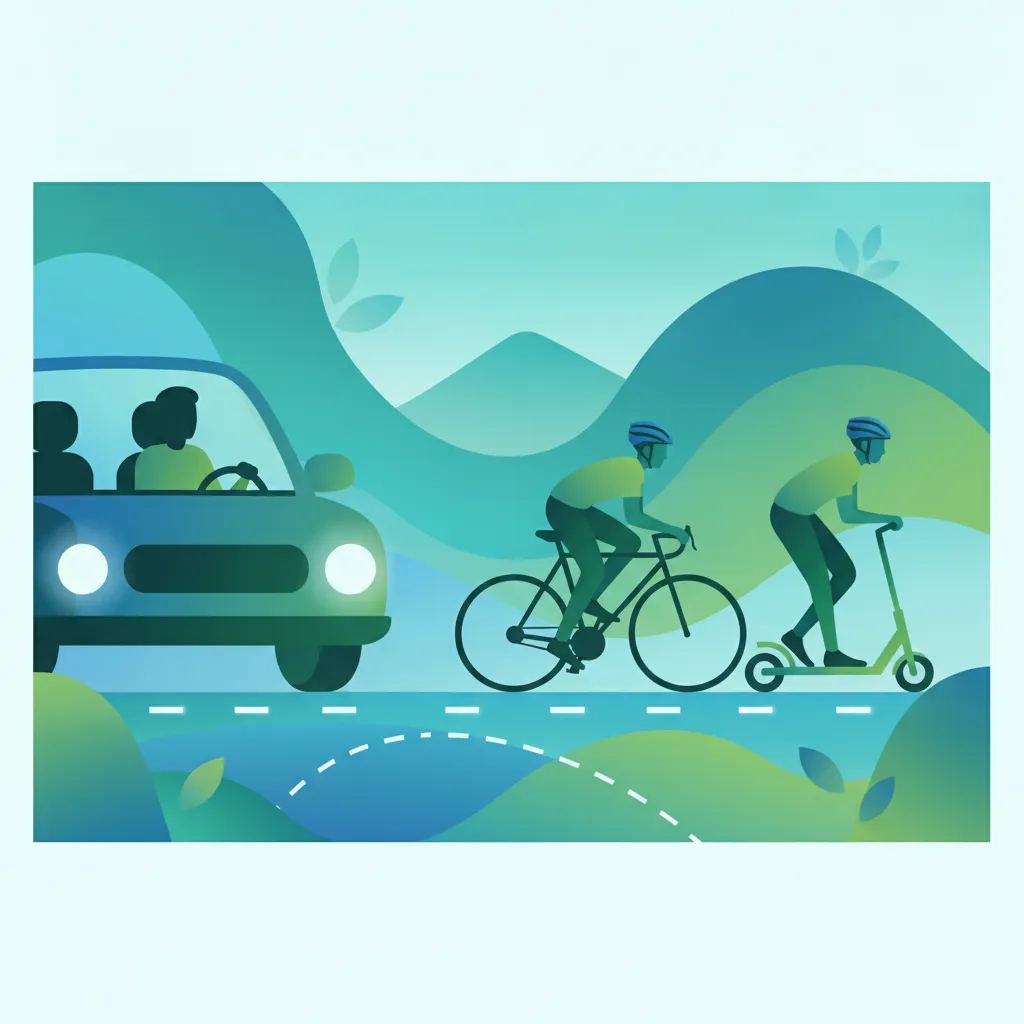
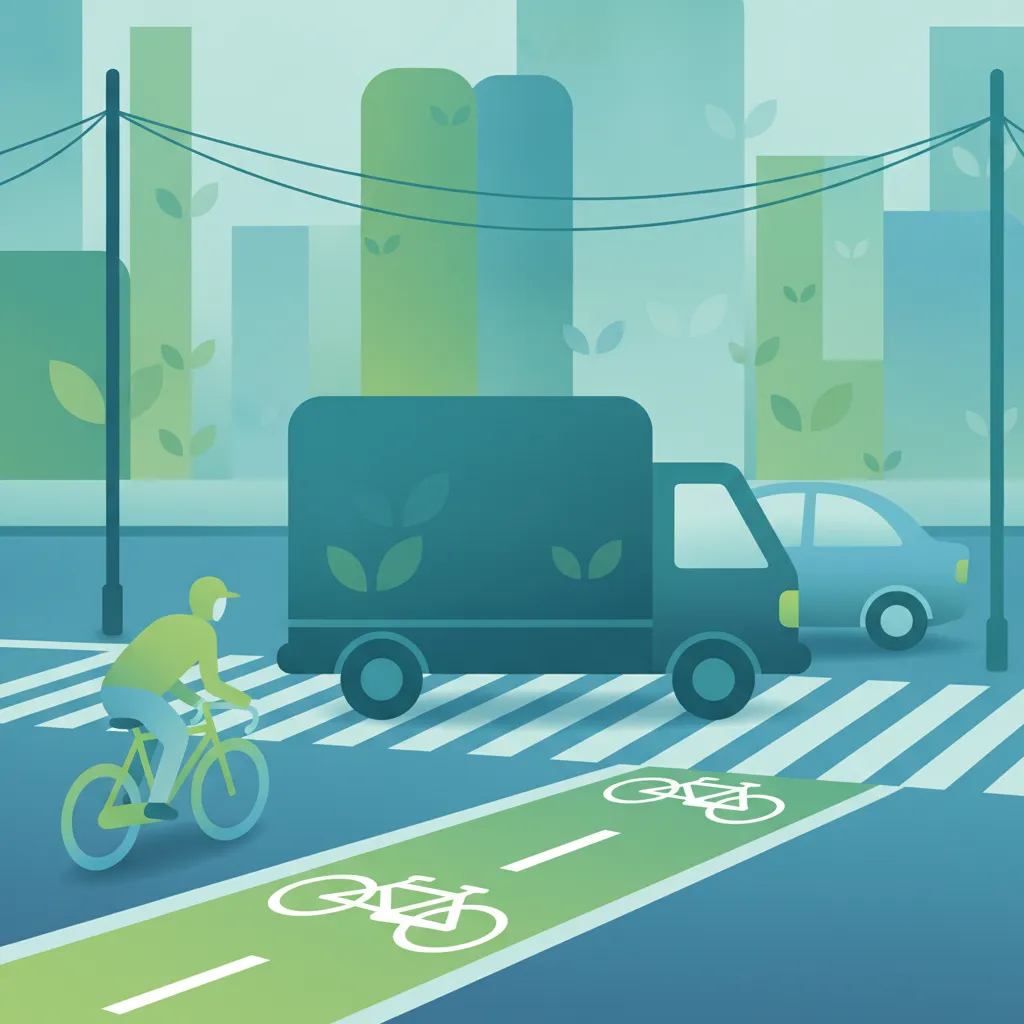
Cyclists and e-scooter riders are highly vulnerable and can be hard to see from a high driving position. This lesson focuses on the critical danger points, such as making right turns across cycle lanes and checking blind spots before pulling away from a stop. It teaches the importance of giving ample space when overtaking and anticipating their movements in busy city traffic.
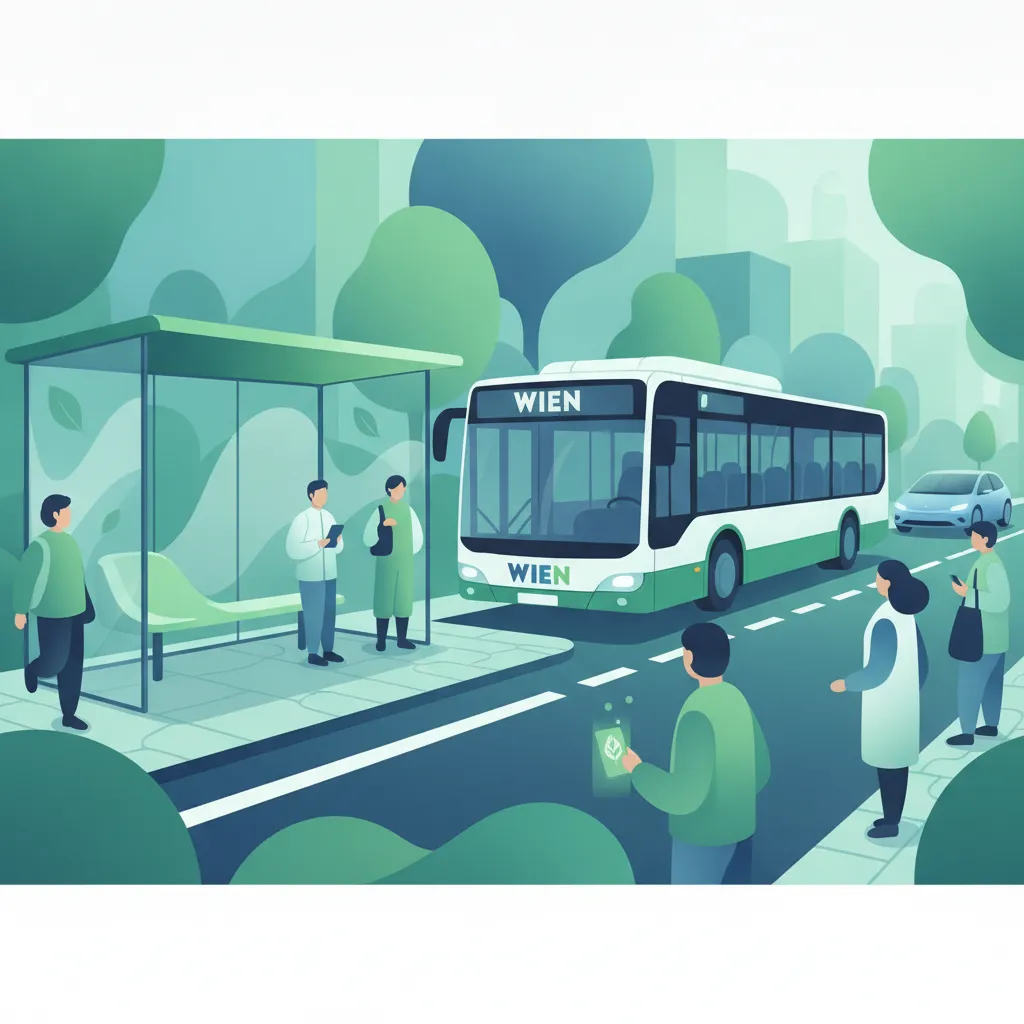
A safe stop begins with a planned approach. This lesson covers how to signal your intentions early, manage your speed, and scan for hazards like pedestrians and cyclists near the stop. It emphasizes the importance of aligning the bus parallel and close to the kerb to minimize the step for passengers, creating a safe platform for boarding and alighting.

Rural Austrian roads present unique challenges, including lack of markings, tight spaces, and slow-moving agricultural vehicles. This lesson teaches how to read the road ahead, anticipate hazards around blind bends, and use passing places effectively when meeting other large vehicles. It emphasizes adjusting speed to suit the limited visibility and variable road conditions.
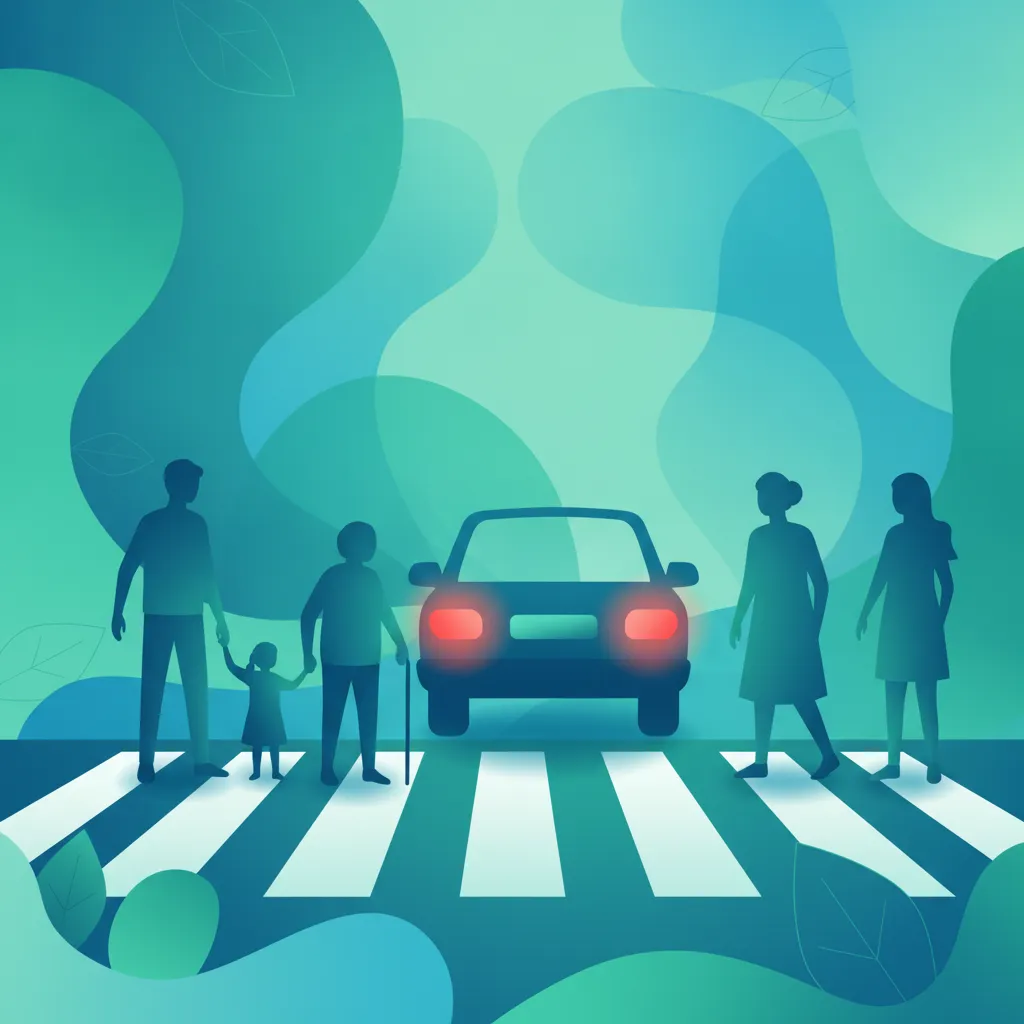
Pedestrians have absolute priority on marked crossings in Austria, and a bus driver must always be ready to give way. This lesson covers the rules for approaching and stopping for pedestrians, and highlights the risk of pedestrians being hidden by the vehicle's structure. It also stresses the danger of passengers crossing the road after alighting from your bus.

This lesson focuses on the critical skill of sharing the road safely with vulnerable users, such as pedestrians, cyclists, and e-scooter riders. It details the legally required distance buffers for overtaking and emphasizes heightened awareness in sensitive areas like school zones and designated pedestrian crossings. The content provides guidelines for interacting with bicycle lanes and shared spaces to foster a protective and respectful driving attitude towards those most at risk.
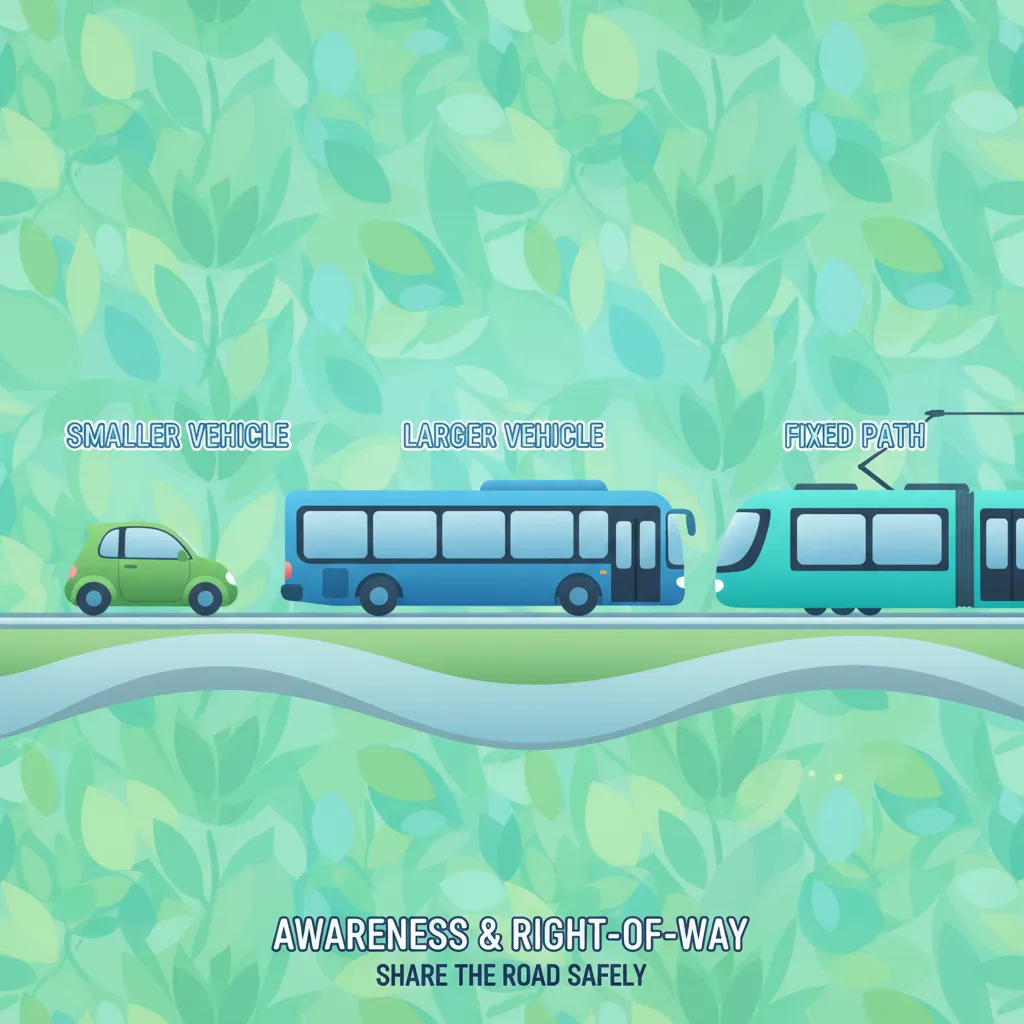
This lesson provides specific guidance for sharing the road with different types of vehicles in Austria. It covers the dangers of large vehicle blind spots, the rules for navigating near buses and dedicated tram tracks, and common conflict points at intersections. Understanding the behavior and limitations of other vehicles is key to safely navigating complex urban environments.
Explore the legal framework in Austria for bus and coach stops, focusing on StVO regulations related to safe stopping, sightlines, and duty of care. Learn how to identify and manage high-risk stop areas according to law.
This lesson details the specific regulations and best practices for driving in areas with high pedestrian activity, such as bus stops and school zones. It explains the driver's obligation to stop for school buses with flashing lights and to yield to public buses pulling out from a stop. The content emphasizes the requirement to significantly reduce speed in marked school zones to ensure the safety of children.
A safe stop begins with a planned approach. This lesson covers how to signal your intentions early, manage your speed, and scan for hazards like pedestrians and cyclists near the stop. It emphasizes the importance of aligning the bus parallel and close to the kerb to minimize the step for passengers, creating a safe platform for boarding and alighting.
Pedestrians have absolute priority on marked crossings in Austria, and a bus driver must always be ready to give way. This lesson covers the rules for approaching and stopping for pedestrians, and highlights the risk of pedestrians being hidden by the vehicle's structure. It also stresses the danger of passengers crossing the road after alighting from your bus.
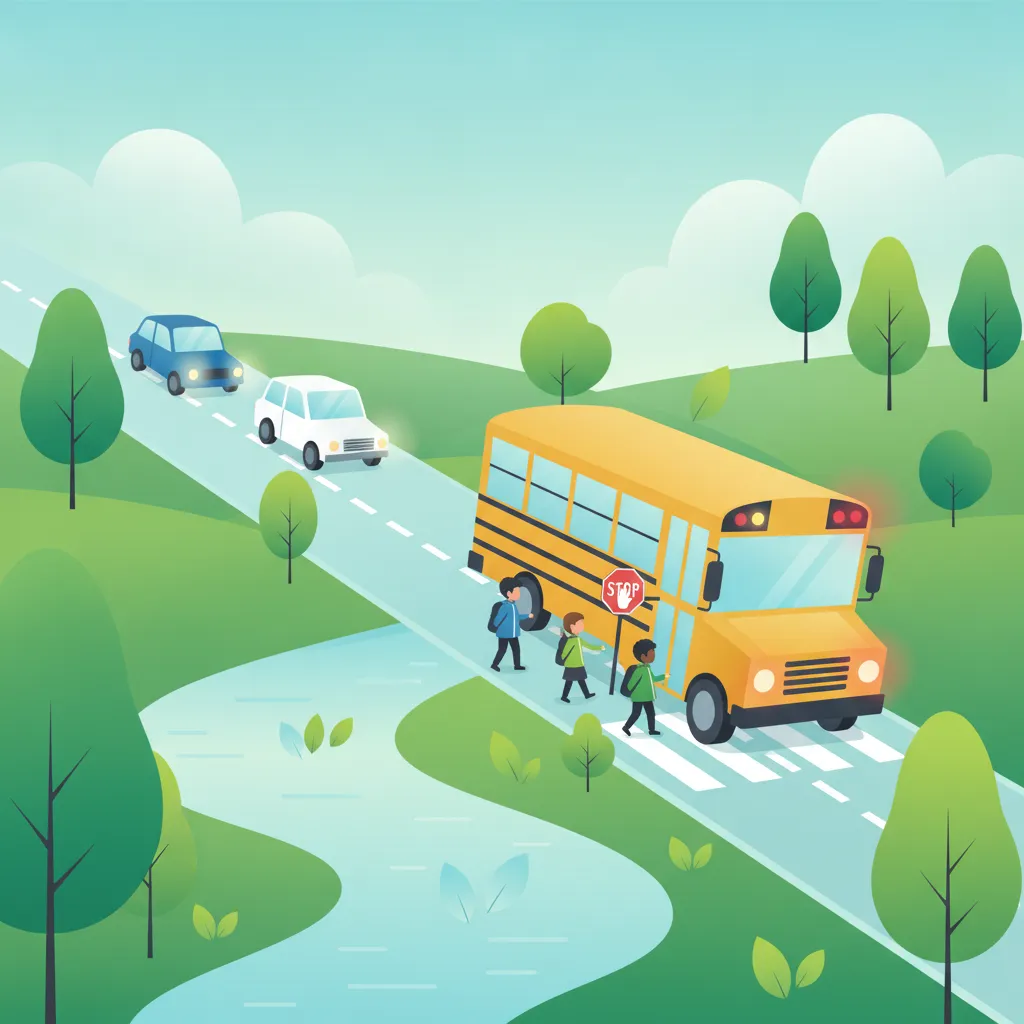
Transporting children carries the highest level of responsibility. This lesson covers the specific Austrian rules for school buses, including the use of warning signs and lights. It focuses on developing a mindset of extreme caution, anticipating that children may run into the road unexpectedly, and managing the chaotic traffic environment often found around schools during drop-off and pick-up times.
Driving a bus in a busy city like Vienna or Salzburg requires constant forward planning and anticipation. This lesson teaches techniques for maintaining adequate space around the vehicle, positioning correctly for upcoming junctions, and reading the flow of traffic. Adopting a defensive mindset is key to navigating complex urban environments without incident.
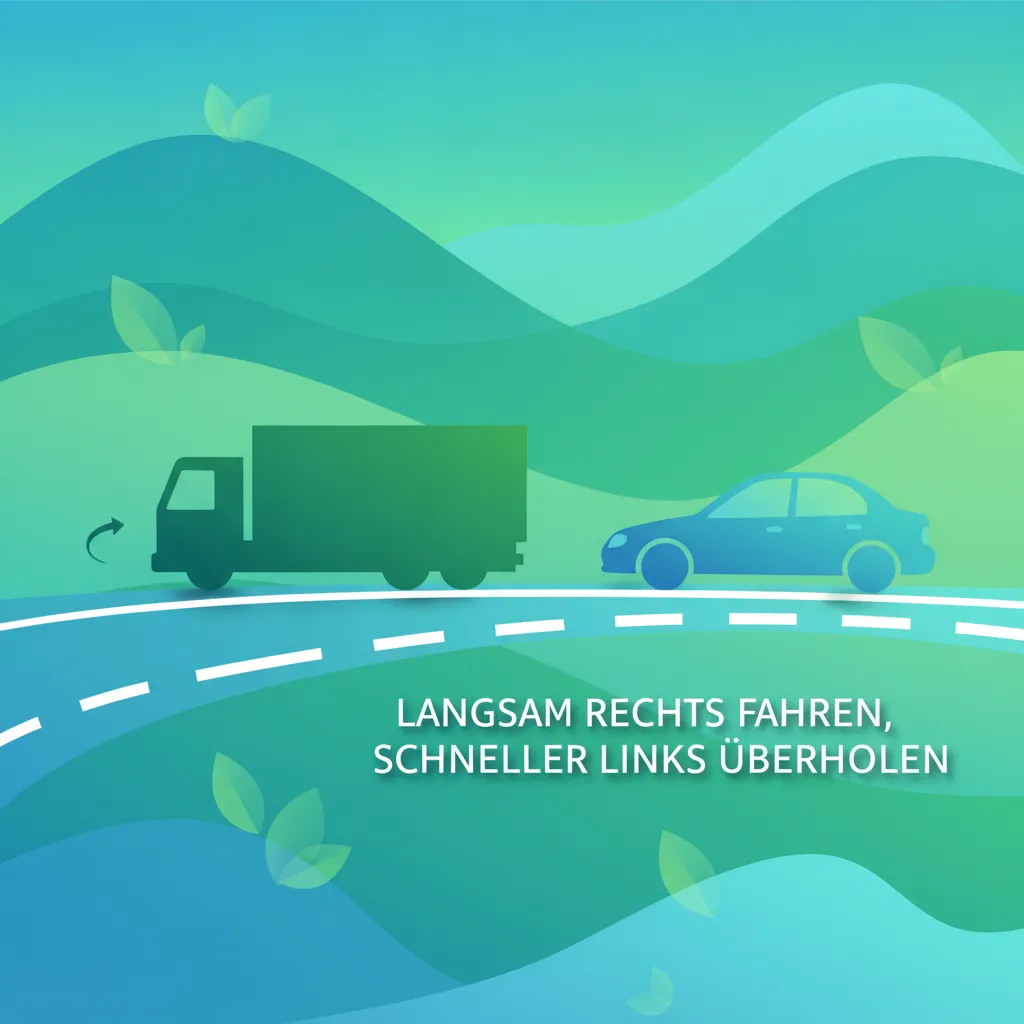
High-speed driving in a large vehicle requires excellent lane discipline and forward planning. This lesson covers Austrian speed limits for buses, rules for joining and leaving the motorway, safe overtaking procedures, and maintaining appropriate following distances. The critical importance of forming an emergency corridor ('Rettungsgasse') in traffic jams is also a key topic.

This lesson explores the strict regulations governing pedestrian crossings in Austria, particularly marked zebra crossings known as Schutzweg. It emphasizes the absolute priority of pedestrians on these crossings and the driver's legal obligation to stop and allow them to cross safely. The content covers how to approach these areas with caution, the importance of visibility, and the rules at crossings controlled by traffic lights.

Cities like Vienna and Graz have extensive tram networks that require special attention from bus drivers. This lesson covers the rules of priority concerning trams, the dangers of crossing tracks, and the specific hazards at shared stops where passengers cross traffic lanes. It emphasizes the need for extreme caution and clear communication with other road users in these complex environments.
Rural Austrian roads present unique challenges, including lack of markings, tight spaces, and slow-moving agricultural vehicles. This lesson teaches how to read the road ahead, anticipate hazards around blind bends, and use passing places effectively when meeting other large vehicles. It emphasizes adjusting speed to suit the limited visibility and variable road conditions.
This lesson provides specific guidance for sharing the road with different types of vehicles in Austria. It covers the dangers of large vehicle blind spots, the rules for navigating near buses and dedicated tram tracks, and common conflict points at intersections. Understanding the behavior and limitations of other vehicles is key to safely navigating complex urban environments.
Find clear answers to common questions learners have about Identifying and Managing High-Risk Stop Areas. Learn how the lesson is structured, which driving theory objectives it supports, and how it fits into the overall learning path of units and curriculum progression in Austria. These explanations help you understand key concepts, lesson flow, and exam focused study goals.
A stop is typically considered high-risk if it features limited sightlines, is situated near a busy intersection, has heavy pedestrian volumes, or is located where cyclist and bus paths frequently cross, requiring heightened driver awareness.
The exam often presents scenario-based questions where you must identify the primary hazard in a visual representation of a bus stop, asking how you should adjust your speed or positioning to mitigate risk.
While you should always approach with care, you must adapt your speed based on the specific environment. In high-risk areas, a more cautious and gradual approach is essential to provide enough time to react to unexpected movements.
While your duty of care is equal for all, you must anticipate unpredictable behavior from tourists, who may be unfamiliar with local traffic flow or stop procedures, and adjust your observation strategy accordingly.
Refine your study plan by searching for specific Austrian driving theory practice sets. Pinpoint questions related to particular road rules, signs, or challenge levels, and begin practicing immediately to reinforce your knowledge and excel in your official exam with confidence. Get started with focused revision today.