
This lesson introduces the unique signalling systems used in Austrian cities to grant buses and trams right of way at intersections. You will learn how to identify and correctly respond to these special white light signals, ensuring you maintain efficiency while navigating dense urban environments as a professional bus driver.
Lesson content overview
Efficient public transport is vital for modern cities, and in Austria, special signalling systems are employed to ensure buses and trams can move smoothly through dense urban environments. For professional drivers undertaking the Austrian Driving Theory Course for Bus & Coach Licence (Category D), a thorough understanding of these public transport priority signals is not just beneficial for efficiency but is a crucial safety and legal requirement. These unique signals often use white bars or letters instead of the conventional red, amber, and green lights, demanding specific knowledge and precise reactions from all road users.
This lesson will equip you with the ability to identify, interpret, and correctly react to these specialized signals, allowing you to anticipate traffic flow, reduce delays, and enhance safety for your passengers and other road users. Mastering these signals contributes significantly to a smoother, more efficient driving style that fully leverages the public transport infrastructure in Austrian cities.
Austrian urban traffic management places a high priority on the unimpeded flow of public transport. This is achieved through dedicated infrastructure like bus and tram lanes, as well as sophisticated signalling systems that grant right-of-way to public transport vehicles at intersections. The primary goal is to minimize stops, reduce travel times, and improve adherence to schedules for buses and trams, thereby making public transport a more attractive and reliable option for commuters.
Public transport priority signals are specifically designed to communicate the intent of the transport system to its drivers – whether to stop or proceed. This system reduces conflicts at intersections and ensures that public transport vehicles can maintain momentum, directly impacting operational efficiency and passenger comfort.
For Category D drivers, understanding these signals is paramount. It dictates when you, as a bus or coach driver, have priority and when you must yield. This knowledge allows for proactive driving decisions, preventing unnecessary braking, ensuring passenger comfort, and crucially, averting dangerous situations with other traffic.
Unlike standard traffic lights that use red, amber, and green, public transport priority signals in Austria typically employ white illuminated symbols. These symbols are universally understood within the public transport system but can be unfamiliar to general road users. It is imperative for professional drivers to recognize and interpret these specific white bar or letter signals quickly and accurately.
The white horizontal bar signal, often referred to as the "go" signal for public transport, is a clear indicator that the bus or tram may proceed.
A special traffic signal displaying a horizontal white bar, granting public transport vehicles (buses and trams) the right-of-way to proceed through an intersection without stopping, similar to a green light.
When you encounter a white horizontal bar in your dedicated public transport lane, it signifies that you have priority to continue straight ahead. Other traffic in adjacent lanes will typically have a red light, requiring them to stop. As a Category D driver, this means you should maintain your speed (within limits) and proceed through the intersection, provided it is safe to do so and no other hazards are present. This signal is crucial for minimizing delays and maintaining your timetable.
Anticipate the white horizontal bar. By observing the road layout and the presence of tram tracks or bus lanes, you can often predict when you might receive priority, allowing for smoother approach speeds.
In contrast to the horizontal bar, the white vertical bar signal mandates a full stop for public transport vehicles.
A special traffic signal displaying a vertical white bar, indicating that public transport vehicles must stop before the intersection, similar to a red light or stop sign for their lane.
When the white vertical bar is displayed in your lane, you must bring your bus or tram to a complete halt before the stop line. This signal is equivalent to a red light or a stop sign specifically for your vehicle. It typically indicates that conflicting traffic (e.g., private vehicles on a cross-street or pedestrians) has been given the right-of-way. You must remain stopped until the signal changes, usually to a white horizontal bar. Failing to stop at a vertical bar is a serious traffic violation and poses a significant risk of collision.
Another variant of the stop signal for public transport is the white letter 'S'. This signal is commonly used at intersections or specific points where public transport must stop.
A special traffic signal displaying a white letter 'S', indicating a mandatory stop specifically for public transport vehicles. It functions as a stop sign for that dedicated lane.
The white 'S' signal carries the same legal weight as the white vertical bar; it means "Stop" for public transport vehicles. You must come to a complete stop before the designated stop line and wait until the signal changes or disappears. This signal might be used in conjunction with a standard red light for other traffic, or it might be independent, requiring you to stop even if adjacent lanes have a green light. Always prioritize the 'S' signal when displayed for your lane.
Understanding how public transport priority signals interact with standard traffic lights and other road users is essential for safe and efficient driving.
One of the most critical aspects of these signals is their interaction with conventional red, amber, and green traffic lights that control other road users.
In many urban areas, especially city centers, public transport priority signals are integrated into a coordinated timing system. This means they are synchronized with the standard traffic lights. For example, a white horizontal bar for your bus lane will typically appear when the adjacent private vehicle lanes show a red light. This synchronized approach aims to minimize conflicts and optimize overall traffic flow. As a Category D driver, you will often find that when you receive a white horizontal bar, cross-traffic or opposing private vehicle traffic is stopped.
Less frequently, signals may operate with independent timing. In such cases, the public transport signal may change irrespective of the standard traffic lights. This requires heightened vigilance. While rare, it's crucial to always obey the signal applicable to your specific lane and not assume that the status of other traffic lights automatically applies to you.
Never assume that a white horizontal bar for public transport means that all other traffic will have a red light. Always confirm the situation in your lane and be aware of cross-traffic and potential hazards. Your signal applies only to you.
Public transport priority signals are almost exclusively found within dedicated bus lanes or tram corridors. These lanes are clearly marked, often with a solid red surface and the letter 'B' or tram symbols.
As a Category D driver, you must operate strictly within these designated lanes, adhering to their specific rules and signals. Private vehicles are generally prohibited from entering or using bus lanes, especially at intersections where priority signals are active. Crossing a bus lane at an intersection is only permitted when specific road markings or standard traffic signals allow it, and crucially, never when a public transport priority signal is active for the bus lane and would create a conflict.
The core principle behind these signals is the clear assignment of right-of-way.
The legal privilege to proceed before other road users in a specific traffic situation, assigned by traffic signs, signals, or general traffic rules.
This strict adherence to lane-specific signals is critical to prevent collisions and maintain the integrity of the priority system.
Compliance with public transport priority signals is not optional; it is a mandatory legal requirement under Austrian traffic law for all road users.
Regulation 1: Public Transport Vehicles Obey Dedicated Signals. As a bus or tram driver, you must strictly obey the white bar or 'S' signals displayed in your dedicated lane. A white horizontal bar means proceed; a white vertical bar or 'S' means stop. This ensures efficient public transport flow and passenger safety.
Regulation 2: Private Vehicles Obey Standard Traffic Lights. Drivers of private vehicles must obey the standard red/amber/green traffic lights applicable to their lanes, entirely independently of any signals shown in adjacent public transport lanes. Misinterpreting a white bar signal as a general "go" signal for all traffic is a dangerous and illegal violation.
Regulation 3: Crossing Bus Lanes at Intersections. Crossing a dedicated bus lane at an intersection is strictly prohibited when a public transport priority signal (vertical bar or 'S') is active for the bus lane, unless an approved crossing point is clearly indicated and your own lane signal permits. This prevents conflicts with priority traffic.
Regulation 4: Mandatory Stop at Vertical Bar or 'S'. When a white vertical bar or 'S' is displayed for public transport, the bus or tram must come to a complete halt before the stop line and remain stationary until the signal changes. There are no "rolling stops" permitted.
Regulation 5: Maintain Safe Stopping Distances. Always stop at a safe distance behind the stop line, as indicated by road markings. This provides space for maneuvering, especially on inclines, and prevents accidental encroachment into the intersection.
Violations of these regulations can lead to severe legal penalties, including fines and points on your driving license, and more importantly, significantly increase the risk of serious accidents involving passengers and other road users.
Safety is paramount for Category D drivers. Integrating the knowledge of public transport priority signals into a comprehensive safety strategy is vital.
Environmental factors can significantly impact the visibility of white priority signals.
Practice anticipatory driving. As you approach intersections with known bus or tram lanes, always expect the possibility of a priority signal. Scan ahead, adjust your speed, and mentally prepare for either stopping or proceeding.
When a white vertical bar or 'S' signal requires you to stop, the precision of your stopping point is critical.
Even when you have a white horizontal bar and priority, you must exercise extreme caution, especially when pedestrians or cyclists are present near the bus lane. They may not always be aware of the public transport priority rules or may misjudge your speed. Always be prepared to react to unexpected movements, even when you have the right-of-way. The duty of care for your passengers and other road users remains paramount.
Understanding common errors helps in avoiding them.
For Category D drivers in Austria, mastering public transport priority signals is a fundamental skill that contributes to safety, efficiency, and professionalism.
By internalizing these principles, you will be able to navigate Austrian urban traffic smoothly, ensure the comfort and safety of your passengers, and contribute to the overall efficiency of the public transport network.
Austrian cities use white-light priority signals (horizontal bar for proceed, vertical bar or 'S' for stop) exclusively for buses and trams in dedicated lanes, distinct from standard traffic lights for private vehicles. These signals are legally binding for all road users and are coordinated with standard traffic lights in most urban areas to minimize conflicts. Safe operation requires recognizing these signals instantly, stopping completely at vertical bars or 'S' signals, proceeding only on horizontal bars, and maintaining heightened vigilance in poor visibility conditions. Common violations include private vehicles misreading white bars as general 'go' signals and bus drivers failing to stop at mandatory stop signals, both carrying serious legal and safety consequences.
A short set of high-value points that capture the most important learning from this lesson.
Austrian public transport priority signals use white illuminated symbols (horizontal bar, vertical bar, or 'S') instead of standard red/amber/green lights
A white horizontal bar (–) grants buses and trams priority to proceed through an intersection; a white vertical bar (|) or 'S' mandates a full stop
These white-light signals apply exclusively to the dedicated public transport lane; private vehicles must obey their own separate standard traffic lights
Compliance with public transport priority signals is a mandatory legal requirement under Austrian traffic law with significant penalties for violations
Category D drivers must account for reduced visibility conditions (fog, rain, snow, glare) as white signals are harder to discern than standard colored lights
Explore all units and lessons included in this driving theory course.
White horizontal bar = proceed with priority (like green for your lane); white vertical bar or 'S' = mandatory stop (like red for your lane)
Public transport signals only apply to their specific dedicated lane—never assume adjacent traffic has the same signal you do
A white vertical bar or 'S' does not mean 'yield' or 'caution'—it requires a complete halt before the stop line
Coordinated timing synchronizes public transport signals with standard lights; independent timing operates separately, requiring extra vigilance
Heavily loaded buses have significantly longer braking distances than private cars—factor this into approach speed and stopping distance
Private vehicle drivers misinterpreting a white horizontal bar in an adjacent bus lane as a general 'go' signal for all traffic, proceeding on red
Bus drivers treating a white vertical bar or 'S' signal as a yield or rolling stop instead of a mandatory full halt before the stop line
Failing to adjust speed and observation distance for reduced visibility conditions like fog, heavy rain, or snowfall where white signals are harder to see
Assuming cross-traffic has been stopped just because your public transport lane shows a white horizontal bar—always confirm the situation is clear
Private vehicles illegally entering bus lanes at intersections to bypass congestion, creating conflicts with active priority traffic
Lesson content overview
A short set of high-value points that capture the most important learning from this lesson.
Austrian public transport priority signals use white illuminated symbols (horizontal bar, vertical bar, or 'S') instead of standard red/amber/green lights
A white horizontal bar (–) grants buses and trams priority to proceed through an intersection; a white vertical bar (|) or 'S' mandates a full stop
These white-light signals apply exclusively to the dedicated public transport lane; private vehicles must obey their own separate standard traffic lights
Compliance with public transport priority signals is a mandatory legal requirement under Austrian traffic law with significant penalties for violations
Category D drivers must account for reduced visibility conditions (fog, rain, snow, glare) as white signals are harder to discern than standard colored lights
Explore all units and lessons included in this driving theory course.
White horizontal bar = proceed with priority (like green for your lane); white vertical bar or 'S' = mandatory stop (like red for your lane)
Public transport signals only apply to their specific dedicated lane—never assume adjacent traffic has the same signal you do
A white vertical bar or 'S' does not mean 'yield' or 'caution'—it requires a complete halt before the stop line
Coordinated timing synchronizes public transport signals with standard lights; independent timing operates separately, requiring extra vigilance
Heavily loaded buses have significantly longer braking distances than private cars—factor this into approach speed and stopping distance
Private vehicle drivers misinterpreting a white horizontal bar in an adjacent bus lane as a general 'go' signal for all traffic, proceeding on red
Bus drivers treating a white vertical bar or 'S' signal as a yield or rolling stop instead of a mandatory full halt before the stop line
Failing to adjust speed and observation distance for reduced visibility conditions like fog, heavy rain, or snowfall where white signals are harder to see
Assuming cross-traffic has been stopped just because your public transport lane shows a white horizontal bar—always confirm the situation is clear
Private vehicles illegally entering bus lanes at intersections to bypass congestion, creating conflicts with active priority traffic
Explore search topics learners often look for when studying Understanding Public Transport Priority Signals. These topics reflect common questions about road rules, driving situations, safety guidance, and lesson level theory preparation for learners in Austria.
Browse additional driving theory lessons that cover connected traffic rules, road signs, and common driving situations related to this topic. Improve your understanding of how different rules interact across everyday traffic scenarios.
Understand the specific white bar and 'S' signals used for buses and trams in Austrian cities. Learn how to interpret these signals for safe and efficient urban driving as a Category D driver.
This lesson explains the operation and meaning of traffic light signals in Austria, including the standard red, yellow, and green phases, as well as flashing signals and arrows. It also covers other priority control devices, such as stop signs and yield signs, which are used to manage right-of-way at intersections. Understanding the hierarchy between these signals and signs is crucial for navigating junctions safely and in compliance with the law.
Cities like Vienna and Graz have extensive tram networks that require special attention from bus drivers. This lesson covers the rules of priority concerning trams, the dangers of crossing tracks, and the specific hazards at shared stops where passengers cross traffic lanes. It emphasizes the need for extreme caution and clear communication with other road users in these complex environments.
This lesson addresses the unique challenges and priority rules that apply when interacting with public transport and cyclists at intersections. It clarifies the specific right-of-way regulations for trams, which often have priority over other traffic, and the procedures for navigating around bus stops. The content also covers how to safely manage crossings with dedicated bicycle lanes, ensuring the protection of all road users.
This lesson focuses on the specific regulations and safety protocols for driving near trams (Straßenbahn) in Austrian cities. It clarifies the priority rules, which almost always favor the tram, and explains how to safely share lanes or cross tram tracks. The content provides critical guidance on how to behave at tram stops, ensuring the safety of boarding and alighting passengers is always the primary concern.
Driving a bus in a busy city like Vienna or Salzburg requires constant forward planning and anticipation. This lesson teaches techniques for maintaining adequate space around the vehicle, positioning correctly for upcoming junctions, and reading the flow of traffic. Adopting a defensive mindset is key to navigating complex urban environments without incident.
This lesson details the specific regulations and best practices for driving in areas with high pedestrian activity, such as bus stops and school zones. It explains the driver's obligation to stop for school buses with flashing lights and to yield to public buses pulling out from a stop. The content emphasizes the requirement to significantly reduce speed in marked school zones to ensure the safety of children.
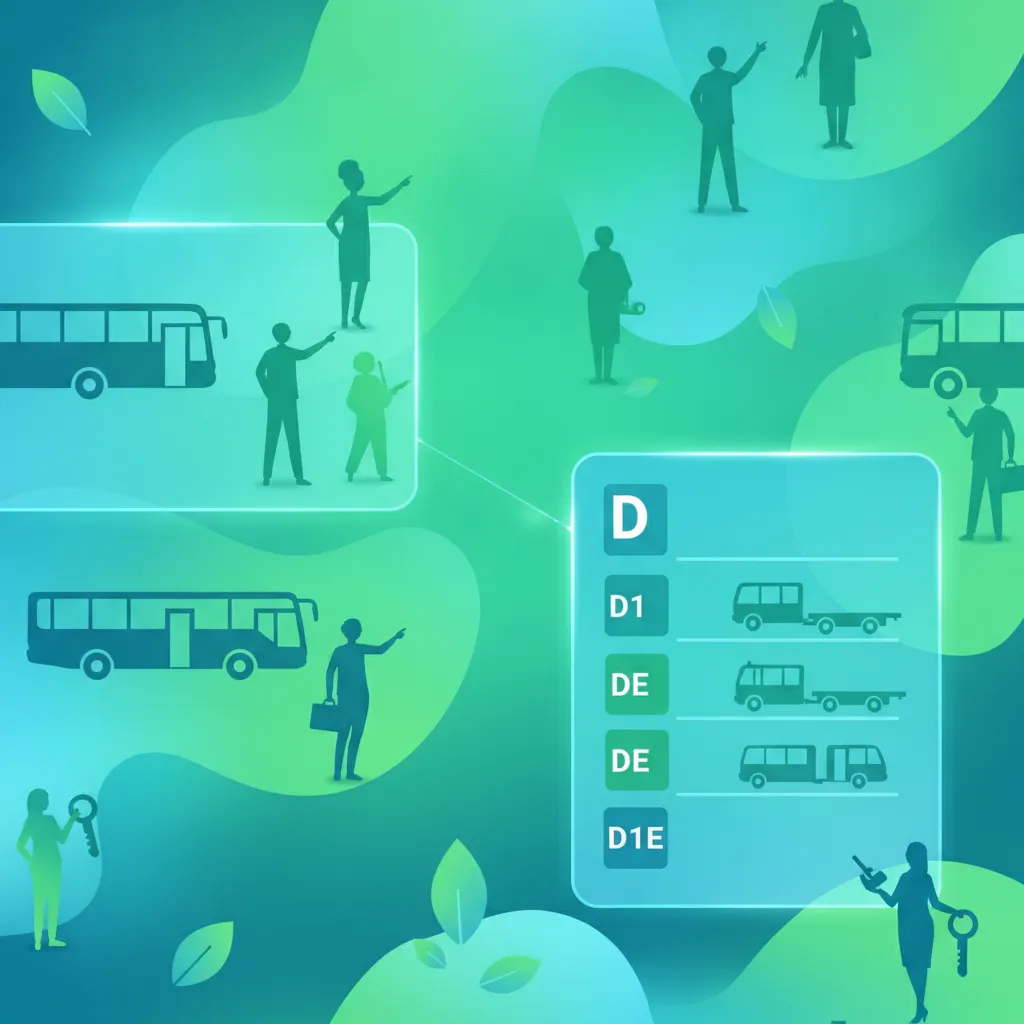
This lesson provides a clear breakdown of the different Category D licences in Austria. It explains the specific rights and limitations associated with each, including the maximum number of passengers for D1 (minibus) and D (bus/coach). Furthermore, it details the rules for combination vehicles, covering trailers (D1E, DE) and their specific operational requirements.
This lesson focuses on the interpretation of traffic lights and road surface markings that guide riders through intersections. It covers the meaning of each traffic light phase, the rules for amber lights, and the significance of various lane lines and stop lines. Properly understanding these signals is essential for maintaining traffic flow and ensuring safety at junctions.
Pedestrians have absolute priority on marked crossings in Austria, and a bus driver must always be ready to give way. This lesson covers the rules for approaching and stopping for pedestrians, and highlights the risk of pedestrians being hidden by the vehicle's structure. It also stresses the danger of passengers crossing the road after alighting from your bus.
A safe stop begins with a planned approach. This lesson covers how to signal your intentions early, manage your speed, and scan for hazards like pedestrians and cyclists near the stop. It emphasizes the importance of aligning the bus parallel and close to the kerb to minimize the step for passengers, creating a safe platform for boarding and alighting.
Learn how to safely navigate complex urban environments in Austria, focusing on interactions with trams, bus lanes, and priority signals. Essential theory for Category D drivers managing city traffic flow.
Driving a bus in a busy city like Vienna or Salzburg requires constant forward planning and anticipation. This lesson teaches techniques for maintaining adequate space around the vehicle, positioning correctly for upcoming junctions, and reading the flow of traffic. Adopting a defensive mindset is key to navigating complex urban environments without incident.
Cities like Vienna and Graz have extensive tram networks that require special attention from bus drivers. This lesson covers the rules of priority concerning trams, the dangers of crossing tracks, and the specific hazards at shared stops where passengers cross traffic lanes. It emphasizes the need for extreme caution and clear communication with other road users in these complex environments.
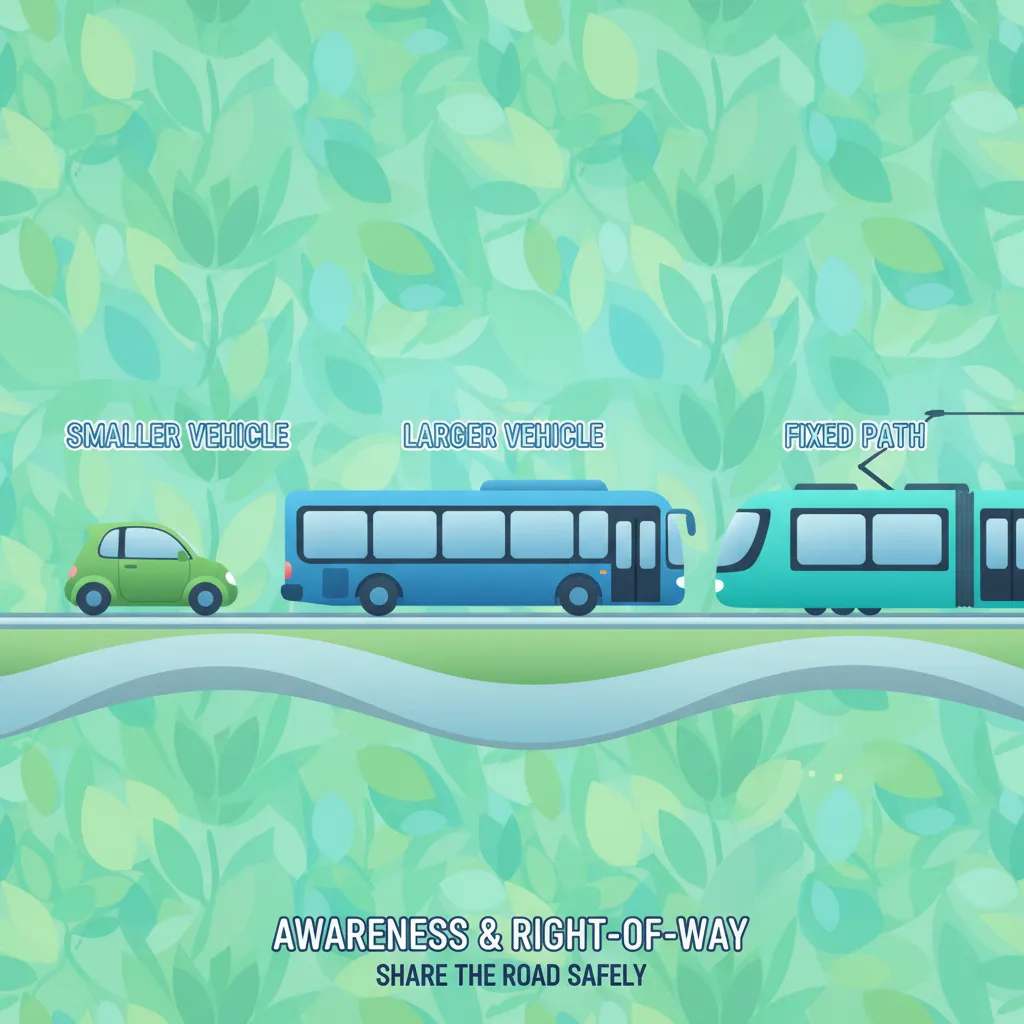
This lesson provides specific guidance for sharing the road with different types of vehicles in Austria. It covers the dangers of large vehicle blind spots, the rules for navigating near buses and dedicated tram tracks, and common conflict points at intersections. Understanding the behavior and limitations of other vehicles is key to safely navigating complex urban environments.
This lesson details the specific regulations and best practices for driving in areas with high pedestrian activity, such as bus stops and school zones. It explains the driver's obligation to stop for school buses with flashing lights and to yield to public buses pulling out from a stop. The content emphasizes the requirement to significantly reduce speed in marked school zones to ensure the safety of children.
This lesson addresses the unique challenges and priority rules that apply when interacting with public transport and cyclists at intersections. It clarifies the specific right-of-way regulations for trams, which often have priority over other traffic, and the procedures for navigating around bus stops. The content also covers how to safely manage crossings with dedicated bicycle lanes, ensuring the protection of all road users.
This lesson focuses on the specific regulations and safety protocols for driving near trams (Straßenbahn) in Austrian cities. It clarifies the priority rules, which almost always favor the tram, and explains how to safely share lanes or cross tram tracks. The content provides critical guidance on how to behave at tram stops, ensuring the safety of boarding and alighting passengers is always the primary concern.
Many Austrian towns and city centres feature narrow roads not designed for large vehicles. This lesson provides strategies for assessing tight spaces, positioning the vehicle to maximize clearance, and navigating complex, non-standard junctions. It emphasizes the importance of slow speeds, constant observation, and understanding the vehicle's swept path to avoid contact with buildings, street furniture, and other vehicles.
This lesson explores the distinct challenges of urban driving, focusing on managing the vehicle in dense, slow-moving, or stop-and-go traffic. It covers strategies for effective lane management, anticipating traffic signal changes, and navigating common city road features like one-way streets and traffic calming measures. Understanding these dynamics helps reduce stress and improve safety in congested environments.
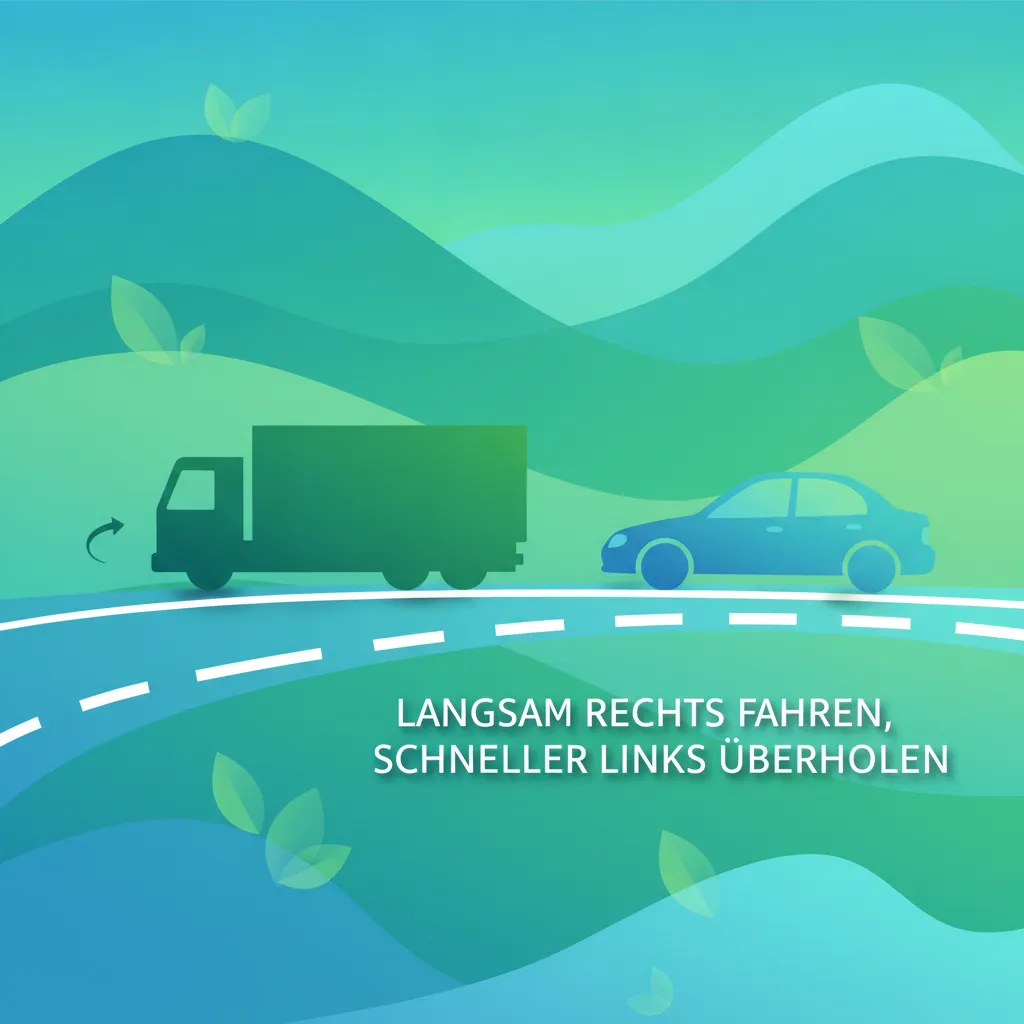
High-speed driving in a large vehicle requires excellent lane discipline and forward planning. This lesson covers Austrian speed limits for buses, rules for joining and leaving the motorway, safe overtaking procedures, and maintaining appropriate following distances. The critical importance of forming an emergency corridor ('Rettungsgasse') in traffic jams is also a key topic.
This lesson addresses the specific challenges of interacting with larger vehicles like buses and trams in an urban environment. It explains how to signal intentions clearly and predictably to avoid conflicts in shared spaces. Key topics include safely crossing tram tracks and maintaining awareness around public transport stops.
Find clear answers to common questions learners have about Understanding Public Transport Priority Signals. Learn how the lesson is structured, which driving theory objectives it supports, and how it fits into the overall learning path of units and curriculum progression in Austria. These explanations help you understand key concepts, lesson flow, and exam focused study goals.
These signals are specifically designed to be distinct from the standard red, yellow, and green lights used by general traffic. This prevents confusion for other road users and clearly indicates that the priority applies exclusively to public transport vehicles.
Yes, as a Category D driver, you are expected to follow these signals when they are active. They often grant you a head-start or dedicated lane usage that is vital for keeping to the timetable safely.
While they indicate priority for the designated vehicle, you must still scan for hazards and emergency vehicles. Safety always takes precedence over the signal indication in extreme conditions.
Focus on recognizing the shape and orientation of the white bars. Practice identifying which path the signal is clearing for the tram or bus in various intersection diagrams provided in our theory practice sets.
Refine your study plan by searching for specific Austrian driving theory practice sets. Pinpoint questions related to particular road rules, signs, or challenge levels, and begin practicing immediately to reinforce your knowledge and excel in your official exam with confidence. Get started with focused revision today.