
This lesson focuses on the critical skills required to share busy Austrian city streets with vulnerable road users. You will learn the specific legal requirements for interacting with cyclists and pedestrians to ensure safety and avoid common exam pitfalls.
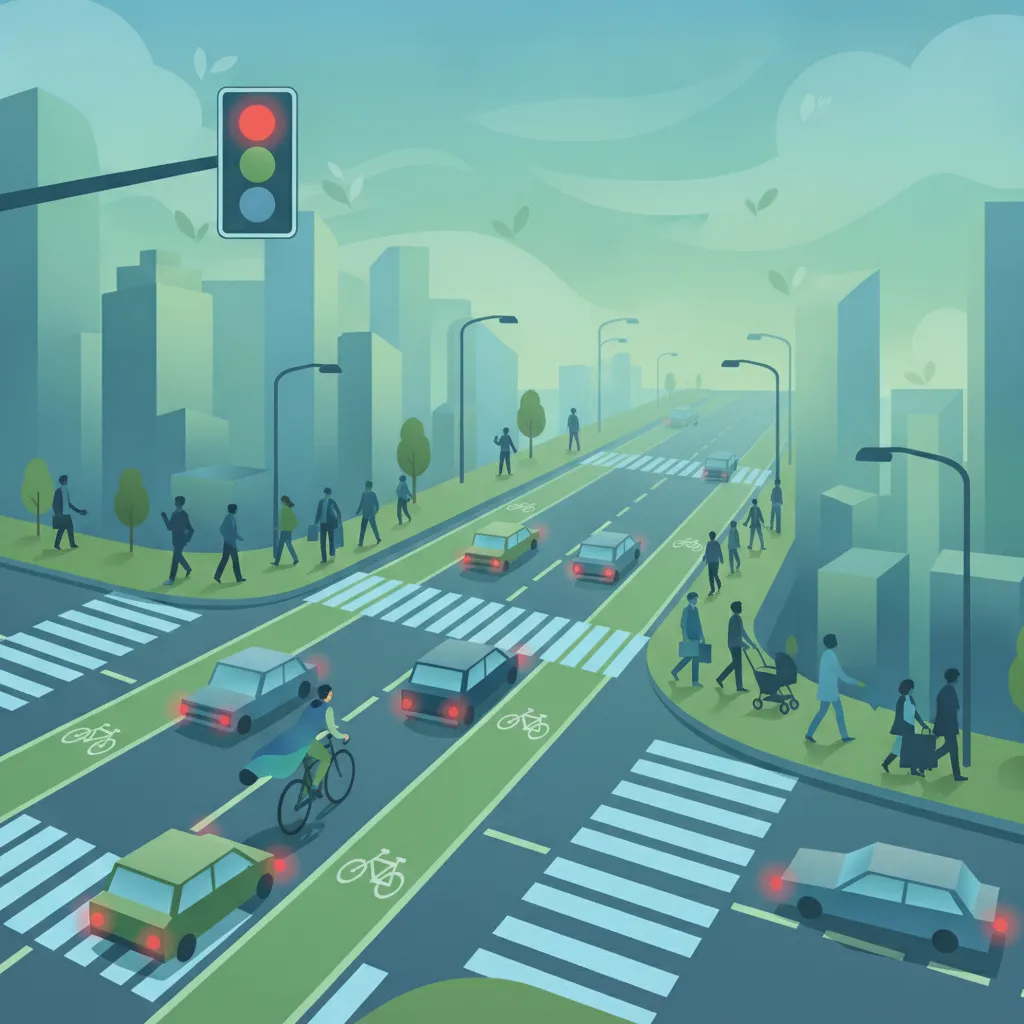
Lesson content overview
Navigating the bustling city streets of Austria requires drivers to possess a keen awareness and understanding of how to safely interact with all road users, especially cyclists and pedestrians. These vulnerable groups, lacking the protection of a vehicle's chassis, are at a significantly higher risk in the event of a collision. This lesson provides essential knowledge and practical guidance for drivers to ensure safe coexistence, minimize accident risks, and comply with Austrian traffic law (StVO). By internalizing these principles, you will contribute to safer roads for everyone and enhance your overall driving competence within urban environments.
Urban environments are inherently complex, characterized by dense traffic, frequent intersections, and varied road users sharing limited space. Among these, cyclists and pedestrians are the most vulnerable. They have little to no physical protection against motor vehicles, making any collision potentially severe or even fatal. Their movements can sometimes be less predictable, and their smaller size or position on the road can make them harder to see, particularly in adverse weather or low light conditions.
Recognizing this inherent vulnerability is the cornerstone of safe driving in cities. It mandates a defensive driving approach, where drivers actively anticipate potential hazards, maintain larger safety buffers, and adjust their speed and maneuvers to protect those outside their vehicle. The Austrian traffic regulations (StVO) are designed with this principle in mind, placing a greater responsibility on drivers of motor vehicles to ensure the safety of less protected road users.
Dedicated bike lanes, known as "Radweg" in Austria, are crucial infrastructure designed to separate cyclists from motor vehicle traffic, thereby enhancing safety and promoting cycling. As a driver, understanding the different types of Radweg and your specific responsibilities regarding them is paramount for avoiding conflicts and ensuring smooth traffic flow.
Bike lanes can take various forms, each with specific implications for drivers:
Motor vehicles are generally prohibited from driving, stopping, or parking in bike lanes. These spaces are exclusively for cyclists, providing them a safe and predictable corridor.
While continuous driving or parking in a Radweg is illegal, there are specific situations where a motor vehicle may briefly cross or enter a bike lane:
Always check your mirrors and perform a shoulder check to ensure no cyclists are in your blind spot before crossing or entering a bike lane. Cyclists can approach quickly and silently.
Pedestrians are granted special protection at designated crossing areas in Austria, known as "Zebrastreifen" or "Fußgängerüberweg" (pedestrian crossings). These marked zones, typically identified by white "zebra" stripes on the road, signify a legal right-of-way for pedestrians.
A common misunderstanding among drivers is that a green traffic light for vehicles overrides pedestrian priority at a marked crossing. In Austria, this is not the case.
A marked pedestrian crossing (zebra stripes) where pedestrians have the legal right of way to cross the road.
Regulation 1 – Pedestrian Right of Way at Marked Crossings (StVO § 21 Abs. 2): Drivers must yield to pedestrians who are on or about to step onto a marked pedestrian crossing, regardless of the traffic signal status. If a pedestrian is at the crossing and indicates an intention to cross (e.g., by looking towards the crossing or taking a step), you must slow down and be prepared to stop.
At marked pedestrian crossings without traffic lights or specific signals (uncontrolled intersections), the pedestrian's right of way is absolute.
Regulation 5 – Yielding to Pedestrians at Uncontrolled Intersections (StVO § 21 Abs. 1): At intersections without traffic signals, drivers must yield to pedestrians on the crossing area or who are clearly intending to cross. This means stopping before the crossing line and allowing them to complete their crossing before proceeding.
Always approach marked pedestrian crossings with reduced speed, ready to stop. Make eye contact with pedestrians if possible to confirm their intentions.
Overtaking cyclists safely is a critical skill for urban driving. Cyclists need sufficient lateral space to maintain balance, react to road imperfections, or make sudden maneuvers without fear of collision. Austrian law specifies minimum overtaking distances to protect cyclists.
Regulation 2 – Overtaking Cyclists (StVO § 6 Abs. 1): When overtaking a cyclist, drivers must maintain a minimum lateral distance. This distance is:
These distances are non-negotiable and must be respected even if it means waiting for a clear opportunity to overtake, or briefly crossing into an adjacent lane (if safe and permitted) to create the necessary space. Always signal your intention to overtake and return to your lane only when you have sufficient space.
Certain areas pose unique risks and, therefore, prohibit overtaking cyclists:
Never overtake a cyclist if doing so would force them to swerve or feel endangered. If you cannot maintain the minimum distance safely, wait for a better opportunity.
"Dooring" is a common type of accident where a vehicle door is opened into the path of an oncoming cyclist or pedestrian, causing a collision. These incidents can lead to serious injuries for the cyclist, who might be thrown into traffic or collide with the open door.
Even when your vehicle is stationary, opening a door without checking can be dangerous. Cyclists often ride close to parked cars, assuming doors will remain closed. A suddenly opened door leaves them no time to react, especially if they are traveling at speed.
Regulation 4 – Door Opening in Traffic (StVO § 22 Abs. 2): Before opening a car door, the driver (and passengers) must check for cyclists and pedestrians approaching from behind. This rule applies to both the driver's and passenger's side doors.
Before unlatching your door, use your farthest hand (e.g., your right hand for the driver's door) to open the door.
This action naturally forces you to turn your body and head, providing a full view of your blind spot and the area behind your vehicle, including any approaching cyclists or pedestrians.
Once you have confirmed the path is clear, open the door slowly and only as wide as necessary.
Defensive driving is not just about following rules; it's also about anticipating the actions of others. Vulnerable road users, especially in unpredictable urban settings, require drivers to be constantly vigilant and prepared for unexpected movements.
Cyclists and pedestrians, particularly in busy areas, may not always signal their intentions perfectly. Drivers should learn to read subtle cues:
Drivers must also be predictable in their own actions. Signaling turns well in advance, maintaining consistent speeds, and avoiding sudden braking or acceleration allows cyclists and pedestrians to anticipate your movements and react safely. Erratic driving increases the risk of startling vulnerable road users, potentially causing them to make an uncalculated move.
The Austrian Road Traffic Act (Straßenverkehrsordnung – StVO) provides the legal framework for safe interaction with cyclists and pedestrians. Adhering to these specific regulations is mandatory for all drivers.
Failing to adhere to the regulations and best practices can lead to severe consequences, including accidents, injuries, and legal penalties. Here are some common violations and errors:
Safe interaction with cyclists and pedestrians requires adapting your driving behavior to prevailing conditions. Speed, distance, and vigilance must be adjusted based on the environment, weather, and the specific vulnerable road users present.
In adverse weather or low light, increase your overtaking distance for cyclists by at least 0.5 metres to provide an additional safety buffer.
To summarize, integrating safely with cyclists and pedestrians in Austrian city streets hinges on several core principles:
Understanding the rules is one thing; applying them in real-world scenarios is another. These examples illustrate correct and incorrect behaviors in common urban situations.
Setting: You are driving on a city street, approaching a marked pedestrian crossing (Zebrastreifen). The traffic light for your vehicle is green. You notice a pedestrian step onto the crossing from the left side.
Relevant Rule: Pedestrians have priority at marked crossings, even with a green light for vehicles (StVO § 21 Abs. 2).
Correct Behavior: You immediately reduce speed and come to a complete stop before the white stop line at the crossing. You wait patiently for the pedestrian to fully clear the crossing before proceeding.
Incorrect Behavior: You assume your green light means you have priority and continue driving, forcing the pedestrian to hurry or stop in the middle of the crossing.
Explanation: In Austria, the pedestrian's right of way at a marked crossing takes precedence over a green traffic light for vehicles. Failing to yield is a serious violation and a significant accident risk.
Setting: You are driving at 45 km/h on an urban road with a speed limit of 50 km/h. Ahead, a cyclist is traveling in the same direction. There is no dedicated bike lane.
Relevant Rule: When overtaking a cyclist at speeds above 30 km/h, a minimum lateral distance of 2 meters must be maintained (StVO § 6 Abs. 1).
Correct Behavior: You check your mirrors, signal left, and if the oncoming lane is clear and safe, you carefully move your vehicle sufficiently to the left to ensure at least a 2-meter clearance from the cyclist. After safely passing the cyclist, you signal right and return to your lane.
Incorrect Behavior: You overtake the cyclist closely, maintaining less than 2 meters of space, or you attempt to squeeze past them without checking for oncoming traffic.
Explanation: Insufficient overtaking distance can destabilize a cyclist, causing them to swerve or fall. It's a legal requirement to provide ample space, and patience is essential if safe overtaking is not immediately possible.
Setting: You have parked your car parallel to a busy city street with a painted bike lane immediately adjacent to your vehicle. You are about to exit the driver's side.
Relevant Rule: Before opening a vehicle door, you must check for approaching cyclists and pedestrians (StVO § 22 Abs. 2).
Correct Behavior: You look in your side mirror, then perform a "shoulder check" by turning your body and looking over your left shoulder to check for any cyclists or pedestrians approaching in the bike lane or on the pavement. Only when the path is clear do you slowly open your door.
Incorrect Behavior: You quickly unlatch and swing your door open without checking, potentially causing a collision with a cyclist you didn't see.
Explanation: "Dooring" accidents are a significant cause of injury for cyclists. A thorough check is quick and prevents serious harm.
Setting: You are approaching an intersection in the rightmost lane, intending to make a right turn. There is a painted bike lane to your right that continues straight through the intersection.
Relevant Rule: Motor vehicles may enter bike lanes for turning, but must yield to cyclists (StVO § 4 Abs. 3).
Correct Behavior: You signal your right turn early. Before entering the bike lane to position for the turn, you check your right mirror and blind spot for any cyclists. If a cyclist is present or approaching, you yield to them, allowing them to pass before safely moving into or across the bike lane to complete your turn.
Incorrect Behavior: You turn right abruptly, cutting across the bike lane without checking or yielding to an ongoing cyclist, forcing them to brake sharply or swerve.
Explanation: Even when turning, you must prioritize cyclists using their designated lane. Always yield to prevent a collision at intersections.
Setting: It's late evening, and you're driving on a poorly lit city street with cyclists and pedestrians around.
Relevant Rule: Ensure proper vehicle lighting and be aware of reduced visibility for all road users.
Correct Behavior: You ensure your low beam headlights are on. You reduce your speed, actively scan for pedestrians stepping out from shadows, and look for cyclists, paying attention to their (sometimes dim) lights or reflective clothing. You increase your following and overtaking distances.
Incorrect Behavior: You drive at the same speed as during daylight, relying only on streetlights, and fail to anticipate the reduced visibility of vulnerable road users.
Explanation: Night driving significantly reduces perception. Your vehicle's lights are crucial for both your visibility and for making you visible to others. Adjusting speed and increasing caution is essential for safety.
The rules and best practices discussed are not arbitrary; they are rooted in fundamental principles of physics, human perception, and psychology, all aimed at minimizing risk on the road.
These scientific and behavioral insights underscore why the Austrian traffic laws prioritize the safety of vulnerable road users, guiding drivers towards practices that save lives and prevent injuries.
Successfully integrating with cyclists and pedestrians in city streets is a hallmark of a responsible and skilled driver. To recap the most important takeaways:
By diligently applying these principles and regulations, you will not only comply with Austrian traffic law but also significantly contribute to a safer, more harmonious urban environment for everyone.
This lesson covers the essential Austrian rules for sharing city streets with vulnerable road users, focusing on cyclist and pedestrian safety requirements under the StVO. Key topics include mandatory yielding at pedestrian crossings regardless of traffic signals, specific legal overtaking distances (1.5m or 2m depending on speed), restrictions on entering bike lanes, and the importance of checking before opening doors to prevent dooring accidents. The content provides practical scenarios illustrating correct and incorrect behaviors, making it directly applicable for both the Austrian Category B theory exam and real-world urban driving situations.
A short set of high-value points that capture the most important learning from this lesson.
Pedestrians have absolute priority at marked crossings (Zebrastreifen) regardless of traffic signal status under StVO § 21 Abs. 2
Minimum lateral overtaking distance from cyclists is 1.5m at speeds up to 30 km/h and 2m at speeds above 30 km/h (StVO § 6 Abs. 1)
Bike lanes (Radweg) are exclusive to cyclists; motor vehicles may only briefly enter for turning or merging after yielding (StVO § 4 Abs. 3)
Always check mirrors and perform a shoulder check before opening any door to prevent dooring accidents (StVO § 22 Abs. 2)
Cyclists and pedestrians require extra caution due to their lack of physical protection and potential unpredictability in urban environments
Explore all units and lessons included in this driving theory course.
Green traffic light does NOT override pedestrian priority at marked crossings in Austria
Use the 'Dutch Reach' technique: open car doors with your farthest hand to naturally turn and check for approaching cyclists
Never overtake cyclists on tram tracks or within pedestrian zones
Increase safety margins in adverse weather, low visibility, and when driving loaded vehicles
Watch for cyclist hand signals, pedestrian eye contact, and body language indicating intention to cross or change lanes
Assuming a green traffic light grants priority over pedestrians at marked crossings, leading to failure to yield
Passing cyclists too closely by maintaining less than the required 1.5m or 2m lateral distance
Opening a car door without checking for cyclists in adjacent bike lanes, causing dooring incidents
Turning across a bike lane without first checking mirrors and yielding to approaching cyclists
Failing to anticipate unpredictable movements of vulnerable road users due to overconfidence in their predictable behavior
Lesson content overview
A short set of high-value points that capture the most important learning from this lesson.
Pedestrians have absolute priority at marked crossings (Zebrastreifen) regardless of traffic signal status under StVO § 21 Abs. 2
Minimum lateral overtaking distance from cyclists is 1.5m at speeds up to 30 km/h and 2m at speeds above 30 km/h (StVO § 6 Abs. 1)
Bike lanes (Radweg) are exclusive to cyclists; motor vehicles may only briefly enter for turning or merging after yielding (StVO § 4 Abs. 3)
Always check mirrors and perform a shoulder check before opening any door to prevent dooring accidents (StVO § 22 Abs. 2)
Cyclists and pedestrians require extra caution due to their lack of physical protection and potential unpredictability in urban environments
Explore all units and lessons included in this driving theory course.
Green traffic light does NOT override pedestrian priority at marked crossings in Austria
Use the 'Dutch Reach' technique: open car doors with your farthest hand to naturally turn and check for approaching cyclists
Never overtake cyclists on tram tracks or within pedestrian zones
Increase safety margins in adverse weather, low visibility, and when driving loaded vehicles
Watch for cyclist hand signals, pedestrian eye contact, and body language indicating intention to cross or change lanes
Assuming a green traffic light grants priority over pedestrians at marked crossings, leading to failure to yield
Passing cyclists too closely by maintaining less than the required 1.5m or 2m lateral distance
Opening a car door without checking for cyclists in adjacent bike lanes, causing dooring incidents
Turning across a bike lane without first checking mirrors and yielding to approaching cyclists
Failing to anticipate unpredictable movements of vulnerable road users due to overconfidence in their predictable behavior
Explore search topics learners often look for when studying Cyclist and Pedestrian Integration in City Streets. These topics reflect common questions about road rules, driving situations, safety guidance, and lesson level theory preparation for learners in Austria.
Browse additional driving theory lessons that cover connected traffic rules, road signs, and common driving situations related to this topic. Improve your understanding of how different rules interact across everyday traffic scenarios.
Deepen your understanding of complex interactions with cyclists and pedestrians in Austrian cities. Covers advanced scenarios, specific rights-of-way, and anticipating unpredictable movements beyond basic integration.

This lesson reinforces the critical importance of protecting vulnerable road users in dense urban settings. It teaches drivers to be hyper-aware of pedestrians and cyclists, especially near intersections and crosswalks. Key techniques include reducing speed, making eye contact to confirm intentions, and giving ample space.

This lesson provides advanced strategies for proactively managing interactions with vulnerable road users to prevent conflicts before they arise. It teaches drivers to predict the likely behavior of pedestrians, cyclists, and e-scooter riders, especially at intersections and in congested areas. Key techniques include maintaining larger safety distances, covering the brake, and making eye contact to ensure mutual awareness and avoid accidents.
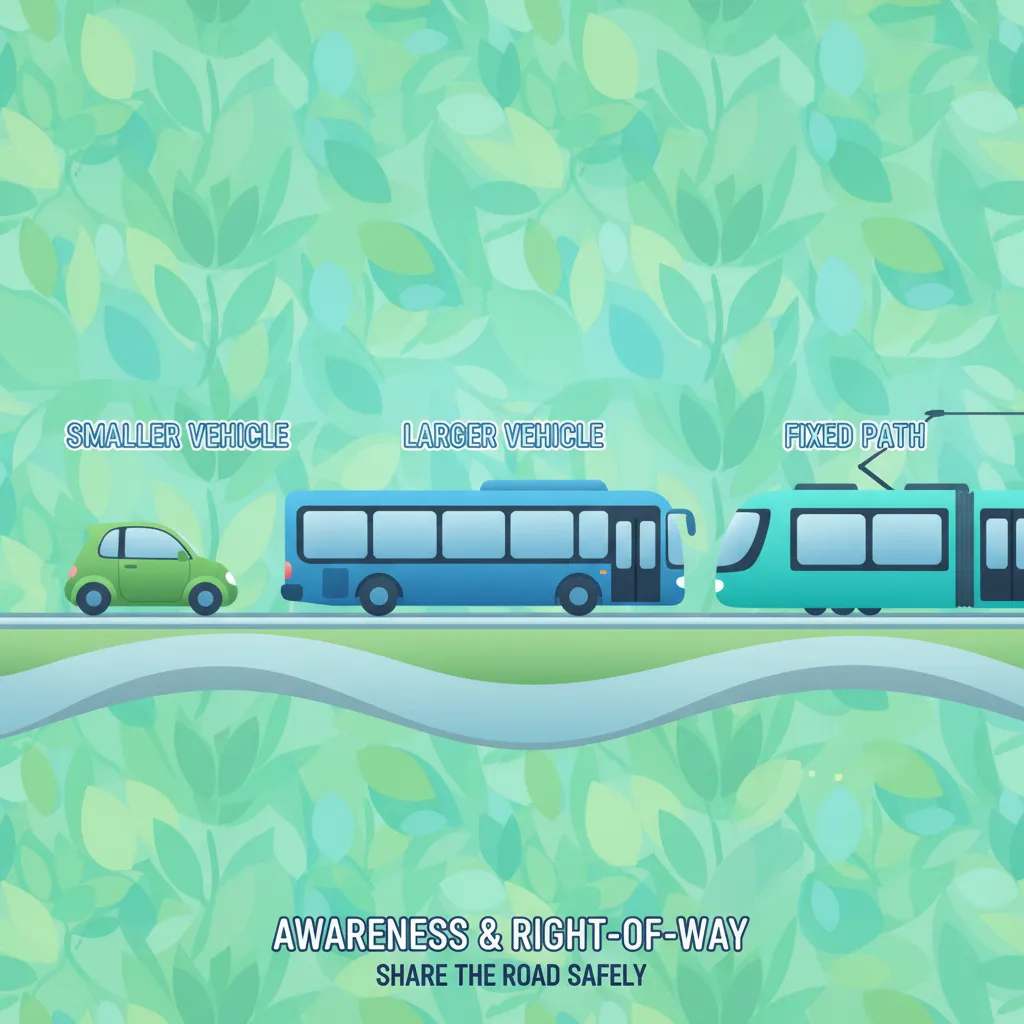
This lesson provides specific guidance for sharing the road with different types of vehicles in Austria. It covers the dangers of large vehicle blind spots, the rules for navigating near buses and dedicated tram tracks, and common conflict points at intersections. Understanding the behavior and limitations of other vehicles is key to safely navigating complex urban environments.

This lesson focuses on the critical skill of sharing the road safely with vulnerable users, such as pedestrians, cyclists, and e-scooter riders. It details the legally required distance buffers for overtaking and emphasizes heightened awareness in sensitive areas like school zones and designated pedestrian crossings. The content provides guidelines for interacting with bicycle lanes and shared spaces to foster a protective and respectful driving attitude towards those most at risk.

Cyclists and e-scooter riders are highly vulnerable and can be hard to see from a high driving position. This lesson focuses on the critical danger points, such as making right turns across cycle lanes and checking blind spots before pulling away from a stop. It teaches the importance of giving ample space when overtaking and anticipating their movements in busy city traffic.

This lesson addresses the unique challenges and priority rules that apply when interacting with public transport and cyclists at intersections. It clarifies the specific right-of-way regulations for trams, which often have priority over other traffic, and the procedures for navigating around bus stops. The content also covers how to safely manage crossings with dedicated bicycle lanes, ensuring the protection of all road users.

This lesson explores the strict regulations governing pedestrian crossings in Austria, particularly marked zebra crossings known as Schutzweg. It emphasizes the absolute priority of pedestrians on these crossings and the driver's legal obligation to stop and allow them to cross safely. The content covers how to approach these areas with caution, the importance of visibility, and the rules at crossings controlled by traffic lights.

This lesson explores the distinct challenges of urban driving, focusing on managing the vehicle in dense, slow-moving, or stop-and-go traffic. It covers strategies for effective lane management, anticipating traffic signal changes, and navigating common city road features like one-way streets and traffic calming measures. Understanding these dynamics helps reduce stress and improve safety in congested environments.

This lesson addresses the specific challenges of interacting with larger vehicles like buses and trams in an urban environment. It explains how to signal intentions clearly and predictably to avoid conflicts in shared spaces. Key topics include safely crossing tram tracks and maintaining awareness around public transport stops.
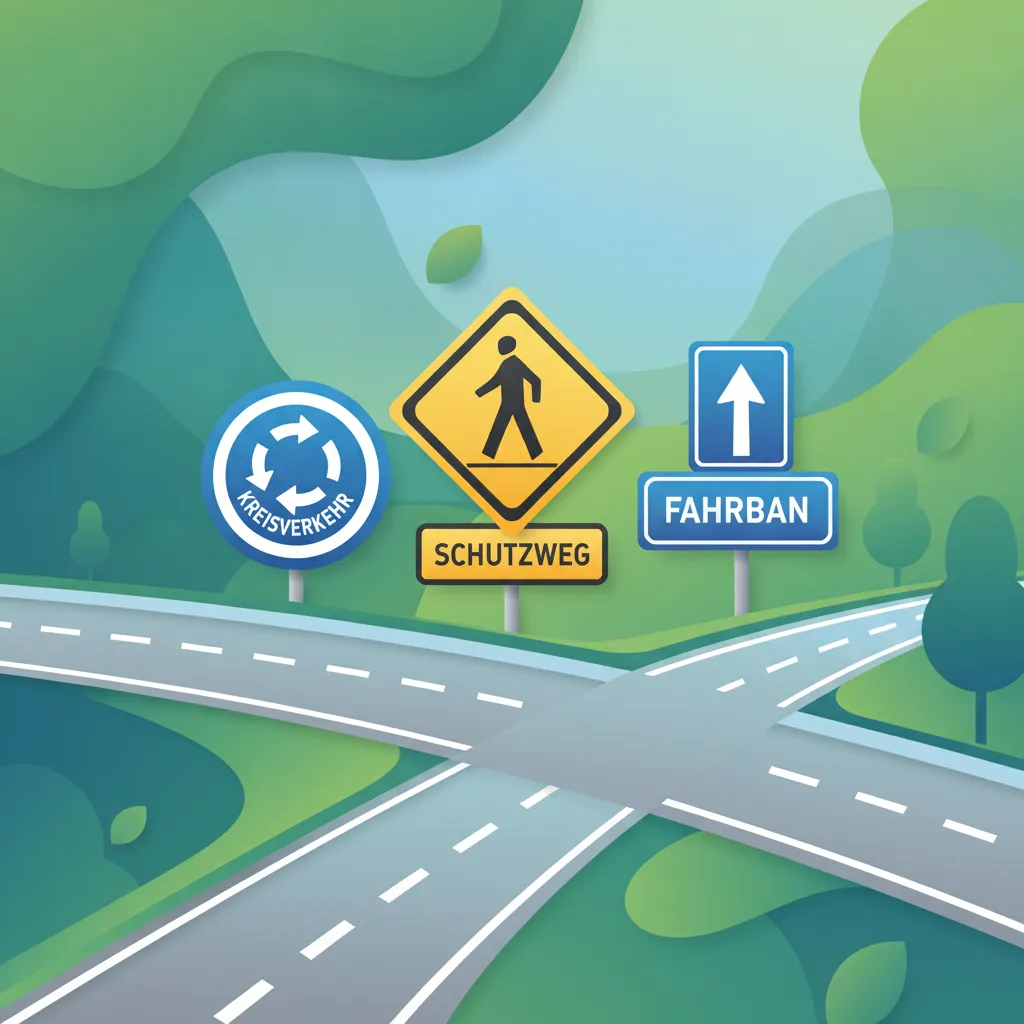
This lesson covers the specific regulations associated with special Austrian road signs and areas. It details the rules for 'Schutzweg' (protected pedestrian crossings), 'Kreisverkehr' (roundabouts), and the distinction between 'Fahrbahn' (road) and 'Fahrstreifen' (lane). Understanding these specific contexts is essential for safe navigation in urban and suburban environments.
Learn to identify and avoid frequent errors drivers make when sharing roads with cyclists and pedestrians in Austria. Focuses on preventing accidents related to overtaking, door opening, and right-of-way at crossings.
This lesson provides advanced strategies for proactively managing interactions with vulnerable road users to prevent conflicts before they arise. It teaches drivers to predict the likely behavior of pedestrians, cyclists, and e-scooter riders, especially at intersections and in congested areas. Key techniques include maintaining larger safety distances, covering the brake, and making eye contact to ensure mutual awareness and avoid accidents.
Cyclists and e-scooter riders are highly vulnerable and can be hard to see from a high driving position. This lesson focuses on the critical danger points, such as making right turns across cycle lanes and checking blind spots before pulling away from a stop. It teaches the importance of giving ample space when overtaking and anticipating their movements in busy city traffic.
This lesson reinforces the critical importance of protecting vulnerable road users in dense urban settings. It teaches drivers to be hyper-aware of pedestrians and cyclists, especially near intersections and crosswalks. Key techniques include reducing speed, making eye contact to confirm intentions, and giving ample space.
This lesson focuses on the critical skill of sharing the road safely with vulnerable users, such as pedestrians, cyclists, and e-scooter riders. It details the legally required distance buffers for overtaking and emphasizes heightened awareness in sensitive areas like school zones and designated pedestrian crossings. The content provides guidelines for interacting with bicycle lanes and shared spaces to foster a protective and respectful driving attitude towards those most at risk.
This lesson provides specific guidance for sharing the road with different types of vehicles in Austria. It covers the dangers of large vehicle blind spots, the rules for navigating near buses and dedicated tram tracks, and common conflict points at intersections. Understanding the behavior and limitations of other vehicles is key to safely navigating complex urban environments.

Pedestrians have absolute priority on marked crossings in Austria, and a bus driver must always be ready to give way. This lesson covers the rules for approaching and stopping for pedestrians, and highlights the risk of pedestrians being hidden by the vehicle's structure. It also stresses the danger of passengers crossing the road after alighting from your bus.
This lesson explores the strict regulations governing pedestrian crossings in Austria, particularly marked zebra crossings known as Schutzweg. It emphasizes the absolute priority of pedestrians on these crossings and the driver's legal obligation to stop and allow them to cross safely. The content covers how to approach these areas with caution, the importance of visibility, and the rules at crossings controlled by traffic lights.
This lesson addresses the specific challenges of interacting with larger vehicles like buses and trams in an urban environment. It explains how to signal intentions clearly and predictably to avoid conflicts in shared spaces. Key topics include safely crossing tram tracks and maintaining awareness around public transport stops.
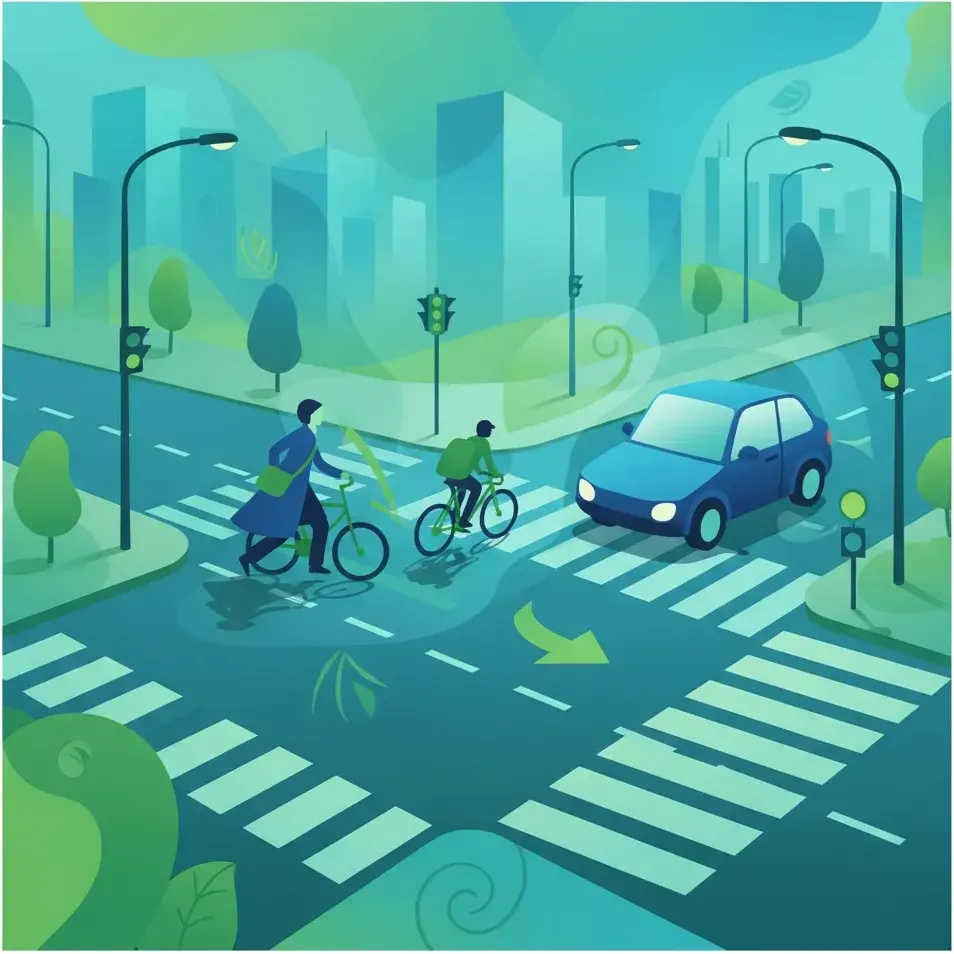
This lesson addresses the specific danger of right-hand turns, where cyclists and pedestrians in the vehicle's right-side blind spot are at high risk. It covers the defensive driving techniques required, including careful observation, slow speed, and yielding the right-of-way. These procedures are critical for preventing serious accidents in urban areas.

This lesson provides a comprehensive explanation of Austria's right-of-way laws, which are fundamental to intersection safety. It covers the meaning of different priority signs and clarifies the 'Rechts vor Links' (priority to the right) rule that applies at unmarked junctions. A clear understanding of these rules is essential to prevent conflicts and collisions in urban and rural settings.
Find clear answers to common questions learners have about Cyclist and Pedestrian Integration in City Streets. Learn how the lesson is structured, which driving theory objectives it supports, and how it fits into the overall learning path of units and curriculum progression in Austria. These explanations help you understand key concepts, lesson flow, and exam focused study goals.
You must yield if a pedestrian is on or clearly intending to enter a marked crossing (Schutzweg). While you should always be cautious, you are legally obligated to stop specifically when they show an intent to cross at these designated points.
In Austria, you must keep a sufficient side distance. If the speed limit is higher or in difficult conditions, this gap must be increased significantly. Always ensure you have enough room to pass safely without endangering the rider.
If a cycle path (Radweg) is designated as mandatory, cyclists must use it. However, always remain vigilant, as you will still encounter cyclists on the main carriageway at intersections, turning points, or where paths end.
The theory exam often presents high-resolution hazard perception scenarios. You will be tested on whether you notice the vulnerable user early, adjust your speed, and choose the correct lane position before reaching the conflict point.
Refine your study plan by searching for specific Austrian driving theory practice sets. Pinpoint questions related to particular road rules, signs, or challenge levels, and begin practicing immediately to reinforce your knowledge and excel in your official exam with confidence. Get started with focused revision today.