
This lesson guides you through the complexities of navigating dense urban environments, a core requirement for your Category B license in Austria. Building on your knowledge of priority rules, you will learn how to effectively manage traffic flow, anticipate city-specific hazards, and navigate complex road features safely.
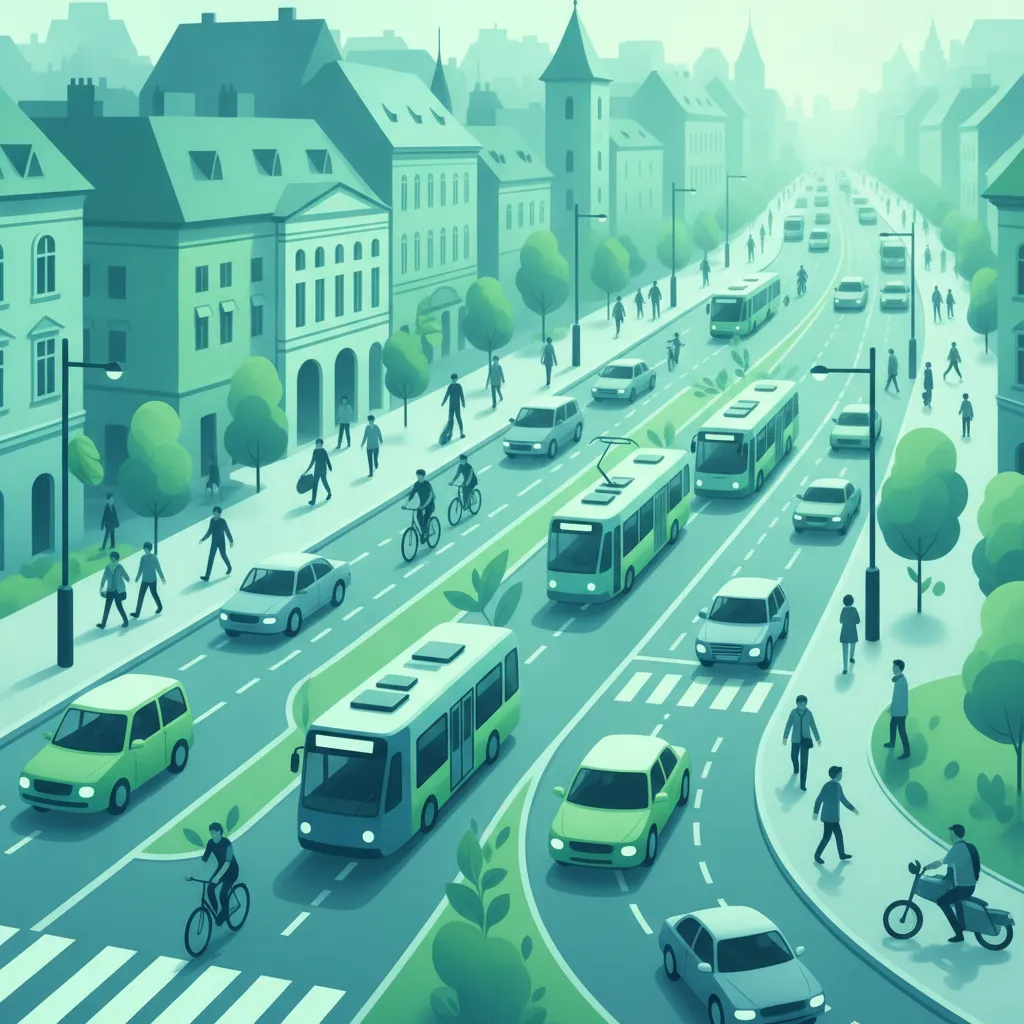
Lesson content overview
Navigating the bustling streets of Austrian cities requires a unique set of skills and a keen understanding of specific traffic dynamics. This lesson, part of the Austrian Driving License B Theory Course, delves into the intricacies of urban driving, equipping you with the knowledge to manage your vehicle safely and efficiently in dense, slow-moving, and often stop-and-go traffic conditions. By mastering these dynamics, you can significantly reduce stress, enhance safety for yourself and others, and contribute to smoother traffic flow in congested environments.
Urban traffic is a complex system involving not just vehicles, but also pedestrians, cyclists, and public transport. Its characteristics differ significantly from rural or motorway driving, demanding constant vigilance and adaptability.
The movement of vehicles, cyclists, and pedestrians within city streets is known as traffic flow. It is characterized by variable speeds, frequent stops, and numerous interactions, especially at intersections and traffic signals. Recognizing the different types of flow helps drivers anticipate conditions and adjust their driving accordingly.
In all scenarios, drivers must adapt their speed, anticipate potential stops, and maintain appropriate following distances. Ignoring these flow types can lead to unsafe situations and contribute to further congestion.
Queue management refers to the skillful positioning and control of your vehicle within a line of traffic, particularly when stopping at traffic lights or stop lines. It's about preventing unnecessary stop-and-go movements and mitigating the spread of traffic jams.
When joining a queue:
Maintain a Safe Following Distance: Aim for a minimum two-to-three-second gap from the vehicle ahead, even when stopped. This provides crucial reaction time and space to maneuver if the vehicle in front breaks down or if you need to avoid a rear-end collision.
Anticipate Signal Changes: Observe the traffic light cycles, cross-traffic, and pedestrian signals. This allows for smoother deceleration when approaching a red light and a more timely start when the light turns green.
Avoid Abrupt Braking: Decelerate gradually as you approach a queue. This signals your intentions to drivers behind you and helps maintain a steady flow.
Do Not Cut the Queue: When the light turns green, wait for the vehicle directly ahead of you to move before proceeding. "Jumping the queue" (overtaking vehicles that are already in line) is unsafe and creates disruption.
When stopped behind another vehicle, ensure you can still see its rear tires touching the pavement. This general rule provides enough space to react if the vehicle ahead rolls back or if you need to steer around it.
Gap acceptance is a critical decision-making process where a driver assesses whether there is sufficient space and time to safely merge into, cross, or overtake within a moving traffic stream. This judgment is vital for avoiding collisions and seamlessly integrating into traffic.
The process of evaluating the distance and speed of approaching vehicles to determine if a safe interval exists to perform a maneuver like merging, turning, or crossing.
Overly optimistic gap assessment is a common cause of accidents. It leads to abrupt braking, dangerous lane changes, and often forces other drivers into hazardous maneuvers. Always err on the side of caution.
Successful urban driving relies on consistent, predictable vehicle behavior and a clear understanding of infrastructural elements. Precision in lane usage and anticipation of traffic signals are key to safe and efficient navigation.
Lane discipline involves the proper selection, occupation, and change of lanes according to road markings, signs, and prevailing traffic conditions. Good lane discipline reduces lane weaving, improves traffic flow, and significantly enhances safety for all road users.
This sign, for example, signals the presence of multiple lanes, emphasizing the need for correct lane selection well in advance of an intersection.
Signal anticipation is the driver's ability to predict or infer upcoming traffic signal phases based on various cues, such as typical timing cycles, intersection layout, and the flow of cross-traffic. This skill enables smoother approaches, reduces unnecessary stops, and improves fuel efficiency.
Avoid the temptation to accelerate aggressively to "beat" a changing yellow light. This is extremely dangerous and rarely saves significant time. Instead, adjust your speed to stop comfortably before the stop line.
One-way streets are common in urban areas, designed to facilitate traffic flow and reduce conflicts by allowing traffic to move in a single direction only. They are clearly indicated by specific signs and road markings.
Always double-check signage when entering an unfamiliar street, especially in older city centers where one-way systems can be complex. Misinterpreting a one-way street can have serious consequences.
Traffic calming measures are physical or geometric features installed in residential or high-pedestrian-traffic areas to intentionally reduce vehicle speeds and improve safety. These measures encourage drivers to adapt their speed and increase their awareness of their surroundings.
Common traffic calming measures include:
When encountering traffic calming measures:
Urban areas are shared spaces where drivers must constantly interact with a diverse range of road users, many of whom are more vulnerable. Developing heightened awareness and understanding specific priority rules are crucial.
Trams are an integral part of public transport in many Austrian cities, sharing road space with vehicles, cyclists, and pedestrians. Understanding their unique dynamics and priority rules is essential for safe urban driving.
This topic is further explored in detail in Lesson 7.2, "Tram Traffic Interaction and Priority Rules."
Vulnerable Road Users (VRUs), including pedestrians and cyclists, have significantly lower protection in collisions compared to vehicle occupants. Urban drivers must therefore exercise extreme caution and adjust their behavior to protect these users.
Bus stops are designated areas where public buses pick up and drop off passengers. These zones require specific driver behavior to ensure the safety of passengers and smooth operation of public transport.
Always be mindful of passengers disembarking from buses, who may cross the road unexpectedly.
This topic will be covered in more detail in Lesson 7.4, "Bus Stops, School Zones, and Public Transport Priorities."
Adherence to specific traffic laws is fundamental for safety and order in urban environments. Ignoring these rules not only carries legal penalties but significantly increases the risk of accidents.
| Rule | Applicability | Legal Status | Rationale | Correct Application | Incorrect Application |
|---|---|---|---|---|---|
| Stop at Red Lights | Any urban intersection with traffic signals. | Mandatory | Prevents collisions, ensures right-of-way. | Come to a complete stop before the stop line; proceed only on green. | Rolling through red lights or stopping after the stop line. |
| Yield to Pedestrians | Pedestrian crossings, tram crossings, and right-of-way marked zones. | Mandatory | Pedestrians are vulnerable; right-of-way is protected by law. | Stop and allow pedestrians to cross completely before proceeding. | Continuing through the crossing while pedestrians are on their way. |
| Overtake on the Left | Multi-lane urban roads. | Mandatory | Maintains predictable flow, prevents accidents. | Overtake slower traffic on the left; stay in the right lane when not overtaking. | Overtaking on the right in a multi-lane road without a designated overtaking lane. |
| Maintain Safe Following Distance | All urban traffic conditions. | Mandatory | Provides time to react to sudden stops. | Keep at least a two-second gap under normal conditions; increase in adverse conditions. | Tailgating, i.e., following too closely. |
| Signal Before Maneuvers | Any urban maneuver requiring lateral movement (lane change, turn). | Mandatory | Communicates intent to surrounding road users. | Use turn signals at least 3 seconds before lane change or turn. | Changing lane or turning without signaling. |
| Yield to Trams | At tram crossings and intersections where trams are present. | Mandatory | Trams cannot stop quickly; have priority. | Stop before the tram crossing line when a tram approaches. | Continuing when a tram has priority. |
| Yield to Buses Pulling Out | When buses stop at designated stops. | Mandatory | Prevents collisions with buses merging. | Yield to a bus pulling out of a stop until it has a clear path. | Accelerating past a bus that is pulling out. |
| City Speed Limits | Urban areas, typically 50 km/h unless otherwise posted. | Mandatory | Reduces severity of accidents, respects mixed-use roads. | Observe posted speed limits; adjust speed for road conditions. | Exceeding speed limit or not adjusting for traffic conditions. |
Failing to adhere to urban driving regulations can lead to serious consequences, ranging from fines to severe accidents.
Urban driving conditions are rarely static. Factors such as weather, visibility, road type, and even your vehicle's state can significantly alter the dynamics and demand different approaches.
Adverse weather conditions heighten the challenges of urban driving, necessitating increased caution and adjustment of driving habits.
The type of urban road you are on and the state of your vehicle also influence how you should drive.
Wohnstraßen or Begegnungszonen where specific rules apply), higher presence of pedestrians and cyclists, and parked cars that can obscure views. Drive slowly and be prepared for unexpected movements.Beyond specific rules, safe urban driving is built upon fundamental principles that govern how drivers interact with their environment and each other.
Understanding these key terms will enhance your grasp of urban driving dynamics:
To solidify your understanding, let's consider how these concepts apply in real-world urban driving scenarios:
Scenario: Approaching a Red Signal on a Busy Avenue
Scenario: Turning Left onto a One-Way Street with Pedestrians
Scenario: Overtaking a Slow-Moving Delivery Vehicle
Scenario: Approaching a Tram Stop with a Bus Pulling Out
Scenario: Navigating a Speed-Calming Zone in a Residential Area
Mastering urban driving dynamics is a cornerstone of becoming a safe and confident driver in Austria. It requires a blend of vigilance, anticipation, and strict adherence to traffic regulations. By understanding traffic flow, practicing queue management and gap acceptance, maintaining lane discipline, and actively anticipating signals, you contribute to a smoother, safer environment for everyone.
The principles covered in this lesson build directly upon your knowledge of priority rules, speed management, observation, and lane use from previous sections of the Austrian Driving License B Theory Course. This understanding will also serve as a crucial foundation for upcoming lessons that delve deeper into specific interactions with trams, cyclists, pedestrians, and public transport within city limits. Continuous practice and mindful application of these dynamics will ensure you are well-prepared for any urban driving challenge.
This lesson covers the essential dynamics of driving in Austrian urban environments, including traffic flow patterns, queue management, lane discipline, and gap acceptance strategies. Drivers must master specific protocols such as the three-step lane change procedure and maintain minimum distances including 1.5 meters when passing cyclists and two-second gaps in traffic. The lesson emphasizes interactions with vulnerable road users, priority rules for trams and buses, and proper response to traffic calming measures like speed bumps. Understanding these principles prepares learners for both the Austrian Category B theory exam and real-world city driving challenges.
A short set of high-value points that capture the most important learning from this lesson.
Urban traffic operates in three main flow types: steady flow (continuous movement), stop-and-go flow (frequent halting), and queue formation (vehicles waiting at signals or blockages).
Queue management requires maintaining at least a two-second gap from the vehicle ahead, even when stopped, to allow reaction time for unexpected situations.
Lane discipline mandates overtaking on the left, staying in the right lane when not overtaking, and following a strict protocol of signal-mirror-head check before any lane change.
Gap acceptance is the critical skill of judging whether sufficient space and time exist to safely merge, cross, or overtake within moving traffic.
Cyclists require a minimum 1.5-meter lateral clearance when being overtaken, and pedestrians always have priority at marked crosswalks regardless of signal timing.
Explore all units and lessons included in this driving theory course.
Always signal for at least three seconds before initiating any lateral movement, including lane changes and turns.
When stopped behind another vehicle, ensure you can see its rear tires touching the pavement to maintain safe maneuvering space.
Overtake on the left in multi-lane urban roads; right-side overtaking without a designated lane is unsafe and illegal.
Yield to trams and buses pulling out from designated stops, as they have priority and limited maneuverability.
Maintain appropriate following distances that increase in adverse weather conditions and when driving heavier vehicles or towing trailers.
Overtaking on the right side of multi-lane urban roads, violating lane discipline rules and creating collision risks.
Following too closely behind other vehicles, reducing reaction time and increasing rear-end collision probability.
Failing to yield to pedestrians at crosswalks, even when the traffic light indicates vehicles may proceed.
Stopping past the designated stop line at red lights, creating dangerous obstruction for cross-traffic and pedestrians.
Accelerating to 'beat' a changing yellow light rather than stopping safely before the intersection.
Lesson content overview
A short set of high-value points that capture the most important learning from this lesson.
Urban traffic operates in three main flow types: steady flow (continuous movement), stop-and-go flow (frequent halting), and queue formation (vehicles waiting at signals or blockages).
Queue management requires maintaining at least a two-second gap from the vehicle ahead, even when stopped, to allow reaction time for unexpected situations.
Lane discipline mandates overtaking on the left, staying in the right lane when not overtaking, and following a strict protocol of signal-mirror-head check before any lane change.
Gap acceptance is the critical skill of judging whether sufficient space and time exist to safely merge, cross, or overtake within moving traffic.
Cyclists require a minimum 1.5-meter lateral clearance when being overtaken, and pedestrians always have priority at marked crosswalks regardless of signal timing.
Explore all units and lessons included in this driving theory course.
Always signal for at least three seconds before initiating any lateral movement, including lane changes and turns.
When stopped behind another vehicle, ensure you can see its rear tires touching the pavement to maintain safe maneuvering space.
Overtake on the left in multi-lane urban roads; right-side overtaking without a designated lane is unsafe and illegal.
Yield to trams and buses pulling out from designated stops, as they have priority and limited maneuverability.
Maintain appropriate following distances that increase in adverse weather conditions and when driving heavier vehicles or towing trailers.
Overtaking on the right side of multi-lane urban roads, violating lane discipline rules and creating collision risks.
Following too closely behind other vehicles, reducing reaction time and increasing rear-end collision probability.
Failing to yield to pedestrians at crosswalks, even when the traffic light indicates vehicles may proceed.
Stopping past the designated stop line at red lights, creating dangerous obstruction for cross-traffic and pedestrians.
Accelerating to 'beat' a changing yellow light rather than stopping safely before the intersection.
Explore search topics learners often look for when studying Urban Driving Dynamics and Traffic Flow. These topics reflect common questions about road rules, driving situations, safety guidance, and lesson level theory preparation for learners in Austria.
Browse additional driving theory lessons that cover connected traffic rules, road signs, and common driving situations related to this topic. Improve your understanding of how different rules interact across everyday traffic scenarios.
Explore detailed explanations and rules for safe interactions with trams, cyclists, and pedestrians in busy Austrian urban environments. Learn to navigate shared road spaces and protect vulnerable road users according to the latest theory.
This lesson provides specific guidance for sharing the road with different types of vehicles in Austria. It covers the dangers of large vehicle blind spots, the rules for navigating near buses and dedicated tram tracks, and common conflict points at intersections. Understanding the behavior and limitations of other vehicles is key to safely navigating complex urban environments.
Cities like Vienna and Graz have extensive tram networks that require special attention from bus drivers. This lesson covers the rules of priority concerning trams, the dangers of crossing tracks, and the specific hazards at shared stops where passengers cross traffic lanes. It emphasizes the need for extreme caution and clear communication with other road users in these complex environments.
This lesson addresses the specific challenges of interacting with larger vehicles like buses and trams in an urban environment. It explains how to signal intentions clearly and predictably to avoid conflicts in shared spaces. Key topics include safely crossing tram tracks and maintaining awareness around public transport stops.
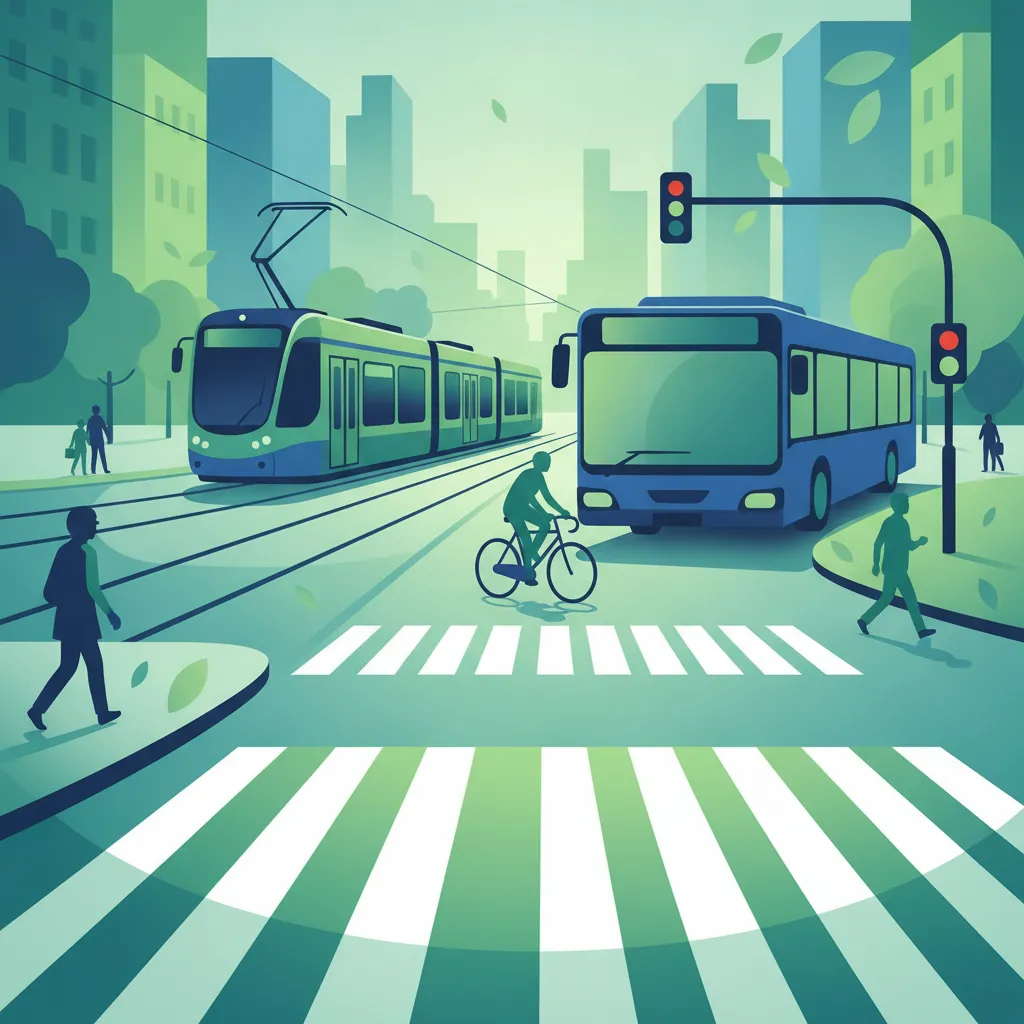
This lesson addresses the unique challenges and priority rules that apply when interacting with public transport and cyclists at intersections. It clarifies the specific right-of-way regulations for trams, which often have priority over other traffic, and the procedures for navigating around bus stops. The content also covers how to safely manage crossings with dedicated bicycle lanes, ensuring the protection of all road users.

This lesson focuses on the specific regulations and safety protocols for driving near trams (Straßenbahn) in Austrian cities. It clarifies the priority rules, which almost always favor the tram, and explains how to safely share lanes or cross tram tracks. The content provides critical guidance on how to behave at tram stops, ensuring the safety of boarding and alighting passengers is always the primary concern.
This lesson focuses on the unique challenges presented by tram systems in Austrian cities. It teaches riders how to cross tracks at a safe angle to avoid tyres getting caught, especially in wet conditions, and explains the absolute priority trams have in most situations. Awareness around tram stops and bus lanes is also covered to ensure safe coexistence with public transport.
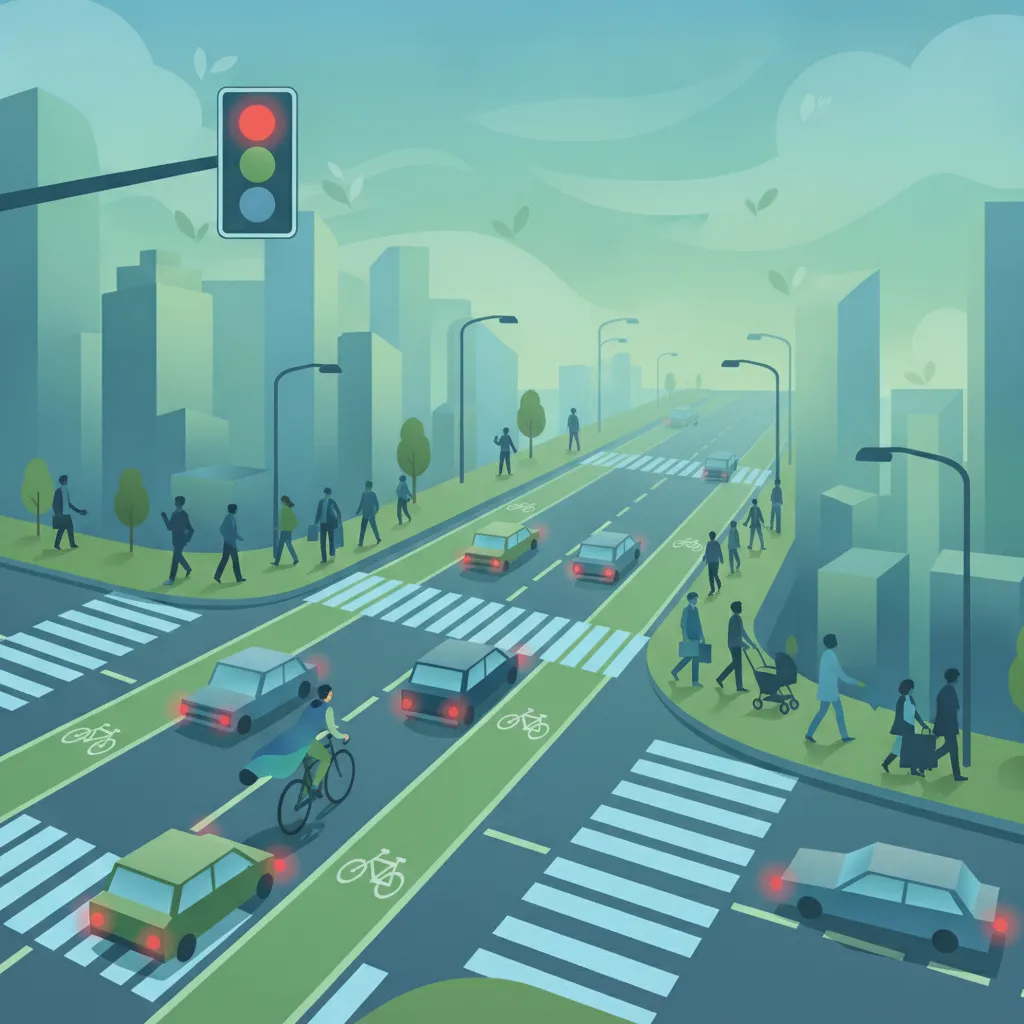
This lesson teaches drivers how to safely coexist with cyclists and pedestrians, who are prevalent in urban areas. It covers the rules for dedicated bike lanes (Radweg), the importance of yielding to pedestrians in designated zones, and the need for extra caution when turning or opening car doors. Maintaining safe overtaking distances and anticipating the movements of these vulnerable road users are key themes for preventing accidents.
This lesson addresses the specific hazard of tram tracks in urban areas, which can be slippery and cause a loss of balance. It teaches the correct angle at which to cross tracks and the importance of being aware of tram signals and movements. The content also provides guidance for safely sharing road space near tram and bus stops.
Cyclists and e-scooter riders are highly vulnerable and can be hard to see from a high driving position. This lesson focuses on the critical danger points, such as making right turns across cycle lanes and checking blind spots before pulling away from a stop. It teaches the importance of giving ample space when overtaking and anticipating their movements in busy city traffic.
Driving a bus in a busy city like Vienna or Salzburg requires constant forward planning and anticipation. This lesson teaches techniques for maintaining adequate space around the vehicle, positioning correctly for upcoming junctions, and reading the flow of traffic. Adopting a defensive mindset is key to navigating complex urban environments without incident.
Deepen your understanding of managing traffic flow in Austrian cities, focusing on advanced concepts like queue management, gap acceptance, and common violations. Learn how to navigate complex urban scenarios safely and efficiently.
This lesson covers the interaction with various forms of urban traffic control. It includes anticipating traffic light cycles to avoid stopping in an intersection and following the directions given by police or road work personnel. Smooth cooperation with these systems ensures better traffic flow and safety for everyone.
This lesson reinforces the critical importance of protecting vulnerable road users in dense urban settings. It teaches drivers to be hyper-aware of pedestrians and cyclists, especially near intersections and crosswalks. Key techniques include reducing speed, making eye contact to confirm intentions, and giving ample space.
This lesson provides specific guidance for sharing the road with different types of vehicles in Austria. It covers the dangers of large vehicle blind spots, the rules for navigating near buses and dedicated tram tracks, and common conflict points at intersections. Understanding the behavior and limitations of other vehicles is key to safely navigating complex urban environments.
Driving a bus in a busy city like Vienna or Salzburg requires constant forward planning and anticipation. This lesson teaches techniques for maintaining adequate space around the vehicle, positioning correctly for upcoming junctions, and reading the flow of traffic. Adopting a defensive mindset is key to navigating complex urban environments without incident.

This lesson focuses on identifying and mitigating common hazards in dense urban settings. It explains how to maintain a safe distance from parked cars to avoid opening doors and how to navigate narrow streets. Additionally, it covers the special rules and heightened awareness required when riding in or near pedestrian zones and school areas.
This lesson provides practical strategies for safely reversing in challenging environments like narrow streets or busy loading zones. It emphasizes the 'get out and look' principle, the proper use of mirrors and cameras, and the critical safety role of a reliable spotter. Executing these manoeuvres slowly and cautiously is paramount to avoiding collisions.
This lesson provides advanced strategies for proactively managing interactions with vulnerable road users to prevent conflicts before they arise. It teaches drivers to predict the likely behavior of pedestrians, cyclists, and e-scooter riders, especially at intersections and in congested areas. Key techniques include maintaining larger safety distances, covering the brake, and making eye contact to ensure mutual awareness and avoid accidents.

Many Austrian towns and city centres feature narrow roads not designed for large vehicles. This lesson provides strategies for assessing tight spaces, positioning the vehicle to maximize clearance, and navigating complex, non-standard junctions. It emphasizes the importance of slow speeds, constant observation, and understanding the vehicle's swept path to avoid contact with buildings, street furniture, and other vehicles.
This lesson consolidates knowledge by applying it to common everyday driving situations. It offers practical tips on topics like smooth driving for fuel efficiency, managing distractions in the cabin, and maintaining courtesy in frustrating traffic. The content reinforces defensive driving principles as a constant habit, helping learners transition from theoretical knowledge to confident, safe, and responsible real-world driving.
This lesson addresses the specific challenges of interacting with larger vehicles like buses and trams in an urban environment. It explains how to signal intentions clearly and predictably to avoid conflicts in shared spaces. Key topics include safely crossing tram tracks and maintaining awareness around public transport stops.
Find clear answers to common questions learners have about Urban Driving Dynamics and Traffic Flow. Learn how the lesson is structured, which driving theory objectives it supports, and how it fits into the overall learning path of units and curriculum progression in Austria. These explanations help you understand key concepts, lesson flow, and exam focused study goals.
Always choose your lane well in advance based on your intended direction. Look for road markings and overhead signs early, and check your mirrors and blind spots thoroughly before moving into your lane.
In traffic-calmed areas (Wohnstraßen or Begegnungszonen), speed is strictly limited, and you must give priority to pedestrians who may be using the entire width of the road. Always keep a slow, steady speed and be prepared to stop instantly.
Yes, always observe signs indicating the direction of traffic. When turning left on a one-way street, you must position your vehicle as far to the left as possible before the turn, unless signs or markings indicate otherwise.
Focus on scanning beyond the vehicle immediately in front of you. Look for traffic light sequences, upcoming lane drops, and the behavior of vulnerable road users like cyclists to build a full picture of the traffic flow.
Refine your study plan by searching for specific Austrian driving theory practice sets. Pinpoint questions related to particular road rules, signs, or challenge levels, and begin practicing immediately to reinforce your knowledge and excel in your official exam with confidence. Get started with focused revision today.