
This lesson explores the essential electronic safety systems and driver aids required for professional bus operation in Austria. You will learn how modern technology supports vehicle control and safety, which is critical for your Category D theory exam.
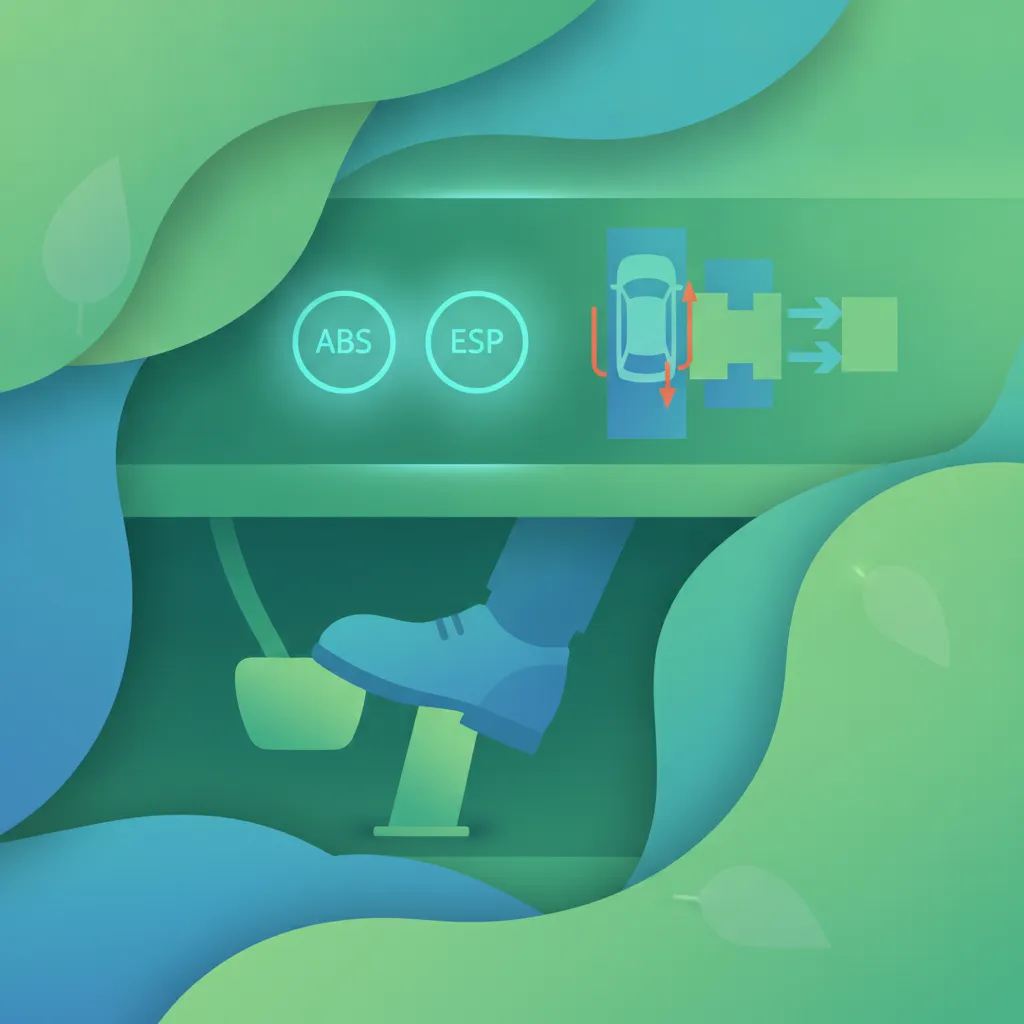
Lesson content overview
Modern passenger vehicles, particularly buses and coaches in the Austrian Driving Theory Course for Bus & Coach Licence (Category D), are equipped with an array of advanced electronic safety systems. These driver aids are crucial for enhancing vehicle control, reducing stopping distances, preventing skidding, and ultimately improving passenger safety, especially under varying load conditions and on diverse road types, from urban streets to challenging alpine routes. This lesson will provide a comprehensive understanding of these vital systems.
Electronic driver aids are sophisticated systems designed to augment a driver's ability to safely control a vehicle, often compensating for human error and difficult driving conditions. For a Category D driver, understanding these systems is not just about technical knowledge; it's about ensuring the highest level of passenger safety and operational efficiency. These systems enhance vehicle stability and traction, which is paramount when transporting many passengers and managing heavy vehicle dynamics.
The core logic behind these aids is safety enhancement: they mitigate the risk of losing traction and uncontrolled vehicle motion, which is particularly critical with heavy loads, on steep descents, and in adverse weather. They function based on principles of physics, controlling wheel slip by precisely modulating brake pressure, engine torque, and even steering input through constant sensor feedback. Furthermore, regulations, especially for public transport vehicles like coaches, often mandate specific systems, such as retarders, to ensure safety on challenging routes.
The Anti-lock Braking System (ABS) is a fundamental electronic safety system designed to prevent wheel lock-up during heavy or emergency braking. By preventing the wheels from locking, ABS allows the driver to maintain steering control while braking, which can be critical for avoiding obstacles.
How ABS Works: When a driver applies the brakes suddenly or on a slippery surface, a wheel might lock up, causing the tire to skid and the vehicle to lose directional control. ABS sensors monitor the speed of each wheel. If a sensor detects that a wheel is about to lock, the ABS rapidly modulates the brake pressure to that specific wheel. This pulsation releases and reapplies the brake force many times per second, allowing the wheel to continue rotating while still providing maximum braking effort.
Types Relevant to Buses and Coaches: While passenger cars might use three-channel systems, buses and coaches typically employ four-channel, four-wheel symmetrical ABS systems. This means each of the four (or more, depending on axle configuration) wheels is individually monitored and modulated, providing optimal control and stability for a heavy vehicle.
Practical Implications for Bus Drivers:
When ABS activates, the pulsating sensation in the brake pedal and possible noise are normal. Maintain firm pressure on the brake pedal and focus on steering the vehicle safely. Do not release the pedal or pump the brakes.
The Electronic Stability Program (ESP), also known as Electronic Stability Control (ESC), is an advanced driver aid that significantly enhances vehicle stability, especially during dynamic maneuvers or on slippery surfaces. It works by detecting and correcting vehicle skids or loss of control, helping to keep the vehicle on its intended path.
How ESP Works: ESP uses a network of sensors, including wheel speed sensors (shared with ABS), a steering angle sensor, and a yaw rate sensor. The yaw rate sensor measures the vehicle's rotation around its vertical axis, while the steering angle sensor determines the driver's intended path. If ESP detects that the vehicle's actual path (from the yaw rate sensor) deviates significantly from the driver's intended path (from the steering angle sensor), it intervenes.
Intervention Methods: ESP intervenes by:
Practical Implications for Bus Drivers:
The rotational speed of the vehicle around its vertical axis. ESP uses this measurement to determine if the vehicle is deviating from its intended path, indicating instability.
The Traction Control System (TCS) is designed to prevent wheel spin when accelerating, especially on slippery surfaces or during aggressive acceleration. It ensures that the driving wheels maintain optimal traction, allowing for smoother and more controlled acceleration.
How TCS Works: TCS uses the same wheel speed sensors as ABS and ESP. If it detects that a driven wheel is spinning faster than the others, indicating a loss of traction, it intervenes by:
Practical Implications for Bus Drivers:
For heavy vehicles like buses and coaches, particularly in mountainous terrain, relying solely on service brakes for prolonged deceleration can lead to overheating and a dangerous condition known as brake fade. Retarders are supplementary braking systems designed to provide continuous, powerful deceleration without using the conventional service brakes. This saves the service brakes for emergency stops and bringing the vehicle to a complete halt.
Types of Retarders:
Practical Implications for Bus Drivers:
Hill-Start Assist (HSA) is a convenient and important safety feature, especially for a heavy vehicle like a bus or coach, which can be challenging to start on an incline without rolling backward.
How HSA Works: When the driver stops on an incline and holds the brake pedal, HSA detects the gradient. Upon releasing the brake pedal, the system momentarily maintains brake pressure (typically for a few seconds or until the accelerator is pressed), giving the driver enough time to smoothly transition their foot from the brake to the accelerator without the vehicle rolling backward.
Practical Implications for Bus Drivers:
Automatic Emergency Braking (AEB) is an advanced safety system designed to help prevent or mitigate collisions, particularly rear-end collisions, by autonomously applying the brakes when a potential forward crash is detected.
How AEB Works: AEB systems use radar, cameras, or lidar sensors to monitor the road ahead for obstacles, vehicles, or pedestrians. If the system detects an imminent collision and the driver does not react adequately (e.g., insufficient braking or no braking at all), AEB will first issue a warning (auditory, visual, or haptic). If the driver still doesn't respond or if the situation is critical, the system will apply the brakes automatically to reduce vehicle speed and either avoid the collision or lessen its severity.
Practical Implications for Bus Drivers:
Do not become over-reliant on Automatic Emergency Braking (AEB). It is a supplemental safety system. As a professional driver, you must always maintain full control of the vehicle, stay attentive, and be prepared to take evasive action.
Professional bus and coach drivers must not only understand how these systems work but also adhere to specific operational rules and best practices to ensure continuous safety.
Before every journey, a Category D driver is responsible for conducting a thorough pre-trip inspection. This includes verifying the operational status of all electronic driver aids.
Ignition On/Engine Start: Observe the dashboard warning lights. ABS, ESP, and other system indicator lights should illuminate briefly during the vehicle's self-test.
Light Extinguishment: Ensure that all warning lights for these safety systems (ABS, ESP, TCS) extinguish after the self-test, indicating they are operational. If any light remains on, it signals a fault.
Fault Action: If a warning light indicates a malfunction, the vehicle should not be operated until the issue is diagnosed and rectified. Driving with a faulty safety system compromises vehicle control and passenger safety.
The correct use of retarders on long descents is fundamental to preventing brake fade, a condition where service brakes lose effectiveness due to overheating. This is a critical skill for bus and coach drivers, especially in mountainous regions like Austria.
Despite their advanced nature, driver aids are often subject to misunderstandings that can compromise their effectiveness and lead to unsafe practices.
The effectiveness and perceived behavior of driver aids can vary significantly depending on external factors and the vehicle's state. Professional drivers must understand these contextual variations.
The integration of ABS, ESP, TCS, retarders, HSA, and AEB in modern buses and coaches fundamentally transforms vehicle safety. For Category D drivers, these systems are not merely technical features; they are critical tools that directly support their professional responsibility for passenger safety.
Ultimately, these driver aids are sophisticated safety nets. While they provide significant assistance, the professional driver remains the most critical safety component. A deep understanding of how these systems work, their capabilities, and their limitations, combined with excellent driving skills and adherence to safe driving practices, forms the bedrock of responsible bus and coach operation.
This lesson covers essential electronic safety systems for Category D drivers, explaining how ABS maintains steering during hard braking by preventing wheel lock-up, how ESP detects and corrects vehicle instability through selective wheel braking, and how TCS prevents wheel spin on slippery surfaces. Retarders are critical supplementary systems for controlling speed on long descents, especially on Austrian alpine routes where their use may be legally mandated to prevent dangerous brake fade. The lesson also covers Hill-Start Assist for incline starts and Automatic Emergency Braking for collision mitigation, while emphasizing that these systems enhance but never replace attentive, skilled driving and proper pre-trip inspections.
A short set of high-value points that capture the most important learning from this lesson.
ABS prevents wheel lock-up during emergency braking, allowing you to maintain steering control by applying firm, continuous pressure to the brake pedal
ESP detects understeer and oversteer by comparing yaw rate with steering angle, correcting instability through selective wheel braking and torque reduction
Retarders are supplementary braking systems essential for controlling speed on long descents, preventing brake fade and preserving service brakes for emergencies
TCS prevents wheel spin during acceleration on slippery surfaces and should only be disabled temporarily in specific low-traction situations
AEB provides autonomous collision mitigation but does not replace attentive driving; always remain ready to intervene
Explore all units and lessons included in this driving theory course.
ABS pulsation through the brake pedal is normal—do not pump the brakes, as this overrides the system's faster and more precise modulation
Retarders must be actively engaged before descending steep gradients and are often legally mandated on Austrian alpine routes exceeding 6% gradient
Dashboard warning lights for ABS, ESP, and TCS must extinguish after the self-test; a persistently illuminated light indicates a fault requiring attention
Retarders supplement but do not replace service brakes—always use service brakes to bring the vehicle to a complete stop
ESP and ABS systems automatically compensate for varying passenger loads but cannot overcome the laws of physics if driven excessively for conditions
Pumping the brake pedal when ABS activates, which overrides the system's superior modulation and can cause wheel lock-up
Continuing to drive with illuminated safety system warning lights, operating the vehicle with compromised stability and braking control
Over-relying on retarders for emergency braking or complete stops, which can lead to insufficient stopping distance in critical situations
Disabling TCS during normal driving on wet or icy roads, increasing the risk of wheel spin and loss of control during acceleration
Assuming driver aids make the vehicle immune to physics—excessive speed or abrupt maneuvers can still overwhelm even advanced electronic systems
Lesson content overview
A short set of high-value points that capture the most important learning from this lesson.
ABS prevents wheel lock-up during emergency braking, allowing you to maintain steering control by applying firm, continuous pressure to the brake pedal
ESP detects understeer and oversteer by comparing yaw rate with steering angle, correcting instability through selective wheel braking and torque reduction
Retarders are supplementary braking systems essential for controlling speed on long descents, preventing brake fade and preserving service brakes for emergencies
TCS prevents wheel spin during acceleration on slippery surfaces and should only be disabled temporarily in specific low-traction situations
AEB provides autonomous collision mitigation but does not replace attentive driving; always remain ready to intervene
Explore all units and lessons included in this driving theory course.
ABS pulsation through the brake pedal is normal—do not pump the brakes, as this overrides the system's faster and more precise modulation
Retarders must be actively engaged before descending steep gradients and are often legally mandated on Austrian alpine routes exceeding 6% gradient
Dashboard warning lights for ABS, ESP, and TCS must extinguish after the self-test; a persistently illuminated light indicates a fault requiring attention
Retarders supplement but do not replace service brakes—always use service brakes to bring the vehicle to a complete stop
ESP and ABS systems automatically compensate for varying passenger loads but cannot overcome the laws of physics if driven excessively for conditions
Pumping the brake pedal when ABS activates, which overrides the system's superior modulation and can cause wheel lock-up
Continuing to drive with illuminated safety system warning lights, operating the vehicle with compromised stability and braking control
Over-relying on retarders for emergency braking or complete stops, which can lead to insufficient stopping distance in critical situations
Disabling TCS during normal driving on wet or icy roads, increasing the risk of wheel spin and loss of control during acceleration
Assuming driver aids make the vehicle immune to physics—excessive speed or abrupt maneuvers can still overwhelm even advanced electronic systems
Explore search topics learners often look for when studying Understanding ABS, ESP, and Other Driver Aids. These topics reflect common questions about road rules, driving situations, safety guidance, and lesson level theory preparation for learners in Austria.
Browse additional driving theory lessons that cover connected traffic rules, road signs, and common driving situations related to this topic. Improve your understanding of how different rules interact across everyday traffic scenarios.
Learn the detailed functions of essential electronic safety systems like ABS, ESP, and TCS for buses and coaches. Understand how retarders assist in managing speed on descents, crucial for Austrian driving theory.

This lesson provides an overview of the modern active and passive safety systems found in vehicles. It explains the function of technologies like the Anti-lock Braking System (ABS), Electronic Stability Program (ESP), and airbags, clarifying how they assist the driver in emergency situations. Learners will also gain an awareness of other driver assistance systems, such as collision warnings and lane departure alerts, and understand their role in preventing accidents.
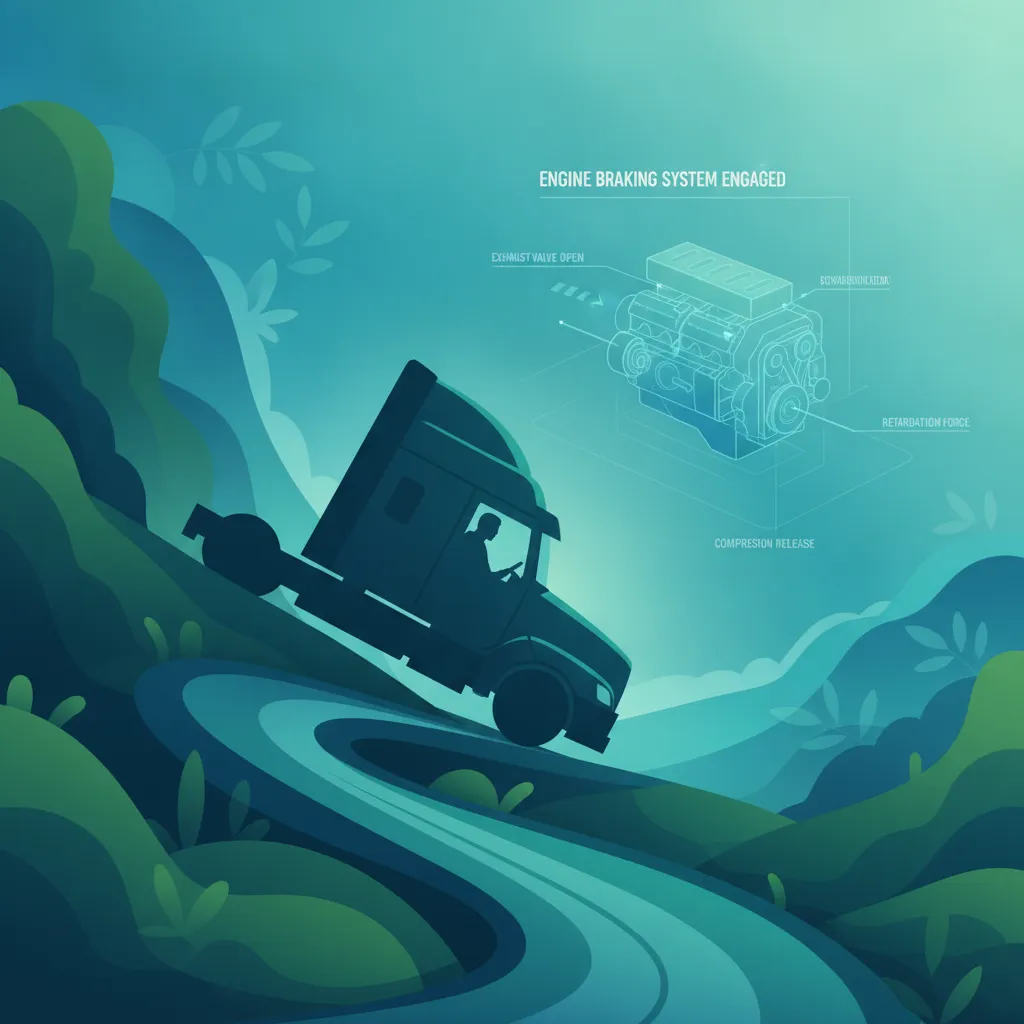
This lesson introduces auxiliary braking systems, such as engine brakes and retarders, which are designed to help control vehicle speed without using the service brakes. It explains how these systems function to slow the vehicle, especially on long downhill gradients. Using them effectively reduces service brake wear and prevents overheating.

This lesson provides a clear breakdown of the different Category D licences in Austria. It explains the specific rights and limitations associated with each, including the maximum number of passengers for D1 (minibus) and D (bus/coach). Furthermore, it details the rules for combination vehicles, covering trailers (D1E, DE) and their specific operational requirements.

This lesson covers the proper techniques for performing an emergency braking manoeuvre in a heavy vehicle. It explains how to apply maximum braking force without losing control, especially in vehicles equipped with an Anti-lock Braking System (ABS). The lesson also discusses how hard braking can affect cargo and the importance of proper load securing.

This lesson introduces the proactive mindset of defensive driving, which focuses on anticipating potential hazards rather than just reacting to them. It teaches techniques for systematic risk assessment, including scanning the road ahead, checking mirrors frequently, and being aware of the potential actions of other road users. By adopting these safe habits, drivers can create a buffer of safety around their vehicle and significantly reduce the likelihood of being involved in an accident.

Sudden vehicle movements are a primary cause of passenger injury and discomfort. This lesson focuses on developing a high level of control over the throttle and brake pedals. It teaches how to apply power gradually and brake progressively by anticipating traffic flow, ensuring that passengers, particularly those standing or moving, are never caught off balance.

This lesson delves into the specific Austrian laws and regulations that professional passenger drivers must adhere to. It provides an overview of rules concerning driving and rest times, the use of the digital tachograph, and the essential documents that must be carried at all times. Understanding these legal obligations is crucial for compliance and avoiding penalties during roadside checks.

Driving in tourist hotspots in cities like Salzburg or alpine resorts requires extra patience and vigilance. This lesson explores common unpredictable behaviours, such as pedestrians stepping into the road to take photos or groups of tourists being unaware of traffic. It teaches drivers to slow down, be prepared for anything, and use communication tools like the horn sparingly and appropriately.

This lesson explains the various factors that determine the total stopping distance of a heavy vehicle. It covers the effects of speed, vehicle weight, road conditions, and driver reaction time. Understanding these variables helps drivers to maintain a safe following distance and anticipate how much space is needed to stop.

This lesson consolidates knowledge by applying it to common everyday driving situations. It offers practical tips on topics like smooth driving for fuel efficiency, managing distractions in the cabin, and maintaining courtesy in frustrating traffic. The content reinforces defensive driving principles as a constant habit, helping learners transition from theoretical knowledge to confident, safe, and responsible real-world driving.
Explore how ABS, ESP, and other driver aids function differently in various weather, road types, and with different vehicle loads. Essential knowledge for professional bus and coach drivers in Austria.

Adverse weather demands a significant adjustment in driving technique. This lesson explains the dangers of aquaplaning in heavy rain, the need for drastically reduced speed in fog, and how to anticipate and correct for the effects of strong crosswinds on a high-sided vehicle. It reinforces the importance of increasing following distances and using appropriate lighting to see and be seen.

Rural Austrian roads present unique challenges, including lack of markings, tight spaces, and slow-moving agricultural vehicles. This lesson teaches how to read the road ahead, anticipate hazards around blind bends, and use passing places effectively when meeting other large vehicles. It emphasizes adjusting speed to suit the limited visibility and variable road conditions.

Driving a bus in a busy city like Vienna or Salzburg requires constant forward planning and anticipation. This lesson teaches techniques for maintaining adequate space around the vehicle, positioning correctly for upcoming junctions, and reading the flow of traffic. Adopting a defensive mindset is key to navigating complex urban environments without incident.
Driving in tourist hotspots in cities like Salzburg or alpine resorts requires extra patience and vigilance. This lesson explores common unpredictable behaviours, such as pedestrians stepping into the road to take photos or groups of tourists being unaware of traffic. It teaches drivers to slow down, be prepared for anything, and use communication tools like the horn sparingly and appropriately.
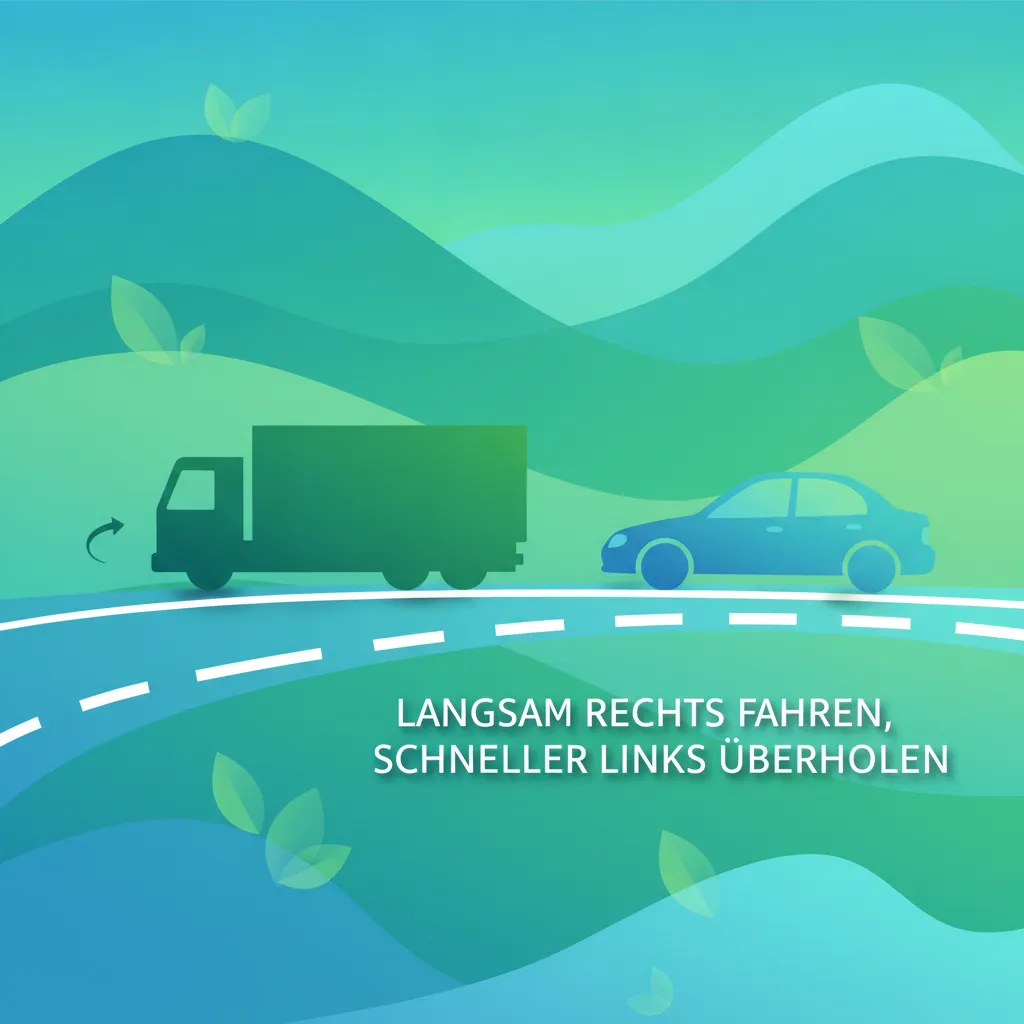
High-speed driving in a large vehicle requires excellent lane discipline and forward planning. This lesson covers Austrian speed limits for buses, rules for joining and leaving the motorway, safe overtaking procedures, and maintaining appropriate following distances. The critical importance of forming an emergency corridor ('Rettungsgasse') in traffic jams is also a key topic.

Transporting children carries the highest level of responsibility. This lesson covers the specific Austrian rules for school buses, including the use of warning signs and lights. It focuses on developing a mindset of extreme caution, anticipating that children may run into the road unexpectedly, and managing the chaotic traffic environment often found around schools during drop-off and pick-up times.

Providing safe and respectful access for all passengers is a legal and professional duty. This lesson details the correct operation of accessibility features like ramps, lifts, and kneeling systems. It covers how to secure wheelchairs and mobility aids, and how to communicate effectively and respectfully with passengers who may require assistance with boarding or alighting.

The driver sets the tone for the entire journey. This lesson explores how a driver's calm demeanor and smooth driving style create a reassuring atmosphere for passengers. It also covers responsibilities for maintaining a comfortable onboard environment, such as appropriate heating or cooling, and the importance of a clean and well-presented vehicle in promoting passenger confidence and positive behaviour.

Not all bus stops are created equal. This lesson trains you to assess a stop's environment and identify potential hazards, such as poor sightlines, proximity to a busy junction, or frequent presence of vulnerable road users. It encourages a proactive approach, where the driver heightens their observation and slows their approach when dealing with these known high-risk locations.

Carrying standing passengers significantly increases a driver's responsibility for smooth control. This lesson details the specific adjustments required, such as reducing speed before turns to minimize sideways forces and increasing following distances to avoid sudden braking. It emphasizes the importance of awareness and observation of passengers' stability before accelerating from a stop.
Find clear answers to common questions learners have about Understanding ABS, ESP, and Other Driver Aids. Learn how the lesson is structured, which driving theory objectives it supports, and how it fits into the overall learning path of units and curriculum progression in Austria. These explanations help you understand key concepts, lesson flow, and exam focused study goals.
The Anti-lock Braking System (ABS) prevents the wheels from locking up during hard braking. This allows the driver to maintain steering control even while braking firmly, which is critical for avoiding obstacles in a large bus.
The Electronic Stability Program (ESP) helps detect and reduce loss of traction or skidding. It intervenes by braking individual wheels and adjusting engine torque to help the driver steer the bus safely in the intended direction.
Retarders provide a non-wearing way to slow the vehicle, preventing the main service brakes from overheating on long, steep descents. This preserves the main braking capacity for sudden emergency stops.
No, the theory exam focuses on how to use these systems, understanding their purpose, and recognizing the warning lights or symbols associated with them. You are expected to know how they assist the driver, not how to perform mechanical repairs.
Refine your study plan by searching for specific Austrian driving theory practice sets. Pinpoint questions related to particular road rules, signs, or challenge levels, and begin practicing immediately to reinforce your knowledge and excel in your official exam with confidence. Get started with focused revision today.