
Understanding the precise legal categories for vulnerable road users is fundamental for both road safety and passing your Belgian theory test. This guide breaks down the current regulations concerning priority, road positioning, and the usage of specialized lanes, ensuring you are prepared for official exam questions regarding these specific user groups.
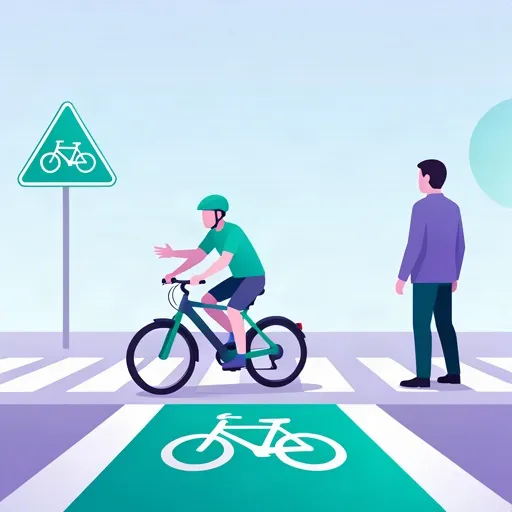
Article content overview
In the context of the Belgian driving theory exam, the term "vulnerable road users" is a fundamental concept that every learner must master. The Belgian traffic code places a high priority on the safety of those who are most exposed to the risks of motorized traffic, including pedestrians, cyclists, and the increasingly prevalent speed pedelec riders. Understanding how these road users interact with the infrastructure and the specific rules governing their movement is not only crucial for road safety but also a common subject for complex scenario-based questions in the official theory test.
The Belgian traffic legislation has been carefully structured to define who qualifies as a vulnerable road user and where they are permitted to travel. A crucial update in recent years involves the concept of "assimilation." For instance, a person pushing a bicycle, a motorized two-wheel cycle, or a two-wheel moped is legally assimilated to a pedestrian. This means they must follow the same rules as pedestrians, utilizing sidewalks or designated zones rather than the main carriageway whenever possible.
The legal status where specific road users, such as those pushing a bicycle or using non-motorized mobility devices, are granted the same rights and obligations as pedestrians, ensuring they can navigate public spaces safely.
Cyclists in Belgium have a specific set of rights and responsibilities that often confuse learner drivers. When a cycle path is present and accessible, cyclists are generally required to use it. However, if no cycle path is available, they must use the carriageway. A common trap in the theory exam involves the lateral distance required when overtaking a cyclist. Drivers must remember that a lateral distance of at least one meter must be maintained within built-up areas, while at least one and a half meters is mandatory outside of built-up areas.
When overtaking a cyclist, always ensure the distance is sufficient. Failure to respect the 1m or 1.5m lateral distance is a frequent cause of points lost during both the theory and practical driving tests in Belgium.
Speed pedelecs occupy a unique category in Belgian law. Because they can reach speeds of up to 45 km/h, they are legally classified as mopeds, yet they retain many features of traditional bicycles. To operate a speed pedelec, riders must be at least 16 years old and possess a valid driving license (Category AM, A, or B). Their positioning on the road depends heavily on the speed limit of the area. On roads with a speed limit of 50 km/h or less, they may use cycle paths, whereas on faster roads, they are often directed to the carriageway.
| User Type | Priority Status | Primary Infrastructure |
|---|---|---|
| Pedestrians | Highest | Sidewalks / Zones |
| Cyclists | High | Cycle paths / Carriageway |
| Speed Pedelec | Moderate (Moped) | Cycle paths (if < 50 km/h) |
At intersections, the hierarchy of vulnerability is key to determining right-of-way. While standard priority rules like "priority from the right" apply, the law specifically mandates that drivers must show heightened caution around vulnerable users. For example, when turning at an intersection, a driver must allow cyclists riding straight on a cycle path to pass. Furthermore, in designated residential zones or "zones de rencontre," pedestrians are permitted to use the entire width of the road and have priority over cars, with speeds strictly limited to 20 km/h.
This article covers the essential Belgian traffic regulations governing vulnerable road users, with particular focus on pedestrians, cyclists, and speed pedelecs. It clarifies that persons pushing non-motorized vehicles are legally assimilated to pedestrians and must use sidewalks, while cyclists must use dedicated paths when available and adhere to specific overtaking distance rules. Speed pedelecs occupy a unique legal category as mopeds capable of 45 km/h, requiring appropriate licensing and following infrastructure rules based on road speed limits. The content emphasizes intersection priority hierarchy, residential zone rules where pedestrians have full priority at 20 km/h, and the importance of maintaining adequate lateral clearance when passing cyclists.
A short set of high-value points that capture the most important ideas from this article.
Vulnerable road users in Belgium include pedestrians, cyclists, and speed pedelec riders, each with distinct legal status and priority rights
A person pushing a bicycle, motorized two-wheel cycle, or two-wheel moped is legally assimilated to a pedestrian and must use sidewalks
When overtaking cyclists, drivers must maintain at least 1 meter lateral distance in built-up areas and 1.5 meters outside built-up areas
Speed pedelecs are legally classified as mopeds despite their bicycle-like features, requiring AM/A/B license and minimum age 16
In residential zones (zones de rencontre), pedestrians have priority over vehicles across the entire road width with a 20 km/h speed limit
Lateral distance rules: 1m minimum in built-up areas, 1.5m minimum outside built-up areas when overtaking cyclists
Speed pedelecs (up to 45 km/h) may use cycle paths only where the speed limit is 50 km/h or less
At intersections, cyclists riding straight on a cycle path must be allowed to pass when you are turning
The D9 sign indicates a mandatory cycle path that cyclists must use when present and accessible
Priority from the right rule applies at unmarked intersections, but heightened caution around vulnerable users is always required
Assuming speed pedelecs follow the same rules as regular bicycles—they are legally mopeds requiring a license
Forgetting the difference between lateral distance requirements inside versus outside built-up areas
Not yielding to pedestrians when turning at intersections in residential zones where pedestrians have full priority
Attempting to use the main carriageway when a mandatory cycle path (D9 sign) is available and accessible
Overlooking the blind spot check for cyclists before making turns, especially near cycle paths
Article content overview
A short set of high-value points that capture the most important ideas from this article.
Vulnerable road users in Belgium include pedestrians, cyclists, and speed pedelec riders, each with distinct legal status and priority rights
A person pushing a bicycle, motorized two-wheel cycle, or two-wheel moped is legally assimilated to a pedestrian and must use sidewalks
When overtaking cyclists, drivers must maintain at least 1 meter lateral distance in built-up areas and 1.5 meters outside built-up areas
Speed pedelecs are legally classified as mopeds despite their bicycle-like features, requiring AM/A/B license and minimum age 16
In residential zones (zones de rencontre), pedestrians have priority over vehicles across the entire road width with a 20 km/h speed limit
Lateral distance rules: 1m minimum in built-up areas, 1.5m minimum outside built-up areas when overtaking cyclists
Speed pedelecs (up to 45 km/h) may use cycle paths only where the speed limit is 50 km/h or less
At intersections, cyclists riding straight on a cycle path must be allowed to pass when you are turning
The D9 sign indicates a mandatory cycle path that cyclists must use when present and accessible
Priority from the right rule applies at unmarked intersections, but heightened caution around vulnerable users is always required
Assuming speed pedelecs follow the same rules as regular bicycles—they are legally mopeds requiring a license
Forgetting the difference between lateral distance requirements inside versus outside built-up areas
Not yielding to pedestrians when turning at intersections in residential zones where pedestrians have full priority
Attempting to use the main carriageway when a mandatory cycle path (D9 sign) is available and accessible
Overlooking the blind spot check for cyclists before making turns, especially near cycle paths
Explore related topics, search based questions, and concepts that learners often look up when studying Cyclist and Pedestrian Rules. These themes reflect real search intent and help you understand how this topic connects to wider driving theory knowledge in Belgium.
Find clear and practical answers to common questions learners often have about Cyclist and Pedestrian Rules. This section helps explain difficult points, remove confusion, and reinforce the key driving theory concepts that matter for learners in Belgium.
Under the current Belgian traffic code, pedestrians pushing a bicycle, a motorized two-wheel cycle, or a two-wheel moped are officially assimilated to pedestrians and must follow the same traffic rules as pedestrians.
The minimum age to operate a speed pedelec on the public road is 16 years old.
Yes, riders must hold at least a valid driving license category AM (moped), A (motorcycle), or B (car) to legally operate a speed pedelec.
Speed pedelec usage of cycle paths versus the carriageway depends on specific speed limits and local signage. Generally, they follow the rules applicable to mopeds, and their positioning is strictly regulated based on the 50 km/h speed limit threshold.
Continue your learning journey by exploring related articles and guides on specific Belgian traffic situations, advanced road signs, or vehicle safety topics. Use our search to pinpoint what you need to review next, deepening your understanding for your driving license theory exam.