Navigating Historic City Centers: Driving Rules for Bruges and Ghent
Driving through Belgium’s historic UNESCO World Heritage cities like Bruges and Ghent offers a beautiful experience, but it presents significant challenges for motorists. Medieval street patterns were never designed for modern vehicle traffic, and modern mobility policies have added layers of complexity that often confuse visitors and even experienced local drivers. Relying solely on a GPS can lead you into restricted zones where automatic cameras monitor your every move, potentially resulting in heavy fines. To drive safely and legally, you must understand local signage and specific traffic management schemes.
Understanding the Ghent Circulation Plan
Since its implementation in 2017, the Ghent Circulation Plan (Circulatieplan Gent) has fundamentally changed how cars navigate the city center. The primary goal of this system is to enhance urban liveability by banning through-traffic from the inner city. The center is divided into several distinct sectors, and driving directly from one sector to another is strictly prohibited. If you are navigating by GPS, it may suggest a path that crosses these internal boundaries, which will trigger an automatic fine via ANPR cameras.
To move between adjacent sectors, you are required to drive back to the R40 Ring Road, which encircles the city, and re-enter at the appropriate access point for your destination. This "loop" system forces a U-shaped route for many journeys. Over 50,000 fines were issued in the year following the plan's introduction, largely to drivers who followed GPS instructions over the physical road signs. Always prioritize the blue and white "Zone" signs over your digital map application.
Bruges: One-Way Systems and Carriage Priority
Bruges is defined by its dense network of canals and narrow, ancient streets. Much of the city center operates on a strict one-way system, where the majority of streets can only be accessed from one direction. It is common for drivers to find themselves in a situation where their destination is only meters away, yet legally unreachable without a long detour around the city perimeter. Ignoring these one-way signs is a frequent cause of traffic violations and accidents in the historic core.
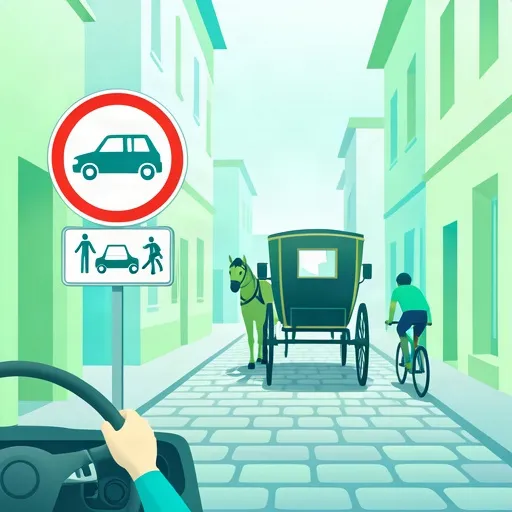
Beyond standard traffic rules, drivers must be aware of the "koetsen"—the horse-drawn carriages that operate as a traditional tourist transport. These carriages have specific, fixed routes through the city. On these designated segments, the carriages hold priority, and you must yield to them at intersections. Treating them like any other slow-moving vehicle is a mistake; failing to grant them the right-of-way can lead to dangerous interactions in narrow street passages.
The Importance of Park & Ride (P+R) Facilities
Given the strict regulations in both Ghent and Bruges, driving into the absolute heart of these cities is often unnecessary and counterproductive. Both cities have heavily invested in Park & Ride (P+R) facilities located on the periphery. Using these facilities is not just a recommendation for convenience; it is a strategic decision to avoid the stress of navigating complex one-way systems and the risk of accidental fines.
Once parked, you can easily transition to public transport, including trams, buses, or even shared bicycles. These alternatives are designed to work in tandem with the city's circulation plans, ensuring you arrive at your destination faster and without the anxiety of monitoring for ANPR cameras or restricted zone boundaries.
Always check the official municipal websites for Ghent or Bruges before your trip to see if your destination falls within a low-emission zone or a restricted sector. This helps you plan your route to the nearest P+R facility effectively.
Summary of Key Regulatory Concepts
| Feature | Ghent | Bruges |
|---|
| Primary System | Circulation Plan (Sectors) | Complex One-Way Network |
| Enforcement | ANPR Cameras | Police and Traffic Signs |
| Through Traffic | Forbidden (must use R40) | Restricted by one-way layouts |
| Unique Priority | Standard traffic rules | Horse-drawn carriages on fixed routes |
Check out these practice sets
Learn more with these articles