
Transporting a passenger on a motorcycle involves strict adherence to Belgian road traffic legislation designed to ensure occupant safety. You will learn the mandatory minimum age for pillion passengers, the legal importance of functional footrests, and the specific standards for protective helmets. This knowledge is essential for both your theoretical exam preparation and your future safety as a motorcyclist.
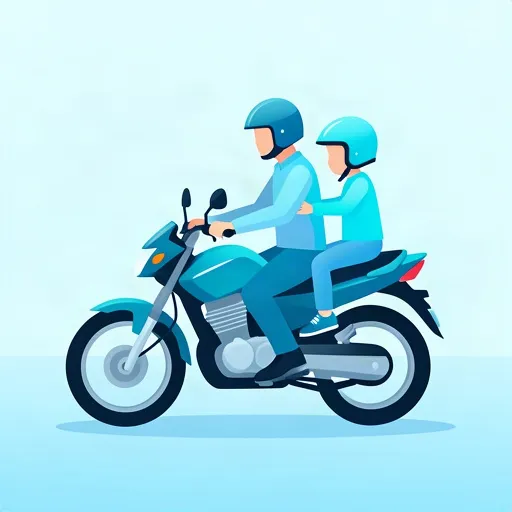
Article content overview
Transporting a passenger on a motorcycle is a significant responsibility that extends beyond simple riding skills. In the Belgian traffic system, road safety regulations are precise, and failing to comply with passenger carriage laws can lead to severe penalties and, more importantly, life-threatening risks. As a learner preparing for your Belgian theory exam, it is essential to understand that carrying a pillion rider is not merely a matter of having an extra seat; it is a legal requirement that involves strict age limits, specific vehicle equipment, and safety gear standards.
According to the Belgian Highway Code, the minimum age for a passenger on a motorcycle is 12 years old. This is a non-negotiable legal threshold designed to ensure that the passenger possesses enough physical maturity and cognitive awareness to hold onto the rider and maintain proper balance. Regardless of the child's physical height or the parent’s intent, you cannot legally carry a passenger under the age of 12 on a standard motorcycle.
Do not confuse motorcycle passenger rules with those of other vehicles. While younger children may ride in specific seats on bicycles or in authorized child restraint systems in cars, motorcycles have no such exemptions for children under 12. Any person under this age is strictly prohibited from riding as a pillion.
A common pitfall in the driving theory exam involves the requirement for specialized equipment. For a motorcycle to be legally equipped for a passenger, it must have a designated seat and, crucially, functional footrests (repose-pieds/voetsteunen). These footrests are not optional comfort features; they are a legal prerequisite. If your motorcycle lacks footrests, or if they are positioned in a way that a passenger cannot reach them comfortably, you are forbidden from carrying anyone.
This creates a significant practical limitation for younger riders or those of smaller stature. Because the passenger must be able to place their feet firmly on the footrests while seated, individuals who are too short to reach them cannot be carried. In practice, this means that even if a child is 12 years old, they may still be legally barred from riding if they cannot meet this physical reach requirement. Always remember that the passenger must be seated astride the motorcycle, facing forward, and never in any makeshift or non-designated position.
Safety gear regulations in Belgium are uniform for both the driver and the passenger. Any passenger carried on a motorcycle must wear a protective crash helmet that meets the same ECE 22.05 or 22.06 homologation standards as the rider's helmet. During your theory test, you may encounter questions regarding the liability of the driver; remember that it is the driver’s responsibility to ensure that their passenger is properly protected and equipped before setting off.
A certification standard for helmets that ensures they have passed rigorous safety testing for impact protection, retention systems, and field of vision as required by European Union law.
The regulations mentioned above apply primarily to pillion passengers riding directly behind the driver. The rules for sidecars are distinct. Because a sidecar provides a structural enclosure, it is often viewed differently under the law regarding seating and stability. However, the requirement to maintain safety standards and ensure the passenger is securely held within the sidecar remains a legal obligation for the operator.
In the Belgian theory exam, questions about passenger carriage often focus on "what-if" scenarios. You might be presented with a photo of a motorcycle and asked if it is legal to carry a passenger, or a situational question about a 10-year-old child. Always look for the age threshold and the presence of footrests in the exam's description. If the passenger cannot reach the footrests, the answer is always that it is not permitted, regardless of the child's age or the presence of a helmet.
Carrying a passenger on a motorcycle in Belgium is governed by strict rules: the passenger must be at least 12 years old, the motorcycle must have a designated seat and functional footrests the passenger can reach, and both rider and passenger must wear helmets meeting ECE 22.05 or 22.06 standards. The driver is legally responsible for ensuring compliance before setting off. These requirements are frequently tested through scenario-based questions asking whether a specific situation (such as a child under 12 or missing footrests) legally permits passenger carriage.
A short set of high-value points that capture the most important ideas from this article.
The minimum age for a motorcycle pillion passenger in Belgium is 12 years, with no exceptions regardless of physical size or parental consent
Functional footrests are a legal prerequisite, not optional equipment, and the passenger must be able to reach them while seated
Both rider and passenger must wear helmets meeting ECE 22.05 or 22.06 homologation standards
The passenger must sit astride the motorcycle facing forward in a designated seat, never in a makeshift position
Sidecar passenger rules differ from pillion rules and are governed by separate regulations
Age 12 is the absolute minimum; younger children cannot legally ride as pillion even with parental permission
Check that footrests are functional AND that the passenger can physically reach them before carrying anyone
ECE 22.05 or 22.06 are the only accepted helmet standards for both driver and passenger
The driver bears legal responsibility for ensuring the passenger's safety equipment before departure
Physical reach requirement means even a 12-year-old may be barred if they cannot place their feet on the footrests
Assuming children who are tall enough can ride on a motorcycle before age 12, as they might in cars with child restraints
Forgetting that footrests are mandatory and focusing only on helmet requirements
Believing any protective helmet is sufficient, without checking for ECE homologation certification
Assuming a child who has reached 12 can automatically ride, without verifying they can reach the footrests
Applying pillion passenger rules to sidecars, which have distinct seating and safety requirements
Article content overview
A short set of high-value points that capture the most important ideas from this article.
The minimum age for a motorcycle pillion passenger in Belgium is 12 years, with no exceptions regardless of physical size or parental consent
Functional footrests are a legal prerequisite, not optional equipment, and the passenger must be able to reach them while seated
Both rider and passenger must wear helmets meeting ECE 22.05 or 22.06 homologation standards
The passenger must sit astride the motorcycle facing forward in a designated seat, never in a makeshift position
Sidecar passenger rules differ from pillion rules and are governed by separate regulations
Age 12 is the absolute minimum; younger children cannot legally ride as pillion even with parental permission
Check that footrests are functional AND that the passenger can physically reach them before carrying anyone
ECE 22.05 or 22.06 are the only accepted helmet standards for both driver and passenger
The driver bears legal responsibility for ensuring the passenger's safety equipment before departure
Physical reach requirement means even a 12-year-old may be barred if they cannot place their feet on the footrests
Assuming children who are tall enough can ride on a motorcycle before age 12, as they might in cars with child restraints
Forgetting that footrests are mandatory and focusing only on helmet requirements
Believing any protective helmet is sufficient, without checking for ECE homologation certification
Assuming a child who has reached 12 can automatically ride, without verifying they can reach the footrests
Applying pillion passenger rules to sidecars, which have distinct seating and safety requirements
Explore related topics, search based questions, and concepts that learners often look up when studying Motorcycle Passenger Rules in Belgium. These themes reflect real search intent and help you understand how this topic connects to wider driving theory knowledge in Belgium.
Find clear and practical answers to common questions learners often have about Motorcycle Passenger Rules in Belgium. This section helps explain difficult points, remove confusion, and reinforce the key driving theory concepts that matter for learners in Belgium.
In Belgium, a passenger on a motorcycle must be at least 12 years old.
Yes, the motorcycle must be equipped with dedicated, functional footrests for the passenger. If the passenger cannot reach the footrests, they cannot legally be carried on the motorcycle.
The passenger must wear a protective helmet that meets the same ECE homologation standards as the helmet required for the rider.
Sidecars operate under different regulations because they provide structural protection, meaning the age restrictions for pillion passengers do not apply in the same way, though helmet and safety equipment requirements remain.
Continue your learning journey by exploring related articles and guides on specific Belgian traffic situations, advanced road signs, or vehicle safety topics. Use our search to pinpoint what you need to review next, deepening your understanding for your driving license theory exam.