
Confusion between stopping and parking is a frequent cause of failure in the Belgian theory test, as the distinction relies on your specific action rather than just the duration of the stop. This guide provides a clear breakdown of the legal definitions, the meaning of critical signs, and the practical requirements for parking in various urban zones. You will learn how to interpret road signs correctly and recognize the impact of your choices on traffic flow and safety.
Article content overview
Understanding the distinction between stopping and parking is a cornerstone of the Belgian traffic code and a frequent source of errors in the theory exam. Many learner drivers assume that these terms are defined by the duration of the vehicle’s immobility, but the law in Belgium focuses on the nature of the activity. Mastering these definitions is not only vital for passing your exam but is also essential for maintaining traffic flow and safety on busy Belgian roads.
In Belgium, "stopping" is defined as any immobilization of a vehicle for the time necessary for the boarding or unboarding of passengers, or the loading or unloading of goods. Any immobilization that does not fit this specific description—or that lasts longer than necessary for these tasks—is legally considered "parking." The duration is secondary to the purpose of the stop.
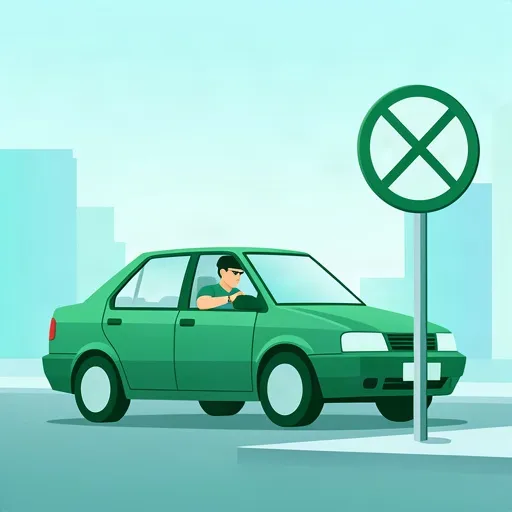
The Belgian road code utilizes specific signage to control vehicle positioning. Understanding the difference between sign E1 and sign E3 is critical, as they dictate different levels of restriction. Confusing these two signs is a common pitfall in theory exam questions.
Be aware that the absence of a sign does not necessarily mean parking is permitted. Always check for road markings, such as yellow lines or specific zones, and remember the fundamental rules regarding distance from intersections, crosswalks, and public transport stops.
Belgian urban environments, such as Brussels, Antwerp, and Liege, present unique parking challenges. Drivers must be familiar with "blue zones," where a standardized parking disc is mandatory. Failure to display the disc or exceeding the allowed time limit results in significant administrative fines.
In many cities, residents benefit from specific permits that allow them to park in "green zones" or residential streets without time limits or hourly fees. However, these permits are location-specific, and parking outside your registered zone can lead to penalties. When navigating these areas, always look for local signage that specifies the time validity of the restriction, as some regulations are only active during specific hours or days of the week.
| Zone Type | Requirement | Typical Restriction |
|---|---|---|
| Blue Zone | Valid parking disc | Max 2 hours (usually) |
| Paid Zone | Payment at meter | Varies by municipality |
| Green/Resident | Resident permit | Unlimited for residents |
The traffic code is not arbitrary; it is designed to manage high traffic volumes and protect vulnerable road users. When you stop in a prohibited area, you often force other vehicles—including buses, trams, and cyclists—to move into the middle of the road to pass you. This creates blind spots and increases the risk of accidents.
Article content overview
Explore related topics, search based questions, and concepts that learners often look up when studying Stopping and Parking Rules. These themes reflect real search intent and help you understand how this topic connects to wider driving theory knowledge in Belgium.
Find clear and practical answers to common questions learners often have about Stopping and Parking Rules. This section helps explain difficult points, remove confusion, and reinforce the key driving theory concepts that matter for learners in Belgium.
Stopping is defined as the immobilization of a vehicle for the time necessary to pick up or drop off passengers or load/unload goods. Parking is any immobilization of a vehicle that does not meet these criteria, regardless of the duration.
Sign E1 prohibits parking but allows for stopping. Sign E3 prohibits both stopping and parking, meaning you cannot remain stationary there for any reason.
Yes, in a blue zone, you must display a valid European parking disc during the hours indicated by the relevant signage to show your arrival time. Failure to do so or exceeding the time limit can lead to fines.
No. Sign E3 prohibits both stopping and parking, so you are not permitted to stop your vehicle even briefly to drop off or pick up passengers.
Continue your learning journey by exploring related articles and guides on specific Belgian traffic situations, advanced road signs, or vehicle safety topics. Use our search to pinpoint what you need to review next, deepening your understanding for your driving license theory exam.