As Belgium transitions to the new Code de la voie publique in 2026, understanding updated penalty structures is essential for both road safety and your theory exam success. This overview explains the transition to a uniform 12-hour ban for alcohol offenses and clarifies how the theory test evaluates serious traffic infractions. You will learn to categorize offenses by severity, which is vital for correctly identifying point-deduction situations on the official exam.
Article content overview
As of July 1, 2026, Belgium is implementing significant updates to its traffic legislation. These changes are designed to improve road safety and align the country with modern mobility challenges. For those currently preparing for their GOCA theoretical exam, it is vital to understand that the regulatory landscape is shifting toward more stringent, uniform penalties. Understanding these updates is not only a requirement for passing your theory test but is also essential for safe, responsible driving in Belgium.
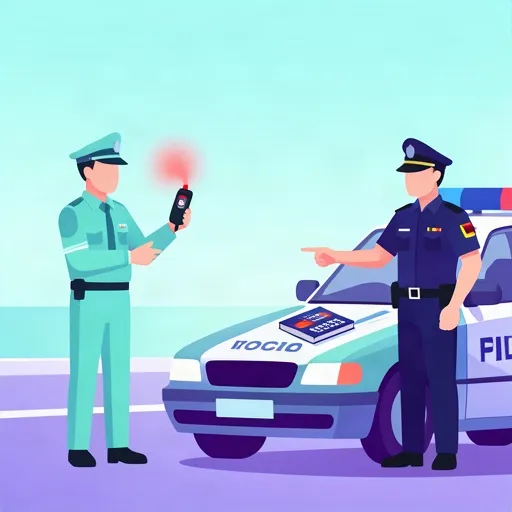
One of the most critical changes under the new Code de la voie publique is the introduction of a universal, non-negotiable 12-hour driving ban following any positive breathalyzer test. Previously, the duration of an immediate driving ban varied significantly—ranging from two to six hours—depending on the driver's profile and the specific level of alcohol detected. This inconsistency could lead to confusion for both drivers and law enforcement.
By standardizing this period to 12 hours, the legislation removes ambiguity. Whether you are a novice driver or an experienced professional, a positive result will now result in the same mandatory period of enforced sobriety from behind the wheel. For your theory exam, it is important to remember that this duration is now fixed regardless of the specific blood-alcohol concentration (BAC) provided, provided it exceeds the legal limit.
A mandatory administrative measure imposed by police that prohibits a driver from operating a motor vehicle for a specific duration, typically following a serious traffic infraction like driving under the influence.
In the Belgian theoretical exam, questions about traffic offenses often focus on the classification of the violation rather than the specific currency value of a fine. The Belgian legal system categorizes traffic infractions into four degrees of severity. Understanding these degrees is a core competency for all candidates.
Third and fourth-degree offenses are classified as 'serious' traffic violations. These carry the heaviest penalties, including mandatory court appearances in some cases, and result in significant point deductions—usually 5 points per error—during your GOCA theory test. Because these offenses directly threaten the safety of other road users, they are a frequent subject of exam questions.
While the theory exam does not require you to memorize the exact euro amount of fines, it does require a strong grasp of how different levels of offenses are treated by the law. Under the 2026 updates, 'immediate payment' fines for minor infractions are set to increase by approximately 10%, while criminal fines issued by police courts are rising by 25%.
It is a common error for learners to conflate administrative fines with criminal penalties. Administrative sanctions are generally handled on the spot or via post, whereas severe infractions, such as driving under the influence or excessive speeding, often move into the realm of criminal law, leading to harsher consequences that extend well beyond a simple fine.
| Offense Category | Typical Penalty Type | Exam Priority |
|---|---|---|
| 1st Degree | Immediate fine | Low |
| 2nd Degree | Fine / Potential court | Medium |
| 3rd Degree | Serious (5 points) | High |
| 4th Degree | Serious (5 points) | High |
The transition to the Code de la voie publique represents a comprehensive update to the 1975 Code de la route. Beyond alcohol-related rules, the new code modernizes definitions regarding cycling infrastructure, speed limits, and the interactions between different types of road users, including trams and buses.
Do not confuse old legislation with the new rules taking effect in 2026. Always ensure your study materials are updated for the latest version of the Belgian traffic laws to avoid failing questions regarding current regulatory standards.
As you progress through your studies, focus on the logic behind the rules. The Belgian exam authority prioritizes your ability to predict hazards and recognize when a situation poses a risk to others. A violation that results in immediate injury or significant danger is almost always a third or fourth-degree offense.
The 2026 Belgian traffic law introduces a standardized 12-hour alcohol driving ban that applies universally to any positive breathalyzer result, replacing the previous variable duration of 2-6 hours. Traffic violations are categorized into four severity degrees, with third and fourth-degree offenses classified as serious violations that carry 5-point exam penalties and potential court proceedings. The new Code de la voie publique modernizes the previous 1975 Code de la route and emphasizes that the GOCA theory exam tests your ability to classify offense severity rather than recall specific fine amounts. Administrative fines for minor infractions are increasing by approximately 10%, while criminal fines from police courts rise by 25%, highlighting the escalating consequences for serious traffic violations.
A short set of high-value points that capture the most important ideas from this article.
The 12-hour alcohol driving ban is now mandatory for any positive breathalyzer test, regardless of BAC level or driver experience
Traffic offenses are classified into four degrees of severity, with 3rd and 4th degree being classified as serious violations
Third and 4th degree serious offenses result in a 5-point deduction on the GOCA theory exam
The new Code de la voie publique (effective July 2026) replaces the 1975 Code de la route and includes updated definitions for cycling infrastructure, speed limits, and road user interactions
GOCA exam questions focus on classifying offense severity rather than memorizing specific fine amounts
The 12-hour ban duration is fixed and non-negotiable for any alcohol-positive result
First and 2nd degree offenses are administrative fines; 3rd and 4th degree offenses can lead to court appearances and criminal penalties
The GOCA exam treats third and fourth-degree offenses as serious violations worth 5 points each
Old legislation from before 2026 should not be used when studying for current exam questions
BAC (Blood Alcohol Concentration) is the metric used to determine whether a driver has exceeded the legal alcohol limit
Confusing old traffic law rules with the new 2026 Code de la voie publique requirements
Mixing up administrative fines (paid on the spot) with criminal penalties (handled through courts)
Assuming the 12-hour ban duration varies based on BAC level when it is now standardized at 12 hours
Believing the GOCA exam requires memorizing exact fine amounts instead of understanding offense classifications
Underestimating the severity of third-degree offenses, which directly threaten other road users' safety
Article content overview
A short set of high-value points that capture the most important ideas from this article.
The 12-hour alcohol driving ban is now mandatory for any positive breathalyzer test, regardless of BAC level or driver experience
Traffic offenses are classified into four degrees of severity, with 3rd and 4th degree being classified as serious violations
Third and 4th degree serious offenses result in a 5-point deduction on the GOCA theory exam
The new Code de la voie publique (effective July 2026) replaces the 1975 Code de la route and includes updated definitions for cycling infrastructure, speed limits, and road user interactions
GOCA exam questions focus on classifying offense severity rather than memorizing specific fine amounts
The 12-hour ban duration is fixed and non-negotiable for any alcohol-positive result
First and 2nd degree offenses are administrative fines; 3rd and 4th degree offenses can lead to court appearances and criminal penalties
The GOCA exam treats third and fourth-degree offenses as serious violations worth 5 points each
Old legislation from before 2026 should not be used when studying for current exam questions
BAC (Blood Alcohol Concentration) is the metric used to determine whether a driver has exceeded the legal alcohol limit
Confusing old traffic law rules with the new 2026 Code de la voie publique requirements
Mixing up administrative fines (paid on the spot) with criminal penalties (handled through courts)
Assuming the 12-hour ban duration varies based on BAC level when it is now standardized at 12 hours
Believing the GOCA exam requires memorizing exact fine amounts instead of understanding offense classifications
Underestimating the severity of third-degree offenses, which directly threaten other road users' safety
Explore related topics, search based questions, and concepts that learners often look up when studying 2026 Belgian Traffic Law Updates. These themes reflect real search intent and help you understand how this topic connects to wider driving theory knowledge in Belgium.
Find clear and practical answers to common questions learners often have about 2026 Belgian Traffic Law Updates. This section helps explain difficult points, remove confusion, and reinforce the key driving theory concepts that matter for learners in Belgium.
Starting July 1, 2026, any driver found with an alcohol level above the legal limit will face an immediate, uniform 12-hour driving ban, replacing the previous tiered system of 2, 3, or 6 hours.
No, the theory exam does not test you on specific fine amounts. Instead, focus on understanding the four degrees of traffic offenses and how 3rd and 4th-degree offenses are classified as serious violations.
The Code de la voie publique is the new, modernized Belgian traffic code that will replace the current traffic laws starting September 1, 2026, incorporating new mobility forms and updated safety standards.
Serious offenses (3rd and 4th degree) are critical to identify because they result in significant point deductions (5 points per error) during your theoretical exam. You must be able to recognize these scenarios to pass.
Continue your learning journey by exploring related articles and guides on specific Belgian traffic situations, advanced road signs, or vehicle safety topics. Use our search to pinpoint what you need to review next, deepening your understanding for your driving license theory exam.