
This lesson provides a comprehensive overview of the information signs and road markings used on Belgian roads. It is essential for Category AM riders to understand these visual cues to navigate effectively, maintain correct lane positioning, and interpret directional guidance in real-world scenarios.
Lesson content overview
Understanding information signs and road markings is fundamental for every road user, particularly for those operating small, exposed vehicles like mopeds and speed pedelecs in Belgium. These crucial elements of the road environment provide vital guidance, ensuring you can navigate efficiently, maintain correct lane positioning, and understand shared spaces with other users. Misinterpreting or ignoring them can lead to confusion, illegal maneuvers, and dangerous situations.
This lesson explores the various types of information signs and road markings found on Belgian roads, detailing their purpose, legal implications, and how to apply this knowledge to ensure safe and compliant riding as an AM license holder.
Information signs and road markings are integral to the Belgian highway code, serving as a constant communication system between road authorities and users. They are designed to streamline traffic flow, enhance safety, and prevent accidents by providing clear, unambiguous instructions and advisories. For AM riders, who are often more vulnerable due to their vehicle type and size, correctly interpreting these signals is even more critical for defensive riding and self-protection.
This comprehensive system is built upon legal requirements outlined in the Belgian Road Code, safety science considerations like driver reaction times and visibility, and traffic engineering principles aimed at optimizing road usage. Successfully navigating any route depends heavily on your ability to process this information quickly and accurately.
Directional Guidance:
Lane Delineation and Discipline:
Zonal Information and Special Usage Areas:
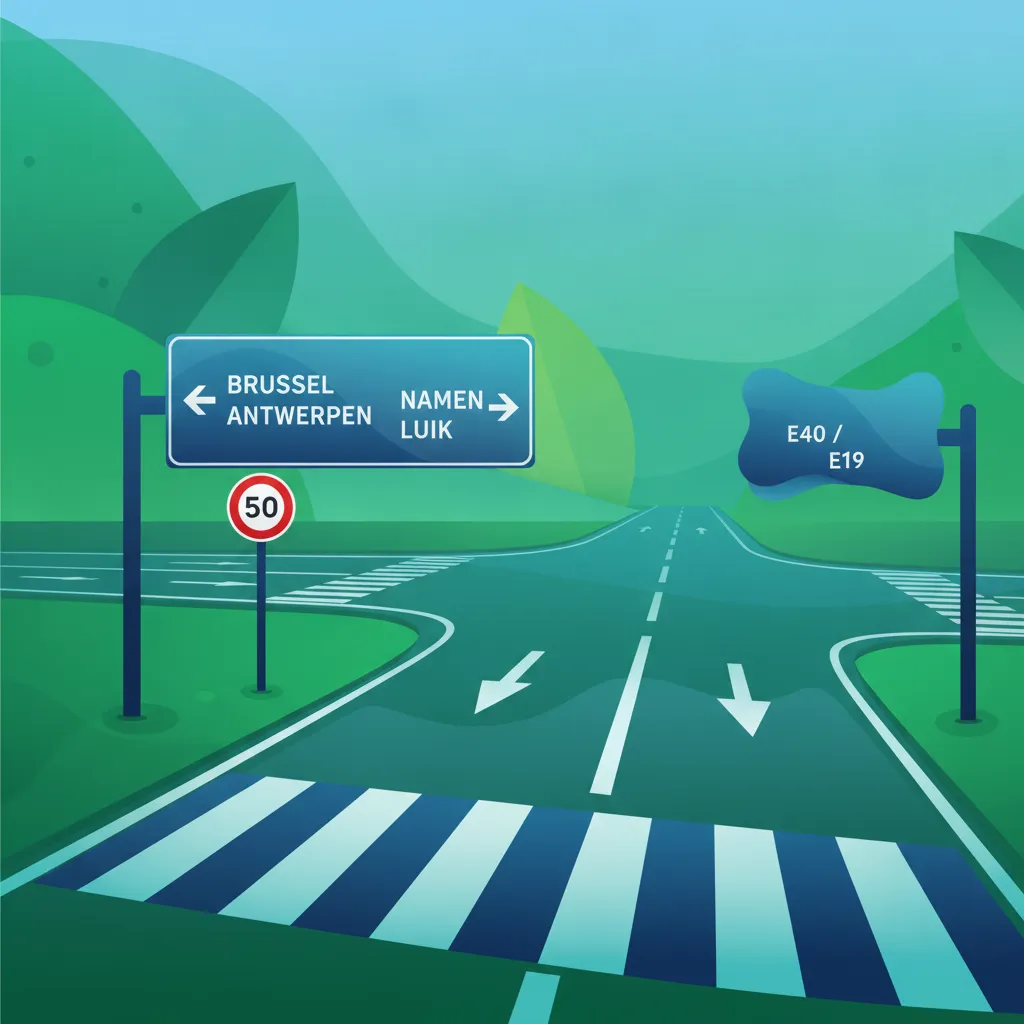
Directional information signs are your primary tools for route navigation on Belgian roads. They provide essential details about upcoming junctions, exits, and services, guiding you smoothly towards your destination.
Directional signs come in various forms, typically rectangular and often blue or green for motorways and main roads, or white for local directions.
When riding your moped or speed pedelec, it is crucial to observe directional signs well in advance. This allows you ample time to:
Plan Ahead for Turns: As an AM rider, sudden braking or sharp turns can be more challenging, especially in traffic. Always look far ahead for directional signs to give yourself maximum time to prepare for lane changes or turns.
Common Mistake: A frequent error is missing a turn because the directional sign was not observed early enough. This can lead to unsafe braking, quick lane changes, or being forced to take an unintended route. Always scan the road ahead and overhead for these signs.
Road markings painted directly onto the road surface provide immediate, continuous information about lane boundaries, permitted maneuvers, and areas designated for specific uses. They are an indispensable part of the road communication system.
The lines in the middle of the road are among the most critical markings, dictating overtaking rules and defining the separation between opposing traffic flows or different lanes moving in the same direction.
White lines painted along the outer boundary of the roadway are known as edge lines.
Solid Lines are Absolute: For AM riders, remember that crossing a continuous line, whether central or a lane divider, is a serious violation. It indicates an inherent danger or a mandatory lane discipline.
Belgium's road network often includes dedicated lanes designed to prioritize specific types of road users or transport. It is crucial for AM riders to understand and respect these markings.
Bike lanes are specially designated parts of the road reserved for cyclists and sometimes speed pedelecs (depending on local regulations and engine size).
Bus lanes are reserved for public transport buses, and sometimes taxis or emergency vehicles.
Prioritize Vulnerable Road Users: As an AM rider, you are also a relatively vulnerable road user compared to cars. Extend that same courtesy and vigilance to cyclists and pedestrians by respecting their dedicated spaces.
Beyond general traffic flow, road markings also define specific areas with particular uses and rules.
These areas are designated for stopping or parking vehicles under specific conditions.
These are critical areas where pedestrians have specific rights of way.
Modern road infrastructure increasingly incorporates "smart" or enhanced road markings to improve safety, especially in challenging conditions.
These enhancements are particularly beneficial for AM riders, whose smaller vehicles may have less powerful headlights and whose visibility to other drivers might be reduced in poor conditions.
Adhering to road marking rules is not just about safety; it's a legal obligation under the Belgian Road Code. Violations can lead to significant fines and endanger yourself and others.
Immediate Danger: Disregarding solid lines, especially central lines, creates immediate and severe risks of head-on collisions, particularly at higher speeds. This is one of the most dangerous road marking violations.
The way you interpret and react to information signs and road markings should also adapt to prevailing conditions.
To successfully and safely navigate Belgian roads with your AM license, remember these key points:
Mastering these elements will ensure you are a confident, safe, and compliant AM rider on Belgium's roads.
Information signs and road markings form Belgium's visual communication system for all road users, and AM riders must interpret them accurately for safe, legal riding. Directional signs guide navigation and should be spotted early to allow proper lane positioning and speed adjustment. Road markings regulate traffic flow: continuous lines prohibit crossing entirely, while broken lines permit it when safe. Dedicated lanes like bike lanes and bus lanes are reserved spaces that mopeds and speed pedelecs must generally avoid except where specific signage permits otherwise. Pedestrian crossings grant priority to walkers, requiring riders to stop and yield. Violations of these markings are legal offenses under the Belgian Road Code and create significant safety hazards.
A short set of high-value points that capture the most important learning from this lesson.
Directional signs (destination, distance, and turn signs) provide route guidance and should be observed well in advance to prepare for lane changes and turns safely.
Continuous (solid) white lines strictly prohibit crossing in either direction, while broken (dashed) lines permit crossing when safe to do so.
Bike lanes are reserved exclusively for cyclists; mopeds and speed pedelecs must not enter unless specific Belgian signage explicitly permits your vehicle category.
Bus lanes are prohibited for general traffic including mopeds, unless signs or broken markings indicate otherwise at specific points.
Pedestrians on zebra crossings have priority, and riders must be prepared to stop and yield to them.
Explore all units and lessons included in this driving theory course.
Combination lines (solid + broken side by side): if the solid line is on your side, you may not cross; if the broken line is on your side, you may cross when safe.
Continuous edge lines mark the road boundary and may also indicate no-stopping zones; always check for accompanying signage.
Bike lane exceptions exist only for specific moped classes (e.g., Class A) on certain paths, always confirmed by local signage.
Zebra crossings require stopping for pedestrians who are on the crossing or clearly waiting to cross, including those on pedestrian islands.
Lane merging uses the zipper principle where traffic takes turns when lanes converge; observe markings early and merge smoothly.
Crossing a solid central line for overtaking or making a U-turn, which is prohibited and creates severe head-on collision risks.
Driving in bike lanes to bypass traffic, which endangers cyclists and results in fines for most mopeds and all speed pedelecs.
Changing lanes across solid lane dividers on multi-lane roads instead of only crossing where dashed lines permit.
Missing directional signs because they were not observed early enough, leading to sudden braking or unsafe lane changes near junctions.
Failing to yield at zebra crossings to pedestrians who are clearly waiting or already on the crossing, violating pedestrian priority rules.
Lesson content overview
A short set of high-value points that capture the most important learning from this lesson.
Directional signs (destination, distance, and turn signs) provide route guidance and should be observed well in advance to prepare for lane changes and turns safely.
Continuous (solid) white lines strictly prohibit crossing in either direction, while broken (dashed) lines permit crossing when safe to do so.
Bike lanes are reserved exclusively for cyclists; mopeds and speed pedelecs must not enter unless specific Belgian signage explicitly permits your vehicle category.
Bus lanes are prohibited for general traffic including mopeds, unless signs or broken markings indicate otherwise at specific points.
Pedestrians on zebra crossings have priority, and riders must be prepared to stop and yield to them.
Explore all units and lessons included in this driving theory course.
Combination lines (solid + broken side by side): if the solid line is on your side, you may not cross; if the broken line is on your side, you may cross when safe.
Continuous edge lines mark the road boundary and may also indicate no-stopping zones; always check for accompanying signage.
Bike lane exceptions exist only for specific moped classes (e.g., Class A) on certain paths, always confirmed by local signage.
Zebra crossings require stopping for pedestrians who are on the crossing or clearly waiting to cross, including those on pedestrian islands.
Lane merging uses the zipper principle where traffic takes turns when lanes converge; observe markings early and merge smoothly.
Crossing a solid central line for overtaking or making a U-turn, which is prohibited and creates severe head-on collision risks.
Driving in bike lanes to bypass traffic, which endangers cyclists and results in fines for most mopeds and all speed pedelecs.
Changing lanes across solid lane dividers on multi-lane roads instead of only crossing where dashed lines permit.
Missing directional signs because they were not observed early enough, leading to sudden braking or unsafe lane changes near junctions.
Failing to yield at zebra crossings to pedestrians who are clearly waiting or already on the crossing, violating pedestrian priority rules.
Explore search topics learners often look for when studying Information Signs and Road Markings. These topics reflect common questions about road rules, driving situations, safety guidance, and lesson level theory preparation for learners in Belgium.
Browse additional driving theory lessons that cover connected traffic rules, road signs, and common driving situations related to this topic. Improve your understanding of how different rules interact across everyday traffic scenarios.
Learn about specific Belgian road markings for dedicated lanes like bike paths and bus lanes, plus rules for parking zones and pedestrian crossings. Essential theory for safe navigation.

This lesson introduces the various types of road surface markings and their specific legal meanings in Belgium. Topics include the rules for solid and broken lines, double lines, and special markings for pedestrian zones, bus lanes, and tramways. Understanding these markings is essential for maintaining correct lane discipline and executing safe overtaking maneuvers.
This lesson provides a detailed explanation of the various road markings found on Belgian roads and their specific significance for motorcyclists. It covers the rules associated with solid and broken lane lines, stop lines at junctions, and markings for pedestrian and bicycle crossings. Understanding these markings is essential for correct lane positioning and safe navigation.

This lesson focuses on the rules governing pedestrian crossings, including marked zebra crossings and signal-controlled crossings. Special attention is given to school zones and residential areas where pedestrian activity is high. Learners will understand how to recognize and respect pedestrian priority in various crossing scenarios to ensure their safety.
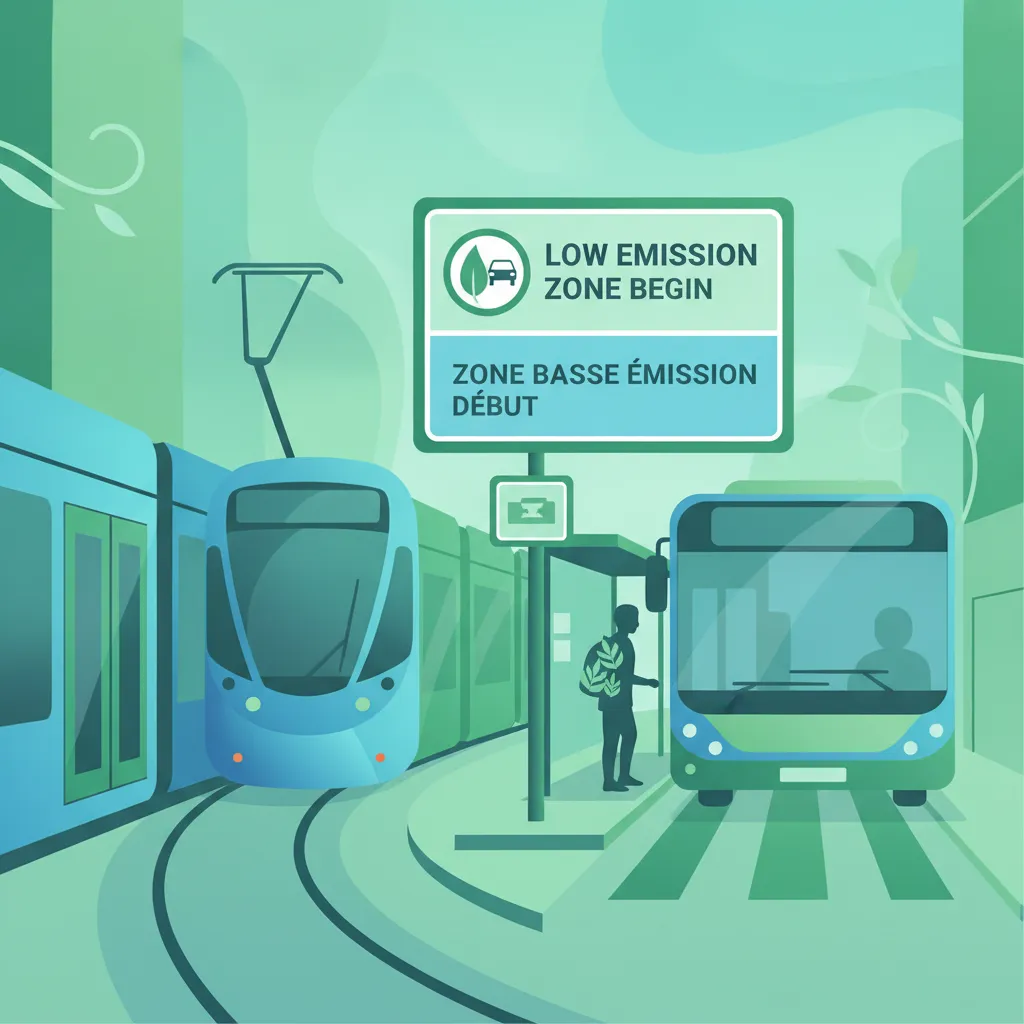
This lesson addresses unique traffic environments and special zones commonly found in Belgian urban areas. It clarifies the specific regulations concerning tramways, including where trams have absolute priority, and the conditions under which motorcycles may use bus lanes. The lesson also explains how to identify and comply with restrictions in low-emission zones.
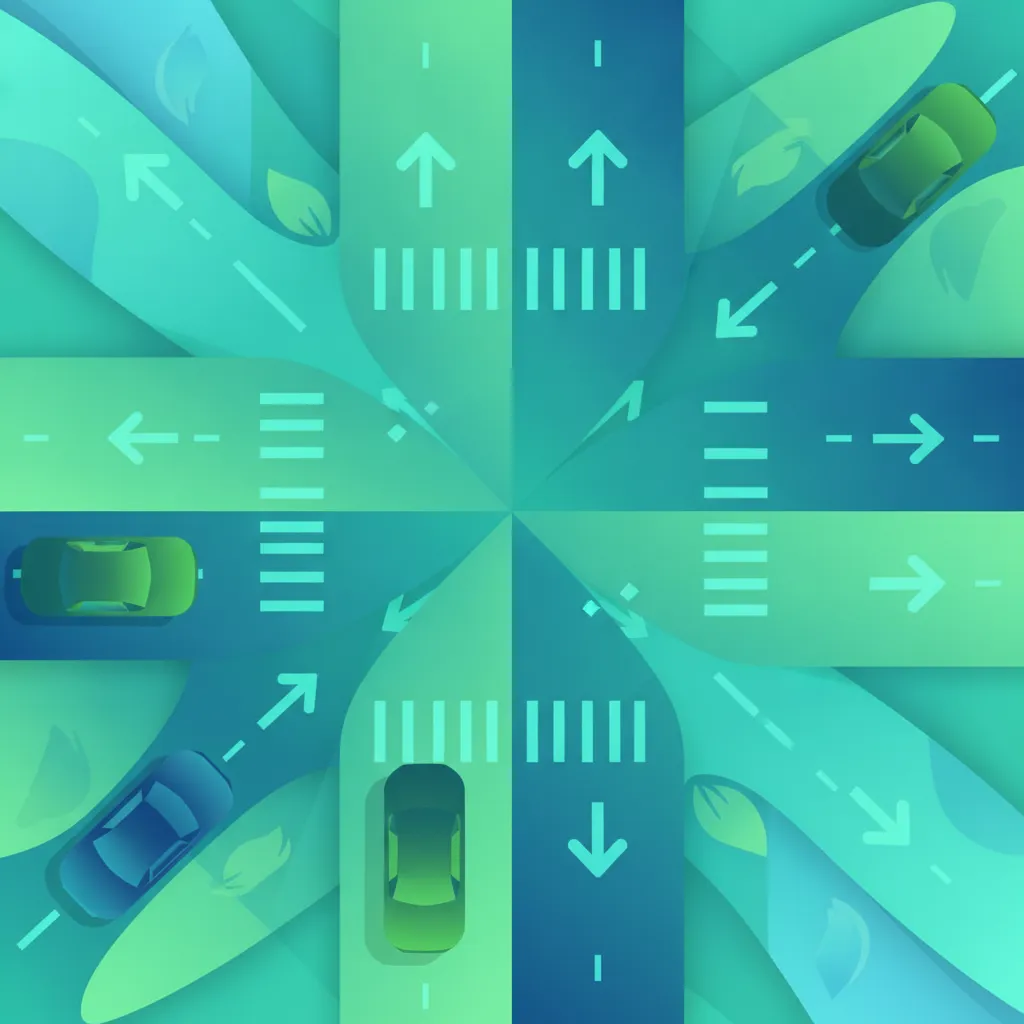
Directional symbols and arrows painted on the road surface guide drivers on permitted lane movements and turning directions. This lesson explains the interpretation of these arrows, covering rules for one-way streets, mandatory turns, and lane-specific instructions. Learners will understand how to comply with these symbols to navigate complex intersections safely and efficiently.
This lesson details a motorcyclist's obligations when approaching various types of crossings, including marked pedestrian and bicycle lanes. It emphasizes the legal requirement to yield to vulnerable road users and the importance of thorough visual checks before proceeding. You will learn how to maintain a safe distance and anticipate the movements of pedestrians and cyclists in urban areas.
This lesson covers the specific challenges of driving on motorways, rural roads, and navigating roadworks. Learners will review lane discipline on high-speed roads and identify hazards common to rural roads, such as sharp bends and wildlife. It also explains the importance of adjusting speed and following temporary signage in construction zones.
The focus of this lesson is on maintaining proper lane discipline, especially on motorways and other high-speed roads. Learners will explore the rules for changing lanes, overtaking, and positioning in the correct lane based on speed and traffic flow. Emphasis is placed on safe merging techniques and adherence to all lane markings for fluid traffic movement.
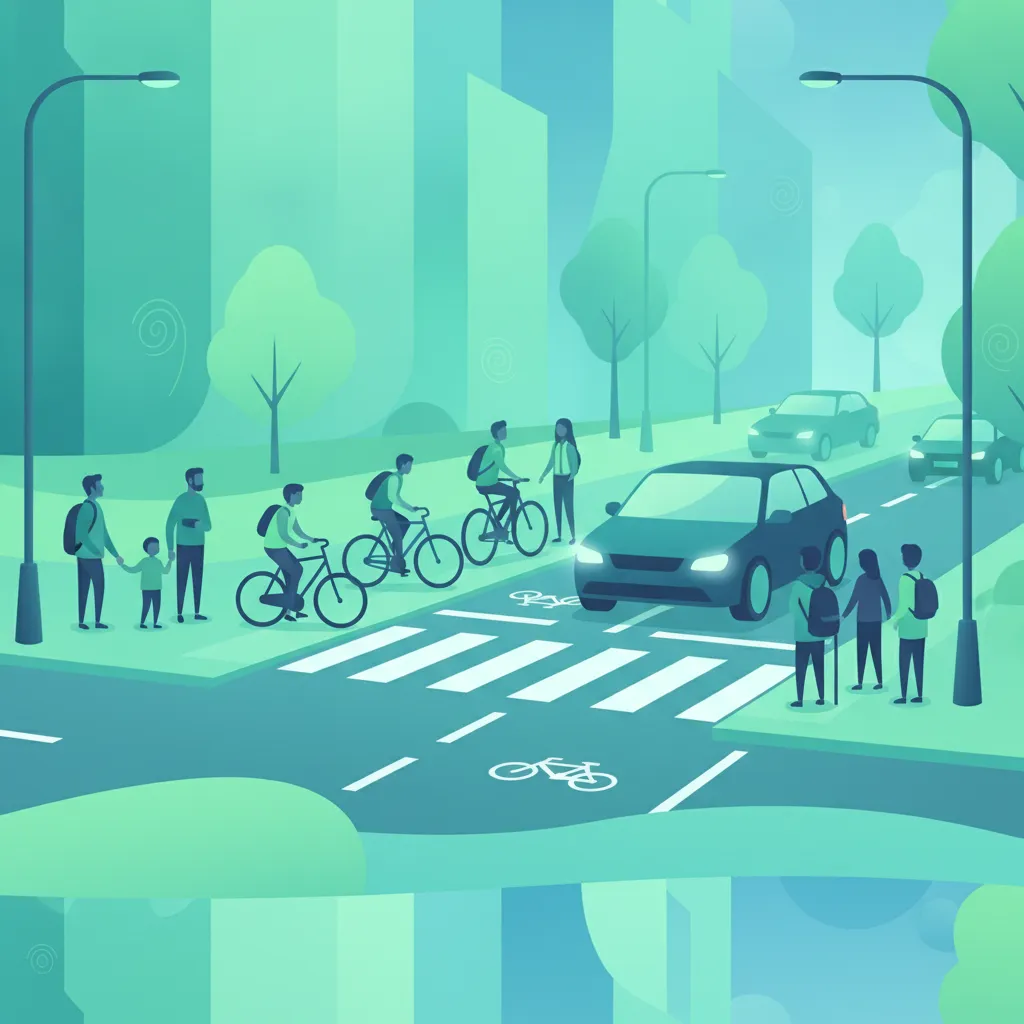
This lesson focuses on the heightened awareness required when approaching and traversing pedestrian and cyclist crossings. It clarifies the legal rules, including the absolute priority of pedestrians on zebra crossings, and the importance of reducing speed. Riders will learn how to anticipate the movements of these vulnerable road users and position their vehicle to ensure a safe interaction.
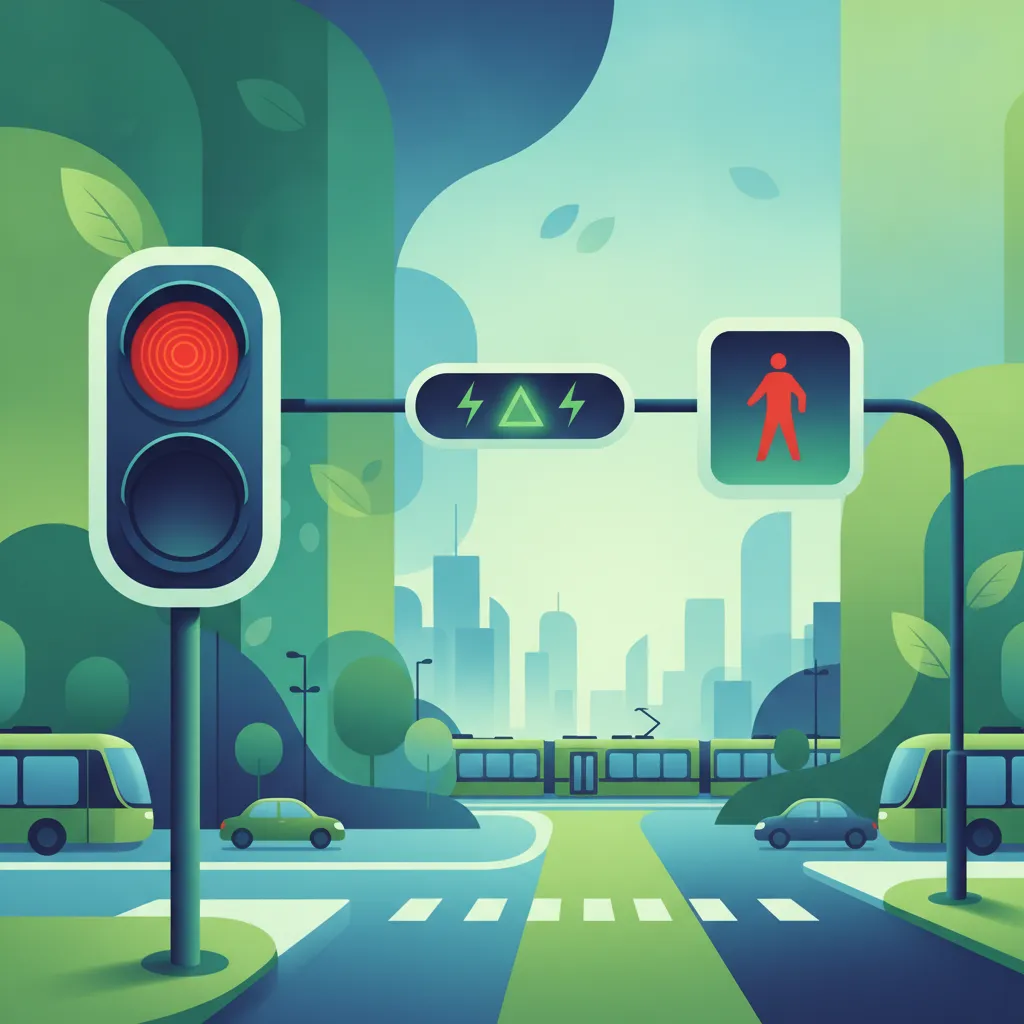
This lesson examines the operation of traffic light systems in Belgium, clarifying the meaning of red, amber, and green signals, including flashing lights and directional arrows. It details a motorcyclist's legal obligations when approaching and navigating signal-controlled intersections. The content also addresses specialized signals for pedestrians and trams that riders must recognize and respond to correctly.
Deepen your understanding of Belgian directional signs and road markings for lane delineation. Essential theory for safe navigation, route planning, and avoiding common errors.
Directional symbols and arrows painted on the road surface guide drivers on permitted lane movements and turning directions. This lesson explains the interpretation of these arrows, covering rules for one-way streets, mandatory turns, and lane-specific instructions. Learners will understand how to comply with these symbols to navigate complex intersections safely and efficiently.
The focus of this lesson is on maintaining proper lane discipline, especially on motorways and other high-speed roads. Learners will explore the rules for changing lanes, overtaking, and positioning in the correct lane based on speed and traffic flow. Emphasis is placed on safe merging techniques and adherence to all lane markings for fluid traffic movement.

Overtaking safely is a critical driving skill. This lesson explains where and how overtaking is permitted in Belgium, the importance of correct signaling, and maintaining a sufficient speed differential. Learners will understand the rules for passing on motorways and single-carriageway roads, and how to identify zones where overtaking is prohibited.
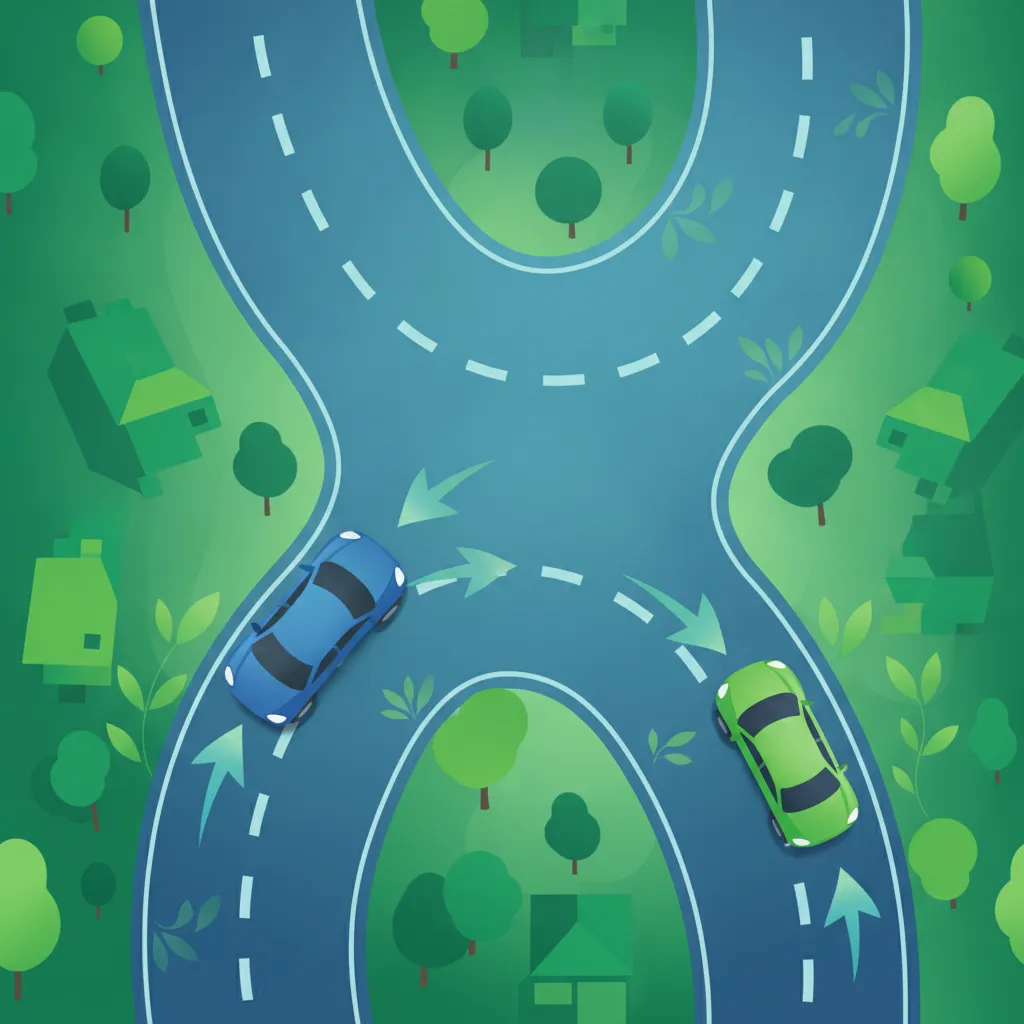
This lesson focuses on basic manoeuvres, covering the proper use of indicators, safe lane positioning, and correct steering for turns. Learners will study the importance of checking blind spots and maintaining appropriate speed for a smooth transition when changing lanes. It also addresses turning at intersections and signaling intentions clearly to other road users.
This lesson covers the specific challenges of driving on motorways, rural roads, and navigating roadworks. Learners will review lane discipline on high-speed roads and identify hazards common to rural roads, such as sharp bends and wildlife. It also explains the importance of adjusting speed and following temporary signage in construction zones.

This lesson focuses on warning signs designed to alert drivers to potential hazards ahead. Topics include warnings for sharp curves, steep gradients, slippery surfaces, and zones with high pedestrian or wildlife activity. Learners will understand how to correctly interpret these signs and adjust their driving behavior to maintain safety on the road.
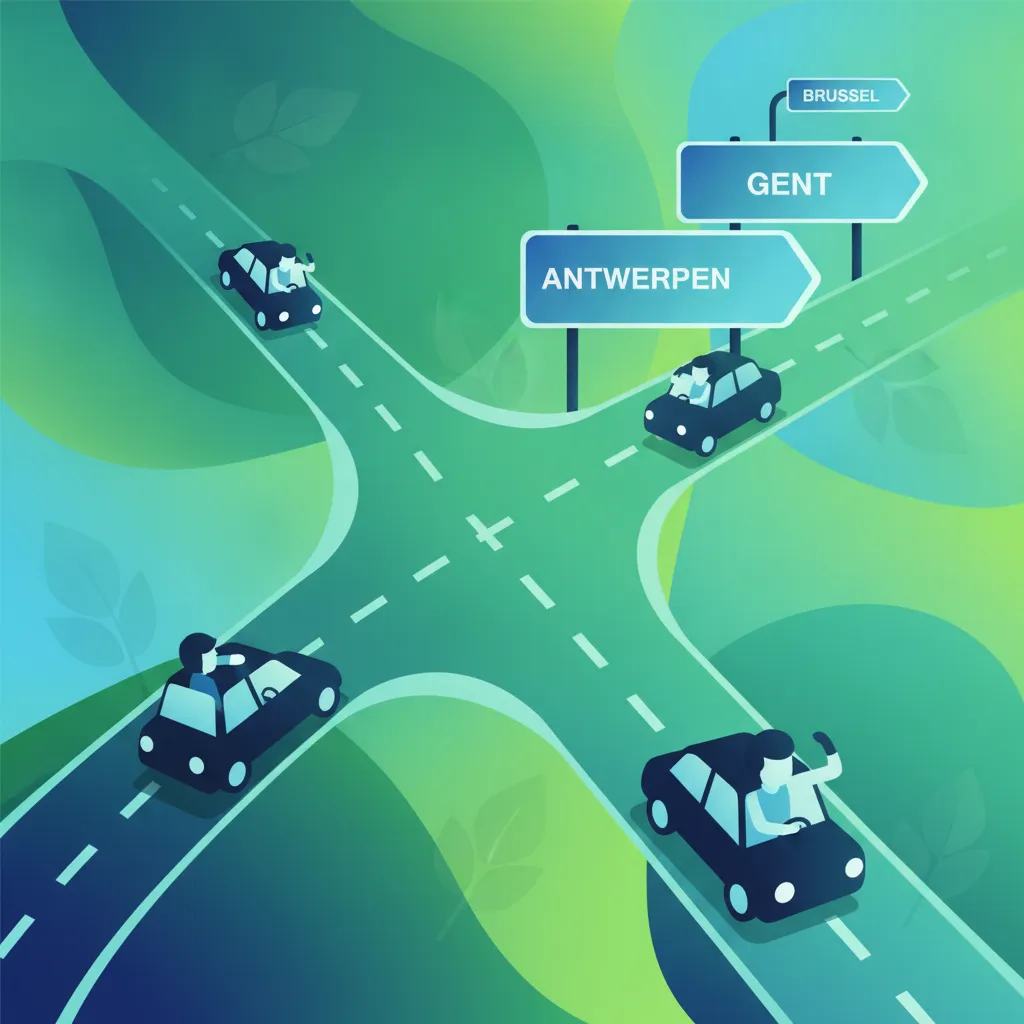
Information signs provide drivers with essential guidance about destinations, services, and the road layout. This lesson covers signs indicating distances, directions to towns, availability of services like fuel stations, and specific lane guidance. Learners will know how to read these signs to navigate efficiently and locate necessary facilities while driving.
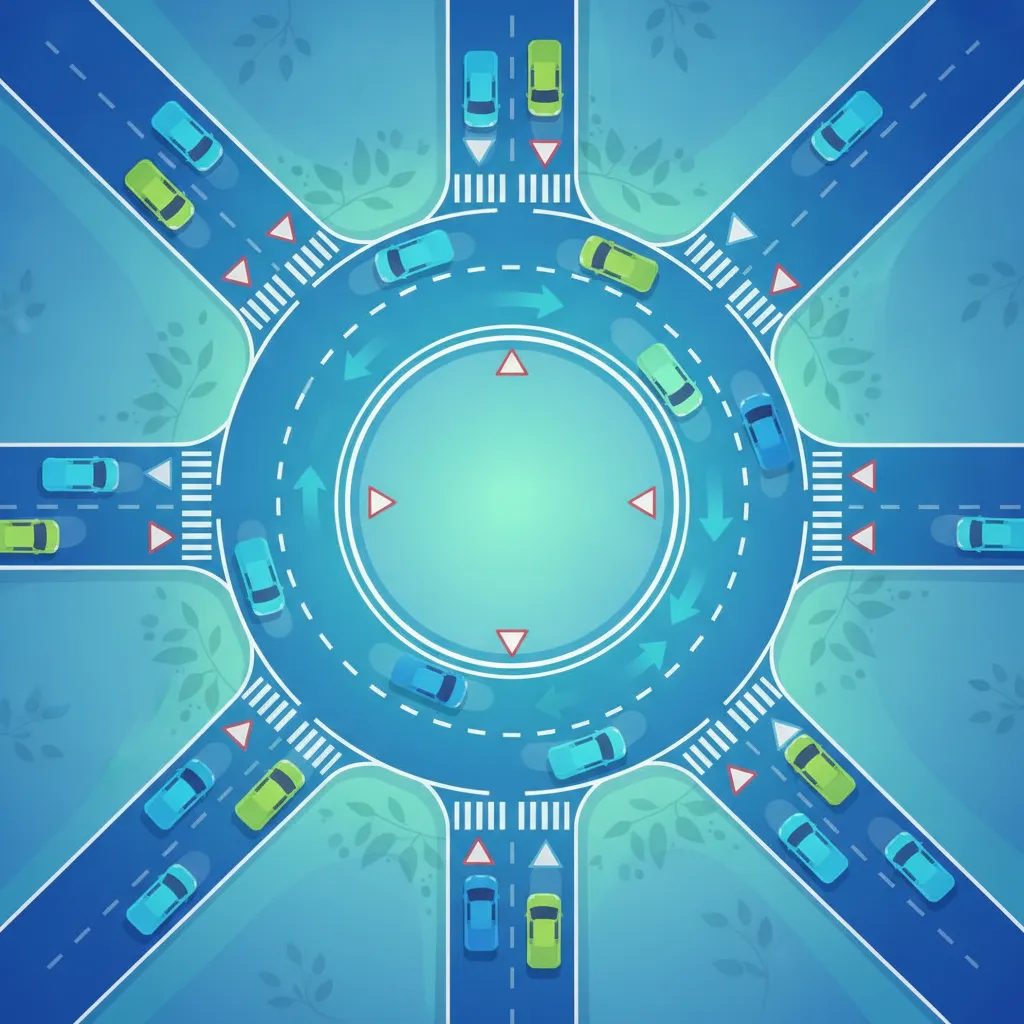
Roundabouts are a key feature of Belgian traffic management. This lesson explains how to approach, enter, navigate, and exit a roundabout safely, with a focus on yielding priority to traffic already circulating. Learners will also study correct lane positioning on multi-lane roundabouts and the appropriate use of signals.
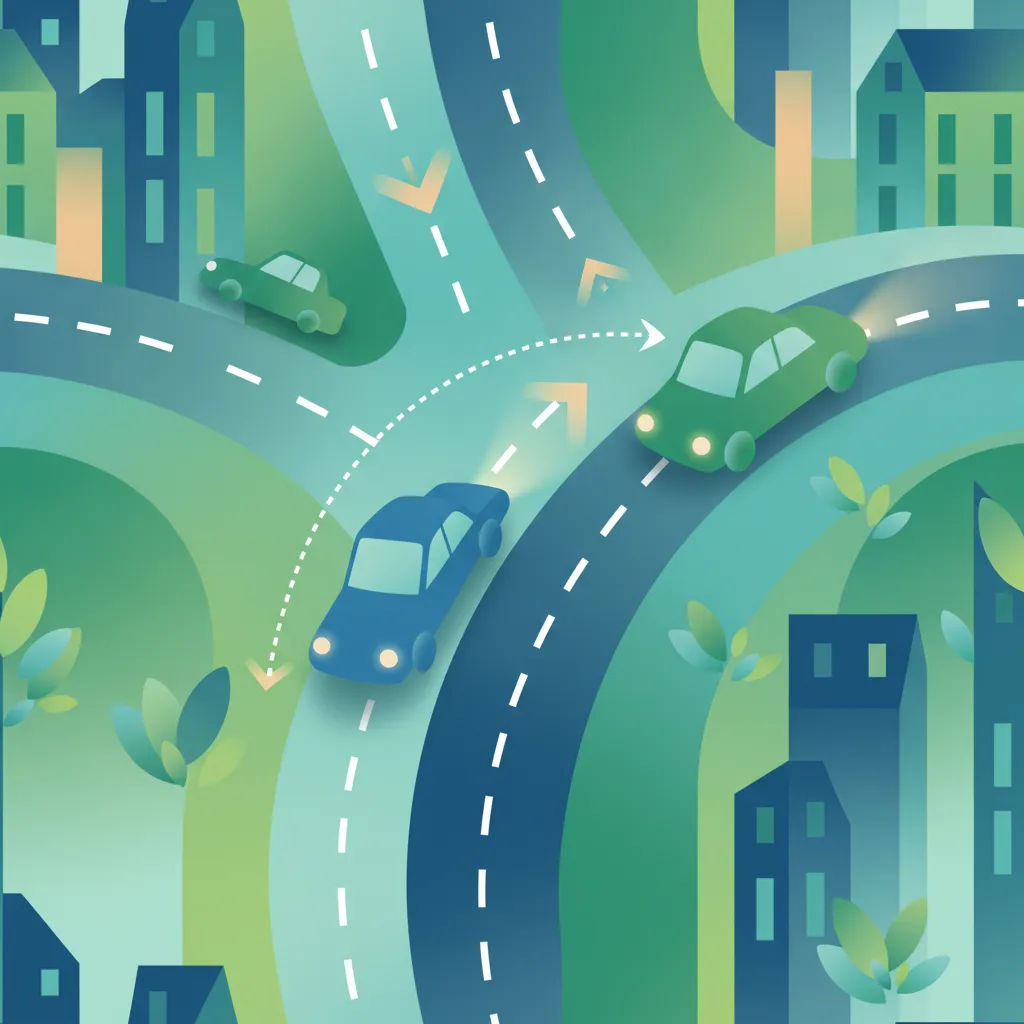
This lesson provides a step-by-step guide to executing turns and lane changes safely and efficiently. It covers the critical sequence of checking mirrors, signaling intent, and performing a head check for blind spots before any maneuver. Learners will also understand how to manage their speed and balance during cornering to maintain full control of the vehicle.
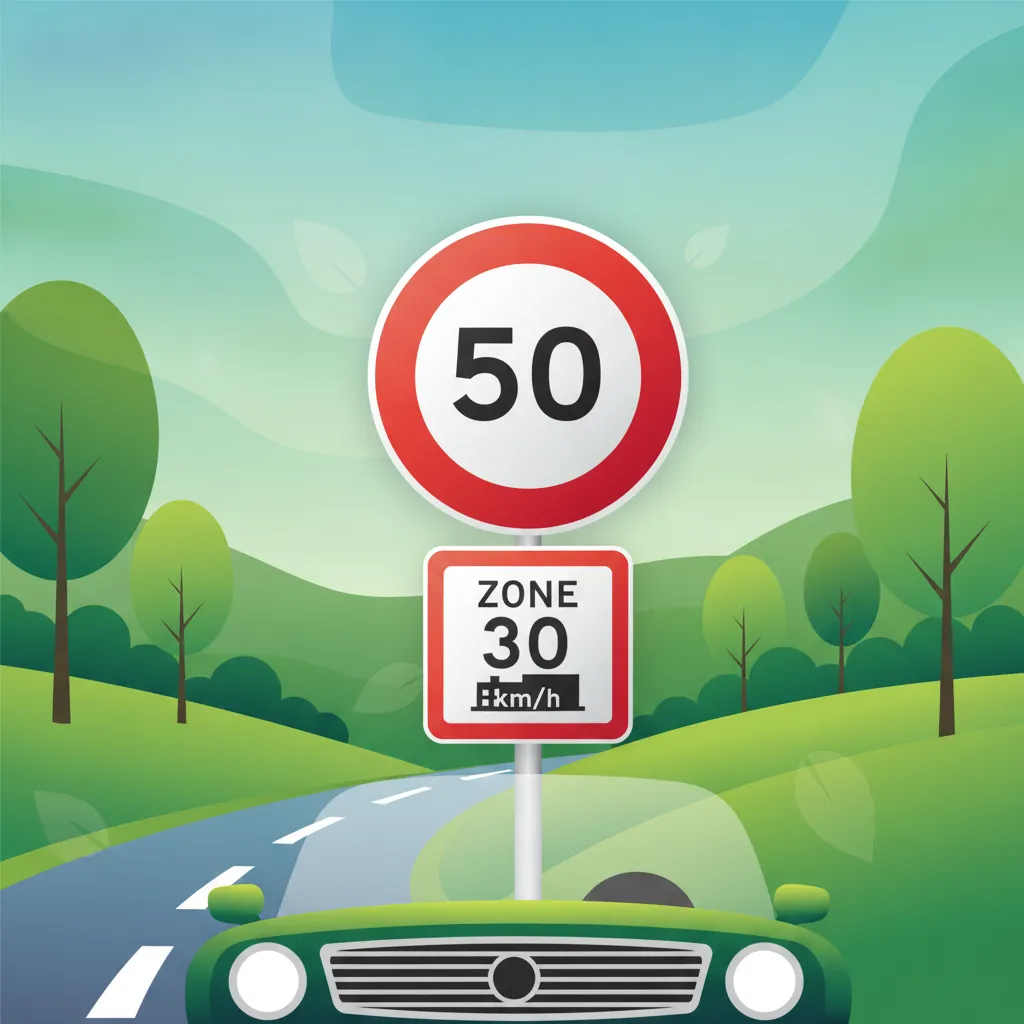
In this lesson, learners explore the full range of regulatory signs used throughout Belgium to enforce traffic laws. It covers signs that prescribe actions, such as stop and give way, as well as those that restrict actions, like speed limits and overtaking bans. Understanding these signs enables drivers to comply accurately with enforced traffic regulations.
Find clear answers to common questions learners have about Information Signs and Road Markings. Learn how the lesson is structured, which driving theory objectives it supports, and how it fits into the overall learning path of units and curriculum progression in Belgium. These explanations help you understand key concepts, lesson flow, and exam focused study goals.
Regulatory signs command specific actions or prohibitions, while information signs provide helpful data like direction, location, or facility details to assist your navigation.
Yes, road markings are a fundamental part of the Belgian highway code. Ignoring solid lines or directional arrows marked on the road is a traffic violation just like ignoring a physical sign.
Always stay within the center of your lane or the designated space for small vehicles. Never straddle lane markings, as this reduces your visibility to other drivers and increases collision risk.
Yes, watch for cycle lanes and advanced stop lines at intersections. Information signs will often indicate where you are required to ride, such as mandatory cycle paths where mopeds might be permitted.
Ready to focus your Belgian driving theory revision? Utilize our powerful search tool to pinpoint exact topics, road signs, or difficulty levels. Engage with practice questions that directly address your learning needs and solidify your understanding of Belgian traffic laws for your upcoming exam.