
This lesson establishes your understanding of essential priority rules on Belgian roads, specifically tailored for Category AM riders. By mastering these foundational concepts, you will learn how to navigate intersections and junctions with confidence and safety. This knowledge is a key component of your theoretical exam preparation for operating small motorized vehicles.
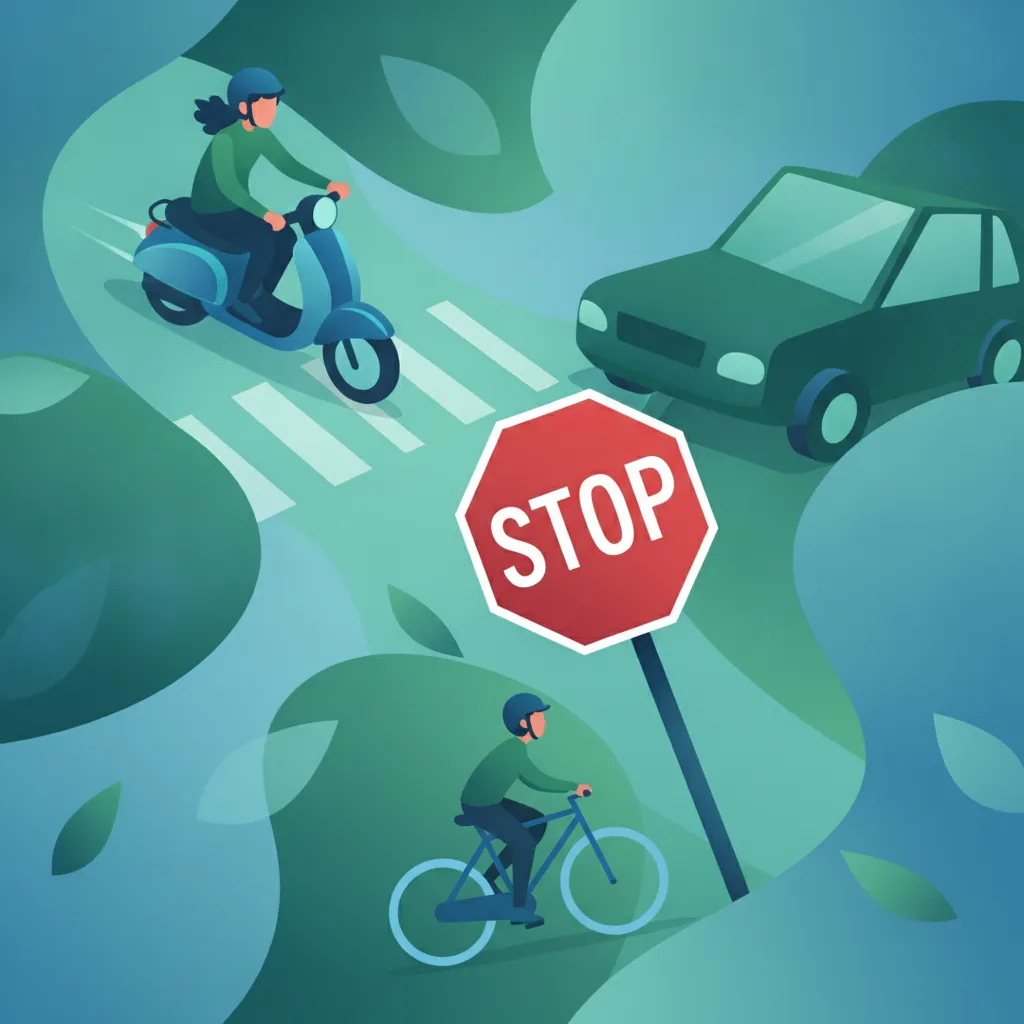
Lesson content overview
Navigating the roads of Belgium safely and confidently requires a thorough understanding of traffic priority rules. For AM riders, who operate small, exposed vehicles like mopeds and speed pedelecs, mastering these principles is not just about compliance, but about ensuring personal safety and contributing to a predictable traffic flow. This comprehensive lesson, part of the Official Belgian Driving Theory Course for Category AM License, will introduce you to the core principles that dictate right-of-way at junctions, intersections, roundabouts, and other road sections.
Properly applying priority rules helps prevent collisions, reduces confusion, and ensures smooth movement for all road users. Without a clear framework for who goes first, intersections would devolve into chaos, significantly increasing the risk of accidents. This lesson will focus heavily on the fundamental 'priority from the right' rule, explain how to identify priority roads, and detail your responsibilities when encountering yield and stop signs.
Traffic priority rules establish a legal framework that determines which vehicle proceeds first when paths intersect. These rules are designed to create predictable and organized traffic flow, significantly reducing the risk of collisions by clearly defining right-of-way. As an AM rider, understanding these foundational concepts is crucial for safe navigation, especially at complex intersections and roundabouts.
The 'priority from the right' rule is the cornerstone of Belgian traffic law at intersections without specific signs or signals. It serves as a universal default, providing a clear hierarchy where no other visual cues exist.
Priority roads are designed to facilitate smoother traffic flow along main routes by granting right-of-way to vehicles traveling on them. These roads are clearly indicated by specific signs, which communicate that drivers on this road have precedence over traffic entering or crossing from intersecting roads.
Yield and stop signs are regulatory traffic control devices that explicitly dictate when and how drivers must cede right-of-way. They are strategically placed at points where priority changes, or where a full stop is necessary to ensure safety.
The 'priority from the right' rule is arguably the most fundamental priority concept in Belgian traffic law. It applies to all uncontrolled intersections – those without traffic lights, yield signs, stop signs, or priority road signs.
This rule is straightforward: if you are approaching an intersection and there are no signs or signals indicating otherwise, any vehicle approaching the intersection from your right has priority. You, therefore, must slow down, be prepared to stop, and allow them to proceed first. This applies whether you are driving a moped, a car, or any other vehicle.
Many new drivers, including AM riders, harbor misunderstandings about priority from the right:
Priority roads are designed to keep traffic moving smoothly along key routes. They are indicated by specific signs that grant right-of-way to vehicles on that road.
The primary sign indicating a priority road is a square sign with a yellow diamond (or orange in some contexts) inside a white border.
This sign informs you that you are on a priority road. It is often repeated after intersections to confirm the continuation of priority.
These signs are explicit directives that override the default 'priority from the right' rule. They are crucial for managing traffic flow at specific, often more complex or higher-risk, intersections.
The yield sign, also known as a 'give way' sign, is an inverted white triangle with a red border.
When you encounter a yield sign, you must:
The stop sign is a red octagon with the word "STOP" in white.
When you see a stop sign, you are legally required to:
Roundabouts are circular intersections designed to improve traffic flow and reduce the severity of collisions compared to traditional cross intersections. Their priority rules are specific and crucial for AM riders to understand.
In Belgium, the standard rule for roundabouts is that traffic already circulating within the roundabout has priority over traffic wishing to enter it.
When approaching a standard roundabout:
Some larger roundabouts or those integrated into main thoroughfares may be part of a priority road. In such cases, the priority road status might mean that traffic on the main priority road has right-of-way through the roundabout, or that traffic entering the roundabout from certain directions has priority over others. These situations are usually clearly indicated by additional priority signs (e.g., a priority road sign combined with a roundabout sign, or specific yield signs within the roundabout itself).
Adhering to priority rules is not merely a suggestion; it is a legal requirement in Belgium. Violating these rules can lead to serious consequences, including fines, license points, and, most critically, dangerous collisions.
The Belgian Highway Code (Verkeersreglement) explicitly defines all priority rules.
While priority rules are generally absolute, certain conditions demand increased caution and may influence your practical application of these rules.
Adverse weather conditions like heavy rain, fog, or snow significantly reduce visibility and make it harder to judge distances and speeds.
As an AM rider, you are classified as a vulnerable road user. This means while you must adhere to priority rules, you also need to be aware that other, larger vehicle drivers might not always see you. However, priority rules do not change based on vehicle type; a moped has the same right-of-way as a car when applicable.
Following priority rules meticulously leads to predictable traffic behavior. When every driver understands and respects who has the right-of-way, fewer conflicts arise. This predictability drastically reduces the risk of collisions, especially at high-risk points like intersections. Moreover, clear priority rules ensure a smoother, more efficient flow of traffic, minimizing unnecessary stops and delays. Ignoring these rules, conversely, creates confusion, leads to sudden braking, and significantly heightens the risk of dangerous, often head-on or side-impact, collisions.
Understanding priority rules conceptually is one thing; applying them correctly in real-world situations is another. Here are some common scenarios for AM riders in Belgium:
Scenario 1: Uncontrolled Four-Way Intersection You are riding your moped towards an intersection with no signs or traffic lights. At the same time, another AM rider is approaching from your right. According to the 'priority from the right' rule, the rider on your right has priority. You must slow down, be prepared to stop, and let them proceed before you continue safely.
Scenario 2: Entering a Standard Roundabout You approach a roundabout clearly marked with the circular blue sign with white arrows. There are no other priority signs at your entry point. Traffic is currently circulating inside the roundabout. You must reduce your speed and yield to the traffic already within the roundabout. Only enter when there is a safe gap, allowing you to merge without causing circulating vehicles to brake or swerve.
Scenario 3: Intersecting a Priority Road with a Yield Sign You are riding on a secondary road and see a yield sign before an intersection with a main road. The main road is clearly marked as a priority road. You must reduce your speed, check for traffic on the priority road, and be prepared to stop if vehicles are approaching. You cannot proceed until the way is clear and you can merge safely without impeding traffic on the priority road.
Scenario 4: Encountering a Stop Sign You come to a crossroads marked with a stop sign and a white stop line. You must bring your moped to a complete and full stop before the white line. After stopping, you should carefully check for traffic from all intersecting directions (left, right, and straight ahead if applicable) and only proceed when it is absolutely safe to do so.
Mastering priority rules is fundamental for safe and legal riding within the Official Belgian Driving Theory Course for Category AM License. Remember these core principles:
By diligently applying these rules, AM riders can significantly enhance their safety, ensure smooth traffic flow, and comply with Belgian traffic law. Always ride defensively, anticipate potential hazards, and be prepared for other road users to make mistakes.
Belgian traffic priority rules are fundamental for safe moped riding and form a core part of the Category AM theory exam. The 'priority from the right' rule serves as the default at uncontrolled intersections, while priority roads (marked by yellow diamond signs) grant right-of-way to traffic on them. Yield signs require readiness to stop and give way, stop signs demand a complete halt behind the line, and roundabouts require yielding to circulating traffic. Understanding these rules, recognizing their corresponding signs, and applying them correctly in real scenarios is essential for both passing the exam and riding safely on Belgian roads.
A short set of high-value points that capture the most important learning from this lesson.
The 'priority from the right' rule is the default at all uncontrolled intersections in Belgium, requiring you to yield to traffic approaching from your right.
Priority roads are marked with a yellow diamond sign (B7) and grant right-of-way to vehicles traveling on them over all intersecting traffic.
Yield signs (inverted triangle, B1) require you to be prepared to stop and give way, while stop signs (octagon, B5) require a complete halt before the line.
At roundabouts, traffic already circulating within has priority over vehicles entering, regardless of entry direction.
Priority rules apply equally to all vehicle types—size or vehicle category does not determine right-of-way.
Explore all units and lessons included in this driving theory course.
At uncontrolled intersections with no signs or signals, 'priority from the right' always applies as the default rule.
Priority from the right is not affected by road surface type, vehicle size, or who arrived first—it is strictly based on direction of approach.
When you see a stop sign, come to a complete standstill behind the stop line; if no line exists, stop where you have clear visibility.
Always yield to pedestrians at crossings and vulnerable road users, regardless of any other traffic signs or priority rules.
In poor visibility or adverse weather, increase caution at all intersections even if you technically have priority.
Assuming larger vehicles have automatic priority over smaller ones—priority is based solely on direction of approach, not vehicle type or size.
Treating a yield sign as merely a suggestion to slow down rather than a requirement to give way when necessary.
Forgetting that 'priority from the right' applies even when one road appears more important or has better surfacing.
Entering a roundabout without yielding to traffic already circulating inside, especially when other vehicles are present.
Making a rolling stop or stopping past the stop line instead of a complete standstill at a stop sign.
Lesson content overview
A short set of high-value points that capture the most important learning from this lesson.
The 'priority from the right' rule is the default at all uncontrolled intersections in Belgium, requiring you to yield to traffic approaching from your right.
Priority roads are marked with a yellow diamond sign (B7) and grant right-of-way to vehicles traveling on them over all intersecting traffic.
Yield signs (inverted triangle, B1) require you to be prepared to stop and give way, while stop signs (octagon, B5) require a complete halt before the line.
At roundabouts, traffic already circulating within has priority over vehicles entering, regardless of entry direction.
Priority rules apply equally to all vehicle types—size or vehicle category does not determine right-of-way.
Explore all units and lessons included in this driving theory course.
At uncontrolled intersections with no signs or signals, 'priority from the right' always applies as the default rule.
Priority from the right is not affected by road surface type, vehicle size, or who arrived first—it is strictly based on direction of approach.
When you see a stop sign, come to a complete standstill behind the stop line; if no line exists, stop where you have clear visibility.
Always yield to pedestrians at crossings and vulnerable road users, regardless of any other traffic signs or priority rules.
In poor visibility or adverse weather, increase caution at all intersections even if you technically have priority.
Assuming larger vehicles have automatic priority over smaller ones—priority is based solely on direction of approach, not vehicle type or size.
Treating a yield sign as merely a suggestion to slow down rather than a requirement to give way when necessary.
Forgetting that 'priority from the right' applies even when one road appears more important or has better surfacing.
Entering a roundabout without yielding to traffic already circulating inside, especially when other vehicles are present.
Making a rolling stop or stopping past the stop line instead of a complete standstill at a stop sign.
Explore search topics learners often look for when studying Basic Priority Rules for AM Riders. These topics reflect common questions about road rules, driving situations, safety guidance, and lesson level theory preparation for learners in Belgium.
Browse additional driving theory lessons that cover connected traffic rules, road signs, and common driving situations related to this topic. Improve your understanding of how different rules interact across everyday traffic scenarios.
Identify and learn to avoid frequent errors riders make when applying Belgian priority rules at intersections and roundabouts. This lesson focuses on common misinterpretations of 'priority from the right' and yield situations to improve safe decision-making.
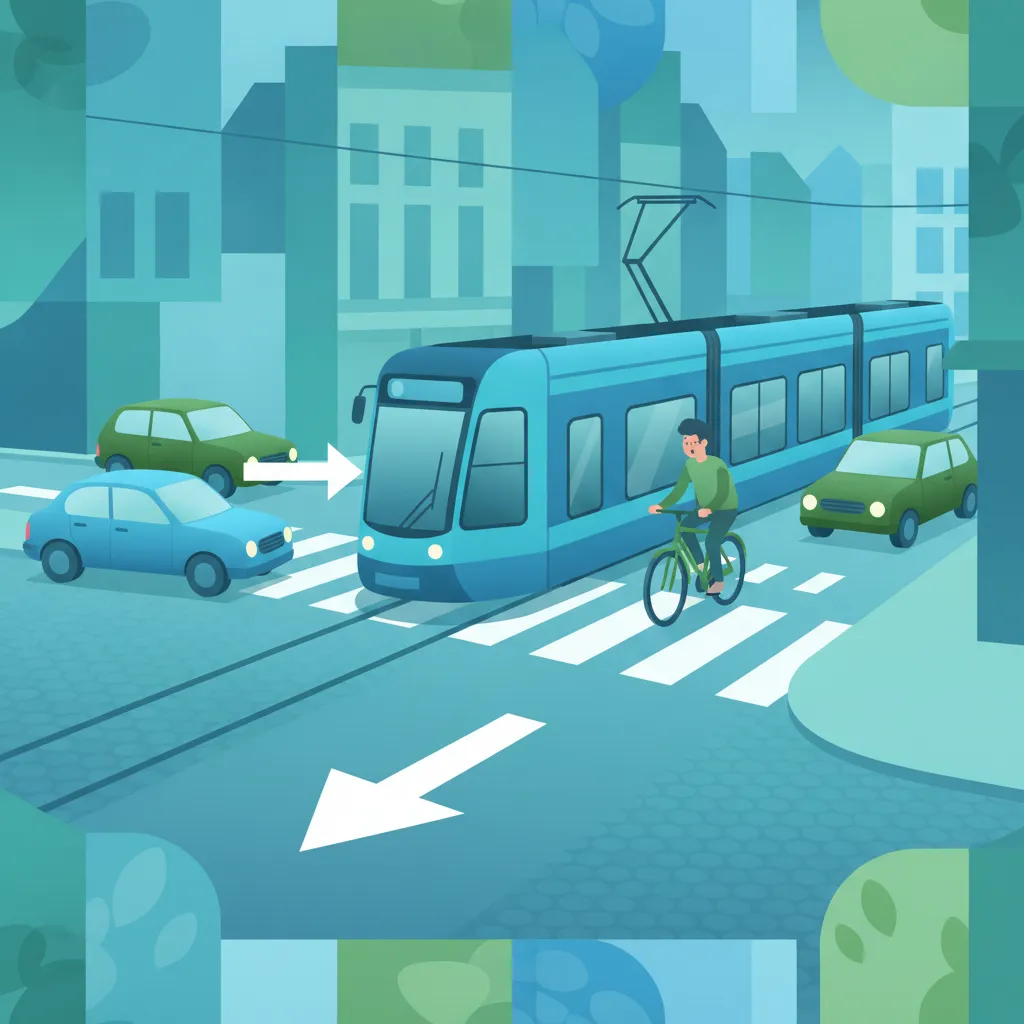
This lesson delves into the complex priority rules that govern Belgian roadways, with a strong focus on the default 'priority from the right' principle. It explains how to interpret priority signs, such as 'give way' and 'stop', and apply the correct right-of-way at various types of junctions. You will learn the hierarchy of road users and the specific rules for yielding in different traffic scenarios.
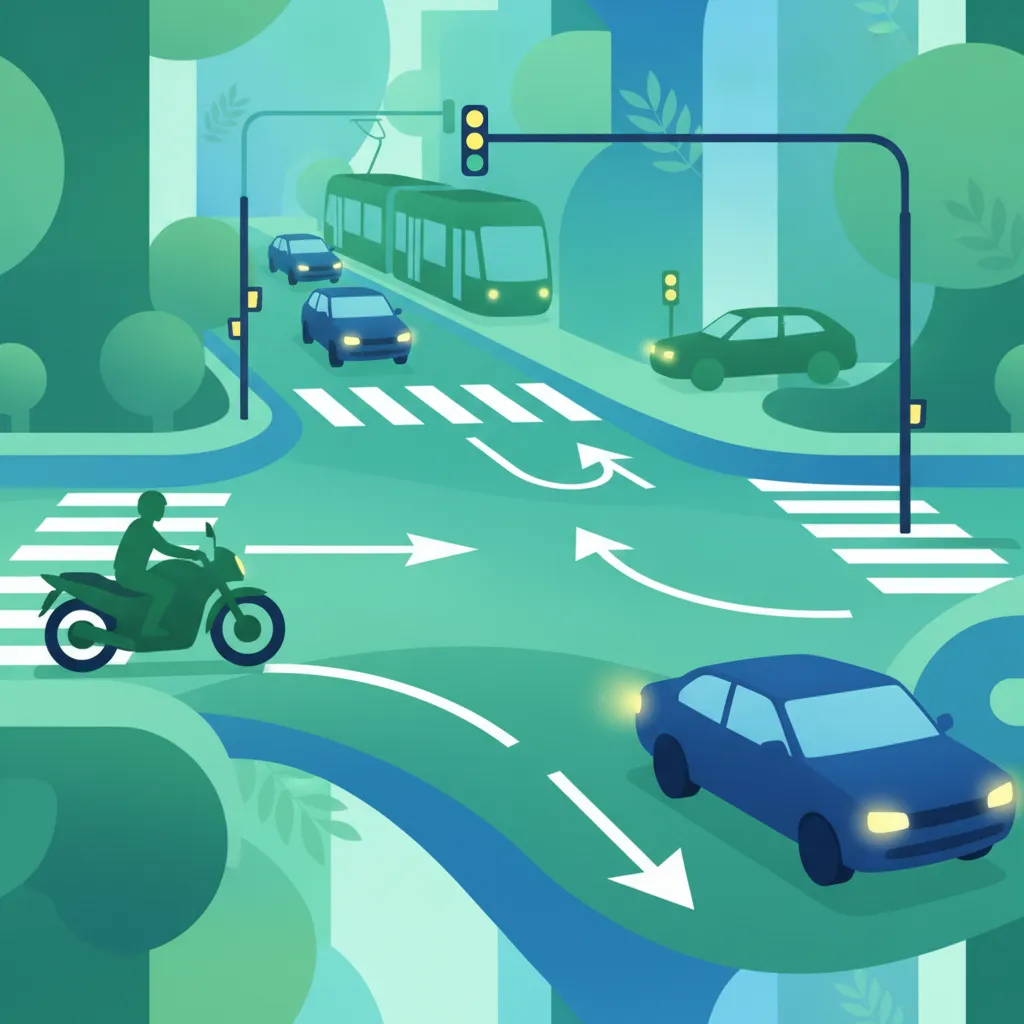
In this lesson, learners will examine the fundamental priority rules that dictate traffic flow at unmarked intersections. The lesson focuses on the principle of priority from the right, the hierarchy of traffic signs and signals, and situations requiring yielding or stopping. Understanding these principles is crucial for safe and lawful navigation of Belgian road networks.
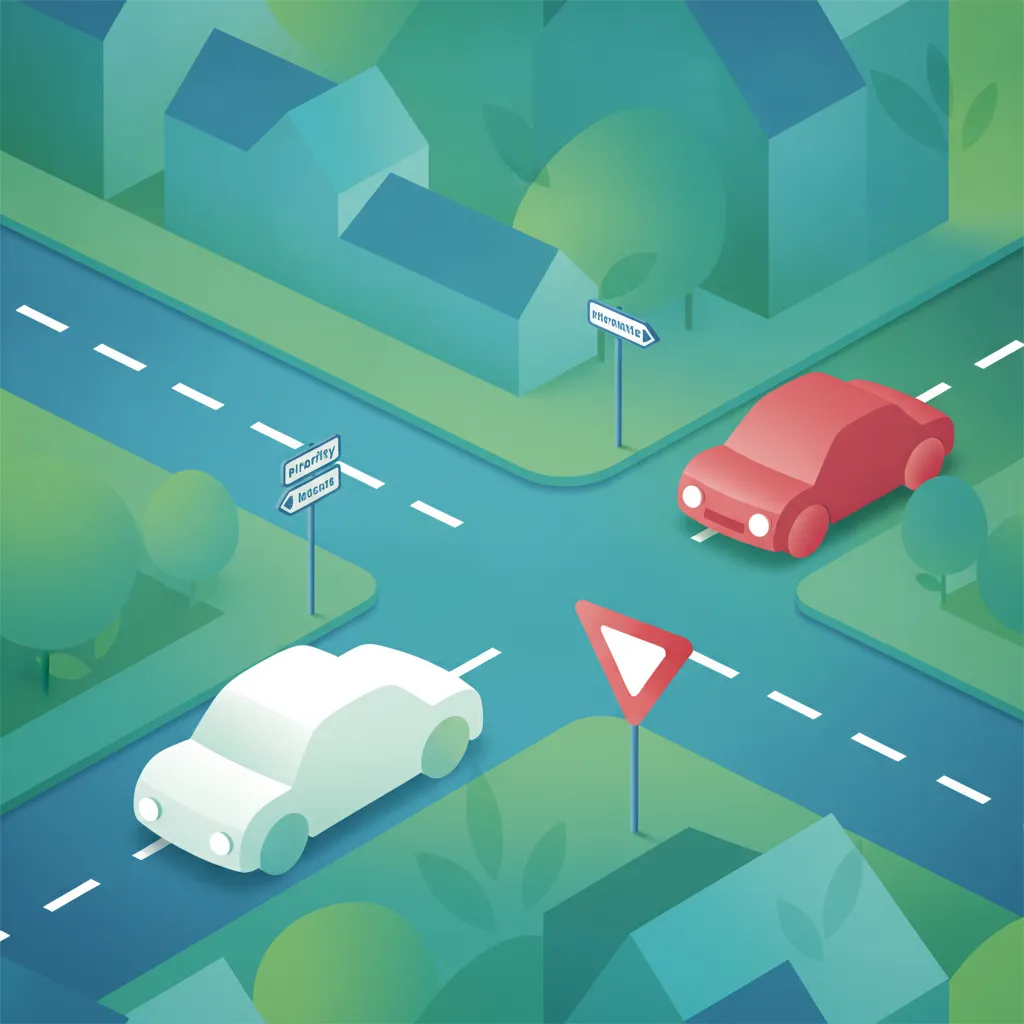
This lesson focuses on the distinction between the default priority from the right and designated priority roads, explaining how drivers should yield or proceed. Learners will discover the specific signs that indicate a priority road and when that priority ends. Understanding these concepts is essential for predictable and safe road use at intersections.

Overtaking safely is a critical driving skill. This lesson explains where and how overtaking is permitted in Belgium, the importance of correct signaling, and maintaining a sufficient speed differential. Learners will understand the rules for passing on motorways and single-carriageway roads, and how to identify zones where overtaking is prohibited.

This lesson details the specific rights and responsibilities of motorcyclists within the Belgian road system, focusing on the correct application of priority rules and safe overtaking. It covers the legal requirements for signaling intentions and adhering to proper road etiquette to ensure smooth traffic flow. The content emphasizes how riders must balance their rights with their safety obligations toward all other road users.
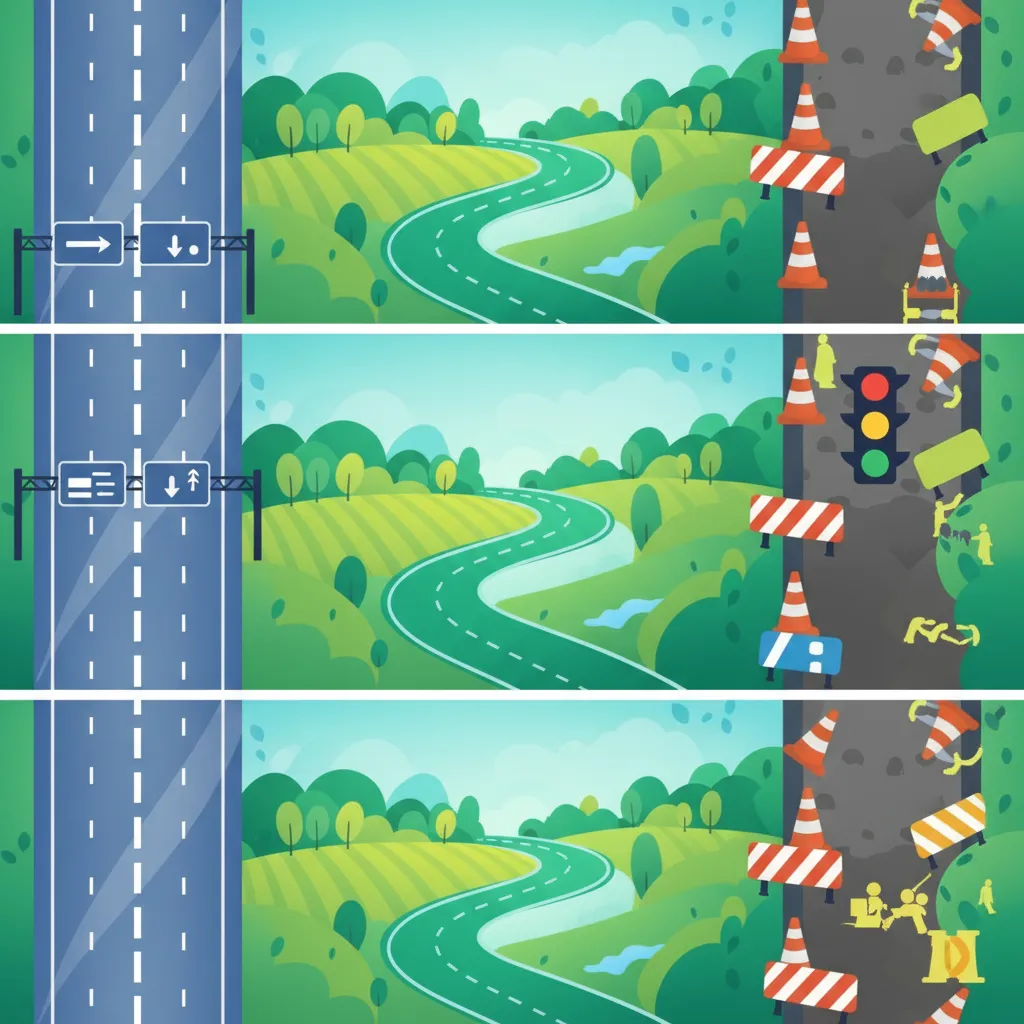
This lesson covers the specific challenges of driving on motorways, rural roads, and navigating roadworks. Learners will review lane discipline on high-speed roads and identify hazards common to rural roads, such as sharp bends and wildlife. It also explains the importance of adjusting speed and following temporary signage in construction zones.

This lesson focuses on the rules governing pedestrian crossings, including marked zebra crossings and signal-controlled crossings. Special attention is given to school zones and residential areas where pedestrian activity is high. Learners will understand how to recognize and respect pedestrian priority in various crossing scenarios to ensure their safety.
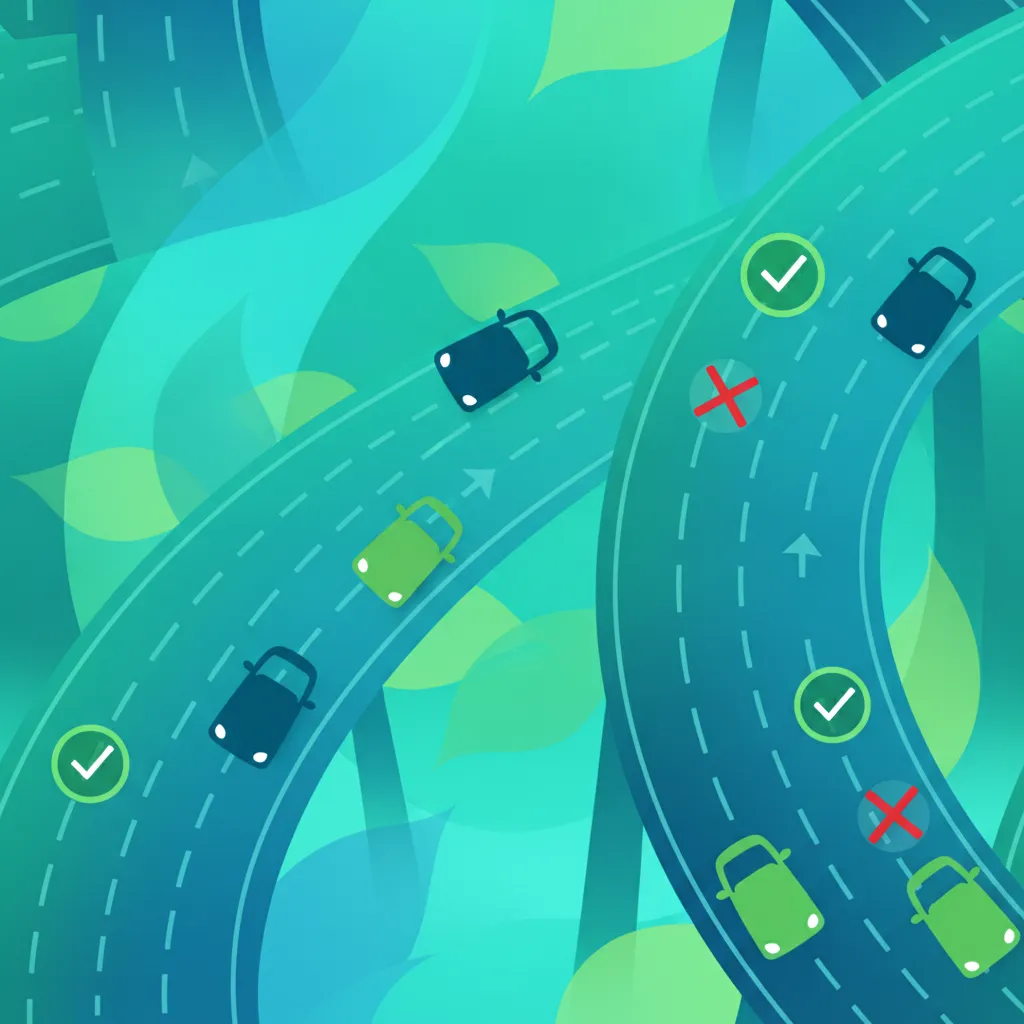
The focus of this lesson is on maintaining proper lane discipline, especially on motorways and other high-speed roads. Learners will explore the rules for changing lanes, overtaking, and positioning in the correct lane based on speed and traffic flow. Emphasis is placed on safe merging techniques and adherence to all lane markings for fluid traffic movement.
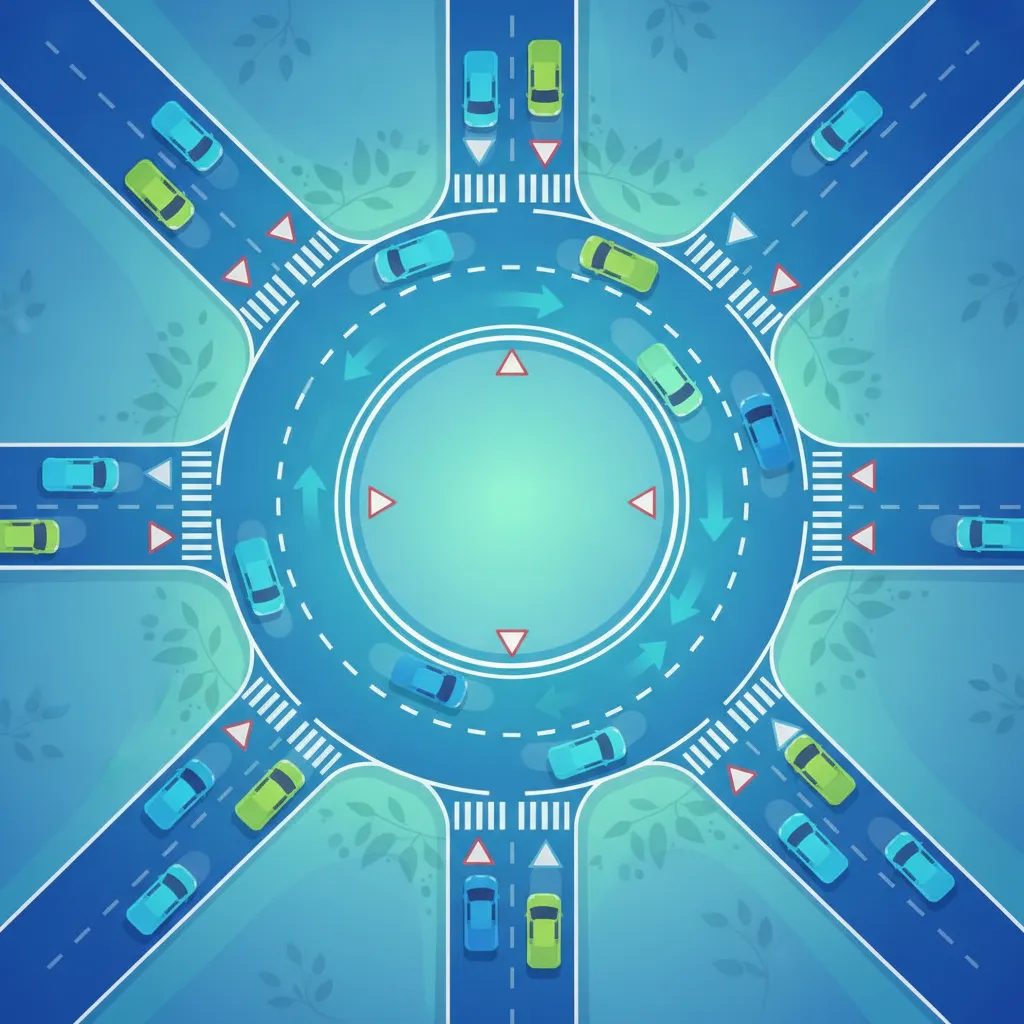
Roundabouts are a key feature of Belgian traffic management. This lesson explains how to approach, enter, navigate, and exit a roundabout safely, with a focus on yielding priority to traffic already circulating. Learners will also study correct lane positioning on multi-lane roundabouts and the appropriate use of signals.
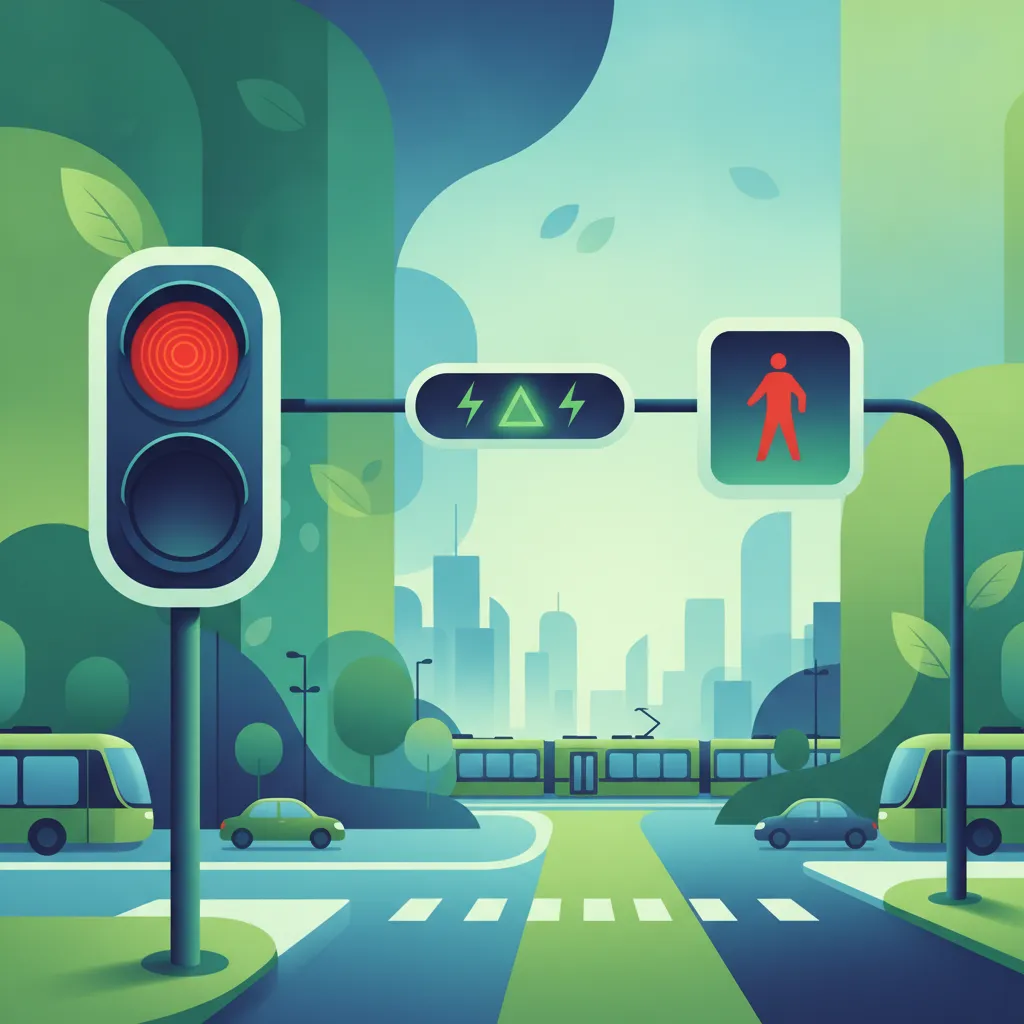
This lesson examines the operation of traffic light systems in Belgium, clarifying the meaning of red, amber, and green signals, including flashing lights and directional arrows. It details a motorcyclist's legal obligations when approaching and navigating signal-controlled intersections. The content also addresses specialized signals for pedestrians and trams that riders must recognize and respond to correctly.
Explore advanced and conditional priority rules in Belgium, including situations with special road markings, emergency vehicles, and complex intersection layouts. Understand how these rules apply to AM riders and complement fundamental priority concepts taught in basic lessons.
This lesson delves into the complex priority rules that govern Belgian roadways, with a strong focus on the default 'priority from the right' principle. It explains how to interpret priority signs, such as 'give way' and 'stop', and apply the correct right-of-way at various types of junctions. You will learn the hierarchy of road users and the specific rules for yielding in different traffic scenarios.
This lesson focuses on the legal duties and responsibilities that an AM vehicle operator must uphold on Belgian roads. It covers critical rules such as adhering to speed limits, correctly applying right-of-way principles, and following regulations for overtaking other vehicles. The lesson also explains the system of fines and penalty points for traffic violations, emphasizing the legal consequences of non-compliance to foster responsible driving habits.
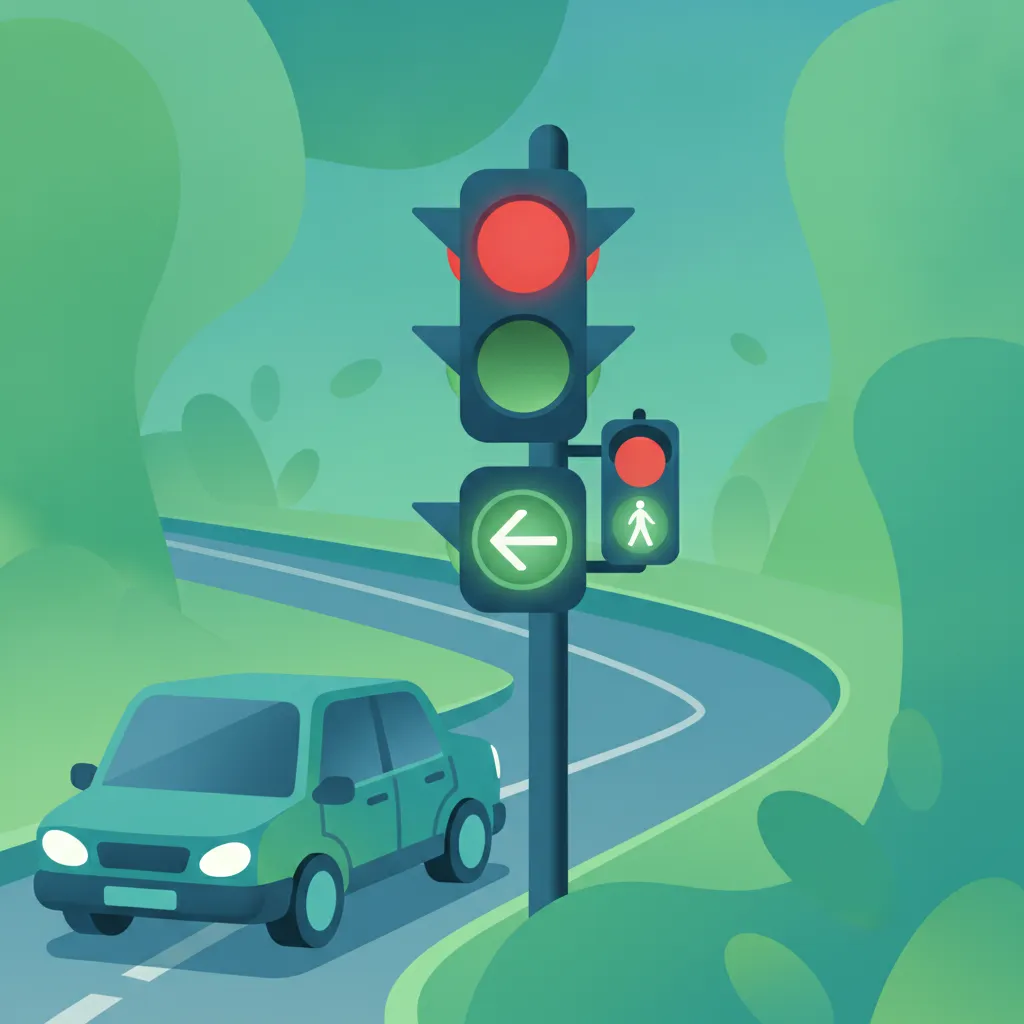
This lesson provides a detailed explanation of traffic light systems and the correct response to each signal. It covers the standard red, amber, and green light sequence, as well as specific signals for pedestrians and cyclists that AM riders must also obey. The meaning of flashing amber and red lights is also clarified to ensure correct and safe behavior at signalized intersections.
In this lesson, learners will examine the fundamental priority rules that dictate traffic flow at unmarked intersections. The lesson focuses on the principle of priority from the right, the hierarchy of traffic signs and signals, and situations requiring yielding or stopping. Understanding these principles is crucial for safe and lawful navigation of Belgian road networks.

This lesson provides a clear definition of the Category AM license as specified by Belgian law. It details the specific types of vehicles covered, such as mopeds, light quadricycles, and speed pedelecs, outlining their legal limits on engine capacity and maximum speed. Learners will understand the permissions granted by an AM license and the specific context of their participation in public traffic as motor vehicle operators.
This lesson examines the operation of traffic light systems in Belgium, clarifying the meaning of red, amber, and green signals, including flashing lights and directional arrows. It details a motorcyclist's legal obligations when approaching and navigating signal-controlled intersections. The content also addresses specialized signals for pedestrians and trams that riders must recognize and respond to correctly.
This lesson focuses on the distinction between the default priority from the right and designated priority roads, explaining how drivers should yield or proceed. Learners will discover the specific signs that indicate a priority road and when that priority ends. Understanding these concepts is essential for predictable and safe road use at intersections.

This lesson outlines the complete process for obtaining a Category AM license in Belgium, starting with the minimum age and health requirements. It details the sequence of theoretical and practical exams that candidates must pass to demonstrate their competence. The content also explains the administrative procedures for vehicle registration and securing mandatory insurance, ensuring all legal prerequisites are understood before riding.

This lesson outlines the system of penalties for traffic violations in Belgium, ensuring riders are fully aware of the consequences of illegal behavior. It covers common offenses like speeding and explains the structure of fines and the demerit point system that can lead to license suspension. The content emphasizes the significant financial and legal repercussions of non-compliance, reinforcing the importance of lawful and responsible riding.
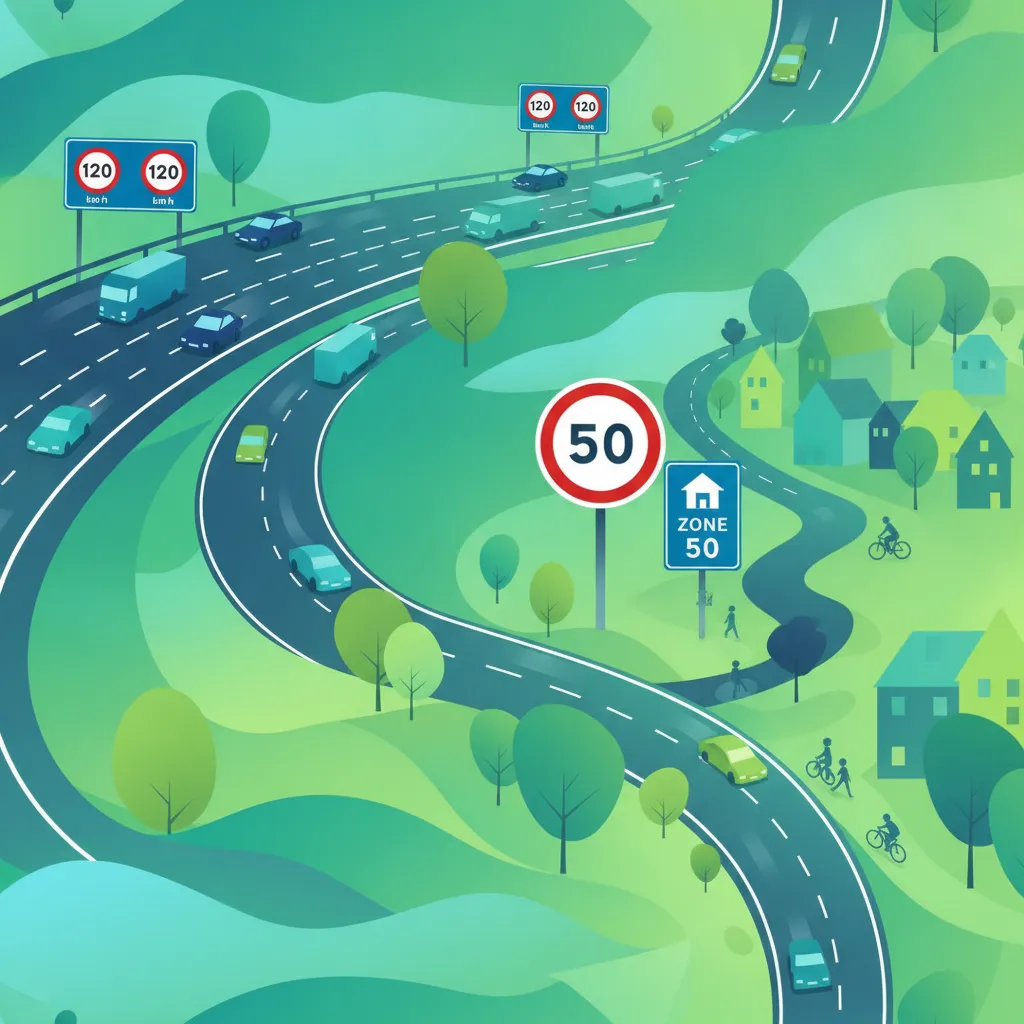
This lesson details the various legal speed limits applicable in Belgium, including those for urban, residential, and school zones. It explains the underlying safety rationale for these limits, linking speed to the severity of accidents and the time available to react to hazards. Learners will understand the difference between the maximum legal speed and a safe, appropriate speed for the prevailing conditions.
Find clear answers to common questions learners have about Basic Priority Rules for AM Riders. Learn how the lesson is structured, which driving theory objectives it supports, and how it fits into the overall learning path of units and curriculum progression in Belgium. These explanations help you understand key concepts, lesson flow, and exam focused study goals.
In Belgium, priority from the right is the default rule at uncontrolled intersections, unless road signs or specific markings indicate otherwise. You must always check for signs like the inverted triangle or specific warning signs that override the default rule.
You have priority if you encounter a road sign indicating a priority road or if there is no sign indicating you must yield to others. However, always exercise caution; even if you have the right of way, prioritize safety by checking for other road users who may not be following the rules.
AM riders are more vulnerable than car drivers. Misunderstanding priority rules at intersections can lead to dangerous collisions with cars or trucks that may not have seen you. Mastering these rules is essential for your survival and for passing the theory exam.
If you are in doubt, the safest approach is to reduce your speed and prepare to stop. Never assume the other driver will yield. In the context of the theory exam, look for the specific road signs that clarify the situation before deciding on your answer.
Ready to focus your Belgian driving theory revision? Utilize our powerful search tool to pinpoint exact topics, road signs, or difficulty levels. Engage with practice questions that directly address your learning needs and solidify your understanding of Belgian traffic laws for your upcoming exam.