
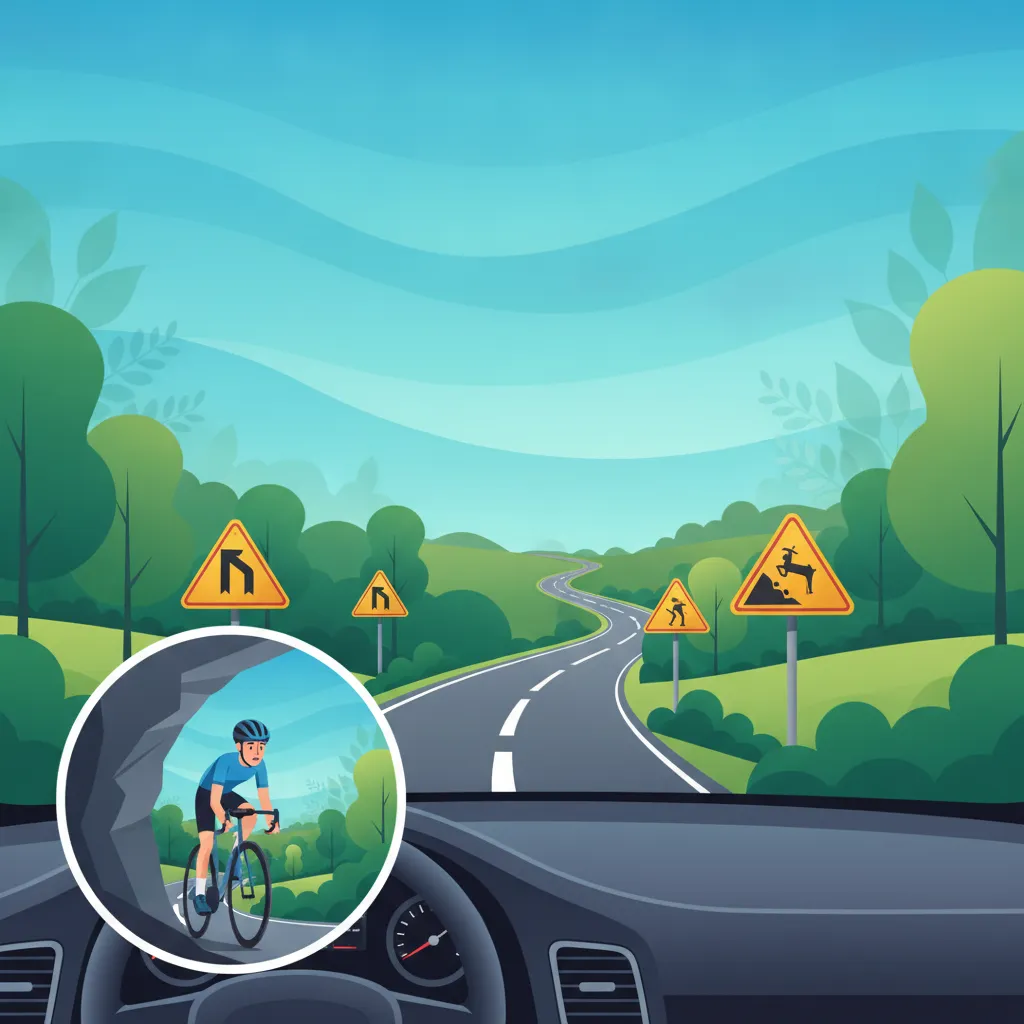
This lesson introduces the vital warning signs used on Belgian roads, helping you identify potential dangers before they become hazards. Understanding these signs is a key step in our Category AM course, as it prepares you to adjust your speed and positioning to ensure your safety as a vulnerable road user.
Lesson content overview
As an operator of a Category AM vehicle in Belgium, understanding and correctly interpreting warning signs is paramount for your safety and the safety of other road users. These crucial signs are designed to alert you to potential dangers ahead, giving you the necessary time to react and adjust your driving proactively. This lesson will delve into the various types of warning signs, their specific meanings, and the appropriate responses required by the Belgian highway code.
Warning signs serve as advance notice for hazards that might not be immediately visible. Their primary function is preventive, aiming to reduce the risk of accidents by preparing drivers for changes in road conditions, upcoming obstacles, or the presence of vulnerable road users. For moped and speed pedelec riders, who are more exposed and have less protection, this advance notice is even more vital.
Warning signs do not prohibit or command specific actions in the same way regulatory signs do. Instead, they inform you of potential risks, empowering you to make informed decisions about your speed, road positioning, and overall behavior. By forewarning drivers, these signs contribute significantly to preventive safety, allowing for smoother and safer traffic flow, especially in areas with unexpected conditions.
Effective hazard awareness, guided by warning signs, relies on several core principles. Firstly, advance warning means signs are placed far enough ahead of a hazard to provide adequate reaction time. Secondly, specific hazard identification implies that each sign conveys a distinct type of risk. Finally, proactive driver behavior is the expected response, where riders anticipate and adjust their driving based on the information received, rather than waiting for the hazard to become immediate.
Belgian warning signs are typically triangular with a red border, a white background, and a black symbol depicting the specific hazard. Recognizing these signs and understanding their implications is a fundamental skill for all AM license holders.
Curves in the road require careful handling, and warning signs are used to indicate bends that might be sharper or more dangerous than expected. These signs give you time to reduce speed and prepare for the turn.
You will encounter signs warning of a single sharp bend, which could be to the left or right. Other signs indicate a series of bends, often showing the direction of the first turn (e.g., a double bend where the first turns left, then right).
Upon seeing such a sign, it is crucial to reduce your speed well in advance of the curve. Maintaining too high a speed can lead to loss of control, especially for lighter AM vehicles. Position yourself correctly in your lane to ensure optimal visibility through the bend and to allow for smooth steering. Common mistakes include ignoring the sign, approaching the curve too quickly, or failing to anticipate the severity of the turn.
For mopeds and speed pedelecs, proper cornering involves a sequence of actions:
Scan Ahead: Look through the curve to identify its exit and any potential hazards.
Brake Before: Reduce speed before entering the curve, completing most of your braking in a straight line.
Select Gear: Downshift to an appropriate gear that allows for smooth acceleration through the curve.
Lean and Steer: Gently lean the vehicle into the turn while maintaining a steady throttle through the curve.
Accelerate Out: Gradually accelerate as you exit the curve to stabilize the vehicle.
Steep gradients, whether ascents or descents, present specific challenges for AM vehicles, impacting acceleration, braking, and control. Warning signs notify you of these changes in terrain.
Signs for steep gradients typically feature a percentage (e.g., 10%) indicating the steepness. An arrow pointing upwards signifies an uphill climb, while an arrow pointing downwards indicates a steep descent.
A steep incline will demand more power from your engine, potentially reducing your speed. Conversely, a steep decline can cause your vehicle to accelerate rapidly due to gravity, making braking more critical. For AM vehicles, these changes are particularly noticeable due to their lighter weight and smaller engines.
When approaching a steep descent, it is vital to reduce your speed early and shift to a lower gear. This allows for "engine braking," which helps control your speed without solely relying on your friction brakes, preventing them from overheating and losing effectiveness. When encountering a steep ascent, selecting a lower gear before the climb can provide more power, preventing your engine from struggling or stalling. Over-reliance on brakes downhill or struggling with an incorrect gear uphill are common mistakes.
Road surface conditions can dramatically affect tire grip. Warning signs for slippery surfaces alert you to areas where traction might be reduced, demanding extra caution.
Signs indicating slippery surfaces often feature a symbol suggesting a skidding vehicle or waves representing wet conditions. These signs alert you to a general risk of reduced friction due to factors like rain, ice, snow, loose gravel, oil spills, or even fallen leaves.
These conditions can make braking, steering, and accelerating more hazardous. Sudden movements can easily lead to a loss of control, especially on two-wheeled vehicles.
Upon seeing a slippery surface warning, you must immediately adjust your driving behavior. Reduce your speed significantly, increase your following distance to allow more time to react and stop, and avoid any sudden braking, acceleration, or steering inputs. Smooth and gradual actions are key to maintaining control. In severe conditions, such as heavy rain or fog, the need for caution is amplified, and you might also need to use appropriate lighting.
When riding on slippery surfaces, apply brakes gently and progressively. Avoid abrupt changes in speed or direction to maintain stability.
Warning signs also alert you to areas where you might encounter vulnerable road users or animals, requiring heightened awareness and preparedness to yield or stop.
Signs indicating a pedestrian crossing warn you of areas where pedestrians frequently cross the road, even if there isn't a marked zebra crossing. These signs are a call for extreme vigilance.
Upon seeing this sign, slow down and be prepared to stop. Scan both sides of the road for pedestrians who might be about to step into the road. Always be ready to yield the right-of-way to pedestrians, as they are vulnerable road users. Ignoring these signs or failing to slow down can lead to dangerous situations.
In rural areas, you may encounter warning signs indicating the frequent presence of animals, such as deer, cattle, or wild boar.
These signs mean you should reduce your speed and be extra alert, especially at dawn, dusk, or during the night when animals are most active. Animals can appear suddenly from the side of the road, and a collision, even with a small animal, can be very dangerous for an AM rider. Be prepared to brake or swerve cautiously if necessary.
Road work signs are temporary warning signs that indicate construction activities ahead, which can significantly alter traffic flow and road conditions.
These signs warn of temporary lane closures, diversions, uneven surfaces, loose gravel, or the presence of workers and machinery on or near the road. You might also see temporary speed limit signs or changes in lane markings.
When entering a road work zone, reduce your speed and be extra vigilant. Expect the unexpected: lanes may merge abruptly, surfaces can be uneven, and workers or equipment might be close to traffic. Adhere strictly to any temporary speed limits and follow the directions of traffic controllers or temporary signs. Neglecting these warnings can lead to accidents with workers, equipment, or other vehicles.
In Belgium, the general rules for responding to warning signs are outlined in the Royal Decree of 1 December 1975 on the General Regulations on the Police of Road Traffic and the Use of Public Roads (RVV 1975). These regulations emphasize the driver's responsibility to react prudently to posted warnings.
Article 42 of the RVV 1975 generally stipulates that drivers must adjust their speed and trajectory in advance of any identified hazard. This means that a warning sign is not merely advisory; it legally obliges you to anticipate and respond. While a specific speed reduction is not always mandated by the sign itself, a prudent and safe reduction is always required to navigate the warned hazard safely.
Specifically for pedestrian crossings, when alerted by a warning sign, drivers must be prepared to yield. Article 10 of the RVV 1975 details the rules concerning pedestrians and their right of way, especially at marked or indicated crossings. Even without a marked crossing, a warning sign signifies a location where pedestrians are likely, and drivers must exercise extreme caution and be ready to stop.
As an AM rider, you are considered a vulnerable road user, yet you also bear the responsibility of safely operating your vehicle. Your lighter vehicle requires earlier and more precise adjustments to speed and gear, particularly on gradients and slippery surfaces. Your visibility to other road users is also lower, making proactive responses to warnings even more crucial. For certain signs, such as those indicating fog or heavy rain, the use of appropriate lighting (as per RVV 1975 Article 39) may also become a legal requirement to ensure your visibility.
Many accidents occur not because drivers are unaware of a warning sign, but because they misinterpret it, underestimate the hazard, or fail to adjust their driving adequately.
Common violations and dangerous behaviors include:
The required response to a warning sign is not always rigid; it depends heavily on the context:
Understanding warning signs is a cornerstone of defensive driving, which is about anticipating potential dangers and acting to prevent them, rather than just reacting to them.
Consider these practical scenarios:
Warning signs empower you to adopt a proactive approach to driving. They reduce your reaction time by providing information before you visually confirm a hazard. This proactive stance is essential for AM riders, as it allows for smoother maneuvers, prevents sudden braking or steering inputs that can destabilize a moped, and ultimately contributes to a safer journey for everyone on the road. The preventive nature of these signs aligns perfectly with defensive driving principles: anticipating and avoiding hazards rather than reacting to them after they become an immediate threat.
This lesson covers the interpretation and response to Belgian warning signs, which use triangular red-bordered designs with black symbols to indicate hazards such as sharp curves, steep gradients, slippery surfaces, pedestrian crossings, animal areas, and road works. For AM riders, safe responses include reducing speed well in advance of curves, using engine braking on descents, downshifting before climbs, and making smooth adjustments on slippery surfaces. Belgian Road Code (RVV 1975) legally requires proactive responses to warning signs, and common mistakes include late reactions, underestimating hazards, and failing to yield to vulnerable road users. The lesson provides practical scenarios and defensive driving principles essential for passing the Belgian AM theory exam.
A short set of high-value points that capture the most important learning from this lesson.
Warning signs in Belgium are triangular with a red border, white background, and black symbols depicting specific hazards ahead
Safe cornering requires reducing speed BEFORE entering the curve, then steering through with a steady throttle and gradual acceleration on exit
On steep descents, shift to a lower gear for engine braking to control speed and prevent friction brake overheating
Slippery surface warnings require immediate speed reduction, increased following distance, and smooth inputs to maintain control
Under Belgian law (RVV 1975), warning signs legally obligate drivers to proactively adjust speed and trajectory before hazards become immediate
Explore all units and lessons included in this driving theory course.
Triangular red-bordered signs = warning signs (informative), not regulatory signs (mandatory)
Cornering sequence: Scan ahead → Brake before → Downshift → Lean and steer → Accelerate out
Engine braking on downhills preserves brakes; lower gear on uphills maintains power
Pedestrian crossing signs demand vigilance even when no pedestrians are visible
Animals are most active at dawn, dusk, and night—reduce speed in animal crossing zones during these times
Ignoring the warning sign and continuing at the same speed through hazards
Reacting too late by waiting until the hazard is immediately visible before braking
Underestimating hazard severity by not reducing speed sufficiently for sharp curves or steep gradients
Failing to yield or prepare to stop for pedestrians at indicated crossing zones
Overconfidence in adverse weather, believing skill or vehicle capability compensates for reduced tire grip
Lesson content overview
A short set of high-value points that capture the most important learning from this lesson.
Warning signs in Belgium are triangular with a red border, white background, and black symbols depicting specific hazards ahead
Safe cornering requires reducing speed BEFORE entering the curve, then steering through with a steady throttle and gradual acceleration on exit
On steep descents, shift to a lower gear for engine braking to control speed and prevent friction brake overheating
Slippery surface warnings require immediate speed reduction, increased following distance, and smooth inputs to maintain control
Under Belgian law (RVV 1975), warning signs legally obligate drivers to proactively adjust speed and trajectory before hazards become immediate
Explore all units and lessons included in this driving theory course.
Triangular red-bordered signs = warning signs (informative), not regulatory signs (mandatory)
Cornering sequence: Scan ahead → Brake before → Downshift → Lean and steer → Accelerate out
Engine braking on downhills preserves brakes; lower gear on uphills maintains power
Pedestrian crossing signs demand vigilance even when no pedestrians are visible
Animals are most active at dawn, dusk, and night—reduce speed in animal crossing zones during these times
Ignoring the warning sign and continuing at the same speed through hazards
Reacting too late by waiting until the hazard is immediately visible before braking
Underestimating hazard severity by not reducing speed sufficiently for sharp curves or steep gradients
Failing to yield or prepare to stop for pedestrians at indicated crossing zones
Overconfidence in adverse weather, believing skill or vehicle capability compensates for reduced tire grip
Explore search topics learners often look for when studying Warning Signs and Hazard Awareness. These topics reflect common questions about road rules, driving situations, safety guidance, and lesson level theory preparation for learners in Belgium.
Browse additional driving theory lessons that cover connected traffic rules, road signs, and common driving situations related to this topic. Improve your understanding of how different rules interact across everyday traffic scenarios.
Understand the critical role of Belgian warning signs in hazard awareness. This lesson provides detailed explanations of triangular signs indicating curves, slippery roads, gradients, pedestrian crossings, and animal hazards for AM license holders.
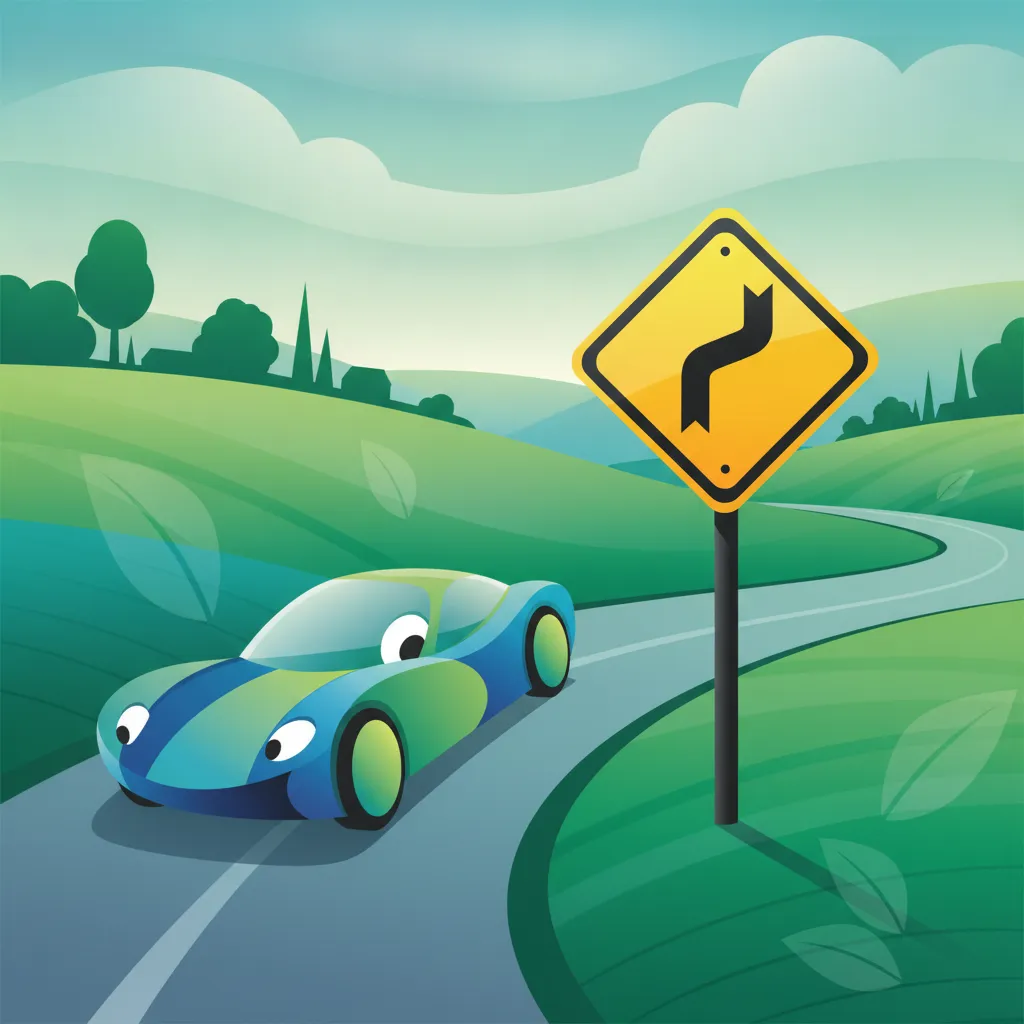
This lesson focuses on warning signs designed to alert drivers to potential hazards ahead. Topics include warnings for sharp curves, steep gradients, slippery surfaces, and zones with high pedestrian or wildlife activity. Learners will understand how to correctly interpret these signs and adjust their driving behavior to maintain safety on the road.
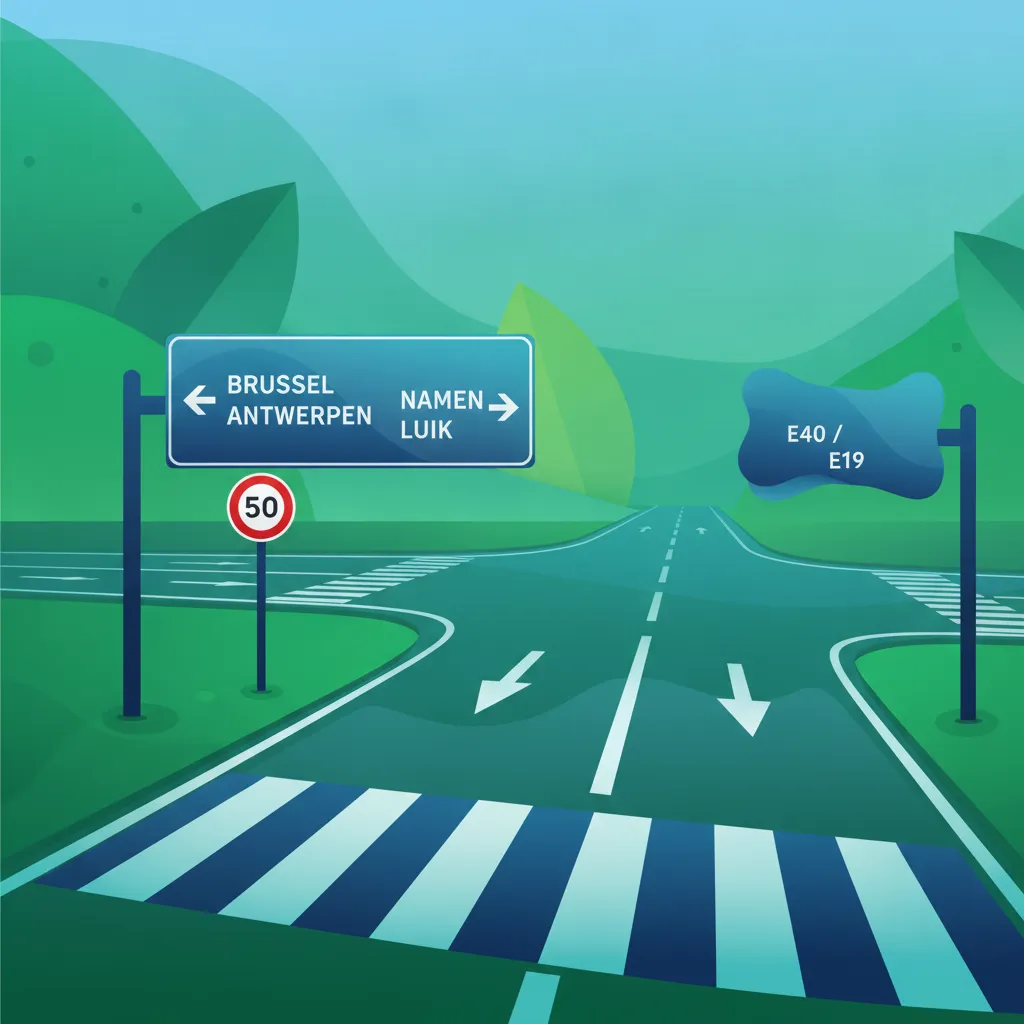
This lesson explains the role of information signs and road markings in guiding road users. It covers directional signs that help with navigation and markings that delineate lanes, pedestrian crossings, and zones for specific users like cyclists. Learners will understand how to use this information to maintain correct lane positioning and navigate their route efficiently and safely.
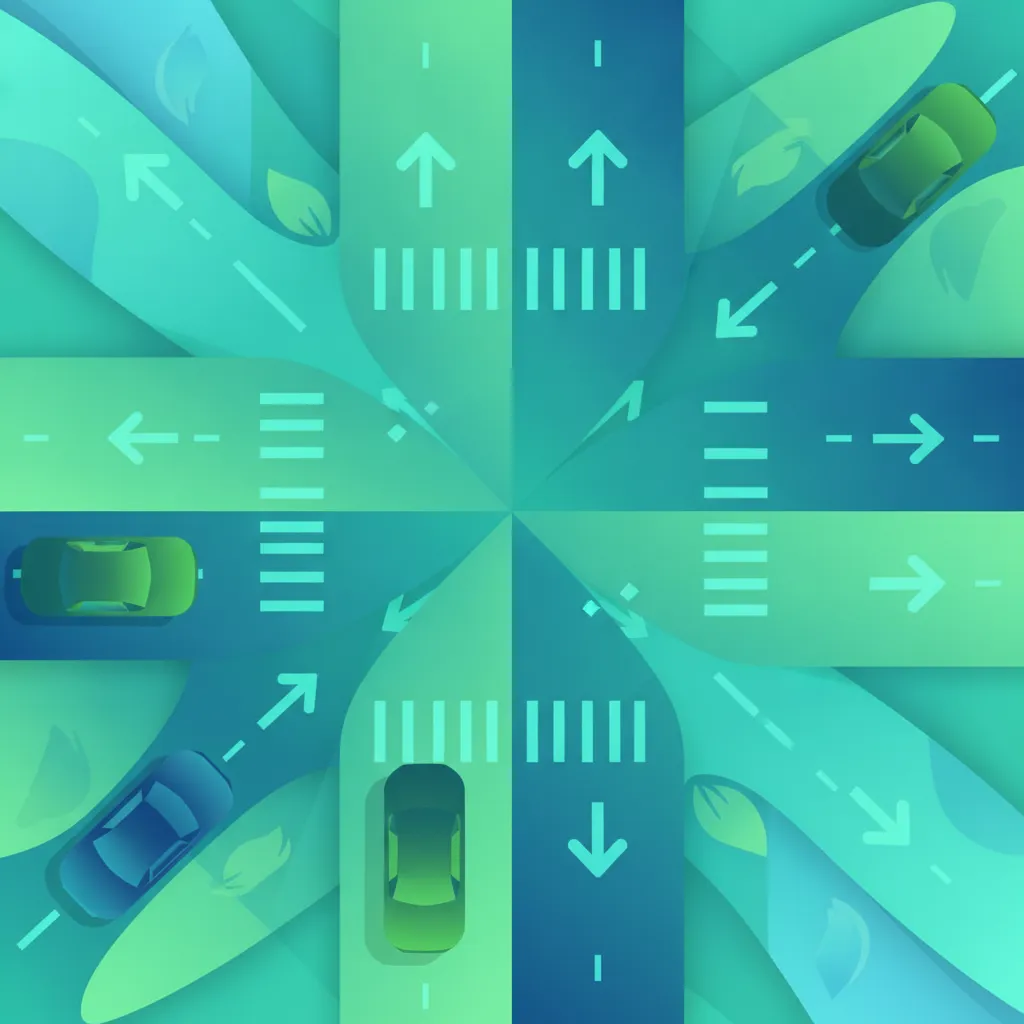
Directional symbols and arrows painted on the road surface guide drivers on permitted lane movements and turning directions. This lesson explains the interpretation of these arrows, covering rules for one-way streets, mandatory turns, and lane-specific instructions. Learners will understand how to comply with these symbols to navigate complex intersections safely and efficiently.
This lesson focuses on regulatory signs, which impose legal obligations and restrictions on road users. It explains the meaning of common signs such as speed limits, stop, yield, and no-entry, detailing how they apply to Category AM vehicles. Understanding these signs is fundamental for legal compliance and safe interaction with traffic, as they dictate required actions and prohibitions.
This lesson provides a detailed explanation of traffic light systems and the correct response to each signal. It covers the standard red, amber, and green light sequence, as well as specific signals for pedestrians and cyclists that AM riders must also obey. The meaning of flashing amber and red lights is also clarified to ensure correct and safe behavior at signalized intersections.
In this lesson, learners explore the full range of regulatory signs used throughout Belgium to enforce traffic laws. It covers signs that prescribe actions, such as stop and give way, as well as those that restrict actions, like speed limits and overtaking bans. Understanding these signs enables drivers to comply accurately with enforced traffic regulations.
This lesson focuses on the correct identification and interpretation of regulatory and informative road signs that are particularly relevant to motorcyclists. It covers signs that dictate speed limits, prohibit overtaking, and indicate compulsory routes or turns. You will learn to recognize different sign categories based on their distinct shapes and colors as defined by Belgian traffic law.
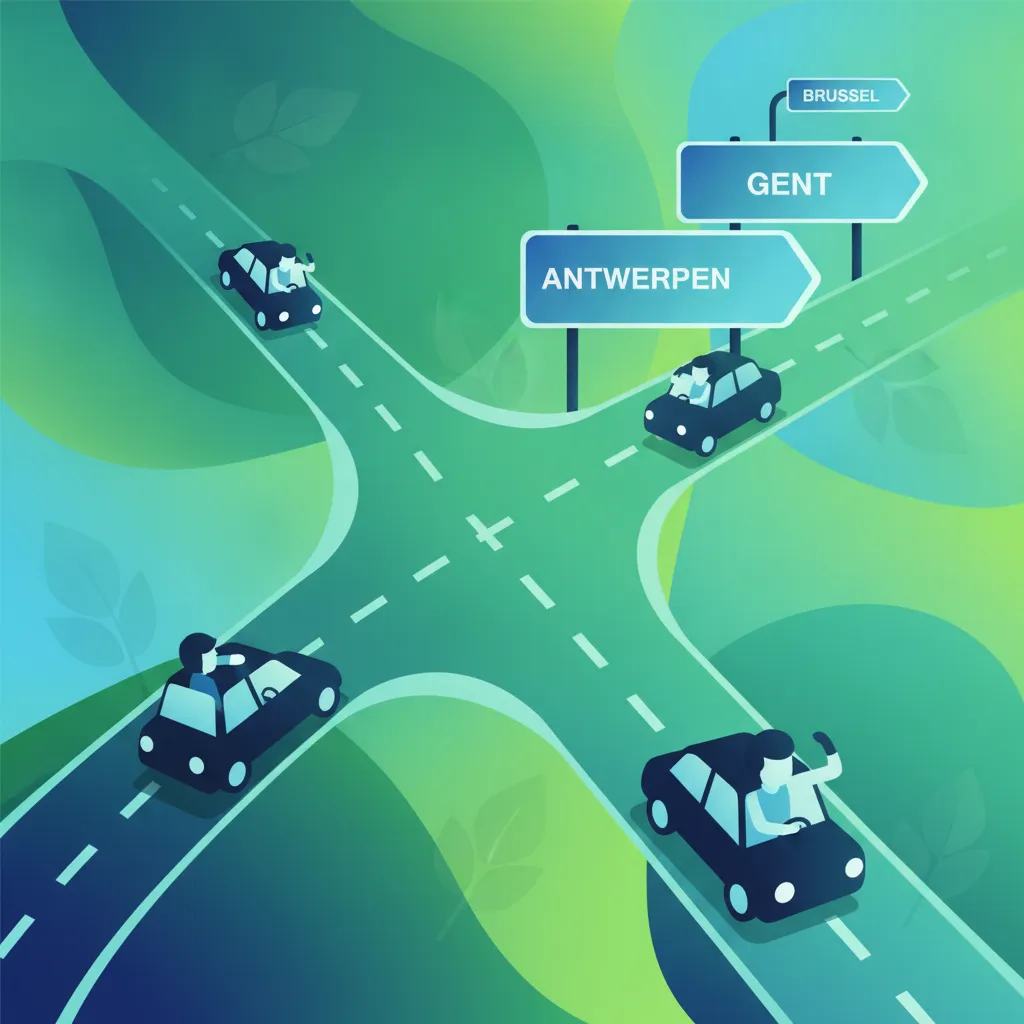
Information signs provide drivers with essential guidance about destinations, services, and the road layout. This lesson covers signs indicating distances, directions to towns, availability of services like fuel stations, and specific lane guidance. Learners will know how to read these signs to navigate efficiently and locate necessary facilities while driving.
This lesson provides a detailed explanation of the various road markings found on Belgian roads and their specific significance for motorcyclists. It covers the rules associated with solid and broken lane lines, stop lines at junctions, and markings for pedestrian and bicycle crossings. Understanding these markings is essential for correct lane positioning and safe navigation.

This lesson introduces the various types of road surface markings and their specific legal meanings in Belgium. Topics include the rules for solid and broken lines, double lines, and special markings for pedestrian zones, bus lanes, and tramways. Understanding these markings is essential for maintaining correct lane discipline and executing safe overtaking maneuvers.
Learn how to apply defensive driving principles to real-world Belgian traffic scenarios. This lesson focuses on proactive responses to hazards indicated by warning signs, crucial for AM license holders' safety.
This lesson synthesizes key safety concepts into the practice of defensive riding, a proactive mindset focused on anticipation and risk reduction. It teaches you to continuously scan for potential hazards, predict the actions of other road users, and always maintain an escape path. By mastering these strategies, you learn to manage the space around you and take control of your own safety.
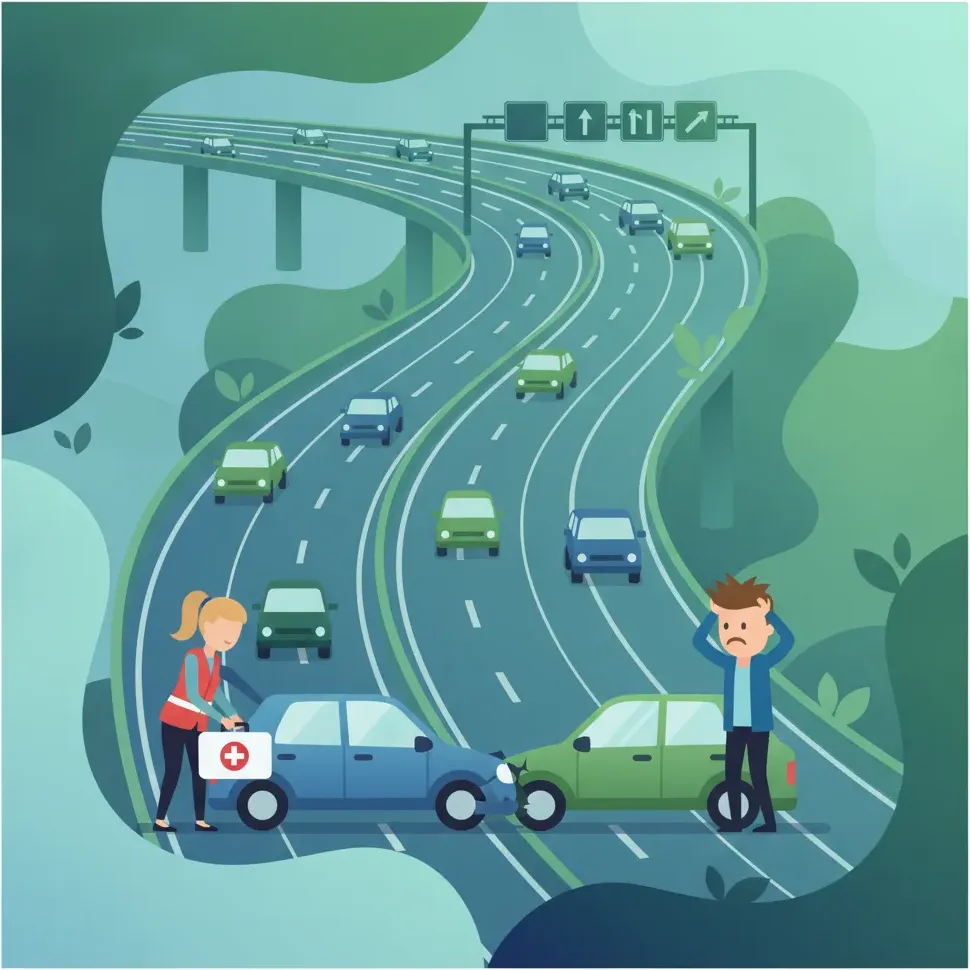
This lesson provides a clear and structured guide for responding to on-road emergencies such as a mechanical breakdown or a traffic accident. It details the steps for securing the scene safely, including the use of a warning triangle and high-visibility vest. Learners will understand how and when to contact emergency services via the 112 number and the basic principles of assisting anyone who may be injured.
Driving safely requires anticipating potential hazards before they become immediate threats. This lesson covers hazard perception techniques, such as effective road scanning and identifying high-risk situations. Learners will practice recognizing common hazards and learn how to formulate a safe response plan in advance to avoid accidents.
This lesson provides a step-by-step guide to executing turns and lane changes safely and efficiently. It covers the critical sequence of checking mirrors, signaling intent, and performing a head check for blind spots before any maneuver. Learners will also understand how to manage their speed and balance during cornering to maintain full control of the vehicle.
This lesson explains the concept of strategic road positioning to enhance safety and visibility. It teaches riders how to select the best position within a lane to be seen by other drivers and to have a good view of the road ahead. A key focus is on identifying and staying out of the large blind spots of cars, vans, and trucks to prevent dangerous situations.

This lesson provides crucial advice for riding in rainy conditions, a frequent occurrence in Belgium. It explains how water on the road surface dramatically reduces tire grip, extends stopping distances, and creates a risk of hydroplaning. Riders will learn how to adjust their speed, increase following distances, and manage reduced visibility from rain and road spray to maintain safety.
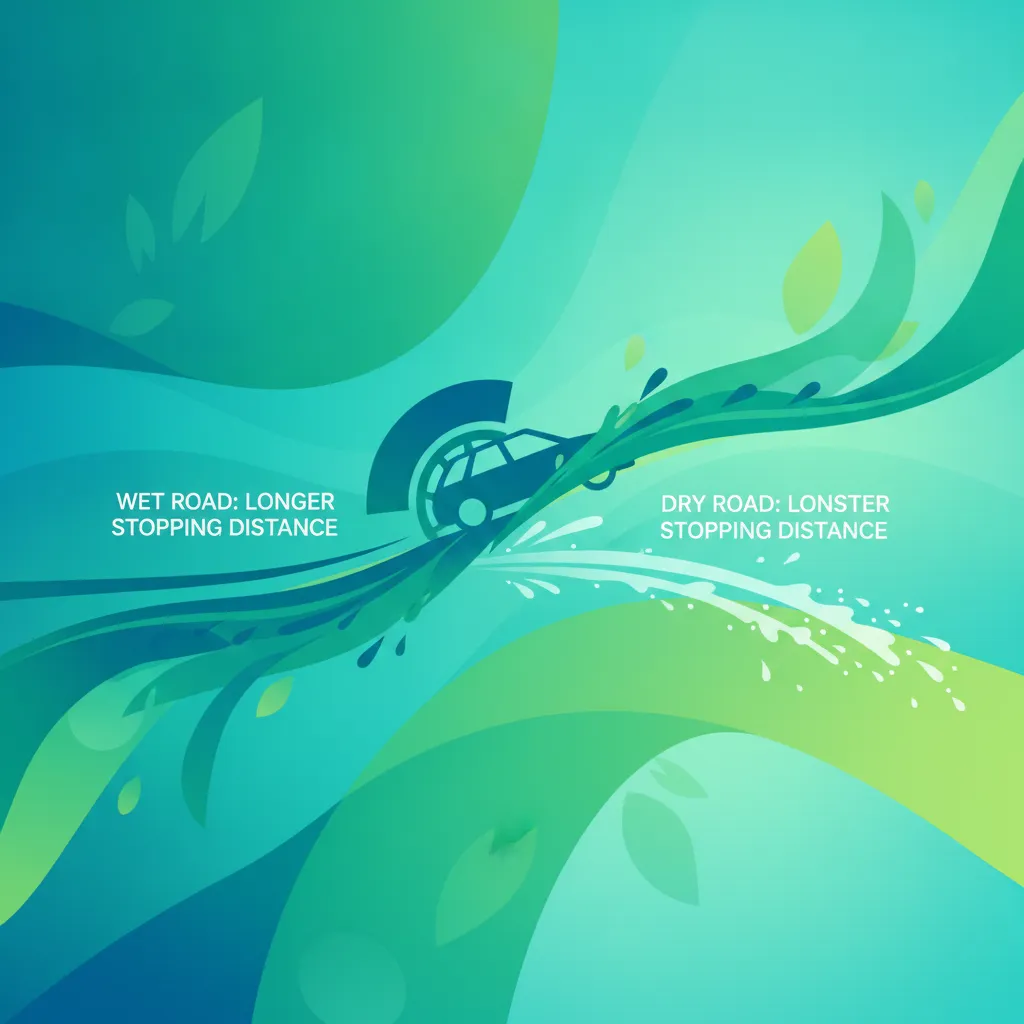
This lesson covers the principles of effective braking, distinguishing between controlled, progressive braking and emergency braking techniques. It breaks down the total stopping distance into reaction distance and braking distance, explaining how speed and road surface conditions dramatically affect the latter. Learners will understand how to use both front and rear brakes correctly to stop quickly and safely without losing control.
This lesson covers the specific challenges of driving on motorways, rural roads, and navigating roadworks. Learners will review lane discipline on high-speed roads and identify hazards common to rural roads, such as sharp bends and wildlife. It also explains the importance of adjusting speed and following temporary signage in construction zones.

This lesson focuses on the specific challenges of riding in adverse conditions such as rain, fog, and darkness, which severely reduce visibility. It provides practical strategies for riders to increase their own conspicuity through the use of lights and reflective gear. The content also explains how to adapt riding behavior, such as reducing speed and increasing following distance, to safely manage these high-risk situations.
This lesson focuses on the heightened awareness required when approaching and traversing pedestrian and cyclist crossings. It clarifies the legal rules, including the absolute priority of pedestrians on zebra crossings, and the importance of reducing speed. Riders will learn how to anticipate the movements of these vulnerable road users and position their vehicle to ensure a safe interaction.
Find clear answers to common questions learners have about Warning Signs and Hazard Awareness. Learn how the lesson is structured, which driving theory objectives it supports, and how it fits into the overall learning path of units and curriculum progression in Belgium. These explanations help you understand key concepts, lesson flow, and exam focused study goals.
Triangular signs with a white background and red border are designed to warn you of a danger or hazard ahead. Their purpose is to prompt you to reduce your speed and increase your focus so you can navigate the situation safely.
No, warning signs indicate a hazard, not a mandatory stop. While you should always be prepared to slow down or stop if necessary, you should only stop if the traffic situation or other road rules specifically require it.
In built-up areas, warning signs are usually placed roughly 50 meters before the hazard, while outside built-up areas, they are typically placed 150 meters in advance. This gives you sufficient time to assess the situation and react comfortably.
Yes, there is a specific sign showing a car losing traction, which indicates a section of the road that is particularly slippery when wet. When you see this, you should immediately reduce your speed and avoid sudden steering or braking movements.
Ready to focus your Belgian driving theory revision? Utilize our powerful search tool to pinpoint exact topics, road signs, or difficulty levels. Engage with practice questions that directly address your learning needs and solidify your understanding of Belgian traffic laws for your upcoming exam.