
This lesson provides a comprehensive guide to understanding traffic lights and signals within the Belgian Highway Code. Mastering these signals is essential for every Category AM rider, ensuring you can navigate signalized intersections safely and pass your official theory exam.
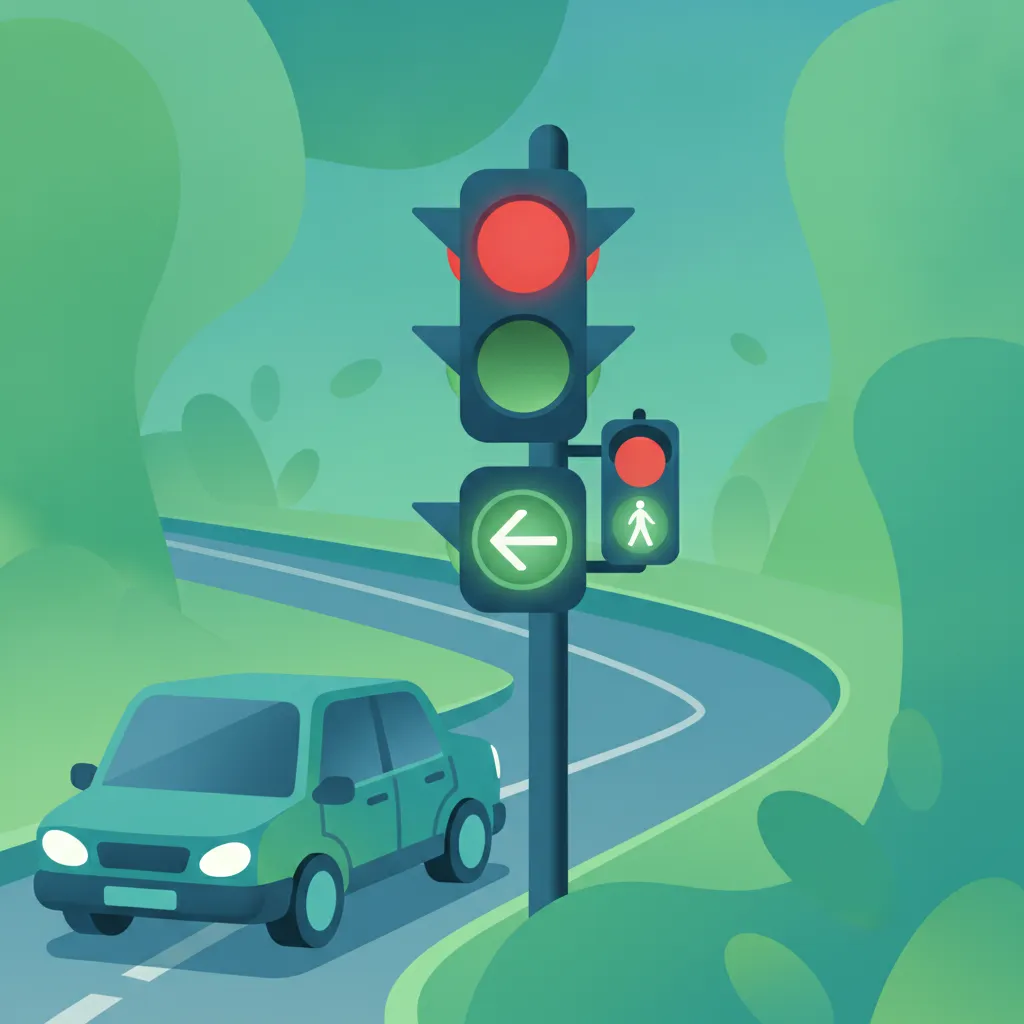
Lesson content overview
Traffic lights are fundamental control devices that play a crucial role in regulating the flow of traffic, enhancing safety, and improving efficiency at intersections and pedestrian crossings. For operators of Category AM vehicles, such as mopeds and speed pedelecs, a precise understanding and strict adherence to these signals are paramount for navigating Belgian roads safely and lawfully. This lesson will provide a comprehensive overview of traffic light systems, detailing the meaning of each signal and the correct actions required, including specific signals designed for pedestrians and cyclists.
Traffic lights are designed to prevent collisions by assigning the right-of-way to different streams of traffic or road users at various times. They supersede standard priority rules (such as priority to the right) when active, meaning that a green light grants you the right to proceed, regardless of who is approaching from the right. Misinterpreting or ignoring traffic signals is a leading cause of accidents and can result in significant legal consequences. As a vulnerable road user, your predictable behavior at signalized intersections is vital for your safety and the safety of others.
The most common traffic light configuration uses a sequence of three distinct colours: red, amber (also known as orange or yellow), and green. Understanding the precise meaning and required action for each phase is critical for all road users.
A red light is an absolute command to stop. When you see a red light, you must bring your vehicle to a complete halt before the stop line marked on the road surface. If there is no stop line, you must stop before the intersection or before the crosswalk, ensuring you do not obstruct pedestrians or cross-traffic.
The steady amber light serves as a warning signal, indicating that the light is about to change from green to red, or from red to green. Its interpretation depends on the preceding signal.
When the light changes from green to steady amber, it signifies that the light will very soon turn red.
When the light changes from red to steady amber, it indicates that the green light will appear momentarily. This phase is less common in some configurations but still requires careful attention.
A green light grants you permission to proceed through the intersection or past the signal.
When approaching a green light, always anticipate potential changes. Be ready to slow down or stop if the light turns amber.
A flashing amber light indicates a warning signal that requires you to proceed with extreme caution and to yield the right-of-way to other road users who may have priority. It is not an invitation to proceed without looking.
A flashing red light is a highly imperative signal that demands an immediate and complete stop.
As an AM rider, you share the road with pedestrians and cyclists and must be acutely aware of their specific signals. These signals are designed to manage their crossing phases safely.
Pedestrian signals typically consist of two figures: a red standing person (Don't Walk) and a green walking person (Walk).
Many intersections now feature dedicated signals for cyclists, which may be separate from motor vehicle signals or shared. These usually display bicycle symbols.
Traffic lights come in various configurations beyond the standard three-light vertical or horizontal arrangement.
Adhering to Belgian traffic light regulations is not just about safety, but also about legal compliance.
Ignoring or misinterpreting traffic signals is a leading cause of accidents and can lead to severe penalties. AM riders, due to their smaller size and reduced protection, are particularly vulnerable when others violate these rules.
Penalties for traffic light violations in Belgium can include substantial fines, immediate license suspension, and points on your driving record. Prioritise safety over saving a few seconds.
Your response to traffic lights should also be adapted based on various environmental and situational factors.
The system of traffic lights is meticulously designed to manage conflict points on the road. By assigning clear priority, they aim to minimize the risk of collisions. Flashing signals provide flexibility, allowing traffic to flow in less busy areas while still demanding caution. Pedestrian and cyclist signals are crucial for integrating all road users safely, giving vulnerable groups dedicated crossing times. Understanding the sequence and reasoning behind each signal helps prevent abrupt stops, reduces confusion, and ensures a coordinated movement of all road users. Your adherence to these rules directly contributes to a safer road environment for everyone in Belgium.
This lesson covers the complete traffic light system for Belgian AM riders, explaining that red demands an absolute stop, amber serves as a warning to prepare to stop (after green) or prepare to proceed (after red), and green grants permission with caution. Flashing amber acts as a warning requiring you to yield to priority traffic, while flashing red mandates a complete stop like a stop sign. The lesson also addresses special signals for pedestrians and cyclists, which AM riders must respect and yield to when applicable. Understanding these signals is essential for safe navigation of Belgian intersections and for passing the AM theory exam.
A short set of high-value points that capture the most important learning from this lesson.
A red light is an absolute stop command—you must halt completely before the stop line regardless of other traffic
Steady amber after green means prepare to stop; steady amber after red means remain stopped and prepare to proceed
Flashing amber suspends traffic light priority rules and requires you to yield to all other road users with priority
Flashing red functions like a stop sign and demands a complete halt before proceeding when the intersection is clear
You must always yield to pedestrians and cyclists who have a green signal, especially when turning
Explore all units and lessons included in this driving theory course.
Red = mandatory stop, Green = proceed with caution, Steady amber = prepare to stop or prepare to proceed depending on sequence
Flashing amber = yield to priority traffic; Flashing red = complete stop like a stop sign
Preliminary amber (after green) allows proceeding only if already too close to stop safely
Final amber (after red) means do not move—the green has not yet been granted
Pedestrian signals show a green walking person for 'go' and a red standing person for 'stop'
Accelerating to 'beat' an amber light instead of preparing to stop—this is dangerous and illegal
Treating a flashing amber light like a green light and proceeding without yielding to priority traffic
Failing to stop completely at a flashing red light, especially at railway crossings
Not yielding to pedestrians or cyclists who have a green signal when making a turn
Changing lanes within a signal-controlled intersection, disrupting coordinated traffic flow
Lesson content overview
A short set of high-value points that capture the most important learning from this lesson.
A red light is an absolute stop command—you must halt completely before the stop line regardless of other traffic
Steady amber after green means prepare to stop; steady amber after red means remain stopped and prepare to proceed
Flashing amber suspends traffic light priority rules and requires you to yield to all other road users with priority
Flashing red functions like a stop sign and demands a complete halt before proceeding when the intersection is clear
You must always yield to pedestrians and cyclists who have a green signal, especially when turning
Explore all units and lessons included in this driving theory course.
Red = mandatory stop, Green = proceed with caution, Steady amber = prepare to stop or prepare to proceed depending on sequence
Flashing amber = yield to priority traffic; Flashing red = complete stop like a stop sign
Preliminary amber (after green) allows proceeding only if already too close to stop safely
Final amber (after red) means do not move—the green has not yet been granted
Pedestrian signals show a green walking person for 'go' and a red standing person for 'stop'
Accelerating to 'beat' an amber light instead of preparing to stop—this is dangerous and illegal
Treating a flashing amber light like a green light and proceeding without yielding to priority traffic
Failing to stop completely at a flashing red light, especially at railway crossings
Not yielding to pedestrians or cyclists who have a green signal when making a turn
Changing lanes within a signal-controlled intersection, disrupting coordinated traffic flow
Explore search topics learners often look for when studying Traffic Lights and Signal Interpretation. These topics reflect common questions about road rules, driving situations, safety guidance, and lesson level theory preparation for learners in Belgium.
Browse additional driving theory lessons that cover connected traffic rules, road signs, and common driving situations related to this topic. Improve your understanding of how different rules interact across everyday traffic scenarios.
Learn about frequent errors and dangerous misinterpretations of traffic lights encountered by AM riders in Belgium. Understand the risks associated with accelerating on amber, ignoring flashing lights, and other critical signal mistakes.
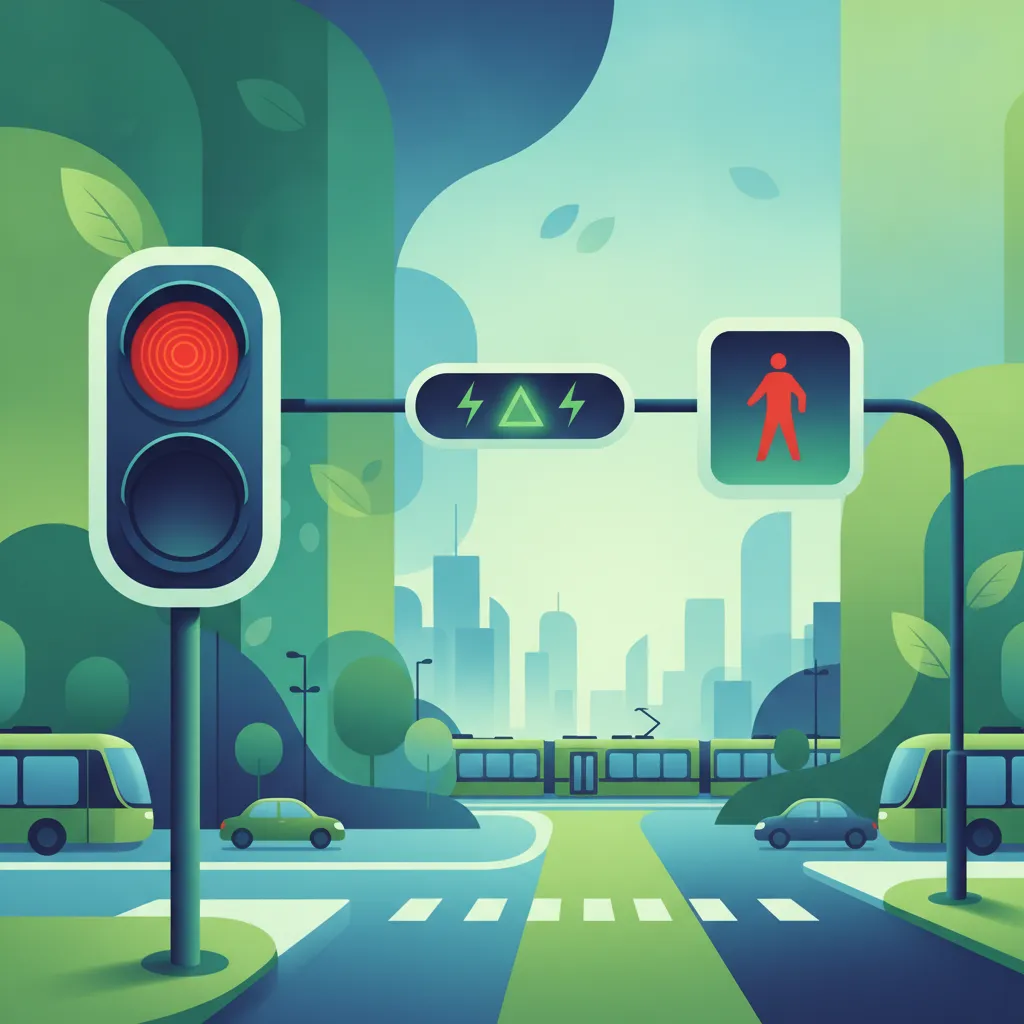
This lesson examines the operation of traffic light systems in Belgium, clarifying the meaning of red, amber, and green signals, including flashing lights and directional arrows. It details a motorcyclist's legal obligations when approaching and navigating signal-controlled intersections. The content also addresses specialized signals for pedestrians and trams that riders must recognize and respond to correctly.
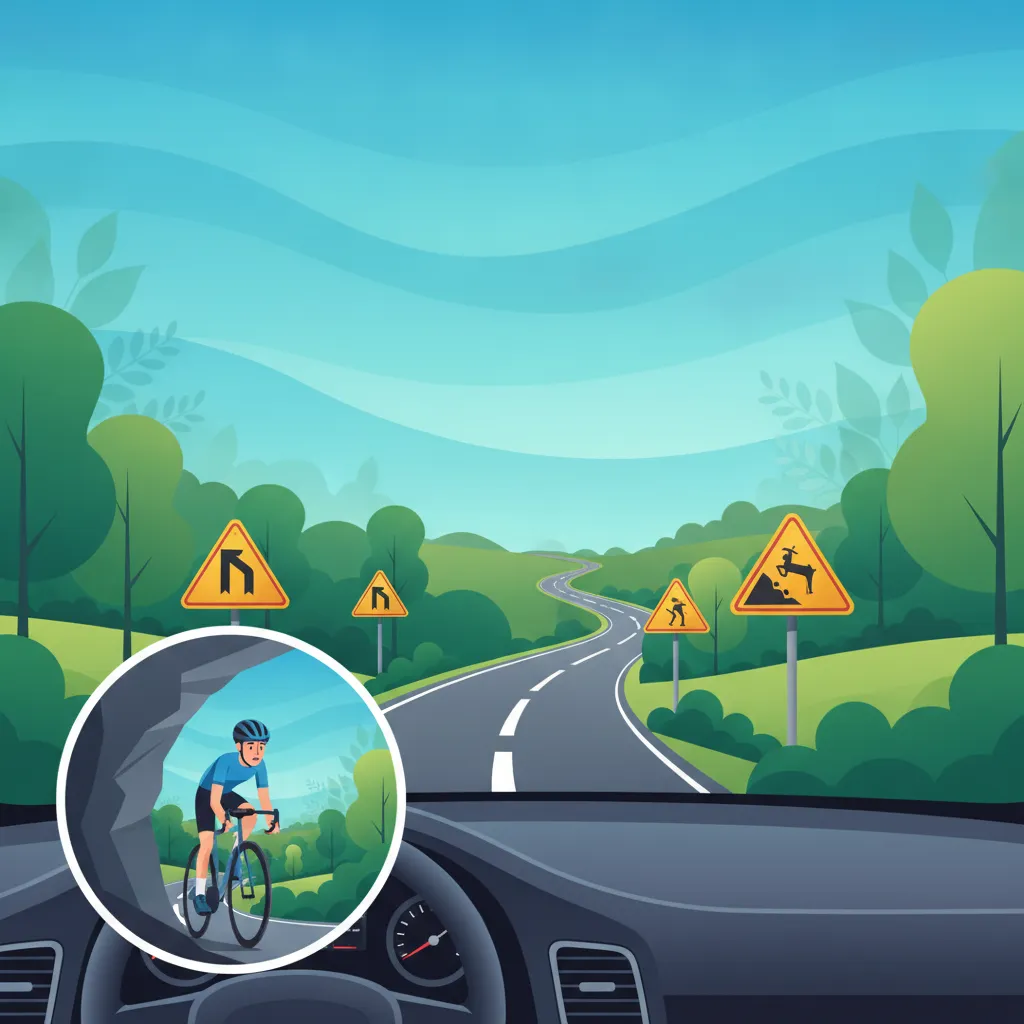
This lesson is dedicated to warning signs, which are designed to alert drivers to potential dangers ahead. It covers the interpretation of signs indicating sharp curves, steep gradients, slippery surfaces, and the presence of pedestrians or animals. By understanding these warnings, riders can anticipate potential hazards and adjust their speed and position proactively for safer travel.

This lesson details the proper use of all vehicle lights and signaling devices. It explains when to use low and high beams, fog lights, hazard lights, and turn signals to communicate effectively with other road users. Correct lighting usage improves visibility and safety, especially in adverse weather conditions and during hours of darkness.

This lesson provides a comprehensive overview of the mandatory lighting systems for all Category AM vehicles under Belgian law. It details the required functions of headlamps, rear lights, brake lights, and turn signals, explaining their importance for communication and visibility. Learners will understand the legal standards for this equipment and how to perform simple pre-ride checks to ensure all lights are functioning correctly.
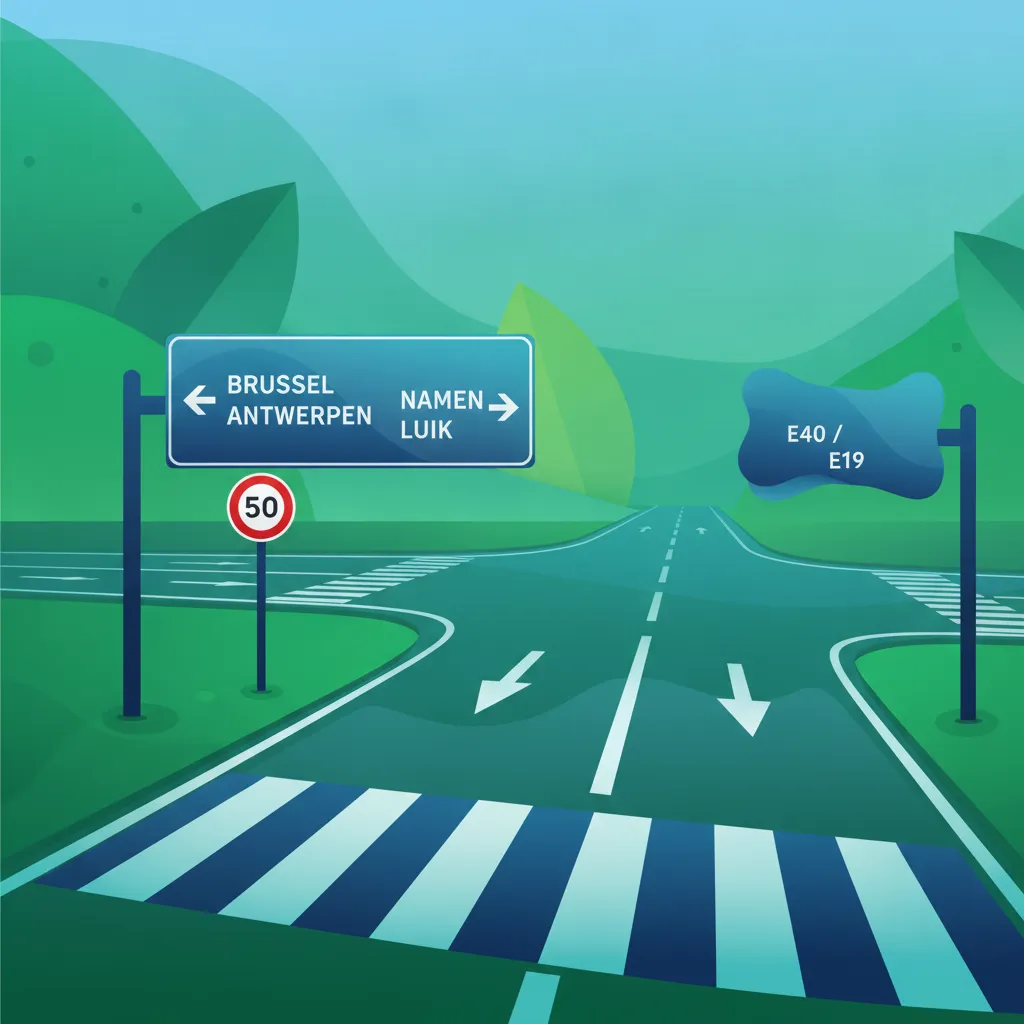
This lesson explains the role of information signs and road markings in guiding road users. It covers directional signs that help with navigation and markings that delineate lanes, pedestrian crossings, and zones for specific users like cyclists. Learners will understand how to use this information to maintain correct lane positioning and navigate their route efficiently and safely.

This lesson details the safe and systematic approach to different types of intersections, both signal-controlled and uncontrolled. It explains how to use road signs and markings to determine right-of-way and when to stop or yield. The importance of comprehensive scanning for traffic from all directions and adjusting approach speed is emphasized to ensure safe passage.
This lesson focuses on regulatory signs, which impose legal obligations and restrictions on road users. It explains the meaning of common signs such as speed limits, stop, yield, and no-entry, detailing how they apply to Category AM vehicles. Understanding these signs is fundamental for legal compliance and safe interaction with traffic, as they dictate required actions and prohibitions.
This lesson focuses on the legal duties and responsibilities that an AM vehicle operator must uphold on Belgian roads. It covers critical rules such as adhering to speed limits, correctly applying right-of-way principles, and following regulations for overtaking other vehicles. The lesson also explains the system of fines and penalty points for traffic violations, emphasizing the legal consequences of non-compliance to foster responsible driving habits.
This lesson provides a step-by-step guide to executing turns and lane changes safely and efficiently. It covers the critical sequence of checking mirrors, signaling intent, and performing a head check for blind spots before any maneuver. Learners will also understand how to manage their speed and balance during cornering to maintain full control of the vehicle.
This lesson provides specific instructions for navigating roundabouts, a common feature on Belgian roads. It covers the rules of priority upon entry, the correct lane choice based on the intended exit, and the proper use of signals. Learners will understand how to safely circulate and exit, while being mindful of other vehicles, particularly larger ones with significant blind spots.
Explore advanced traffic light signals beyond the basic red, amber, and green. Understand flashing signals, special lights for pedestrians and cyclists, and their specific meanings and applications in Belgium. Essential for safe intersection navigation.
This lesson examines the operation of traffic light systems in Belgium, clarifying the meaning of red, amber, and green signals, including flashing lights and directional arrows. It details a motorcyclist's legal obligations when approaching and navigating signal-controlled intersections. The content also addresses specialized signals for pedestrians and trams that riders must recognize and respond to correctly.
This lesson details the proper use of all vehicle lights and signaling devices. It explains when to use low and high beams, fog lights, hazard lights, and turn signals to communicate effectively with other road users. Correct lighting usage improves visibility and safety, especially in adverse weather conditions and during hours of darkness.
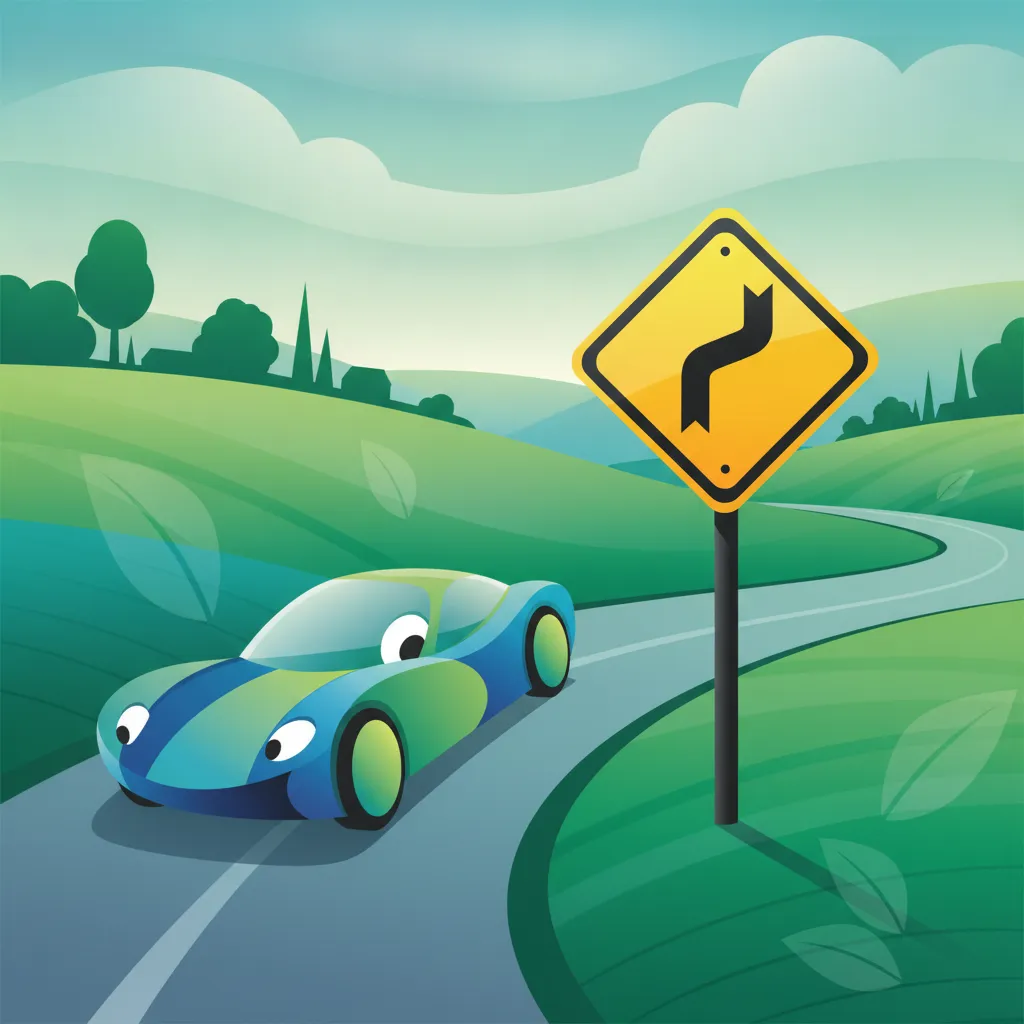
This lesson focuses on warning signs designed to alert drivers to potential hazards ahead. Topics include warnings for sharp curves, steep gradients, slippery surfaces, and zones with high pedestrian or wildlife activity. Learners will understand how to correctly interpret these signs and adjust their driving behavior to maintain safety on the road.
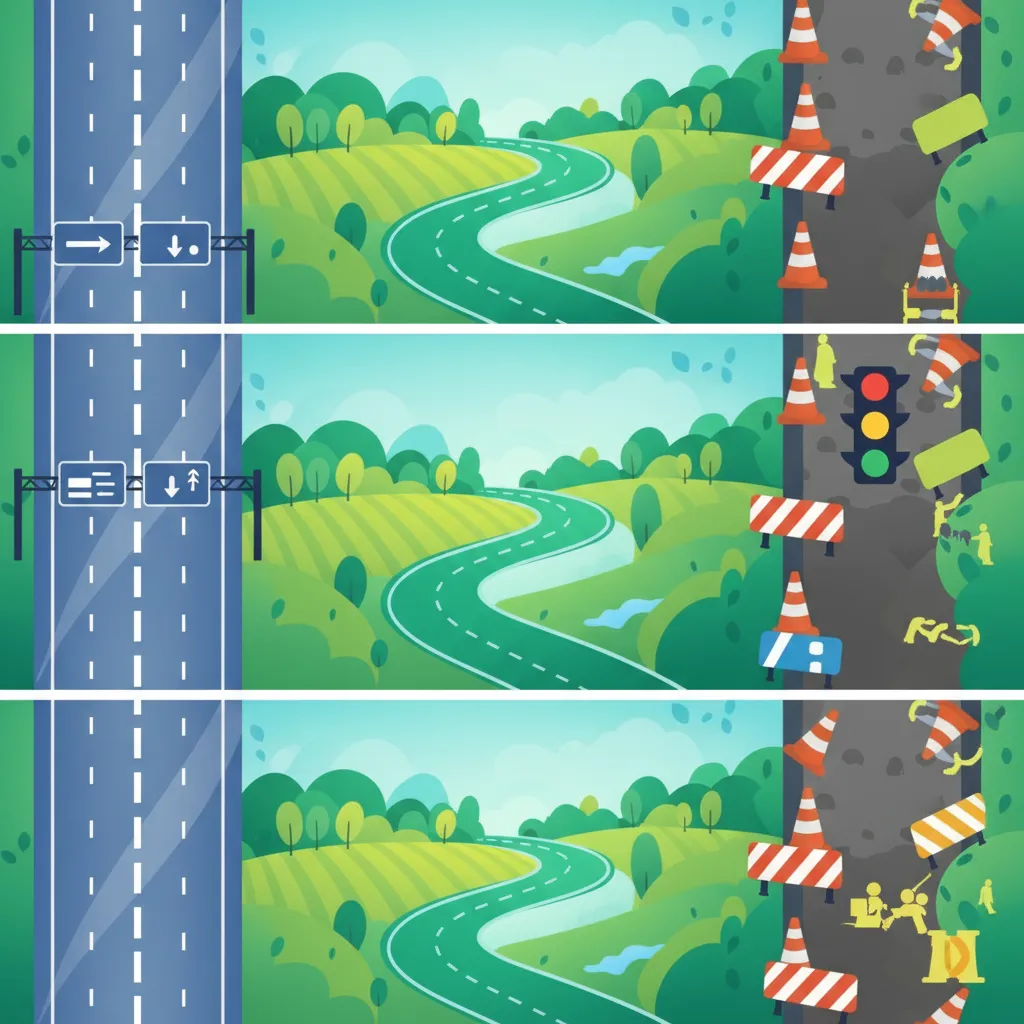
This lesson covers the specific challenges of driving on motorways, rural roads, and navigating roadworks. Learners will review lane discipline on high-speed roads and identify hazards common to rural roads, such as sharp bends and wildlife. It also explains the importance of adjusting speed and following temporary signage in construction zones.
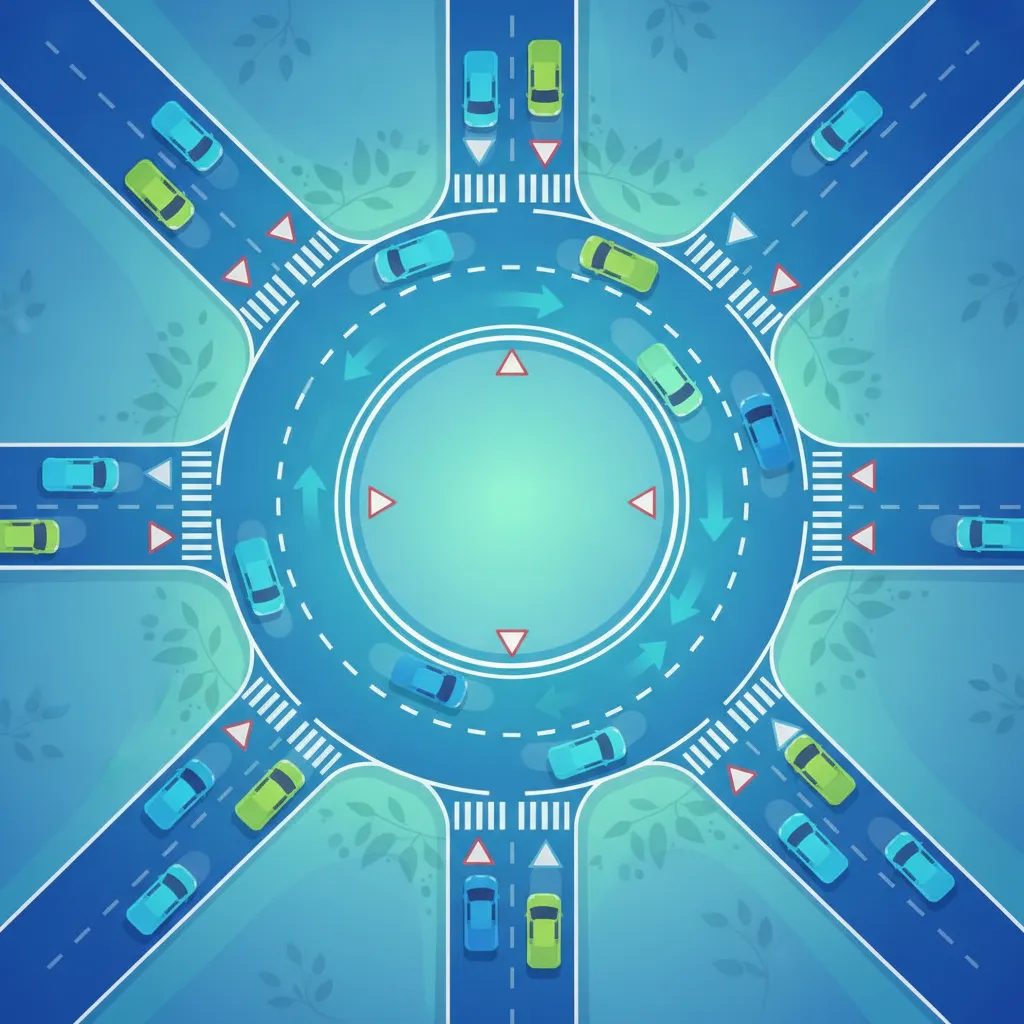
Roundabouts are a key feature of Belgian traffic management. This lesson explains how to approach, enter, navigate, and exit a roundabout safely, with a focus on yielding priority to traffic already circulating. Learners will also study correct lane positioning on multi-lane roundabouts and the appropriate use of signals.
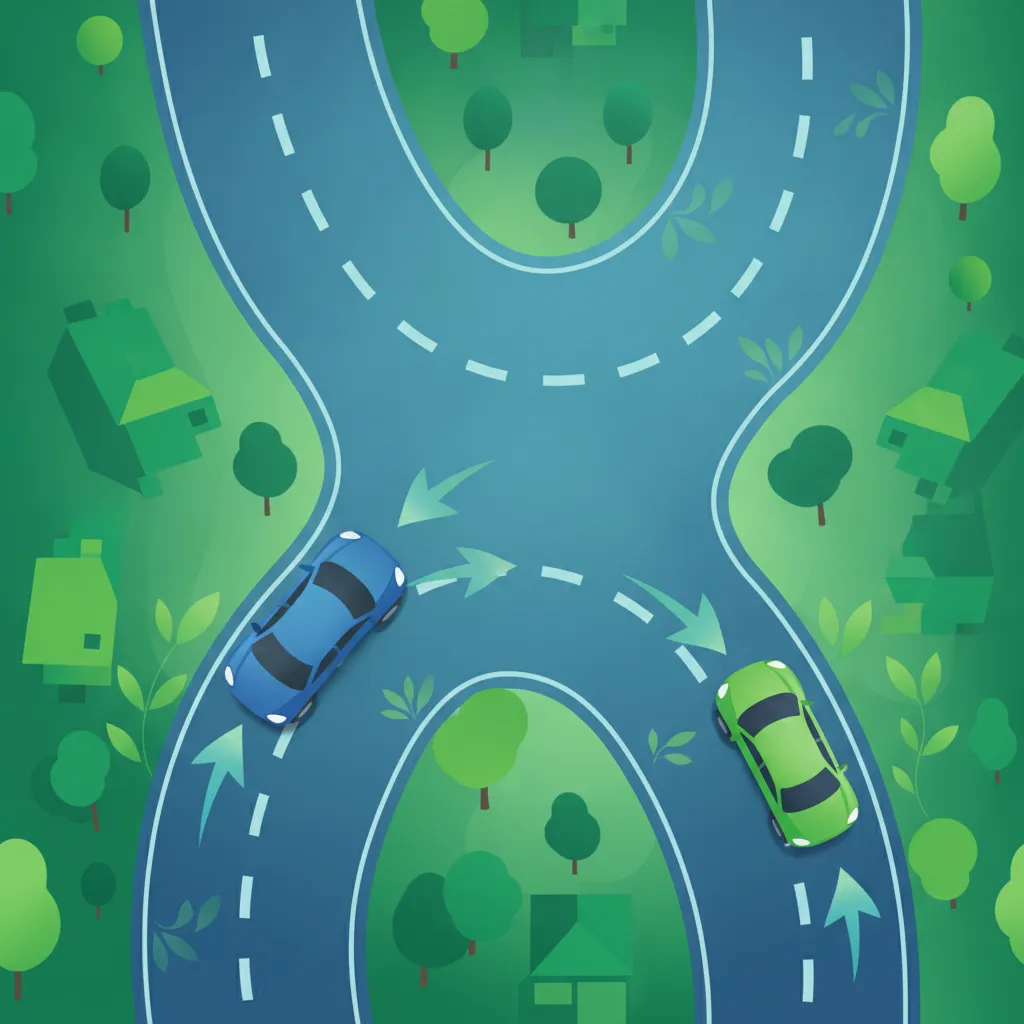
This lesson focuses on basic manoeuvres, covering the proper use of indicators, safe lane positioning, and correct steering for turns. Learners will study the importance of checking blind spots and maintaining appropriate speed for a smooth transition when changing lanes. It also addresses turning at intersections and signaling intentions clearly to other road users.
This lesson is dedicated to warning signs, which are designed to alert drivers to potential dangers ahead. It covers the interpretation of signs indicating sharp curves, steep gradients, slippery surfaces, and the presence of pedestrians or animals. By understanding these warnings, riders can anticipate potential hazards and adjust their speed and position proactively for safer travel.

This lesson focuses on the rules governing pedestrian crossings, including marked zebra crossings and signal-controlled crossings. Special attention is given to school zones and residential areas where pedestrian activity is high. Learners will understand how to recognize and respect pedestrian priority in various crossing scenarios to ensure their safety.
Find clear answers to common questions learners have about Traffic Lights and Signal Interpretation. Learn how the lesson is structured, which driving theory objectives it supports, and how it fits into the overall learning path of units and curriculum progression in Belgium. These explanations help you understand key concepts, lesson flow, and exam focused study goals.
You must stop if you can do so safely. If you are already too close to the intersection to stop without causing a danger to other road users, you may proceed, but you must exercise extreme caution.
No. A flashing amber light indicates that the traffic light is not functioning or is in a cautionary state. You must obey the standard priority signs present at the intersection, such as priority from the right.
Yes, in some areas of Belgium, you may see traffic lights with small bicycle or moped symbols. You must obey these if they apply to your lane or the specific path you are using.
A red arrow means you cannot proceed in the direction indicated by that arrow, even if the main light is green for other directions. You must wait until that specific arrow turns green.
Ready to focus your Belgian driving theory revision? Utilize our powerful search tool to pinpoint exact topics, road signs, or difficulty levels. Engage with practice questions that directly address your learning needs and solidify your understanding of Belgian traffic laws for your upcoming exam.