
This lesson focuses on identifying and interpreting the warning signs you will encounter on Danish roads. You will learn to anticipate hazards and adjust your driving behavior in response to changing road conditions, a critical skill for both the Category B theory exam and real-world safety.
Lesson content overview
Welcome to this comprehensive lesson on warning signs and hazard awareness, an essential component of the Danish Driving License Theory Course: Category B Preparation. As a future driver, your ability to identify, understand, and react appropriately to warning signs is paramount for road safety, hazard anticipation, and ultimately, passing your driving theory test. These signs act as a proactive safety tool, providing you with crucial advance notice of potential dangers and changing road conditions, allowing you to adjust your speed and driving behavior well before encountering a risk.
This lesson will delve into the specifics of various warning signs found on Danish roads, explaining their significance and the correct actions to take. Understanding these signs not only helps you navigate safely but also ensures compliance with Danish traffic laws, contributing to a smoother and more secure traffic flow for everyone.
Warning signs are fundamental to a robust traffic management system. They are designed to give drivers sufficient time to prepare for hazards that might not be immediately visible. This early notification is crucial for preventing accidents and ensuring smooth traffic flow, especially on unfamiliar roads or in challenging conditions. The underlying logic is simple: informed drivers are safer drivers. By anticipating potential risks, you can make timely decisions regarding speed, lane position, and vigilance, thereby significantly reducing the likelihood of a collision.
The principles behind warning signs are rooted in proactive safety. They emphasize advance warning, providing early notification of upcoming hazards. This enables risk anticipation, allowing you to foresee and mitigate potential dangers based on the information provided. Consequently, you can then perform an adaptation of driving, adjusting your speed, trajectory, and level of vigilance. Finally, compliance with the implied safety measures of these signs is a legal obligation, ensuring a consistent standard of safety across the road network.
In Denmark, warning signs conform to a distinct visual standard that makes them easily recognizable. They are typically triangular in shape, featuring a prominent red border, a white background, and a black symbol at their center. This black symbol is a concise pictogram that visually conveys the nature of the upcoming hazard, making them universally understandable regardless of language barriers.
The primary purpose of these signs is to inform drivers of specific dangers ahead, enabling timely and appropriate adjustments to their driving. Recognizing and correctly responding to these signs is not merely a suggestion; it is a mandatory requirement for safety. Failure to comply with the implied warnings can lead to serious accidents, endangering yourself, your passengers, and other road users. Therefore, their importance in preventing incidents and maintaining overall road safety cannot be overstated.
Danish roads feature a variety of warning signs, each indicating a specific type of hazard or condition. Familiarizing yourself with these common signs and understanding their practical meaning is a critical step towards becoming a responsible and safe driver.
One of the most frequent hazards indicated by warning signs is the presence of sharp curves or a series of bends. These signs are crucial for preventing drivers from entering a turn at an unsafe speed, which can lead to loss of control, especially in adverse conditions.
When you encounter these signs, they signify that the road ahead will turn sharply, either to the right or to the left. If a series of curves is present, multiple signs may be used in succession, or a single sign might depict a winding road. The practical meaning is clear: you must reduce your speed significantly before entering the curve and position your vehicle appropriately to navigate the bend safely. Maintaining a proper lane position throughout the curve is essential to avoid crossing into oncoming traffic or leaving the road. Common mistakes include maintaining speed or underestimating the severity of the curve, both of which can lead to dangerous situations.
Areas with an increased presence of children, particularly near schools, playgrounds, or residential areas, are designated as school zones or areas requiring extra caution for children. These zones are marked with specific warning signs to alert drivers to the potential for unpredictable behavior from young pedestrians.
These signs typically feature a black silhouette of children, often with schoolbags, indicating that you must be extra vigilant. They are frequently accompanied by supplementary signs indicating reduced speed limits, especially during school start and end times. The practical meaning for drivers is to significantly reduce speed, be highly observant, and be prepared to stop suddenly for children who may cross the road unexpectedly, step out from behind parked cars, or not pay attention to traffic. Common mistakes involve ignoring reduced speed limits or assuming children will always obey traffic signals or rules.
In rural areas or regions adjacent to forests, farmlands, or natural habitats, warning signs for animal crossings are common. These signs alert drivers to areas where wild animals or domestic livestock may frequently cross the road, posing a significant collision risk.
The symbols on these signs vary, depicting the most common animals in the area, such as deer, moose, cattle, or even ducks. Upon seeing an animal crossing sign, drivers must anticipate the possible presence of animals on or near the road and adjust their speed accordingly. This means reducing speed, increasing your following distance, and being prepared to brake or stop suddenly if animals appear. Do not swerve aggressively to avoid an animal, as this can lead to loss of control and a more serious accident. Common mistakes include not reducing speed sufficiently or expecting animals only to cross at specific, designated points.
Roadworks are a common sight on Danish roads, aimed at maintaining and improving infrastructure. These temporary construction zones are indicated by specific warning signs that demand increased attention and careful driving from motorists.
Roadworks signs are often triangular with a red border and a black symbol of a roadworker, but they can also be yellow or orange with black symbols to signify temporary conditions more clearly. They are usually placed on portable poles or stands. These signs indicate altered road conditions, such as narrowed lanes, lane closures, temporary diversions, uneven surfaces, or the presence of workers and machinery. Drivers must strictly follow all posted temporary speed limits and lane directions, be prepared for sudden changes in traffic flow, and exercise extreme caution to ensure the safety of roadworkers. Ignoring these signs or failing to anticipate changes can lead to collisions with equipment or personnel.
Certain road conditions can significantly reduce tire grip, making the road surface hazardous. Warning signs for slippery roads are designed to alert drivers to such conditions, requiring an immediate adjustment in driving style.
This sign typically features a black car skidding on a slippery surface. It indicates that the road may be unusually slippery due to factors such as ice, snow, heavy rain, loose gravel, oil spills, or wet leaves. Upon encountering this sign, drivers must immediately reduce their speed, increase their following distance, and avoid any sudden or aggressive maneuvers, including sharp steering, rapid acceleration, or harsh braking. Gentle and smooth inputs are critical for maintaining control. Common mistakes include maintaining normal speed or reacting abruptly when the car starts to slide.
Beyond specific school zone signs, there are general warning signs indicating a heavy presence of children or pedestrians, particularly near residential areas, parks, or shopping districts. These signs emphasize the need for general vigilance towards vulnerable road users.
These signs typically feature symbols of children playing or a pedestrian. Their practical meaning is to increase your vigilance, reduce speed, and be ready to stop, especially in areas where children or pedestrians might unexpectedly enter the roadway. It is crucial not to assume that all pedestrians will use designated crossings or follow traffic signals. Always be prepared for the unexpected, particularly when children are present.
Level crossings, where a road and a railway track intersect at the same level, present a unique and potentially very dangerous hazard. Warning signs are always placed in advance of these crossings.
These signs may show a railway locomotive or a crossbuck symbol. They indicate an upcoming railway crossing, which may be either guarded (with barriers and flashing lights) or unguarded. At guarded crossings, drivers must stop when the barriers are down, or the red lights are flashing. At unguarded crossings, you must approach with extreme caution, slow down, look and listen for trains, and only proceed when it is absolutely safe to do so and no train is approaching. Never attempt to drive around lowered barriers or cross when a train is visible, even if the barriers are not yet fully down. Ignoring signals or assuming safety without stopping are severe and potentially fatal violations.
Roads with significant changes in gradient, either a steep uphill climb or a sharp downhill descent, are also indicated by warning signs. These signs prepare drivers for conditions that affect vehicle performance and control.
The sign typically shows a downward-pointing arrow with a percentage indicating the steepness of the slope. While a similar sign exists for uphill slopes, the downhill warning is particularly critical because it affects braking distance and vehicle speed. Drivers must reduce their speed before descending a steep slope to maintain control and prevent excessive brake wear. Using engine braking (downshifting to a lower gear) is often recommended to help control speed and reduce reliance on friction brakes, especially in longer or steeper descents. Maintaining speed and losing control due to insufficient braking is a common and dangerous mistake.
Tunnels present specific driving challenges, primarily due to changes in lighting conditions and often reduced visibility within the tunnel itself. Warning signs are placed before tunnel entrances to prepare drivers for these changes.
This sign typically shows a tunnel silhouette. It indicates the entry to a tunnel ahead. The practical meaning is to prepare for an abrupt change in light levels, which can temporarily impair your vision. You must adjust your speed, ensure your headlights are on (even if it's bright outside), and be alert for potential changes in road conditions, such as slippery surfaces or reduced lane width. Maintaining a safe following distance is also crucial. Failing to turn on headlights or not reducing speed adequately can lead to decreased visibility and increase the risk of accidents inside the tunnel.
Compliance with warning signs is not just a matter of good driving; it is a legal requirement under Danish traffic law. Failure to adhere to the warnings and implied safety measures can result in significant legal consequences, including fines, penalty points, or even license suspension, in addition to the obvious safety risks.
The general rule is that all warning signs must be heeded without exception. The Færdselsloven (Danish Road Traffic Act) mandates that drivers must adjust their speed and behavior to suit the prevailing road and traffic conditions, explicitly including conditions indicated by warning signs.
For example, in school zones, reduced speed limits are often in effect, and strict adherence is monitored. Violations in these areas are treated with particular severity due to the increased risk to children. At level crossings, the obligation to stop when barriers are down or signals indicate a train is approaching is absolute. Proceeding when unsafe is a grave violation. On slippery surfaces, drivers are expected to reduce speed significantly and increase following distances. The exact speed reduction will depend on the severity of the conditions, but it must be substantial enough to ensure full control of the vehicle.
Even experienced drivers can sometimes make errors when it comes to warning signs. Being aware of these common pitfalls can help you avoid them:
The appropriate response to a warning sign is not always a fixed action; it often depends on various contextual factors. A skilled driver considers these elements to adapt their driving even further, ensuring maximum safety.
Weather plays a critical role in how you should interpret and react to warning signs.
Other variables that influence your hazard response include:
The ultimate goal of understanding warning signs is to cultivate strong hazard anticipation skills. Early detection of potential dangers, combined with a proactive adjustment of your driving, drastically increases your reaction time and substantially reduces the risk of accidents. This integrated approach aligns with defensive driving strategies, where you constantly scan the environment, anticipate potential risks, and prepare a response before an emergency situation arises.
Proper compliance with warning signs not only leads to a reduced risk of collisions but also contributes to smoother traffic flow by preventing sudden braking or erratic maneuvers. Ignoring these vital alerts, conversely, directly increases the likelihood of losing control, causing collisions, and incurring legal penalties. By internalizing the lessons of warning signs, you become a safer, more confident, and more responsible participant in Danish traffic.
To solidify your understanding, consider these practical scenarios:
Scenario 1: Approaching an Animal Crossing in Damp Conditions You are driving on a rural road that winds through a forested area. You see a warning sign indicating an animal crossing ahead. The road surface is slightly damp from recent rain.
Scenario 2: Entering a School Zone During Active Hours You are driving through a residential area during a weekday morning. You spot a warning sign indicating a school zone, and ahead, you see children walking on the pavement, some close to the road's edge.
Scenario 3: Entering a Motorway Tunnel at Dusk You are on a motorway approaching a long tunnel as dusk settles, making visibility somewhat lower. You see the warning sign for a tunnel entrance.
Mastering the identification and appropriate response to warning signs is a cornerstone of safe and responsible driving in Denmark. This lesson has provided you with comprehensive knowledge of their characteristics, specific meanings, and the crucial adjustments required for various hazards. By internalizing these principles, you enhance your hazard awareness, improve your decision-making abilities, and contribute significantly to overall road safety. Remember to always apply contextual adaptations based on weather, road type, time of day, and your vehicle's condition.
Continue to integrate this hazard awareness with broader defensive driving strategies learned in other units, such as priority rules, speed management, and observation techniques. Your ability to anticipate risks and adapt your driving behavior is a key indicator of a competent and safe driver, fully prepared for the challenges of Danish roads.
This lesson covers the identification and proper response to Danish warning signs, which are triangular with red borders, white backgrounds, and black symbols. It details how to handle specific hazards including sharp curves, school zones, animal crossings, roadworks, slippery surfaces, level crossings, steep slopes, and tunnels. The lesson emphasizes that warning signs represent a legal obligation under Danish traffic law and that appropriate responses must account for contextual factors like weather, time of day, and vehicle load. Key driving actions include reducing speed before hazards, increasing following distances, using smooth inputs, and ensuring proper headlight use in tunnels.
A short set of high-value points that capture the most important learning from this lesson.
Warning signs in Denmark follow a standardized triangular design with red border, white background, and black symbol indicating the specific hazard
Sharp curve signs require significant speed reduction before entering the bend, maintaining proper lane position throughout to avoid crossing into oncoming traffic
School zone signs demand extra vigilance for unpredictable child behavior, with reduced speed limits strictly enforced and heavily fined
Animal crossing signs require speed reduction and increased following distance; never swerve aggressively as this can cause loss of control
Level crossings require absolute compliance—stop when barriers are down or lights are flashing, and never attempt to cross when a train is visible
Explore all units and lessons included in this driving theory course.
Warning signs are a legal obligation under Danish traffic law (Færdselsloven), not optional safety suggestions
On slippery surfaces, reduce speed, increase following distance, and use gentle smooth inputs to maintain control
Tunnels require headlights to be turned on even in daylight to compensate for sudden light level changes
Engine braking (downshifting) is recommended on steep descents to control speed and reduce brake wear
Contextual factors like weather, time of day, road type, and vehicle load all affect how much you must adjust your response to any warning sign
Maintaining normal speed when approaching sharp curves, leading to loss of control especially on wet surfaces
Assuming children will always use crossings or obey traffic rules in school zones
Proceeding through a level crossing before barriers are fully raised or lights have stopped flashing
Entering tunnels without headlights on, reducing visibility to other drivers and your own ability to see ahead
Ignoring temporary speed limits in roadwork zones, reducing reaction time to sudden lane changes or obstacles
Lesson content overview
A short set of high-value points that capture the most important learning from this lesson.
Warning signs in Denmark follow a standardized triangular design with red border, white background, and black symbol indicating the specific hazard
Sharp curve signs require significant speed reduction before entering the bend, maintaining proper lane position throughout to avoid crossing into oncoming traffic
School zone signs demand extra vigilance for unpredictable child behavior, with reduced speed limits strictly enforced and heavily fined
Animal crossing signs require speed reduction and increased following distance; never swerve aggressively as this can cause loss of control
Level crossings require absolute compliance—stop when barriers are down or lights are flashing, and never attempt to cross when a train is visible
Explore all units and lessons included in this driving theory course.
Warning signs are a legal obligation under Danish traffic law (Færdselsloven), not optional safety suggestions
On slippery surfaces, reduce speed, increase following distance, and use gentle smooth inputs to maintain control
Tunnels require headlights to be turned on even in daylight to compensate for sudden light level changes
Engine braking (downshifting) is recommended on steep descents to control speed and reduce brake wear
Contextual factors like weather, time of day, road type, and vehicle load all affect how much you must adjust your response to any warning sign
Maintaining normal speed when approaching sharp curves, leading to loss of control especially on wet surfaces
Assuming children will always use crossings or obey traffic rules in school zones
Proceeding through a level crossing before barriers are fully raised or lights have stopped flashing
Entering tunnels without headlights on, reducing visibility to other drivers and your own ability to see ahead
Ignoring temporary speed limits in roadwork zones, reducing reaction time to sudden lane changes or obstacles
Explore search topics learners often look for when studying Warning Signs and Hazard Awareness. These topics reflect common questions about road rules, driving situations, safety guidance, and lesson level theory preparation for learners in Denmark.
Browse additional driving theory lessons that cover connected traffic rules, road signs, and common driving situations related to this topic. Improve your understanding of how different rules interact across everyday traffic scenarios.
Explore less common warning signs and how context like weather, time of day, and road type affects their interpretation. Learn to anticipate complex hazards beyond basic recognition.
This lesson introduces the primary categories of Danish road signs and their legal implications. It covers regulatory signs that dictate mandatory actions or prohibitions, and warning signs that indicate upcoming hazards. Correct interpretation of these signs is fundamental for lawful and safe riding on Danish roads.
This lesson focuses on interpreting the various markings painted on Danish road surfaces. It explains the rules associated with solid and broken lane lines, directional arrows, and special-purpose lanes for buses and cyclists. Understanding these markings is crucial for maintaining correct lane discipline and safely navigating complex road layouts.
This lesson details the meaning and application of various road surface markings, including lane dividers, solid and broken lines, and directional arrows. You will also learn to interpret the full sequence of traffic light signals, including the specific rules for the amber (yellow) light phase. A proper understanding of these systems is vital for maintaining correct lane discipline and adhering to traffic controls.
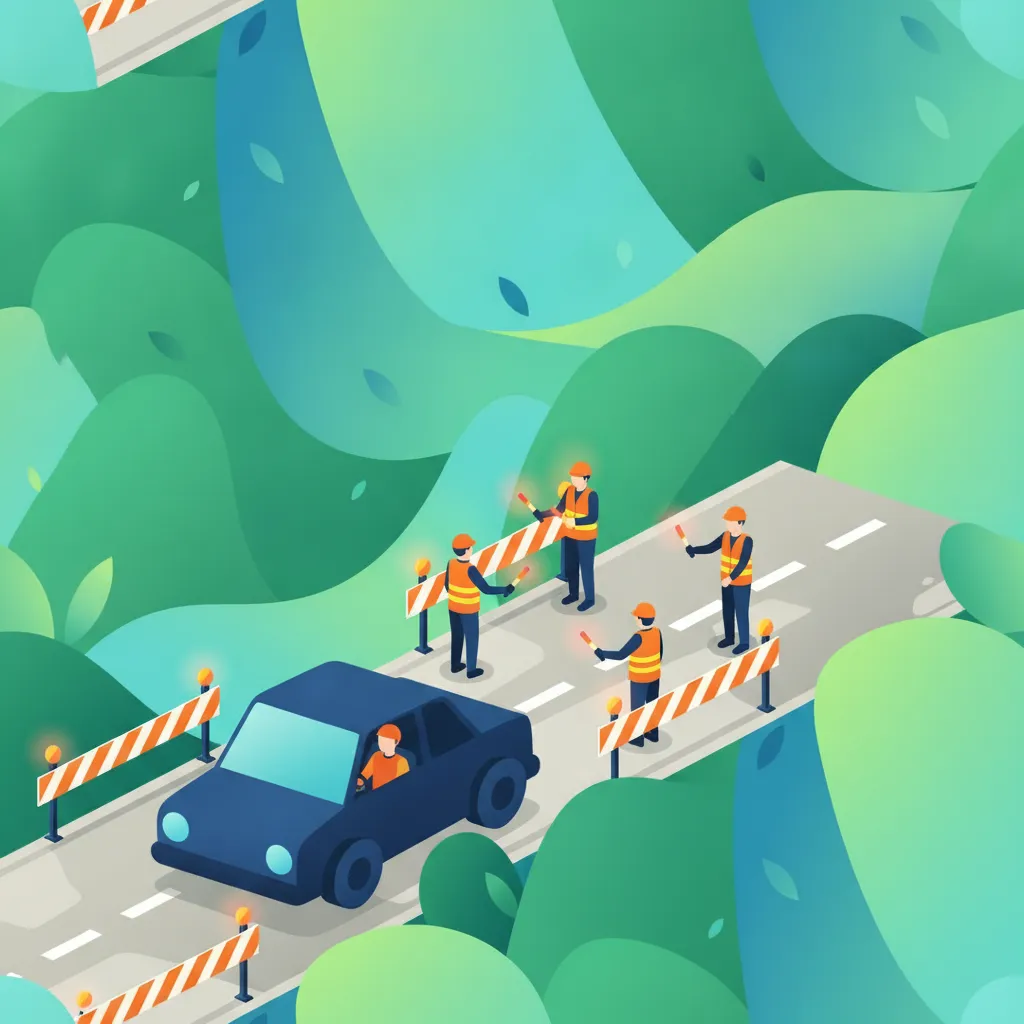
This lesson explains the procedures for safely riding through construction zones. It covers how to respond to temporary signage, lane closures, and flaggers directing traffic. Riders will learn to reduce speed and be vigilant for uneven pavement, loose gravel, and the movement of workers and equipment.
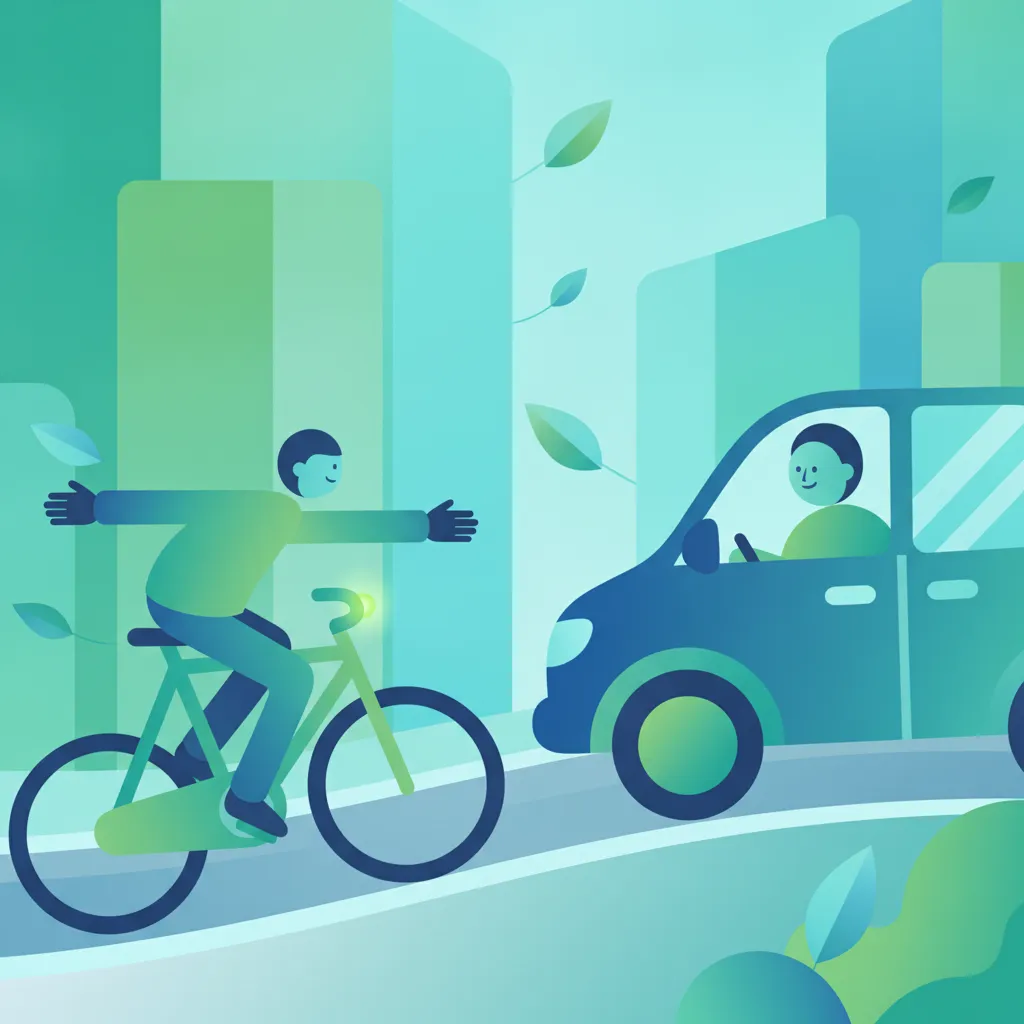
This lesson covers the proper methods for signalling intentions to other road users. It details the legal requirements for using turn indicators before turning or changing lanes. The content also explains how to use legally recognized hand signals as a backup or for added clarity.
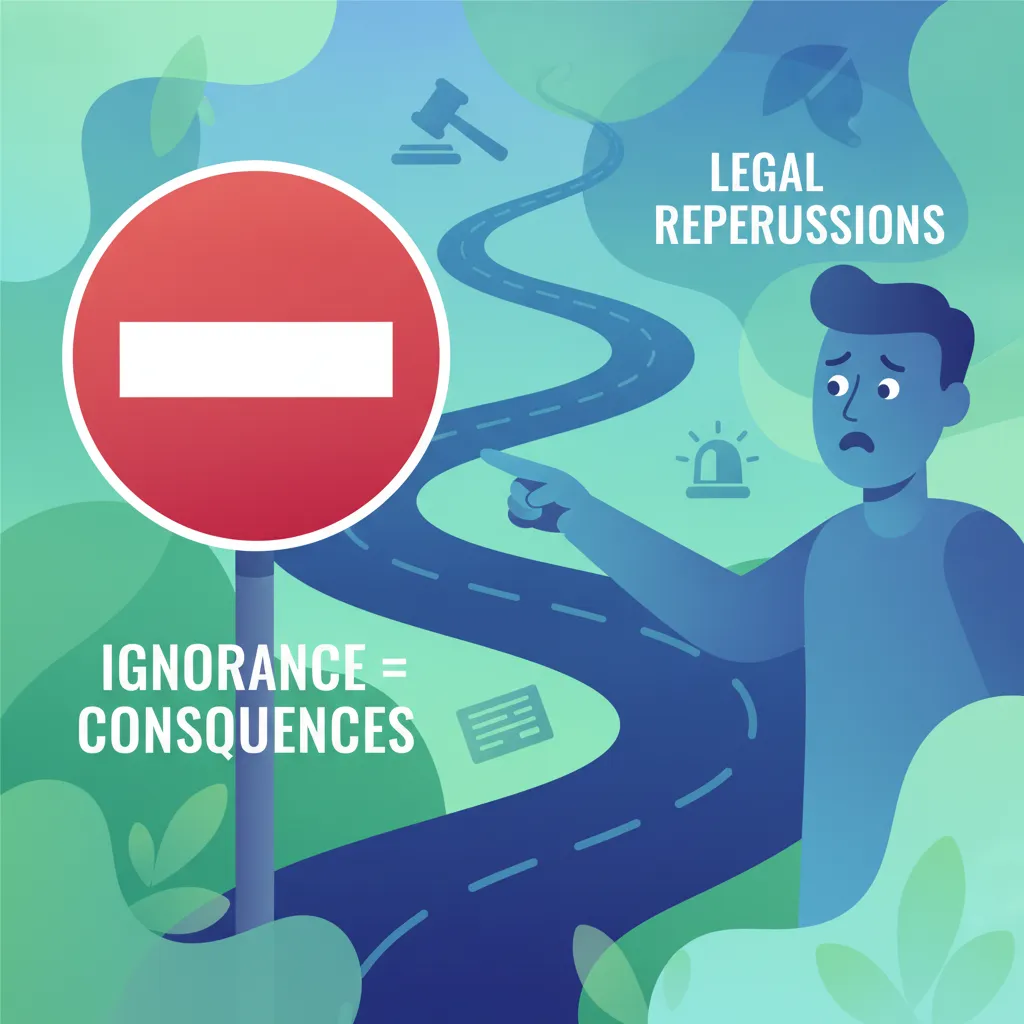
This lesson focuses on regulatory signs, which enforce mandatory actions or prohibitions, such as speed limits, stop signs, and no-entry signs. You will learn about the legally binding nature of these signs and the serious consequences of non-compliance. The material also explains signs related to parking rules and overtaking restrictions, providing a clear framework for adhering to Danish traffic law.

This lesson explores non-verbal communication techniques for safer road sharing. It discusses the importance of making eye contact with other drivers and pedestrians to confirm they have seen you. The content also explains the appropriate and legal use of the horn to alert others of your presence.

This lesson covers the core principles of defensive driving in an urban context. It teaches drivers how to anticipate the actions of other road users, maintain safe following distances in dense traffic, and navigate complex intersections with multiple signals. The content emphasizes heightened awareness of pedestrians, cyclists, and unexpected events common in Danish city environments.
This lesson introduces the essential principles of defensive driving, shifting the focus from reacting to hazards to proactively anticipating them. You will learn techniques for systematic scanning of the driving environment, maintaining a safety cushion around your vehicle, and identifying potential risks before they develop. These proactive strategies are fundamental to becoming a safer, more confident driver.

This lesson prepares riders for the specific hazards of rural roads, which often have less visibility and more unpredictable surfaces. It covers strategies for approaching blind curves, safely passing agricultural machinery, and being vigilant for animals on the road. Adjusting speed to match visibility is a core principle.
Identify frequent errors drivers make when encountering Danish warning signs. Learn how to avoid misinterpretations of signs for curves, school zones, and roadworks to ensure better safety.
This lesson introduces the primary categories of Danish road signs and their legal implications. It covers regulatory signs that dictate mandatory actions or prohibitions, and warning signs that indicate upcoming hazards. Correct interpretation of these signs is fundamental for lawful and safe riding on Danish roads.
This lesson details the meaning and application of various road surface markings, including lane dividers, solid and broken lines, and directional arrows. You will also learn to interpret the full sequence of traffic light signals, including the specific rules for the amber (yellow) light phase. A proper understanding of these systems is vital for maintaining correct lane discipline and adhering to traffic controls.
This lesson focuses on interpreting the various markings painted on Danish road surfaces. It explains the rules associated with solid and broken lane lines, directional arrows, and special-purpose lanes for buses and cyclists. Understanding these markings is crucial for maintaining correct lane discipline and safely navigating complex road layouts.
This lesson focuses on regulatory signs, which enforce mandatory actions or prohibitions, such as speed limits, stop signs, and no-entry signs. You will learn about the legally binding nature of these signs and the serious consequences of non-compliance. The material also explains signs related to parking rules and overtaking restrictions, providing a clear framework for adhering to Danish traffic law.
This lesson introduces the essential principles of defensive driving, shifting the focus from reacting to hazards to proactively anticipating them. You will learn techniques for systematic scanning of the driving environment, maintaining a safety cushion around your vehicle, and identifying potential risks before they develop. These proactive strategies are fundamental to becoming a safer, more confident driver.
This lesson explores non-verbal communication techniques for safer road sharing. It discusses the importance of making eye contact with other drivers and pedestrians to confirm they have seen you. The content also explains the appropriate and legal use of the horn to alert others of your presence.
This lesson explains the procedures for safely riding through construction zones. It covers how to respond to temporary signage, lane closures, and flaggers directing traffic. Riders will learn to reduce speed and be vigilant for uneven pavement, loose gravel, and the movement of workers and equipment.
This lesson covers the proper methods for signalling intentions to other road users. It details the legal requirements for using turn indicators before turning or changing lanes. The content also explains how to use legally recognized hand signals as a backup or for added clarity.
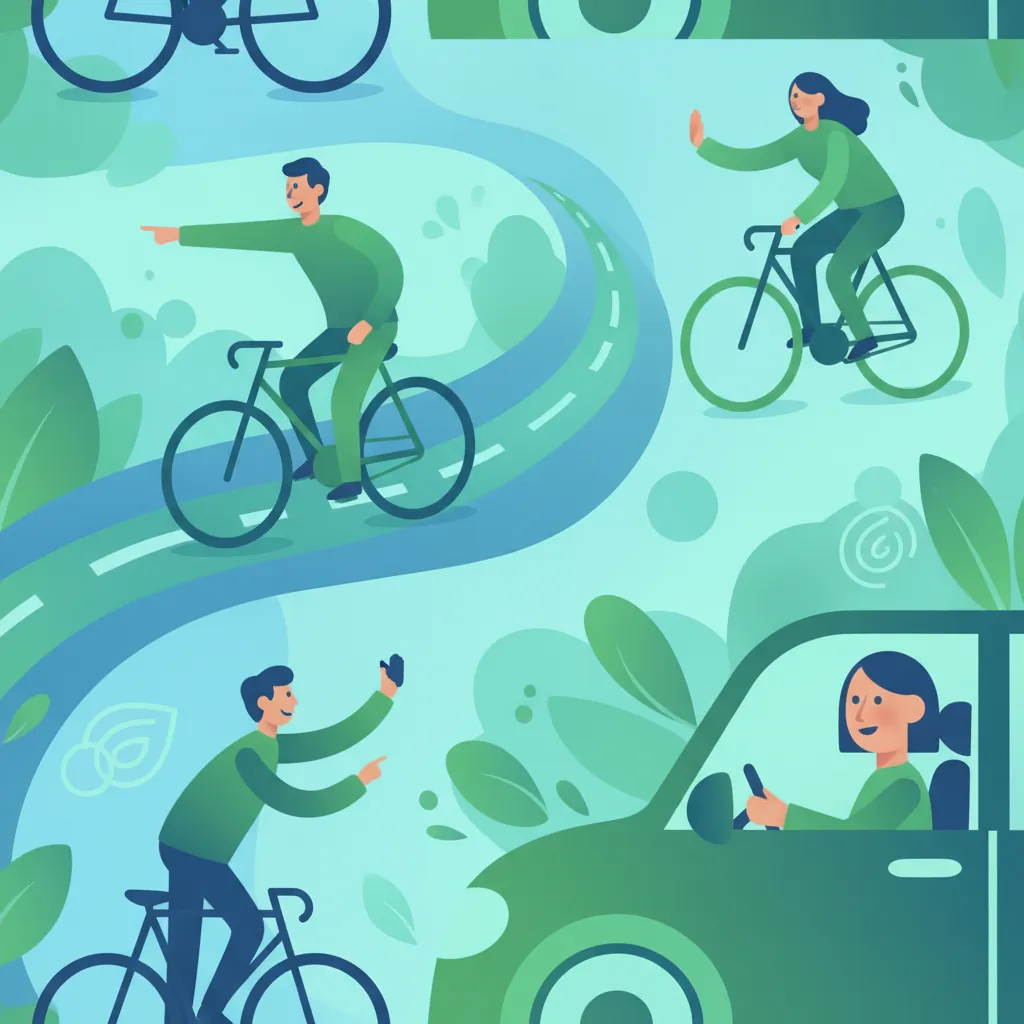
This lesson introduces cooperative driving as a fundamental element of road safety in Denmark. It highlights the social responsibility of drivers to act predictably, anticipate the actions of others, and maintain courteous interactions with all road users. By fostering mutual respect and cooperation, you will learn how to reduce the potential for conflict and enhance overall traffic safety.

Properly functioning lighting and signaling systems are fundamental for safe communication on the road. This lesson details the purpose and correct use of all exterior lights, including headlights, brake lights, turn signals, and hazard lights, according to Danish law. It emphasizes the driver's responsibility to ensure these systems are clean and operational to maintain visibility and clearly signal maneuvers to other road users.
Find clear answers to common questions learners have about Warning Signs and Hazard Awareness. Learn how the lesson is structured, which driving theory objectives it supports, and how it fits into the overall learning path of units and curriculum progression in Denmark. These explanations help you understand key concepts, lesson flow, and exam focused study goals.
While not every warning sign requires an immediate hard brake, they all demand that you prepare to adapt your speed. You must assess the situation and reduce your speed if the hazard—such as a sharp curve or roadworks—makes your current speed unsafe.
Warning signs are typically triangular with a white background and red border; they alert you to a potential hazard ahead. Regulatory signs, such as stop or yield signs, dictate a specific legal obligation you must follow immediately.
Yes, Denmark uses specific warning signs to alert drivers to areas where cyclists are frequently crossing or sharing the road. Given the high volume of cyclists in Denmark, these are frequently tested and require heightened observation.
Distance plates indicate exactly how far ahead the hazard begins. Always check these plates so you can gauge your reaction time and begin your speed adjustment smoothly rather than reacting at the last second.
Use our powerful search tool to pinpoint specific Danish driving theory topics, road signs, or traffic situations you need to review. Start exploring relevant practice sets now to reinforce your knowledge and build confidence for your upcoming driving licence exam.