
This lesson focuses on the essential non-verbal communication skills required for riding a stor knallert safely on Danish roads. You will learn how to use eye contact, body language, and signals to share the road effectively and avoid misunderstandings with other traffic participants.

Lesson content overview
Understanding and practicing effective communication is a cornerstone of safe driving, particularly for operators of Category AM vehicles, known as stor knallert (large mopeds) in Denmark. As a stor knallert rider, you share the road with a diverse range of participants, including cars, buses, trucks, cyclists, and pedestrians. Since direct verbal communication is rarely possible in traffic, mastering non-verbal cues becomes paramount to preventing misunderstandings, reducing uncertainty, and ultimately, avoiding collisions. This lesson delves into the techniques and legal requirements for clear interaction, ensuring you can anticipate and be anticipated by others.
Traffic interactions are a constant dance of anticipation and reaction, heavily reliant on unspoken signals. For stor knallert riders, who might be less visible than larger vehicles, this non-verbal dialogue is even more critical. It involves a combination of visual cues, audible signals, and strategic positioning to convey your intentions and ensure mutual awareness.
Effective communication builds a shared understanding among all road users. When your intentions are clear, others can predict your actions, and you can similarly anticipate theirs. This predictive capability is vital for safety, especially in dynamic Danish traffic environments where various vehicle types and speeds converge. Without clear communication, there is a heightened risk of sudden maneuvers, conflicts, and accidents due to incorrect assumptions about another road user's next move. For stor knallert riders, who are more vulnerable, this proactive communication can be life-saving.
At the heart of safe road communication are several core principles designed to foster a predictable and cooperative traffic flow. These principles ensure that all participants are actively engaged in understanding and being understood, minimizing the chances of error.
The explicit effort by road users to ensure others are aware of their presence and intentions, creating a shared understanding of the traffic situation.
Mutual awareness is the foundation. It means not just being visible, but confirming that you have been seen. This principle reduces the likelihood of collisions by confirming that all parties can anticipate each other's actions, leading to smoother and safer interactions.
Actively seeking and receiving visual acknowledgment from another road user to confirm they have perceived your presence and potentially your intended actions before proceeding with a maneuver.
Confirmatory eye contact provides direct assurance that another party has indeed perceived you. Before pulling out into traffic, changing lanes, or crossing an intersection, actively looking for eye contact or other visual cues indicating awareness is a critical step for a stor knallert rider.
The judicious and legally compliant use of the vehicle's horn as a signaling device, primarily intended to alert other road users of an imminent danger or your presence when visual contact is insufficient.
The horn is a powerful tool for immediate alerts. It is designed to communicate your presence or warn of potentially dangerous situations where quick attention is required. Its use, however, must be judicious and adhere strictly to legal guidelines, never being employed out of frustration or as a general greeting.
Eye contact is perhaps the most direct form of non-verbal communication in traffic. It's a quick, powerful way to confirm that another person has seen you and is acknowledging your presence. For stor knallert riders, whose smaller profile might otherwise be overlooked, establishing eye contact is a critical safety measure.
Eye contact transcends mere visibility; it is about perceived visibility. When you make eye contact with another driver or a pedestrian, you are establishing a direct connection that confirms mutual awareness. This visual exchange helps eliminate assumptions, replacing them with concrete confirmation that your presence and often your intentions have been registered. For instance, before you proceed at a junction, a quick glance and a nod from a driver waiting to turn can provide invaluable assurance.
As a stor knallert rider, actively seek eye contact in numerous situations where your safety depends on another road user's awareness. This includes, but is not limited to, pedestrian crossings, intersections, when overtaking, or when joining traffic. Before entering a pedestrian crossing, for example, slow down and wait until you make eye contact with the pedestrian, confirming they have seen you and acknowledged your intent. Similarly, before overtaking a cyclist, ensure they have looked in their mirror or over their shoulder, indicating they are aware of your approach.
A common mistake is assuming that because you see someone, they automatically see you. This assumption can lead to dangerous situations, particularly with vulnerable road users like children or elderly pedestrians who might not be as attentive. Always make the explicit effort to seek eye contact. Another error is failing to look for eye contact when overtaking, which can lead to misjudgments if the other party unexpectedly changes their path.
When approaching an intersection or a pedestrian crossing, gently slow down and scan for eye contact from all potentially conflicting road users. Only proceed when you are confident you have been seen.
Your position on the road is a dynamic form of communication that speaks volumes about your presence and intentions. For stor knallert riders, strategic positioning is not just about following traffic rules; it's a vital tool for maximizing your visibility to other drivers and helping you see the road ahead clearly.
Placing your stor knallert in a location that optimizes both your visibility to others and your view of the road is crucial. This means actively avoiding areas where you might disappear from other drivers' mirrors or direct sightlines. By positioning yourself clearly within a lane, you become an unmistakable presence rather than a marginal one. For example, when traveling in a lane next to a larger vehicle, positioning yourself slightly to the side, where you can see their side mirror and they can see you, is far safer than riding directly beside their cabin.
Every vehicle has blind spots – areas around it that are not covered by mirrors or direct eyesight. For larger vehicles, these blind spots can be substantial. As a stor knallert rider, you must be acutely aware of these zones and actively avoid riding in them. This often means adjusting your speed or position to ensure you remain visible in another driver's mirrors or direct line of sight. Never linger in a truck's or car's blind spot; either accelerate to pass safely or drop back to a position where you are clearly visible.
Never assume a driver will see you if you are riding in their blind spot. Always position yourself where you can see their mirrors and they can see you.
The horn on your stor knallert is a critical safety device, designed for specific warning purposes. Its use is governed by Danish traffic laws (Færdselsloven) to prevent misuse and ensure it effectively serves its intended function: to alert and warn.
The primary and almost exclusive purpose of the horn is to warn other road users of your presence or to signal an imminent danger that requires immediate attention. This means using it only in situations where a quick, audible alert is necessary to prevent an accident.
Examples of Correct Use:
The horn should be a brief, decisive sound, not a prolonged blast. Its purpose is to gain attention, not to startle or intimidate.
In situations where immediate attention is crucial to prevent an accident, a short, clear sound from your horn can be an effective warning signal.
Danish traffic law is clear about what constitutes improper horn use. The horn must not be used:
Misuse of the horn can not only be annoying and distracting to other road users but can also lead to legal consequences, including fines. It diminishes the horn's effectiveness as a genuine warning signal and can cause confusion or even panic.
The effectiveness and necessity of horn use can vary with conditions.
Danish traffic laws, primarily outlined in Færdselsloven (The Road Traffic Act), contain implicit and explicit regulations regarding how road users communicate. While not every aspect of non-verbal communication is detailed, the overarching principle is to ensure safety through mutual awareness and predictable behavior.
The general principle embedded in Danish traffic law is that drivers, including stor knallert riders, must operate their vehicles safely and with due consideration for others. This includes taking steps to ensure other road users have seen them before proceeding if safety depends on it. This requirement is implicit in rules concerning priority (vigepligt), overtaking, and maneuvering. For instance, before pulling out from a side road or making a turn, you are expected to ensure that oncoming traffic or pedestrians are aware of your intention and that you can proceed without causing danger. Failing to do so can be considered negligent and may lead to legal repercussions in the event of an accident.
Færdselsloven explicitly addresses the use of warning signals, which includes the horn.
The core regulation states that:
These rules emphasize that the horn is a safety tool, not a means of expressing emotion or greeting. Adhering to these regulations is crucial for maintaining order and safety on Danish roads.
Effective communication isn't a one-size-fits-all approach; it adapts to the surrounding environment and conditions. Stor knallert riders must be able to adjust their communication techniques based on visibility, road type, and the presence of vulnerable road users.
Adverse weather and low light significantly reduce visibility, making non-verbal communication more challenging but also more critical.
In poor visibility conditions, always assume you are less visible than you think, and proactively compensate with careful positioning and judicious use of warning signals.
Vulnerable road users require extra caution and a proactive approach to communication.
The context of the road also dictates communication needs.
Effective communication is a skill that develops with practice and conscious effort. By consistently applying these principles, stor knallert riders can significantly enhance their safety and contribute to a more predictable and harmonious traffic flow in Denmark.
This lesson covers essential non-verbal communication techniques for stor knallert riders in Denmark, emphasizing that effective communication prevents collisions by establishing mutual awareness among all road users. Key skills include seeking confirmatory eye contact before maneuvers, using road positioning to stay visible and avoid blind spots, and understanding the legal constraints on horn use under Færdselsloven. The lesson also addresses adapting communication strategies for adverse weather, darkness, and interactions with vulnerable road users. For the Danish theory exam, learners must recognize how proactive communication reduces uncertainty and identifies potential hazards before they escalate.
A short set of high-value points that capture the most important learning from this lesson.
Confirmatory eye contact means actively seeking visual acknowledgment from other road users, not just assuming they see you.
The horn is a safety warning device under Færdselsloven and must only be used to alert others of imminent danger.
Your position on the road communicates your presence—ride where you can see other drivers' mirrors and they can see you.
Reduce your speed and increase vigilance when interacting with vulnerable road users like children and elderly pedestrians.
Environmental conditions like rain, fog, and darkness require proactive compensation through positioning and warning signals.
Explore all units and lessons included in this driving theory course.
Never assume another road user has seen you; always seek confirmation through eye contact before proceeding with a maneuver.
Horn use is prohibited for expressing frustration, greetings, or unnecessary attention—this can result in fines under Danish traffic law.
Avoid riding in the blind spots of larger vehicles; position yourself to remain visible in mirrors or directly in the driver's sightline.
Mutual awareness means ensuring others are aware of both your presence and your intentions, not just your physical presence.
Vulnerable road users such as children, elderly pedestrians, and cyclists may not detect your approach without explicit confirmation.
Assuming that because you see someone, they have automatically seen you—this is especially dangerous at intersections and crossings.
Using the horn out of impatience or as a greeting, which violates Færdselsloven and reduces the horn's effectiveness as a warning signal.
Failing to establish eye contact when overtaking a cyclist, leading to misjudgment if the cyclist unexpectedly changes direction.
Riding in a vehicle's blind spot without realizing you are not visible to the driver through mirrors or direct vision.
Not adapting communication techniques to reduced visibility conditions, such as heavy rain, fog, or night riding.
Lesson content overview
A short set of high-value points that capture the most important learning from this lesson.
Confirmatory eye contact means actively seeking visual acknowledgment from other road users, not just assuming they see you.
The horn is a safety warning device under Færdselsloven and must only be used to alert others of imminent danger.
Your position on the road communicates your presence—ride where you can see other drivers' mirrors and they can see you.
Reduce your speed and increase vigilance when interacting with vulnerable road users like children and elderly pedestrians.
Environmental conditions like rain, fog, and darkness require proactive compensation through positioning and warning signals.
Explore all units and lessons included in this driving theory course.
Never assume another road user has seen you; always seek confirmation through eye contact before proceeding with a maneuver.
Horn use is prohibited for expressing frustration, greetings, or unnecessary attention—this can result in fines under Danish traffic law.
Avoid riding in the blind spots of larger vehicles; position yourself to remain visible in mirrors or directly in the driver's sightline.
Mutual awareness means ensuring others are aware of both your presence and your intentions, not just your physical presence.
Vulnerable road users such as children, elderly pedestrians, and cyclists may not detect your approach without explicit confirmation.
Assuming that because you see someone, they have automatically seen you—this is especially dangerous at intersections and crossings.
Using the horn out of impatience or as a greeting, which violates Færdselsloven and reduces the horn's effectiveness as a warning signal.
Failing to establish eye contact when overtaking a cyclist, leading to misjudgment if the cyclist unexpectedly changes direction.
Riding in a vehicle's blind spot without realizing you are not visible to the driver through mirrors or direct vision.
Not adapting communication techniques to reduced visibility conditions, such as heavy rain, fog, or night riding.
Explore search topics learners often look for when studying Communication with Other Road Users. These topics reflect common questions about road rules, driving situations, safety guidance, and lesson level theory preparation for learners in Denmark.
Browse additional driving theory lessons that cover connected traffic rules, road signs, and common driving situations related to this topic. Improve your understanding of how different rules interact across everyday traffic scenarios.
Understand the legal requirements and best practices for communicating with drivers, cyclists, and pedestrians in Denmark. Learn how to use eye contact, horn signals, and road positioning to ensure mutual awareness and safety on the road.
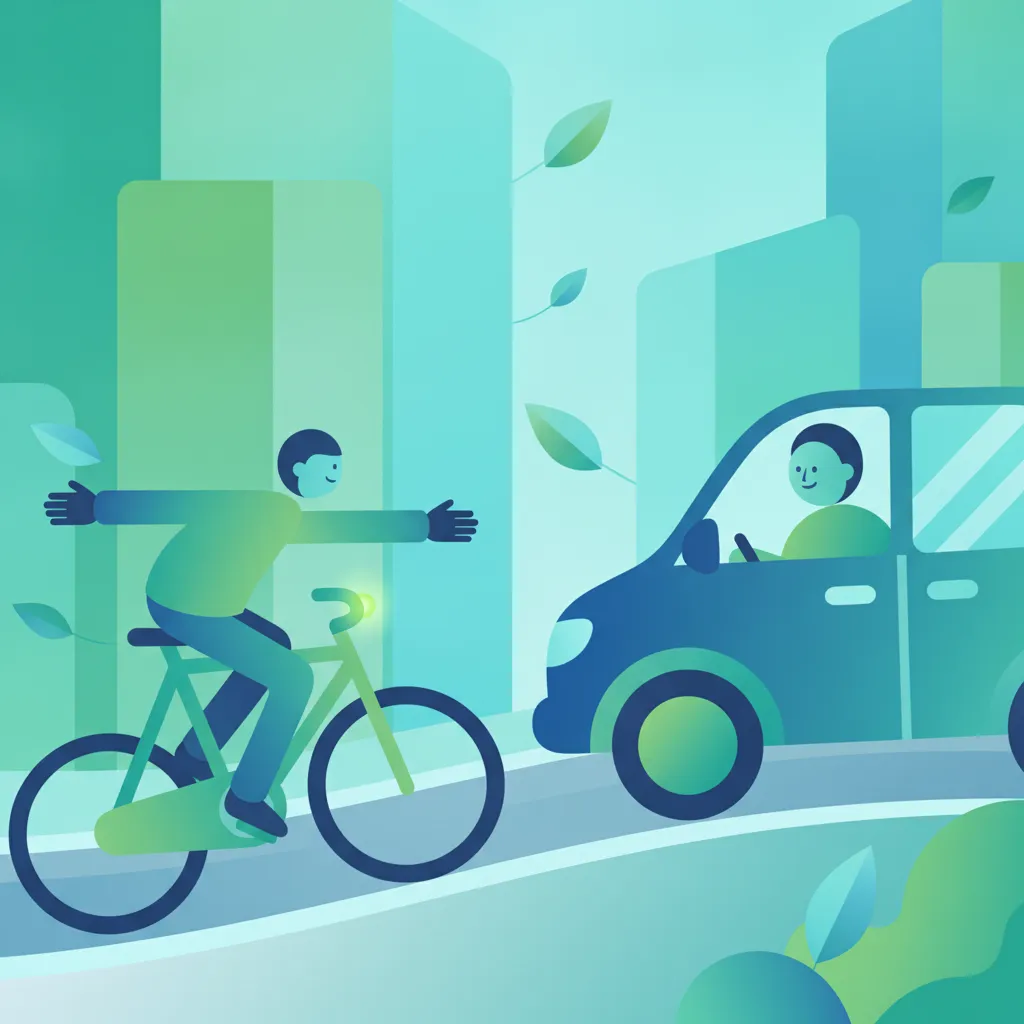
This lesson covers the proper methods for signalling intentions to other road users. It details the legal requirements for using turn indicators before turning or changing lanes. The content also explains how to use legally recognized hand signals as a backup or for added clarity.
This lesson details the function and meaning of traffic light signals in Denmark. It covers the standard red, amber, and green sequences, as well as special signals like flashing amber lights and green arrows for turning. The content also explains signals specific to cyclists and pedestrians that moped riders must observe at intersections.

This lesson explains the critical importance of being visible to other road users. It details the proper use of headlights and daytime running lights as required by Danish law. The content also covers the effectiveness of wearing reflective clothing and ensuring the vehicle's reflectors are clean and functional.
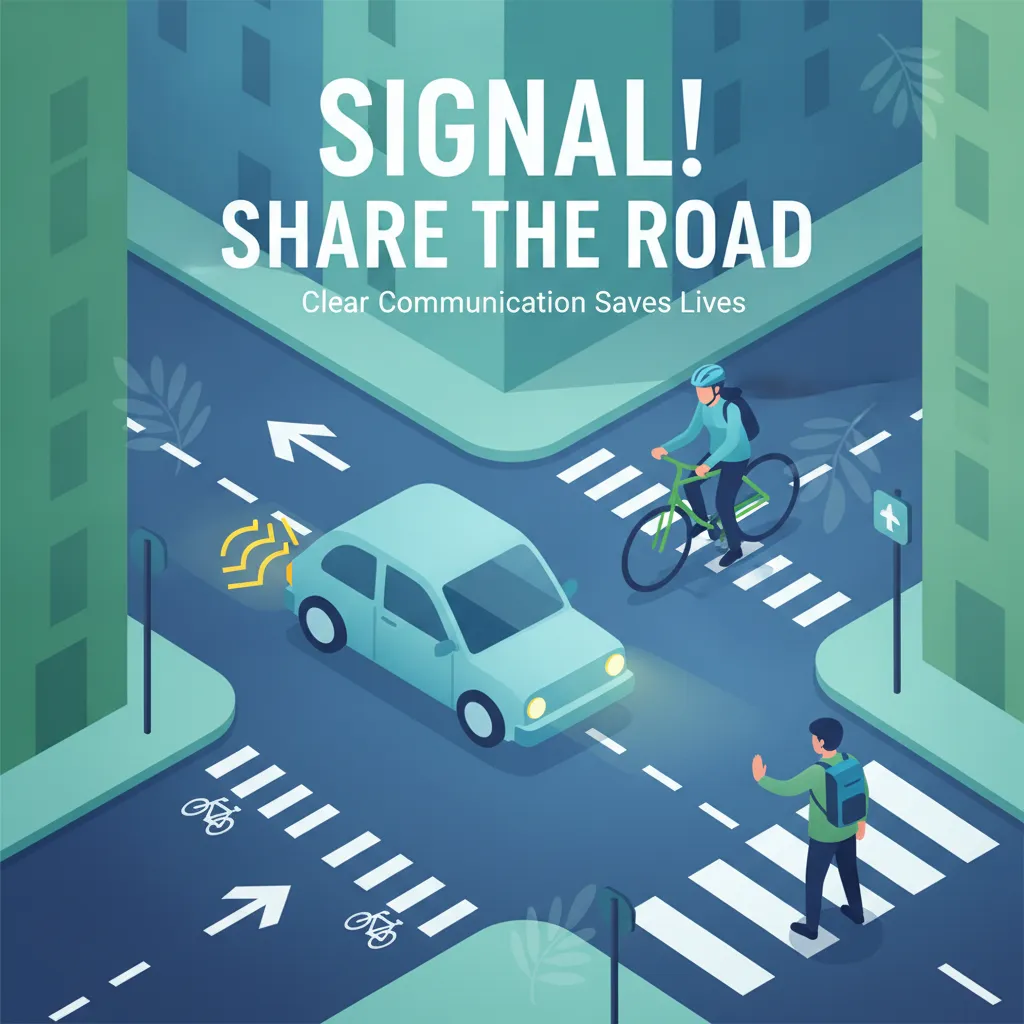
This lesson focuses on the different ways motorcyclists can communicate their intentions to others. It covers the correct use of electronic signals, standard hand signals, and the importance of making eye contact with drivers. Clear and early communication is essential for preventing conflicts and ensuring predictable interactions in traffic.
This lesson focuses on interpreting the various markings painted on Danish road surfaces. It explains the rules associated with solid and broken lane lines, directional arrows, and special-purpose lanes for buses and cyclists. Understanding these markings is crucial for maintaining correct lane discipline and safely navigating complex road layouts.

Properly functioning lighting and signaling systems are fundamental for safe communication on the road. This lesson details the purpose and correct use of all exterior lights, including headlights, brake lights, turn signals, and hazard lights, according to Danish law. It emphasizes the driver's responsibility to ensure these systems are clean and operational to maintain visibility and clearly signal maneuvers to other road users.

This lesson provides a comprehensive overview of a vehicle's lighting systems and their proper use. It covers the functions of low and high beams, fog lights, and all signal lights, emphasizing their importance for visibility and communication with other drivers. The material explains the legal requirements for using lights in various conditions, including daytime, darkness, and adverse weather, as specified by Danish regulations.

This lesson provides an in-depth explanation of Denmark's priority rules, known as 'vigepligt.' It differentiates between unconditional priority ('ubetinget vigepligt'), often indicated by signs, and the default right-hand priority rule ('højre vigepligt'). Applying these rules correctly is essential for preventing collisions at junctions without traffic signals.
This lesson introduces the primary categories of Danish road signs and their legal implications. It covers regulatory signs that dictate mandatory actions or prohibitions, and warning signs that indicate upcoming hazards. Correct interpretation of these signs is fundamental for lawful and safe riding on Danish roads.
This lesson details the meaning and application of various road surface markings, including lane dividers, solid and broken lines, and directional arrows. You will also learn to interpret the full sequence of traffic light signals, including the specific rules for the amber (yellow) light phase. A proper understanding of these systems is vital for maintaining correct lane discipline and adhering to traffic controls.
Master effective communication techniques for navigating complex Danish urban environments. This lesson covers how to adapt eye contact, positioning, and horn usage when interacting with vulnerable road users and in busy city traffic.

This lesson addresses the unique challenges of driving in tourist-heavy urban centers alongside cyclists. It teaches drivers to anticipate the behavior of individuals who may be distracted or unfamiliar with local traffic rules. The content provides strategies for communicating intentions clearly and navigating safely around large groups, luggage, and cyclists.

This lesson covers the core principles of defensive driving in an urban context. It teaches drivers how to anticipate the actions of other road users, maintain safe following distances in dense traffic, and navigate complex intersections with multiple signals. The content emphasizes heightened awareness of pedestrians, cyclists, and unexpected events common in Danish city environments.
This lesson provides critical guidance for driving in environments with heavy cycle traffic, typical of Danish cities. It focuses on identifying and yielding to cyclists in dedicated bike lanes, especially when turning right across their path. The content emphasizes advanced observation skills to detect cyclists in blind spots and the importance of giving adequate space.
This lesson addresses the unique challenges of streets with dedicated cycle lanes and numerous bus stops. It teaches riders how to anticipate pedestrians moving to and from buses and how to position themselves to avoid conflict with cyclists. The goal is to navigate these complex environments smoothly and safely.
This lesson focuses on safe interactions with Denmark's large population of cyclists and other vulnerable road users. It covers the rules for passing cyclists, yielding at pedestrian crossings, and the specific hazard of turning across a bike lane. Developing heightened awareness for these interactions is critical for urban riding.
This lesson provides in-depth guidance on safely interacting with cyclists and e-bike riders, a daily reality in Danish cities. It explains how to provide adequate space when overtaking, how to anticipate their movements at intersections, and how to respect their right-of-way in designated lanes. Understanding these dynamics is essential for preventing common accidents and ensuring a safe urban driving experience for everyone.
This lesson focuses on identifying and mitigating common hazards in built-up areas. It covers the risks associated with pedestrians emerging from behind buses or parked cars, and the danger of suddenly opening car doors. Learners will understand the importance of reducing speed and increasing observation in these high-risk environments.
This lesson introduces cooperative driving as a fundamental element of road safety in Denmark. It highlights the social responsibility of drivers to act predictably, anticipate the actions of others, and maintain courteous interactions with all road users. By fostering mutual respect and cooperation, you will learn how to reduce the potential for conflict and enhance overall traffic safety.

This lesson prepares riders for the specific hazards of rural roads, which often have less visibility and more unpredictable surfaces. It covers strategies for approaching blind curves, safely passing agricultural machinery, and being vigilant for animals on the road. Adjusting speed to match visibility is a core principle.
This lesson reinforces the driver's responsibility to protect pedestrians, particularly in busy urban areas and near schools. It details the procedures for approaching pedestrian crossings, the legal requirement to reduce speed significantly in marked school zones, and how to anticipate the unpredictable actions of pedestrians. The content covers traffic calming measures and the legal rights of pedestrians in various settings.
Find clear answers to common questions learners have about Communication with Other Road Users. Learn how the lesson is structured, which driving theory objectives it supports, and how it fits into the overall learning path of units and curriculum progression in Denmark. These explanations help you understand key concepts, lesson flow, and exam focused study goals.
You may only use your horn to warn other road users of a danger or to prevent an accident. Using it to express frustration or to signal that you are waiting is not permitted under Danish traffic law.
Eye contact is a vital non-verbal tool to confirm that a car driver or cyclist has noticed you. Since stor knallert riders are more vulnerable, verifying that they see you helps prevent accidents at junctions and roundabouts.
Always use your indicators well in advance of your turn or change in lane. If your indicators are not functioning or in heavy traffic, hand signals may be used as a supplementary way to make your intentions clear.
Yes. Many theory questions feature road scenarios where identifying the correct communication method is the key to preventing a collision. Understanding these rules demonstrates the road maturity required to pass.
Use our powerful search tool to pinpoint specific Danish driving theory topics, road signs, or traffic situations you need to review. Start exploring relevant practice sets now to reinforce your knowledge and build confidence for your upcoming driving licence exam.