
This lesson explores the legal and practical requirements for lighting and signaling systems on heavy vehicles within the Danish traffic framework. Understanding these systems is vital for safe operation, ensuring your vehicle remains visible and communicative in diverse driving conditions. This knowledge forms a critical part of your preparation for the Category C theory exam.

Lesson content overview
For professional drivers of heavy goods vehicles in Denmark, the proper functioning and correct use of lighting and signaling systems are not merely a legal requirement; they are fundamental pillars of road safety. These systems are your primary tools for communicating with other road users, ensuring your large vehicle is seen, and clearly indicating your intentions, particularly given the significant size and mass of lorries and combinations. This comprehensive lesson details the purpose, correct application, and legal mandates governing all exterior lights on a heavy vehicle, as stipulated by Danish traffic law.
Operating a heavy goods vehicle demands an elevated sense of responsibility, and nowhere is this more evident than in the meticulous management of its lighting and signaling systems. Due to their extended braking distances, wider turning circles, and potential for larger blind spots, lorries rely heavily on clear, consistent visual communication to prevent accidents. Properly functioning lights allow other drivers, cyclists, and pedestrians to accurately perceive your vehicle's presence, size, speed, and intended maneuvers, thereby reducing the risk of collisions, especially in challenging conditions like darkness, fog, or heavy rain.
To master the use of your vehicle's lighting and signaling systems, it is essential to internalize the following core principles:
Headlights are your primary means of illuminating the path ahead and making your vehicle visible from the front, especially during periods of low light or poor visibility. Heavy vehicles are often driven in diverse conditions, making the correct use of dipped and main beams critical.
Dipped beam headlights provide sufficient illumination for normal driving conditions when it's dark, or when visibility is otherwise reduced. They are engineered to cast light downwards and slightly to the right (in countries with right-hand traffic like Denmark), minimizing glare for other road users.
Associated Rules in Denmark:
Main beam headlights provide a powerful, far-reaching beam of light, significantly enhancing your forward visibility on unlit roads. However, their intensity makes them unsuitable for use when other traffic is present, as they can temporarily blind other drivers.
Associated Rules in Denmark:
Common Mistakes:
Position lights are crucial for making your heavy vehicle's presence, width, and length visible to other road users, especially during twilight hours, at night, or when parked. Given the significant dimensions of lorries and combinations, these lights are indispensable for safety.
Practical Meaning: These lights help other drivers accurately judge the size and position of your heavy vehicle, which is critical for safe passing and maneuvering, particularly in low light conditions. For a Category C driver, knowing the correct use of side marker lights is essential, as they significantly aid in defining the extensive length of your rig.
Associated Rules in Denmark:
Common Mistakes:
Brake lights are arguably one of the most critical signaling systems on any vehicle, and particularly on heavy goods vehicles. Their sole purpose is to immediately alert following traffic that your vehicle is slowing down or stopping. Given the extended stopping distances of heavy vehicles, early and clear signaling of braking is paramount.
Practical Meaning: For Category C drivers, perfectly functional brake lights are a non-negotiable safety feature. A heavy vehicle takes significantly longer to stop than a passenger car. If your brake lights are faulty or delayed, drivers behind you will have less time to react, dramatically increasing the risk of a rear-end collision, which can have catastrophic consequences involving a lorry.
Associated Rules in Denmark:
Common Mistakes:
The rear fog light is a specialized, high-intensity red light designed to make your heavy vehicle more visible from the rear in extremely poor visibility conditions, such as dense fog, heavy snowfall, or torrential rain. It is important to understand its specific purpose and the strict rules governing its use to avoid causing glare for other drivers.
Practical Meaning: For heavy vehicles, especially long combinations, being easily seen from the rear in dense fog is vital. The rear fog light helps prevent rear-end collisions by providing an unmistakable warning of your presence. However, its high intensity means it must be used judiciously.
Associated Rules in Denmark:
Common Mistakes:
Using the rear fog light in clear weather can be hazardous. Its intense brightness can blind drivers behind you, making it difficult for them to judge distances and increasing the risk of an accident. Always switch it off as soon as visibility allows.
Turn signals, often referred to as directional indicators, are crucial for communicating your intentions to other road users well in advance of a maneuver. For heavy vehicle drivers, effective signaling is even more critical due to the vehicle's size, the time it takes to complete maneuvers, and the need for significant space.
Practical Meaning: As a Category C driver, you must master the art of timely and clear signaling. A lorry requires ample space and time for turns and lane changes. Signaling early gives other road users, including motorists, cyclists, and pedestrians, sufficient warning to anticipate your actions and react safely, preventing misunderstandings and collisions.
Associated Rules in Denmark:
Common Mistakes:
Hazard warning lights, often simply called "hazard lights," cause all turn signals (front, side, and rear) to flash simultaneously. Their purpose is to indicate that your heavy vehicle is stationary and poses a potential hazard to other road users. They are strictly for emergency situations.
Practical Meaning: For a Category C driver, breaking down or being involved in an incident on the road, especially on a busy motorway, is a serious situation. Hazard lights are your immediate visual warning to other traffic, alerting them to slow down and exercise extreme caution when approaching your stationary heavy vehicle.
Associated Rules in Denmark:
Common Mistakes:
In case of a heavy vehicle breakdown on a motorway, immediately activate hazard warning lights, try to move the vehicle safely to the shoulder or emergency lane, and place warning triangles according to legal requirements. Your visibility is paramount.
Number plate illumination refers to the white light(s) designed to light up your heavy vehicle's rear registration plate at night or in low light conditions. This ensures that your vehicle's identification number remains visible and legible to authorities and other road users.
Practical Meaning: While seemingly minor, a non-functional number plate light can lead to fines and indicates a lack of thorough vehicle maintenance. For a professional Category C driver, ensuring all components are operational reflects professionalism and compliance.
Associated Rules in Denmark:
Common Mistakes:
The Danish Road Traffic Act (Færdselsloven) and associated regulations lay down strict requirements for vehicle lighting and signaling. For Category C drivers, understanding and adhering to these rules is not just about avoiding penalties; it's about maintaining safety and professional standards.
Violations of lighting and signaling regulations can result in significant fines in Denmark. More importantly, they severely compromise road safety, increasing the risk of collisions and potentially leading to more severe legal consequences for the driver and transport company in the event of an accident. Regular checks and immediate repair of any defects are crucial.
As a professional heavy vehicle driver, you are directly responsible for the roadworthiness of your vehicle, and this includes its lighting and signaling systems. A thorough pre-trip inspection (as covered in Lesson 3.1: Pre-trip Inspection Checklist) must always include a detailed check of all lights.
Visual Inspection: Walk around your heavy vehicle, including any attached trailer or semi-trailer. Check all light lenses for cleanliness, cracks, or damage. Dirty lenses significantly reduce light output.
Headlights: Turn on your dipped beam and main beam. Ensure both are working, are of appropriate brightness, and are correctly aimed (though alignment checks are usually workshop tasks, obvious misdirection can be spotted).
Position Lights: Verify that all front, rear, and side marker lights are illuminated when activated. For long vehicles, pay special attention to side marker lights along the entire length.
Brake Lights: Ask a colleague to stand behind the vehicle, or use a reflective surface, to confirm that all brake lights illuminate brightly and immediately when you press the brake pedal.
Turn Signals: Check each turn signal (left and right, front, side, and rear) for proper flashing. Listen for the indicator sound inside the cab to ensure correct flash rate. A rapid flash often indicates a blown bulb on that side.
Hazard Warning Lights: Activate hazard lights and confirm all turn signals flash simultaneously and correctly.
Rear Fog Light: Turn on the rear fog light (if applicable) and verify its function. Remember to switch it off immediately after the check.
Number Plate Illumination: Ensure the rear number plate light is working and effectively illuminates the license plate.
Understanding the rules is one thing; applying them effectively in various real-world scenarios is another. Heavy vehicle drivers often encounter specific challenges that demand careful attention to lighting and signaling.
Always consider the implications of your vehicle's size. A small error in signaling or lighting can have much larger consequences when driving a heavy goods vehicle compared to a passenger car.
The lighting and signaling systems on your heavy vehicle are more than just accessories; they are integral safety devices that facilitate vital communication and ensure visibility on Danish roads. As a professional Category C driver, your proficiency in their correct use, timely activation, and diligent maintenance directly impacts not only your safety but also the safety of every other road user. By consistently adhering to legal requirements and adopting a proactive approach to checks and repairs, you contribute to a safer, more predictable, and more efficient traffic environment for heavy transport.
This lesson covers all mandatory lighting and signaling systems required for Category C heavy goods vehicles in Denmark, including headlights (dipped and main beam), position lights, brake lights, rear fog lights, turn signals, hazard warning lights, and number plate illumination. It emphasizes that proper lighting ensures both driver visibility and clear communication with other road users, which is critical given the extended braking distances and larger blind spots of heavy vehicles. Danish law under Færdselsloven mandates specific rules for each light type, with particular emphasis on dipped beam usage from sunset to sunrise and in reduced visibility, and strict prohibitions against misuse of rear fog lights and hazard lights. Daily pre-trip inspections must verify all lights are clean, functional, and correctly aimed, as malfunctioning lights render the vehicle unroadworthy and significantly increase collision risk.
A short set of high-value points that capture the most important learning from this lesson.
Heavy vehicles must use dipped beam from sunset to sunrise and whenever visibility is reduced during daylight hours.
Turn signals must be activated well in advance of any maneuver and remain active throughout the entire turn or lane change.
Rear fog lights are strictly for severely reduced visibility (typically under 50 meters) and must be switched off immediately when conditions improve.
Hazard warning lights are exclusively for stationary emergency situations and must never be used while driving.
Drivers are legally responsible for ensuring all lighting equipment is clean, functional, and correctly maintained as part of the pre-trip inspection.
Explore all units and lessons included in this driving theory course.
Dipped beam prevents glare to oncoming and preceding traffic; main beam only on unlit roads with no other traffic present.
Position lights (front, rear, and side marker lights) indicate vehicle presence and dimensions whenever headlights are in use.
Brake lights must illuminate instantly and clearly; delayed or non-functional brake lights make a heavy vehicle unroadworthy.
Side marker lights are mandatory on vehicles exceeding certain lengths to define the full length of the rig.
Number plate illumination must function whenever other exterior lights are on to ensure the registration plate remains legible.
Forgetting to switch headlights on at dusk or in poor weather conditions when visibility is significantly reduced.
Using main beam when following another vehicle or approaching oncoming traffic, causing dangerous glare.
Activating rear fog lights in clear or only slightly reduced visibility, blinding drivers behind unnecessarily.
Failing to cancel turn signals manually after completing a maneuver, confusing other road users.
Driving with only position lights on at night instead of dipped beam, severely under-illuminating the road.
Lesson content overview
A short set of high-value points that capture the most important learning from this lesson.
Heavy vehicles must use dipped beam from sunset to sunrise and whenever visibility is reduced during daylight hours.
Turn signals must be activated well in advance of any maneuver and remain active throughout the entire turn or lane change.
Rear fog lights are strictly for severely reduced visibility (typically under 50 meters) and must be switched off immediately when conditions improve.
Hazard warning lights are exclusively for stationary emergency situations and must never be used while driving.
Drivers are legally responsible for ensuring all lighting equipment is clean, functional, and correctly maintained as part of the pre-trip inspection.
Explore all units and lessons included in this driving theory course.
Dipped beam prevents glare to oncoming and preceding traffic; main beam only on unlit roads with no other traffic present.
Position lights (front, rear, and side marker lights) indicate vehicle presence and dimensions whenever headlights are in use.
Brake lights must illuminate instantly and clearly; delayed or non-functional brake lights make a heavy vehicle unroadworthy.
Side marker lights are mandatory on vehicles exceeding certain lengths to define the full length of the rig.
Number plate illumination must function whenever other exterior lights are on to ensure the registration plate remains legible.
Forgetting to switch headlights on at dusk or in poor weather conditions when visibility is significantly reduced.
Using main beam when following another vehicle or approaching oncoming traffic, causing dangerous glare.
Activating rear fog lights in clear or only slightly reduced visibility, blinding drivers behind unnecessarily.
Failing to cancel turn signals manually after completing a maneuver, confusing other road users.
Driving with only position lights on at night instead of dipped beam, severely under-illuminating the road.
Explore search topics learners often look for when studying Lighting and Signaling Systems. These topics reflect common questions about road rules, driving situations, safety guidance, and lesson level theory preparation for learners in Denmark.
Browse additional driving theory lessons that cover connected traffic rules, road signs, and common driving situations related to this topic. Improve your understanding of how different rules interact across everyday traffic scenarios.
Understand the driver's legal responsibility for maintaining and ensuring compliance of all lighting and signaling systems on heavy vehicles according to Danish traffic law. Essential for road safety and theory exam preparation.

This lesson provides a comprehensive overview of a vehicle's lighting systems and their proper use. It covers the functions of low and high beams, fog lights, and all signal lights, emphasizing their importance for visibility and communication with other drivers. The material explains the legal requirements for using lights in various conditions, including daytime, darkness, and adverse weather, as specified by Danish regulations.

Beyond basic checks, this lesson covers the inspection of critical vehicle systems like brakes, steering, and suspension to ensure they are functioning correctly. It also details the importance of properly adjusted mirrors and the use of modern camera systems for monitoring blind spots and enhancing situational awareness. Understanding these systems is vital for safe maneuvering, compliance with Danish regulations, and overall vehicle roadworthiness.

This lesson provides essential knowledge on tyre maintenance, a critical aspect of heavy vehicle safety and efficiency. It covers how to check for correct tyre pressure, assess wear patterns, and understand technical specifications like load and speed ratings. Learners will become familiar with the legal requirements for tread depth in Denmark and recognize how heavy loads impact tyre condition and overall vehicle performance.

Operating a heavy goods vehicle comes with heightened professional and legal responsibilities. This lesson examines the driver's duties regarding pre-trip inspections, load security, and continuous vehicle maintenance. It emphasizes the ethical obligation to protect vulnerable road users like cyclists and pedestrians, and stresses the importance of maintaining professional conduct and adhering to all traffic regulations to ensure road safety.

This lesson explains the critical importance of being visible to other road users. It details the proper use of headlights and daytime running lights as required by Danish law. The content also covers the effectiveness of wearing reflective clothing and ensuring the vehicle's reflectors are clean and functional.

This lesson introduces the primary components of heavy vehicle braking systems, distinguishing between service, parking, and auxiliary brakes like retarders. It explains the mechanical and pneumatic principles behind how these systems operate to safely slow and stop a large vehicle. Understanding the function of each component is essential for proper use, maintenance, and compliance with Danish braking regulations.

This lesson focuses on the rules and best practices for operating heavy vehicles on motorways and interchanges. It details Danish regulations regarding lane usage and speed limits for lorries, and explains safe techniques for merging into and exiting high-speed traffic. Maintaining a safe and appropriate following distance to allow for longer stopping distances is a key focus of the content.

This lesson focuses on the specific challenges of riding in darkness. It explains the legal requirements and proper use of high and low beam headlights to see and be seen. The importance of wearing reflective clothing and ensuring all vehicle lights and reflectors are functioning is strongly emphasized.

This lesson outlines the mandatory daily pre-trip inspection for passenger vehicles as required by Danish law. It provides a systematic checklist for examining brakes, lights, tires, mirrors, and emergency equipment to confirm the vehicle's roadworthiness. Following these procedures helps drivers identify and report potential mechanical faults before they can compromise passenger or public safety.
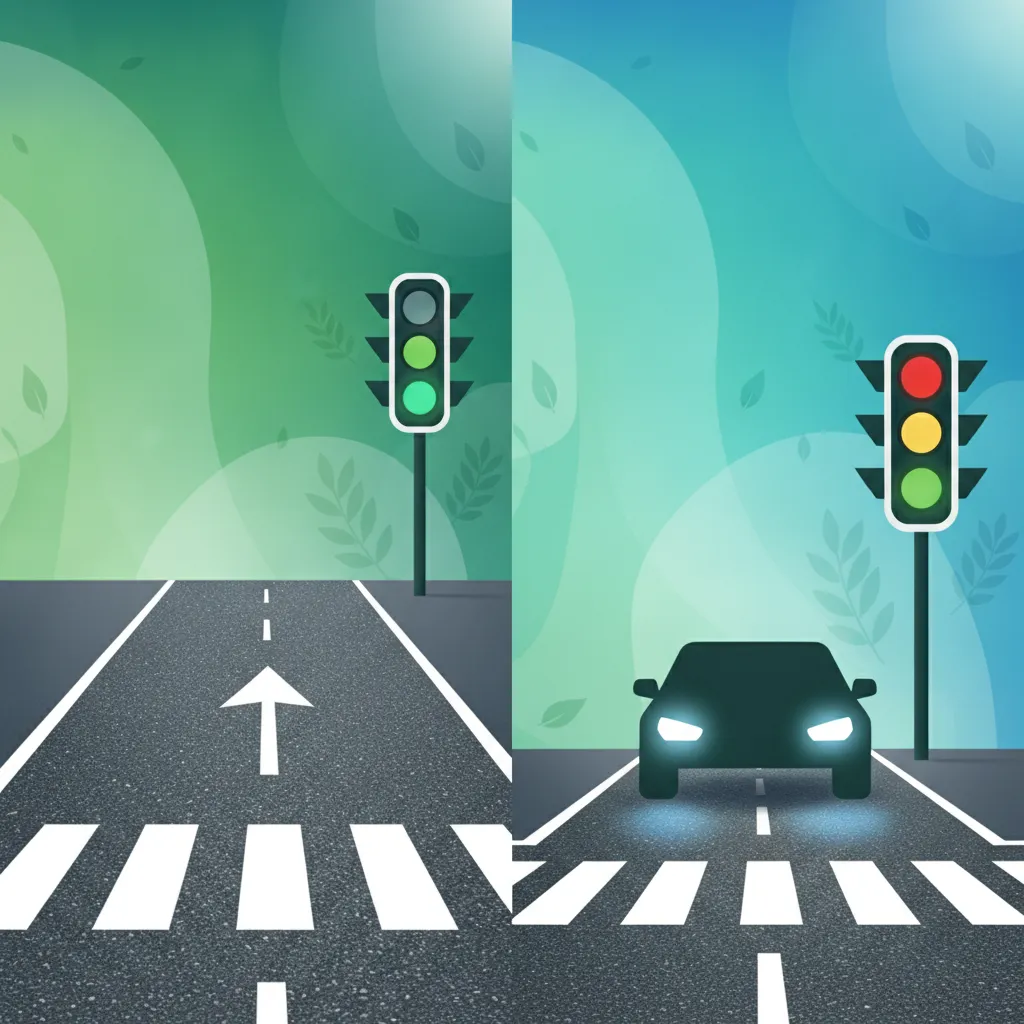
This lesson details the meaning and application of various road surface markings, including lane dividers, solid and broken lines, and directional arrows. You will also learn to interpret the full sequence of traffic light signals, including the specific rules for the amber (yellow) light phase. A proper understanding of these systems is vital for maintaining correct lane discipline and adhering to traffic controls.
Explore critical scenarios involving heavy vehicle lighting and signaling, including blind spots, right turns with cyclists, and emergency situations. Learn to effectively communicate intentions and ensure visibility on Danish roads.
This lesson provides a comprehensive overview of a vehicle's lighting systems and their proper use. It covers the functions of low and high beams, fog lights, and all signal lights, emphasizing their importance for visibility and communication with other drivers. The material explains the legal requirements for using lights in various conditions, including daytime, darkness, and adverse weather, as specified by Danish regulations.
This lesson details the meaning and application of various road surface markings, including lane dividers, solid and broken lines, and directional arrows. You will also learn to interpret the full sequence of traffic light signals, including the specific rules for the amber (yellow) light phase. A proper understanding of these systems is vital for maintaining correct lane discipline and adhering to traffic controls.

This lesson explores non-verbal communication techniques for safer road sharing. It discusses the importance of making eye contact with other drivers and pedestrians to confirm they have seen you. The content also explains the appropriate and legal use of the horn to alert others of your presence.

This lesson covers the proper methods for signalling intentions to other road users. It details the legal requirements for using turn indicators before turning or changing lanes. The content also explains how to use legally recognized hand signals as a backup or for added clarity.

This lesson addresses the specific skills required to navigate around public transport and heavy goods vehicles safely. You will learn the rules for bus lanes, recognize when buses have priority at stops, and understand the unique challenges posed by large vehicles, such as wider turning circles and larger blind spots. The material also provides clear protocols for overtaking these vehicles while maintaining adequate safety margins.

This lesson teaches you to identify warning signs that alert drivers to upcoming hazards and changing road conditions. It covers common signs such as sharp curves, school zones, animal crossings, and temporary conditions like roadworks or slippery surfaces. Understanding these signs is crucial for anticipating risks and adjusting your driving to ensure safety on all types of Danish roads.
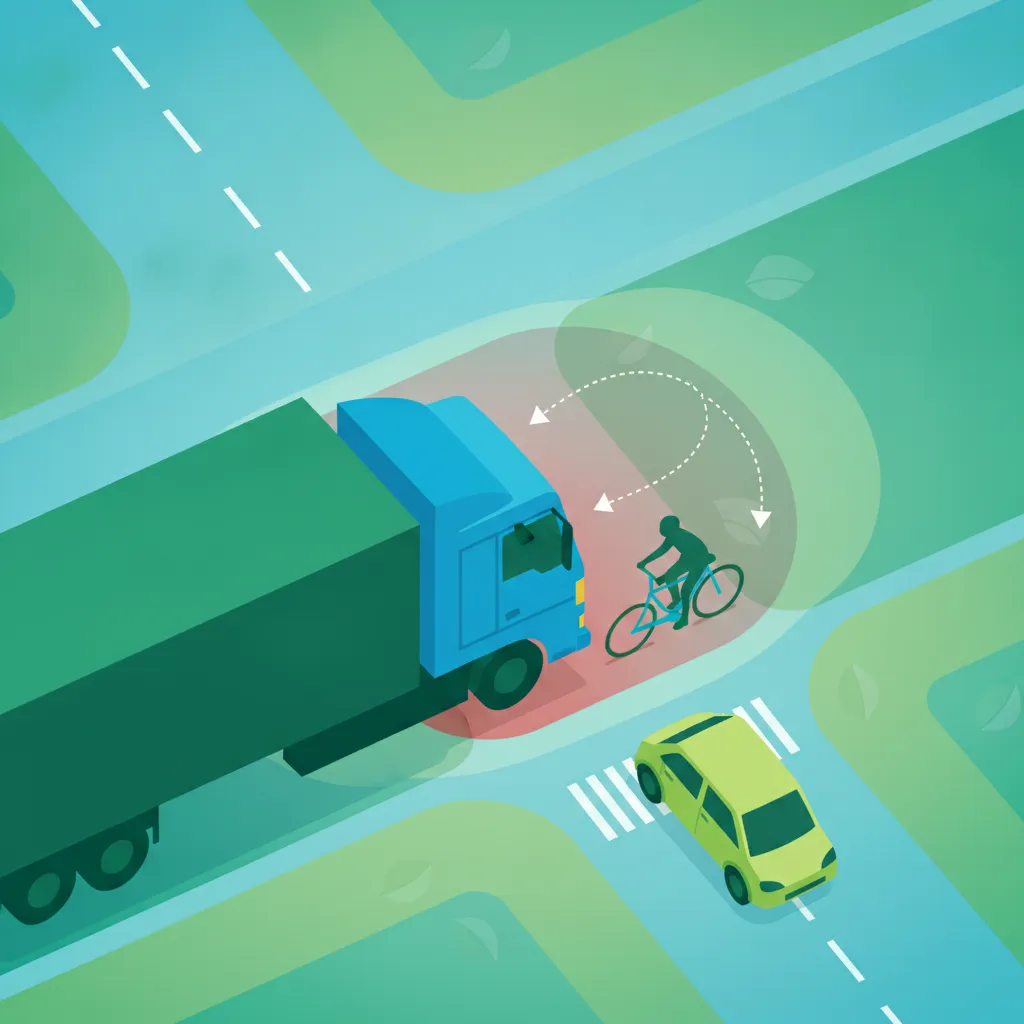
This lesson maps out the extensive blind spots, or 'no-zones,' that exist around a tractor-trailer combination, particularly to the sides and rear. It teaches the proper techniques for adjusting all mirrors to minimize these areas and explains how modern camera systems provide critical visibility. Understanding and compensating for these blind spots is a fundamental skill for preventing collisions, especially during lane changes and turns.
This lesson explains the critical importance of being visible to other road users. It details the proper use of headlights and daytime running lights as required by Danish law. The content also covers the effectiveness of wearing reflective clothing and ensuring the vehicle's reflectors are clean and functional.

This lesson covers the core principles of defensive driving in an urban context. It teaches drivers how to anticipate the actions of other road users, maintain safe following distances in dense traffic, and navigate complex intersections with multiple signals. The content emphasizes heightened awareness of pedestrians, cyclists, and unexpected events common in Danish city environments.
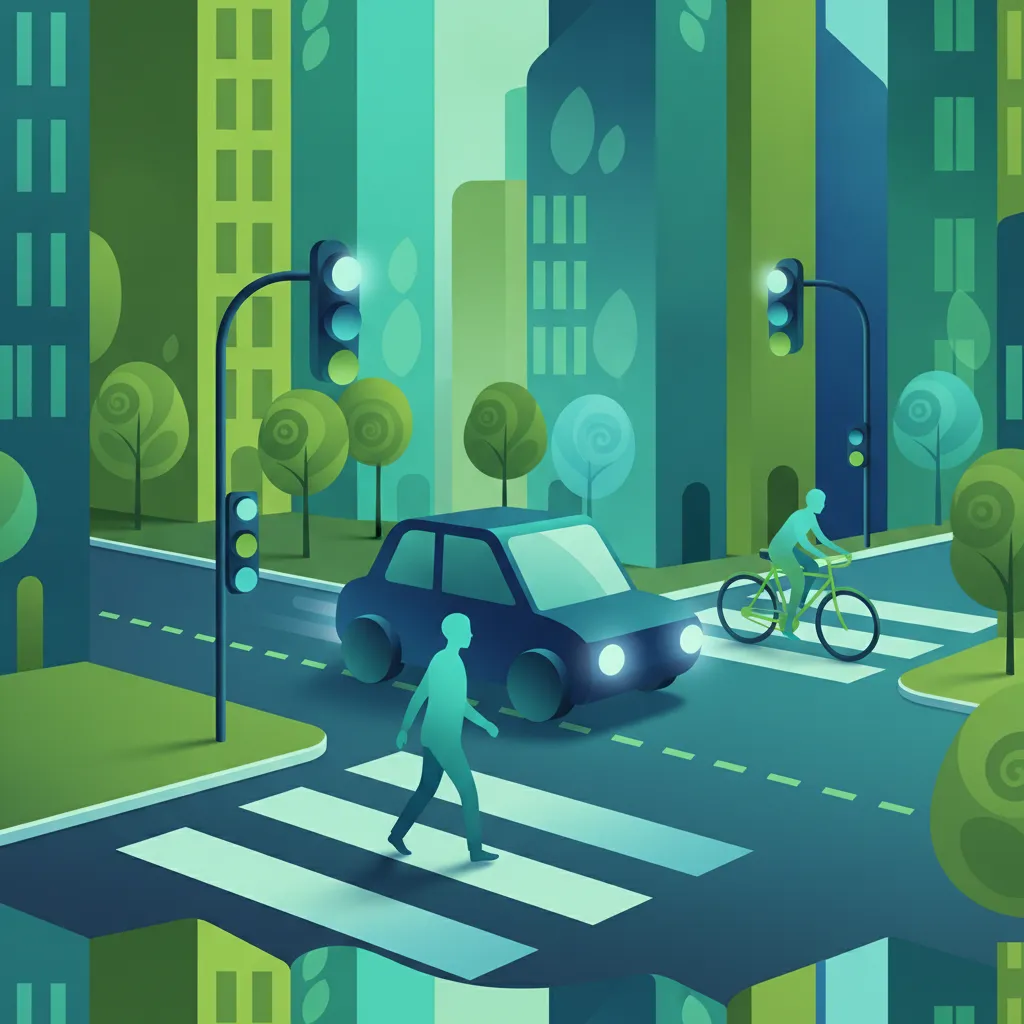
This lesson emphasizes the professional driver's heightened responsibility to protect vulnerable road users. It revisits Danish regulations concerning cyclist priority, particularly during right turns, and details the correct procedures for maintaining safe overtaking distances. The content focuses on developing advanced situational awareness, using mirrors and cameras effectively, and anticipating the behavior of pedestrians and cyclists in urban environments.
Find clear answers to common questions learners have about Lighting and Signaling Systems. Learn how the lesson is structured, which driving theory objectives it supports, and how it fits into the overall learning path of units and curriculum progression in Denmark. These explanations help you understand key concepts, lesson flow, and exam focused study goals.
All vehicles in Denmark are legally required to have their daytime running lights (or dipped headlights) switched on at all times, regardless of weather conditions or time of day.
You should check that all lights, including turn signals, brake lights, and marker lights, are clean and fully operational during your pre-trip inspection before every shift.
Operating a vehicle with defective lights is illegal and a major safety risk. In the context of your theory exam, you must understand that this renders the vehicle unroadworthy and can lead to immediate fines and potential prohibition from driving.
Yes, when operating long combinations, you must use your turn signals early and clearly to allow other road users, especially cyclists, enough time to react to your intended movement, particularly when turning right.
Use our powerful search tool to pinpoint specific Danish driving theory topics, road signs, or traffic situations you need to review. Start exploring relevant practice sets now to reinforce your knowledge and build confidence for your upcoming driving licence exam.