
This lesson teaches you to identify the critical blind spots of heavy vehicles and surrounding traffic to keep yourself safe on Danish roads. By understanding these invisible areas, you will learn how to position your motorcycle to remain visible and avoid common hazards during your daily rides.

Lesson content overview
Navigating the roads safely on a motorcycle requires acute awareness of your surroundings, especially the areas where other drivers might not see you. These hidden zones, commonly known as blind spots or 'no-zones,' represent a significant risk for motorcyclists. This lesson, part of the Danish Motorcycle Theory curriculum, provides an in-depth guide to understanding, identifying, and actively managing blind spots around other vehicles to enhance your safety and visibility.
Understanding how other vehicles' blind spots operate and adopting proactive strategies to avoid them is fundamental. It empowers you to anticipate potential hazards and position your motorcycle to be seen, minimizing the risk of collisions. This knowledge builds upon foundational concepts such as optimal lane positioning and effective communication with other road users, ensuring you can ride confidently and defensively.
Blind spots are areas around any vehicle where the driver's view is obstructed by the vehicle's structure or cargo, making it impossible to see other road users. For motorcyclists, these 'no-zones' are particularly dangerous because motorcycles are smaller and can easily disappear from a driver's sightline. Being aware of where these zones are is the first step in avoiding them.
A blind spot (no-zone) is defined as any area around a vehicle that cannot be seen by the driver through their mirrors or direct line of sight. These zones exist due to the physical limitations of mirrors and the vehicle's body, pillars, or cargo. While all vehicles have blind spots, their size and location vary significantly depending on the vehicle type.
For motorcyclists, spending time in another driver's blind spot is extremely hazardous. If a driver changes lanes, makes a turn, or simply adjusts their position without seeing you, the consequences can be severe. The danger is magnified by the fact that many drivers, especially of larger vehicles, may not actively scan beyond their immediate mirror views, often unaware that a smaller vehicle could be hidden from sight.
The size and location of blind spots are not uniform across all vehicle types. Motorcyclists must understand these differences to gauge the risk accurately.
While smaller than trucks, cars still possess notable blind spots. These are typically located:
Large vehicles such as trucks, lorries, and buses have significantly larger and more numerous blind spots due to their sheer size, length, and height. These expanded 'no-zones' demand extreme caution from motorcyclists. The driver of a large truck sits much higher than a car driver, which paradoxically means they have blind spots closer to the ground and directly behind or to the sides that are much larger.
The primary blind spots for trucks and buses include:
The physical dimensions of a vehicle directly correlate with the size of its blind spots. A longer vehicle will have larger blind areas along its sides and behind. The driver's seating position also plays a crucial role. While a higher seating position in a truck offers a commanding view of the road ahead, it creates large blind spots for objects closer to the ground, immediately around the cab, and to the rear.
Motorcyclists must understand that if they cannot see the driver's face in their side mirrors, the driver likely cannot see them. This simple rule of thumb can be a lifesaver. Never assume a driver has seen you, especially when you are alongside or attempting to pass a large vehicle.
Proactively managing blind spots is about ensuring you are seen by other drivers and that you can see them. This involves strategic lane positioning, using appropriate gear, and constant vigilance through visual scanning.
Optimal lane positioning refers to placing your motorcycle within a lane in a way that maximizes your visibility to other drivers and provides you with the best view of potential hazards. This strategy is paramount for avoiding blind spots.
When riding alongside a vehicle, always strive to position your motorcycle where you can see the driver's eyes in their side mirror. If you can see them, it's highly probable they can see you.
Consider the following when determining your lane position:
Even with perfect lane positioning, there are times when visibility is naturally reduced (e.g., dawn, dusk, night, adverse weather). This is where high-visibility clothing and proper lighting become essential tools to combat blind spots.
Staying safe from blind spots requires constant, active engagement with your surroundings.
Scan Mirrors: Check your rear-view and side mirrors to get an overall picture.
Signal Intent: Activate your turn signal well in advance of the maneuver.
Quick Head Turn: Turn your head sharply and briefly to look into your blind spot in the direction of your intended movement. Do not over-rotate your head, as this can cause you to drift.
Execute Maneuver: If clear, smoothly initiate your lane change or turn.
Cancel Signal: Once the maneuver is complete, cancel your turn signal.
Overtaking large vehicles like trucks and buses presents unique challenges due to their extensive blind spots and often longer braking distances. A precise, decisive, and visible approach is essential.
Before initiating an overtaking maneuver, especially around a large vehicle, careful planning is paramount.
Once you've planned and signalled, the execution must be swift and decisive to minimize the time spent in the large vehicle's blind spots.
Intersections and junctions are high-risk areas where blind spots become even more critical. Vehicles turning, merging, or emerging from side roads can easily hide a motorcyclist.
While general safety principles apply, specific regulations in Danish traffic law reinforce the importance of blind spot awareness and safe riding practices.
| Regulation | Rule Statement | Applicability | Legal Status | Rationale | Correct Example | Incorrect Example |
|---|---|---|---|---|---|---|
| Traffic Act Regulation 39, Section 4 (approx.) | Drivers must keep a safe distance to avoid being in a blind spot of another vehicle | Applies to all vehicles, especially large ones like trucks and buses | Mandatory | Prevent collisions and ensure mutual visibility | Maintaining a distance that keeps the truck driver within sight in their mirrors | Riding directly beside a truck in its blind spot for an extended distance |
| Regulation 93, Section 2 (approx.) | Motorcyclists must use appropriate lane positioning for visibility and safety | Applies at all times, especially near larger vehicles | Mandatory | Maximizes visibility for both the motorcyclist and other drivers | Riding slightly offset from a truck to stay in the driver's mirrors before initiating an overtake | Riding directly behind a large vehicle in a zone where the driver cannot see the motorcyclist |
| Regulation 86, Section 1 (approx.) | Use of high-visibility clothing or reflective gear is recommended in low-light conditions | Applies in low visibility, night, dawn, dusk, or adverse weather | Recommended | Improves visibility and reduces risk of being missed in a blind spot | Wearing a reflective vest while riding in dawn conditions or during heavy rain | Riding without visible clothing or adequate lighting in low-light conditions, especially near larger vehicles |
Being aware of common errors can help you actively prevent dangerous situations related to blind spots.
Lingering in the 'No-Zone':
Assuming Visibility:
Failing to Signal Intentions:
Underestimating Large Vehicle Blind Spots:
Improper Lane Adjustments:
Several external factors can exacerbate the dangers of blind spots, demanding even greater vigilance from motorcyclists.
As motorcyclists, we are also responsible for being aware of the blind spots we create for other, even more vulnerable road users, such as cyclists and pedestrians. When maneuvering around larger vehicles, always consider the complete environment and ensure your actions do not inadvertently put others at risk. For instance, when passing a parked bus, be mindful of pedestrians who might emerge from in front of or behind it.
Mastering blind spot awareness is a critical skill for every motorcyclist in Denmark. It involves a continuous, proactive approach to road safety, focusing on mutual visibility and predictable behavior.
Remember these key takeaways:
By integrating these principles into your daily riding habits, you significantly reduce the risk associated with blind spots, making you a safer and more confident rider on Danish roads.
Blind spots are hidden zones around vehicles where drivers cannot see other road users, and they are significantly larger for trucks and buses than for cars, extending in front, behind, and along the sides. Motorcyclists must proactively manage these blind spots by positioning their bike to remain visible in other drivers' mirrors, using headlights and high-visibility clothing, and executing shoulder checks before any maneuver. Safe overtaking of large vehicles requires early signaling, decisive acceleration to pass quickly, and only returning to the original lane when the entire front of the overtaken vehicle is visible in your mirror. Continuous visual scanning, adjusting for weather and light conditions, and never assuming another driver has seen you are essential habits for staying safe in Danish traffic.
A short set of high-value points that capture the most important learning from this lesson.
Blind spots (no-zones) are areas around any vehicle where the driver cannot see other road users, making them extremely dangerous for motorcyclists
Large vehicles like trucks and buses have significantly larger blind spots extending directly in front, behind, and along both sides due to their size and driver height
Position your motorcycle where you can see the driver's eyes in their side mirror—if you can see them, they can likely see you
Use your headlight during the day, wear high-visibility and reflective clothing, and ensure all lights are functional to enhance detection
When overtaking large vehicles, execute the maneuver decisively and quickly to minimize time spent in their extensive blind zones
Explore all units and lessons included in this driving theory course.
If you cannot see a driver's face in their side mirror, they likely cannot see you—never assume visibility
Trucks have massive blind spots directly behind (often many metres) and along the entire length of the trailer or bus
Always perform a shoulder check before changing lanes or turning to cover the area your mirrors cannot see
Adjust speed and position within your lane to stay visible in other drivers' mirrors rather than moving outside your lane markings
Signal your intentions early for all maneuvers to give other road users maximum time to react
Lingering in a truck's or bus's no-zone for too long, increasing the risk of a collision if the driver changes lanes without seeing you
Assuming that because you can see a large vehicle's driver, they can automatically see you—especially when you are alongside or behind them
Failing to use turn signals well in advance, leaving other drivers unable to anticipate your next move
Underestimating the size difference between car and truck blind spots, applying the same positioning strategies to both vehicle types
Adjusting lane position too far toward the shoulder or into oncoming traffic while trying to avoid one vehicle's blind spot
Lesson content overview
A short set of high-value points that capture the most important learning from this lesson.
Blind spots (no-zones) are areas around any vehicle where the driver cannot see other road users, making them extremely dangerous for motorcyclists
Large vehicles like trucks and buses have significantly larger blind spots extending directly in front, behind, and along both sides due to their size and driver height
Position your motorcycle where you can see the driver's eyes in their side mirror—if you can see them, they can likely see you
Use your headlight during the day, wear high-visibility and reflective clothing, and ensure all lights are functional to enhance detection
When overtaking large vehicles, execute the maneuver decisively and quickly to minimize time spent in their extensive blind zones
Explore all units and lessons included in this driving theory course.
If you cannot see a driver's face in their side mirror, they likely cannot see you—never assume visibility
Trucks have massive blind spots directly behind (often many metres) and along the entire length of the trailer or bus
Always perform a shoulder check before changing lanes or turning to cover the area your mirrors cannot see
Adjust speed and position within your lane to stay visible in other drivers' mirrors rather than moving outside your lane markings
Signal your intentions early for all maneuvers to give other road users maximum time to react
Lingering in a truck's or bus's no-zone for too long, increasing the risk of a collision if the driver changes lanes without seeing you
Assuming that because you can see a large vehicle's driver, they can automatically see you—especially when you are alongside or behind them
Failing to use turn signals well in advance, leaving other drivers unable to anticipate your next move
Underestimating the size difference between car and truck blind spots, applying the same positioning strategies to both vehicle types
Adjusting lane position too far toward the shoulder or into oncoming traffic while trying to avoid one vehicle's blind spot
Explore search topics learners often look for when studying Managing Blind Spots and Blind Area Awareness. These topics reflect common questions about road rules, driving situations, safety guidance, and lesson level theory preparation for learners in Denmark.
Browse additional driving theory lessons that cover connected traffic rules, road signs, and common driving situations related to this topic. Improve your understanding of how different rules interact across everyday traffic scenarios.
Go beyond basic blind spot identification. This lesson details advanced techniques for motorcyclists to manage no-zones around large vehicles like trucks and buses, focusing on Danish traffic conditions and maximizing rider visibility.
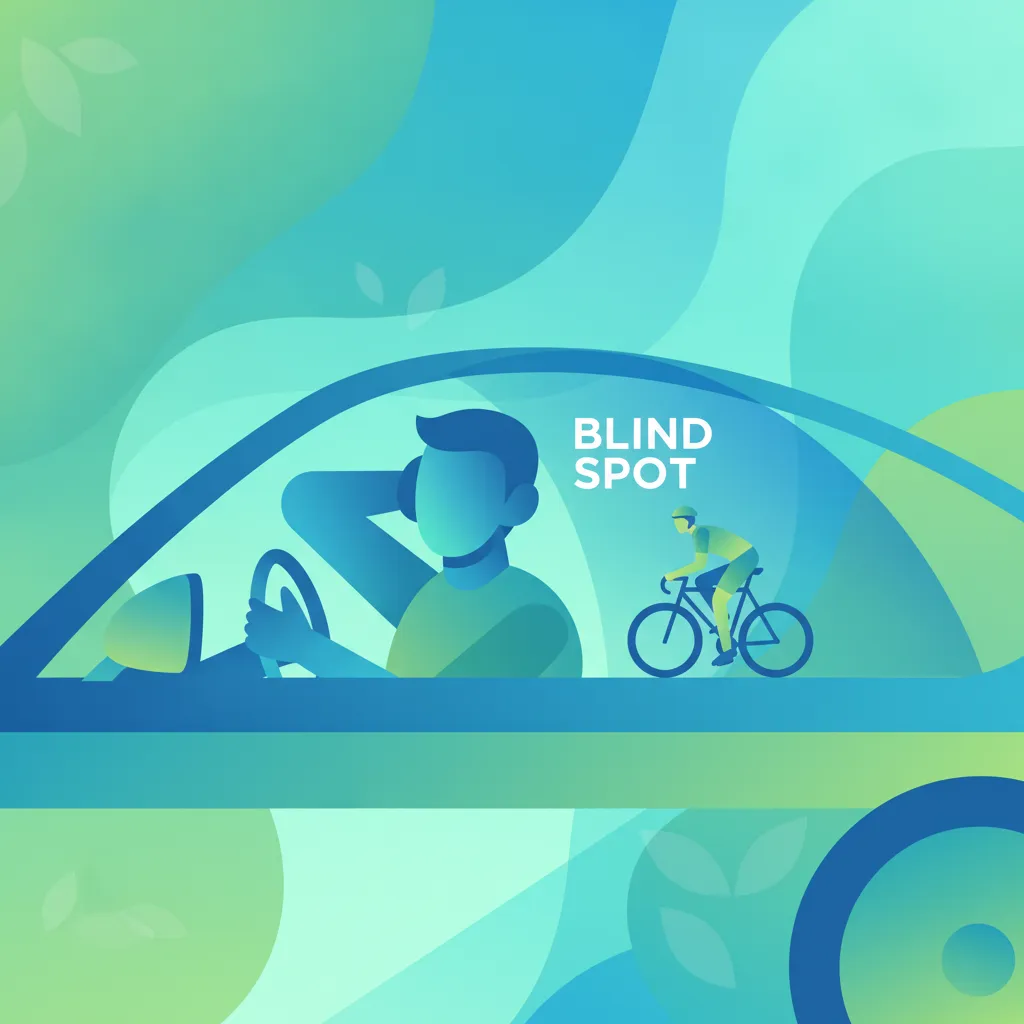
This lesson provides an in-depth analysis of the size and location of blind spots around a typical passenger bus. It teaches systematic scanning patterns that incorporate all mirrors, cameras, and direct head checks to maintain situational awareness. The content highlights high-risk areas where cyclists, pedestrians, or small vehicles can become hidden from view, especially during turns.
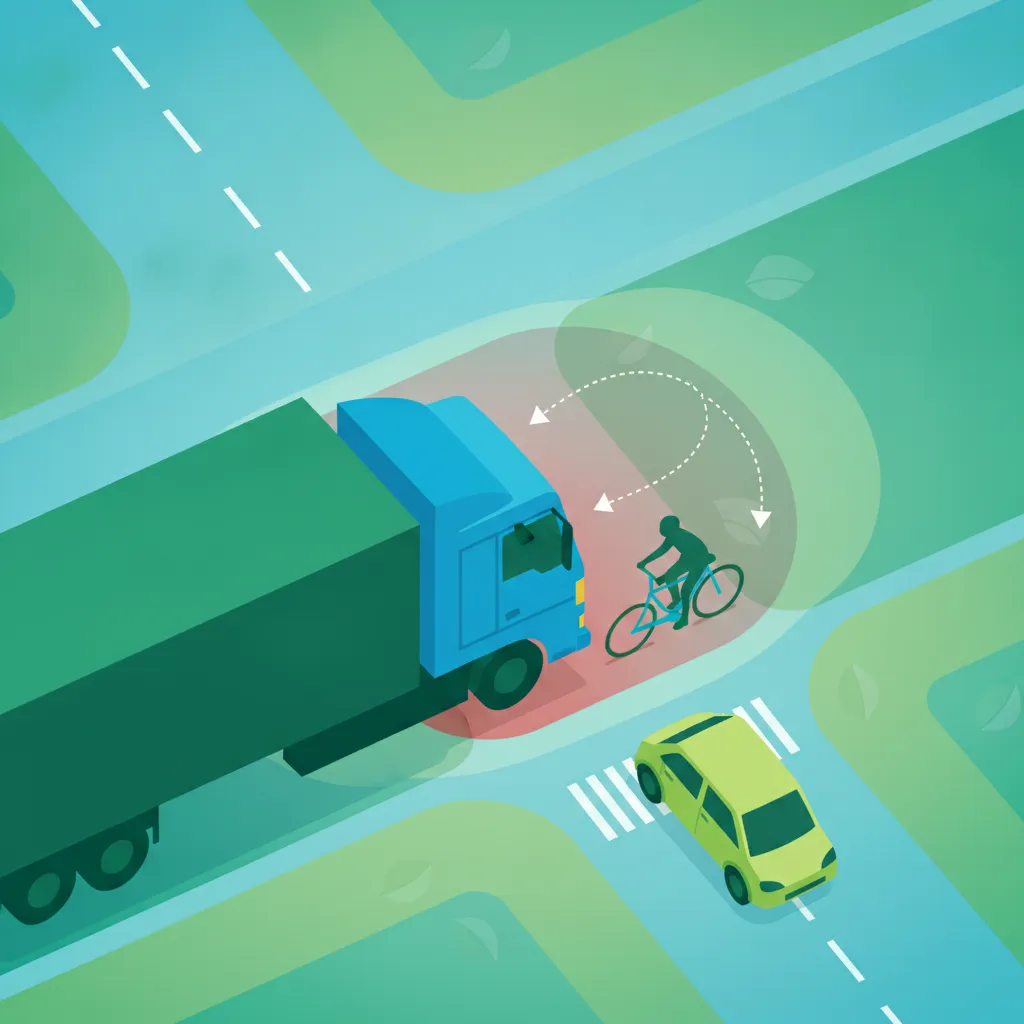
This lesson maps out the extensive blind spots, or 'no-zones,' that exist around a tractor-trailer combination, particularly to the sides and rear. It teaches the proper techniques for adjusting all mirrors to minimize these areas and explains how modern camera systems provide critical visibility. Understanding and compensating for these blind spots is a fundamental skill for preventing collisions, especially during lane changes and turns.

This lesson explains the strategic importance of lane positioning for a motorcyclist. It teaches how to select a position within the lane that makes you most visible to other road users and provides an escape route from potential hazards. The content covers how to adjust your position based on traffic, road conditions, and to avoid being in another vehicle's blind spot.

This lesson introduces proactive visual scanning techniques essential for motorcyclist safety. It explains how to use a systematic search pattern to look far, near, and side-to-side to detect potential hazards before they become immediate threats. Mastering this skill allows riders to create more time and space to react to changing road conditions.

This lesson prepares riders for the specific hazards of rural roads, which often have less visibility and more unpredictable surfaces. It covers strategies for approaching blind curves, safely passing agricultural machinery, and being vigilant for animals on the road. Adjusting speed to match visibility is a core principle.

This lesson teaches the effective use of mirrors and on-board camera systems for comprehensive spatial awareness. It explains how to correctly adjust all mirrors to minimize blind spots and how to integrate camera views into a regular scanning routine. The content emphasizes the importance of combining mirror checks with direct observation to detect vulnerable road users hidden in blind zones.
This lesson provides critical guidance for driving in environments with heavy cycle traffic, typical of Danish cities. It focuses on identifying and yielding to cyclists in dedicated bike lanes, especially when turning right across their path. The content emphasizes advanced observation skills to detect cyclists in blind spots and the importance of giving adequate space.
This lesson addresses the unique challenges of streets with dedicated cycle lanes and numerous bus stops. It teaches riders how to anticipate pedestrians moving to and from buses and how to position themselves to avoid conflict with cyclists. The goal is to navigate these complex environments smoothly and safely.
This lesson explains the procedures for safely riding through construction zones. It covers how to respond to temporary signage, lane closures, and flaggers directing traffic. Riders will learn to reduce speed and be vigilant for uneven pavement, loose gravel, and the movement of workers and equipment.

This lesson details the proper technique for using mirrors and performing shoulder checks to maintain 360-degree awareness. It explains how to adjust mirrors for maximum visibility and emphasizes that a shoulder check is the only way to see into the vehicle's blind spot. These actions are critical before any change in position, such as turning or changing lanes.
Learn critical safety strategies for motorcyclists sharing the road with large vehicles in Denmark. Understand their blind spots, turning radiuses, and how to position yourself to avoid dangerous interactions and ensure you are seen.
This lesson provides an in-depth analysis of the size and location of blind spots around a typical passenger bus. It teaches systematic scanning patterns that incorporate all mirrors, cameras, and direct head checks to maintain situational awareness. The content highlights high-risk areas where cyclists, pedestrians, or small vehicles can become hidden from view, especially during turns.
This lesson maps out the extensive blind spots, or 'no-zones,' that exist around a tractor-trailer combination, particularly to the sides and rear. It teaches the proper techniques for adjusting all mirrors to minimize these areas and explains how modern camera systems provide critical visibility. Understanding and compensating for these blind spots is a fundamental skill for preventing collisions, especially during lane changes and turns.

This lesson emphasizes the professional driver's heightened responsibility to protect vulnerable road users. It revisits Danish regulations concerning cyclist priority, particularly during right turns, and details the correct procedures for maintaining safe overtaking distances. The content focuses on developing advanced situational awareness, using mirrors and cameras effectively, and anticipating the behavior of pedestrians and cyclists in urban environments.
This lesson provides critical guidance for driving in environments with heavy cycle traffic, typical of Danish cities. It focuses on identifying and yielding to cyclists in dedicated bike lanes, especially when turning right across their path. The content emphasizes advanced observation skills to detect cyclists in blind spots and the importance of giving adequate space.

This lesson examines the specific risks inherent to motorcycling, emphasizing a rider's vulnerability due to reduced physical protection compared to other vehicles. It covers the heightened severity of injuries in accidents and the critical role of protective gear in mitigating harm. Learners will understand how to adopt defensive strategies, such as proper road positioning, to counteract these risks.

This lesson addresses the unique challenges of driving in tourist-heavy urban centers alongside cyclists. It teaches drivers to anticipate the behavior of individuals who may be distracted or unfamiliar with local traffic rules. The content provides strategies for communicating intentions clearly and navigating safely around large groups, luggage, and cyclists.
This lesson explains the strategic importance of lane positioning for a motorcyclist. It teaches how to select a position within the lane that makes you most visible to other road users and provides an escape route from potential hazards. The content covers how to adjust your position based on traffic, road conditions, and to avoid being in another vehicle's blind spot.

This lesson explains the relationship between a bus's dimensions—length, width, and height—and its maneuverability. It covers key concepts such as turning radius, rear overhang, and swept path, which are critical for navigating turns and tight spaces safely. Learners will also understand how these physical characteristics create significant blind spots that require specific observation techniques to manage.
This lesson prepares riders for the specific hazards of rural roads, which often have less visibility and more unpredictable surfaces. It covers strategies for approaching blind curves, safely passing agricultural machinery, and being vigilant for animals on the road. Adjusting speed to match visibility is a core principle.
This lesson introduces proactive visual scanning techniques essential for motorcyclist safety. It explains how to use a systematic search pattern to look far, near, and side-to-side to detect potential hazards before they become immediate threats. Mastering this skill allows riders to create more time and space to react to changing road conditions.
Find clear answers to common questions learners have about Managing Blind Spots and Blind Area Awareness. Learn how the lesson is structured, which driving theory objectives it supports, and how it fits into the overall learning path of units and curriculum progression in Denmark. These explanations help you understand key concepts, lesson flow, and exam focused study goals.
A no-zone is the area around large vehicles, such as trucks or buses, where the driver cannot see you in their mirrors or through their windows. On a motorcycle, it is vital to avoid staying in these areas, as a sudden maneuver by the larger vehicle could put you in immediate danger.
Improve your visibility by choosing a lane position that allows you to see the driver's face in their mirrors. If you cannot see them, they likely cannot see you. Additionally, use high-visibility gear and ensure your headlight is on, which is a mandatory requirement for motorcycles in Denmark.
Yes, hazard perception is a key part of the Danish test. You will likely be asked to identify potential risks in images or videos, which often include scenarios where a motorcycle is hidden in a vehicle's blind spot during a turn or lane change.
Use our powerful search tool to pinpoint specific Danish driving theory topics, road signs, or traffic situations you need to review. Start exploring relevant practice sets now to reinforce your knowledge and build confidence for your upcoming driving licence exam.