
In this lesson, we explore the critical 'no-zones' and blind spots inherent to operating large combination vehicles in Denmark. You will learn professional techniques for mirror adjustment and how to utilize modern safety systems to maintain visibility and prevent collisions. This is an essential step toward mastering the maneuverability requirements for your category C license.
Lesson content overview
Operating a heavy goods vehicle combination, such as a tractor-trailer, presents unique challenges, particularly concerning visibility. Due to their immense size and length, these vehicles have extensive areas around them where the driver cannot see other road users through mirrors. These areas are commonly referred to as "blind spots" or "no-zones" and are a critical factor in collision avoidance. For anyone pursuing a Danish Heavy Vehicle Theory Course for Category C License, a thorough understanding of these blind spots and how to manage them is not just advisable, but essential for safety and compliance.
This lesson delves into the nature of blind spots around heavy vehicle combinations, exploring their origins, the proper techniques for adjusting mirrors to minimize them, and how modern camera systems serve as vital aids. Mastering the art of identifying and compensating for these obscured zones is a fundamental skill that directly impacts your ability to prevent serious accidents during maneuvers like lane changes, merging, and turns. Without this knowledge, the risk of collision with smaller vehicles, cyclists, and pedestrians dramatically increases.
Heavy vehicle combinations, by their very nature, create significant blind spots. These are zones around the vehicle where the driver's direct line of sight is obstructed, and even the most well-adjusted mirrors cannot provide a complete view. The physical dimensions of the tractor and especially the trailer, combined with the driver's fixed seating position, geometrically prevent a full 360-degree visual field.
These "no-zones" are not merely inconvenient; they represent critical safety hazards. Other road users, particularly those unfamiliar with the scale of heavy vehicles, may unwittingly enter these zones, becoming invisible to the lorry driver. This lack of visibility is a primary contributor to collisions involving heavy vehicles, making their identification and management a cornerstone of safe operation for Category C drivers.
The sheer length and width of a tractor-trailer combination significantly amplify the challenge of blind spots compared to a standard car. A heavy vehicle can span multiple lanes or occupy an entire intersection during a turn, meaning its blind spots are proportionally larger and more dangerous. These extended no-zones demand a proactive and systematic approach to observation, rather than simply glancing at mirrors.
Moreover, the behavior of combination vehicles during maneuvers like lane changes, turns, and reversing is different from solo vehicles. The pivot point, off-tracking, and general sluggishness mean that a driver needs more time and space to react. If another road user is concealed within a blind spot during such a maneuver, the consequences can be severe, highlighting the critical importance of impeccable blind spot management for heavy vehicle operators.
Side blind spots are the extensive areas running along the length of a heavy vehicle combination, particularly on either side, where other vehicles or road users can become completely hidden from the driver's view. These areas extend from just behind the side mirrors all the way to the rear corners of the trailer. They are especially perilous during lane changes and merging maneuvers.
Drivers of combination vehicles must understand that these side no-zones are far larger than those found in passenger cars. A small car, motorbike, or even an entire delivery van can easily disappear within these areas. Recognizing where these blind spots are and consistently checking them is fundamental to preventing side-swipe collisions.
The near-side blind spot refers to the area immediately adjacent to the driver's side of the tractor and extending along the entire left side of the trailer. While the driver is positioned on this side, paradoxically, it can still hide vehicles effectively due to the sheer length of the combination. A vehicle that is directly parallel to the cab or traveling slightly behind the cab can often be completely obscured.
This blind spot is particularly dangerous during lane changes to the left, as vehicles attempting to overtake or simply traveling alongside can remain unseen. Drivers must develop a habit of not only checking the left side mirror but also performing a thorough head check (shoulder check) when possible, especially before committing to any leftward movement.
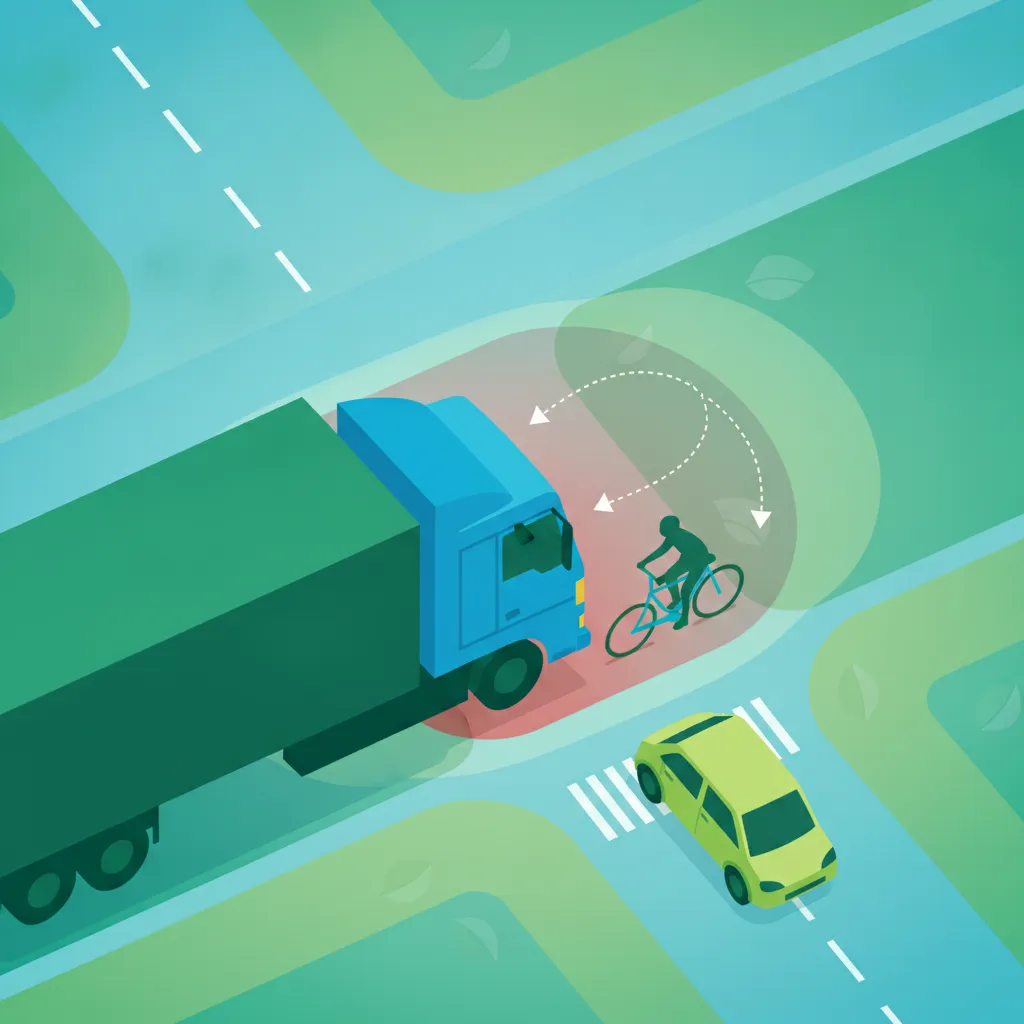
The far-side blind spot, located on the passenger side of the tractor and running along the right side of the trailer, is typically the largest and most challenging blind spot for heavy vehicle drivers. Due to the driver's position on the left, the distance to the far-side mirror, and the length of the combination, this area can conceal multiple vehicles, especially smaller ones.
Vehicles that are driving alongside the trailer, or even slightly ahead of the trailer's rear, can easily vanish from view. This blind spot poses a significant risk during right-hand lane changes, merging onto motorways, or when making wide right turns where cyclists or pedestrians might be present. Extreme vigilance, coupled with properly adjusted mirrors, is crucial to managing this extensive no-zone.
The rear blind spot is the area directly behind the trailer where the driver has absolutely no direct line of sight. This area is completely obscured by the trailer itself. While cars might have a rear-view mirror offering some visibility, a heavy vehicle combination with a trailer blocks any such view, rendering a traditional rear-view mirror ineffective.
This immediate rear blind spot is of paramount importance during reversing maneuvers. Even with large side mirrors, the space directly behind the trailer remains unseen. Similarly, when a vehicle follows too closely, especially smaller cars or motorbikes, they can easily enter this invisible zone, becoming a significant hazard. Advanced drivers rely heavily on supplementary tools and systematic checks to account for this critical blind spot.
Proper mirror adjustment is the first and most crucial step in minimizing blind spots around a heavy vehicle combination. Incorrectly set mirrors can drastically reduce the driver's field of view, making even standard maneuvers perilous. A systematic, two-stage adjustment process is recommended to maximize coverage and provide the earliest possible detection of other road users.
It is important to remember that mirrors are not a "set-it-and-forget-it" component. They should be checked and adjusted at the start of each journey, and potentially re-adjusted if the load changes significantly or if the vehicle combination is altered.
Base Positioning (Vehicle Visible): Sit in the normal driving position. Adjust your side mirrors so that you can just see a small portion of your own vehicle's side or rear. The goal here is to establish a reference point, allowing you to gauge the proximity of other objects relative to your vehicle.
Blind Spot Compensation (Outward Adjustment): Once the base position is set, slightly adjust the side mirrors outwards. The aim is to push the view outwards just enough so that as a vehicle disappears from your central rear-view mirror (if applicable) or the edge of your side vision, it immediately appears in your side mirror. Conversely, as a vehicle leaves your side mirror's view, it should ideally be visible in your peripheral vision or through a shoulder check. This slight outward adjustment helps to "overlap" the fields of view, bridging the gaps that create blind spots.
After adjusting your mirrors, perform a static check by having someone walk around your vehicle while you observe them through your mirrors. Note where they disappear and reappear to understand your specific blind spot coverage.
While meticulously adjusted mirrors are indispensable, modern heavy vehicles increasingly integrate camera systems to provide supplementary visual information, particularly concerning blind spots. These technologies act as an additional pair of eyes, enhancing situational awareness and compensating for the inherent physical limitations of mirrors.
Various types of camera systems are available:
Drivers must understand that camera systems are supplements, not replacements for traditional mirror checks and direct observation. Cameras can have limitations such as delayed feed, restricted field of view, glare, or being obscured by dirt. Always cross-reference camera views with mirror checks and, where possible, direct observation.
The way cargo is loaded and secured within a heavy vehicle combination has a direct and significant impact on driver visibility and, consequently, on the size and management of blind spots. Improper load distribution can lead to several problems:
It is mandatory that cargo must not obstruct the driver's view through mirrors or windows. Drivers must ensure that the load is properly positioned within permissible boundaries and secured in a way that maintains optimal visibility and does not create additional hazards. This is an integral part of pre-trip inspections and overall load management for Category C operations.
Danish road traffic regulations, like those in most countries, place a strong emphasis on driver responsibility for maintaining visibility and awareness of their surroundings. While specific articles might not explicitly detail "blind spot checks," the general requirements for safe driving, collision prevention, and proper vehicle maintenance implicitly cover all aspects of blind spot management.
Key regulatory principles and best practices for heavy vehicle drivers in Denmark include:
Even experienced heavy vehicle drivers can fall victim to common errors related to blind spots. Recognizing these pitfalls and actively adopting advanced strategies can significantly enhance safety.
The challenges posed by blind spots are not constant; they vary significantly based on environmental and operational conditions. A skilled Category C driver must adapt their blind spot management strategies accordingly.
Understanding blind spots conceptually is one thing; applying that knowledge in dynamic driving situations is another. Here are practical examples demonstrating correct and incorrect behavior for a heavy vehicle driver:
Scenario: Lane Change on a Motorway
Scenario: Reversing into a Loading Bay
Scenario: Right Turn at an Urban Intersection with Cyclists
Identifying and managing blind spots is a core competency for all heavy vehicle operators. For Category C license holders, the responsibility is amplified by the sheer size and potential impact of their vehicles.
This lesson teaches Category C drivers to identify and manage the extensive blind spots around heavy vehicle combinations, including near-side, far-side, and rear no-zones. Key techniques include a systematic two-stage mirror adjustment process and the complementary use of modern camera systems, while understanding their limitations. Proper load management is essential to prevent additional visibility obstruction. Drivers must develop habits of continuous mirror scanning, feasible shoulder checks, and anticipatory driving—especially around vulnerable road users—to prevent collisions during lane changes, turns, and reversing maneuvers.
A short set of high-value points that capture the most important learning from this lesson.
Heavy vehicle combinations have extensive near-side, far-side, and rear blind spots (no-zones) that are significantly larger than those in passenger cars.
The two-stage mirror adjustment process—base positioning with vehicle reference followed by outward compensation—maximizes coverage and bridges gaps between mirror fields.
Camera systems are valuable supplements to mirrors but have limitations including lag, limited field of view, and susceptibility to weather conditions and dirt.
Cargo placement directly affects visibility; loads must never obstruct mirrors or create additional blind areas.
Vulnerable road users such as cyclists and pedestrians are particularly at risk during right turns due to the extensive far-side blind spot.
Explore all units and lessons included in this driving theory course.
The far-side (passenger side) blind spot is typically the largest and most dangerous due to the driver's left-side position.
Always perform a shoulder check (head turn) in addition to mirror checks before lane changes, where feasible.
Mirrors should be checked and adjusted at the start of every journey and rechecked if the vehicle combination changes.
Assume blind spots are occupied until confirmed clear—anticipatory driving is essential for heavy vehicle safety.
During reversing, the area directly behind the trailer is completely invisible and requires camera assistance and side mirror monitoring.
Leaving mirrors in a previous driver's default position rather than performing fresh two-stage adjustments for each journey.
Over-relying on camera systems alone and neglecting traditional mirror checks and direct observation.
Failing to check side blind spots before initiating turns, particularly right turns where cyclists may be hidden.
Loading cargo in ways that obstruct mirrors or extend beyond trailer dimensions, creating additional blind areas.
Performing lane changes after only a quick mirror glance without a confirmation shoulder check.
Lesson content overview
A short set of high-value points that capture the most important learning from this lesson.
Heavy vehicle combinations have extensive near-side, far-side, and rear blind spots (no-zones) that are significantly larger than those in passenger cars.
The two-stage mirror adjustment process—base positioning with vehicle reference followed by outward compensation—maximizes coverage and bridges gaps between mirror fields.
Camera systems are valuable supplements to mirrors but have limitations including lag, limited field of view, and susceptibility to weather conditions and dirt.
Cargo placement directly affects visibility; loads must never obstruct mirrors or create additional blind areas.
Vulnerable road users such as cyclists and pedestrians are particularly at risk during right turns due to the extensive far-side blind spot.
Explore all units and lessons included in this driving theory course.
The far-side (passenger side) blind spot is typically the largest and most dangerous due to the driver's left-side position.
Always perform a shoulder check (head turn) in addition to mirror checks before lane changes, where feasible.
Mirrors should be checked and adjusted at the start of every journey and rechecked if the vehicle combination changes.
Assume blind spots are occupied until confirmed clear—anticipatory driving is essential for heavy vehicle safety.
During reversing, the area directly behind the trailer is completely invisible and requires camera assistance and side mirror monitoring.
Leaving mirrors in a previous driver's default position rather than performing fresh two-stage adjustments for each journey.
Over-relying on camera systems alone and neglecting traditional mirror checks and direct observation.
Failing to check side blind spots before initiating turns, particularly right turns where cyclists may be hidden.
Loading cargo in ways that obstruct mirrors or extend beyond trailer dimensions, creating additional blind areas.
Performing lane changes after only a quick mirror glance without a confirmation shoulder check.
Explore search topics learners often look for when studying Identifying Blind Spots in Combinations. These topics reflect common questions about road rules, driving situations, safety guidance, and lesson level theory preparation for learners in Denmark.
Browse additional driving theory lessons that cover connected traffic rules, road signs, and common driving situations related to this topic. Improve your understanding of how different rules interact across everyday traffic scenarios.
Learn to map the extensive blind spots around tractor-trailers. This lesson covers essential mirror adjustment techniques and the use of camera systems to maximize visibility and ensure safety for your Danish heavy vehicle theory exam.

This lesson teaches the effective use of mirrors and on-board camera systems for comprehensive spatial awareness. It explains how to correctly adjust all mirrors to minimize blind spots and how to integrate camera views into a regular scanning routine. The content emphasizes the importance of combining mirror checks with direct observation to detect vulnerable road users hidden in blind zones.

This lesson provides an in-depth analysis of the size and location of blind spots around a typical passenger bus. It teaches systematic scanning patterns that incorporate all mirrors, cameras, and direct head checks to maintain situational awareness. The content highlights high-risk areas where cyclists, pedestrians, or small vehicles can become hidden from view, especially during turns.

Beyond basic checks, this lesson covers the inspection of critical vehicle systems like brakes, steering, and suspension to ensure they are functioning correctly. It also details the importance of properly adjusted mirrors and the use of modern camera systems for monitoring blind spots and enhancing situational awareness. Understanding these systems is vital for safe maneuvering, compliance with Danish regulations, and overall vehicle roadworthiness.

This lesson provides an in-depth look at the blind spots of other vehicles and how to manage them. It teaches riders to recognize the large 'no-zones' around trucks and buses where they cannot be seen. Strategies include avoiding lingering in these areas and positioning the motorcycle for maximum visibility.

This lesson focuses on developing robust observation habits, which are critical for safe driving. It details the proper use of all mirrors and explains the necessity of shoulder checks to cover blind spots before any manoeuvre. You will learn a systematic scanning routine to constantly monitor the traffic environment, helping you anticipate potential hazards and maintain full situational awareness.

This lesson explains the relationship between a bus's dimensions—length, width, and height—and its maneuverability. It covers key concepts such as turning radius, rear overhang, and swept path, which are critical for navigating turns and tight spaces safely. Learners will also understand how these physical characteristics create significant blind spots that require specific observation techniques to manage.

Reversing a tractor-trailer combination requires skill and a clear understanding of vehicle dynamics. This lesson breaks down the technique, explaining how to use steering inputs to guide the trailer accurately while monitoring its position through mirrors and cameras. It emphasizes the importance of a slow, controlled speed and planning the entire maneuver before starting to ensure safety and precision.

Properly functioning lighting and signaling systems are fundamental for safe communication on the road. This lesson details the purpose and correct use of all exterior lights, including headlights, brake lights, turn signals, and hazard lights, according to Danish law. It emphasizes the driver's responsibility to ensure these systems are clean and operational to maintain visibility and clearly signal maneuvers to other road users.

This lesson details the proper technique for using mirrors and performing shoulder checks to maintain 360-degree awareness. It explains how to adjust mirrors for maximum visibility and emphasizes that a shoulder check is the only way to see into the vehicle's blind spot. These actions are critical before any change in position, such as turning or changing lanes.

This lesson focuses on the practical skills needed to maneuver a large vehicle in confined environments such as urban delivery zones and loading docks. It teaches how to accurately judge the required space, understand the vehicle's turning radius, and use reference points to position the vehicle precisely. The content covers strategies for navigating tight corners and avoiding fixed obstacles, which is essential for damage-free urban operations.
Understand how blind spots impact safe maneuvering in urban settings. This lesson explores challenges like right-hand turns, cyclist interactions, and how to navigate confined spaces with heavy vehicles, crucial for Danish category C theory.
This lesson provides an in-depth analysis of the size and location of blind spots around a typical passenger bus. It teaches systematic scanning patterns that incorporate all mirrors, cameras, and direct head checks to maintain situational awareness. The content highlights high-risk areas where cyclists, pedestrians, or small vehicles can become hidden from view, especially during turns.

This lesson covers the core principles of defensive driving in an urban context. It teaches drivers how to anticipate the actions of other road users, maintain safe following distances in dense traffic, and navigate complex intersections with multiple signals. The content emphasizes heightened awareness of pedestrians, cyclists, and unexpected events common in Danish city environments.

This lesson emphasizes the professional driver's heightened responsibility to protect vulnerable road users. It revisits Danish regulations concerning cyclist priority, particularly during right turns, and details the correct procedures for maintaining safe overtaking distances. The content focuses on developing advanced situational awareness, using mirrors and cameras effectively, and anticipating the behavior of pedestrians and cyclists in urban environments.
This lesson provides an in-depth look at the blind spots of other vehicles and how to manage them. It teaches riders to recognize the large 'no-zones' around trucks and buses where they cannot be seen. Strategies include avoiding lingering in these areas and positioning the motorcycle for maximum visibility.
This lesson focuses on the practical skills needed to maneuver a large vehicle in confined environments such as urban delivery zones and loading docks. It teaches how to accurately judge the required space, understand the vehicle's turning radius, and use reference points to position the vehicle precisely. The content covers strategies for navigating tight corners and avoiding fixed obstacles, which is essential for damage-free urban operations.
This lesson explains the relationship between a bus's dimensions—length, width, and height—and its maneuverability. It covers key concepts such as turning radius, rear overhang, and swept path, which are critical for navigating turns and tight spaces safely. Learners will also understand how these physical characteristics create significant blind spots that require specific observation techniques to manage.

This lesson addresses the specific skills required to navigate around public transport and heavy goods vehicles safely. You will learn the rules for bus lanes, recognize when buses have priority at stops, and understand the unique challenges posed by large vehicles, such as wider turning circles and larger blind spots. The material also provides clear protocols for overtaking these vehicles while maintaining adequate safety margins.

This lesson provides critical guidance for driving in environments with heavy cycle traffic, typical of Danish cities. It focuses on identifying and yielding to cyclists in dedicated bike lanes, especially when turning right across their path. The content emphasizes advanced observation skills to detect cyclists in blind spots and the importance of giving adequate space.

This lesson provides critical instruction on executing right turns safely, a high-risk maneuver for heavy vehicles in urban settings. It places strong emphasis on Danish traffic laws concerning cyclist priority and teaches drivers how to position their vehicle to account for off-tracking. The content focuses on defensive driving techniques, such as scanning for cyclists and making intentions clear, to prevent right-turn collisions.

This lesson contrasts the driving techniques required for rural roads and motorways. It covers managing speed on narrow, winding lanes with potential hazards like farm machinery or animals. The content also explains the principles of safe motorway driving, including maintaining lane discipline, managing high-speed stability, and executing safe overtaking maneuvers.
Find clear answers to common questions learners have about Identifying Blind Spots in Combinations. Learn how the lesson is structured, which driving theory objectives it supports, and how it fits into the overall learning path of units and curriculum progression in Denmark. These explanations help you understand key concepts, lesson flow, and exam focused study goals.
Category C vehicles have significantly greater length, width, and height, which creates large areas around the vehicle that are invisible to the driver. These 'no-zones' are compounded by the vehicle's articulation points and the increased distance between the driver's seat and the rear of the trailer.
While you cannot entirely eliminate all blind spots, you can minimize them by correctly adjusting your main mirrors, wide-angle mirrors, and kerb/front-view mirrors. Integrating these with modern camera systems and constant head checks is the industry standard for maintaining full situational awareness.
The exam often presents scenario-based images of heavy vehicles at intersections or during turns. You will be tested on your ability to identify where a cyclist or pedestrian might be hidden from the driver's view and what specific actions you should take to ensure safety.
Use our powerful search tool to pinpoint specific Danish driving theory topics, road signs, or traffic situations you need to review. Start exploring relevant practice sets now to reinforce your knowledge and build confidence for your upcoming driving licence exam.