
Pedestrian priority establishes when drivers must give way to people on foot, particularly at designated crossings and when turning. As pedestrians are vulnerable road users, Danish traffic rules place significant responsibility on drivers to anticipate their presence and act safely, thereby preventing accidents.
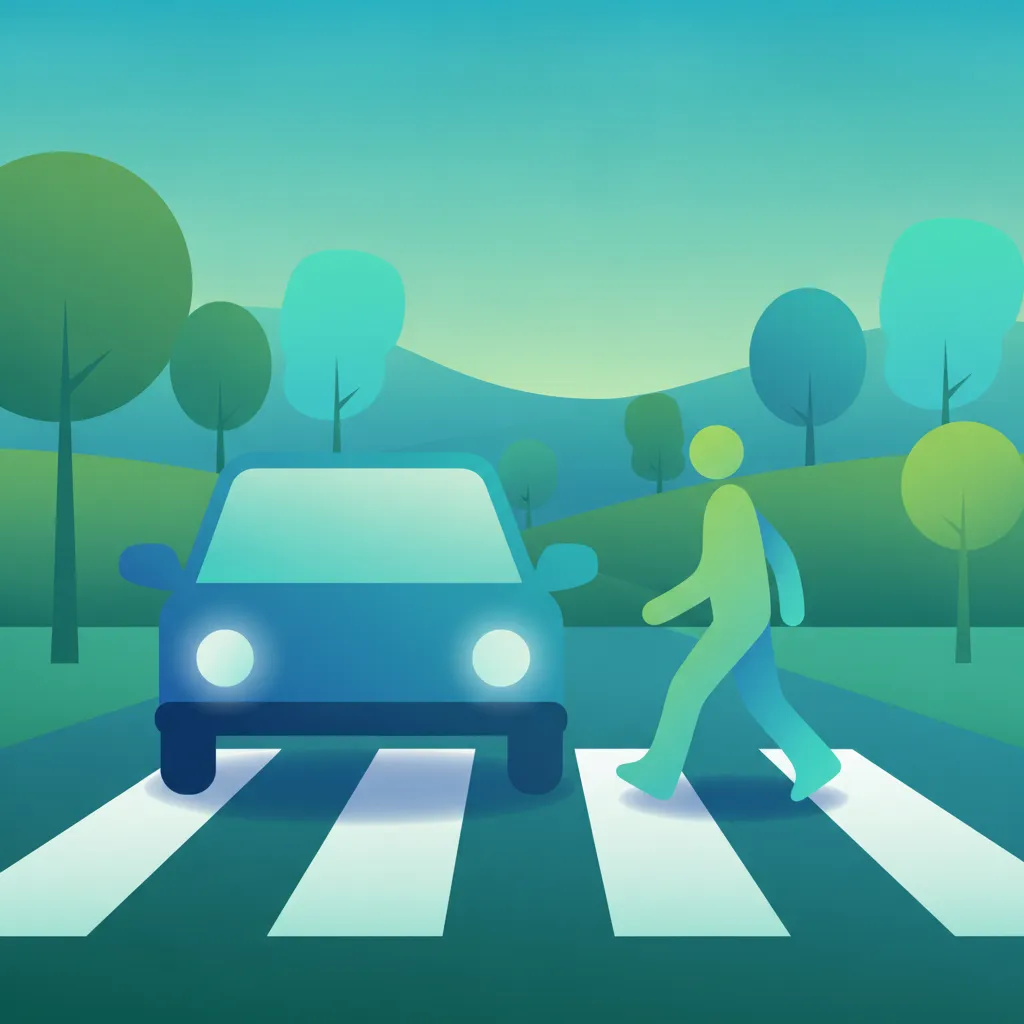
Theory topic content overview
Read the full theory topic guide for Pedestrian Priority Rules with structured, easy-to-scan content built for learners in Denmark. This detailed section explains the exact rule, meaning, traffic context, comparison points, and exam logic behind this Danish driving theory topic so you can study faster, understand the concept more clearly, and avoid common interpretation mistakes on the theory test.
Pedestrian priority refers to specific situations in Danish traffic where drivers must yield the right of way to pedestrians. It establishes that, under certain circumstances, people on foot have precedence over vehicles, meaning drivers are legally required to stop or slow down to allow them to cross safely. This rule is fundamental for protecting pedestrians, who are considered highly vulnerable road users due to their lack of physical protection.
Understanding pedestrian priority in Denmark is not just about knowing the law; it's about adopting a proactive and safety-first mindset that is heavily emphasized in the Danish driving theory exam.
The principle of pedestrian priority is deeply ingrained in Danish road safety because pedestrians are the most vulnerable participants in traffic. Any collision between a vehicle and a pedestrian can result in severe injury or fatality.
For Danish learner drivers, mastering this topic is critical because:
fodgængerfelt (pedestrian crossings) and during turns, are very common in the Danish driving theory test. Scenarios often test your ability to anticipate pedestrian intent, not just their physical presence on the road.Danish traffic law outlines specific scenarios where drivers must give way to pedestrians.
Fodgængerfelt)This is the most common and clear-cut instance of pedestrian priority. A fodgængerfelt (often called a zebra crossing in English) is marked by white stripes on the road.
fodgængerfelt, drivers must slow down and be prepared to stop. You must yield to any pedestrian who is either on the crossing or clearly intending to cross.Another critical situation for pedestrian priority in Denmark occurs when you are turning at an intersection.
While not formal priority, drivers hold a higher responsibility for safety in areas with high pedestrian activity.
Several factors influence how drivers must respond to pedestrians:
fodgængerfelt or specific warning signs for pedestrians clearly dictates priority.To fully grasp pedestrian priority, it's helpful to distinguish it from related concepts:
fodgængerfelt, turning at intersections).Fodgængerfelt) vs. Unmarked Road Crossing:
fodgængerfelt, pedestrians have explicit priority.Intending to Cross vs. Actively Crossing: The Danish theory test often focuses on the subtle distinction of intention. You must react not just when a pedestrian is physically in your path, but also when their behaviour indicates they are about to be in your path. This reflects the "Driver Responsibility & Hazard Anticipation" angle.Approaching a Fodgængerfelt on a Busy Street: You're driving in a busy Danish city street. Ahead, you see a fodgængerfelt. A group of children is standing on the pavement near the crossing, looking towards the road.
Turning Right at a Junction with a Cyclist and Pedestrian: You are waiting to turn right at a light-controlled junction. The light turns green for you. As you begin your turn, you see a pedestrian and a cyclist on the pavement to your right, waiting to cross the road you are turning into.
Driving Past a Bus Stop in a Residential Area: You're driving through a residential area with parked cars and a bus stop. A bus has just departed, and people are walking away from the stop.
fodgængerfelt, you must reduce speed, be highly vigilant, and anticipate that someone might unexpectedly step into the road from behind parked cars or the departing bus. There's no formal priority, but the high-risk environment demands maximum caution.Based on common theory test failures and road observations, learners often make these mistakes regarding pedestrian priority:
Danish traffic legislation places a very strong emphasis on protecting vulnerable road users, including pedestrians and cyclists. This philosophy permeates driving theory education and practical driving expectations. The Færdselsloven (Traffic Act) explicitly outlines these responsibilities.
The concept of "driver responsibility" is paramount. Drivers are expected to predict potential hazards, especially those involving pedestrians, and to adjust their driving accordingly. The theory exam reflects this by presenting complex scenarios that test your ability to read the traffic situation comprehensively, not just apply a simple rule. For example, questions often involve judging if a pedestrian's body language implies they are about to step out, even if they are not yet on the road.
When it comes to pedestrian priority in Denmark, adopt the "Scan, Slow, Stop" mindset:
Always prioritize safety and assume pedestrians might not see you or might act unpredictably. Your vigilance ensures everyone's safety on Danish roads.
Pedestrian priority in Danish traffic is a legal obligation where drivers must yield to pedestrians at marked crossings (fodgængerfelt) and when turning at intersections. The key principle is anticipating pedestrian intent—reacting to body language and positioning before they physically step onto the road—rather than waiting for them to be in your path. Danish traffic law places primary responsibility on drivers to protect vulnerable road users, with specific rules that apply even at unmarked crossings and in areas without formal priority. The practical 'Scan, Slow, Stop' mindset ensures drivers constantly monitor for pedestrians, reduce speed appropriately, and stop safely before conflict points, preventing accidents and satisfying theory exam requirements.
A short set of high-value points that capture the most important ideas from this theory explanation.
Pedestrians have explicit priority at marked crossings (fodgængerfelt), and drivers must slow down and be prepared to stop when pedestrians show intent to cross, not just when they are physically on the road
When turning at any intersection, drivers must yield to pedestrians and cyclists who are crossing or intending to cross the road they are turning into, regardless of markings
Anticipating pedestrian intent—observing body language, gaze, or positioning—is a critical skill assessed in the Danish theory exam
Danish traffic law places primary responsibility on drivers to protect vulnerable road users, making pedestrian safety a legal obligation, not just courtesy
The 'Scan, Slow, Stop' mindset should be applied continuously when approaching crossings, intersections, and areas with high pedestrian activity
Fodgængerfelt (marked pedestrian crossings) give pedestrians explicit legal priority—always slow down and prepare to stop when pedestrians show crossing intent
Turning vehicles must yield to pedestrians and cyclists crossing the road they are entering, even without a marked crossing
You must stop before the crossing, leaving ample space for pedestrians—never stop on the crossing itself
Assume pedestrians might step out unpredictably; reacting only when they are physically on the road is insufficient and a common exam failure
Poor visibility, high pedestrian areas (schools, bus stops), and larger vehicles all require increased caution and reduced speed
Only reacting when a pedestrian is already on the crossing rather than when they show intent to cross, which causes near misses and exam failures
Stopping too close to or directly on the pedestrian crossing, blocking pedestrians' path
Forgetting that turning vehicles must yield to pedestrians crossing the road they are entering, especially at intersections without markings
Tunnel vision focusing only on vehicle traffic and failing to scan for pedestrians at intersections and crossings
Not adjusting speed sufficiently when approaching crossings or high-pedestrian areas, leaving insufficient reaction time
Start with a short, direct summary of Pedestrian Priority Rules before reading the full explanation below.
Pedestrian priority means that drivers must yield to pedestrians in specific situations, such as at marked pedestrian crossings or when turning into a road where pedestrians are already crossing or intending to cross. This rule is designed to protect vulnerable road users and is a fundamental aspect of Danish traffic law and safe driving practices.
Review the most important terms, rule signals, and traffic concepts linked to Pedestrian Priority Rules.
Explore related theory topic pages connected to Pedestrian Priority Rules and continue with the next useful rule explanation.
See the common search queries learners use when trying to understand Pedestrian Priority Rules in Denmark.

Dive into detailed explanations of Danish traffic legislation, road signs, and driving conventions. Solidify your understanding of key theory topics and prepare confidently for all sections of your official Danish driving license theory exam.
Explore Driving Theory TopicsTheory topic content overview
A short set of high-value points that capture the most important ideas from this theory explanation.
Pedestrians have explicit priority at marked crossings (fodgængerfelt), and drivers must slow down and be prepared to stop when pedestrians show intent to cross, not just when they are physically on the road
When turning at any intersection, drivers must yield to pedestrians and cyclists who are crossing or intending to cross the road they are turning into, regardless of markings
Anticipating pedestrian intent—observing body language, gaze, or positioning—is a critical skill assessed in the Danish theory exam
Danish traffic law places primary responsibility on drivers to protect vulnerable road users, making pedestrian safety a legal obligation, not just courtesy
The 'Scan, Slow, Stop' mindset should be applied continuously when approaching crossings, intersections, and areas with high pedestrian activity
Fodgængerfelt (marked pedestrian crossings) give pedestrians explicit legal priority—always slow down and prepare to stop when pedestrians show crossing intent
Turning vehicles must yield to pedestrians and cyclists crossing the road they are entering, even without a marked crossing
You must stop before the crossing, leaving ample space for pedestrians—never stop on the crossing itself
Assume pedestrians might step out unpredictably; reacting only when they are physically on the road is insufficient and a common exam failure
Poor visibility, high pedestrian areas (schools, bus stops), and larger vehicles all require increased caution and reduced speed
Only reacting when a pedestrian is already on the crossing rather than when they show intent to cross, which causes near misses and exam failures
Stopping too close to or directly on the pedestrian crossing, blocking pedestrians' path
Forgetting that turning vehicles must yield to pedestrians crossing the road they are entering, especially at intersections without markings
Tunnel vision focusing only on vehicle traffic and failing to scan for pedestrians at intersections and crossings
Not adjusting speed sufficiently when approaching crossings or high-pedestrian areas, leaving insufficient reaction time
Start with a short, direct summary of Pedestrian Priority Rules before reading the full explanation below.
Pedestrian priority means that drivers must yield to pedestrians in specific situations, such as at marked pedestrian crossings or when turning into a road where pedestrians are already crossing or intending to cross. This rule is designed to protect vulnerable road users and is a fundamental aspect of Danish traffic law and safe driving practices.
Review the most important terms, rule signals, and traffic concepts linked to Pedestrian Priority Rules.
Explore related theory topic pages connected to Pedestrian Priority Rules and continue with the next useful rule explanation.
See the common search queries learners use when trying to understand Pedestrian Priority Rules in Denmark.
Dive into detailed explanations of Danish traffic legislation, road signs, and driving conventions. Solidify your understanding of key theory topics and prepare confidently for all sections of your official Danish driving license theory exam.
Explore Driving Theory TopicsUse this exam-focused revision tip to understand how Pedestrian Priority Rules is likely to appear in theory questions for learners in Denmark. This section helps you identify the most testable part of the rule, avoid common traps, and remember the concept more effectively during Danish driving theory exam preparation.
In the Danish theory test, pay close attention to image questions involving pedestrians. Look for subtle cues like a pedestrian's body language or gaze indicating they intend to cross, even if they haven't stepped onto the road yet. Always assume the pedestrian might step out, especially at crossings and when turning.
Read direct answers to the most common learner questions about Pedestrian Priority Rules in Denmark. This FAQ focuses on rule confusion, practical meaning, comparison with similar concepts, and the exact uncertainties that appear most often in Danish driving theory revision and exam preparation.
Pedestrian priority means that drivers are legally required to give way to pedestrians in certain traffic situations, allowing them to cross the road safely. This prioritizes pedestrian safety due to their vulnerability.
At a marked pedestrian crossing (fodgængerfelt), drivers must always slow down and stop if a pedestrian is on the crossing or clearly intending to cross it. This applies whether the crossing is controlled by traffic lights or not.
Yes, when turning at an intersection, drivers must yield to pedestrians who are already crossing or are about to cross the road into which the vehicle is turning. This applies to both right and left turns.
Even without a marked crossing, drivers must always drive with extra caution in areas with many pedestrians, such as residential streets or near schools. While pedestrians may not have formal priority, drivers still have a duty to avoid endangering them.
The driver's main responsibility is to anticipate pedestrian movements, maintain a safe speed, and be prepared to stop. This is especially true near crossings, intersections, and in areas with high pedestrian activity, to prevent collisions.
Yes, failing to correctly identify and respond to situations requiring pedestrian priority is a common mistake and can lead to failing the Danish driving theory test, as it demonstrates a lack of understanding of fundamental safety rules.
Approach all pedestrian crossings with reduced speed, be observant of pedestrians on both sides of the road, and be ready to brake. Never drive onto a crossing if a pedestrian is already using it or clearly waiting to use it.
Use our powerful search tool to pinpoint specific Danish driving theory topics, road signs, or traffic situations you need to review. Start exploring relevant practice sets now to reinforce your knowledge and build confidence for your upcoming driving licence exam.