
In Denmark, public transport vehicles such as light rail (Letbane), trams (where applicable), and buses are often granted special priority on the roads. This is primarily due to their fixed routes or tracks, larger size, and the need to maintain public service schedules. Drivers must be aware of these specific rules to ensure safety for all road users and to navigate complex urban traffic situations correctly, a key component of Danish driving theory.
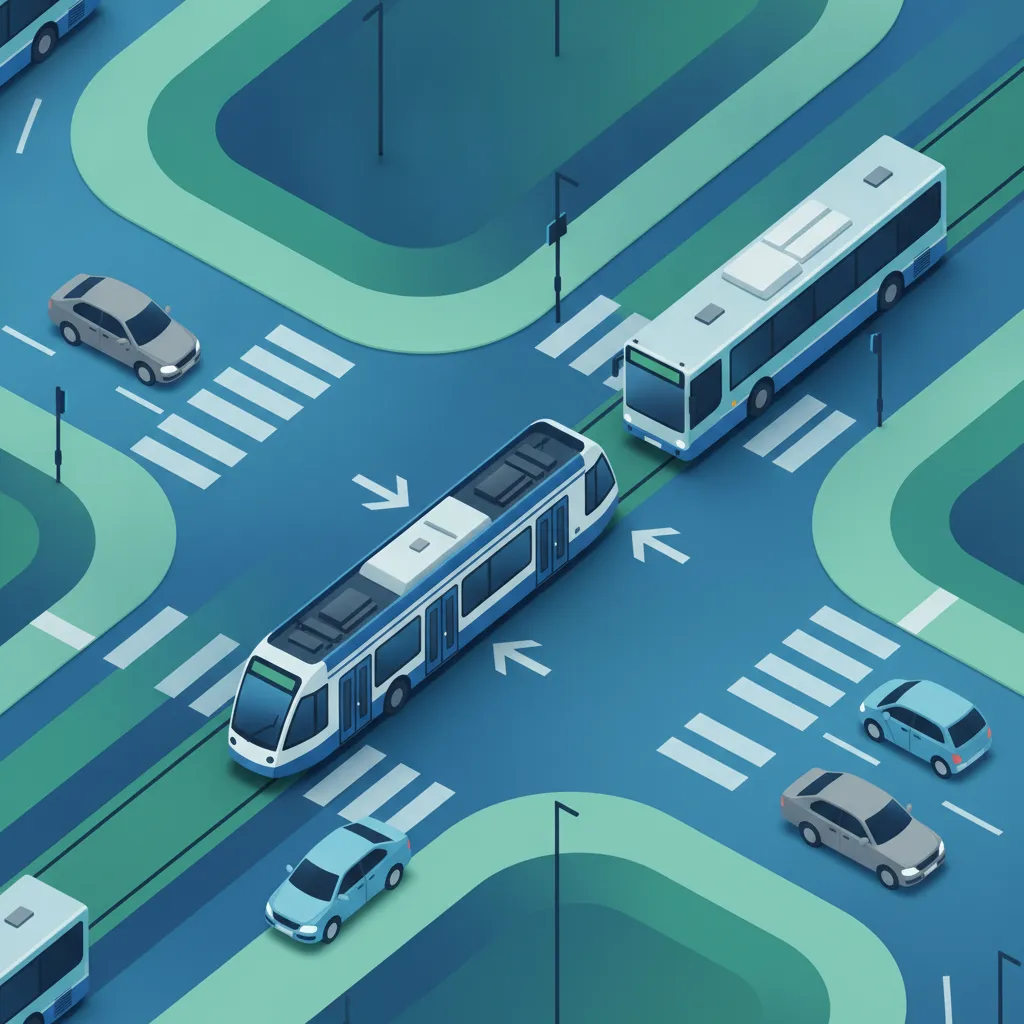
Theory topic content overview
Read the full theory topic guide for Public Transport Priority with structured, easy-to-scan content built for learners in Denmark. This detailed section explains the exact rule, meaning, traffic context, comparison points, and exam logic behind this Danish driving theory topic so you can study faster, understand the concept more clearly, and avoid common interpretation mistakes on the theory test.
In Denmark, certain public transport vehicles, notably Light Rail (Letbane) and buses, are often granted special priority on the roads. This isn't just a courtesy; it's a critical safety and efficiency measure embedded in Danish traffic rules. As a driver, understanding these specific priority rules for public transport in Denmark is vital for safe urban navigation and a frequent topic in the Danish driving theory exam.
Public transport priority (or kollektiv trafik prioritet in Danish) refers to specific rules that give vehicles like Letbane and buses precedence over other road users in certain traffic situations. This priority is granted due to their unique operational characteristics and their role in facilitating efficient public transport flow.
The core reasons for this special status are:
Understanding when and how to yield to public transport is crucial for several reasons:
The rules for public transport priority differ slightly depending on the type of vehicle.
While traditional trams (sporvogne) are rare in Denmark today, the modern Letbane systems (e.g., in Aarhus and Odense) operate under similar principles for priority.
Vigepligt sign against the Letbane), the Letbane vehicle usually has priority. Always be prepared to yield.Vigepligt or Stop signs at a Letbane crossing will dictate priority, just as they would for any other road user. Pay close attention to these signals.Buses generally follow regular traffic rules, but there are important exceptions and considerations for bus priority in Danish traffic:
It's easy to confuse public transport priority with standard right-of-way rules. Here's how they differ:
Vigepligt signs for the Letbane. You must be prepared to stop and yield to any approaching Letbane train.busprioritering i trafiksignaler in action.The key to safely interacting with public transport in Denmark is to anticipate and adapt. For fixed-track vehicles like Letbane, assume priority is theirs unless a sign or signal explicitly states otherwise. For buses, respect their dedicated infrastructure and be ready to facilitate their movement, especially when they are leaving stops or if traffic signals appear to favour them. Always remember their limited maneuverability and crucial role in kollektiv trafik for Denmark.
Public transport priority in Danish traffic grants special precedence to Letbane vehicles and buses due to their fixed routes, size, and operational schedules. Letbane vehicles on fixed tracks generally have priority unless traffic signs or signals explicitly require them to yield, while buses gain priority primarily through dedicated lanes or traffic signal systems. Drivers must never obstruct Letbane tracks, respect bus lane restrictions, and facilitate bus movements when they signal to leave stops. The key distinction lies between active yielding to Letbane at unregulated crossings and passive reaction to traffic lights that have been influenced by approaching buses.
A short set of high-value points that capture the most important ideas from this theory explanation.
Fixed-track vehicles like Letbane have priority over other road users at unregulated crossings unless a sign or signal explicitly requires them to yield
Never stop on or block Letbane tracks; always ensure you have space to clear them completely before proceeding
Bus signal priority is passive—you react to traffic light changes that the bus has already influenced, not directly to the bus itself
Dedicated bus lanes are reserved exclusively for buses; private vehicles may only enter when directed by road markings for turning or accessing property
When a bus signals to leave a stop in a built-up area, facilitate its re-entry if it is safe to do so, though the bus must also ensure it can move safely
Letbane priority can override the standard right-hand rule (højre vigepligt) when not otherwise regulated by signs or signals
Letbane vehicles cannot deviate from their fixed tracks, making their path predictable but their movement inflexible
Bus priority primarily comes through dedicated infrastructure (bus lanes) or active traffic management (signal priority systems)
Distinguish between active priority (you actively yield to Letbane) and passive priority (you react to lights that favor buses)
Buses are long vehicles that often need to swing wide when turning—give them ample space at junctions
Assuming the right-hand rule applies to Letbane—this is a dangerous misconception as Letbane on tracks typically has priority
Blocking Letbane tracks while waiting in traffic, which creates major safety hazards and potential fines
Driving in or parking in dedicated bus lanes when not explicitly allowed by road markings
Underestimating the size and turning radius of buses, leading to dangerous situations at junctions
Not anticipating that traffic lights may change quickly due to approaching buses with signal priority
Start with a short, direct summary of Public Transport Priority before reading the full explanation below.
Public transport vehicles, including light rail (Letbane), trams, and certain buses, typically have priority in Danish traffic. This stems from their operational constraints, like fixed tracks for rail-based transport, or designated priority at signals for buses. Drivers must always yield to these vehicles when required, especially at intersections and dedicated lanes, to prevent accidents and ensure the smooth operation of public transit.
Review the most important terms, rule signals, and traffic concepts linked to Public Transport Priority.
Explore related theory topic pages connected to Public Transport Priority and continue with the next useful rule explanation.
See the common search queries learners use when trying to understand Public Transport Priority in Denmark.

Dive into detailed explanations of Danish traffic legislation, road signs, and driving conventions. Solidify your understanding of key theory topics and prepare confidently for all sections of your official Danish driving license theory exam.
Explore Driving Theory TopicsTheory topic content overview
A short set of high-value points that capture the most important ideas from this theory explanation.
Fixed-track vehicles like Letbane have priority over other road users at unregulated crossings unless a sign or signal explicitly requires them to yield
Never stop on or block Letbane tracks; always ensure you have space to clear them completely before proceeding
Bus signal priority is passive—you react to traffic light changes that the bus has already influenced, not directly to the bus itself
Dedicated bus lanes are reserved exclusively for buses; private vehicles may only enter when directed by road markings for turning or accessing property
When a bus signals to leave a stop in a built-up area, facilitate its re-entry if it is safe to do so, though the bus must also ensure it can move safely
Letbane priority can override the standard right-hand rule (højre vigepligt) when not otherwise regulated by signs or signals
Letbane vehicles cannot deviate from their fixed tracks, making their path predictable but their movement inflexible
Bus priority primarily comes through dedicated infrastructure (bus lanes) or active traffic management (signal priority systems)
Distinguish between active priority (you actively yield to Letbane) and passive priority (you react to lights that favor buses)
Buses are long vehicles that often need to swing wide when turning—give them ample space at junctions
Assuming the right-hand rule applies to Letbane—this is a dangerous misconception as Letbane on tracks typically has priority
Blocking Letbane tracks while waiting in traffic, which creates major safety hazards and potential fines
Driving in or parking in dedicated bus lanes when not explicitly allowed by road markings
Underestimating the size and turning radius of buses, leading to dangerous situations at junctions
Not anticipating that traffic lights may change quickly due to approaching buses with signal priority
Start with a short, direct summary of Public Transport Priority before reading the full explanation below.
Public transport vehicles, including light rail (Letbane), trams, and certain buses, typically have priority in Danish traffic. This stems from their operational constraints, like fixed tracks for rail-based transport, or designated priority at signals for buses. Drivers must always yield to these vehicles when required, especially at intersections and dedicated lanes, to prevent accidents and ensure the smooth operation of public transit.
Review the most important terms, rule signals, and traffic concepts linked to Public Transport Priority.
Explore related theory topic pages connected to Public Transport Priority and continue with the next useful rule explanation.
See the common search queries learners use when trying to understand Public Transport Priority in Denmark.
Dive into detailed explanations of Danish traffic legislation, road signs, and driving conventions. Solidify your understanding of key theory topics and prepare confidently for all sections of your official Danish driving license theory exam.
Explore Driving Theory TopicsUse this exam-focused revision tip to understand how Public Transport Priority is likely to appear in theory questions for learners in Denmark. This section helps you identify the most testable part of the rule, avoid common traps, and remember the concept more effectively during Danish driving theory exam preparation.
The Danish theory exam frequently includes scenarios involving public transport priority. Pay close attention to questions about light rail (Letbane) and buses at intersections, bus stops, and dedicated lanes. Remember the core principle: these vehicles have limited maneuverability and specific schedules, which justifies their priority. Don't confuse general right-of-way rules with the special priority often given to public transport.
Read direct answers to the most common learner questions about Public Transport Priority in Denmark. This FAQ focuses on rule confusion, practical meaning, comparison with similar concepts, and the exact uncertainties that appear most often in Danish driving theory revision and exam preparation.
Trams and light rail (Letbane) vehicles in Denmark generally have priority due to their fixed tracks and limited maneuverability. However, always observe specific traffic signs, signals, and road markings, as these can override general priority rules.
Buses often receive priority at traffic signals in Denmark (busprioritering) to improve the efficiency and punctuality of public transport. This can involve lights turning green faster or staying green longer for approaching buses.
Letbane (light rail) is a modern public transport system on tracks, similar to a tram, found in cities like Aarhus. Like trams, Letbane vehicles have fixed routes and require special consideration, often having priority in Danish traffic situations to ensure safe and smooth operation.
Always maintain a safe distance and be extra cautious. Avoid driving or stopping on tracks unless absolutely necessary and permitted. Be aware of trams or light rail approaching from behind or ahead, especially when turning or crossing intersections.
Yes, in Denmark, if a bus indicates its intention to pull out from a marked bus stop or a designated bus lane, you must slow down and, if necessary, stop to allow it to merge into traffic, provided it's safe to do so.
Yes, specific traffic signs, road markings, or traffic signals (e.g., a red light for a tram or light rail) can override general priority rules for public transport vehicles. Always follow the explicit instructions of signage and signals.
The main dangers include their inability to swerve, long braking distances, and quiet operation, especially for modern light rail. Drivers must anticipate their movements and be particularly careful at intersections and pedestrian crossings near tracks.
Failing to yield to public transport when required can result in fines and points on your driving license in Denmark, as it poses a significant safety risk and disrupts traffic flow. Always follow the rules to avoid penalties.
Use our powerful search tool to pinpoint specific Danish driving theory topics, road signs, or traffic situations you need to review. Start exploring relevant practice sets now to reinforce your knowledge and build confidence for your upcoming driving licence exam.