
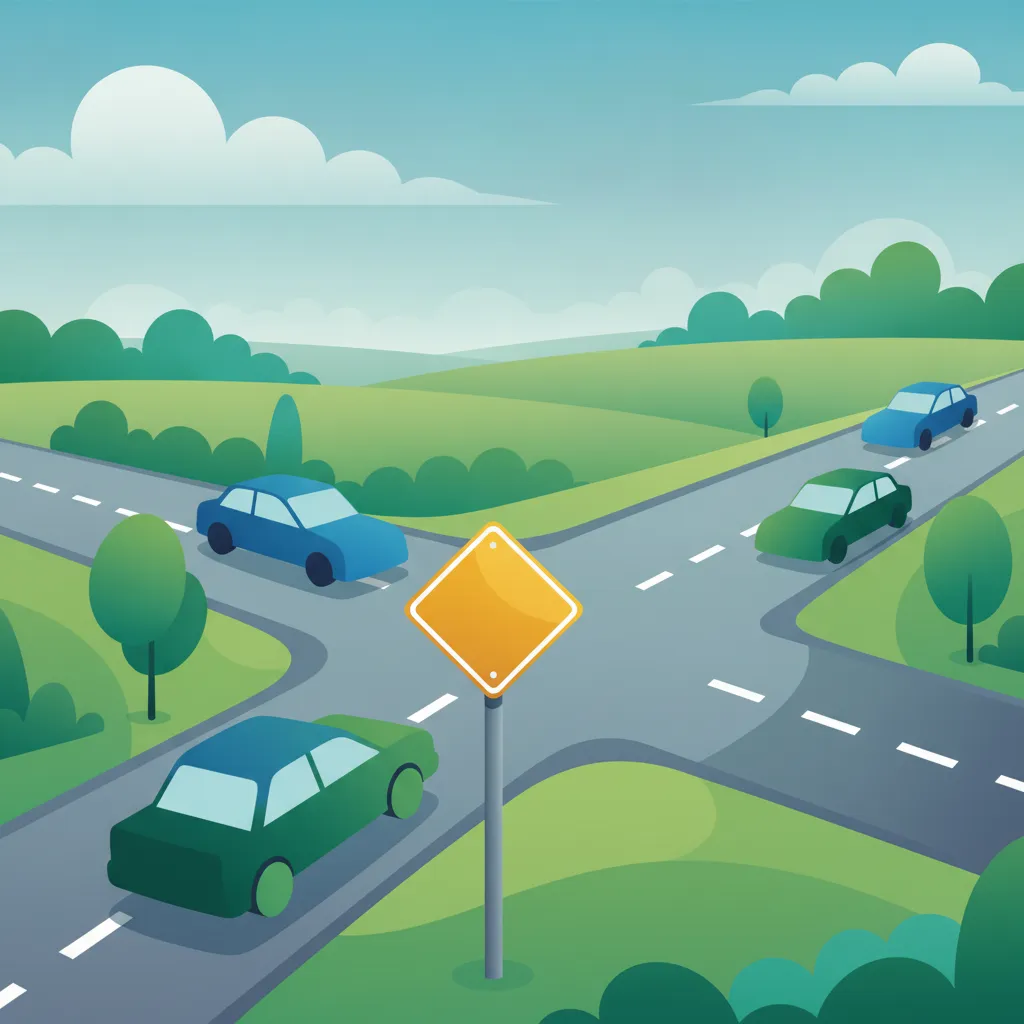
A priority road, known in Denmark as a 'forrangsvej', grants traffic on it precedence over vehicles entering from intersecting roads. In Denmark, specific signs, most notably the yellow diamond, clearly mark these roads, dictating that drivers on side roads must yield. This system ensures efficient traffic flow and reduces confusion at junctions, but requires constant vigilance from all drivers.
Theory topic content overview
Read the full theory topic guide for Priority Road Rules Denmark with structured, easy-to-scan content built for learners in Denmark. This detailed section explains the exact rule, meaning, traffic context, comparison points, and exam logic behind this Danish driving theory topic so you can study faster, understand the concept more clearly, and avoid common interpretation mistakes on the theory test.
Forrangsvej)A priority road, known in Denmark as a forrangsvej (literally "precedence road"), is a fundamental concept in Danish traffic law designed to streamline traffic flow and enhance safety at intersections. When you are driving on a priority road, traffic on that road generally has precedence (right of way) over vehicles entering or crossing from intersecting roads, unless specific signals or signs state otherwise.
Understanding the forrangsvej is absolutely critical for all drivers in Denmark, not only for navigating daily traffic safely but also for successfully passing your Danish driving theory exam. Misinterpreting priority rules at intersections is a frequent cause of accidents and can lead to immediate failure in theory tests.
Priority roads serve several vital functions in the Danish road network:
forrangsveje reduce hesitation and potential conflicts at numerous intersections, allowing traffic to move more smoothly on primary routes.In Denmark, priority roads are clearly identified by specific traffic signs, which you must be able to recognise instantly.
The most important sign indicating a priority road is the yellow diamond sign (officially B1), often referred to as a "hovedfærdselsåreskilt" (main thoroughfare sign).
When you approach an intersection involving a forrangsvej, your actions depend on whether you are on the priority road or entering it.
Forrangsvej)vigepligt (obligation to yield) to avoid a collision always remains.give way) to all traffic on the priority road. This means slowing down significantly, stopping if necessary, and waiting until the priority road is clear of all vehicles that would conflict with your intended path.While priority roads offer clear guidance, there are crucial exceptions and nuances:
Forrangsvej with a Bend: You are on a priority road marked with the yellow diamond, and a supplementary sign shows the priority road taking a sharp left turn. A car from a straight-ahead side road is waiting at a Yield sign. You have priority to continue around the bend, but you must signal your turn clearly, maintain a safe speed, and still confirm the side road driver is yielding before proceeding.Forrangsvej Intersection: You are on a priority road and see a green traffic light ahead. Another car on the side road has a red light. You proceed, as the green light gives you priority. If your light were red, you would stop, even though you are on a priority road, because the traffic light overrides the sign.forrangsvej gives you an absolute right to proceed without caution. Drivers on priority roads must still be ready to brake or react to unyielding traffic from side roads, pedestrians, or unexpected hazards.Mastering the rules of the priority road (forrangsvej) is fundamental to safe driving in Denmark. Always be vigilant for the yellow diamond sign, which is your primary indicator. Remember that while forrangsveje grant you precedence, this comes with the responsibility of maintaining situational awareness and being prepared for unexpected events. Traffic lights and police signals are supreme. Drive predictably, signal clearly, and always be ready to yield if it means preventing a collision – safety always comes first on Danish roads.
In Danish traffic, a priority road (forrangsvej) gives vehicles on it precedence over traffic from intersecting roads, identified by the yellow diamond sign (B1). Drivers on side roads must yield or stop at B11 and B13 signs respectively, while priority road drivers can generally proceed but must remain cautious. Critical exceptions include traffic lights and police signals which always override priority signs, and vulnerable road users like pedestrians at zebra crossings and cyclists who retain their right of way regardless of priority status. Understanding when priority ends, how bending priority roads work, and that roundabouts follow separate rules is essential for both safe driving and passing the Danish theory exam.
A short set of high-value points that capture the most important ideas from this theory explanation.
A priority road (forrangsvej) grants traffic on that road precedence over vehicles entering from intersecting roads
The yellow diamond sign (B1) is the primary indicator that you are on or entering a priority road
Traffic lights and police signals always override priority road signs regardless of your position
Drivers on a priority road must still remain observant and be prepared to react to unyielding traffic or unexpected hazards
The End of Priority Road sign (yellow diamond with black diagonal) means normal right-of-way rules resume
Yield (B11) and Stop (B13) signs are always placed on roads entering a priority road, never on the priority road itself
Roundabouts operate under separate rules where traffic already in the roundabout has priority over vehicles entering
Pedestrians at zebra crossings and cyclists crossing your path must always be yielded to, regardless of priority status
When a priority road bends, indicated by a supplementary sign, you must signal your turn even though you remain on the main road
Emergency vehicles with flashing blue lights always have right of way over priority road rules
Assuming that being on a forrangsvej gives absolute right of way without checking for unyielding traffic or hazards
Forgetting that traffic signals override priority road signs, a common exam trap
Not signaling when the priority road bends at an intersection
Only checking immediately left and right at intersections instead of scanning further down the priority road for approaching traffic
Assuming side road drivers will always yield correctly and failing to anticipate unexpected pulling out
Start with a short, direct summary of Priority Road Rules Denmark before reading the full explanation below.
In Denmark, a priority road (forrangsvej) is a road where traffic generally has the right of way over vehicles approaching from intersecting roads. These roads are identified by specific traffic signs, most notably the yellow diamond sign. Drivers entering a priority road must always yield, ensuring that traffic already on the main road can proceed without interruption, unless overridden by traffic lights or other instructions.
Review the most important terms, rule signals, and traffic concepts linked to Priority Road Rules Denmark.
Explore related theory topic pages connected to Priority Road Rules Denmark and continue with the next useful rule explanation.
See the common search queries learners use when trying to understand Priority Road Rules Denmark in Denmark.

Dive into detailed explanations of Danish traffic legislation, road signs, and driving conventions. Solidify your understanding of key theory topics and prepare confidently for all sections of your official Danish driving license theory exam.
Explore Driving Theory TopicsTheory topic content overview
A short set of high-value points that capture the most important ideas from this theory explanation.
A priority road (forrangsvej) grants traffic on that road precedence over vehicles entering from intersecting roads
The yellow diamond sign (B1) is the primary indicator that you are on or entering a priority road
Traffic lights and police signals always override priority road signs regardless of your position
Drivers on a priority road must still remain observant and be prepared to react to unyielding traffic or unexpected hazards
The End of Priority Road sign (yellow diamond with black diagonal) means normal right-of-way rules resume
Yield (B11) and Stop (B13) signs are always placed on roads entering a priority road, never on the priority road itself
Roundabouts operate under separate rules where traffic already in the roundabout has priority over vehicles entering
Pedestrians at zebra crossings and cyclists crossing your path must always be yielded to, regardless of priority status
When a priority road bends, indicated by a supplementary sign, you must signal your turn even though you remain on the main road
Emergency vehicles with flashing blue lights always have right of way over priority road rules
Assuming that being on a forrangsvej gives absolute right of way without checking for unyielding traffic or hazards
Forgetting that traffic signals override priority road signs, a common exam trap
Not signaling when the priority road bends at an intersection
Only checking immediately left and right at intersections instead of scanning further down the priority road for approaching traffic
Assuming side road drivers will always yield correctly and failing to anticipate unexpected pulling out
Start with a short, direct summary of Priority Road Rules Denmark before reading the full explanation below.
In Denmark, a priority road (forrangsvej) is a road where traffic generally has the right of way over vehicles approaching from intersecting roads. These roads are identified by specific traffic signs, most notably the yellow diamond sign. Drivers entering a priority road must always yield, ensuring that traffic already on the main road can proceed without interruption, unless overridden by traffic lights or other instructions.
Review the most important terms, rule signals, and traffic concepts linked to Priority Road Rules Denmark.
Explore related theory topic pages connected to Priority Road Rules Denmark and continue with the next useful rule explanation.
See the common search queries learners use when trying to understand Priority Road Rules Denmark in Denmark.
Dive into detailed explanations of Danish traffic legislation, road signs, and driving conventions. Solidify your understanding of key theory topics and prepare confidently for all sections of your official Danish driving license theory exam.
Explore Driving Theory TopicsUse this exam-focused revision tip to understand how Priority Road Rules Denmark is likely to appear in theory questions for learners in Denmark. This section helps you identify the most testable part of the rule, avoid common traps, and remember the concept more effectively during Danish driving theory exam preparation.
In the Danish theory exam, pay close attention to priority road signs, especially the yellow diamond, and understand the difference between being on a priority road versus entering one. Remember that traffic lights and police signals always override priority road signs, which is a common exam trap.
Read direct answers to the most common learner questions about Priority Road Rules Denmark in Denmark. This FAQ focuses on rule confusion, practical meaning, comparison with similar concepts, and the exact uncertainties that appear most often in Danish driving theory revision and exam preparation.
A priority road in Denmark is a road where traffic has the right of way over vehicles entering from side roads. This system is designed to ensure smooth traffic flow on main routes.
Priority roads are typically identified by a distinctive yellow diamond-shaped sign. Additional signs may indicate the continuation or end of the priority road.
While you generally have right of way, it is not absolute. You must still be attentive, observe traffic signals (which override priority signs), and be prepared to react safely to hazards or unexpected situations.
When entering a priority road from a side road, you must always slow down and give way to all traffic already on the priority road, regardless of whether they are approaching from the left or right.
The yellow diamond sign indicates that you are currently on a priority road. It means you have precedence over traffic from intersecting roads, provided no other rules (like traffic lights) take precedence.
Yes, traffic lights or instructions from a police officer always override general priority rules and road signs, including those indicating a priority road.
A priority road typically ends when you pass a 'End of priority road' sign (a yellow diamond with a black diagonal line) or when you encounter traffic signals or other signs that change the priority rules.
Understanding priority roads is highly important for the Danish theory exam, as questions frequently involve scenarios at intersections where knowing who has right of way is crucial for correct answers.
Use our powerful search tool to pinpoint specific Danish driving theory topics, road signs, or traffic situations you need to review. Start exploring relevant practice sets now to reinforce your knowledge and build confidence for your upcoming driving licence exam.