
This lesson focuses on identifying and protecting vulnerable road users, a critical skill for professional passenger vehicle drivers. By understanding the unpredictable behavior of pedestrians, cyclists, and school children, you will learn to anticipate risks and apply defensive driving techniques in complex environments. This content is essential for your D1, D1E, D, and DE theory exam preparation and daily professional duty.
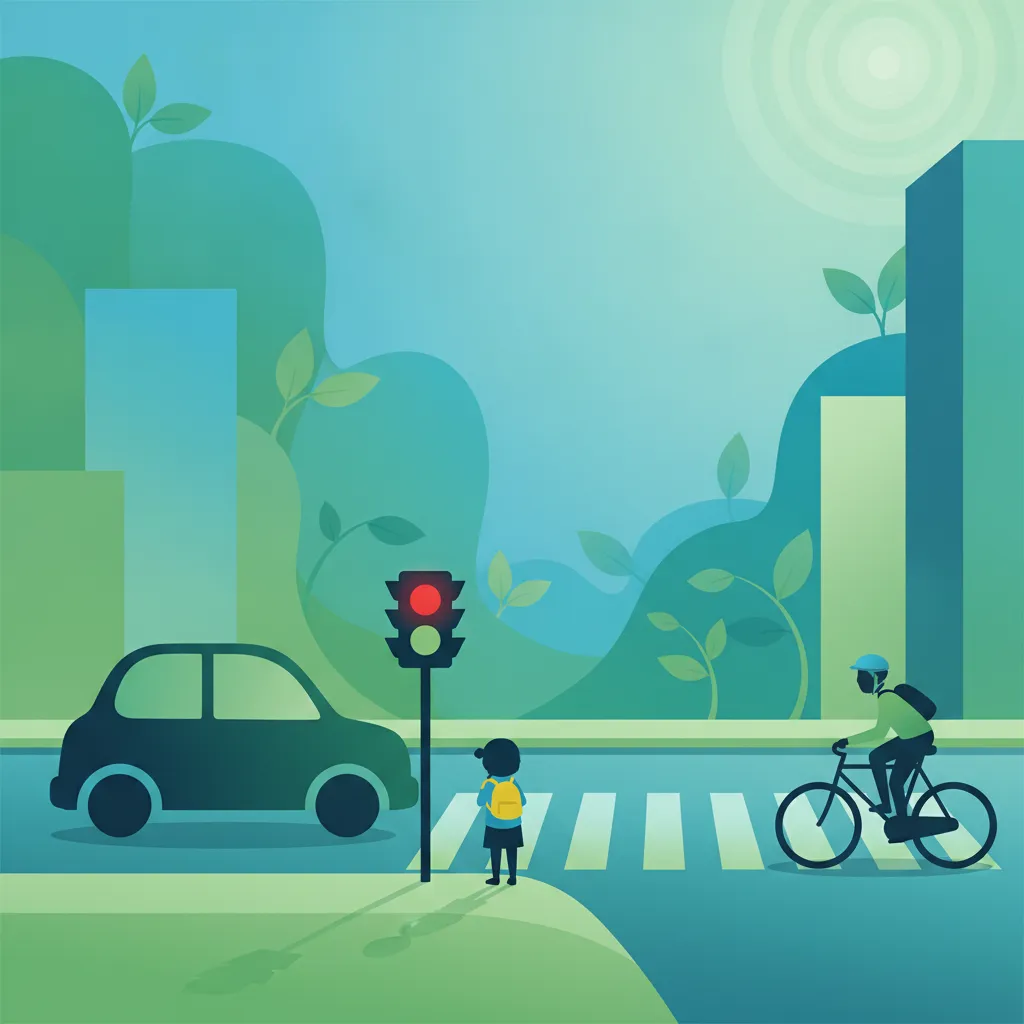
Lesson content overview
As a professional driver of passenger vehicles in Germany, understanding and anticipating the behaviour of vulnerable road users is not just a legal requirement but a fundamental aspect of your professional duty. This comprehensive lesson is designed to equip you with the knowledge and strategies necessary to proactively identify and safely interact with these groups, ensuring the safety of both your passengers and other road users.
The road is a shared space, and while all road users bear responsibility for safety, certain groups are inherently more susceptible to serious injury in a collision. These vulnerable road users include children, elderly pedestrians, cyclists, and e-scooter riders. Professional drivers, especially those operating larger passenger vehicles (categories D1, D1E, D, DE), carry an elevated duty of care. This responsibility stems from the size and mass of their vehicles, which amplify the potential consequences of an accident, and the obligation to safely transport passengers.
Your role extends beyond merely following traffic laws; it demands a proactive mindset focused on risk mitigation. Recognising the unique challenges posed by these vulnerable groups – such as their unpredictable movements, reduced visibility, or slower reaction times – is crucial for preventing incidents. Developing a heightened sense of risk perception allows you to anticipate potential hazards and adjust your driving behaviour accordingly, protecting those most at risk on German roads.
Effective interaction with vulnerable road users is built upon several foundational principles that guide a professional driver's approach to safety. These principles are not merely theoretical; they are practical tools for navigating complex traffic scenarios.
Risk perception is your ability to accurately assess and understand potential hazards based on the behaviour, position, and environment of various road users. For professional drivers, this involves not just seeing what is immediately in front of you, but also predicting what might happen next, especially when vulnerable users are present. This means constantly scanning the road ahead, checking mirrors, and being aware of surroundings.
For example, when driving near a school, your risk perception should automatically heighten, anticipating that children might run into the road without looking. Near a bus stop, you should expect passengers to cross the street before or after boarding/alighting. Developing this skill enables you to take proactive safety measures, making informed decisions that prevent dangerous situations before they escalate.
Defensive driving is a proactive approach that involves anticipating potential hazards and taking preventive measures to reduce the likelihood of accidents. This is particularly vital when interacting with vulnerable road users whose actions can sometimes be unpredictable. It requires ongoing vigilance, continuous assessment of the traffic environment, and a willingness to adapt your speed and positioning.
Key defensive techniques include maintaining adequate following distances, adjusting speed to prevailing conditions and potential hazards, and always being prepared to stop or react. For instance, if you observe a child near the roadside, a defensive driver would immediately reduce speed and cover the brake pedal, ready to stop instantly if the child makes an unexpected move. This mindset shifts the focus from simply reacting to dangers to actively preventing them.
Visibility management refers to the proactive steps drivers take to ensure that vulnerable road users are visible to them, and that the driver and their vehicle are visible to others. This is critical in diverse conditions, including low light, adverse weather, or in areas with obstructed views. Proper use of vehicle lighting is a primary component of visibility management.
Ensuring that your dipped beam headlights are on during the day in certain conditions (e.g., rain, fog) or at dusk can significantly improve the detection of pedestrians, cyclists, and e-scooter riders. Similarly, being aware of and eliminating your vehicle's blind spots—areas not visible through standard mirrors—is crucial, especially before turning or changing lanes. A professional driver actively works to see and be seen, thereby improving overall road safety for everyone.
Right-of-way rules are established traffic laws that dictate the priority of movement between different road users, preventing conflicts and collisions. While these rules are clear, understanding the predictive behaviour of vulnerable users—their typical movement patterns and potential unexpected actions—adds another layer of safety.
For instance, at a marked pedestrian crossing (Zebrastreifen), pedestrians always have the right of way. However, a professional driver also anticipates that an elderly pedestrian might take longer to cross or might pause mid-way. Similarly, while cyclists generally follow vehicle traffic rules, they might suddenly swerve to avoid a pothole or turn without clear signalling. Combining knowledge of right-of-way with an understanding of typical and atypical behaviours allows drivers to react appropriately and give vulnerable users the necessary space and time.
Each group of vulnerable road users presents distinct challenges that professional drivers must understand to ensure their safety.
Children are among the most vulnerable road users due to several inherent characteristics. Their limited awareness of traffic hazards, shorter perception-reaction times, and often unpredictable behaviour make them particularly susceptible to accidents. They may not fully understand traffic rules, judge distances or speeds accurately, or recognise the danger posed by moving vehicles.
The risks children face vary with age:
Drivers must always yield to children on or near crossing points, especially in designated school zones (Schulzonen) or near play areas (Spielstraßen). These areas often have specific speed restrictions, usually 30 km/h (Zone 30), which are mandatory. Ignoring these limits significantly increases the risk of a severe accident, as stopping distances are much shorter at lower speeds.
This sign warns drivers that children may be present on or near the road, requiring increased caution.
This sign specifies a maximum speed limit, which must be observed diligently, particularly in areas with high pedestrian activity like school zones. Failing to reduce speed in these zones is a common and dangerous mistake.
Older pedestrians often experience reduced mobility, slower reaction times, and sensory impairments (e.g., reduced vision, hearing difficulties) that affect their ability to judge distance and speed accurately. These factors can make their movements less predictable and their interactions with vehicles more hazardous.
Elderly pedestrians may walk slower, require more time to cross the road (especially wider intersections), or use unexpected routes. They might also pause mid-way to rest or reorient themselves. As a professional driver, you must exercise increased patience and allow ample time and space for them to complete their crossing or movement safely. Never pressure an elderly pedestrian to rush.
Common misunderstandings include assuming that they are aware of your presence or that increased patience is enough; drivers must actively adjust their speed and be prepared to stop. For example, an elderly person might start crossing, then stop suddenly due to fatigue or a change of mind. Your responsibility is to anticipate this and react safely.
Cyclists (Radfahrer) and e-scooter users (E-Scooter-Fahrer) operate on the road surface, sharing space with motor vehicles. Their small visual profile, variable speeds, and sometimes less predictable movements create specific hazards for drivers.
The presence of cyclists and e-scooter riders in your vehicle's blind spots (areas not visible in mirrors) is a significant risk, particularly when turning right or changing lanes. Their speeds can vary greatly; some cyclists move quickly, while others are slower, and e-scooter speeds can range depending on the model and terrain. They may also be less visible at night or in adverse weather conditions if they lack proper lighting or reflective gear.
When overtaking a cyclist or e-scooter rider, professional drivers must maintain a minimum safe distance. In Germany, specific regulations dictate this distance to ensure the safety of these vulnerable users. Overtaking too closely can startle them, cause them to swerve, or even result in a collision if there are sudden changes in the road surface or crosswinds. Always check your mirrors and blind spots thoroughly before any lateral movement.
Common mistakes include overlooking cyclists and e-scooter riders in blind spots, overtaking too closely, or failing to yield when required at intersections or when they are already established in a lane.
Certain locations on the road network present a consistently higher risk for interactions between motor vehicles and vulnerable road users. Professional drivers must develop a heightened sense of awareness in these environments.
Bus stops (Bushaltestellen) are critical high-risk environments where vulnerable road users frequently enter or exit the flow of traffic. This includes not only the passengers boarding or alighting your own vehicle but also pedestrians waiting for or leaving other public transport.
Drivers must be aware that passengers may be distracted, in a hurry, or focus solely on reaching the bus, potentially stepping into the road unexpectedly. This is particularly true for children and elderly individuals. It's crucial to understand that passengers might cross the road before they board or after they alight, often from behind the bus, obscuring them from your view.
Rules and best practices:
Intersections (Kreuzungen) and pedestrian crossings (Fußgängerüberwege) are other high-risk areas. These are points where different traffic flows intersect, and sightlines can be limited, increasing the chance of conflict with vulnerable users.
This sign marks a pedestrian crossing. At such crossings, pedestrians always have absolute priority once they step onto the crossing or clearly indicate their intention to cross.
Rules and best practices:
Adhering to German traffic laws (Straßenverkehrs-Ordnung – StVO) is paramount for professional drivers. These laws are designed to protect all road users, especially the vulnerable.
Professional drivers must have an in-depth understanding of German traffic laws relevant to vulnerable road users.
Ensuring proper lighting use is a critical legal obligation and a best practice for visibility management.
Understanding common violations helps in preventing them:
Safe driving practices with vulnerable road users are not static; they must adapt to prevailing conditions.
Professional passenger vehicles, such as buses and coaches, are significantly larger and heavier than private cars.
Recognising vulnerable road users and understanding their unique challenges is a cornerstone of professional German passenger vehicle driving. By internalising the principles of heightened risk perception, defensive driving, and effective visibility management, and by diligently applying specific rules and best practices for interacting with children, elderly pedestrians, cyclists, and e-scooter riders, you significantly contribute to road safety. Your professional responsibility extends to protecting these groups, especially in high-risk environments like bus stops and pedestrian crossings. Through consistent vigilance, adherence to the StVO, and adapting your driving to changing conditions, you ensure a safer journey for both your passengers and all other participants on the road.
This lesson teaches professional drivers to identify and protect vulnerable road users—children, elderly pedestrians, cyclists, and e-scooter riders—by applying heightened risk perception and defensive driving techniques. Key challenges include children's unpredictable behavior, elderly pedestrians' reduced mobility, cyclists sharing road space with blind spot risks, and high-risk environments like bus stops and pedestrian crossings. Drivers must adhere to StVO regulations, maintain proper lighting, observe reduced speed limits in school zones, and account for the larger stopping distances and blind spots of passenger vehicles. The goal is proactive hazard anticipation rather than reactive responses to prevent accidents with those most at risk on German roads.
A short set of high-value points that capture the most important learning from this lesson.
Vulnerable road users include children, elderly pedestrians, cyclists, and e-scooter riders who lack protective equipment and are more susceptible to serious injury.
Defensive driving with vulnerable users requires proactive anticipation rather than reactive responses, including constant scanning and preparing to stop.
Children behave unpredictably due to limited traffic awareness, misjudging speed and distance, requiring drivers to assume they may act without warning.
Bus stops and pedestrian crossings are high-risk zones where passengers and pedestrians frequently enter traffic unexpectedly from obscured positions.
Professional drivers have elevated duty of care due to larger vehicle size, longer stopping distances, and more extensive blind spots.
Explore all units and lessons included in this driving theory course.
School zones typically require 30 km/h speed limits (Zone 30) and drivers must always yield to children near crossings and play areas.
Cyclists and e-scooter riders must be given minimum safe lateral distance when overtaking; check mirrors and blind spots thoroughly before any lateral movement.
At marked pedestrian crossings (Zebrastreifen), pedestrians have absolute priority and drivers must stop and yield to those waiting or already crossing.
Use dipped beam headlights in poor visibility conditions such as rain, fog, or dusk to ensure vulnerable users can see and be seen.
Elderly pedestrians may walk slower, need more crossing time, or pause unexpectedly; never pressure them to rush.
Assuming pedestrians or cyclists have seen your vehicle and will wait, when in reality their reaction may be slower or they may not be aware at all.
Failing to reduce speed near bus stops, not anticipating that passengers may cross from behind the stationary bus unexpectedly.
Overlooking cyclists and e-scooter riders in blind spots when turning right or changing lanes due to their small visual profile.
Neglecting speed limits in school zones despite clear signage, particularly during school hours when children are most likely present.
Using high beams or improper fog lights near vulnerable road users, which can temporarily blind them and reduce their visibility.
Lesson content overview
A short set of high-value points that capture the most important learning from this lesson.
Vulnerable road users include children, elderly pedestrians, cyclists, and e-scooter riders who lack protective equipment and are more susceptible to serious injury.
Defensive driving with vulnerable users requires proactive anticipation rather than reactive responses, including constant scanning and preparing to stop.
Children behave unpredictably due to limited traffic awareness, misjudging speed and distance, requiring drivers to assume they may act without warning.
Bus stops and pedestrian crossings are high-risk zones where passengers and pedestrians frequently enter traffic unexpectedly from obscured positions.
Professional drivers have elevated duty of care due to larger vehicle size, longer stopping distances, and more extensive blind spots.
Explore all units and lessons included in this driving theory course.
School zones typically require 30 km/h speed limits (Zone 30) and drivers must always yield to children near crossings and play areas.
Cyclists and e-scooter riders must be given minimum safe lateral distance when overtaking; check mirrors and blind spots thoroughly before any lateral movement.
At marked pedestrian crossings (Zebrastreifen), pedestrians have absolute priority and drivers must stop and yield to those waiting or already crossing.
Use dipped beam headlights in poor visibility conditions such as rain, fog, or dusk to ensure vulnerable users can see and be seen.
Elderly pedestrians may walk slower, need more crossing time, or pause unexpectedly; never pressure them to rush.
Assuming pedestrians or cyclists have seen your vehicle and will wait, when in reality their reaction may be slower or they may not be aware at all.
Failing to reduce speed near bus stops, not anticipating that passengers may cross from behind the stationary bus unexpectedly.
Overlooking cyclists and e-scooter riders in blind spots when turning right or changing lanes due to their small visual profile.
Neglecting speed limits in school zones despite clear signage, particularly during school hours when children are most likely present.
Using high beams or improper fog lights near vulnerable road users, which can temporarily blind them and reduce their visibility.
Explore search topics learners often look for when studying Recognising Vulnerable Road Users. These topics reflect common questions about road rules, driving situations, safety guidance, and lesson level theory preparation for learners in Germany.
Browse additional driving theory lessons that cover connected traffic rules, road signs, and common driving situations related to this topic. Improve your understanding of how different rules interact across everyday traffic scenarios.
This lesson explains the specific challenges and legal requirements for interacting with vulnerable road users such as children, the elderly, pedestrians, and cyclists. Focuses on risk assessment and defensive driving techniques to ensure safety for all road participants.
This lesson focuses on identifying road users who require special attention and caution, such as children, the elderly, and individuals with disabilities. It details the appropriate behavior when encountering school buses and public transport, which often involve unpredictable pedestrian movement. A critical topic covered is the legal requirement to form an emergency corridor ('Rettungsgasse') for responding emergency vehicles.
This lesson focuses on the particular care required when driving near pedestrians, with a special emphasis on children and the elderly, whose behavior can be unpredictable. It covers the rules for yielding at zebra crossings and the importance of reducing speed near schools, playgrounds, and residential areas. The goal is to instill a habit of constant vigilance and readiness to stop.
This lesson teaches riders how to interact safely and predictably with pedestrians, cyclists, and public transport vehicles. It highlights the importance of yielding at designated crossings, maintaining a safe passing distance, and anticipating the movements of buses and trams. The content emphasizes using eye contact and clear signaling to foster safe and respectful interactions with all road users.
This lesson provides specific guidance on how to safely share the road with pedestrians and cyclists, who are among the most vulnerable road users. It covers the rules of conduct at zebra crossings, traffic lights for pedestrians, and designated cycle lanes. The content emphasizes the importance of vigilance, yielding right-of-way, and maintaining a safe distance to prevent accidents in urban and rural environments.
This lesson addresses the critical skill of safely interacting with other road users, particularly vulnerable ones like pedestrians and cyclists. It covers rules for yielding at crosswalks, maintaining a safe passing distance, and being aware of the limited visibility of a moped to car drivers. The focus is on fostering a defensive and cooperative mindset in mixed traffic.
This lesson focuses on the critical moments of interaction with pedestrians and cyclists near bus stops, a common location for accidents. It reinforces the importance of reducing speed, yielding right-of-way, and constantly monitoring blind spots during the stopping process. Learners will practice techniques like making eye contact and using signals to communicate intentions, creating a safer environment for everyone around the vehicle.
This lesson covers the correct and safe way to interact with cyclists. It explains the different types of bicycle infrastructure, such as dedicated cycle paths and advisory bike lanes on the road. Key topics include maintaining the legally required minimum passing distance, checking for cyclists before turning right, and being aware of the risk of 'dooring' when parked.
This lesson provides a detailed breakdown of the various categories of participants in road traffic, from pedestrians and cyclists to cars, trucks, and public transport. It explains the concept of vulnerable road users and outlines the specific rules and expectations for interacting with each group. The objective is to foster mutual respect and understanding to ensure safe coexistence on the road for everyone.
This lesson focuses on the interaction between heavy vehicles and vulnerable road users at crossings, particularly when turning right. It covers the need for heightened vigilance, the importance of properly using mirrors, and correct signaling to alert others. The content highlights legal responsibilities and safe distance requirements to prevent accidents.
This lesson highlights the specific risks associated with motorcyclists, who are less visible and more vulnerable than car drivers. It teaches you to actively look for motorcycles, especially at intersections and during lane changes, as their smaller profile can be easily missed. You will learn about their potential for rapid acceleration and instability, emphasizing the need for extra following distance.
Learn to identify and anticipate hazards in critical areas like school transport zones and busy bus stops. This lesson focuses on understanding the risks associated with unpredictable movements of children, the elderly, and other vulnerable individuals in these specific traffic environments.
This lesson teaches drivers how to identify and assess stop locations that present elevated risks, such as those in dense residential areas, near schools, or with limited visibility. It provides strategies for mitigating these risks through careful vehicle positioning and heightened situational awareness. The goal is to ensure that passenger exchanges can be conducted safely even when the surrounding environment is challenging and unpredictable.
This lesson builds on defensive driving by focusing specifically on hazard perception ('Gefahrenerkennung'). It teaches you how to actively scan the driving environment for potential risks, not just immediate dangers. You will learn to anticipate the likely actions of other road users and identify clues that signal a developing hazardous situation, allowing you to react early and safely.
This lesson focuses on the particular care required when driving near pedestrians, with a special emphasis on children and the elderly, whose behavior can be unpredictable. It covers the rules for yielding at zebra crossings and the importance of reducing speed near schools, playgrounds, and residential areas. The goal is to instill a habit of constant vigilance and readiness to stop.
This lesson focuses on the critical moments of interaction with pedestrians and cyclists near bus stops, a common location for accidents. It reinforces the importance of reducing speed, yielding right-of-way, and constantly monitoring blind spots during the stopping process. Learners will practice techniques like making eye contact and using signals to communicate intentions, creating a safer environment for everyone around the vehicle.
This lesson introduces the concept of defensive driving ('vorausschauendes Fahren'), a proactive approach focused on anticipating and mitigating potential risks. It teaches techniques for scanning the road ahead, identifying potential hazards early, and managing the space around your vehicle to create a safety buffer. The goal is to develop a mindset that prioritizes safety and collision avoidance above all else.
This lesson focuses on identifying road users who require special attention and caution, such as children, the elderly, and individuals with disabilities. It details the appropriate behavior when encountering school buses and public transport, which often involve unpredictable pedestrian movement. A critical topic covered is the legal requirement to form an emergency corridor ('Rettungsgasse') for responding emergency vehicles.
This lesson explores the critical role of visibility in safe driving, covering topics such as sight distance, managing blind spots, and the correct use of mirrors. It provides guidance on how to adjust your driving in conditions of reduced visibility, such as at night, in fog, or during heavy rain, including the proper use of headlights. The importance of the over-the-shoulder check ('Schulterblick') is also a key focus.
This lesson focuses on complex traffic environments where different types of road users share the same space. It provides guidance on situations like driving on streets with integrated tram tracks or where bus and bicycle lanes are part of the roadway. The content emphasizes understanding the specific priority rules and being extra vigilant to anticipate potential conflicts in these busy, shared zones.
This lesson details the specific legal obligations and safety protocols required for transporting schoolchildren. It covers the correct procedures for pick-up and drop-off, the use of warning lights, and the importance of supervised boarding and alighting. The lesson also explains how to interact with school crossing guards and navigate school zones safely to ensure the highest level of protection for children.
This lesson provides specific guidance on how to safely share the road with pedestrians and cyclists, who are among the most vulnerable road users. It covers the rules of conduct at zebra crossings, traffic lights for pedestrians, and designated cycle lanes. The content emphasizes the importance of vigilance, yielding right-of-way, and maintaining a safe distance to prevent accidents in urban and rural environments.
Find clear answers to common questions learners have about Recognising Vulnerable Road Users. Learn how the lesson is structured, which driving theory objectives it supports, and how it fits into the overall learning path of units and curriculum progression in Germany. These explanations help you understand key concepts, lesson flow, and exam focused study goals.
Professional drivers operate larger, heavier vehicles with significant blind spots. Vulnerable road users like cyclists and children often underestimate the space a bus needs to turn or stop, making the driver's role in constant surveillance and anticipation crucial for preventing accidents.
Many candidates fail to account for the cyclist's speed and proximity when making a right turn. The German theory test often includes scenarios where a cyclist continues straight while you turn right, emphasizing the importance of checking your mirror and blind spot before steering.
While this lesson focuses on identifying the road users themselves, it serves as the foundational knowledge for Unit 7, which addresses the specific locations—such as schools or busy intersections—where these road users are most likely to be present.
Yes, passenger vehicle theory tests place a heavy emphasis on professional responsibility. You will encounter numerous hazard perception questions where your decision to slow down or wait for a pedestrian directly impacts your exam score.
Begin your targeted revision now. Use our practice search to quickly find specific German driving theory questions. Filter by StVO rules, road signs, or hazard perception to create your focused study plan. Master challenging areas and prepare confidently for your theoretical driving test.