
This lesson focuses on identifying and assessing stop locations that pose higher risks, such as dense residential zones, school areas, and spots with limited visibility. You will learn specific strategies to mitigate these hazards, ensuring passenger exchanges are performed safely and professionally. This training is a vital component of your D1, D1E, D, or DE category theory preparation.
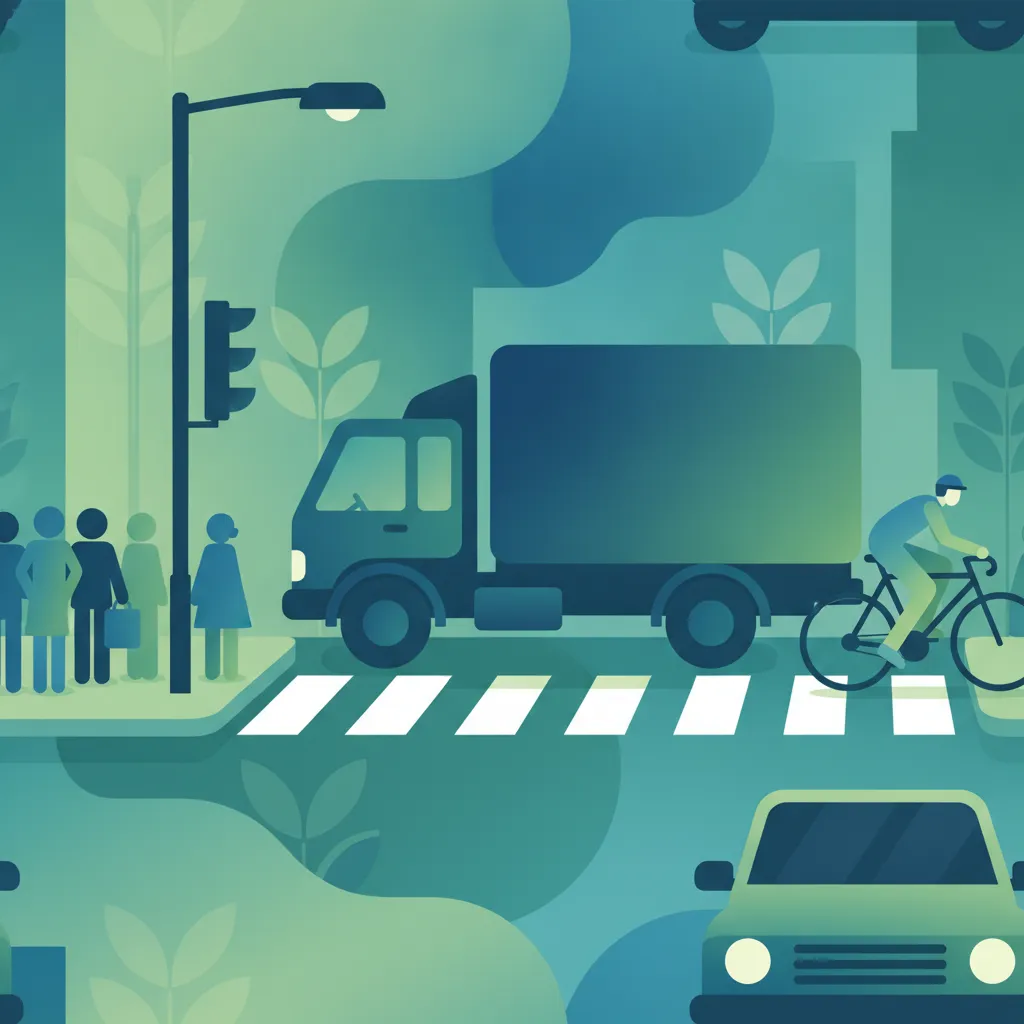
Lesson content overview
As a professional driver holding a German passenger vehicle licence in categories D1, D1E, D, or DE, your responsibility extends far beyond simply navigating routes. A critical aspect of your duty of care involves safely managing stops, particularly in environments that present elevated risks to passengers and other road users. This lesson will equip you with the knowledge and strategies necessary to identify, assess, and mitigate hazards associated with stopping in challenging locations.
A High-Risk Stop Environment is any location where stopping a passenger vehicle poses an increased danger due to various factors such as limited visibility, high pedestrian activity, or close proximity to vulnerable road users. Recognizing these environments is the first step towards ensuring the safety of everyone involved.
Common types of high-risk stop environments include:
Understanding that not all roadside stops are equal in risk is crucial. While a stop on an open road might be straightforward, the same action in a school zone demands a far greater degree of caution and adherence to specific protocols. Failing to recognize these distinctions can lead to serious accidents, compromising passenger safety and potentially resulting in legal consequences.
Effectively managing high-risk stop environments requires the consistent application of several core principles. These principles form the foundation of safe passenger transport practices.
Before initiating a stop, professional drivers must conduct a thorough Risk Assessment of the chosen location. This involves evaluating the immediate surroundings for potential hazards such as:
This assessment should influence not only where you stop, but also how you position your vehicle and the amount of time you allocate for passenger movements.
Visibility Management is paramount. It involves consciously positioning your vehicle and actively scanning the environment to ensure clear sightlines for both yourself and your passengers. This means:
Safe Vehicle Positioning refers to the precise placement of your vehicle within the stop environment to minimize risk. This includes:
In high-risk environments, Time Management During Stops is crucial. Densely populated areas or school zones often require longer Dwell Times for passenger boarding and alighting. Drivers must:
Professional drivers in Germany have a stringent legal obligation to ensure passenger safety and prevent harm to other road users during stops. This includes adhering to specific regulations regarding stopping distances, door opening, and behavior in special zones like school areas. Compliance with these laws is not just a legal requirement but a fundamental aspect of professional duty of care.
Visibility is a cornerstone of safe driving, and its importance is amplified during stops in high-risk environments. Effective visibility management involves a proactive approach to ensure that the driver, passengers, and other road users have clear sightlines.
Your ability to see your surroundings dictates your reaction time. Before stopping, pulling away, or opening any door, you must:
It's not enough for you to see; your passengers also need a safe environment to board or alight.
Opening a door without checking for cyclists or pedestrians can lead to severe accidents. Always perform a final check, often called the "Dutch Reach" or similar, by using the hand furthest from the door to open it, forcing a shoulder check.
The way you position your vehicle during a stop directly impacts the safety of passengers and other road users. Mastering Safe Vehicle Positioning is essential for professional drivers.
According to German traffic regulations, vehicles must stop as close as practicable to the right-hand curb (or left-hand curb in one-way streets, if permitted), ensuring the vehicle does not obstruct the flow of traffic.
Vehicles must stop as close as practicable to the right-hand curb, ensuring the vehicle does not obstruct the flow of traffic. This regulation applies in urban areas, residential streets, and any location where stopping is required.
Even when close to the curb, ensure there's enough room for doors to open fully without striking obstacles (e.g., lampposts, walls) and for passengers to stand clear of the vehicle on the pavement. In areas without pavements, a wider gap may be necessary, but this inherently increases risk, requiring extreme caution.
Your stopped vehicle must not impede the flow of traffic more than absolutely necessary.
Haltverbot) or no waiting (Eingeschränktes Haltverbot), even for brief passenger exchanges.The process of passenger boarding and alighting, particularly in busy or high-risk areas, demands careful management and patience.
In environments like school zones, near public transport stops, or in highly congested urban areas, anticipate that passenger exchanges will take longer. Children may be slower, individuals with mobility issues require more time, and luggage handling can prolong the stop.
During any stop for passenger movement, especially extended ones, ensure the vehicle is properly secured:
Opening doors carelessly can be extremely dangerous. German traffic law is clear on this:
In traffic flows with typical road speeds above 30 km/h, vehicle doors may only be opened when it is safe to do so without endangering other road users. This applies to all stops on public roads with moving traffic.
Vulnerable road users – pedestrians, cyclists, and especially children – require the utmost consideration during stops in high-risk environments. Their unpredictability and limited awareness make them particularly susceptible to accidents.
School zones are areas where children are frequently present and may act unpredictably, often without fully understanding traffic dangers.
In designated school zones, drivers must reduce speed to the posted limit (often 30 km/h or less) and must stop where necessary for passenger drop-off/pick-up while ensuring safety. This is mandatory during school hours.
Cyclists and pedestrians are highly vulnerable.
Professional drivers in Germany must be intimately familiar with specific regulations governing stops, particularly in environments with elevated risk. Adherence to these rules is non-negotiable for passenger safety and legal compliance.
As previously outlined in Regulation 1, the rule to stop as close as practicable to the right-hand curb (or left on one-way streets, if appropriate) is fundamental. This minimizes obstruction to traffic and provides a safe zone for passenger movements. Failure to comply can be considered a traffic obstruction.
Reinforcing Regulation 2, the absolute necessity of ensuring safety before opening any door cannot be overstated. This rule protects passing traffic, cyclists, and pedestrians from serious injury. Professional drivers are responsible for ensuring their passengers also adhere to this, offering guidance and supervision where necessary.
Beyond the general reduction in speed (often to 30 km/h or Tempo 30 Zone), school zones may have additional restrictions on stopping or waiting, potentially indicated by specific signage. Always be alert for Verkehrsberuhigter Bereich (traffic-calmed zones) signs which imply pedestrian priority and very low speeds. The focus is always on safeguarding children.
Hazard warning lights may be used when stopping for an extended period in a place where it may pose a danger to other road users. This is permitted when the vehicle is stationary for passenger movement in atypical locations.
Even experienced professional drivers can make mistakes, especially under pressure or in complex environments. Awareness of common violations and edge cases helps in prevention.
Safe stopping practices must be dynamic, adapting to changing environmental and situational factors.
Let's illustrate these principles with some applied scenarios that professional drivers might encounter in Germany.
Setting: A narrow residential street in a German town, with parked cars on both sides, limiting road width and visibility. You need to drop off a passenger at a house.
Correct Behavior: You slow down well in advance, scanning for gaps in parked cars that allow you to stop parallel to the right-hand curb. You check your mirrors and perform a shoulder check for cyclists before gently steering towards the curb, ensuring your vehicle is close enough to the curb for the passenger to step onto the pavement safely (e.g., 20 cm gap). You instruct the passenger to open their door only after checking for traffic, assisting if needed. You wait for the passenger to clear the vehicle before checking all mirrors and blind spots again, signalling, and smoothly rejoining traffic.
Incorrect Behavior: You quickly pull over, stopping diagonally and partially blocking the narrow street, assuming other cars will wait. You allow the passenger to open their door immediately, potentially into the path of an oncoming car or a child on a scooter. You then rush to pull away without checking your blind spot, nearly colliding with a parked car's mirror or a passing bicycle.
Setting: A designated school zone during morning drop-off, speed limit 30 km/h, with many parents and children walking and crossing.
Correct Behavior: You reduce your speed to 30 km/h well before entering the zone. You identify a designated drop-off area or a safe, clear spot a short distance from the main school entrance. You stop parallel to the curb, leaving ample space for children to alight directly onto the pavement. You activate your hazard lights to alert other drivers. You ensure the children board/alight safely, assisting them and confirming they are clear of the vehicle before proceeding. You then scan meticulously for children or other vehicles before slowly pulling away, maintaining the 30 km/h speed limit.
Incorrect Behavior: You drive through the school zone at 50 km/h. You stop directly in front of the school gate, partially blocking the pedestrian crossing and a busy turn. You rush the children out, not checking if they have safely reached the pavement, and then immediately accelerate, ignoring children still crossing the street.
Setting: An urban intersection where tall buildings and parked delivery vans obstruct your view of traffic approaching from the left. You need to stop to check your route or allow a passenger to orient themselves.
Correct Behavior: Recognizing the limited visibility, you choose to stop before the intersection, or at a point where you have a clear, albeit limited, view of cross-traffic without your vehicle protruding into the intersection. You ensure your stop doesn't create a new blind spot for others. If you must stop near the intersection, you instruct passengers to remain seated while you assess the situation, or if they need to alight, you move to a safer, more visible location first.
Incorrect Behavior: You stop with the front of your vehicle extending slightly into the intersection, assuming others will see you. This creates a dangerous situation where you cannot see approaching traffic, and other drivers may not anticipate your presence until it's too late.
Setting: A busy urban street with continuous traffic flow, where you need to pick up a passenger quickly.
Correct Behavior: You signal your intention to stop well in advance. You look for the safest available spot along the curb, ensuring it does not block a bus stop, fire hydrant, or marked crossing. You pull parallel to the curb, minimizing obstruction to the main traffic lane. You immediately activate your hazard warning lights to alert approaching drivers to your stationary vehicle. You quickly and efficiently facilitate the passenger boarding, ensuring they enter the vehicle safely and doors are closed without obstructing traffic. Once clear, you check all mirrors and blind spots, signal, and smoothly merge back into traffic when a safe gap appears.
Incorrect Behavior: You stop abruptly in the middle of the lane, blocking traffic, without activating hazard lights. You then take a long time to load luggage, causing a queue of frustrated drivers behind you. A passenger attempts to open their door into the path of a speeding delivery van.
Mastering the art of safe stopping in high-risk environments is an indispensable skill for any professional driver in Germany, particularly those operating passenger vehicles under Licence Categories D1, D1E, D, and DE. It is a testament to your professionalism and your unwavering commitment to the safety of your passengers and the public.
By consistently applying the principles discussed—proactive risk assessment, meticulous visibility management, precise vehicle positioning, strategic time management, and strict adherence to legal obligations—you can effectively mitigate the inherent dangers of complex stop locations. Remember to adjust your approach based on dynamic factors such as weather, light, road conditions, and the presence of vulnerable road users.
Ultimately, your ability to identify potential hazards, anticipate the actions of others, and execute safe stopping procedures will not only prevent accidents but also enhance your reputation as a responsible and highly competent professional driver.
This lesson covers the identification, assessment, and management of high-risk stop environments for professional drivers in Germany holding D1, D1E, D, or DE licenses. Key topics include conducting pre-stop risk assessments, managing visibility through mirror checks and blind spot verification, and positioning vehicles correctly near curbs while ensuring passenger safety. The lesson details specific German regulations governing stops, including rules for school zones where speed limits and heightened vigilance are mandatory. Learners are walked through practical scenarios illustrating correct versus incorrect stopping behavior, and the content emphasizes legal obligations toward vulnerable road users such as children, cyclists, and pedestrians.
A short set of high-value points that capture the most important learning from this lesson.
High-risk stop environments include school zones, dense residential areas, intersections with limited sightlines, and locations near public transport hubs where pedestrian activity is elevated.
A thorough risk assessment before stopping must evaluate visibility obstructions, presence of vulnerable road users, traffic flow, road geometry, and proximity to crossings or driveways.
Visibility management requires checking front, rear, and side mirrors plus physically checking blind spots before opening any door or pulling away from a stop.
Vehicles must stop as close as practicable to the right-hand curb without obstructing traffic flow, creating sufficient space for passengers to safely board and alight onto the pavement.
Drivers bear legal responsibility for passenger safety during stops and must ensure doors are only opened when it is safe for other road users, including cyclists and pedestrians.
Explore all units and lessons included in this driving theory course.
Regulation 1: Stop as close as practicable to the right-hand curb without obstructing traffic flow, typically leaving a 15–30 cm gap for safe passenger movement.
Regulation 2: Doors may only be opened in traffic flows above 30 km/h when it is safe to do so without endangering other road users; always check mirrors and blind spots first.
School zones require reduced speed to the posted limit (typically 30 km/h or less) and heightened vigilance during school hours due to unpredictable child behavior.
Hazard warning lights are permitted and recommended during extended stops in busy or atypical locations to alert other road users that your vehicle is stationary.
The Dutch Reach technique—opening a door with the hand furthest from it—forces a shoulder check and reduces the risk of cyclists or pedestrians being struck.
Stopping with the vehicle positioned too far from the curb, forcing passengers to step into the lane of traffic and creating partial lane obstruction.
Opening a vehicle door into the path of moving traffic, particularly cyclists passing on the right, without performing mirror and blind spot checks.
Failing to check blind spots before pulling away from a stop, risking collision with cyclists or vehicles that approached unnoticed.
Failing to reduce speed when entering school zones or stopping at unauthorized locations that block crossings or create hazards for children.
Remaining stopped for an extended period in a busy lane without activating hazard warning lights, increasing the risk of rear-end collisions.
Lesson content overview
A short set of high-value points that capture the most important learning from this lesson.
High-risk stop environments include school zones, dense residential areas, intersections with limited sightlines, and locations near public transport hubs where pedestrian activity is elevated.
A thorough risk assessment before stopping must evaluate visibility obstructions, presence of vulnerable road users, traffic flow, road geometry, and proximity to crossings or driveways.
Visibility management requires checking front, rear, and side mirrors plus physically checking blind spots before opening any door or pulling away from a stop.
Vehicles must stop as close as practicable to the right-hand curb without obstructing traffic flow, creating sufficient space for passengers to safely board and alight onto the pavement.
Drivers bear legal responsibility for passenger safety during stops and must ensure doors are only opened when it is safe for other road users, including cyclists and pedestrians.
Explore all units and lessons included in this driving theory course.
Regulation 1: Stop as close as practicable to the right-hand curb without obstructing traffic flow, typically leaving a 15–30 cm gap for safe passenger movement.
Regulation 2: Doors may only be opened in traffic flows above 30 km/h when it is safe to do so without endangering other road users; always check mirrors and blind spots first.
School zones require reduced speed to the posted limit (typically 30 km/h or less) and heightened vigilance during school hours due to unpredictable child behavior.
Hazard warning lights are permitted and recommended during extended stops in busy or atypical locations to alert other road users that your vehicle is stationary.
The Dutch Reach technique—opening a door with the hand furthest from it—forces a shoulder check and reduces the risk of cyclists or pedestrians being struck.
Stopping with the vehicle positioned too far from the curb, forcing passengers to step into the lane of traffic and creating partial lane obstruction.
Opening a vehicle door into the path of moving traffic, particularly cyclists passing on the right, without performing mirror and blind spot checks.
Failing to check blind spots before pulling away from a stop, risking collision with cyclists or vehicles that approached unnoticed.
Failing to reduce speed when entering school zones or stopping at unauthorized locations that block crossings or create hazards for children.
Remaining stopped for an extended period in a busy lane without activating hazard warning lights, increasing the risk of rear-end collisions.
Explore search topics learners often look for when studying High-Risk Stop Environments. These topics reflect common questions about road rules, driving situations, safety guidance, and lesson level theory preparation for learners in Germany.
Browse additional driving theory lessons that cover connected traffic rules, road signs, and common driving situations related to this topic. Improve your understanding of how different rules interact across everyday traffic scenarios.
Explore detailed strategies for managing passenger safety in challenging stop locations. This lesson builds on identifying risks near schools and in dense residential areas by focusing on advanced mitigation techniques and heightened situational awareness for professional drivers in Germany.
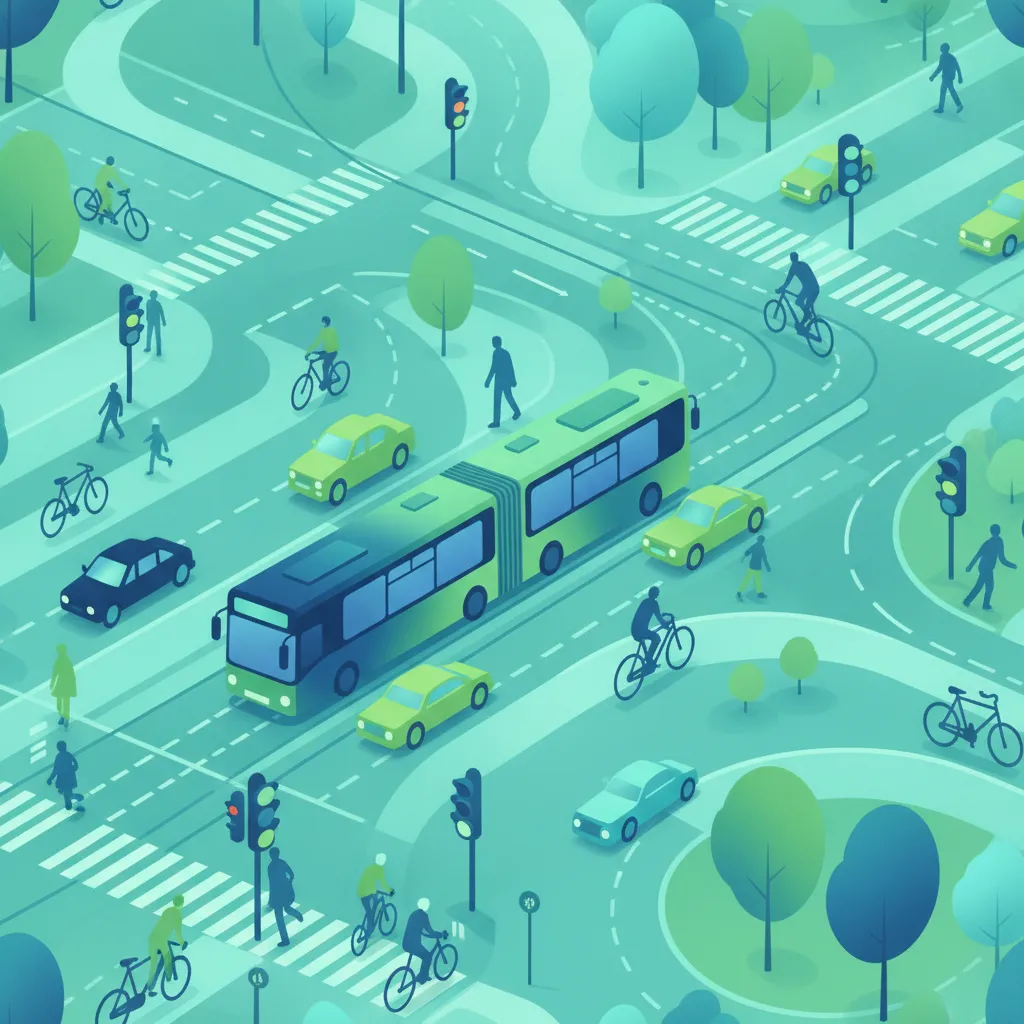
This lesson explores the complex and fast-paced nature of urban traffic environments. It covers topics such as high traffic density, frequent pedestrian crossings, and complex intersections that require heightened awareness. Learners will develop strategies for adapting their speed and lane positioning to navigate these challenges safely, especially during peak rush hour periods and in areas with traffic calming measures.

This lesson covers the crucial skills of managing speed and maintaining a safe buffer from other vehicles. It teaches methods for calculating an appropriate following distance, such as the time-gap method, which adapts to different speeds and conditions. Learners will understand how to adjust their speed based on traffic flow, road surface, and weather to ensure they always have enough time and space to stop safely.
This lesson provides strategies for proactively managing passenger behavior to maintain a safe environment for everyone. It covers techniques for supervising passengers, enforcing rules on seat belt use, smoking, and alcohol, and managing luggage placement. The lesson also addresses how to handle disruptive behavior and the driver's role in assisting passengers during an emergency evacuation to ensure an orderly process.

This lesson provides a comprehensive guide to identifying and managing the significant blind spots around a large passenger vehicle. It covers the correct adjustment and use of all mirrors, supplemented by camera systems, to gain maximum visibility. The importance of performing physical checks ('shoulder checks') before turning or changing lanes is emphasized to detect smaller road users like cyclists and pedestrians who may be hidden from view.
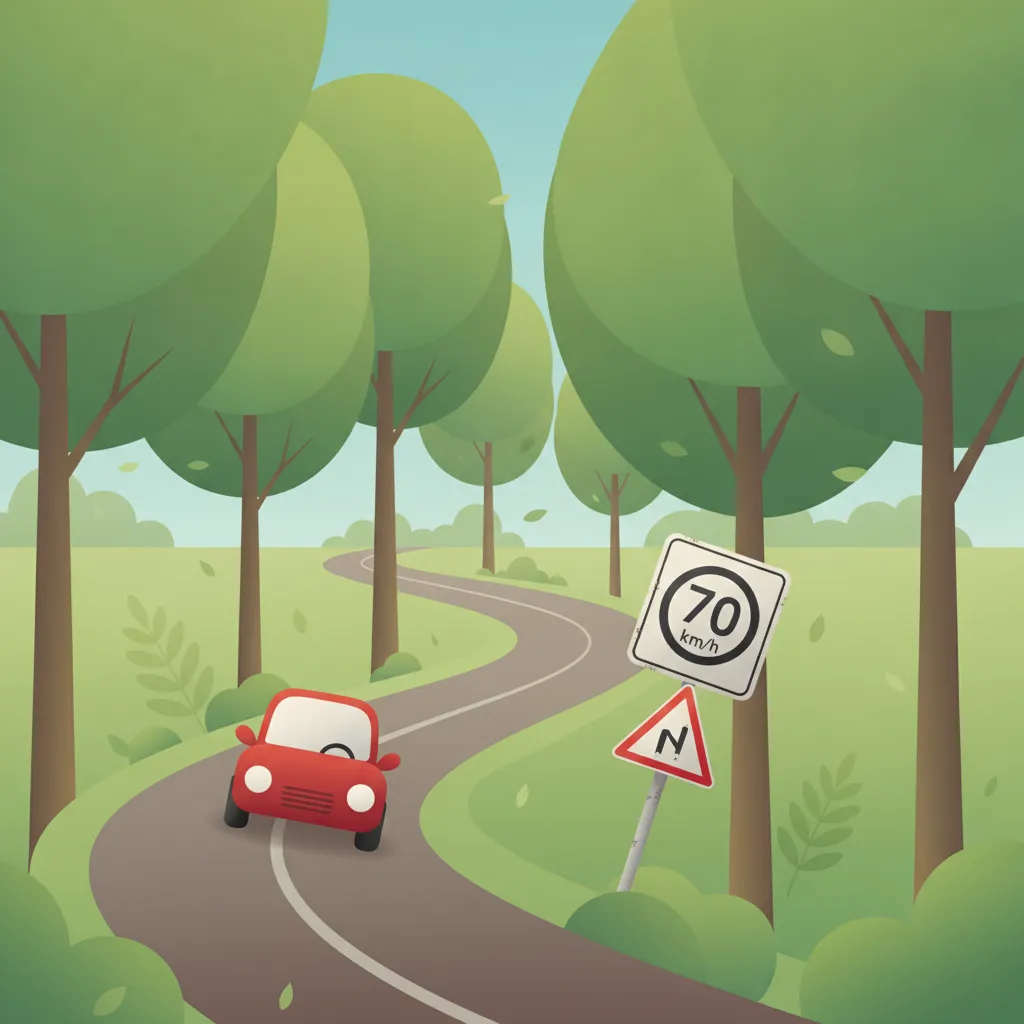
This lesson examines the specific hazards associated with driving on rural roads. It covers how to handle narrow lanes, sharp bends, and poor road surfaces, as well as how to anticipate and safely interact with slow-moving agricultural vehicles or livestock. Strategies for speed adaptation due to limited visibility and the risks associated with overtaking in these conditions are thoroughly discussed.
This lesson provides instruction on the rules and best practices for operating a large passenger vehicle on the Autobahn. It covers the principles of strict lane discipline, regulations for minimum speed, and correct procedures for overtaking and merging. The importance of maintaining significantly increased following distances at high speeds and planning for exits well in advance is a key focus.
This lesson teaches the driving techniques required for smooth operation, which is essential for passenger comfort and vehicle stability. It covers progressive application of the accelerator and brakes to avoid jolts and abrupt movements. The principles of anticipatory driving are also explored, showing how looking ahead and planning maneuvers contributes to a smoother ride, better fuel efficiency, and increased safety.

This lesson provides specialized instruction for drivers of D1E and DE category vehicles, which involve towing a trailer. It covers the physics of vehicle combinations, including the effects of the articulation point on turning and reversing. Learners will understand principles of split braking systems, proper load distribution to prevent trailer sway, and the additional safety checks required before operating such a combination.

This lesson addresses the mental aspects of professional driving, focusing on managing stress and eliminating distractions. It identifies common stressors like time pressure and difficult traffic, offering coping strategies to maintain composure. The lesson also categorizes and explains the dangers of visual, manual, and cognitive distractions, providing techniques to maintain full situational awareness and focus on the driving task.
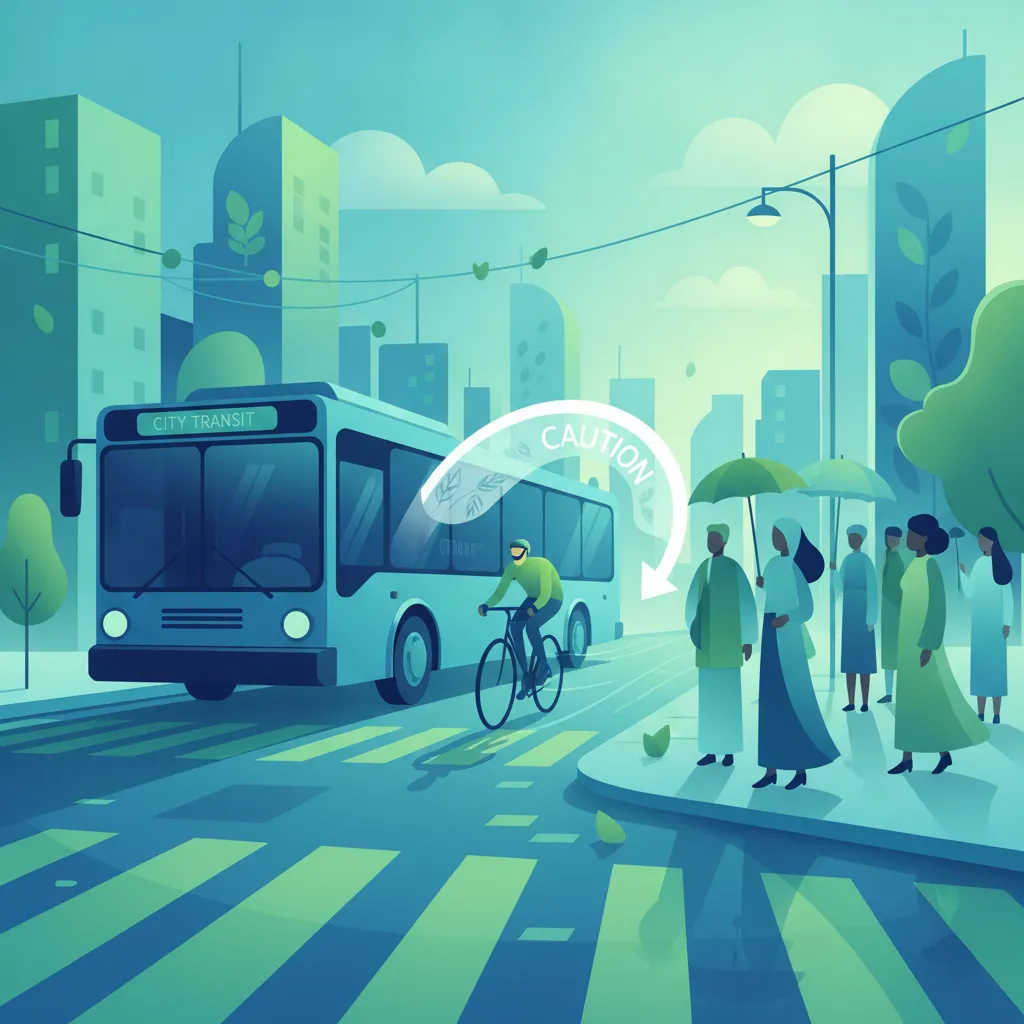
This lesson focuses on the critical moments of interaction with pedestrians and cyclists near bus stops, a common location for accidents. It reinforces the importance of reducing speed, yielding right-of-way, and constantly monitoring blind spots during the stopping process. Learners will practice techniques like making eye contact and using signals to communicate intentions, creating a safer environment for everyone around the vehicle.
Learn crucial theory for conducting safe passenger exchanges when visibility is limited or traffic conditions are complex. This lesson focuses on driver actions and awareness strategies to ensure safety in challenging environments beyond typical high-risk stop scenarios.
This lesson details the structured process for managing passenger boarding and alighting. It covers coordinating passenger flow to prevent crowding and providing clear instructions or assistance when needed. The procedures for deploying ramps or kneeling systems for passengers with reduced mobility are also covered to ensure a safe, dignified, and efficient exchange process at every stop.

This lesson explores the critical role of visibility in safe driving, covering topics such as sight distance, managing blind spots, and the correct use of mirrors. It provides guidance on how to adjust your driving in conditions of reduced visibility, such as at night, in fog, or during heavy rain, including the proper use of headlights. The importance of the over-the-shoulder check ('Schulterblick') is also a key focus.
This lesson explores how different weather conditions impact driving safety and vehicle performance. It discusses the risks of hydroplaning in heavy rain, reduced visibility in fog, and loss of traction on snow and ice. Drivers will learn how to adapt their speed, increase following distances, and make smooth control inputs to maintain vehicle stability and prevent skids in these challenging conditions.
This lesson provides strategies for proactively managing passenger behavior to maintain a safe environment for everyone. It covers techniques for supervising passengers, enforcing rules on seat belt use, smoking, and alcohol, and managing luggage placement. The lesson also addresses how to handle disruptive behavior and the driver's role in assisting passengers during an emergency evacuation to ensure an orderly process.
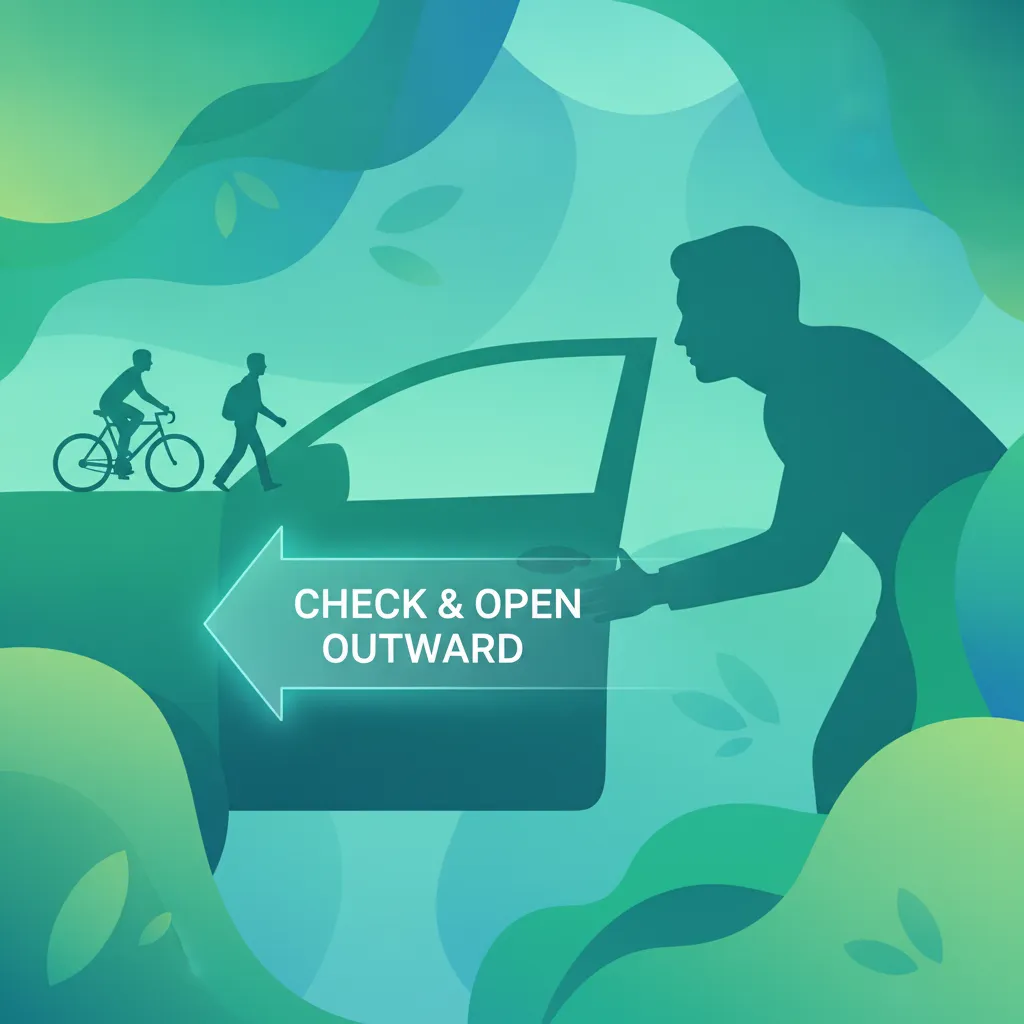
This lesson focuses on the safe operation of passenger doors, a critical aspect of daily duties. It explains the function of safety interlocks that prevent the vehicle from moving while doors are open and the importance of visually monitoring passengers. Learners will master the sequence of checking for obstructions, confirming all passengers are clear, and securely closing doors before departure.
This lesson focuses on the critical moments of interaction with pedestrians and cyclists near bus stops, a common location for accidents. It reinforces the importance of reducing speed, yielding right-of-way, and constantly monitoring blind spots during the stopping process. Learners will practice techniques like making eye contact and using signals to communicate intentions, creating a safer environment for everyone around the vehicle.

This lesson teaches drivers how to safely manage their vehicle in challenging weather. It explains the dangers of aquaplaning in heavy rain, the loss of traction on snow and ice (including 'black ice'), and the severely reduced visibility in fog. You will learn to adjust your speed, increase following distances, and use lights correctly to suit these conditions.
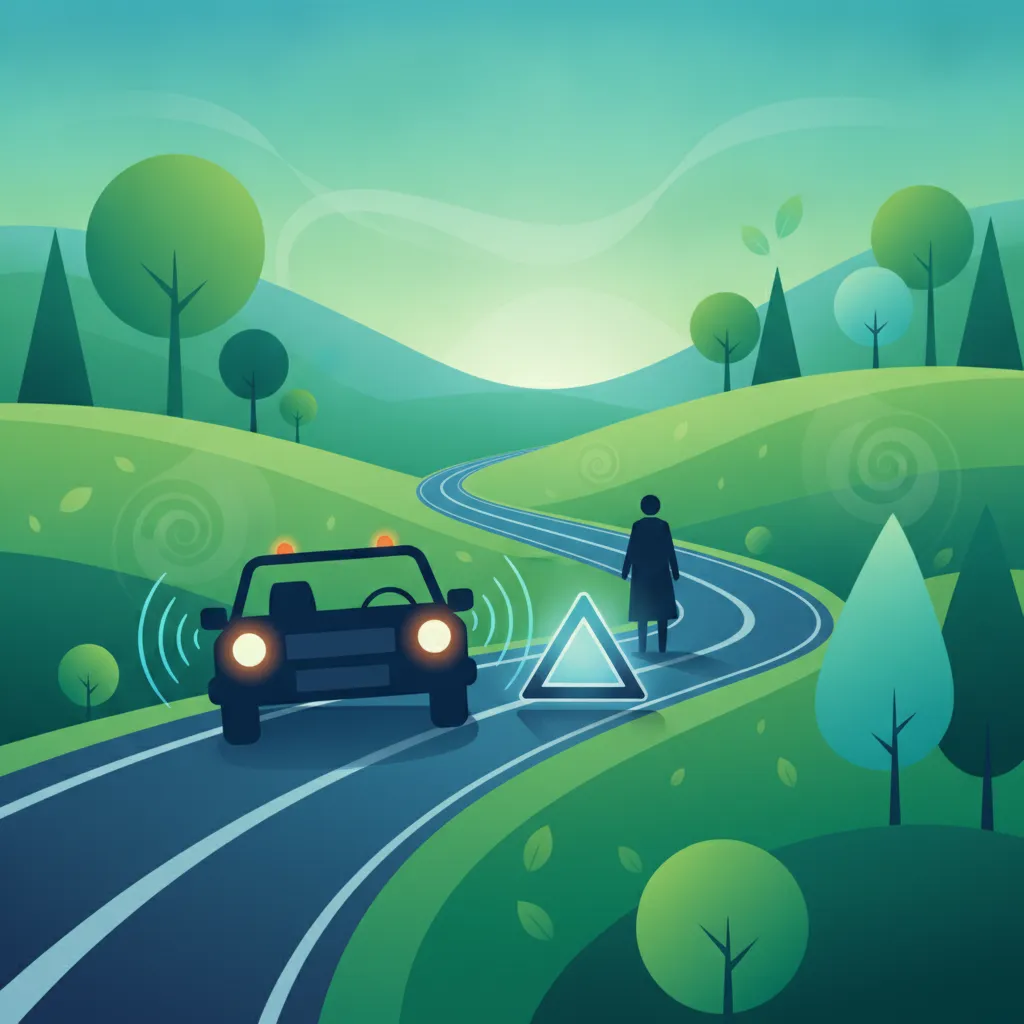
This lesson outlines a clear, systematic procedure for managing a vehicle breakdown safely and efficiently. It covers immediate actions such as activating hazard lights, placing a warning triangle, and moving the vehicle to a safe location if possible. Learners will understand how to communicate the situation to passengers, decide if an evacuation is necessary, and contact the appropriate breakdown services for assistance.

This lesson covers the proper management of items brought on board by passengers, including luggage, prams, and mobility aids. It teaches how to use designated storage areas and racks correctly to prevent items from becoming hazards. The procedures for securing wheelchairs and other mobility devices are detailed to ensure they are stable and do not move during transit, complying with safety and accessibility standards.

This lesson focuses on fire safety protocols for passenger vehicles, covering both prevention and response. It teaches the location and proper use of fire extinguishers and the importance of recognizing potential fire hazards during pre-trip inspections. A primary focus is on the procedure for a calm and orderly evacuation, including how to operate emergency exits and guide all passengers, including those with mobility issues, to a safe location.
Find clear answers to common questions learners have about High-Risk Stop Environments. Learn how the lesson is structured, which driving theory objectives it supports, and how it fits into the overall learning path of units and curriculum progression in Germany. These explanations help you understand key concepts, lesson flow, and exam focused study goals.
A stop is considered high-risk if it features limited visibility, heavy pedestrian traffic (especially children near schools), poor road surface conditions, or if the stop location forces the vehicle into an awkward angle in moving traffic.
Always prioritize the safety of the boarding passengers by ensuring they have a secure path to the sidewalk. If the designated stop area is obscured or unsafe, maintain high visibility with your hazard lights and wait for a clear gap in traffic before initiating the passenger exchange.
Yes, the German theoretical exam frequently includes hazard perception scenarios where you must identify risks at bus stops and determine the correct, safest course of action.
Maintaining calm and clear communication is key. Use your mirror checks constantly to monitor the boarding area and never move the vehicle until all doors are fully secured and you have verified the safety of all passengers, both inside and outside the vehicle.
Begin your targeted revision now. Use our practice search to quickly find specific German driving theory questions. Filter by StVO rules, road signs, or hazard perception to create your focused study plan. Master challenging areas and prepare confidently for your theoretical driving test.