
This lesson provides a step-by-step guide to changing lanes safely on German roads. You will learn the systematic approach required for safe maneuvers, helping you understand how to navigate multi-lane roads effectively while preparing for your Category B theory exam.
Lesson content overview
Changing lanes, known as a 'Fahrstreifenwechsel' in Germany, is a routine driving maneuver that requires precision, foresight, and strict adherence to traffic regulations. While seemingly simple, incorrect lane changes are a common cause of accidents, particularly in high-speed traffic or congested urban environments. This lesson, part of your German Category B driving license theory course, will provide a systematic approach to performing safe and efficient lane changes, ensuring you protect yourself and other road users.
Successful lane changes depend on thorough observation, clear communication of intent, and smooth execution. It's a dynamic maneuver that demands constant awareness of your surroundings, an accurate assessment of traffic speed and distance, and a proactive approach to anticipating other drivers' actions. This topic builds upon your understanding of basic vehicle positioning, right-of-way rules, speed adaptation, and the critical concept of safe following distance. Mastering these elements will not only help you navigate complex traffic scenarios but also prepare you for advanced maneuvers like overtaking and merging.
Every safe lane change in German traffic adheres to a set of core principles designed to prevent accidents and ensure a smooth flow of vehicles. These principles are interconnected, with each step building upon the last to create a comprehensive safety procedure.
Observation Before Signaling: Before you even think about moving, conduct a comprehensive scan of your surroundings. Use your rear-view mirror, side mirrors, and peripheral vision to identify any vehicles in your target lane. This initial observation ensures there is a potential safe gap and helps avoid startling other drivers.
Signaling Your Intent Early: Once you've identified a potential gap, activate your turn signal (Blinker) well in advance. In Germany, this means signaling at least three seconds before initiating the lane change. Early signaling is crucial for communicating your intentions to other road users, allowing them sufficient time to anticipate your move and adjust their speed or position accordingly.
Maintaining or Adjusting Speed: Ideally, maintain a constant speed or accelerate slightly as you prepare to change lanes. This prevents creating a sudden speed differential that could be dangerous for vehicles already in the target lane. Avoid unnecessary deceleration, as it can disrupt traffic flow and increase the risk of rear-end collisions.
The Critical Blind Spot Check (Schulterblick): Even after checking your mirrors, there will always be areas around your vehicle that remain invisible. This 'Toter Winkel' (blind spot) must be checked with a quick, decisive glance over your shoulder in the direction of the intended lane change. This final check is indispensable for detecting vehicles, especially motorcycles or smaller cars, that may have been hidden from your mirrors.
Smooth Execution: With a confirmed safe gap and a clear blind spot, initiate the lane change with gradual steering input. Aim for a smooth, controlled transition into the adjacent lane without any abrupt or sudden movements. This ensures vehicle stability and provides comfort for both your occupants and surrounding drivers.
Reaffirmation After the Maneuver: Once your vehicle is fully and safely established in the new lane, cancel your turn signal. Briefly reassess your new surroundings, checking mirrors to confirm you are maintaining a safe following distance from the vehicle ahead. Leaving your signal on can confuse following drivers.
Mastering lane changes involves a deep understanding of several critical concepts and subtopics. Each plays a vital role in ensuring the maneuver is executed safely and in compliance with German traffic law.
Observation is the foundation of any safe driving maneuver. When changing lanes, it involves a systematic visual inspection of the surrounding traffic environment. This includes:
Effective observation allows you to identify safe gaps, accurately assess the speed of other vehicles, and detect potential hazards before you even signal your intent. Relying solely on mirrors is a common misunderstanding; the blind spot check is an essential supplement.
Signaling is your primary way of communicating intentions to other road users. Activating your vehicle’s turn signal (Blinker) well in advance is a legal requirement and a critical safety measure.
Operating the vehicle’s turn signal to indicate the intention to change lanes, turn, or maneuver.
In Germany, you must activate your turn signal at least three seconds before initiating a lane change. This early warning gives surrounding drivers ample time to react, anticipate your move, and adjust their driving accordingly. Failing to signal, or signaling too late, can lead to dangerous misunderstandings and increase the risk of collisions. Remember to cancel the signal once the maneuver is complete to avoid confusing other drivers.
Before changing lanes, you must evaluate whether there is a sufficient and safe gap (Lücke) in the target lane. This involves more than just seeing an empty space; it requires calculating the distance and relative speed of vehicles in that lane.
Evaluating the distance and speed of vehicles in the target lane to determine if a safe lane change is possible without forcing other drivers to brake or swerve.
You must never change lanes if it endangers other road users or forces them to brake abruptly. Consider the speed of your vehicle relative to the traffic flow in the adjacent lane, your current speed, and the size of the gap. On faster roads like motorways, a seemingly large gap can close very quickly, requiring a precise calculation of time-to-collision. Always ensure you can merge into the new lane without compromising the safe following distance of the vehicle you merge in front of.
The blind spot is a dangerous area around your vehicle that your mirrors cannot show. It's often where motorcycles, cyclists, or even smaller cars can hide, completely unseen by the driver.
The area around a vehicle that is not visible to the driver through any of the mirrors.
This invisible zone makes the shoulder check (Kopf nach rechts/links drehen) an absolutely mandatory step before any lane change. A quick, decisive glance over your shoulder is the only way to confirm that no other road user is occupying this critical space. Neglecting the blind spot check is a common cause of side-swipe collisions.
Road markings provide crucial legal guidance on where lane changes are permitted or prohibited. Understanding these visual cues is fundamental to safe and legal driving.
Ignoring solid lines or assuming lane changes are allowed anywhere can lead to legal penalties and dangerous situations.
When changing lanes, especially onto faster roads like the Autobahn, adjusting your speed to match the flow of traffic in the target lane is paramount.
Adjusting your vehicle’s speed to align with the flow of traffic in the target lane during a lane change or merge.
Attempting to merge into faster traffic at a lower speed forces other drivers to brake or swerve, creating a hazardous situation and disrupting traffic flow. You should accelerate on an entrance ramp to reach the speed of the traffic you intend to join before merging. Conversely, if you are merging into slower traffic, you may need to reduce your speed slightly, but always aim to keep the speed differential minimal. The goal is a seamless and fluid transition.
Positioning involves determining your vehicle's exact lateral and longitudinal placement within the lane, both before and during the lane change.
A well-planned trajectory ensures a safe and measured lane change, preventing you from cutting off other vehicles or drifting too close to lane boundaries. Gradual steering input is key to maintaining control and stability throughout the maneuver.
German traffic law (Straßenverkehrs-Ordnung - StVO) is explicit about the rules governing lane changes to ensure safety and order on the roads. Adhering to these rules is not just about avoiding fines, but about preventing serious accidents.
Rule: Drivers must signal their intention to change lanes at least 3 seconds before initiating the maneuver.
Rule: A lane change must only be performed if it is safe to do so without endangering or impeding other road users.
Rule: Drivers must not cross a solid lane marking except where explicitly permitted by road signs or markings.
Rule: Drivers must maintain a safe following distance after changing lanes, respecting the two-second rule (or longer in poor conditions).
Understanding common mistakes during lane changes can help you proactively avoid hazardous situations and potential penalties.
| Violation | Why It's Wrong | Correct Behavior | Consequence |
|---|---|---|---|
| Failing to signal before a lane change | Deprives other drivers of crucial information about your intentions, leading to confusion and unpredictable reactions. | Activate your turn signal at least 3 seconds before you start to move into the new lane, giving other drivers time to react. | Significantly increased risk of rear-end collisions or side-swipe accidents; potential fines. |
| Changing lanes without checking blind spot | Vehicles (especially motorcycles or smaller cars) can be completely invisible in your mirrors, leading to a collision. | Always perform a quick but thorough shoulder check (Schulterblick) in the direction of the lane change immediately before moving. | High risk of side collisions, especially with vulnerable road users; severe injuries or fatalities. |
| Cutting across a solid line | Solid lines indicate mandatory restrictions, often for safety reasons (e.g., dangerous curves, intersections, bridges). | Wait for a broken line or specific signage that permits a lane change. If no such indication exists, a lane change is prohibited. | Legal penalties, fines, points on your license; increased risk of severe accidents. |
| Changing lanes at the last moment | Leaves insufficient time for surrounding drivers to react safely, forcing them to brake or swerve unexpectedly. | Signal early, carefully assess all gaps, and execute the maneuver smoothly and gradually, giving others ample warning. | Forced braking by other drivers, increased accident risk, significant disruption to traffic flow, driver frustration. |
| Not maintaining speed when merging into faster traffic | Creates a dangerous speed differential, forcing vehicles in the target lane to brake or take evasive action, disrupting flow. | Accelerate on the entry ramp or in your current lane to match the flow of traffic in the target lane before you begin to merge. | Disrupts traffic flow, significantly increases collision risk, especially on motorways. |
| Abrupt lane changes without rechecking surroundings | Can cause other drivers to be surprised or forced into unsafe maneuvers, as traffic conditions can change rapidly. | Execute the lane change smoothly, maintain control, and after fully entering the new lane, cancel the signal and quickly re-assess your new surroundings. | Confusion for other drivers, potential chain-reaction accidents. |
| Changing lanes in a restricted zone (e.g., near construction) | Disregards temporary traffic management measures and warnings designed to protect drivers and road workers. | Strictly follow all temporary signs and markings, waiting for a clearly indicated safe zone before attempting a lane change. | Legal penalties, endangering workers and other road users, increased risk of accidents in hazardous areas. |
Safe lane changes are not static procedures; they must be adapted to various driving conditions and circumstances.
The rules and procedures for safe lane changes are rooted in fundamental principles of physics, human psychology, and risk management.
Let's look at how these principles apply in real-world driving situations.
Mastering the art of changing lanes safely is a cornerstone of responsible driving. It requires a blend of observation, communication, and precise execution, always prioritizing the safety of all road users.
By diligently applying these principles, you will minimize the risk of accidents, contribute to smoother traffic flow, and demonstrate competence as a safe driver on German roads.
Safe lane changes (Fahrstreifenwechsel) require the systematic mirror-signal-maneuver procedure combined with a mandatory shoulder check (Schulterblick) to eliminate blind spots. German law (StVO §23) requires signaling at least 3 seconds before the maneuver, and lane changes are only legal where broken lines permit them—solid lines are absolute prohibitions. Accurate gap assessment (Lückenbeurteilung) must account for both distance and relative speed, with speed matching essential for smooth merges, especially on the Autobahn. The procedure must adapt to conditions: adverse weather demands longer gaps and earlier signaling, urban areas require extra vigilance for cyclists and pedestrians, and heavier vehicles need significantly larger gaps due to longer stopping distances.
A short set of high-value points that capture the most important learning from this lesson.
The mirror-signal-maneuver routine with mandatory shoulder check (Schulterblick) is the non-negotiable foundation of safe lane changes in Germany.
Activate your turn signal (Blinker) at least 3 seconds before initiating any lane change, as required by StVO §23.
Mirrors alone are insufficient; the blind spot (Toter Winkel) must always be checked with a physical shoulder glance to detect hidden vehicles, especially motorcycles.
Lane changes are only permitted across broken lines (Gesetzte Linie); solid lines (Durchgezogene Linie) indicate mandatory prohibition.
Adjust your speed to match the flow of traffic in the target lane before merging to avoid creating dangerous speed differentials.
Explore all units and lessons included in this driving theory course.
Schulterblick (shoulder check) is the only way to see the Toter Winkel (blind spot) that mirrors cannot show.
3-second signaling rule applies on all road types; signal early to give other drivers time to react.
Solid line (Durchgezogene Linie) = lane change prohibited; broken line (Gesetzte Linie) = lane change allowed if safe.
After completing a lane change, maintain minimum two-second following distance and cancel your signal.
Gap assessment (Lückenbeurteilung) must consider both distance and relative speed of vehicles in the target lane.
Failing to signal or signaling too late, depriving other drivers of crucial information about your intentions.
Skipping the blind spot check and relying solely on mirrors, risking collision with vehicles hidden in the Toter Winkel.
Attempting to cross a solid lane marking, which is prohibited for safety reasons near intersections, curves, or bridges.
Changing lanes at the last moment after misjudging gaps, forcing other vehicles to brake or swerve unexpectedly.
Merging into faster traffic without matching speed, creating a dangerous speed differential that disrupts traffic flow.
Lesson content overview
A short set of high-value points that capture the most important learning from this lesson.
The mirror-signal-maneuver routine with mandatory shoulder check (Schulterblick) is the non-negotiable foundation of safe lane changes in Germany.
Activate your turn signal (Blinker) at least 3 seconds before initiating any lane change, as required by StVO §23.
Mirrors alone are insufficient; the blind spot (Toter Winkel) must always be checked with a physical shoulder glance to detect hidden vehicles, especially motorcycles.
Lane changes are only permitted across broken lines (Gesetzte Linie); solid lines (Durchgezogene Linie) indicate mandatory prohibition.
Adjust your speed to match the flow of traffic in the target lane before merging to avoid creating dangerous speed differentials.
Explore all units and lessons included in this driving theory course.
Schulterblick (shoulder check) is the only way to see the Toter Winkel (blind spot) that mirrors cannot show.
3-second signaling rule applies on all road types; signal early to give other drivers time to react.
Solid line (Durchgezogene Linie) = lane change prohibited; broken line (Gesetzte Linie) = lane change allowed if safe.
After completing a lane change, maintain minimum two-second following distance and cancel your signal.
Gap assessment (Lückenbeurteilung) must consider both distance and relative speed of vehicles in the target lane.
Failing to signal or signaling too late, depriving other drivers of crucial information about your intentions.
Skipping the blind spot check and relying solely on mirrors, risking collision with vehicles hidden in the Toter Winkel.
Attempting to cross a solid lane marking, which is prohibited for safety reasons near intersections, curves, or bridges.
Changing lanes at the last moment after misjudging gaps, forcing other vehicles to brake or swerve unexpectedly.
Merging into faster traffic without matching speed, creating a dangerous speed differential that disrupts traffic flow.
Explore search topics learners often look for when studying Changing Lanes Safely. These topics reflect common questions about road rules, driving situations, safety guidance, and lesson level theory preparation for learners in Germany.
Browse additional driving theory lessons that cover connected traffic rules, road signs, and common driving situations related to this topic. Improve your understanding of how different rules interact across everyday traffic scenarios.
Learn the systematic 'mirror-signal-maneuver' process for changing lanes safely. This lesson covers essential observation techniques and blind spot awareness crucial for avoiding accidents in German traffic.

This lesson focuses on the high-risk maneuver of reversing, emphasizing the importance of all-around observation due to limited visibility. It teaches techniques for controlling the vehicle at very low speeds and using mirrors and direct observation to manage large blind spots behind the car. The priority is to ensure the path is clear of pedestrians and obstacles at all times.

This lesson provides a step-by-step guide to executing turns safely at intersections and other locations. It details the full observation sequence (mirrors, signal, blind spot check) required before initiating a turn. The lesson covers correct lane positioning for both left and right turns and explains the rules for performing U-turns or three-point turns where permitted.

This lesson teaches the systematic observation techniques required for safe driving, starting with how to scan the road far ahead, nearby, and to the sides. It details the correct frequency for checking interior and exterior mirrors to maintain situational awareness. The lesson highlights the indispensable over-the-shoulder check ('Schulterblick') to cover the vehicle's blind spot before any change in direction.
This lesson covers the principles of correct vehicle positioning and lane discipline, which are essential for predictable and safe driving. It reinforces the 'Rechtsfahrgebot' (drive on the right) principle and explains how to choose the appropriate lane on multi-lane roads and motorways. Proper positioning for turns and maintaining a safe space cushion around the vehicle are also key topics.

This lesson explores the critical role of visibility in safe driving, covering topics such as sight distance, managing blind spots, and the correct use of mirrors. It provides guidance on how to adjust your driving in conditions of reduced visibility, such as at night, in fog, or during heavy rain, including the proper use of headlights. The importance of the over-the-shoulder check ('Schulterblick') is also a key focus.

This lesson provides a comprehensive guide to identifying and managing the significant blind spots around a large passenger vehicle. It covers the correct adjustment and use of all mirrors, supplemented by camera systems, to gain maximum visibility. The importance of performing physical checks ('shoulder checks') before turning or changing lanes is emphasized to detect smaller road users like cyclists and pedestrians who may be hidden from view.
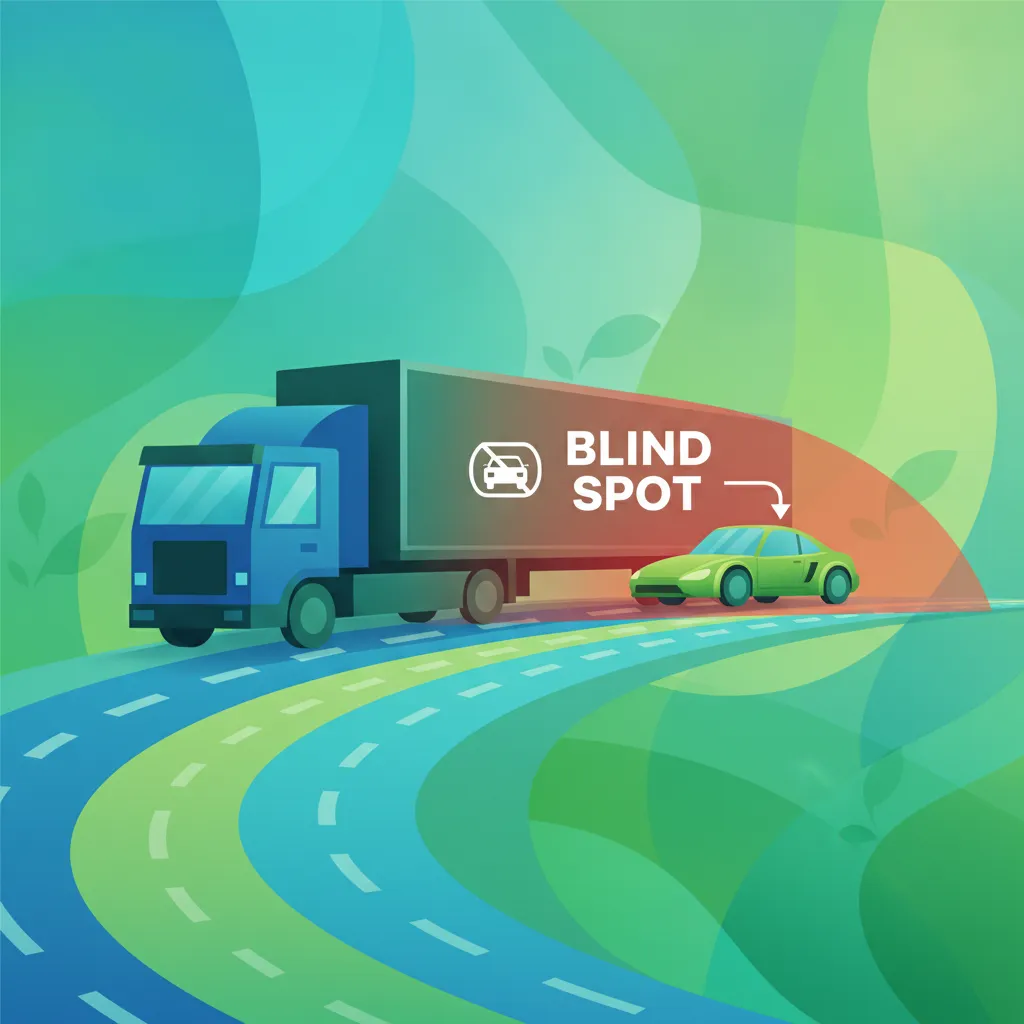
This lesson focuses on the blind spot zones specific to trucks and vehicle combinations, explaining where these zones are located. It covers the use of blind spot mirrors and other aids to enhance driver awareness during lane changes and turns. The content stresses the importance of maintaining safe distances from vulnerable road users.

This lesson focuses on the importance of strategic road positioning for enhancing safety and visibility. Learners explore different lane positions and understand when to use them to see, be seen, and create a safety buffer. The content emphasizes maintaining a long visual focus down the road to anticipate hazards and avoid target fixation, particularly when cornering.

This lesson introduces the concept of defensive driving ('vorausschauendes Fahren'), a proactive approach focused on anticipating and mitigating potential risks. It teaches techniques for scanning the road ahead, identifying potential hazards early, and managing the space around your vehicle to create a safety buffer. The goal is to develop a mindset that prioritizes safety and collision avoidance above all else.
This lesson provides a complete guide to driving on the German Autobahn. It covers the correct procedure for entering and exiting via acceleration and deceleration lanes, the strict lane discipline rule of keeping right ('Rechtsfahrgebot'), and the principle of overtaking only on the left. It also explains the recommended speed limit and the critical procedure for forming an emergency corridor ('Rettungsgasse') in a traffic jam.
Explore advanced driving techniques beyond basic lane changes. This lesson details proper vehicle positioning, lane discipline, and other complex maneuvers required for safe driving in various German traffic situations, including Autobahnen.
This lesson covers the principles of correct vehicle positioning and lane discipline, which are essential for predictable and safe driving. It reinforces the 'Rechtsfahrgebot' (drive on the right) principle and explains how to choose the appropriate lane on multi-lane roads and motorways. Proper positioning for turns and maintaining a safe space cushion around the vehicle are also key topics.

This lesson details the correct procedures for entering a motorway, using the acceleration lane to match traffic speed, and merging safely. It reinforces the strict lane discipline required, including keeping to the right lane except when overtaking. The content also provides guidance on maintaining increased following distances and performing safe lane changes at high speeds.
This lesson provides a complete guide to driving on the German Autobahn. It covers the correct procedure for entering and exiting via acceleration and deceleration lanes, the strict lane discipline rule of keeping right ('Rechtsfahrgebot'), and the principle of overtaking only on the left. It also explains the recommended speed limit and the critical procedure for forming an emergency corridor ('Rettungsgasse') in a traffic jam.
This lesson focuses on the importance of strategic road positioning for enhancing safety and visibility. Learners explore different lane positions and understand when to use them to see, be seen, and create a safety buffer. The content emphasizes maintaining a long visual focus down the road to anticipate hazards and avoid target fixation, particularly when cornering.
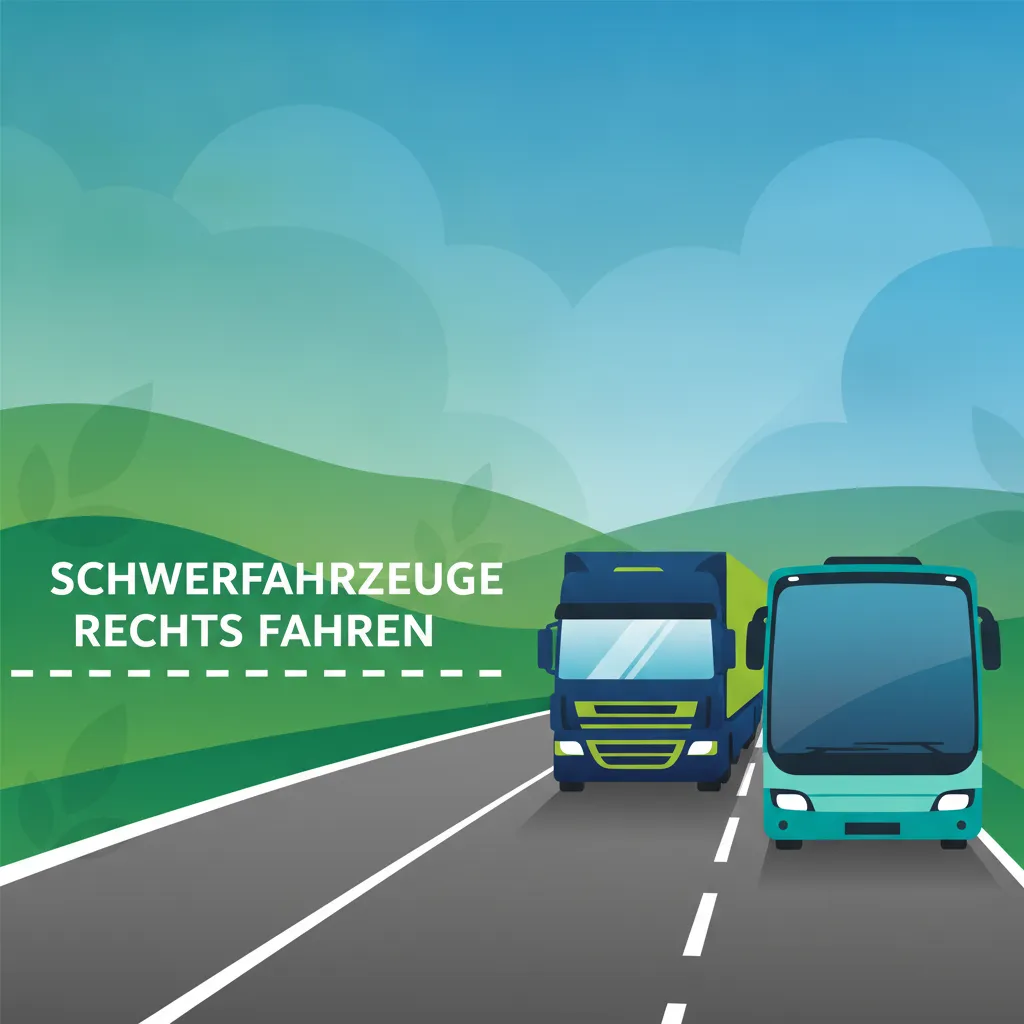
This lesson explains the specific regulations for operating heavy vehicles on Autobahnen, including speed limits, lane discipline, and overtaking rules. It discusses the use of dedicated truck lanes and the importance of maintaining appropriate following distances. The content also covers procedures for merging and exiting high-speed roads safely.
This lesson introduces the concept of defensive driving ('vorausschauendes Fahren'), a proactive approach focused on anticipating and mitigating potential risks. It teaches techniques for scanning the road ahead, identifying potential hazards early, and managing the space around your vehicle to create a safety buffer. The goal is to develop a mindset that prioritizes safety and collision avoidance above all else.

This lesson provides instruction on the rules and best practices for operating a large passenger vehicle on the Autobahn. It covers the principles of strict lane discipline, regulations for minimum speed, and correct procedures for overtaking and merging. The importance of maintaining significantly increased following distances at high speeds and planning for exits well in advance is a key focus.

This lesson focuses on strategic road positioning to enhance safety and visibility. It explains where to ride within a lane under different circumstances, such as approaching intersections or riding alongside parked cars. A key skill covered is anticipating the potential actions of other drivers, cyclists, and pedestrians.
This lesson covers the principles of effective route planning and the practical skills for navigating different types of junctions. It provides guidance on using navigation aids and understanding the specific challenges large vehicles face at roundabouts and complex intersections. Emphasis is placed on correct lane selection and positioning well in advance of a turn to execute the maneuver safely and without impeding other traffic.
This lesson provides a step-by-step guide to executing turns safely at intersections and other locations. It details the full observation sequence (mirrors, signal, blind spot check) required before initiating a turn. The lesson covers correct lane positioning for both left and right turns and explains the rules for performing U-turns or three-point turns where permitted.
Find clear answers to common questions learners have about Changing Lanes Safely. Learn how the lesson is structured, which driving theory objectives it supports, and how it fits into the overall learning path of units and curriculum progression in Germany. These explanations help you understand key concepts, lesson flow, and exam focused study goals.
Mirrors have physical blind spots where vehicles or cyclists can be completely hidden. A shoulder check is the only way to ensure the area beside your vehicle is clear, making it a critical safety requirement for both the driving exam and real-world safety.
You must signal in good time to inform other road users of your intention before you begin moving. However, never signal too early if it might confuse drivers at an upcoming exit or intersection.
While not strictly forbidden in every case, changing lanes in an intersection is generally discouraged due to increased risk and complexity. You should aim to be in your correct lane well before reaching the junction.
Forgetting the shoulder check is a common cause for failure in a practical driving test. It is seen as a failure to observe surroundings correctly, which poses a significant safety risk to yourself and others.
Begin your targeted revision now. Use our practice search to quickly find specific German driving theory questions. Filter by StVO rules, road signs, or hazard perception to create your focused study plan. Master challenging areas and prepare confidently for your theoretical driving test.