
This lesson guides you through the technical requirements of calculating payload and Gross Combination Mass (GCM) for heavy vehicle combinations. It builds upon your understanding of vehicle dimensions to ensure you can accurately determine legal weight limits before hitting the road. Mastery of these calculations is essential for passing the German C and CE theory examination.
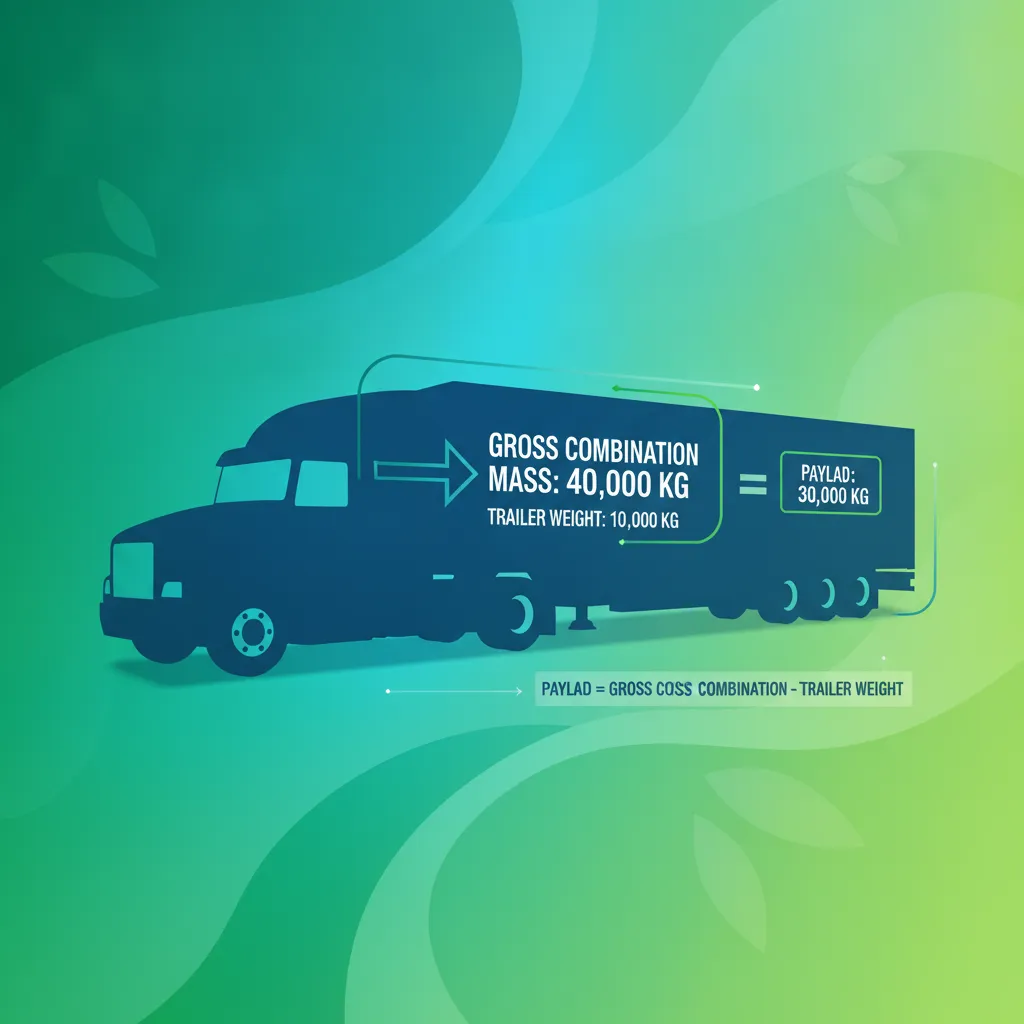
Lesson content overview
Understanding and accurately calculating vehicle masses, especially the gross combination mass (GCM) and permissible payload, is fundamental for every driver seeking a German heavy vehicle driving license in categories C1, C1E, C, and CE. This knowledge is not merely about passing an exam; it is critical for ensuring road safety, preventing costly fines, and maintaining the longevity of your vehicle. This lesson will delve into the definitions, calculation methods, and practical implications of these essential concepts, preparing you for the complexities of professional heavy vehicle operation.
Operating a heavy vehicle combination involves more than just driving; it requires meticulous planning and adherence to strict regulations concerning vehicle mass. The total weight of a vehicle, including its load, significantly impacts its performance, stability, and safety. Miscalculations or exceeding limits can lead to severe consequences, from reduced braking efficiency and unstable handling to component failure and legal penalties. This section lays the groundwork by distinguishing between different types of vehicle masses and highlighting their importance.
At its core, load management ensures that a vehicle combination operates within its design specifications and legal limits. Every heavy vehicle, whether a rigid truck or a tractor-trailer combination, has a designated maximum capacity that must never be surpassed. This capacity is influenced by the vehicle's design, engine power, braking system, axle strength, and tire ratings. A thorough understanding of these limits is paramount for safe and legal transport.
The Maximum Authorized Gross Combination Mass (MAGCM) is a cornerstone concept in heavy vehicle operation. It represents the absolute highest total mass permitted for an entire vehicle combination. This includes the weight of the towing vehicle (tractor), all attached trailers, the cargo being transported, all passengers, the driver, and all operational fluids (fuel, oil, coolant).
The MAGCM is a limit set by the vehicle manufacturer and by law, primarily found in the vehicle's registration documents or technical specifications. It is designed to ensure that the combined structural integrity, braking capacity, and handling characteristics of the entire unit remain safe under all operating conditions. Exceeding this limit places immense strain on critical components such as the engine, drivetrain, brakes, suspension, and tires, significantly increasing the risk of mechanical failure and serious accidents.
It is a common misunderstanding to confuse MAGCM with the Gross Vehicle Mass (GVM), which refers only to the maximum permissible mass of a single vehicle (e.g., the truck itself, without a trailer), or with permissible axle loads, which specify limits for individual axles. While related, MAGCM encompasses the entire combination and serves as the ultimate ceiling for the total operational weight. Always consult the vehicle's official documentation to ascertain the precise MAGCM before loading.
The Payload (P) is the usable load capacity of a vehicle combination. It represents the maximum weight of cargo, passengers, and additional equipment that can be safely and legally added to the vehicle without exceeding its Maximum Authorized Gross Combination Mass (MAGCM). Calculating payload accurately is crucial for avoiding overloading and ensuring compliance.
The payload is determined by subtracting the Curb Weight and the weight of any fixed equipment from the MAGCM.
The curb weight of a vehicle is its weight when empty, including all standard equipment, operational fluids (such as engine oil, coolant, and a full fuel tank), but without any cargo, passengers, or additional, removable equipment.
The basic formula for calculating permissible payload is:
Payload (P) = Maximum Authorized Gross Combination Mass (MAGCM) - Curb Weight of Combination - Weight of Fixed Equipment
Practical Meaning: If a truck has a MAGCM of 18,000 kg and its curb weight is 10,000 kg, the theoretical payload would be 8,000 kg. This 8,000 kg must then accommodate the weight of the driver, any passengers, and all the cargo. If additional fixed equipment (like a crane or a special loading ramp) is permanently installed, its weight must also be subtracted from the payload capacity.
Common Misunderstandings: Many drivers mistakenly assume that the payload only refers to the cargo itself. However, it must include the weight of the driver, any co-drivers or passengers, and sometimes even the weight of additional fuel beyond what's included in the curb weight definition if external tanks are added. Forgetting to account for these seemingly small weights can easily lead to accidental overloading, especially when operating close to the limits.
Consider a heavy vehicle combination:
First, calculate the total curb weight of the combination:
Total Curb Weight = Curb Weight of Tractor + Curb Weight of Trailer
Total Curb Weight = 12,000 kg + 8,000 kg = 20,000 kg
Now, calculate the permissible payload:
Payload = MAGCM - Total Curb Weight - Weight of Fixed Equipment
Payload = 40,000 kg - 20,000 kg - 500 kg = 19,500 kg
In this scenario, the combination can safely and legally carry 19,500 kg of cargo, driver(s), and passengers.
The Tongue Load (TL), also known as coupling load or drawbar load, refers to the vertical force exerted by the trailer on the coupling point of the towing vehicle. This load is a crucial factor, especially for articulated vehicles and combinations with drawbar trailers, as it significantly influences the stability, handling, and braking performance of the entire setup.
The tongue load must always remain within the maximum permissible limits specified by both the manufacturer of the towing vehicle and the trailer's coupling device. These limits are typically expressed in kilograms or Newtons and are critical for preventing structural damage to the coupling mechanism and ensuring safe vehicle dynamics.
Practical Meaning:
Common Misunderstandings: Many drivers may overlook the tongue load when distributing cargo within a trailer, assuming that as long as the total trailer weight is acceptable, the load distribution doesn't matter much. However, cargo placement directly impacts the tongue load. Placing heavy items too far forward increases the tongue load, while placing them too far back reduces it, potentially leading to a negative tongue load (where the trailer lifts the rear of the towing vehicle). Both extremes are hazardous.
The Center of Gravity (CG) is the hypothetical point where the entire weight of a vehicle and its load is concentrated and considered to act vertically downwards. Its position, both horizontally and vertically, is paramount for the stability and handling characteristics of any heavy vehicle combination.
Practical Meaning:
Associated Rules: Vehicle manufacturers specify safe limits for the CG position, often relating to permissible axle loads and maximum vehicle height. While there isn't a single numerical "CG limit" for drivers to calculate, the principle is embedded in rules regarding maximum vehicle height, load securing, and axle load distribution. Drivers must ensure cargo is loaded to keep the CG as low and as central as possible.
Common Misunderstandings: A common misconception is that any cargo placement is acceptable as long as the total weight is within limits. However, the distribution of that weight is equally, if not more, important. Ignoring the impact of a high CG, especially with unstable or liquid loads, can have catastrophic consequences, as the vehicle might become uncontrollable or tip over at speeds that would otherwise be safe.
In Germany, the legal framework governing vehicle masses and dimensions for heavy vehicles is primarily enshrined in the Straßenverkehrs-Zulassungs-Ordnung (StVZO) and the Straßenverkehrs-Ordnung (StVO). These regulations are strict and are enforced to ensure public safety, prevent road damage, and maintain fair competition in the transport industry.
The overarching rule is absolute: the total Gross Combination Mass (GCM) of a vehicle combination must never exceed the Maximum Authorized Gross Combination Mass (MAGCM) specified by the manufacturer and indicated in the vehicle's registration documents (Fahrzeugschein or Zulassungsbescheinigung Teil I). This applies universally to all heavy vehicle categories, including C1, C1E, C, and CE.
Rationale for Strict Enforcement:
Consequences of Non-Compliance: Violations of GCM and payload limits in Germany are subject to severe penalties. These typically include substantial fines, points on the driver's license (Flensburg points), and in serious cases, a driving ban (Fahrverbot). The vehicle may also be immobilized until the excess load is removed or redistributed, incurring further costs and delays. The driver, vehicle owner, and potentially the dispatcher can all be held responsible.
Exceeding the Maximum Authorized Gross Combination Mass (MAGCM) is a serious offense in Germany. Fines increase significantly with the percentage of overload, and can lead to immediate vehicle immobilization and substantial penalties for both the driver and the company.
The repercussions of exceeding mass limits or distributing loads incorrectly extend far beyond legal penalties. They pose significant safety risks and lead to operational inefficiencies.
Effective load planning and calculation are integral components of professional heavy vehicle driving. It requires a systematic approach, combining theoretical knowledge with practical application before every journey.
To ensure safe and compliant operation, always:
By meticulously adhering to these principles, heavy vehicle drivers contribute to their own safety, the safety of other road users, and the longevity of their equipment. This knowledge forms a critical foundation for advanced topics like load securing and dynamic vehicle behavior, which build upon the understanding of mass and its distribution.
This lesson teaches heavy vehicle drivers how to calculate and manage weight limits essential for safe and legal operation in Germany. The core formula—Payload = MAGCM minus curb weight minus fixed equipment—must account for all occupants and fuel. Tongue load distribution and Center of Gravity positioning are equally critical for vehicle stability and must be managed through proper cargo placement. Exceeding MAGCM or misdistributing loads results in longer braking distances, increased rollover risk, mechanical failures, and severe penalties under German StVZO and StVO regulations.
A short set of high-value points that capture the most important learning from this lesson.
The Maximum Authorized Gross Combination Mass (MAGCM) is the absolute weight ceiling for an entire vehicle combination including truck, trailer, cargo, passengers, and all fluids.
Payload equals MAGCM minus the total curb weight of the combination and any permanently fixed equipment.
Tongue load is the vertical force the trailer exerts on the towing vehicle's coupling point, and it must stay within manufacturer-specified limits to prevent trailer sway and handling problems.
The Center of Gravity position directly affects rollover risk, braking performance, and suspension wear—cargo should be loaded low and centrally.
Overloading reduces braking efficiency, increases stopping distances, and can cause mechanical failure or vehicle immobilization with substantial fines.
Explore all units and lessons included in this driving theory course.
MAGCM encompasses the entire combination; GVM only refers to a single vehicle without trailer.
Payload must include driver weight, passengers, and any extra fuel—not just the cargo itself.
Placing cargo too far forward in a trailer increases tongue load; placing it too far back can reduce traction on the towing vehicle's drive wheels.
A high Center of Gravity from stacking heavy items high significantly raises rollover risk during cornering.
Even if total GCM is within limits, a single overloaded axle is illegal and dangerous.
Confusing MAGCM with GVM, leading to incomplete weight calculations when operating with trailers.
Forgetting to account for driver, passengers, and additional fuel when calculating available cargo capacity.
Assuming total trailer weight within limits means tongue load is automatically safe without checking cargo distribution.
Believing any cargo placement is acceptable as long as total weight is under the limit, ignoring Center of Gravity implications.
Not checking individual axle load limits even when the overall GCM appears compliant.
Lesson content overview
A short set of high-value points that capture the most important learning from this lesson.
The Maximum Authorized Gross Combination Mass (MAGCM) is the absolute weight ceiling for an entire vehicle combination including truck, trailer, cargo, passengers, and all fluids.
Payload equals MAGCM minus the total curb weight of the combination and any permanently fixed equipment.
Tongue load is the vertical force the trailer exerts on the towing vehicle's coupling point, and it must stay within manufacturer-specified limits to prevent trailer sway and handling problems.
The Center of Gravity position directly affects rollover risk, braking performance, and suspension wear—cargo should be loaded low and centrally.
Overloading reduces braking efficiency, increases stopping distances, and can cause mechanical failure or vehicle immobilization with substantial fines.
Explore all units and lessons included in this driving theory course.
MAGCM encompasses the entire combination; GVM only refers to a single vehicle without trailer.
Payload must include driver weight, passengers, and any extra fuel—not just the cargo itself.
Placing cargo too far forward in a trailer increases tongue load; placing it too far back can reduce traction on the towing vehicle's drive wheels.
A high Center of Gravity from stacking heavy items high significantly raises rollover risk during cornering.
Even if total GCM is within limits, a single overloaded axle is illegal and dangerous.
Confusing MAGCM with GVM, leading to incomplete weight calculations when operating with trailers.
Forgetting to account for driver, passengers, and additional fuel when calculating available cargo capacity.
Assuming total trailer weight within limits means tongue load is automatically safe without checking cargo distribution.
Believing any cargo placement is acceptable as long as total weight is under the limit, ignoring Center of Gravity implications.
Not checking individual axle load limits even when the overall GCM appears compliant.
Explore search topics learners often look for when studying Gross Combination Mass and Payload Calculations. These topics reflect common questions about road rules, driving situations, safety guidance, and lesson level theory preparation for learners in Germany.
Browse additional driving theory lessons that cover connected traffic rules, road signs, and common driving situations related to this topic. Improve your understanding of how different rules interact across everyday traffic scenarios.
Understand the formulas and practical examples for calculating Gross Combination Mass (GCM) and payload. Learn the difference between vehicle mass and payload, and the importance of tongue load for safe driving in Germany, as required for the C/CE theory exam.

This lesson explains the concepts of permissible total mass and actual mass, as well as the risks and legal consequences of overloading. It discusses how exceeding mass limits can lead to fines, increased stopping distances, and a higher risk of instability. Additionally, the content highlights the impact of overloading on vehicle wear and legal liabilities.
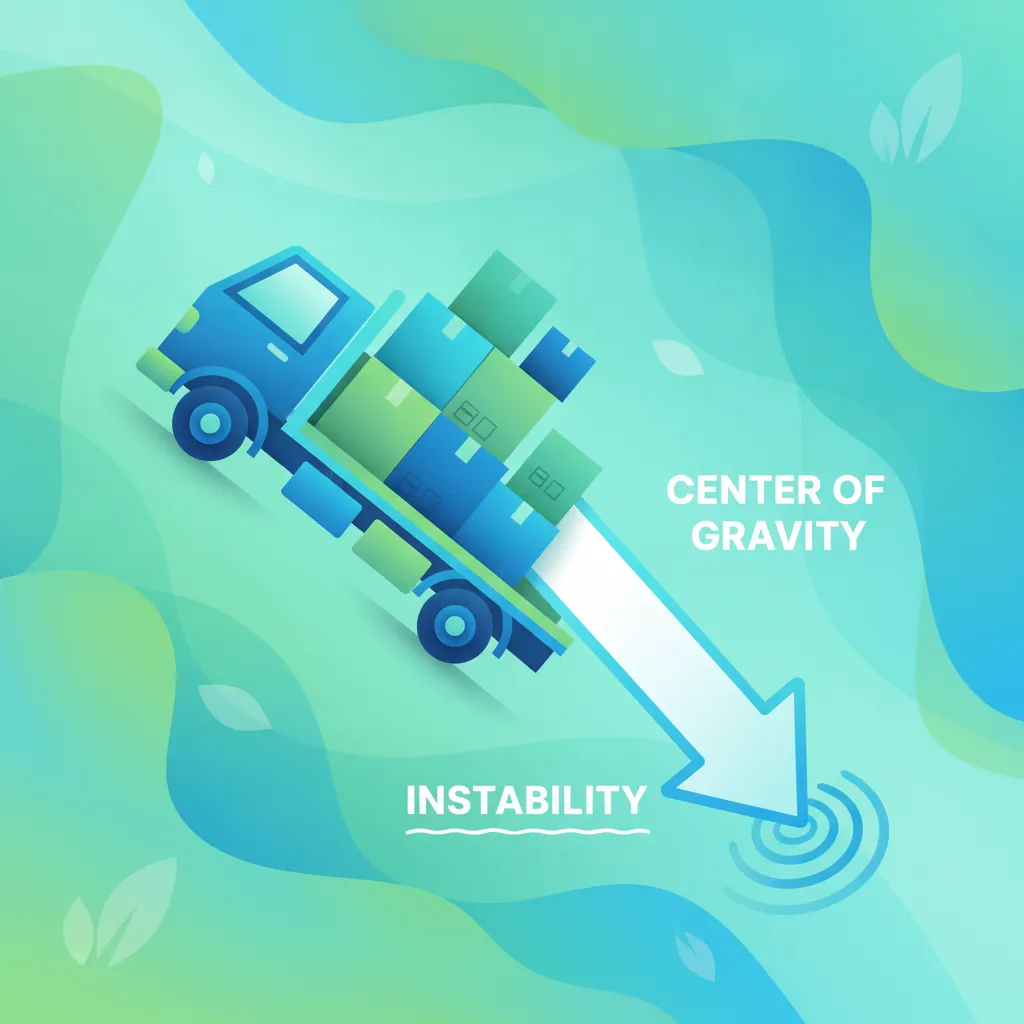
This lesson introduces the principles of load distribution and the impact of the centre of gravity on vehicle stability. It explains how cargo placement influences axle loads and the overall balance of the vehicle. The content emphasizes the importance of maintaining a low centre of gravity to reduce rollover risk.
This lesson explains the specific regulations for operating heavy vehicles on Autobahnen, including speed limits, lane discipline, and overtaking rules. It discusses the use of dedicated truck lanes and the importance of maintaining appropriate following distances. The content also covers procedures for merging and exiting high-speed roads safely.

This lesson covers the dimensional limits for heavy vehicles, focusing on height, width, and length restrictions. It explains how to interpret clearance signage for bridges, tunnels, and overhead obstacles, and discusses the implications for route planning. The content also addresses the importance of understanding turning radii and swept paths to avoid collisions.
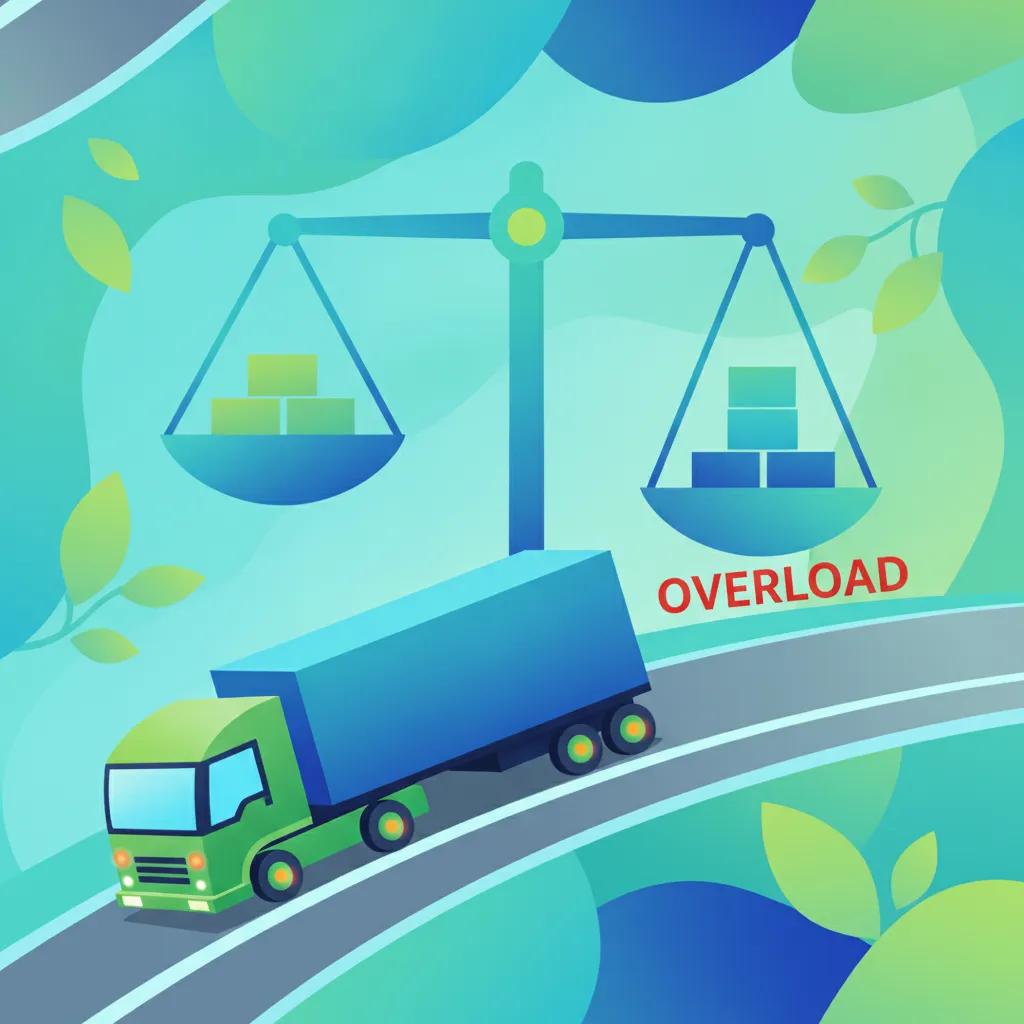
This lesson focuses on the distribution of loads across axle groups and the legal limits for axle loads. It explains the importance of correct weight distribution to avoid axle overloading, which can lead to road damage and safety hazards. The content also covers methods for measuring axle loads and the legal requirements for maintaining proper axle load limits.

This lesson focuses on the importance of thorough route planning for heavy vehicles, taking into account dimensional and weight limits. It discusses how to use mapping tools and road signage to identify bridges, tunnels, and roads with restrictions. The content also covers how to plan alternative routes to avoid impassable areas.

This lesson explains the legal and safety requirements for transporting goods and cargo. It covers the importance of proper load distribution to maintain vehicle stability and the methods for securely fastening items to prevent them from shifting or falling. The regulations concerning maximum vehicle weight, roof loads, and the correct marking of loads that overhang the vehicle are also detailed.

This lesson explains the specific rules and limitations for towing trailers with a Category B license in Germany. It details how to calculate the permissible total weight of the car and trailer combination. The lesson also covers the practical aspects of safely coupling a trailer, checking its lights, and the changes in vehicle handling that drivers must adapt to when towing.

This lesson provides a method for calculating the braking distance of loaded vehicles, considering factors such as speed, load, and road conditions. It explains the formula for total stopping distance, including reaction time and braking distance components. The content highlights the importance of maintaining adequate safety margins for emergency braking.

This lesson focuses on the critical relationship between load distribution, the center of gravity, and vehicle stability. It explains how the placement of passengers and luggage can raise the center of gravity, increasing the risk of rollover during turns or sudden maneuvers. Learners will understand how to manage loading within legal weight limits to maintain optimal handling, braking performance, and overall safety.
Explore detailed explanations of vehicle dimensions, permissible masses, and axle load distribution for heavy vehicles. Understand how these factors, including Gross Combination Mass (GCM), impact vehicle stability and roadworthiness according to German traffic law.
This lesson focuses on the distribution of loads across axle groups and the legal limits for axle loads. It explains the importance of correct weight distribution to avoid axle overloading, which can lead to road damage and safety hazards. The content also covers methods for measuring axle loads and the legal requirements for maintaining proper axle load limits.
This lesson covers the dimensional limits for heavy vehicles, focusing on height, width, and length restrictions. It explains how to interpret clearance signage for bridges, tunnels, and overhead obstacles, and discusses the implications for route planning. The content also addresses the importance of understanding turning radii and swept paths to avoid collisions.
This lesson introduces the principles of load distribution and the impact of the centre of gravity on vehicle stability. It explains how cargo placement influences axle loads and the overall balance of the vehicle. The content emphasizes the importance of maintaining a low centre of gravity to reduce rollover risk.
This lesson explains the concepts of permissible total mass and actual mass, as well as the risks and legal consequences of overloading. It discusses how exceeding mass limits can lead to fines, increased stopping distances, and a higher risk of instability. Additionally, the content highlights the impact of overloading on vehicle wear and legal liabilities.
This lesson explains the specific regulations for operating heavy vehicles on Autobahnen, including speed limits, lane discipline, and overtaking rules. It discusses the use of dedicated truck lanes and the importance of maintaining appropriate following distances. The content also covers procedures for merging and exiting high-speed roads safely.
This lesson explains the legal and safety requirements for transporting goods and cargo. It covers the importance of proper load distribution to maintain vehicle stability and the methods for securely fastening items to prevent them from shifting or falling. The regulations concerning maximum vehicle weight, roof loads, and the correct marking of loads that overhang the vehicle are also detailed.

This lesson introduces the fundamental structural components of heavy vehicles, focusing on the frame and chassis design. It explains the role of different suspension types, such as leaf springs and air suspension, in load distribution and ride comfort. The content also discusses how chassis rigidity and material fatigue affect vehicle safety and longevity.
This lesson focuses on the critical relationship between load distribution, the center of gravity, and vehicle stability. It explains how the placement of passengers and luggage can raise the center of gravity, increasing the risk of rollover during turns or sudden maneuvers. Learners will understand how to manage loading within legal weight limits to maintain optimal handling, braking performance, and overall safety.

This lesson examines the specific height, width, and length constraints that affect heavy vehicle operation, including bridge and tunnel clearances. It discusses how to interpret and comply with traffic signs indicating dimensional limits and the consequences of violating these restrictions. The content also covers practical strategies for route planning to avoid restricted areas.
This lesson provides a method for calculating the braking distance of loaded vehicles, considering factors such as speed, load, and road conditions. It explains the formula for total stopping distance, including reaction time and braking distance components. The content highlights the importance of maintaining adequate safety margins for emergency braking.
Find clear answers to common questions learners have about Gross Combination Mass and Payload Calculations. Learn how the lesson is structured, which driving theory objectives it supports, and how it fits into the overall learning path of units and curriculum progression in Germany. These explanations help you understand key concepts, lesson flow, and exam focused study goals.
Permissible total mass is the maximum weight the vehicle is legally allowed to reach, as stated in your documents. Actual mass is the weight of the vehicle including its current load at any given moment, which must never exceed the permissible total mass.
Tongue load (the weight exerted by the trailer drawbar on the towing vehicle) directly affects steering grip and braking efficiency. Too much or too little tongue load can lead to loss of control, especially during emergency braking or cornering.
The exam focuses on conceptual understanding and recognizing whether a specific configuration is legal. You will need to apply basic formulas to identify if a load plan or vehicle combination is permissible according to the StVZO.
In Germany, overloading is a serious offence that leads to significant fines, points in Flensburg, and, in severe cases, the prohibition of further travel. As a professional, you are legally responsible for checking these weights before starting your journey.
Begin your targeted revision now. Use our practice search to quickly find specific German driving theory questions. Filter by StVO rules, road signs, or hazard perception to create your focused study plan. Master challenging areas and prepare confidently for your theoretical driving test.