
This lesson provides an essential foundation for operating a vehicle, covering the primary controls and the interpretation of dashboard instruments. Understanding these components is critical for both the German theory exam and your practical driving lessons. You will learn to recognize safety indicators, master driver-vehicle communication, and ensure your car is ready for the road.
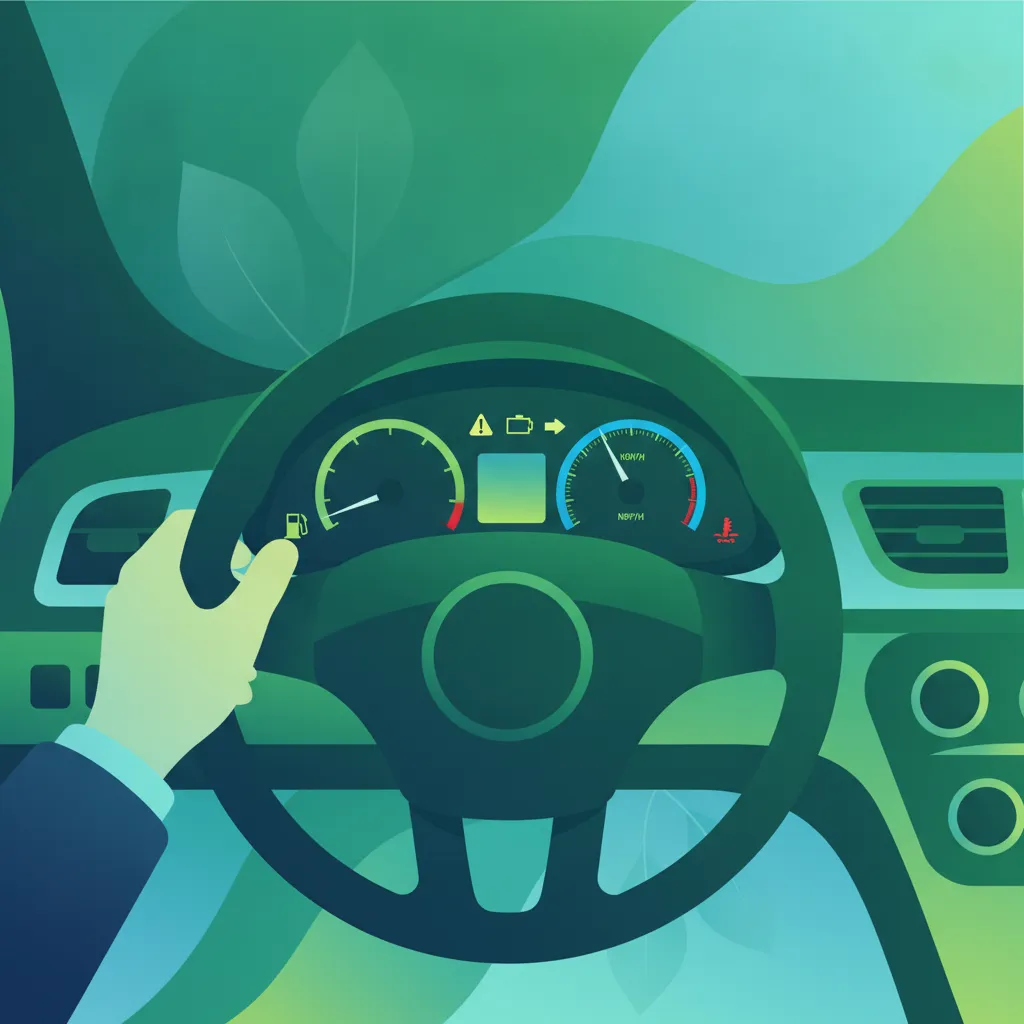
Lesson content overview
Navigating the roads safely and efficiently requires a deep understanding of your vehicle's fundamental controls and how to interpret its various feedback mechanisms. This lesson, part of your comprehensive German Driving License Theory – Category B Course, serves as your essential introduction to the driver's interface, covering everything from the primary pedals and the steering wheel to the critical information displayed on your dashboard. Mastering these basics is not just about passing your exam; it's about developing the intuitive control and awareness crucial for becoming a responsible and safe driver on German roads.
Understanding the function and proper operation of each control and instrument ensures that your vehicle responds predictably to your commands and that you are always aware of its operational status. This foundational knowledge is directly linked to later units concerning vehicle dynamics, speed control, road safety, and driver responsibility.
The interaction between the driver and the vehicle is a critical aspect of road safety. Every input you provide through the controls, and every piece of information you receive from the dashboard instruments, plays a role in how you manage your vehicle and respond to changing traffic conditions. Effective vehicle operation hinges on three core principles:
By internalizing these principles, you lay the groundwork for confident and safe driving, ensuring that you can effectively manage your vehicle under all circumstances.
The primary controls are your direct link to manipulating the vehicle's movement. They enable you to steer, adjust speed, and select gears.
The steering wheel (Lenkrad in German) is the primary rotating device used to change the direction or trajectory of your vehicle. It is connected to the vehicle's wheels through a steering system, allowing you to guide the car precisely.
Different types of steering systems exist, including standard, tilt (for height adjustment), telescopic (for reach adjustment), and speed-sensitive systems that adjust steering effort based on vehicle speed. Regardless of the type, the steering wheel requires constant, minor adjustments to maintain a straight path, especially at higher speeds or in crosswinds.
When driving, maintain a steady grip on the steering wheel with both hands, typically in a 9-3 o’clock position. This provides optimal control and allows for quick, precise movements when necessary. Avoid gripping too tightly, which can lead to fatigue, or too loosely, which compromises control.
Common misunderstandings include oversteering (turning the wheel too much for the desired turn) or understeering (not turning enough), both of which can lead to loss of control. Improper grip, such as holding the wheel with only one hand or placing hands inside the rim, significantly reduces your ability to react to hazards. For example, during a highway lane change, you should turn the wheel gradually and smoothly, making small corrections to guide the vehicle into the new lane without abrupt movements.
The accelerator pedal (Gaspedal) is the control that regulates the engine's power output and, consequently, the vehicle's speed. When you press the accelerator, more fuel is delivered to the engine, increasing its revolutions per minute (RPM) and generating more power, which translates to an increase in vehicle speed.
The practical meaning of the accelerator is direct speed control. Applied pressure directly correlates with increased fuel flow and speed. Drivers must use the accelerator gently and progressively, especially in adverse conditions like wet or icy roads, to prevent wheel spin and loss of traction. Sudden or aggressive acceleration, often referred to as "flooring it," can be dangerous in traffic, lead to excessive fuel consumption, and increase the risk of skidding. A good example of proper use is gradually pressing down on the accelerator when merging onto a highway, smoothly matching the speed of the traffic already present.
Effective use of the accelerator contributes significantly to fuel efficiency and reduces wear on your vehicle's engine and tires.
The brake pedal (Bremspedal) is used to slow down or stop the vehicle by applying friction to the wheels. When pressed, hydraulic pressure is transferred to the brake calipers, which then squeeze brake pads against rotating discs or drums, creating friction that converts kinetic energy into heat, thus decelerating the vehicle.
The practical meaning of the brake pedal is deceleration and stopping. It must be applied proportionally to the vehicle's current speed, the desired rate of deceleration, and the prevailing road conditions. Drivers must maintain safe following distances to allow ample time for braking and should aim to brake early and smoothly rather than harshly or at the last moment. Late braking significantly increases stopping distances and can lead to dangerous situations, especially in emergencies. For instance, smooth braking before a traffic light allows for a gradual stop, preventing passenger discomfort and reducing wear on the braking system. This control is intrinsically linked to concepts like stopping distance and advanced braking systems such as ABS (Anti-lock Braking System), which are covered in more detail in other lessons.
For vehicles equipped with a manual transmission, the clutch pedal (Kupplung) is a crucial control that disengages and engages the engine from the transmission. This temporary disconnection of power allows the driver to change gears without stalling the engine. Without the clutch, attempting to shift gears would either grind the gears or immediately stall the engine, as there would be no way to smoothly transition engine power.
The practical meaning of the clutch is to facilitate gear changes and to allow the vehicle to come to a complete stop without stalling the engine (e.g., when approaching a red light in gear). When shifting gears, the clutch pedal must be pressed fully to ensure complete disengagement. Avoiding "riding the clutch" – keeping the pedal partially depressed while driving – is essential, as this causes excessive wear on the clutch plate and can lead to costly repairs. A common misunderstanding for new drivers is improper timing during a start from a stop, often resulting in stalling or a jerky start. A correct example is depressing the clutch fully before shifting from neutral to first gear when starting the vehicle, then slowly releasing it while simultaneously applying the accelerator.
In manual transmission vehicles, coordinate your clutch and accelerator pedals for smooth starts and gear changes. This prolongs the life of your clutch and ensures a comfortable ride.
The gear selector (Schalthebel or Getriebewählhebel) is the lever or mechanism used to choose the appropriate transmission gear. In manual transmission vehicles, this involves moving a lever through a shift pattern to select specific gears (e.g., 1st, 2nd, 3rd, 4th, 5th, 6th, and Reverse). In automatic transmission vehicles, the selector typically offers options like P (Park), R (Reverse), N (Neutral), D (Drive), and sometimes lower gears or sport modes.
The practical meaning of the gear selector is that it determines the vehicle's performance range, power delivery, and fuel efficiency. Selecting the correct gear is vital for matching engine speed to road speed and conditions. For instance, a low gear (e.g., 1st or 2nd) provides maximum torque for starting or climbing steep hills, while higher gears are for cruising at speed, offering better fuel economy. Driving in too low a gear at high speeds will cause engine strain and excessive fuel consumption, while driving in too high a gear at low speeds will make the engine lug and struggle. For city driving, shifting to third gear is often appropriate, balancing power and efficiency.
The dashboard, or Instrumententafel, is the central hub for vital information about your vehicle's operational status. It houses various gauges and lights that provide real-time feedback, essential for safe and informed driving.
The speedometer (Tachometer or Geschwindigkeitsanzeige) is a mandatory instrument that displays your vehicle's current speed, typically in kilometers per hour (km/h) in Germany. Accurately monitoring your speedometer is crucial for adhering to speed limits, maintaining a safe speed for conditions, and anticipating necessary braking distances. Its accuracy is a legal requirement.
The tachometer (Drehzahlmesser), less common in basic automatic vehicles but standard in manual and performance cars, shows the engine's revolutions per minute (RPM). It helps drivers in manual transmission vehicles choose the optimal gear for power, efficiency, and to avoid over-revving the engine.
The fuel gauge (Kraftstoffanzeige) indicates the amount of fuel remaining in the tank. It is a critical instrument for planning your journeys and ensuring you do not run out of fuel, which can be dangerous and lead to fines if it obstructs traffic.
The temperature gauge (Temperaturanzeige) displays the engine's coolant temperature. A normal operating temperature indicates the engine is running efficiently. If the gauge rises into the red zone, it signals overheating, which can cause severe engine damage and requires immediate attention.
Warning lights (Warnleuchten or Kontrollleuchten) are indicator lights that illuminate to alert the driver to a system malfunction, a critical condition, or the activation of a particular feature. These lights are typically color-coded:
Never ignore a red warning light. For critical warnings such as oil pressure or brake system failure, you must pull over safely and investigate the issue immediately to prevent severe damage or an accident. Continuing to drive can lead to catastrophic failure.
Ignoring warning lights, especially red ones, is a common misunderstanding that can lead to vehicle damage, breakdowns, or dangerous situations. For example, a red warning light for engine overheating requires immediate action; stopping the vehicle and allowing the engine to cool down, then checking the coolant level, is the correct procedure.
Operating a vehicle in Germany comes with specific legal obligations and recommended practices that ensure safety for all road users. These rules are integrated with the proper use of vehicle controls and instruments.
According to the German Road Traffic Act (StVO - Straßenverkehrs-Ordnung), it is mandatory for all occupants to wear a seatbelt before the vehicle is put into motion. This is a fundamental safety regulation. Most modern vehicles are equipped with a seatbelt warning light, which illuminates (often in red) and sometimes emits an audible signal if a seatbelt is not fastened when the ignition is on or the vehicle starts moving. Ignoring this warning not only risks fines but, more importantly, drastically increases the risk of severe injury in the event of an accident.
German regulations require drivers to maintain control of their vehicle at all times. This includes keeping both hands on the steering wheel until the vehicle is stationary, except for brief moments when operating other controls (like the gear selector or turn signal). Driving with hands off the steering wheel significantly reduces your control over the vehicle and increases your reaction time to unforeseen circumstances.
The handbrake (Handbremse or Feststellbremse) is a mechanism designed to keep the vehicle stationary when parked. It must be engaged whenever the vehicle is parked, particularly on inclines, to prevent accidental rolling. Before moving the vehicle, it is essential to ensure the handbrake is fully released. Driving with the handbrake partially engaged can cause significant wear and damage to the braking system and reduce fuel efficiency.
The StVO does not explicitly detail responses to every warning light, but it implicitly requires drivers to operate their vehicles in a safe and roadworthy condition. If a critical warning light (especially red ones for brake system, oil pressure, or engine temperature) illuminates, it indicates a potentially dangerous defect. Continuing to drive with such a fault could be deemed negligent and lead to legal consequences, in addition to vehicle damage or an accident.
Understanding common pitfalls in vehicle control and instrument interpretation can help new drivers develop safer habits.
The way you use your vehicle's controls should not be static; it must adapt to the prevailing driving conditions to ensure safety and efficiency.
Mastery of the basic vehicle controls and the ability to interpret dashboard instruments are foundational for becoming a safe and proficient driver.
By consistently applying the knowledge gained in this lesson, you will develop the intuitive control and situational awareness necessary for confident and responsible driving on German roads and beyond.
This lesson covers the essential controls every German driver must master: the steering wheel, accelerator, brake, clutch (manual transmissions), and gear selector. Each control has specific operational principles—smooth and progressive inputs ensure vehicle stability and reduce wear. The dashboard provides critical information through gauges (speedometer, fuel, temperature) and color-coded warning lights, where red signals immediate safety concerns requiring a stop, yellow indicates non-critical faults, and green/blue shows active systems. Understanding these instruments and responding appropriately to warnings is both a legal requirement under StVO and essential for road safety. Additionally, drivers must adapt control techniques to conditions such as wet roads, mountainous terrain, and cold weather to maintain safe vehicle operation.
A short set of high-value points that capture the most important learning from this lesson.
The steering wheel, accelerator, brake, clutch (manual), and gear selector are your primary tools for controlling vehicle movement and must be operated smoothly and progressively.
Dashboard instruments provide real-time feedback on vehicle status—monitor the speedometer for legal compliance and the temperature gauge to prevent engine damage.
Red warning lights require immediate attention and often demand stopping the vehicle safely; yellow/orange lights indicate non-critical faults that need checking soon.
The clutch must be fully depressed for gear changes; 'riding the clutch' causes premature wear and costly repairs.
Legal requirements under StVO mandate seatbelt use before driving and keeping hands on the steering wheel for vehicle control.
Explore all units and lessons included in this driving theory course.
Red = stop immediately (oil pressure, brake failure, overheating); Yellow/Orange = check soon (low fuel, check engine); Green/Blue = system active (headlights, turn signals).
Use the 9-3 o'clock hand position on the steering wheel for optimal control; avoid gripping too tightly or too loosely.
Match gear selection to speed and conditions—low gears for power and climbing, high gears for cruising efficiency.
Brake early and smoothly to maintain safe following distances; harsh or late braking increases stopping distance and causes wear.
Always release the handbrake fully before driving; driving with it engaged damages the braking system.
Ignoring red warning lights can lead to catastrophic engine or brake failure and potential accidents.
Riding the clutch (keeping it partially depressed while driving) causes excessive wear on the clutch plate.
Driving in too high a gear at low speeds lugs the engine, while too low a gear at high speeds causes over-revving and wasted fuel.
Oversteering or understeering due to improper steering wheel input reduces vehicle control, especially during lane changes.
Accelerating aggressively from a stop causes wheel spin, increased fuel consumption, and unnecessary wear on tires and engine components.
Lesson content overview
A short set of high-value points that capture the most important learning from this lesson.
The steering wheel, accelerator, brake, clutch (manual), and gear selector are your primary tools for controlling vehicle movement and must be operated smoothly and progressively.
Dashboard instruments provide real-time feedback on vehicle status—monitor the speedometer for legal compliance and the temperature gauge to prevent engine damage.
Red warning lights require immediate attention and often demand stopping the vehicle safely; yellow/orange lights indicate non-critical faults that need checking soon.
The clutch must be fully depressed for gear changes; 'riding the clutch' causes premature wear and costly repairs.
Legal requirements under StVO mandate seatbelt use before driving and keeping hands on the steering wheel for vehicle control.
Explore all units and lessons included in this driving theory course.
Red = stop immediately (oil pressure, brake failure, overheating); Yellow/Orange = check soon (low fuel, check engine); Green/Blue = system active (headlights, turn signals).
Use the 9-3 o'clock hand position on the steering wheel for optimal control; avoid gripping too tightly or too loosely.
Match gear selection to speed and conditions—low gears for power and climbing, high gears for cruising efficiency.
Brake early and smoothly to maintain safe following distances; harsh or late braking increases stopping distance and causes wear.
Always release the handbrake fully before driving; driving with it engaged damages the braking system.
Ignoring red warning lights can lead to catastrophic engine or brake failure and potential accidents.
Riding the clutch (keeping it partially depressed while driving) causes excessive wear on the clutch plate.
Driving in too high a gear at low speeds lugs the engine, while too low a gear at high speeds causes over-revving and wasted fuel.
Oversteering or understeering due to improper steering wheel input reduces vehicle control, especially during lane changes.
Accelerating aggressively from a stop causes wheel spin, increased fuel consumption, and unnecessary wear on tires and engine components.
Explore search topics learners often look for when studying Basic Vehicle Controls and Instruments. These topics reflect common questions about road rules, driving situations, safety guidance, and lesson level theory preparation for learners in Germany.
Browse additional driving theory lessons that cover connected traffic rules, road signs, and common driving situations related to this topic. Improve your understanding of how different rules interact across everyday traffic scenarios.
Understand the fundamental controls of a car, including pedals, steering wheel, and gear selector. Learn to interpret dashboard symbols, gauges, and warning lights for safe operation according to German traffic regulations.

This lesson provides a comprehensive guide to a vehicle's lighting systems, explaining the purpose and correct usage of each type of light. It covers dipped and main beam headlights, fog lights, and the legally required use of lights during the day or in poor visibility. You will also review the function of brake lights, indicators, and hazard warning lights for communication and safety.
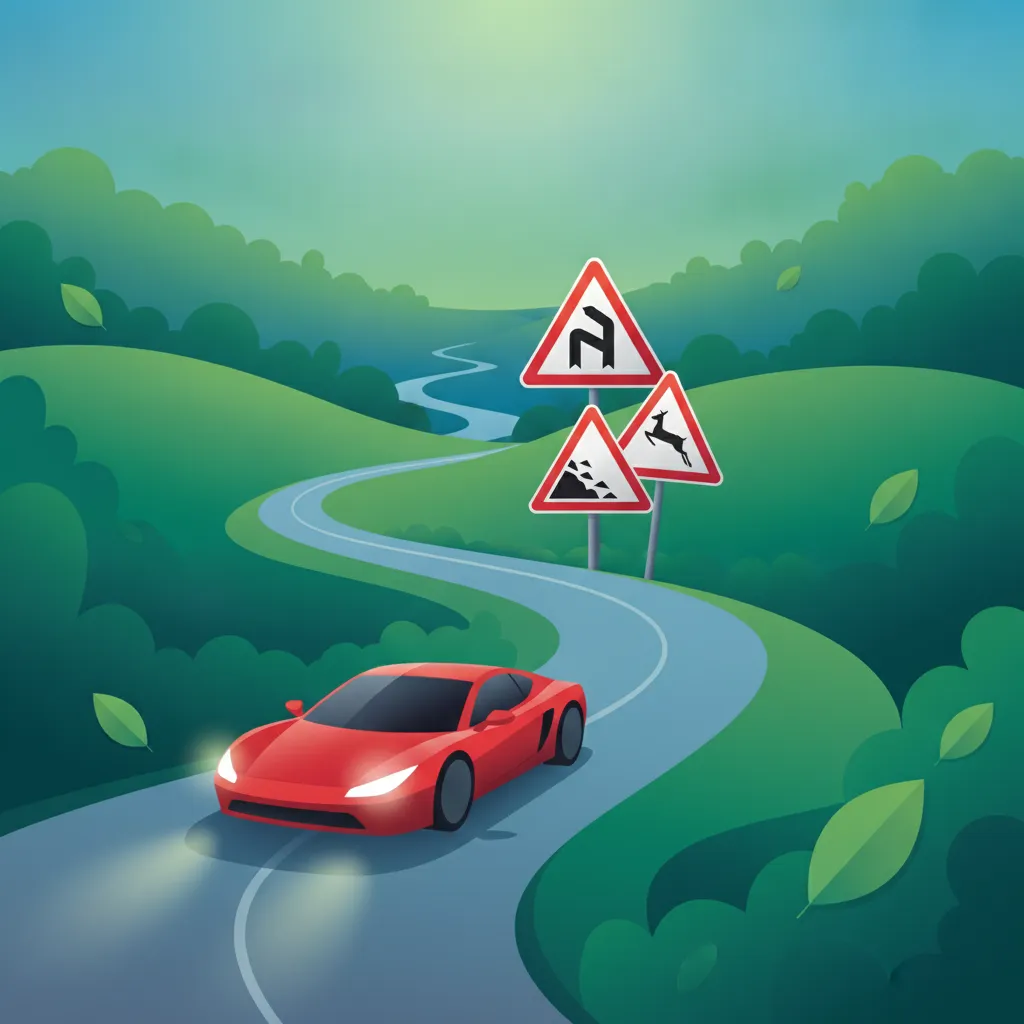
This lesson focuses on warning signs, which are designed to alert drivers to potential dangers or unusual conditions on the road ahead. You will learn to identify signs indicating sharp bends, upcoming intersections, railway crossings, road works, and risks like slippery surfaces or wildlife. Recognizing these signs allows you to anticipate hazards and adjust your driving proactively.
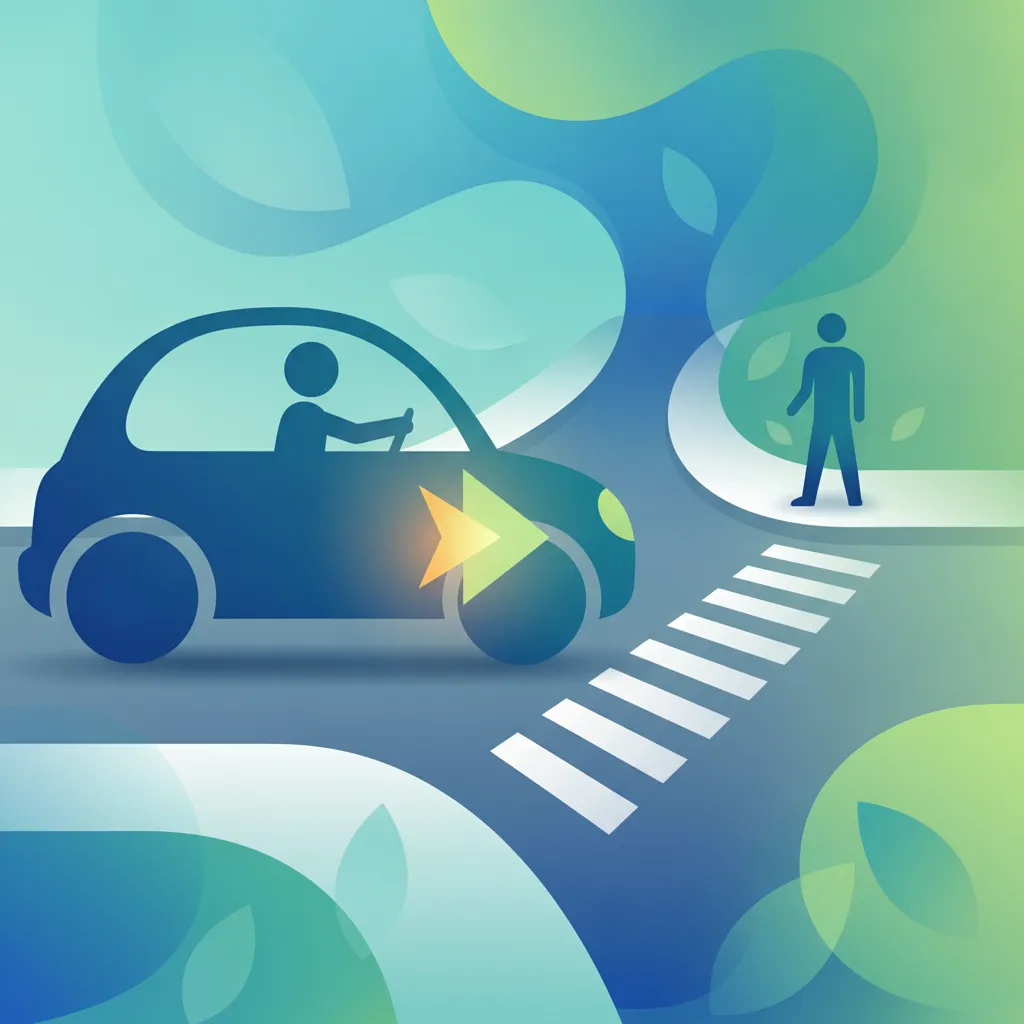
Effective communication is critical for road safety, and this lesson details the correct use of a vehicle's signaling devices. It explains when and how to use turn signals (indicators), hazard warning lights, the horn, and headlight flashes to clearly communicate your intentions to other road users. Proper signaling helps prevent misunderstandings and is a key component of defensive and cooperative driving.
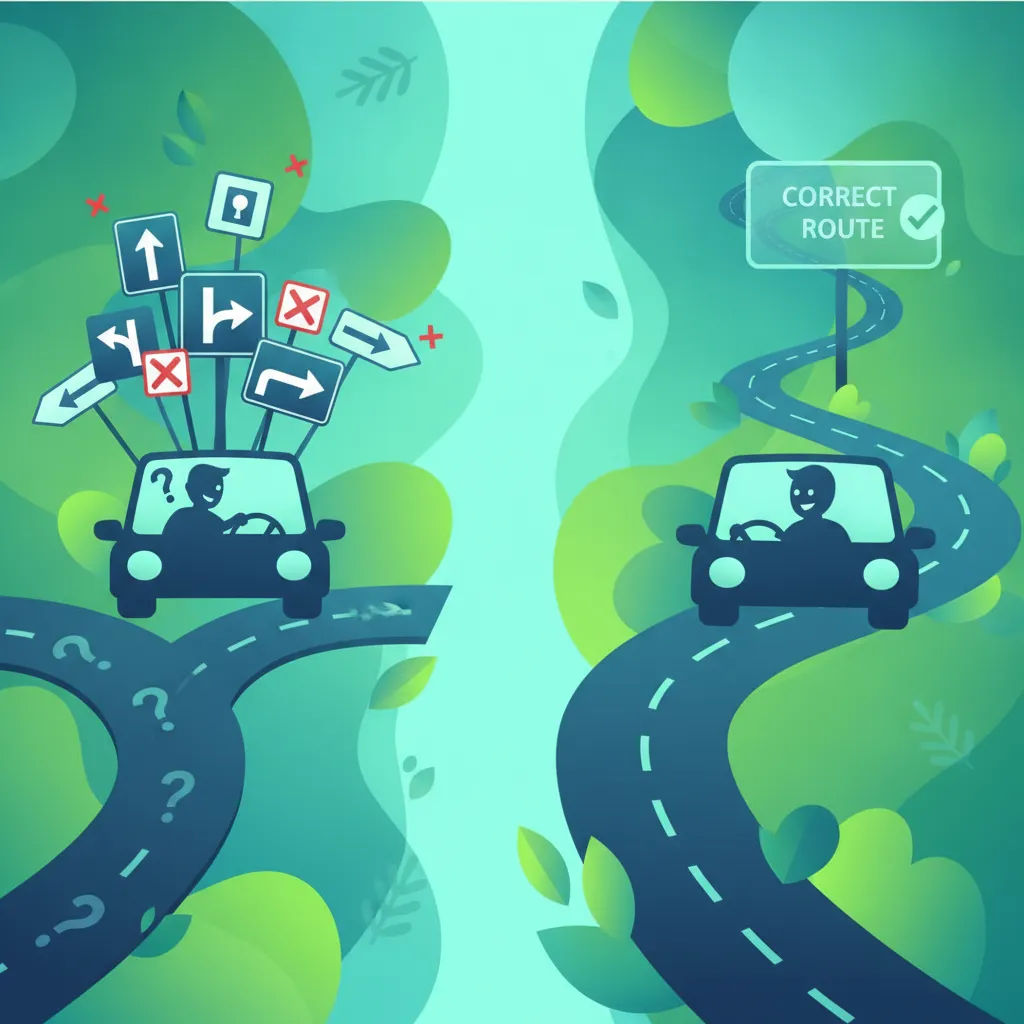
This lesson explains the function of informational signs, which provide helpful guidance for navigation and services. You will learn how to read directional signs on all types of roads, including the Autobahn, and understand distance markers to upcoming cities and exits. The lesson also covers the symbols for services such as fuel stations, restaurants, and tourist attractions.
This lesson provides comprehensive guidance on using vehicle signals to communicate with other road users. It covers the correct timing and use of turn indicators, the application of hand signals when necessary, and the proper use of hazard lights. Effective signaling is presented as a cornerstone of predictable and safe driving.
This lesson outlines the driver's legal responsibility to ensure their vehicle is in a safe and roadworthy condition before every journey. It covers essential pre-drive checks, such as verifying lights, tyres, and fluid levels (oil, coolant, washer fluid). The lesson also explains the mandatory equipment that must be carried in the vehicle, including a warning triangle, high-visibility vest, and first-aid kit.

This lesson provides a thorough explanation of traffic light systems ('Lichtzeichenanlagen') used in Germany. It details the meaning of red, amber, and green lights and the correct response to each phase of the signal sequence. The lesson also covers special signals, such as the green arrow for turning right on red, pedestrian and cyclist signals, and the authority of signals given by a police officer, which override all other signs.
This lesson teaches the systematic pre-trip inspection routine that every professional driver must perform. It covers a comprehensive checklist of visual and functional checks, including lights, tires, mirrors, and wipers. The lesson also emphasizes verifying the presence and condition of mandatory safety equipment, such as emergency exits, the fire extinguisher, and the first-aid kit, to ensure the vehicle is safe to operate.

This lesson explores the critical role of visibility in safe driving, covering topics such as sight distance, managing blind spots, and the correct use of mirrors. It provides guidance on how to adjust your driving in conditions of reduced visibility, such as at night, in fog, or during heavy rain, including the proper use of headlights. The importance of the over-the-shoulder check ('Schulterblick') is also a key focus.
This lesson explains the function and meaning of traffic light signals, including standard cycles, flashing lights, and arrows. It also details how to interpret and obey hand signals given by police officers, which override all other signs and signals. Understanding these instructions is crucial for navigating controlled junctions and emergency situations.
Learn to identify and understand the critical warning lights on your car's dashboard. This lesson explains the specific meaning of each symbol and the appropriate actions to take, crucial for safe driving in Germany.
This lesson provides a comprehensive guide to a vehicle's lighting systems, explaining the purpose and correct usage of each type of light. It covers dipped and main beam headlights, fog lights, and the legally required use of lights during the day or in poor visibility. You will also review the function of brake lights, indicators, and hazard warning lights for communication and safety.
This lesson focuses on warning signs, which are designed to alert drivers to potential dangers or unusual conditions on the road ahead. You will learn to identify signs indicating sharp bends, upcoming intersections, railway crossings, road works, and risks like slippery surfaces or wildlife. Recognizing these signs allows you to anticipate hazards and adjust your driving proactively.
This lesson provides comprehensive guidance on using vehicle signals to communicate with other road users. It covers the correct timing and use of turn indicators, the application of hand signals when necessary, and the proper use of hazard lights. Effective signaling is presented as a cornerstone of predictable and safe driving.
Effective communication is critical for road safety, and this lesson details the correct use of a vehicle's signaling devices. It explains when and how to use turn signals (indicators), hazard warning lights, the horn, and headlight flashes to clearly communicate your intentions to other road users. Proper signaling helps prevent misunderstandings and is a key component of defensive and cooperative driving.
This lesson explains the function of informational signs, which provide helpful guidance for navigation and services. You will learn how to read directional signs on all types of roads, including the Autobahn, and understand distance markers to upcoming cities and exits. The lesson also covers the symbols for services such as fuel stations, restaurants, and tourist attractions.
Find clear answers to common questions learners have about Basic Vehicle Controls and Instruments. Learn how the lesson is structured, which driving theory objectives it supports, and how it fits into the overall learning path of units and curriculum progression in Germany. These explanations help you understand key concepts, lesson flow, and exam focused study goals.
A red warning light typically indicates a serious safety issue that requires immediate attention. You should pull over safely as soon as possible and consult the vehicle manual or a professional to determine if you can continue driving.
Yes, the theory exam includes questions on vehicle safety, dashboard indicators, and basic maintenance. You must be able to recognize symbols for systems like ABS, engine issues, and lighting.
Oil pressure lights indicate a critical lack of lubrication that can damage the engine immediately, whereas check engine lights often relate to emission or electronic system issues. Both require professional inspection but have different urgency levels.
Yes, understanding the layout and operation of gears is fundamental to safe driving, and the exam covers questions regarding shifting and transmission safety for Class B.
Begin your targeted revision now. Use our practice search to quickly find specific German driving theory questions. Filter by StVO rules, road signs, or hazard perception to create your focused study plan. Master challenging areas and prepare confidently for your theoretical driving test.