
This lesson provides essential training on how to safely approach and navigate intersections, which is a critical skill for any rider. It builds upon your understanding of traffic signs and road laws, helping you master the priority rules and observation techniques required for your German motorcycle licence.
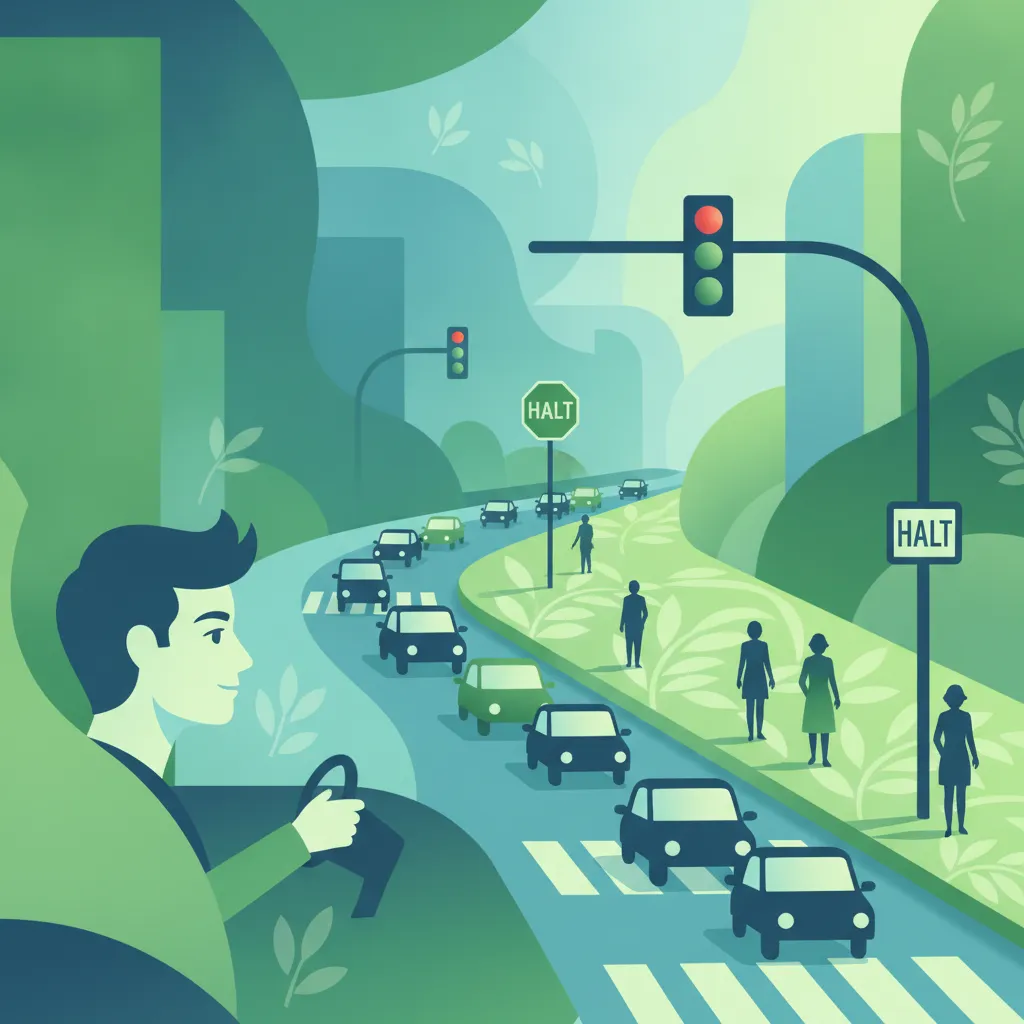
Lesson content overview
Intersections are among the most complex and hazardous locations on any road network, demanding heightened awareness and precise execution from all road users, especially motorcyclists. As a vital part of your German Motorcycle Licence Theory Course, this lesson provides a detailed guide to safely approaching and navigating various intersection types, ensuring you have the theoretical knowledge to protect yourself and others. Mastering these skills is not just about passing your test; it is fundamental to safe riding for life.
An intersection, or Kreuzung, is any point where two or more roads meet or cross, creating multiple potential conflict points for vehicles, pedestrians, and cyclists. For motorcyclists, these areas present unique challenges due to our smaller profile, which can make us less visible, and the inherent vulnerability of not being enclosed in a protective cage.
The primary goal when approaching and crossing an intersection is to reduce uncertainty and establish predictable behavior among all road users. This proactive approach minimizes the risk of collisions by allowing everyone to anticipate movements and react accordingly. Comprehensive observation, clear communication, and strict adherence to traffic rules are paramount.
Navigating intersections effectively relies on several interconnected principles that form the foundation of defensive riding. By consistently applying these, you can significantly enhance your safety.
The legal priority given to certain road users to proceed before others at intersections or other points of conflict. In German traffic law, this is known as "Vorfahrt."
Understanding the Right-of-Way (in German, Vorfahrt) hierarchy is crucial. This legal framework dictates which road user has priority to proceed first, preventing chaos and collisions. In Germany, the hierarchy is generally:
Misinterpreting or ignoring right-of-way rules is a leading cause of intersection accidents. Always be prepared to yield, even if you believe you have priority, if another road user is not yielding.
The active and continuous process of scanning the entire environment to gather information, identify potential hazards, and predict the future movements and intentions of other road users.
Effective Observation and Anticipation involves much more than just looking straight ahead. It requires a constant, systematic scan of your surroundings: left, right, far ahead, close ahead, and checking your mirrors and blind spots. For motorcyclists, this "head on a swivel" technique is even more critical because your field of view is less restricted than in a car, and you need to compensate for your smaller size.
Focus particular attention on vulnerable road users such as pedestrians and cyclists, who may be less predictable or harder to see. Anticipate potential actions like a car suddenly turning or a pedestrian stepping into the road. The German Road Traffic Act (StVO) § 1 emphasizes the general obligation to observe and act cautiously to avoid endangering others.
Direct visual communication between drivers/riders and other road users (e.g., pedestrians, cyclists, other drivers) to confirm mutual awareness and understanding of intentions.
Eye contact is a powerful, non-verbal communication tool that helps confirm intentions and ensures mutual awareness. Before proceeding through an intersection, especially when turning or when pedestrians are present, try to make eye contact with other road users. This brief glance can confirm that they have seen you and that you understand each other's next move.
Do not assume that simply because you can see another driver, they have seen you. Many accidents involving motorcycles occur because other drivers fail to "see" the motorcycle. If you cannot establish eye contact, assume the other party has not seen you and proceed with extreme caution, being prepared to stop or take evasive action.
Aligning your motorcycle within the appropriate part of the lane, or in the correct lane altogether, for your intended maneuver (e.g., going straight, turning left or right).
Your lane positioning communicates your intentions to other road users and ensures you have the best visibility and escape routes. When approaching an intersection:
Incorrect lane positioning can mislead other drivers, create confusion, and increase the risk of collisions, especially for motorcycles which can be harder to spot.
Having an unobstructed view of the road, traffic, and potential hazards in all relevant directions before initiating a maneuver, particularly when entering or crossing an intersection.
Clear visibility is paramount, especially when turning or crossing an intersection where your view might be obstructed by parked vehicles, buildings, or other larger vehicles. Before proceeding, ensure that your view is unobstructed. If your view is blocked, creep forward slowly and cautiously until you have a clear sightline into the intersection or the road you are turning onto. This is often referred to as a "stop-and-look" or "creep-and-peep" maneuver. Never assume the way is clear if you cannot see it yourself.
The specific procedures for safely approaching and crossing intersections vary based on the traffic control devices present.
Traffic lights are the most common method for regulating traffic flow at busy intersections. Understanding each signal is critical for safe passage.
Never assume a green light guarantees safety. Always scan the intersection for unexpected hazards, such as vehicles running a red light or pedestrians crossing against the signal.
A Stop Sign (Halt! Vorfahrt gewähren!) is one of the most unambiguous traffic control signs. When you encounter a stop sign, StVO § 37 clearly states that you must:
Haltelinie) or, if no line is present, before the intersection itself, where you have the best view of conflicting traffic.Approach the stop sign at a controlled speed, ready to stop.
Come to a complete stop before the stop line. If no line, stop where you can see safely without entering the intersection.
Check left, right, and forward for all traffic, including pedestrians and cyclists. Make eye contact where possible.
Wait for a clear, safe gap in traffic before proceeding.
Accelerate smoothly and decisively, ensuring you clear the intersection without hesitation.
The Give-Way Sign (Vorfahrt gewähren!) signifies that you must yield (or Vorfahrt gewähren) to traffic on the main road or intersecting street. StVO § 38 specifies that you must:
Unlike a stop sign, a give-way sign does not always require a complete stop if the way is clear and you can safely merge or turn without impeding other traffic. However, if visibility is poor or traffic is heavy, a stop might be necessary to ensure safety.
When an intersection has no traffic lights, stop signs, or give-way signs, the general right-of-way rule in Germany applies: priority to the right (rechts vor links). According to StVO § 8:
priority road (Vorrangstraße) by appropriate signage. It also does not apply when exiting a property or a dirt track onto a public road, in which case you must always yield.Always approach such intersections cautiously, ready to stop. Assume other drivers might not know or correctly apply the rechts vor links rule.
Understanding the specific paragraphs of the German Road Traffic Act (Straßenverkehrs-Ordnung, StVO) is fundamental for safe and legal riding.
As discussed, this rule mandates that vehicles approaching from the right at an intersection without specific signs or signals have priority. Its rationale is to provide a default rule for conflict resolution, ensuring predictability. However, always exercise caution, as this rule is frequently misunderstood or ignored.
This section governs the adherence to traffic lights. Drivers must follow the red, yellow, and green signals. It's crucial to understand that even when a green light permits you to proceed, you still have an obligation to ensure the intersection is clear and that your action does not endanger others. This is particularly relevant when turning left, as you often have to yield to oncoming traffic unless a green arrow indicates otherwise.
StVO § 12 generally prohibits overtaking (Überholen) at intersections where visibility is limited or where the traffic situation is unclear. This rule is critical for preventing side collisions, as an overtaking maneuver reduces your field of vision and increases your speed, making it harder to react to sudden movements from cross-traffic or turning vehicles. Never attempt to overtake at or immediately before an intersection.
This regulation reinforces the absolute requirement to stop completely at a stop line or, if none, at the intersection's entry, and to yield to all other traffic. A complete stop allows for thorough observation and judgment of traffic conditions before proceeding.
This section clarifies the obligation to yield to traffic on the main road or intersecting road. It requires you to adjust your speed and, if necessary, stop, to ensure that vehicles with priority can continue unimpeded.
Beyond the basic rules, experienced motorcyclists employ advanced strategies to enhance safety at intersections.
A thorough scanning technique is paramount. Before entering an intersection, mentally apply the "left-right-left" scan:
This systematic approach minimizes the chance of missing critical information.
Pedestrians and cyclists are highly vulnerable and can be unpredictable. Always anticipate that they might:
When turning, pay extra attention to crosswalks. Make eye contact with pedestrians and cyclists to confirm their intentions. Be prepared to stop for them, even if you technically have the right-of-way.
When turning, particularly right, check over your right shoulder for cyclists approaching from behind who might be continuing straight or also turning right.
Abblendlicht) even during the day, and consider positioning yourself where you are most likely to be seen by other drivers.Being aware of common mistakes can help you prevent them.
Safe intersection navigation also involves adapting your strategy to varying conditions.
rechts vor links and requiring vigilance for fast-moving cross-traffic.The principles outlined in this lesson — adherence to right-of-way rules, diligent observation, proactive eye contact, correct lane positioning, and ensuring clear visibility — are the cornerstones of safe motorcycle riding at intersections. By understanding and consistently applying the regulations found in the StVO (especially §§ 8, 9, 12, 37, 38), you contribute to predictable traffic flow, which is the most effective way to prevent collisions. Always be adaptable to changing conditions, assume other drivers might make mistakes, and prioritize safety above all else.
The average human reaction time is approximately 1.5 seconds. By anticipating hazards at intersections through continuous observation, you effectively "buy" yourself more time to react, significantly enhancing your safety.
This lesson covers the critical skill of safely navigating German intersections on a motorcycle, including the right-of-way hierarchy, observation techniques, and specific StVO regulations. Learners must master the rechts vor links rule for unmarked intersections, understand traffic light phases including flashing signals, and apply correct lane positioning for turning maneuvers. The systematic left-right-left scan and establishing eye contact are emphasized as key defensive riding techniques. Common pitfalls include rolling stops at stop signs, failing to yield properly at give-way signs, and attempting overtakes at intersections—all of which are addressed through specific StVO provisions and practical procedures outlined in this lesson.
A short set of high-value points that capture the most important learning from this lesson.
Right-of-way at German intersections follows a clear hierarchy: police signals, traffic lights, traffic signs, then general rules including 'rechts vor links' for unmarked junctions.
The systematic 'left-right-left' scanning technique is essential before entering any intersection, with a final check confirming the left side hasn't changed.
Eye contact with other road users confirms mutual awareness—never assume you've been seen simply because you can see them.
Lane positioning communicates your intentions: central for straight, right-aligned for right turns, left-aligned for left turns.
At stop signs you must achieve a complete stop before the stop line, not a rolling stop, then yield to all cross-traffic and pedestrians.
Explore all units and lessons included in this driving theory course.
StVO § 8 establishes 'rechts vor links' (priority to the right) at unmarked intersections, unless a priority road is signed or you're exiting a property.
A flashing yellow light means traffic lights may be out of order—proceed with extreme caution and apply general right-of-way rules.
StVO § 12 prohibits overtaking at or immediately before intersections where visibility is limited.
Yellow light means prepare to stop—only proceed if an emergency stop would be unsafe, never accelerate to beat the red.
Pedestrians already on a crosswalk always have priority, even if you technically have the right-of-way.
Performing a rolling stop at stop signs instead of a complete stop, which reduces observation time and violates StVO § 37.
Assuming the right-of-way at give-way signs without properly yielding to main road traffic and pedestrians.
Initiating a turn when visibility is blocked by parked vehicles or larger vehicles without creeping forward to gain a clear sightline.
Attempting to overtake other vehicles at or near intersections, which is prohibited under StVO § 12 and extremely dangerous.
Misinterpreting flashing signals—a flashing red is equivalent to a stop sign, while a flashing yellow requires extreme caution and yielding.
Lesson content overview
A short set of high-value points that capture the most important learning from this lesson.
Right-of-way at German intersections follows a clear hierarchy: police signals, traffic lights, traffic signs, then general rules including 'rechts vor links' for unmarked junctions.
The systematic 'left-right-left' scanning technique is essential before entering any intersection, with a final check confirming the left side hasn't changed.
Eye contact with other road users confirms mutual awareness—never assume you've been seen simply because you can see them.
Lane positioning communicates your intentions: central for straight, right-aligned for right turns, left-aligned for left turns.
At stop signs you must achieve a complete stop before the stop line, not a rolling stop, then yield to all cross-traffic and pedestrians.
Explore all units and lessons included in this driving theory course.
StVO § 8 establishes 'rechts vor links' (priority to the right) at unmarked intersections, unless a priority road is signed or you're exiting a property.
A flashing yellow light means traffic lights may be out of order—proceed with extreme caution and apply general right-of-way rules.
StVO § 12 prohibits overtaking at or immediately before intersections where visibility is limited.
Yellow light means prepare to stop—only proceed if an emergency stop would be unsafe, never accelerate to beat the red.
Pedestrians already on a crosswalk always have priority, even if you technically have the right-of-way.
Performing a rolling stop at stop signs instead of a complete stop, which reduces observation time and violates StVO § 37.
Assuming the right-of-way at give-way signs without properly yielding to main road traffic and pedestrians.
Initiating a turn when visibility is blocked by parked vehicles or larger vehicles without creeping forward to gain a clear sightline.
Attempting to overtake other vehicles at or near intersections, which is prohibited under StVO § 12 and extremely dangerous.
Misinterpreting flashing signals—a flashing red is equivalent to a stop sign, while a flashing yellow requires extreme caution and yielding.
Explore search topics learners often look for when studying Approaching and Crossing Intersections Safely. These topics reflect common questions about road rules, driving situations, safety guidance, and lesson level theory preparation for learners in Germany.
Browse additional driving theory lessons that cover connected traffic rules, road signs, and common driving situations related to this topic. Improve your understanding of how different rules interact across everyday traffic scenarios.
Go beyond basic intersection rules. This lesson delves into advanced priority situations at complex intersections, including those with multiple lanes, traffic lights, and varying road user types, crucial for German motorcycle theory.
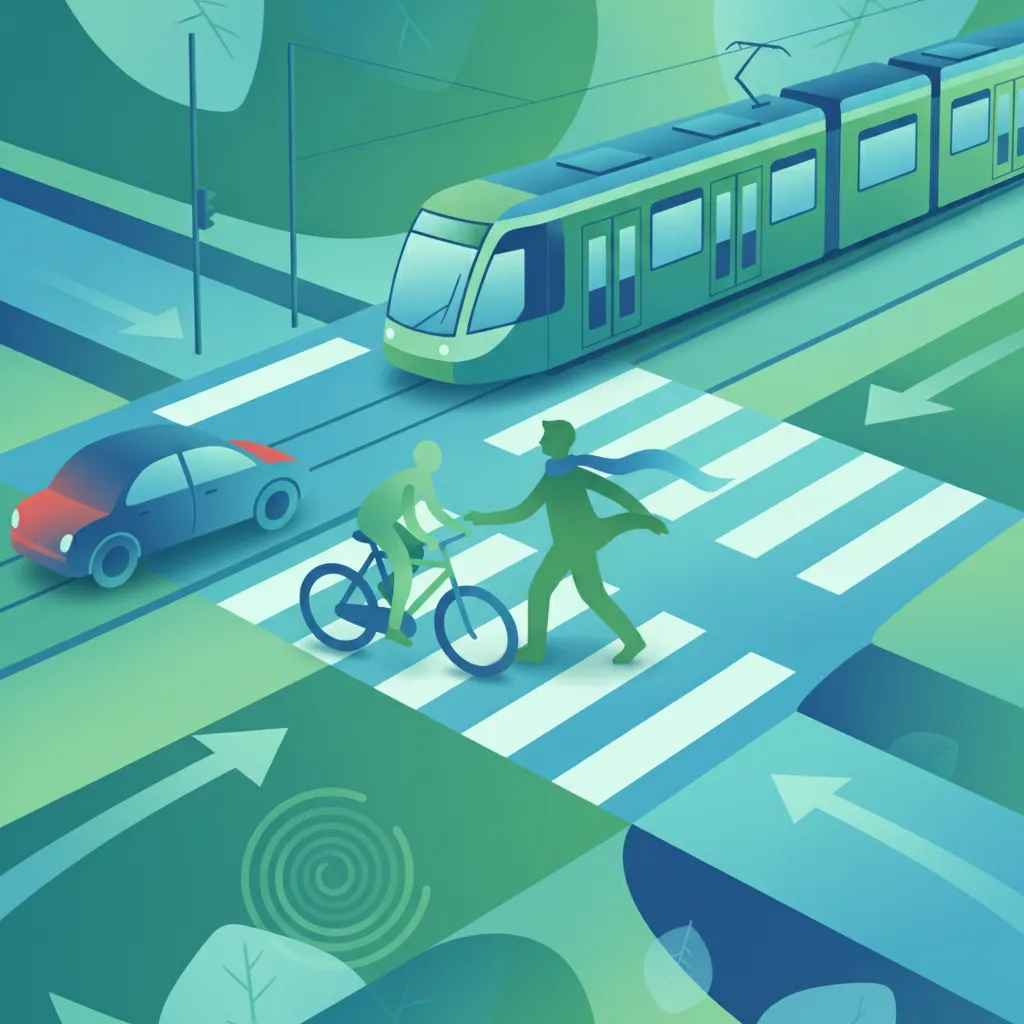
This lesson details the critical right-of-way regulations according to the German StVO. It covers the default 'right before left' rule, the meaning of priority road signs, and specific rules for roundabouts and yielding to pedestrians. A thorough understanding of these priority rules is fundamental for preventing accidents at junctions.
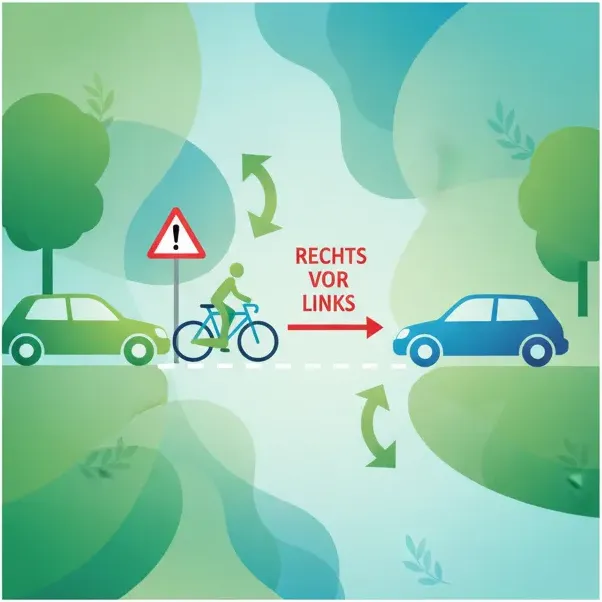
This lesson provides a detailed guide to navigating various types of intersections safely and correctly. It explains how priority is determined by traffic signs (such as the priority road, yield, and stop signs) and traffic lights. The lesson also covers complex scenarios, including the rules for turning left across oncoming traffic, to ensure you can handle any junction with confidence.
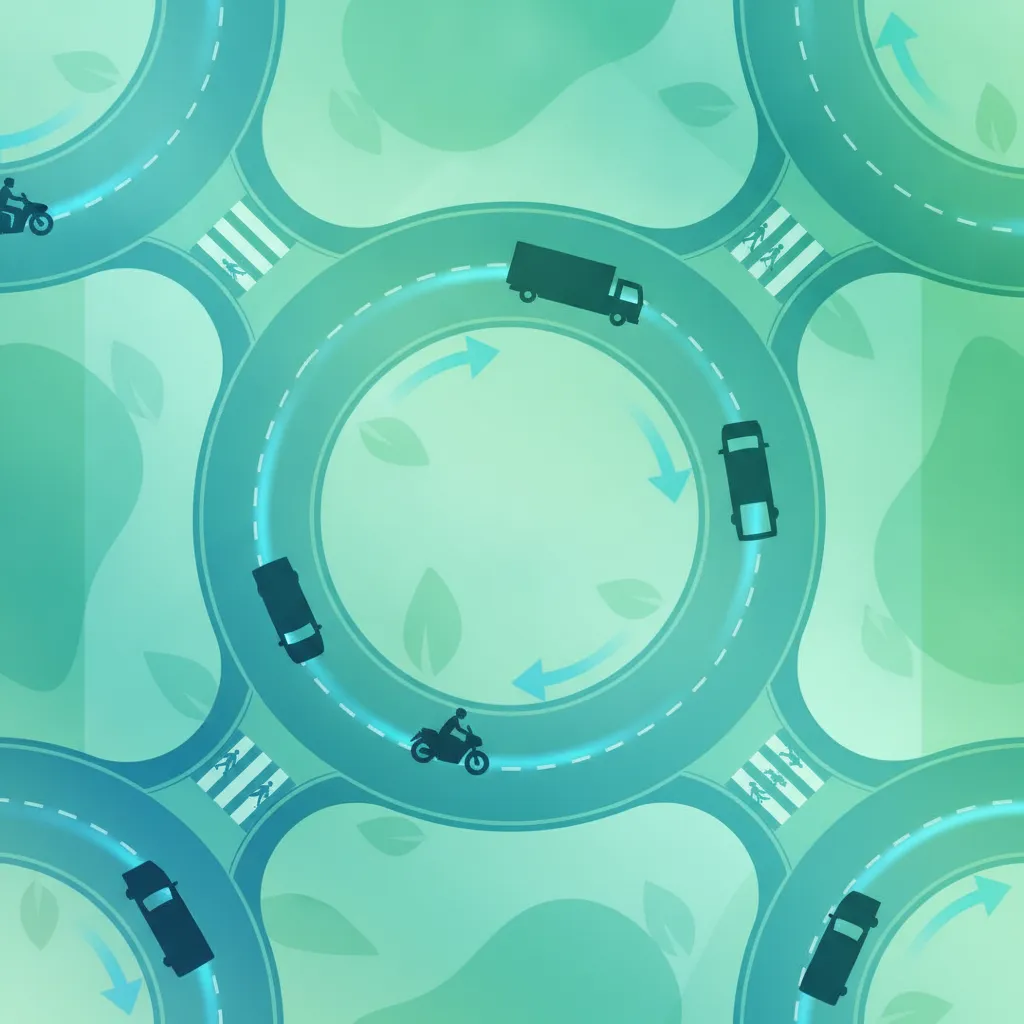
This lesson focuses on the specific techniques for safely navigating roundabouts, a common feature in urban traffic. Learners are taught the correct lane selection for their intended exit, the importance of proper signaling upon entry and exit, and maintaining an appropriate speed. The content highlights the need to yield to circulating traffic and to be aware of other vehicles changing lanes within the roundabout.
This lesson focuses on complex traffic environments where different types of road users share the same space. It provides guidance on situations like driving on streets with integrated tram tracks or where bus and bicycle lanes are part of the roadway. The content emphasizes understanding the specific priority rules and being extra vigilant to anticipate potential conflicts in these busy, shared zones.
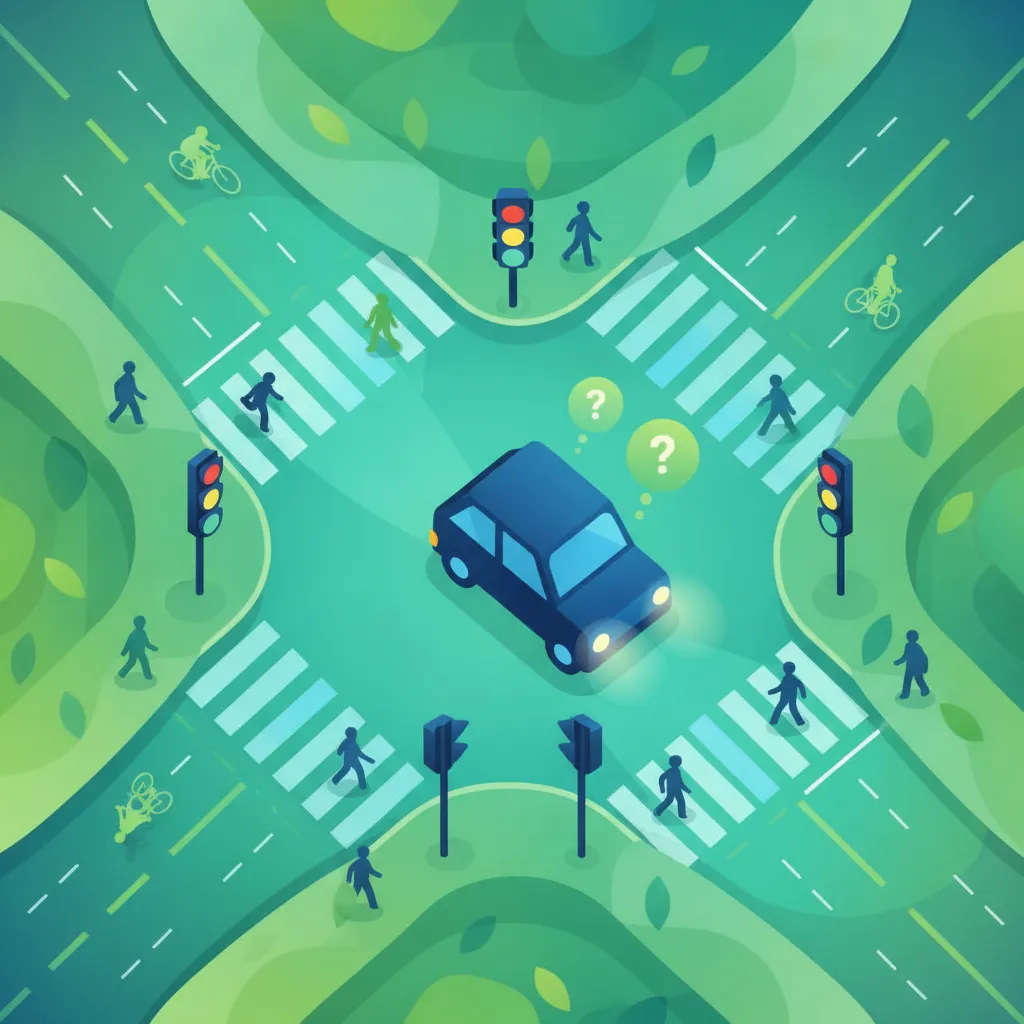
This lesson teaches a structured method for approaching any intersection. It covers identifying the type of junction, determining who has the right-of-way based on signs or rules, and performing thorough visual checks. The focus is on developing a safe and decisive approach to reduce risk in these high-conflict areas.
This lesson covers the regulations and safe techniques for overtaking other vehicles in urban environments. It emphasizes the importance of thorough observation, including mirror and blind spot checks, before committing to the maneuver. Learners will understand how to choose a safe gap, manage their speed differential, and maintain strict lane discipline throughout the overtaking process.
This lesson addresses the challenges of operating a small AM vehicle in dense, mixed traffic. It provides strategies for increasing visibility to other drivers, positioning oneself defensively, and safely sharing lanes with cyclists. The content emphasizes awareness of larger vehicles' blind spots and maintaining a safe space cushion.
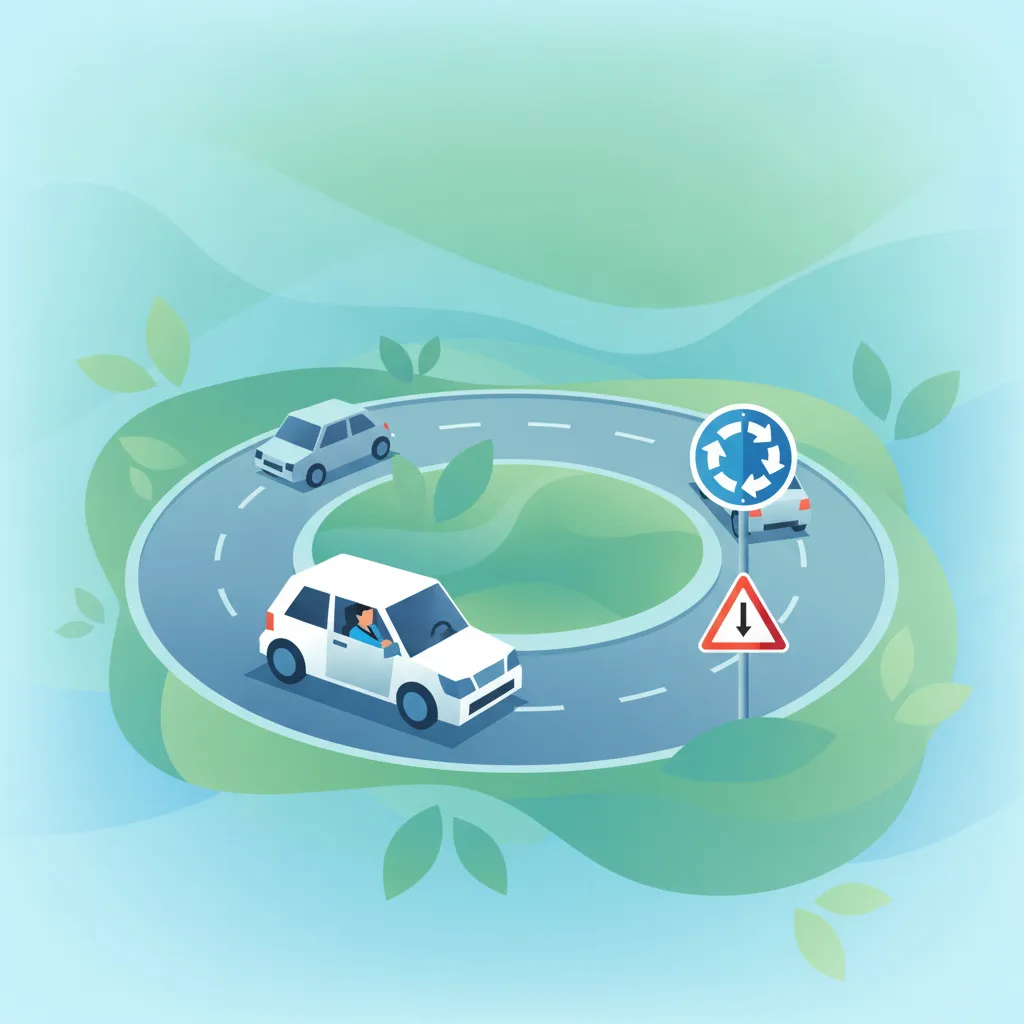
This lesson provides clear instructions on how to navigate roundabouts in Germany. It explains the crucial rule of yielding to traffic already inside the circle, proper lane choice for your intended exit, and the correct use of signals. Safe interaction with cyclists and pedestrians at roundabout exits is also covered.
This lesson teaches riders how to interact safely and predictably with pedestrians, cyclists, and public transport vehicles. It highlights the importance of yielding at designated crossings, maintaining a safe passing distance, and anticipating the movements of buses and trams. The content emphasizes using eye contact and clear signaling to foster safe and respectful interactions with all road users.

This lesson focuses on the importance of strategic road positioning for enhancing safety and visibility. Learners explore different lane positions and understand when to use them to see, be seen, and create a safety buffer. The content emphasizes maintaining a long visual focus down the road to anticipate hazards and avoid target fixation, particularly when cornering.
Master the art of observation and anticipation at German intersections. Learn how to effectively scan for traffic, predict pedestrian and cyclist actions, and ensure safe passage through busy junctions.

This lesson teaches the essential observation techniques required for safe riding, focusing on the systematic use of mirrors and shoulder checks to manage blind spots. It emphasizes developing active scanning habits to maintain constant situational awareness of the surrounding traffic environment. Learners will understand how effective head movement and use of peripheral vision are critical for detecting potential hazards early.
This lesson teaches riders how to interact safely and predictably with pedestrians, cyclists, and public transport vehicles. It highlights the importance of yielding at designated crossings, maintaining a safe passing distance, and anticipating the movements of buses and trams. The content emphasizes using eye contact and clear signaling to foster safe and respectful interactions with all road users.
This lesson highlights the specific risks associated with motorcyclists, who are less visible and more vulnerable than car drivers. It teaches you to actively look for motorcycles, especially at intersections and during lane changes, as their smaller profile can be easily missed. You will learn about their potential for rapid acceleration and instability, emphasizing the need for extra following distance.

This lesson teaches crucial risk awareness and accident prevention strategies for motorcyclists. It examines common accident scenarios and teaches riders how to identify potential hazards in advance. Key concepts include defensive riding, maintaining situational awareness, and understanding how a proactive mindset contributes to a safer riding experience on the road.
This lesson focuses on the importance of strategic road positioning for enhancing safety and visibility. Learners explore different lane positions and understand when to use them to see, be seen, and create a safety buffer. The content emphasizes maintaining a long visual focus down the road to anticipate hazards and avoid target fixation, particularly when cornering.

This lesson focuses on how motorcyclists can clearly communicate their intentions to other road users to prevent misunderstandings and collisions. It covers the correct use of indicators, brake lights, and standardized hand signals for turning and stopping. The importance of making eye contact with other drivers to confirm they have seen you is also a key topic for enhancing safety.
This lesson covers the regulations and safe techniques for overtaking other vehicles in urban environments. It emphasizes the importance of thorough observation, including mirror and blind spot checks, before committing to the maneuver. Learners will understand how to choose a safe gap, manage their speed differential, and maintain strict lane discipline throughout the overtaking process.

This lesson provides a systematic approach to safely negotiating blind corners where visibility is limited. It teaches riders to control their entry speed, adopt a defensive lane position, and use visual scanning techniques to assess the road ahead. The content emphasizes adjusting lean angle and being prepared for unexpected hazards that may be hidden around the bend.
This lesson addresses the critical skill of safely interacting with other road users, particularly vulnerable ones like pedestrians and cyclists. It covers rules for yielding at crosswalks, maintaining a safe passing distance, and being aware of the limited visibility of a moped to car drivers. The focus is on fostering a defensive and cooperative mindset in mixed traffic.

This lesson teaches riders how to develop strong visual perception skills for the road. It covers systematic scanning patterns, the correct use of mirrors, and the critical importance of performing a head check to cover blind spots. Understanding the larger blind spots of trucks and buses is also a key safety component.
Find clear answers to common questions learners have about Approaching and Crossing Intersections Safely. Learn how the lesson is structured, which driving theory objectives it supports, and how it fits into the overall learning path of units and curriculum progression in Germany. These explanations help you understand key concepts, lesson flow, and exam focused study goals.
Visibility and observation are key. Always ensure you are in the correct lane well in advance, check your mirrors, perform a shoulder check, and make eye contact with other road users to confirm they have seen you before proceeding.
Yes, in Germany, you are legally required to come to a full stop at a 'Stop' sign (Halt. Vorfahrt gewähren.), regardless of whether traffic is visible. A rolling stop is considered a failure in both the theory and practical exam.
Motorcyclists should position themselves within the lane to maximize visibility to others while maintaining a safety buffer. Avoid riding in the blind spots of larger vehicles and position yourself so you are clearly seen by oncoming traffic when waiting to turn.
Yes, you must be extra vigilant for cyclists, especially when turning right. Always perform a shoulder check to ensure no cyclist is riding alongside you in the 'dead angle' before you initiate your turn.
Begin your targeted revision now. Use our practice search to quickly find specific German driving theory questions. Filter by StVO rules, road signs, or hazard perception to create your focused study plan. Master challenging areas and prepare confidently for your theoretical driving test.