
Navigate Icelandic intersections with confidence by mastering traffic light systems and signals. This lesson builds upon priority rules and road markings, preparing you for complex junctions and ensuring you can safely interpret every signal, from standard cycles to dedicated lane indicators, crucial for your Category B theory exam.
Lesson content overview
Navigating intersections safely and efficiently is a cornerstone of responsible driving in the Official Icelandic Driving License B Theory Course. Traffic light systems are paramount in orchestrating the flow of vehicles, pedestrians, and cyclists, superseding many other road rules when active. Understanding these signals thoroughly is not just about memorizing colors; it's about interpreting specific instructions, anticipating movements, and ensuring the safety of all road users.
This lesson provides a detailed guide to all types of traffic light signals used across Iceland, from the standard three-phase cycles to specialized indicators for turning movements, pedestrians, and cyclists. We will explore how these signals integrate with right-of-way principles, helping you to confidently and correctly respond to every light state encountered on Icelandic roads.
Traffic lights serve a critical role in road safety and traffic management. They are designed to prevent conflicts at intersections, reduce driver uncertainty, and allow predictable and orderly movement of vehicles and pedestrians.
One of the fundamental principles of traffic lights is their supremacy. When a traffic light is operational at an intersection, its instructions override most other traffic rules, including stop signs, give-way signs, and general right-of-way principles. This provides a single, unambiguous source of instruction, simplifying decision-making at complex junctions. Failure to obey an active traffic light is a serious legal violation, regardless of other signs that may be present.
Traffic lights follow a specific hierarchy of colors that dictates the permissible actions for drivers. This universal sequence ensures a clear transition between stopping and proceeding, enhancing safety and predictability.
The most common traffic light system operates on a three-phase cycle, coordinating movements for various directions at an intersection. This sequence prevents conflicting traffic flows by assigning exclusive periods for each movement.
A solid red light is an absolute command to stop. Drivers must bring their vehicle to a complete halt before the clearly marked stop line, or, if no line is present, before the intersection itself, ensuring not to obstruct cross-traffic or pedestrian crossings.
Never enter an intersection or cross the stop line when a red light is displayed. This is a severe traffic violation and carries a high risk of collision.
The amber light serves as a transitional warning. Its meaning depends on the phase of the cycle:
A solid green light grants permission to proceed through the intersection, provided the way is clear. Even with a green light, drivers must always be prepared for unexpected situations, such as emergency vehicles, pedestrians, or other drivers failing to yield. Always check your surroundings and ensure the path is clear before moving.
A flashing amber light is distinct from a steady amber light. It does not mean stop, but rather "proceed with caution and yield right-of-way to conflicting traffic."
At less busy intersections, particularly rural T-junctions or during off-peak hours, a vehicle traffic light might display a continuously flashing amber light. This indicates that the intersection is not fully controlled by a strict stop-and-go cycle.
Drivers approaching a flashing amber signal must:
Treat a flashing amber light almost like a give-way sign: You must give priority to others, but you do not necessarily need to come to a complete stop if the way is clear.
Sometimes, a flashing amber signal might be shown in conjunction with a pedestrian crossing, indicating that pedestrians may be crossing but vehicles are also permitted to proceed with extreme caution, yielding to any pedestrians already in the crosswalk. This is less common at fully signalized intersections but can occur at uncontrolled crossings.
Many intersections utilize arrow signals to manage specific turning movements, allowing traffic in particular directions to proceed while others are stopped. These signals are crucial for preventing conflicts between turning vehicles and oncoming traffic or pedestrians.
A green arrow illuminated in conjunction with or instead of a solid green light indicates that you have exclusive permission to proceed in the direction of the arrow. This often means your turn is "protected," and conflicting traffic (such as oncoming vehicles for a left turn) will be held by a red light.
Even with a green arrow, always be vigilant for pedestrians or cyclists who might unexpectedly enter the intersection, especially at crosswalks.
A red arrow strictly prohibits movement in the indicated direction, even if other lights for different directions are green. You must not enter the intersection to make that specific turn until a green arrow for your intended direction is displayed.
To ensure the safety of vulnerable road users, many intersections feature dedicated signals for pedestrians and cyclists. These signals operate independently of vehicle traffic lights.
Pedestrian signals typically show:
Crucial Rule for Drivers: Vehicles must yield to pedestrians when their dedicated signal shows a green walking figure, regardless of the vehicle signal's color. This means even if you have a green vehicle light, you must stop for pedestrians who have a green walk signal and are crossing your path.
Similar to pedestrian signals, some intersections have dedicated bicycle signals, often displaying a bicycle symbol.
Crucial Rule for Drivers: Just as with pedestrians, vehicles must yield to cyclists when their dedicated signal shows a green bicycle symbol. A motorist's green light does not override a cyclist's green signal.
Unlike some countries where right-turn-on-red is widely permitted by default, in Iceland, this maneuver is not universally allowed. You may only turn right on a red light if there is a specific sign explicitly permitting it at that particular intersection.
If a sign is present permitting a right turn on red, you must follow these steps:
Do not assume that right-turn-on-red is permitted simply because you are at a red light. Always look for the explicit signage. Turning right on red without such a sign is a violation.
Traffic lights are part of a sophisticated system designed to optimize traffic flow, reduce congestion, and enhance safety. Their timing and coordination vary based on location and traffic conditions.
Many urban intersections operate on fixed-time cycles, where each phase (red, amber, green) has a pre-programmed duration that remains constant throughout the day, regardless of actual traffic volume. Drivers may observe consistent cycle lengths, for example, longer red lights on major arteries during peak hours.
More advanced systems use actuated cycles, which adjust signal timing based on real-time traffic demand. Sensors (induction loops in the road, cameras) detect vehicles and pedestrians, allowing the system to extend green lights for heavier flows or shorten phases when there's no demand. This dynamic adjustment improves efficiency, especially in off-peak hours.
In urban areas, traffic lights along a corridor may be coordinated to create a "green wave." This means signals are timed with specific offsets to allow a continuous flow of traffic at a certain speed without requiring drivers to stop at every intersection. If you maintain the recommended speed, you can hit a series of green lights.
While drivers are not legally required to anticipate timing changes, understanding these concepts can help you drive more smoothly, avoid abrupt stops, and contribute to overall traffic efficiency.
Adherence to traffic light signals is a non-negotiable aspect of driving. The following mandatory rules apply to all drivers:
Misinterpreting or ignoring traffic signals is a leading cause of collisions. Here are some common violations and potential hazards:
While the core rules for traffic lights remain constant, various conditions can affect how drivers perceive and react to them.
Heavy rain, fog, snow, or even strong sunlight can significantly reduce the visibility of traffic lights. In such conditions:
At dawn or dusk, or when driving directly into strong sunlight, glare can make it difficult to distinguish signal colors. Modern traffic lights with LED arrays are generally clearer, but drivers should still exercise caution.
Drivers of heavy vehicles, vehicles towing trailers, or those with high centers of gravity require longer stopping distances. They must anticipate amber transitions earlier and brake more gradually.
Always be extra vigilant for pedestrians and cyclists, especially when turning. They may have dedicated signals, and drivers must always prioritize their safety. Even with a green vehicle light or green arrow, check for any pedestrian or cyclist movement, as they may enter the intersection unexpectedly or their signal might allow them to cross.
The design and operation of traffic light systems are deeply rooted in principles of safety, human perception, and efficient traffic management:
Icelandic traffic light systems follow a standard red-amber-green hierarchy, but traffic lights take supremacy over other priority rules when active. A red light demands a complete stop, while amber signals a preparation to stop unless already in the intersection. Flashing amber requires yielding with caution rather than stopping. Dedicated signals for pedestrians and cyclists always take priority over vehicle signals, meaning drivers must stop even with a green light if vulnerable road users have a green signal. In Iceland, right-turn on red is not permitted by default and requires explicit signage at each intersection.
A short set of high-value points that capture the most important learning from this lesson.
An active traffic light overrides stop signs, give-way signs, and general right-of-way rules at that intersection
A steady amber light after green means prepare to stop; you may only proceed if already in the intersection or stopping would be unsafe
Flashing amber signals require yielding to all conflicting traffic, not stopping, but proceed only when safe
Pedestrians and cyclists with a green signal always have priority over vehicle traffic, even when vehicles have a green light
Right-turn on red is only permitted in Iceland when a specific sign explicitly allows it at that intersection
Explore all units and lessons included in this driving theory course.
Red light = complete stop before stop line or intersection; never cross on red
Flashing amber should be treated almost like a give-way sign: yield but not required to stop if way is clear
A green arrow grants exclusive protected movement for that direction only
A red arrow strictly prohibits that specific turning movement, regardless of other green lights
When turning, always watch for pedestrians and cyclists even with a green arrow signal
Running the red light by misjudging timing or attempting to 'beat' it
Confusing a green arrow for a protected turn with a general green light, leading to conflicts with other traffic
Treating flashing amber as a free pass and failing to yield to traffic with priority
Neglecting to stop for pedestrians or cyclists who have a green walking figure or bicycle symbol
Assuming right-turn on red is permitted by default rather than checking for explicit signage
Lesson content overview
A short set of high-value points that capture the most important learning from this lesson.
An active traffic light overrides stop signs, give-way signs, and general right-of-way rules at that intersection
A steady amber light after green means prepare to stop; you may only proceed if already in the intersection or stopping would be unsafe
Flashing amber signals require yielding to all conflicting traffic, not stopping, but proceed only when safe
Pedestrians and cyclists with a green signal always have priority over vehicle traffic, even when vehicles have a green light
Right-turn on red is only permitted in Iceland when a specific sign explicitly allows it at that intersection
Explore all units and lessons included in this driving theory course.
Red light = complete stop before stop line or intersection; never cross on red
Flashing amber should be treated almost like a give-way sign: yield but not required to stop if way is clear
A green arrow grants exclusive protected movement for that direction only
A red arrow strictly prohibits that specific turning movement, regardless of other green lights
When turning, always watch for pedestrians and cyclists even with a green arrow signal
Running the red light by misjudging timing or attempting to 'beat' it
Confusing a green arrow for a protected turn with a general green light, leading to conflicts with other traffic
Treating flashing amber as a free pass and failing to yield to traffic with priority
Neglecting to stop for pedestrians or cyclists who have a green walking figure or bicycle symbol
Assuming right-turn on red is permitted by default rather than checking for explicit signage
Explore search topics learners often look for when studying Traffic Light Systems and Signals. These topics reflect common questions about road rules, driving situations, safety guidance, and lesson level theory preparation for learners in Iceland.
Browse additional driving theory lessons that cover connected traffic rules, road signs, and common driving situations related to this topic. Improve your understanding of how different rules interact across everyday traffic scenarios.
Explore dedicated arrow signals for turning movements, pedestrian and cyclist signals, and their integration with right-of-way rules. Understand how these specialized signals ensure safety for all road users at Icelandic intersections.
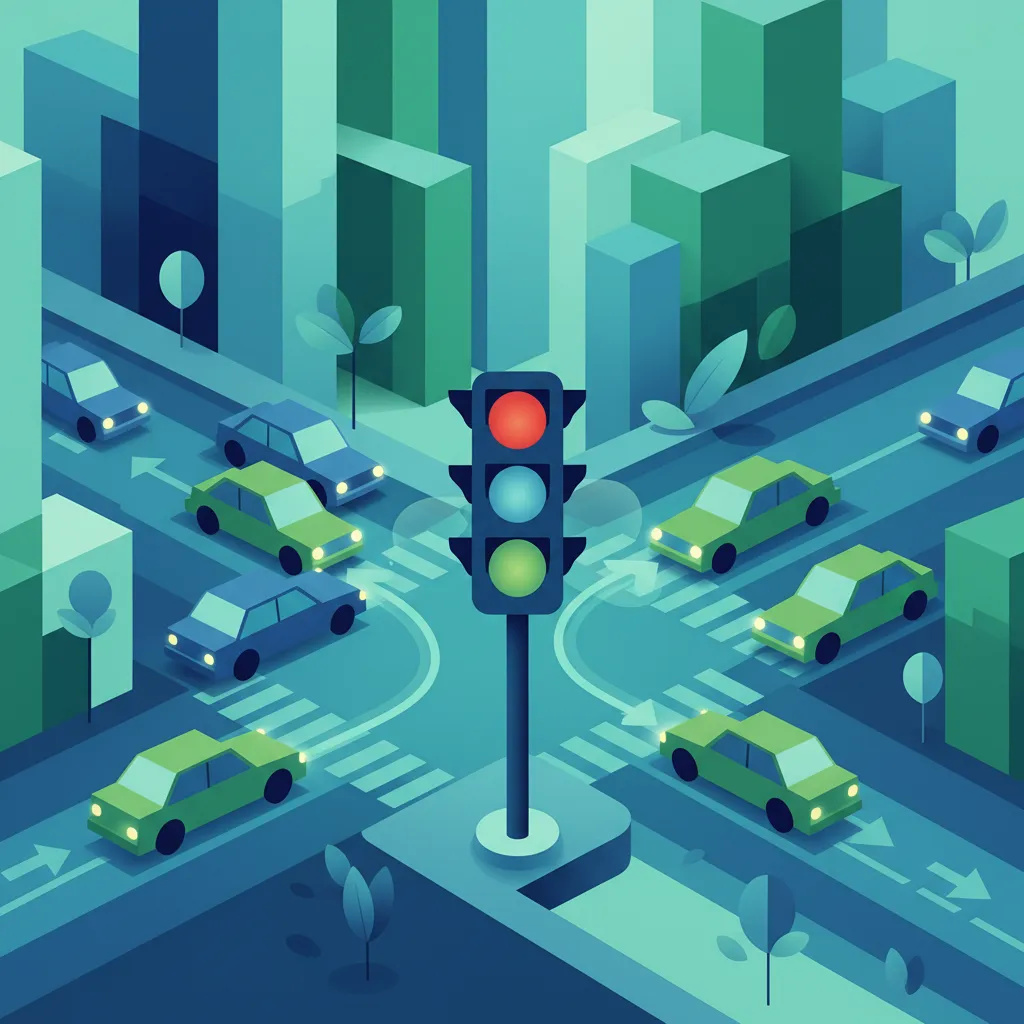
This lesson dissects the three-color traffic light system, detailing the meaning of red, amber, and green signals, including flashing lights and directional arrows. It explains how signal timing impacts moped riders and the legal requirement to obey all signals at intersections. Proper interpretation is crucial for navigating signalized junctions safely and avoiding conflicts with other traffic.
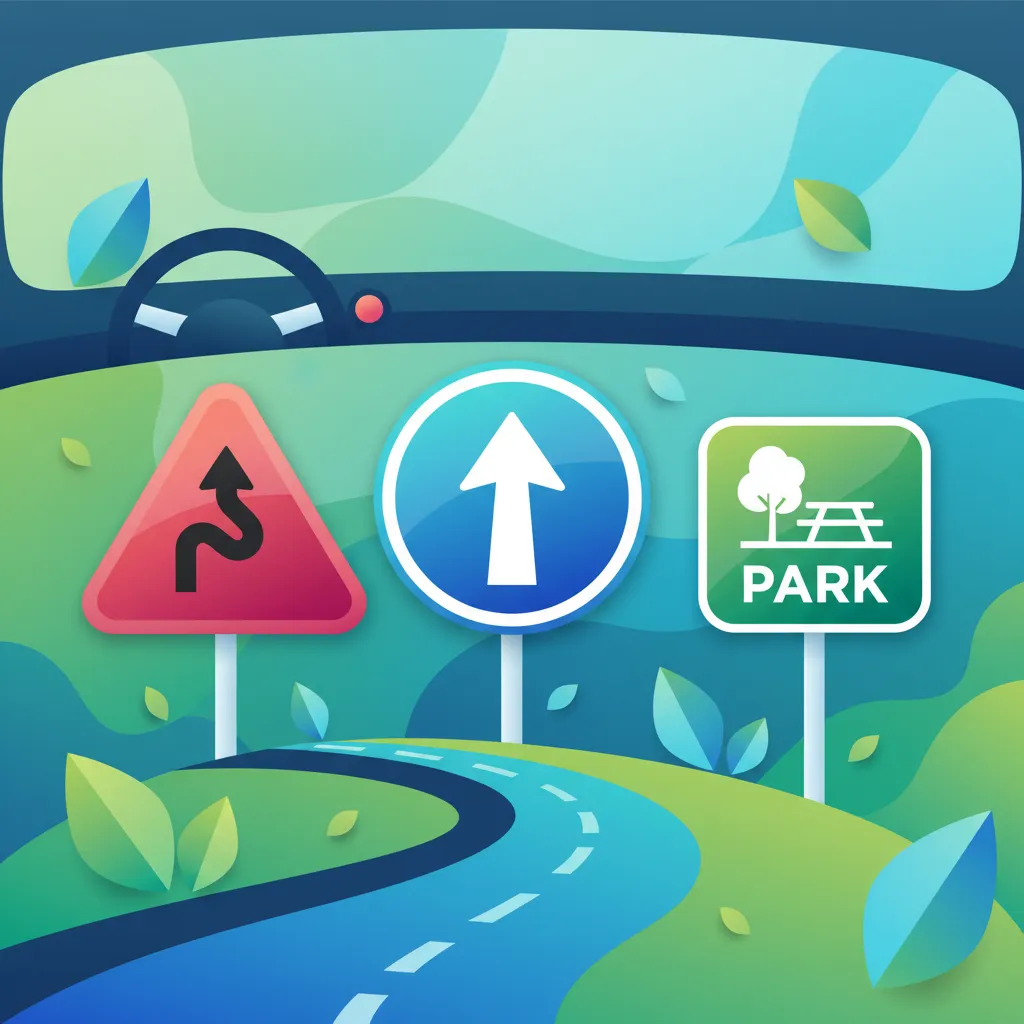
This lesson categorizes Icelandic road signs into regulatory signs that dictate mandatory actions, warning signs that alert drivers to hazards, and informational signs that provide guidance. It explains the distinctive shapes and colour schemes for each category, such as circles for prohibitions and triangles for warnings. By mastering these conventions, students will be able to interpret sign intent instantly and adapt their driving behaviour accordingly to comply with legal obligations.
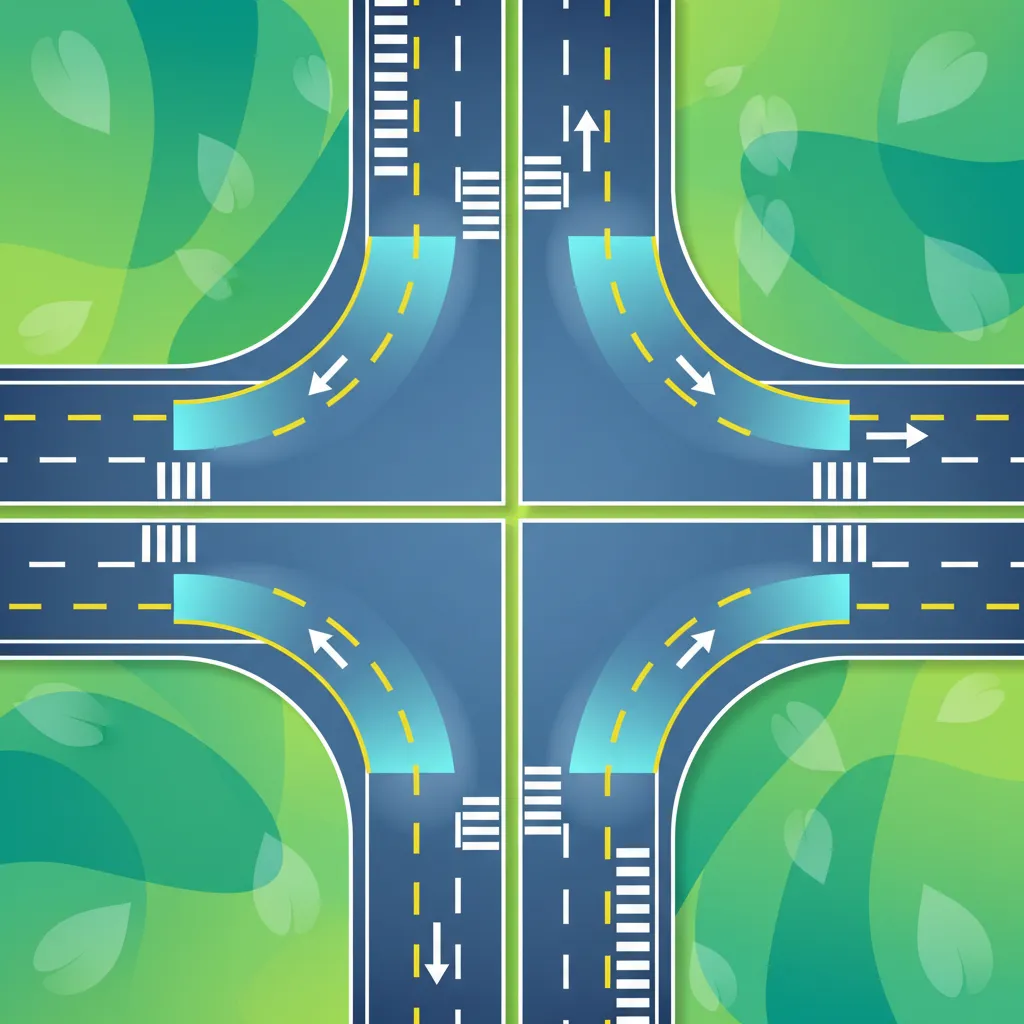
This lesson provides a comprehensive overview of the road markings found on Icelandic roads, from solid and broken lane lines to symbols indicating turning lanes and pedestrian crossings. The content details the visual meanings of each marking, such as solid lines indicating no crossing and broken lines permitting lane changes. Additionally, the lesson addresses the purpose of reflective markers and surface textures used in low-visibility or icy conditions, providing a framework for interpreting pavement cues.
This lesson focuses on interpreting road surface markings, including solid and broken lines that govern lane changes and positioning. Learners will understand the rules associated with turning arrows, pedestrian crossings, and markings for dedicated lanes. Correctly reading these markings is essential for maintaining proper lane discipline and navigating complex road layouts safely.
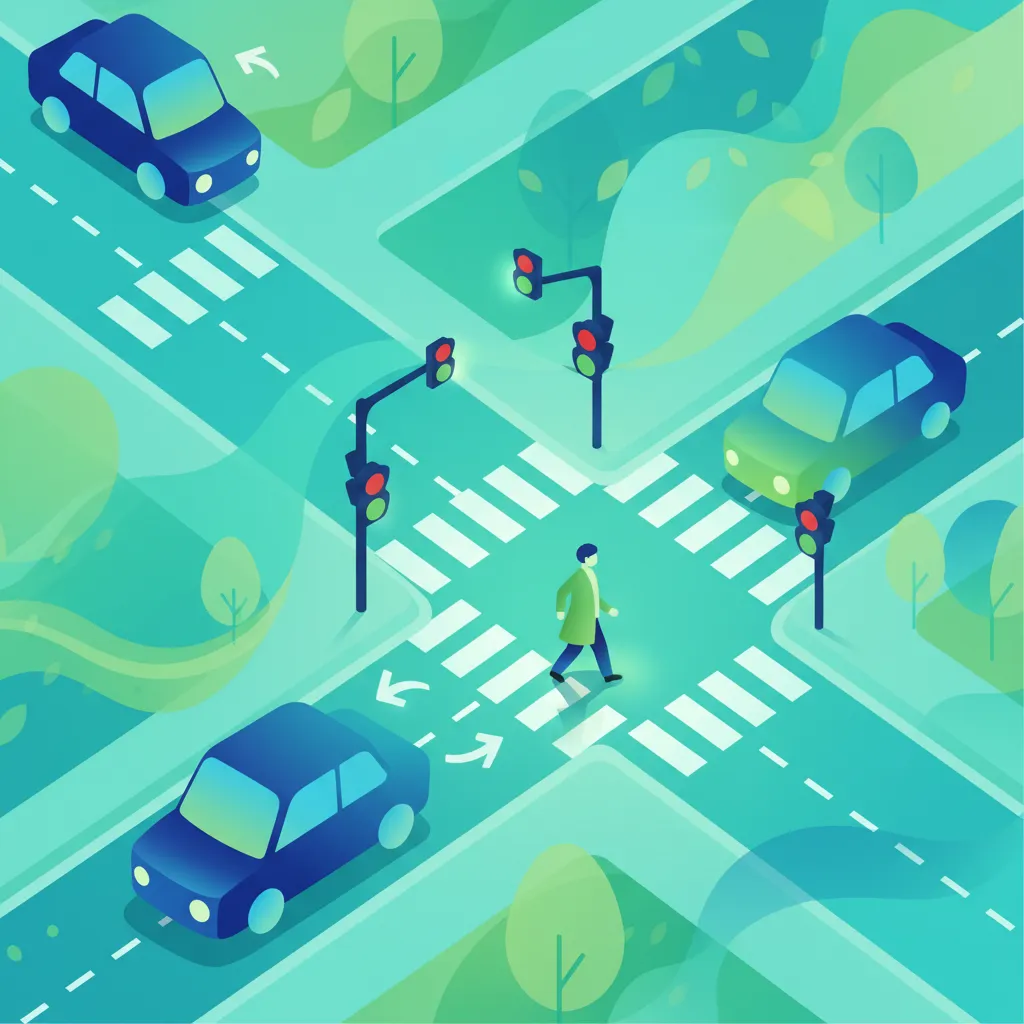
This lesson examines various intersection configurations in Iceland, including those controlled by traffic lights, four-way stops, and uncontrolled intersections without signals. Learners study how priority is determined in each scenario through signage, road markings, and the relative position of vehicles. The lesson also covers specific turning regulations and highlights the importance of assessing sight lines to ensure safe passage through complex junctions.
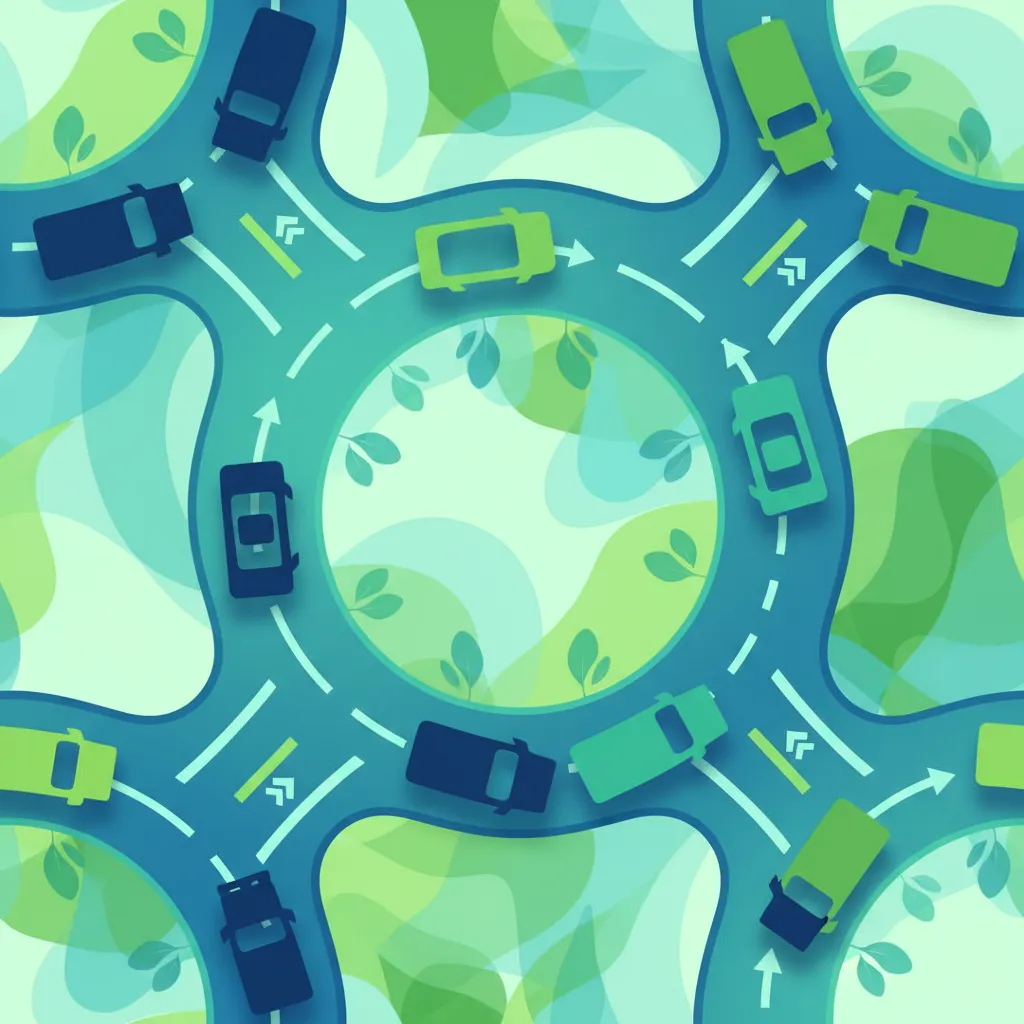
This lesson focuses on the operation of roundabouts, which are common in Icelandic towns and rural areas, and explains how drivers must yield to circulating traffic upon entry. The content covers how to interpret roundabout signage and follow lane markings to maintain correct positioning. Students also learn strategies for safe exit, handling multi-lane roundabouts, and recognizing deceptive entries that require heightened vigilance for smooth navigation.
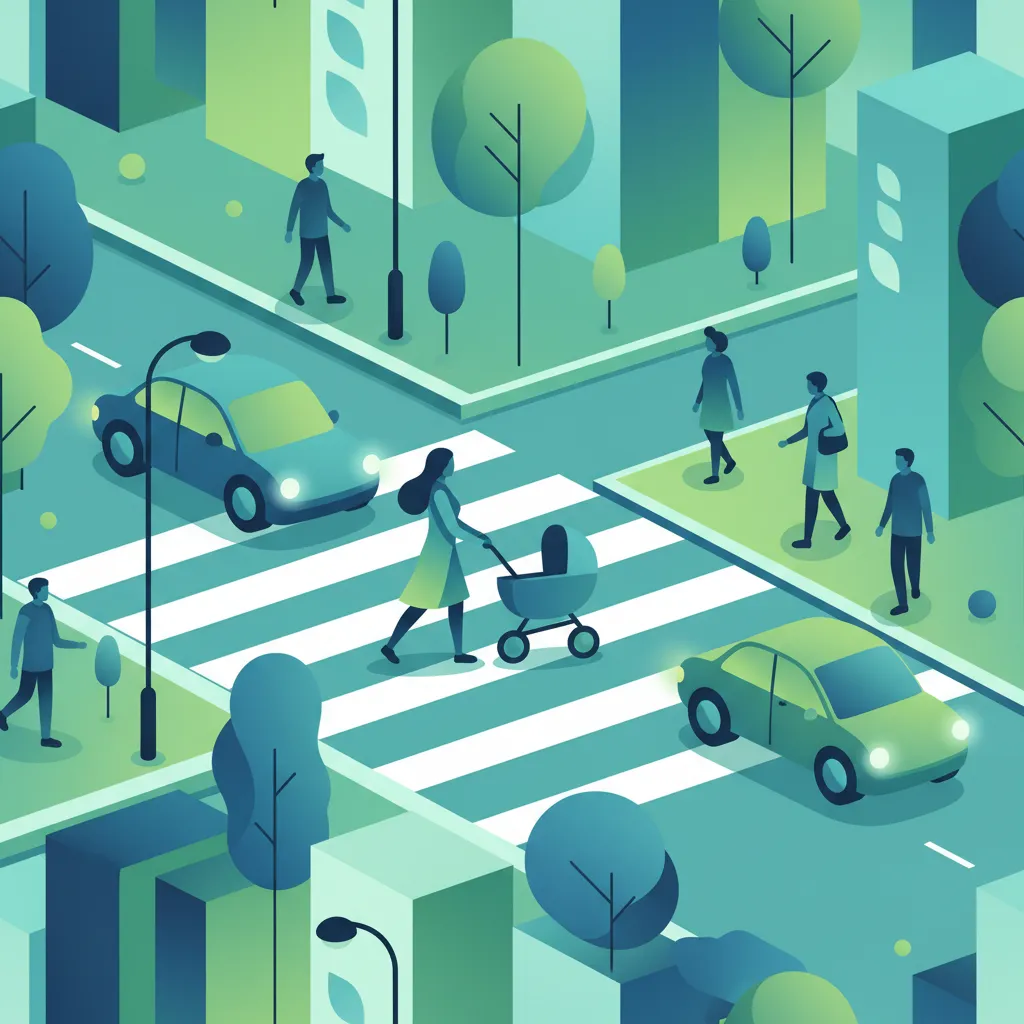
This lesson outlines the regulations governing pedestrian crossings, including zebra crossings, pedestrian traffic lights, and the driver’s obligations to yield. Learners will study how to identify crosswalk markings, interpret pedestrian signal phases, and understand the enhanced caution required in school zones and areas with high foot traffic. The content also emphasizes the need for drivers to anticipate vulnerable pedestrians and provide additional yielding in low-visibility conditions.
This lesson familiarizes learners with signs that warn of upcoming hazards, such as sharp curves, slippery surfaces, or animal crossings. It emphasizes the importance of early hazard recognition and response, which is especially critical for vulnerable moped riders. Understanding these signs allows riders to anticipate road conditions and adjust their riding strategy accordingly for increased safety.
This lesson focuses on the principles of executing safe turns, highlighting the correct use of turn signals and lane positioning before initiating a turn. Learners examine the timing required for signaling, the rules governing right-turns and left-turn yields, and the importance of checking blind spots and cyclist lanes. The lesson also addresses the concept of turning radius to ensure drivers can complete turns without compromising the safety of others on the road.
This lesson examines the broader dynamics of urban traffic flow, focusing on interactions with public transport, pedestrian islands, and traffic calming measures. Content includes the rules for navigating bus priority lanes, yielding to trams, and handling congested intersections safely. Learners also study speed restrictions in school zones and the use of pedestrian islands to manage cross-traffic, emphasizing the importance of anticipation in complex urban settings.
Learn how active traffic lights dictate priority at intersections, overriding other signs. Understand common violations and hazards, including misinterpreting flashing amber and yielding to vulnerable road users in Iceland.
This lesson examines various intersection configurations in Iceland, including those controlled by traffic lights, four-way stops, and uncontrolled intersections without signals. Learners study how priority is determined in each scenario through signage, road markings, and the relative position of vehicles. The lesson also covers specific turning regulations and highlights the importance of assessing sight lines to ensure safe passage through complex junctions.
This lesson dissects the three-color traffic light system, detailing the meaning of red, amber, and green signals, including flashing lights and directional arrows. It explains how signal timing impacts moped riders and the legal requirement to obey all signals at intersections. Proper interpretation is crucial for navigating signalized junctions safely and avoiding conflicts with other traffic.
This lesson introduces the fundamental concepts of right-of-way in Iceland, explaining the priority hierarchy that dictates when a driver must yield to others. Learners study the meaning of give-way and yield signs, the distinction between main and side roads, and how stop signs and markings affect vehicle positioning. By understanding these legal obligations, students will be able to determine correct actions at any junction, reducing the risk of collisions.
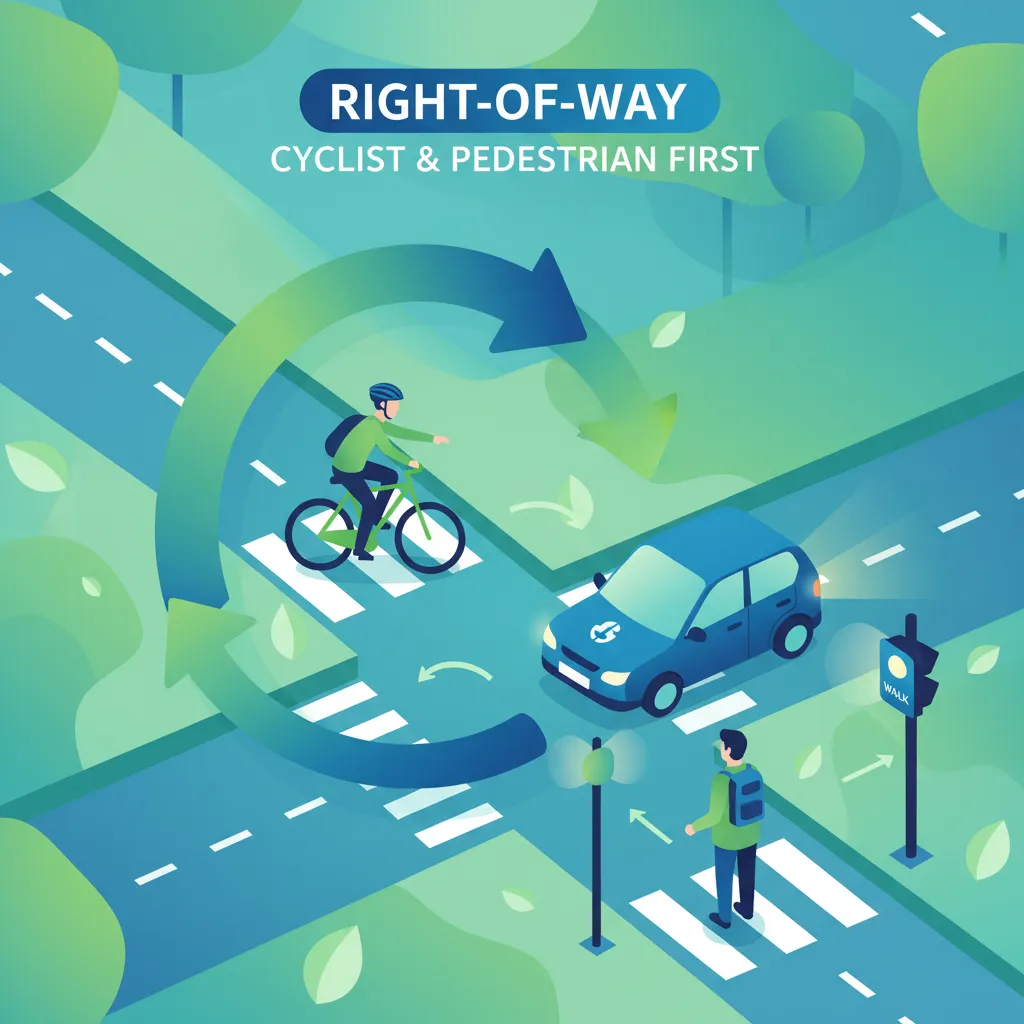
This lesson examines the legal framework defining right-of-way, distinguishing between priority and secondary roads, and detailing yielding responsibilities. It teaches riders how to assess intersections and approach safely based on Icelandic traffic law. Understanding these principles is critical for preventing collisions and ensuring smooth traffic flow at all types of junctions.
This lesson focuses on the operation of roundabouts, which are common in Icelandic towns and rural areas, and explains how drivers must yield to circulating traffic upon entry. The content covers how to interpret roundabout signage and follow lane markings to maintain correct positioning. Students also learn strategies for safe exit, handling multi-lane roundabouts, and recognizing deceptive entries that require heightened vigilance for smooth navigation.
This lesson outlines the regulations governing pedestrian crossings, including zebra crossings, pedestrian traffic lights, and the driver’s obligations to yield. Learners will study how to identify crosswalk markings, interpret pedestrian signal phases, and understand the enhanced caution required in school zones and areas with high foot traffic. The content also emphasizes the need for drivers to anticipate vulnerable pedestrians and provide additional yielding in low-visibility conditions.
This lesson examines the broader dynamics of urban traffic flow, focusing on interactions with public transport, pedestrian islands, and traffic calming measures. Content includes the rules for navigating bus priority lanes, yielding to trams, and handling congested intersections safely. Learners also study speed restrictions in school zones and the use of pedestrian islands to manage cross-traffic, emphasizing the importance of anticipation in complex urban settings.
This lesson provides a contextual overview of Iceland's traffic law hierarchy, explaining how national statutes, road codes, and local rules interact. Learners will understand the precedence of national laws and how to interpret regulations in different jurisdictions. This knowledge ensures riders can correctly apply the relevant rules in any driving scenario, ensuring consistent legal compliance.
This lesson provides a comprehensive overview of the road markings found on Icelandic roads, from solid and broken lane lines to symbols indicating turning lanes and pedestrian crossings. The content details the visual meanings of each marking, such as solid lines indicating no crossing and broken lines permitting lane changes. Additionally, the lesson addresses the purpose of reflective markers and surface textures used in low-visibility or icy conditions, providing a framework for interpreting pavement cues.

This lesson explores the conduct required at uncontrolled crossings where the right-hand rule typically applies. It emphasizes the need to reduce speed, be prepared to stop, and establish clear communication with other road users. Riders will learn to assess the situation carefully and proceed only when it is confirmed to be safe, a critical skill for rural and residential areas.
Find clear answers to common questions learners have about Traffic Light Systems and Signals. Learn how the lesson is structured, which driving theory objectives it supports, and how it fits into the overall learning path of units and curriculum progression in Iceland. These explanations help you understand key concepts, lesson flow, and exam focused study goals.
A solid amber light indicates that the red light is about to appear, and you should prepare to stop if it is safe to do so. A flashing amber light, however, means you should proceed with caution, giving way to any traffic already in the intersection or that has priority. It functions similarly to a give-way sign.
You must stop for a flashing amber light if stopping does not create a hazard or impede other traffic. Generally, it signifies a need for caution and yielding to existing traffic, much like an uncontrolled intersection or a give-way sign, rather than a mandatory stop in all circumstances.
Turning arrows indicate the specific direction(s) for which the light is controlling traffic. A green arrow means you may proceed in that direction, usually with priority over other conflicting traffic. A red arrow means you must stop and cannot proceed in that direction. A flashing amber arrow typically requires you to yield before turning.
Yes, traffic lights always take precedence over other traffic signs and general right-of-way rules when they are active. If a traffic light is operational, its signals dictate the flow of traffic. If the traffic lights are switched off or flashing, then standard priority rules and other signs apply.
If traffic lights are not functioning or are flashing red, treat the intersection as if it were uncontrolled. This means applying standard right-of-way rules, such as yielding to vehicles already on the intersection or approaching from the right on an uncontrolled intersection, and proceeding with extreme caution.
Yes, many intersections in Iceland are equipped with separate signals for pedestrians and cyclists. These are often marked with specific symbols (e.g., walking person, bicycle) and operate on different timings to ensure their safety. Always obey these dedicated signals when present.
Utilize our advanced practice set search to pinpoint the exact Icelandic driving theory topics you need to review. Filter by subject, difficulty, or question type to create a highly effective study plan and ensure you are fully prepared for your official driving licence test in Iceland.