
This lesson delves into the essential language of the road: pavement markings and symbols. Understanding these visual cues is crucial for safe navigation and for passing the Icelandic Category B driving theory exam. We'll cover everything from basic lane dividers to complex junction markings, ensuring you can interpret them correctly in all driving situations.
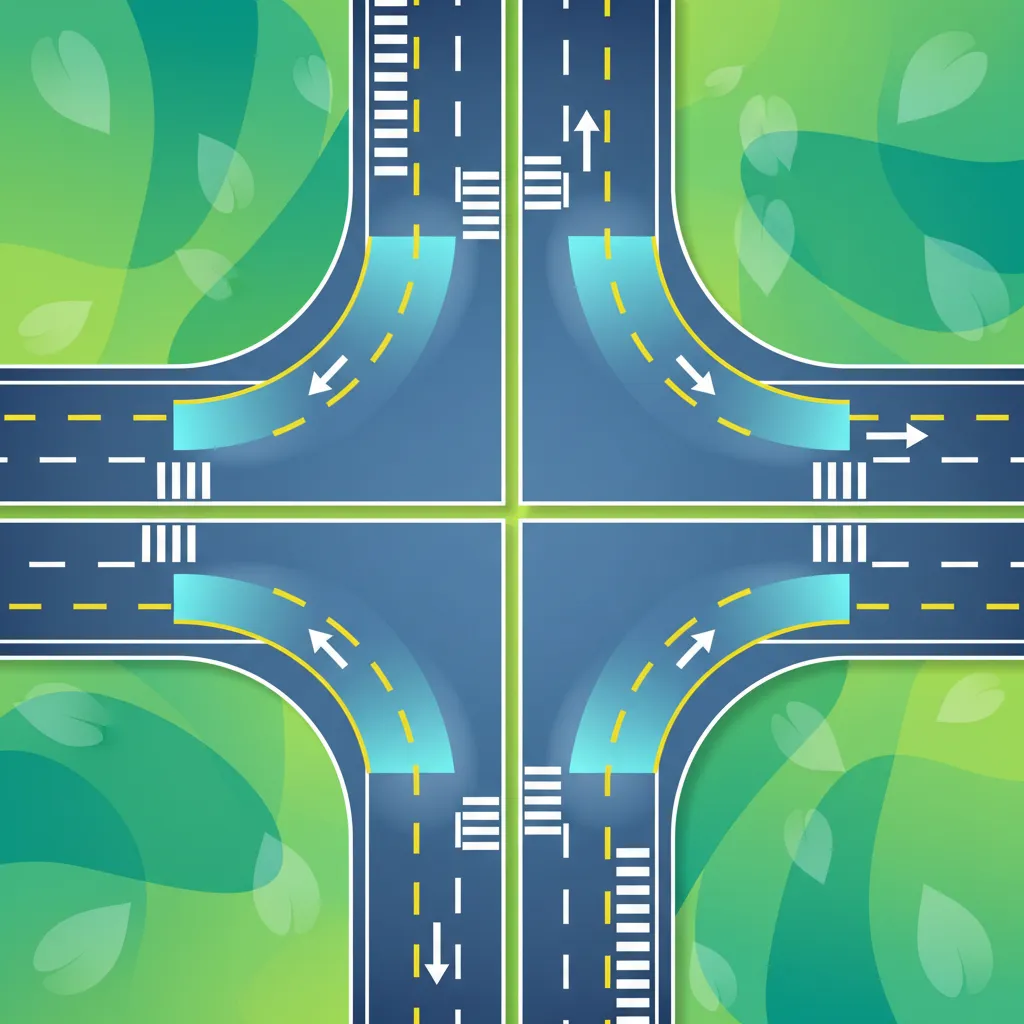
Lesson content overview
Road markings and pavement symbols serve as a vital visual language on Icelandic roads, communicating essential information, legal obligations, and safety guidance directly from the road surface to drivers. Unlike static road signs, these markings are encountered continuously, requiring instant interpretation and adherence to ensure safe and predictable traffic flow.
The markings on the road surface are not merely decorative; they are legally binding instructions designed to organize traffic, prevent collisions, and protect all road users. From delineating lanes to indicating stopping points and directing turns, a thorough understanding of these symbols is fundamental for safe driving and passing the Official Icelandic Driving License B Theory Course.
Correctly interpreting road markings is crucial for several reasons:
All road markings and pavement symbols in Iceland are defined by the Icelandic Transport Authority (Samgöngustofa) and carry legal authority under national traffic law. This means that compliance with road markings is mandatory, and violations can result in fines, demerit points, and other legal penalties, similar to disobeying traffic signs or signals. Drivers must understand that these markings are not suggestions but enforceable rules critical for maintaining order and safety on the roads.
Familiarizing yourself with all types of road markings will significantly enhance your ability to anticipate traffic movements, react appropriately to changing road conditions, and make informed driving decisions, especially under the unique challenges of Icelandic weather.
Road markings are broadly categorized based on their orientation and function. Understanding these categories helps in quickly parsing the road's visual information and responding correctly.
Longitudinal markings are lines that run parallel to the direction of travel, primarily defining lane boundaries, indicating where crossing is permitted or prohibited, and guiding drivers' positioning.
A solid white line marks a lane boundary where crossing is strictly prohibited. This type of line indicates that you must remain within your current lane.
A broken white line indicates lane boundaries where crossing is generally permitted.
Solid yellow lines are less common than white lines in Iceland but are used for specific purposes, often related to special lanes or temporary conditions.
Double solid lines consist of two adjacent solid lines, either white or yellow. This marking signifies an even stricter prohibition against crossing.
Lateral markings define the outer edges of the carriageway, separating the main travel lanes from the road shoulder, verge, or other areas not intended for regular traffic.
A solid white edge line marks the outer limit of the traversable part of the road.
A broken white edge line indicates the edge of the carriageway where occasional crossing is allowed.
Double solid yellow lines painted along the side of the road or curb often indicate a strict no-parking zone.
Transverse markings are lines or symbols that intersect the direction of travel, providing instructions for stopping, yielding, or pedestrian priority.
A stop line is a solid white line painted across the lane before a traffic signal, stop sign, or railway crossing.
Pedestrian crosswalks are marked by a series of wide white stripes or parallel lines painted across the road.
A yield line (sometimes called a give-way line) consists of a series of white triangles pointing towards the approaching vehicle.
Pavement symbols are specific shapes, icons, or text painted directly on the road surface to convey information or designate special areas, often reinforcing or supplementing road signs.
Directional arrows indicate the permitted direction(s) of travel for a specific lane. These can be straight, left-turn, right-turn, or U-turn arrows.
These symbols, often a painted bicycle icon or bus icon, sometimes accompanied by text or a solid line, designate lanes exclusively for cyclists or buses.
A parking zone symbol, typically a "P" (for parking) within a boundary box, indicates an area where parking is permitted under specific conditions.
Other symbols include those for disabled parking (wheelchair symbol), text such as "STOP" or "BUS," and additional turn lane indicators (e.g., curved arrows indicating a specific turn radius). Each symbol provides specific instructions that drivers must understand and obey.
Beyond painted lines and symbols, Icelandic roads often incorporate features designed to enhance visibility and provide tactile warnings, especially in challenging weather or low-light conditions.
Reflective markers, also known as road studs or cat's eyes, are small, raised devices embedded in the road surface. They contain reflective elements that bounce light back towards the driver, making them highly visible at night, in fog, rain, or when snow obscures painted lines.
White reflective markers are typically used to delineate lane lines and the center line on multi-lane roads.
Yellow or amber reflective markers often define road edges, especially on rural or gravel roads, or are used to highlight curves or hazard areas.
Certain physical textures cut or formed into the pavement surface provide additional sensory feedback to drivers.
Rumble strips are raised or grooved patterns on the road surface, typically along the shoulder or centerline.
Grooved pavement features parallel cuts or grooves in the road surface.
Adhering to road markings is a fundamental aspect of safe and legal driving in Iceland. Here are some key regulations:
Many traffic incidents and violations stem from a misunderstanding or disregard of road markings.
Crossing a solid white line to overtake: This is strictly prohibited and highly dangerous, especially on two-lane roads with oncoming traffic.
Ignoring a broken line when a lane is marked for turning only: A broken line may permit crossing, but if a directional arrow indicates "left turn only," you must turn left.
Driving across yellow edge markers on a gravel road: This means you are leaving the designated roadway, risking loss of control on unstable surfaces or damaging your vehicle.
Proceeding straight through a lane with a "right turn only" symbol: This causes confusion and potential collisions with vehicles correctly using the turn lane.
Failing to yield at a marked pedestrian crosswalk: This is a serious offense that puts pedestrians at severe risk.
Driving into a bike lane during rush hour: This endangers cyclists and obstructs their designated path.
Using rumble strips as a lane or shoulder: Rumble strips are warnings, not additional driving space. Driving on them can reduce your control and indicate you are drifting.
The interpretation and visibility of road markings can significantly change depending on environmental and road conditions.
Iceland's climate presents unique challenges for road markings.
Do not assume that an obscured road marking means it no longer applies. The underlying rules still stand, and you must use alternative cues or exercise extreme caution.
Road markings and pavement symbols are an indispensable part of the traffic control system in Iceland, providing continuous, legally binding instructions to drivers. From understanding the difference between a solid and a broken white line to obeying directional arrows and yielding to pedestrians at crosswalks, a comprehensive grasp of these visual cues is paramount for safety, efficiency, and compliance with traffic law.
Your ability to correctly interpret and react to road markings will be thoroughly tested in your Official Icelandic Driving License B Theory Course exam. Beyond the exam, this knowledge forms the foundation for responsible and safe driving throughout your driving career in Iceland, helping you navigate diverse road conditions and ensure the safety of yourself and others.
Road markings and pavement symbols in Iceland are legally binding instructions that organize traffic and protect all road users. They are categorized as longitudinal markings for lane guidance, lateral markings for road edges, transverse markings for intersections and crossings, and pavement symbols for specific uses like bus lanes or parking zones. In Iceland's challenging weather, reflective markers and surface textures like rumble strips provide critical safety support when painted lines are obscured by snow, rain, or darkness. Understanding these visual cues is essential for safe driving and passing the Category B theory exam.
A short set of high-value points that capture the most important learning from this lesson.
Solid white lines prohibit crossing; broken white lines allow crossing when safe
All road markings in Iceland carry legal authority under Samgöngustofa and must be obeyed
Pedestrians have priority at marked crosswalks and drivers must yield
Reflective markers (road studs) become the primary lane guide when snow obscures painted lines
Directional arrows in a lane are mandatory—once in a turn-only lane, you must turn
Explore all units and lessons included in this driving theory course.
A broken line permits lane changes; a solid line (single or double) prohibits them
Double solid lines indicate stricter prohibition than a single solid line
Yellow or amber markers often mark road edges or warn of curves, especially on rural roads
Pavement symbols like the bicycle icon, bus icon, or 'P' designate exclusive-use lanes or parking zones
Rumble strips are warnings only—never treat them as additional driving space
Crossing a solid white line to overtake, especially on two-lane roads with oncoming traffic
Proceeding straight through a lane marked with a directional arrow indicating only left or right turn
Failing to yield to pedestrians who are already on or entering a marked crosswalk
Driving into bike lanes or bus lanes during restricted hours, endangering cyclists or obstructing public transport
Assuming that obscured road markings no longer apply—rules persist even when visibility is reduced
Lesson content overview
A short set of high-value points that capture the most important learning from this lesson.
Solid white lines prohibit crossing; broken white lines allow crossing when safe
All road markings in Iceland carry legal authority under Samgöngustofa and must be obeyed
Pedestrians have priority at marked crosswalks and drivers must yield
Reflective markers (road studs) become the primary lane guide when snow obscures painted lines
Directional arrows in a lane are mandatory—once in a turn-only lane, you must turn
Explore all units and lessons included in this driving theory course.
A broken line permits lane changes; a solid line (single or double) prohibits them
Double solid lines indicate stricter prohibition than a single solid line
Yellow or amber markers often mark road edges or warn of curves, especially on rural roads
Pavement symbols like the bicycle icon, bus icon, or 'P' designate exclusive-use lanes or parking zones
Rumble strips are warnings only—never treat them as additional driving space
Crossing a solid white line to overtake, especially on two-lane roads with oncoming traffic
Proceeding straight through a lane marked with a directional arrow indicating only left or right turn
Failing to yield to pedestrians who are already on or entering a marked crosswalk
Driving into bike lanes or bus lanes during restricted hours, endangering cyclists or obstructing public transport
Assuming that obscured road markings no longer apply—rules persist even when visibility is reduced
Explore search topics learners often look for when studying Road Markings and Pavement Symbols. These topics reflect common questions about road rules, driving situations, safety guidance, and lesson level theory preparation for learners in Iceland.
Browse additional driving theory lessons that cover connected traffic rules, road signs, and common driving situations related to this topic. Improve your understanding of how different rules interact across everyday traffic scenarios.
Understand the meaning and legal implications of all types of road markings, including lane lines, stop lines, pedestrian crossings, and pavement symbols. Essential theory for safe driving.
This lesson focuses on interpreting road surface markings, including solid and broken lines that govern lane changes and positioning. Learners will understand the rules associated with turning arrows, pedestrian crossings, and markings for dedicated lanes. Correctly reading these markings is essential for maintaining proper lane discipline and navigating complex road layouts safely.
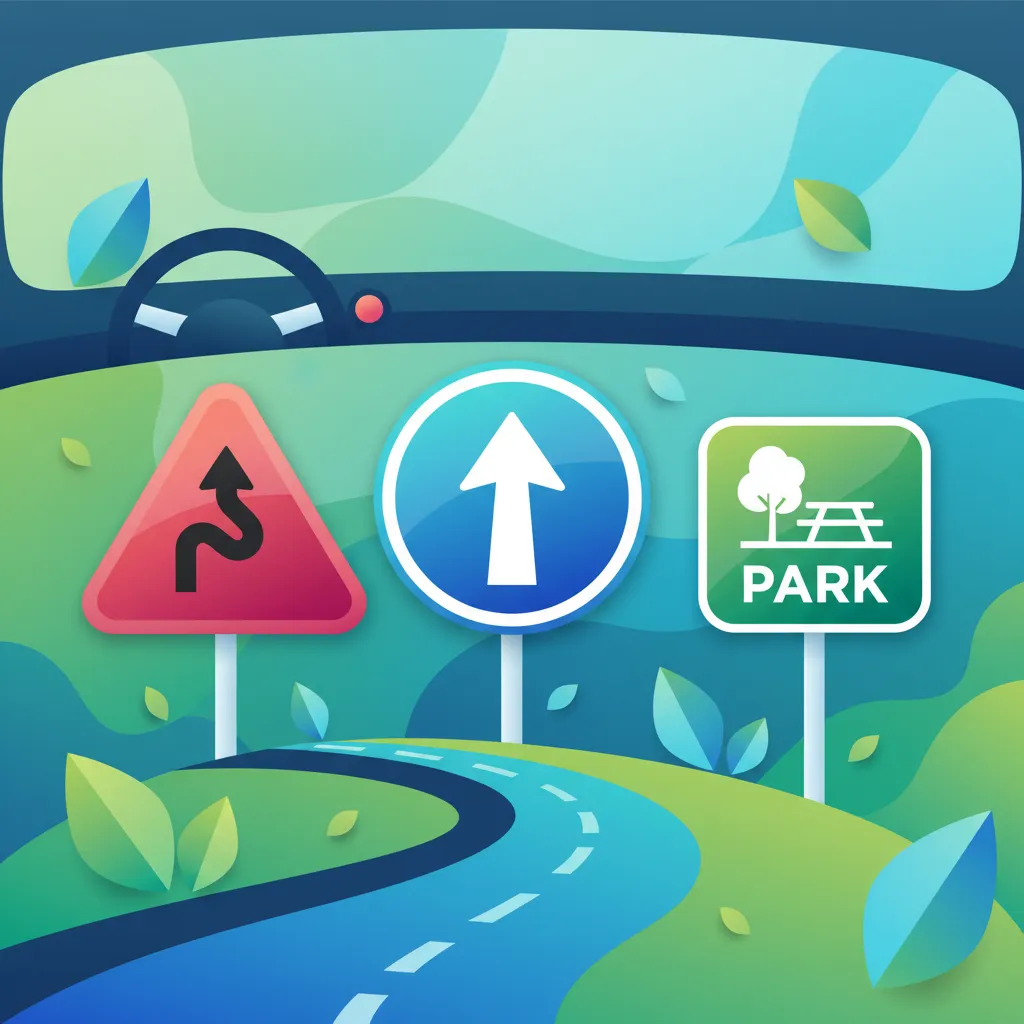
This lesson categorizes Icelandic road signs into regulatory signs that dictate mandatory actions, warning signs that alert drivers to hazards, and informational signs that provide guidance. It explains the distinctive shapes and colour schemes for each category, such as circles for prohibitions and triangles for warnings. By mastering these conventions, students will be able to interpret sign intent instantly and adapt their driving behaviour accordingly to comply with legal obligations.
This lesson explores the proper use of lane markings to maintain correct vehicle centering and adherence to the prescribed traffic flow direction in Iceland. The content describes how to interpret solid and broken lines, maintain safe following distances within a lane, and avoid unintended lane departures. Learners also examine the legal prohibitions on using the road shoulder for general travel, ensuring compliance with lane discipline rules for overall traffic safety.
This lesson familiarizes learners with signs that warn of upcoming hazards, such as sharp curves, slippery surfaces, or animal crossings. It emphasizes the importance of early hazard recognition and response, which is especially critical for vulnerable moped riders. Understanding these signs allows riders to anticipate road conditions and adjust their riding strategy accordingly for increased safety.

This lesson dissects the three-color traffic light system, detailing the meaning of red, amber, and green signals, including flashing lights and directional arrows. It explains how signal timing impacts moped riders and the legal requirement to obey all signals at intersections. Proper interpretation is crucial for navigating signalized junctions safely and avoiding conflicts with other traffic.
This lesson focuses on the operation of traffic lights in Iceland, describing standard three-phase cycles (red, amber, green) and variations such as flashing amber for yielding. Learners will also explore dedicated signals for pedestrians, cyclists, and turning movements, including arrow indications. The lesson explains how signal timing integrates with right-of-way rules at intersections, ensuring drivers can interpret and respond to each light state to maintain safety.
This lesson focuses on the operation of roundabouts, which are common in Icelandic towns and rural areas, and explains how drivers must yield to circulating traffic upon entry. The content covers how to interpret roundabout signage and follow lane markings to maintain correct positioning. Students also learn strategies for safe exit, handling multi-lane roundabouts, and recognizing deceptive entries that require heightened vigilance for smooth navigation.

This lesson outlines the regulations governing pedestrian crossings, including zebra crossings, pedestrian traffic lights, and the driver’s obligations to yield. Learners will study how to identify crosswalk markings, interpret pedestrian signal phases, and understand the enhanced caution required in school zones and areas with high foot traffic. The content also emphasizes the need for drivers to anticipate vulnerable pedestrians and provide additional yielding in low-visibility conditions.
This lesson introduces the fundamental concepts of right-of-way in Iceland, explaining the priority hierarchy that dictates when a driver must yield to others. Learners study the meaning of give-way and yield signs, the distinction between main and side roads, and how stop signs and markings affect vehicle positioning. By understanding these legal obligations, students will be able to determine correct actions at any junction, reducing the risk of collisions.
This lesson examines the calculation of safe following distances using the two-second rule and formulas that factor in vehicle speed and road conditions. The content explains how reaction time, weather conditions like ice or rain, and vehicle load affect braking zones. Students also learn specific techniques for stopping on hills and how to avoid tailgating, thereby maintaining sufficient safety margins under all Icelandic weather conditions.
Learn how to navigate using road markings, reflective markers, and surface textures in snow, ice, rain, and fog. Focuses on adapting interpretation to challenging conditions.
This lesson focuses on interpreting road surface markings, including solid and broken lines that govern lane changes and positioning. Learners will understand the rules associated with turning arrows, pedestrian crossings, and markings for dedicated lanes. Correctly reading these markings is essential for maintaining proper lane discipline and navigating complex road layouts safely.
This lesson addresses the challenges of driving in rain and fog, focusing on strategies to maintain visibility and vehicle control. Learners will explore the correct use of windshield wipers, defoggers, and appropriate headlight settings, including when to use fog lights. The content also covers the increased risk of hydroplaning, the importance of adjusting speed in wet conditions, and the need to extend following distances to account for longer stopping distances.
This lesson familiarizes learners with signs that warn of upcoming hazards, such as sharp curves, slippery surfaces, or animal crossings. It emphasizes the importance of early hazard recognition and response, which is especially critical for vulnerable moped riders. Understanding these signs allows riders to anticipate road conditions and adjust their riding strategy accordingly for increased safety.
This lesson categorizes Icelandic road signs into regulatory signs that dictate mandatory actions, warning signs that alert drivers to hazards, and informational signs that provide guidance. It explains the distinctive shapes and colour schemes for each category, such as circles for prohibitions and triangles for warnings. By mastering these conventions, students will be able to interpret sign intent instantly and adapt their driving behaviour accordingly to comply with legal obligations.
This lesson dissects the three-color traffic light system, detailing the meaning of red, amber, and green signals, including flashing lights and directional arrows. It explains how signal timing impacts moped riders and the legal requirement to obey all signals at intersections. Proper interpretation is crucial for navigating signalized junctions safely and avoiding conflicts with other traffic.
This lesson focuses on the regulations governing highland travel and off-road restrictions, including environmental protections that prohibit off-road driving in certain zones. The lesson details how to interpret highland road signage, understand restrictions related to wildlife crossings like reindeer and sheep, and adhere to road width management guidelines. Learners are also instructed on using emergency contact points in sparsely populated regions.
This lesson examines the calculation of safe following distances using the two-second rule and formulas that factor in vehicle speed and road conditions. The content explains how reaction time, weather conditions like ice or rain, and vehicle load affect braking zones. Students also learn specific techniques for stopping on hills and how to avoid tailgating, thereby maintaining sufficient safety margins under all Icelandic weather conditions.
This lesson outlines the speed limits applicable to various road types in Iceland, from urban streets to rural highways and special zones like tunnels. Learners will interpret speed sign markings, understand variable speed limits that adjust for weather, and recognize when temporary speed reductions are enforced. The content also covers speed monitoring devices and the legal consequences of exceeding limits, emphasizing speed awareness in all driving contexts.

This lesson examines how strong winds and varying light conditions affect vehicle handling and safety, including techniques for maintaining stability under cross-winds and assessing gust intensity. The content also explains proper headlight usage during daylight, dusk, and nighttime, addressing glare reduction strategies and when to employ high-beam headlights. By mastering these concepts, drivers can navigate Icelandic weather and lighting challenges confidently and safely.
Find clear answers to common questions learners have about Road Markings and Pavement Symbols. Learn how the lesson is structured, which driving theory objectives it supports, and how it fits into the overall learning path of units and curriculum progression in Iceland. These explanations help you understand key concepts, lesson flow, and exam focused study goals.
A solid white line generally indicates that you should not cross it, prohibiting lane changes or overtaking. A broken white line, however, permits lane changes and overtaking when safe to do so. Always pay attention to accompanying signs or other markings that might modify these rules.
Road markings often complement traffic lights and priority rules. For example, markings on the road can guide you into the correct lane for a specific traffic light direction, or indicate priority at junctions where traffic lights are not present. They work together to manage traffic flow and ensure safety.
Yes, Iceland uses specific road markings to denote pedestrian crossings (like zebra crossings) and dedicated cycle lanes. Drivers must be particularly aware of these markings and yield to pedestrians and cyclists as required by law, especially at designated crossing points.
Reflective markers (road studs) are used to delineate lanes, especially in low-visibility conditions like fog, rain, or at night. Red studs typically mark the edge of the carriageway, white studs the lane lines, and green studs often indicate the edge of the road near verges or cycle lanes. They are crucial for maintaining lane discipline.
Yes, while basic principles remain the same, the complexity and type of road markings can vary. Urban areas often feature more detailed markings for lanes, junctions, and pedestrian/cycle facilities. Rural roads might have simpler markings focused on lane delineation and hazard warnings. Always adapt your interpretation to the specific road environment.
Utilize our advanced practice set search to pinpoint the exact Icelandic driving theory topics you need to review. Filter by subject, difficulty, or question type to create a highly effective study plan and ensure you are fully prepared for your official driving licence test in Iceland.