
This lesson teaches you how to strategically place your motorcycle within a lane to maximize your visibility to other drivers. You will explore how to create necessary safety buffers from hazards and adapt your position based on varying traffic conditions, a critical skill for both your theory exam and real-world safety.

Lesson content overview
Mastering the art of road positioning is fundamental for any motorcyclist seeking to improve their safety, visibility, and overall control on Italian roads. This lesson, part of your Italian Driving License Theory Course for Motorcycle Categories A1, A2, & A, delves into how strategic placement within your lane can proactively reduce risks, enhance your ability to see hazards, and ensure other road users see you. Effective road positioning is not static; it is a dynamic skill that adapts to ever-changing traffic, road conditions, and potential dangers.
Road positioning goes beyond simply staying between the white lines. It's a proactive safety measure that involves consciously choosing where to place your motorcycle within your lane to achieve multiple objectives: maximizing your visibility to others, optimizing your view of the road ahead, and creating a critical buffer zone around your motorcycle. This dynamic practice is crucial for reducing collision risk and providing space for evasive maneuvers when necessary.
Proper positioning relies heavily on the principle of "see and be seen." Motorcyclists are smaller than most other vehicles, making them inherently less visible. By strategically adjusting your position, you can compensate for this disadvantage, ensuring you are in the sightlines of other drivers while also affording yourself the best possible view of potential hazards. This lesson will explore the core principles that guide optimal road positioning.
Several core principles underpin effective road positioning, working together to create a safer riding environment. Adhering to these principles transforms riding from a passive activity into an active, defensive strategy.
The deliberate selection of a position within the lane that offers the greatest exposure of the motorcycle and rider to the sightlines of other road users.
This principle is about placing your motorcycle where it is most likely to be seen by other drivers, especially those who might be turning, changing lanes, or emerging from junctions. Many collisions involving motorcycles occur because other drivers "didn't see" the motorcycle. By positioning yourself prominently, you reduce the chances of surprise interactions.
For instance, riding too close to the curb or the far edge of a lane can significantly reduce your lateral visibility to traffic entering from side roads or roundabouts. A more central or slightly offset position often ensures you are within a wider range of other drivers' peripheral vision and direct line of sight.
The unobstructed area directly in front of the motorcycle, allowing for early detection of hazards, bounded by lane edges and any immediate obstacles.
Your "sight triangle" is the crucial zone ahead of your motorcycle that must remain clear of obstructions. This invisible triangle allows you to scan for potential hazards, read the road surface, and observe the behavior of other vehicles and vulnerable road users well in advance. Positioning yourself behind a large vehicle, such as a truck or bus, will severely restrict your sight triangle, delaying your reaction time to sudden stops, lane changes, or unforeseen obstacles.
To maintain a clear sight triangle, you might need to adjust your lateral position within the lane or increase your following distance. This continuous adjustment ensures you always have an adequate view to detect obstacles, traffic lights, and road signs early, allowing you sufficient time to adjust your speed or trajectory.
Maintaining a safe lateral distance from potential hazards such as road edges, fixed obstacles (e.g., walls, parked cars), and other moving vehicles.
Buffer space is your personal safety margin. It's the physical room you create around your motorcycle that can be used for evasive action if an unexpected situation arises. This lateral space is just as important as the longitudinal following distance. Riding too close to the edge of the road, to parked cars, or directly alongside other vehicles, significantly reduces your options if you need to swerve or adjust your path quickly.
For example, maintaining a buffer from parked cars allows you to react to an opening car door or a pedestrian stepping out. On a two-way road, creating a buffer from the centerline can give you space if an oncoming vehicle drifts slightly into your lane. The goal is always to have an escape route or an area into which you can safely maneuver.
Maintaining a lane position consistent with traffic flow expectations, which helps other road users anticipate the motorcycle’s path and intentions.
Being predictable is a cornerstone of defensive riding. When your lane positioning is consistent and logical, other drivers can more easily anticipate your movements. Erratic or ambiguous positioning, such as straddling lane lines unnecessarily or making sudden, unannounced shifts, can confuse other road users and increase the risk of collisions.
While dynamic adjustment is crucial, it must be performed predictably. This means signaling your intentions clearly and making smooth, deliberate movements. Staying within the expected "rib" of the lane and only deviating when necessary (e.g., to create a buffer or enhance visibility) reinforces your predictability.
The continuous reassessment and adaptation of your lane position in response to changing traffic density, road geometry, environmental conditions, and potential hazards.
There is no single "ideal" road position that applies to all situations. Optimal road positioning is a dynamic skill, requiring constant observation and adjustment. Your position should fluidly change based on factors such as:
A skilled rider continuously scans the environment and subtly adjusts their position to maintain maximum visibility, a clear sight triangle, and adequate buffer space. This proactive approach allows you to anticipate and respond safely to evolving situations.
Understanding the core principles allows us to apply them in various riding scenarios. Each situation demands a slightly different approach to lane positioning.
On a straight road, particularly in multi-lane traffic, maintaining a central position within your chosen lane is often the most predictable and visible option. This places you squarely in the view of drivers ahead and behind you, and provides a decent buffer on both sides.
On single-lane, two-way roads (strade a doppio senso di marcia), especially those without painted centerlines, it's often beneficial to position your motorcycle slightly to the left of the lane center. This improves your visibility to oncoming traffic and gives you more room to react if an oncoming vehicle drifts towards the centerline. However, always ensure you remain well within your own lane and do not encroach on the opposing traffic lane.
Intersections (incroci) and roundabouts (rotatorie) are high-risk areas where visibility is paramount. When approaching and navigating these points, position your motorcycle to maximize your visibility to all potential traffic, particularly vehicles approaching from side roads or those already in the roundabout.
Typically, staying towards the center or slightly left of center in your lane provides the best vantage point and ensures you are easily seen by drivers waiting to enter or exit. Avoid hugging the curb, as this can make you less visible to turning traffic and may also lead drivers to mistakenly assume you are preparing to turn right or are inviting them to cut in front of you.
When preparing to overtake another vehicle, your initial positioning is critical. Before moving into the adjacent lane, position yourself to ensure a clear view ahead of the vehicle you intend to pass. This often means moving slightly to the right of your lane (in countries with right-hand traffic like Italy) to get a better sightline past the vehicle. Once you commit to the overtake, fully occupy the adjacent lane, signal clearly, and return to your original lane only when you can see the overtaken vehicle in your mirrors with a safe buffer.
When being overtaken, maintain a steady, predictable course, usually in the center of your lane. This gives the overtaking vehicle ample space and avoids any sudden movements that could lead to a collision.
Parked vehicles (veicoli in sosta) pose a significant hazard due to the potential for opening doors (portiere aperte) or pedestrians (pedoni) emerging suddenly. When riding past parked cars, maintain a generous buffer space by positioning yourself at least one meter away, if road width allows. This provides you with an escape route and time to react. Similarly, create buffer space from other roadside hazards like construction zones, drainage grates, or debris.
While the Codice della Strada (Italian Road Code) provides specific rules for lane usage, optimal safety positioning often goes beyond minimum legal requirements, incorporating best practices for defensive riding.
The Codice della Strada mandates that vehicles, including motorcycles, must remain within the boundaries of the lane they occupy. Straddling lane markings is generally prohibited, except in specific situations like preparing to overtake or navigate obstacles.
Understanding common mistakes can help you actively prevent them and enhance your safety.
Optimal road positioning is dynamic and must be continually adapted based on changing circumstances.
The relationship between your road positioning choices and your safety is direct and undeniable.
Optimal road positioning is a crucial component of defensive motorcycle riding. It is a dynamic skill that requires continuous assessment and adjustment based on the riding environment. By consciously applying the principles of visibility maximization, maintaining a clear sight triangle, creating ample buffer space, ensuring predictability, and performing dynamic adjustments, you significantly enhance your safety and reduce collision risk. Always remember that your goal is to "see and be seen" while maintaining the flexibility to react safely to any situation. Adhering to these practices, alongside the rules of the Codice della Strada, empowers you to be a more confident, responsible, and safe motorcyclist on Italian roads.
Optimal road positioning is a dynamic safety skill that requires motorcyclists to continuously adjust their lane placement based on visibility needs, hazard avoidance, and traffic conditions. The core principles—maximizing visibility to others, maintaining a clear sight triangle, creating buffer space from dangers, and ensuring predictable movements—work together to reduce collision risk. In Italy, these skills align with Codice della Strada requirements while exceeding minimum legal standards through defensive riding practices. Applying these principles across different road types (autostrade, urban streets, mountain roads) and varying conditions (weather, traffic density) allows riders to maintain consistent safety margins and respond effectively to evolving hazards.
A short set of high-value points that capture the most important learning from this lesson.
Lane positioning is a proactive safety tool that constantly adapts to traffic, road conditions, and potential hazards.
The 'see and be seen' principle requires placing your motorcycle where other drivers can most easily notice you, especially at junctions and roundabouts.
Maintaining a clear sight triangle ahead gives you early hazard detection and sufficient reaction time.
Buffer space around your motorcycle provides room for evasive maneuvers if unexpected dangers arise.
Optimal positioning on two-way Italian roads (strade a doppio senso) means staying slightly left of lane center to improve visibility to oncoming traffic.
Explore all units and lessons included in this driving theory course.
Ride centrally within your lane on straight roads; stay slightly left on two-way roads for better oncoming visibility.
Avoid the curb edge and parked cars—maintain at least one meter buffer when road width allows.
Intersections and roundabouts require central or slightly left positioning to maximize visibility from all directions.
Your position must change continuously based on road type, weather, traffic density, and approaching hazards.
Being predictable means staying within lane boundaries except when intentionally adjusting for safety or overtaking.
Riding too close to the curb reduces your visibility to oncoming traffic and eliminates lateral buffer space.
Straddling lane lines unnecessarily creates ambiguity for other drivers about your intended path.
Hugging parked cars leaves no escape route if a door opens or a pedestrian steps out unexpectedly.
Failing to adjust position when approaching junctions can place you in another driver's blind spot.
Maintaining a static position regardless of conditions diminishes your ability to respond to specific hazards.
Lesson content overview
A short set of high-value points that capture the most important learning from this lesson.
Lane positioning is a proactive safety tool that constantly adapts to traffic, road conditions, and potential hazards.
The 'see and be seen' principle requires placing your motorcycle where other drivers can most easily notice you, especially at junctions and roundabouts.
Maintaining a clear sight triangle ahead gives you early hazard detection and sufficient reaction time.
Buffer space around your motorcycle provides room for evasive maneuvers if unexpected dangers arise.
Optimal positioning on two-way Italian roads (strade a doppio senso) means staying slightly left of lane center to improve visibility to oncoming traffic.
Explore all units and lessons included in this driving theory course.
Ride centrally within your lane on straight roads; stay slightly left on two-way roads for better oncoming visibility.
Avoid the curb edge and parked cars—maintain at least one meter buffer when road width allows.
Intersections and roundabouts require central or slightly left positioning to maximize visibility from all directions.
Your position must change continuously based on road type, weather, traffic density, and approaching hazards.
Being predictable means staying within lane boundaries except when intentionally adjusting for safety or overtaking.
Riding too close to the curb reduces your visibility to oncoming traffic and eliminates lateral buffer space.
Straddling lane lines unnecessarily creates ambiguity for other drivers about your intended path.
Hugging parked cars leaves no escape route if a door opens or a pedestrian steps out unexpectedly.
Failing to adjust position when approaching junctions can place you in another driver's blind spot.
Maintaining a static position regardless of conditions diminishes your ability to respond to specific hazards.
Explore search topics learners often look for when studying Optimal Road Positioning for Visibility and Safety. These topics reflect common questions about road rules, driving situations, safety guidance, and lesson level theory preparation for learners in Italy.
Browse additional driving theory lessons that cover connected traffic rules, road signs, and common driving situations related to this topic. Improve your understanding of how different rules interact across everyday traffic scenarios.
Explore advanced principles of road positioning beyond basic visibility. Learn to adapt your motorcycle's lane position dynamically to navigate complex Italian traffic scenarios, ensure optimal sightlines, and create crucial buffer spaces for enhanced safety and hazard avoidance.

This lesson teaches riders how to strategically position their vehicle within a lane for maximum visibility to others. It explains how to avoid riding in the blind spots of larger vehicles and how to maintain a safe buffer zone. Proper positioning enhances a rider's presence on the road and is a key component of defensive driving in mixed traffic.

This lesson explains the principles of maintaining proper lane discipline and strategic positioning in an urban context. It covers how to adapt your position within the lane to enhance visibility, avoid road surface hazards, and prepare for turns or lane changes. The content also provides awareness of specific urban features like restricted traffic zones (ZTL) and how to navigate them legally and safely.

This lesson focuses on the principles of correct vehicle positioning to enhance safety and stability. It teaches how to maintain a central position within the lane and how to adjust this position to navigate curves, prepare for turns, or create more space from potential hazards. Understanding how to adapt to the road's geometry is crucial for smooth and safe driving.

This lesson teaches the fundamental observation techniques required for proactive and defensive riding. It details a systematic approach to scanning the road environment, using mirrors effectively, and performing shoulder checks to cover blind spots before any maneuver. Developing strong situational awareness is presented as a key skill for anticipating potential hazards and reacting to them in a timely manner.

This lesson provides a comprehensive guide to riding on high-speed motorways, or autostrade. It details the correct procedures for safely merging into traffic from an entry ramp and exiting via a deceleration lane. The content reinforces strict lane discipline, rules for overtaking, and the importance of maintaining a significantly larger following distance to compensate for higher speeds and potential wind gusts.

This lesson addresses two key aspects of defensive riding: maintaining a safe buffer and performing overtaking maneuvers. It details how to use time-based rules, such as the two-second rule, to ensure adequate following distance for reaction. The content also provides a structured approach to overtaking, covering observation, signalling, speed management, and ensuring sufficient clearance before returning to the lane.

This lesson equips riders to safely manage the challenges posed by road construction zones. It explains how to interpret temporary signage, navigate lane closures or diversions, and maintain heightened awareness for surface hazards like gravel or steel plates. The content emphasizes the need to reduce speed and increase following distances to safely share the road with large construction vehicles and workers.

This lesson addresses the increased complexity of overtaking in urban environments with dense traffic and frequent intersections. It stresses the importance of thorough observation, including mirror and blind spot checks, to ensure a safe gap is available. The content covers judging speed differentials and the necessity of clear signalling to execute the maneuver without causing conflict with other road users.

This lesson explains how to execute left turns, right turns, and U-turns safely while maintaining correct lane discipline. It covers interpreting road markings and arrows, selecting the proper vehicle position, and using signals in a timely manner. Performing shoulder checks to monitor blind spots before and during a turn is a key focus for preventing collisions.

This lesson focuses on the vital systems for visibility and communication: mirrors, lighting, and signals. It provides instruction on the proper adjustment of mirrors to minimize blind spots and the correct use of headlamps, indicators, and brake lights as per Italian regulations. The content underscores how maintaining these systems in full working order is crucial for being seen and signalling intentions clearly in traffic.
Identify and understand frequent mistakes in motorcycle road positioning within the Italian driving context. This lesson explains typical errors and provides practical, theory-based solutions to improve your visibility, safety, and adherence to traffic laws.
This lesson teaches riders how to strategically position their vehicle within a lane for maximum visibility to others. It explains how to avoid riding in the blind spots of larger vehicles and how to maintain a safe buffer zone. Proper positioning enhances a rider's presence on the road and is a key component of defensive driving in mixed traffic.
This lesson explains the principles of maintaining proper lane discipline and strategic positioning in an urban context. It covers how to adapt your position within the lane to enhance visibility, avoid road surface hazards, and prepare for turns or lane changes. The content also provides awareness of specific urban features like restricted traffic zones (ZTL) and how to navigate them legally and safely.
This lesson focuses on the principles of correct vehicle positioning to enhance safety and stability. It teaches how to maintain a central position within the lane and how to adjust this position to navigate curves, prepare for turns, or create more space from potential hazards. Understanding how to adapt to the road's geometry is crucial for smooth and safe driving.
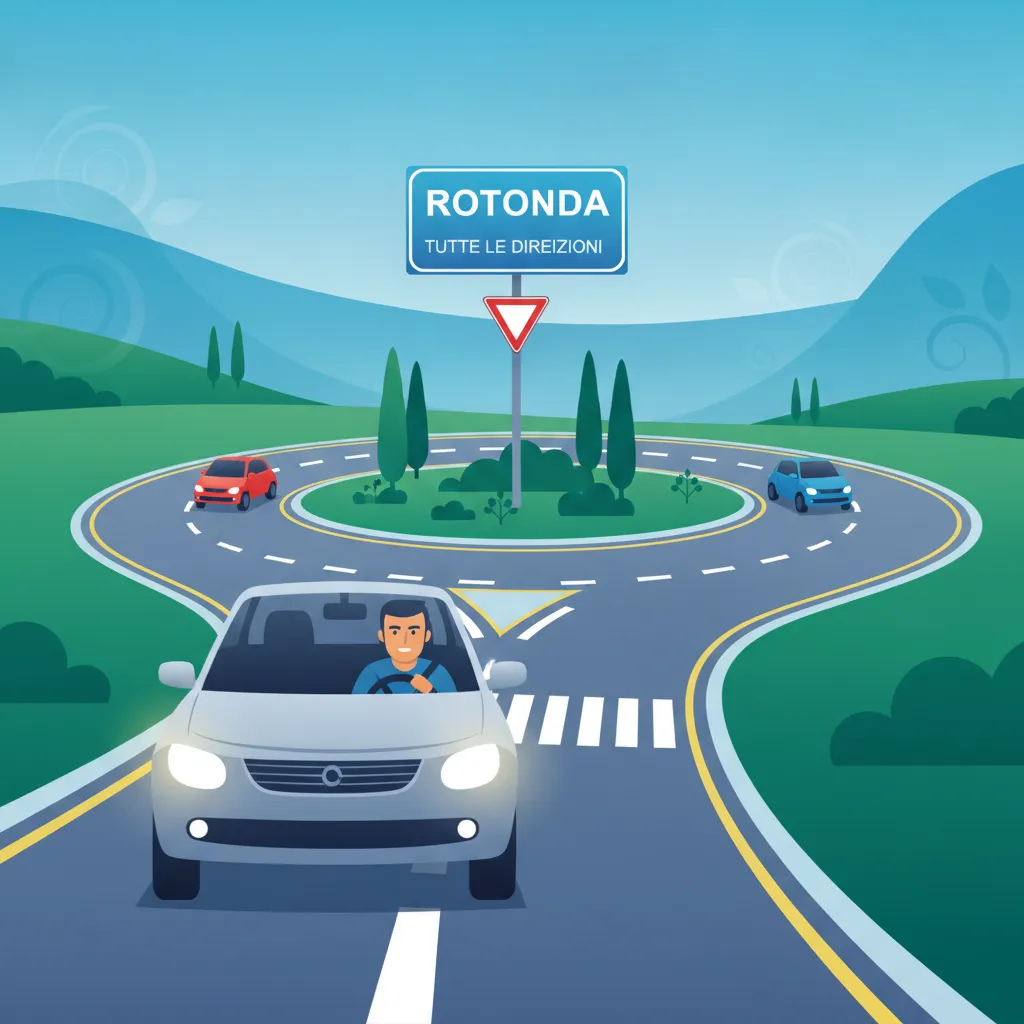
This lesson provides a step-by-step guide to safely navigating Italian roundabouts, known as rotatorie. It emphasizes the primary rule of yielding to traffic already circulating within the roundabout before entering. The content details correct lane positioning for different exits, the importance of signalling your intention to exit, and maintaining awareness of other vehicles.

This lesson provides specific strategies for riding on narrow rural roads, which often feature poor surfaces and limited sightlines. It details the techniques for approaching and navigating hairpin bends, including selecting the correct line, managing speed before entry, and using appropriate gear selection. The content emphasizes anticipating oncoming traffic and potential hazards hidden around blind corners for enhanced safety.
This lesson provides a comprehensive guide to riding on high-speed motorways, or autostrade. It details the correct procedures for safely merging into traffic from an entry ramp and exiting via a deceleration lane. The content reinforces strict lane discipline, rules for overtaking, and the importance of maintaining a significantly larger following distance to compensate for higher speeds and potential wind gusts.
This lesson explains how to execute left turns, right turns, and U-turns safely while maintaining correct lane discipline. It covers interpreting road markings and arrows, selecting the proper vehicle position, and using signals in a timely manner. Performing shoulder checks to monitor blind spots before and during a turn is a key focus for preventing collisions.
This lesson focuses on the vital systems for visibility and communication: mirrors, lighting, and signals. It provides instruction on the proper adjustment of mirrors to minimize blind spots and the correct use of headlamps, indicators, and brake lights as per Italian regulations. The content underscores how maintaining these systems in full working order is crucial for being seen and signalling intentions clearly in traffic.
This lesson addresses two key aspects of defensive riding: maintaining a safe buffer and performing overtaking maneuvers. It details how to use time-based rules, such as the two-second rule, to ensure adequate following distance for reaction. The content also provides a structured approach to overtaking, covering observation, signalling, speed management, and ensuring sufficient clearance before returning to the lane.
This lesson equips riders to safely manage the challenges posed by road construction zones. It explains how to interpret temporary signage, navigate lane closures or diversions, and maintain heightened awareness for surface hazards like gravel or steel plates. The content emphasizes the need to reduce speed and increase following distances to safely share the road with large construction vehicles and workers.
Find clear answers to common questions learners have about Optimal Road Positioning for Visibility and Safety. Learn how the lesson is structured, which driving theory objectives it supports, and how it fits into the overall learning path of units and curriculum progression in Italy. These explanations help you understand key concepts, lesson flow, and exam focused study goals.
Because motorcycles are smaller than cars, they are harder for other drivers to see. Proper positioning increases your visibility, helps you avoid blind spots, and gives you more room to react to hazards, which is crucial for safety and exam success.
Not always. While the center can be good for visibility, you should adjust your position based on road conditions, such as moving away from oil spills, potholes, or to better see around a bend or intersection.
Exam questions often present scenarios where you must identify the safest path or placement. Understanding these principles helps you correctly answer questions about right-of-way, hazard avoidance, and interactions with other vehicles.
You should adjust whenever conditions change, such as approaching an intersection, overtaking, facing poor road surfaces, or when you need to improve your view of the road ahead. Always consider your visibility to others first.
Start searching now to pinpoint exactly which Italian driving theory topics, road signs, or traffic rules you need to master. Use our advanced filters to build a custom practice session and ensure you're fully prepared for every aspect of your official driving licence exam.