This lesson teaches you how to strategically position your moped or scooter within a lane to ensure you are clearly seen by other road users. It is a critical skill within our Patente AM curriculum, building on your understanding of vehicle types to help you navigate mixed traffic safely. Mastering these techniques will prepare you for common hazard perception scenarios in the Italian theory exam.
Lesson content overview
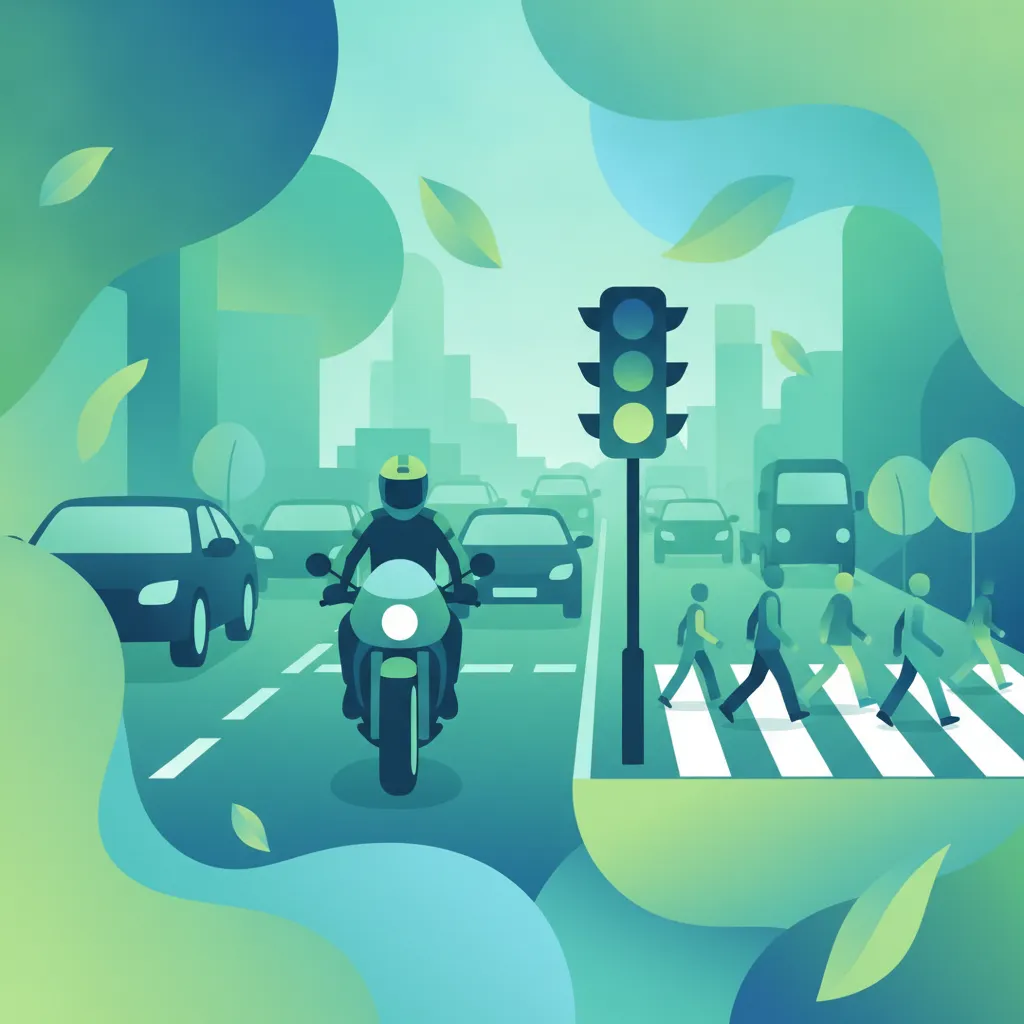
Riding a moped or scooter, as an AM category vehicle user, requires heightened awareness and strategic road positioning, especially when sharing the road with various other vehicles. This lesson focuses on mastering the art of positioning your vehicle within a lane to ensure you are consistently seen by other road users, significantly reducing the risk of collisions. By understanding how to avoid blind spots and maintain a safe buffer zone, you enhance your presence on the road, which is a fundamental aspect of defensive driving.
Proper positioning isn't just about following rules; it's about actively managing your safety by influencing how other drivers perceive and react to you. This skill builds upon foundational knowledge of mirror use and blind spot awareness, preparing you for safe interactions in complex traffic environments.
For moped riders, being visible is paramount. The concept of Direct Line of Sight refers to the unobstructed view a driver has of your moped within their vehicle’s mirrors and peripheral vision without needing to make significant head movements. This immediate, clear view allows other drivers to detect your presence quickly and anticipate your actions, which is crucial for collision prevention.
Drivers use both their central vision, which provides a direct forward view, and their peripheral vision, which covers side views without head movement. As a moped rider, your goal is to remain within these critical fields of vision. A common misunderstanding is that riding very close to another vehicle somehow improves visibility; in reality, it often places you directly in a driver's blind spot, blocking their view entirely.
Always assume that if you cannot see a driver’s face in their mirror, they likely cannot see you. Position yourself to make eye contact whenever possible.
Blind Spots are specific areas around any vehicle that are not visible to the driver through their mirrors or by direct sight. These zones pose a significant risk to moped riders because if you are within a blind spot, the driver may be completely unaware of your presence, leading to dangerous maneuvers like unannounced lane changes or turns.
Blind spots are generally categorized into side blind spots and rear blind spots, with their size varying greatly depending on the type and dimensions of the vehicle. Larger vehicles, such as trucks, buses, and even some vans, have substantially larger blind spots compared to typical passenger cars. For example, a truck's side blind spot can extend many meters alongside and behind its cab, making it an extremely hazardous area for a moped rider.
The Codice della Strada, Italy's highway code, emphasizes the responsibility of all road users to contribute to safety, which inherently includes the duty for riders to keep clear of these dangerous zones. Never assume that a vehicle's side mirrors will always show you; always anticipate larger blind areas, especially around heavy goods vehicles.
A Buffer Zone is the lateral distance you maintain between your moped and adjacent vehicles, providing ample reaction time and space for both yourself and other road users. This crucial safety margin reduces the risk of side collisions and allows for necessary evasive action or safe lane changes. Without an adequate buffer zone, even a slight deviation by another vehicle, or an unexpected gust of wind, could lead to a collision.
Maintaining a buffer zone of at least one vehicle width (your moped's width plus some extra space) is often recommended when traveling alongside another vehicle. This distance allows you to react to sudden movements from other vehicles, such as an opening car door or a swerving bus. A common misconception is that riding close to the edge of the lane is the safest option; however, this can reduce your visibility to drivers approaching from behind or those making turns, and it also leaves you vulnerable to hazards on the road's shoulder.
Lane Positioning refers to your specific placement within a traffic lane, balancing the need for maximum visibility with adherence to traffic rules and overall safety. Your choice of lane position significantly impacts how easily other drivers can see you and predict your movements.
Often, riding closer to the center of your lane is the most advantageous position for moped riders. This Central Lane Position places you prominently within the line of sight for both oncoming traffic and vehicles behind you, making you harder to overlook. On a two-way road, for example, a slightly central position improves your visibility to oncoming drivers who might otherwise miss you if you were hugging the curb. This position also provides a better view of the road ahead, allowing you to spot potential hazards, and gives you more room to maneuver around obstacles or road debris.
While a central position is generally preferred, there are specific situations where a slight adjustment towards the lane edge might be necessary. For instance, in very narrow urban streets where space is extremely limited, or when preparing to make a specific turn, you might briefly adjust your position. However, excessive Edge of Lane Positioning can reduce your visibility, particularly to drivers making turns or those merging into your lane, and it can increase your exposure to hazards like potholes, drains, or parked cars. Riders should avoid hugging the curb or lane markings excessively, as this can make them seem less significant to other road users and prone to being "cut off."
Never ride so far to the edge that you risk being trapped against the curb by a larger vehicle or if you need to perform an emergency maneuver.
Interacting with larger vehicles such as trucks, buses, or vans demands extra caution and specific positioning adjustments. These vehicles, due to their size and design, possess significantly larger blind zones than passenger cars. As a moped rider, understanding and actively managing your position around them is critical for your safety.
When Overtaking a large vehicle, the goal is to minimize the time spent in its blind spot. This means you must execute the overtake quickly and decisively. Signal your intention, accelerate to pass, and return to a safe, visible position within the lane as soon as it is safe to do so. Lingering alongside a large vehicle, especially in its blind spot, drastically increases your risk of being involved in a collision if the driver decides to change lanes or turn.
Check your mirrors and perform a shoulder check to ensure the lane is clear.
Signal your intention to overtake well in advance.
Move into the adjacent lane (if safe and legal) or position yourself to the left of the large vehicle, ensuring you maintain a safe lateral distance.
Accelerate smoothly and quickly to pass the vehicle.
Once you can see the entire front of the overtaken vehicle in your right-side mirror, signal to return to your original lane.
Perform a final shoulder check and smoothly return to a safe, visible position in your lane, maintaining a proper buffer zone.
When riding alongside heavy goods vehicles, it is imperative to maintain an ample lateral distance. These vehicles create significant air turbulence and their drivers have severely restricted side and rear visibility. Position yourself where the driver can clearly see you in their side mirrors, which often means being slightly ahead of the driver's direct mirror view, rather than directly beside the cab. Avoid riding halfway along a truck’s trailer, as this is typically deep within a major blind spot.
The Codice della Strada, Italy's highway code, sets clear regulations that indirectly and directly support the principles of visibility and safe positioning for all road users, including those on Patente AM vehicles. Adherence to these rules is not merely a legal obligation but a critical safety practice.
Riders are mandated to remain within their designated lane boundaries and actively avoid riding in the blind spots of other road users. This rule applies universally across all mixed-traffic situations, with particular emphasis when interacting with larger vehicles. The rationale is simple: if you are visible, you are safer. Staying within your lane and maintaining a safe distance from larger vehicles are correct applications of this rule. Conversely, riding too close to a truck's side where the driver cannot see you constitutes an incorrect and dangerous application.
The Codice della Strada specifies that when overtaking any vehicle, and especially larger ones, riders must complete the maneuver quickly and then return to a safe position within their lane. This regulation is designed to minimize the time a rider spends in a potentially hazardous blind spot. Correct application involves accelerating safely past a bus and promptly returning to a position visible to its driver. Overtaking slowly and remaining alongside for an extended period is a clear violation of this safety principle.
Riders must always respect continuous line markings on the road and should only cross them when it is explicitly safe and legally permitted. This rule is crucial for preventing unexpected lane changes that can place riders into another driver's blind spot. Staying within your lane boundaries at all times is the correct application. Crossing a continuous line, even to avoid traffic, if it places you in a dangerous blind spot, is an incorrect and potentially illegal action.
Even experienced riders can sometimes fall into habits that compromise their visibility. Being aware of these common mistakes can help you maintain safer practices.
Effective positioning isn't static; it requires constant adaptation based on prevailing conditions. Understanding how various factors influence visibility and control allows you to make informed decisions for your safety.
When interacting with pedestrians and cyclists, your positioning also plays a role in their safety and your own. Avoid hugging the road edge where they may be present, as this could put them at risk or obscure you from other drivers. Position yourself where you can be seen by all road users, maintaining a safe distance from pedestrians and cyclists while ensuring other drivers can still see you clearly.
The principles of positioning for maximum visibility are deeply rooted in understanding human perception and vehicle dynamics. Moped riders, due to their smaller profile, are inherently harder to see if positioned incorrectly. A proper lateral offset within the lane significantly increases the likelihood of detection by other drivers, allowing them more time to react. Legally, failure to maintain adequate visibility can be seen as negligent, potentially leading to penalties or shared responsibility in an accident.
This lesson builds directly on your understanding of mirror use and blind spot awareness (Lesson 3.1) and provides the foundation for effective shoulder check techniques and indicator use (Lesson 3.2). It is also a prerequisite for understanding how to communicate effectively with other road users (Lesson 3.4) and for safely navigating complex situations like intersections, roundabouts, and turning maneuvers (Lesson 5).
To conclude, mastering your road positioning is a cornerstone of safe moped riding in mixed traffic, directly influencing your safety and that of others.
By consistently applying these principles, you significantly reduce the risk of collisions and contribute to a safer road environment for everyone.
This lesson teaches Patente AM riders how to position their moped strategically within a lane to maximize visibility and safety in mixed traffic. Key concepts include understanding blind spots around vehicles—especially larger ones like trucks and buses—maintaining a safe buffer zone of at least one vehicle width, and preferring a central lane position for maximum visibility. The lesson covers specific overtaking procedures to minimize time spent in blind spots and emphasizes that positioning must adapt to conditions such as weather, road type, and the presence of vulnerable road users. These defensive riding principles are grounded in the Codice della Strada and are essential for both safe driving and passing situational questions in the Italian theory exam.
A short set of high-value points that capture the most important learning from this lesson.
Moped riders must stay within a driver's direct line of sight and peripheral vision to be detected quickly and avoid collisions.
Blind spots around vehicles, especially large trucks and buses, can completely hide a moped rider from the driver's view.
Maintaining a buffer zone of at least one vehicle width when riding alongside other vehicles provides essential reaction time and space.
A central lane position generally maximizes visibility to both oncoming traffic and vehicles behind you.
Positioning decisions must adapt continuously based on weather, road type, vehicle size, and traffic density.
Explore all units and lessons included in this driving theory course.
If you cannot see a driver's face in their mirror, they likely cannot see you; position yourself to make eye contact whenever possible.
Avoid riding halfway along a truck's trailer, as this area is typically deep within a major blind spot.
Complete overtaking maneuvers quickly to minimize time spent in a larger vehicle's blind spot.
Continuous line markings on the road should only be crossed when explicitly safe and legally permitted.
In urban environments, position slightly centrally before intersections to remain visible to vehicles potentially turning across your path.
Riding within a truck's blind spot because the driver cannot see you, creating high risk during any lane change or turn.
Hugging the curb too closely, which reduces visibility to oncoming traffic and vehicles turning across your path.
Overtaking large vehicles at low speed, which extends the time spent alongside them in their blind zones.
Relying only on mirrors before lane changes, missing vehicles that may occupy your own blind spots.
Failing to reposition after overtaking a large vehicle, remaining in a less visible lane position.
Lesson content overview
A short set of high-value points that capture the most important learning from this lesson.
Moped riders must stay within a driver's direct line of sight and peripheral vision to be detected quickly and avoid collisions.
Blind spots around vehicles, especially large trucks and buses, can completely hide a moped rider from the driver's view.
Maintaining a buffer zone of at least one vehicle width when riding alongside other vehicles provides essential reaction time and space.
A central lane position generally maximizes visibility to both oncoming traffic and vehicles behind you.
Positioning decisions must adapt continuously based on weather, road type, vehicle size, and traffic density.
Explore all units and lessons included in this driving theory course.
If you cannot see a driver's face in their mirror, they likely cannot see you; position yourself to make eye contact whenever possible.
Avoid riding halfway along a truck's trailer, as this area is typically deep within a major blind spot.
Complete overtaking maneuvers quickly to minimize time spent in a larger vehicle's blind spot.
Continuous line markings on the road should only be crossed when explicitly safe and legally permitted.
In urban environments, position slightly centrally before intersections to remain visible to vehicles potentially turning across your path.
Riding within a truck's blind spot because the driver cannot see you, creating high risk during any lane change or turn.
Hugging the curb too closely, which reduces visibility to oncoming traffic and vehicles turning across your path.
Overtaking large vehicles at low speed, which extends the time spent alongside them in their blind zones.
Relying only on mirrors before lane changes, missing vehicles that may occupy your own blind spots.
Failing to reposition after overtaking a large vehicle, remaining in a less visible lane position.
Explore search topics learners often look for when studying Positioning for Maximum Visibility in Mixed Traffic. These topics reflect common questions about road rules, driving situations, safety guidance, and lesson level theory preparation for learners in Italy.
Browse additional driving theory lessons that cover connected traffic rules, road signs, and common driving situations related to this topic. Improve your understanding of how different rules interact across everyday traffic scenarios.
Explore advanced strategies for positioning your moped in Italian traffic to maximize visibility and safety. Learn to effectively navigate blind spots and maintain crucial buffer zones in complex urban and highway environments.

This lesson addresses the specific challenges of sharing the road with two-wheeled motor vehicles like motorcycles and scooters. It highlights their reduced visibility and stability compared to cars, requiring drivers to double-check blind spots and maintain a greater following distance. The content also discusses common behaviors like lane filtering and the need for drivers to be predictable and signal intentions clearly.

This lesson explains the concept of using lane positioning as a proactive safety tool. It details how to select a position within the lane to maximize visibility to other drivers, especially at junctions, and to create a buffer of space from potential dangers. The content emphasizes the 'see and be seen' principle, teaching riders to constantly adjust their position based on traffic, road conditions, and potential escape routes.
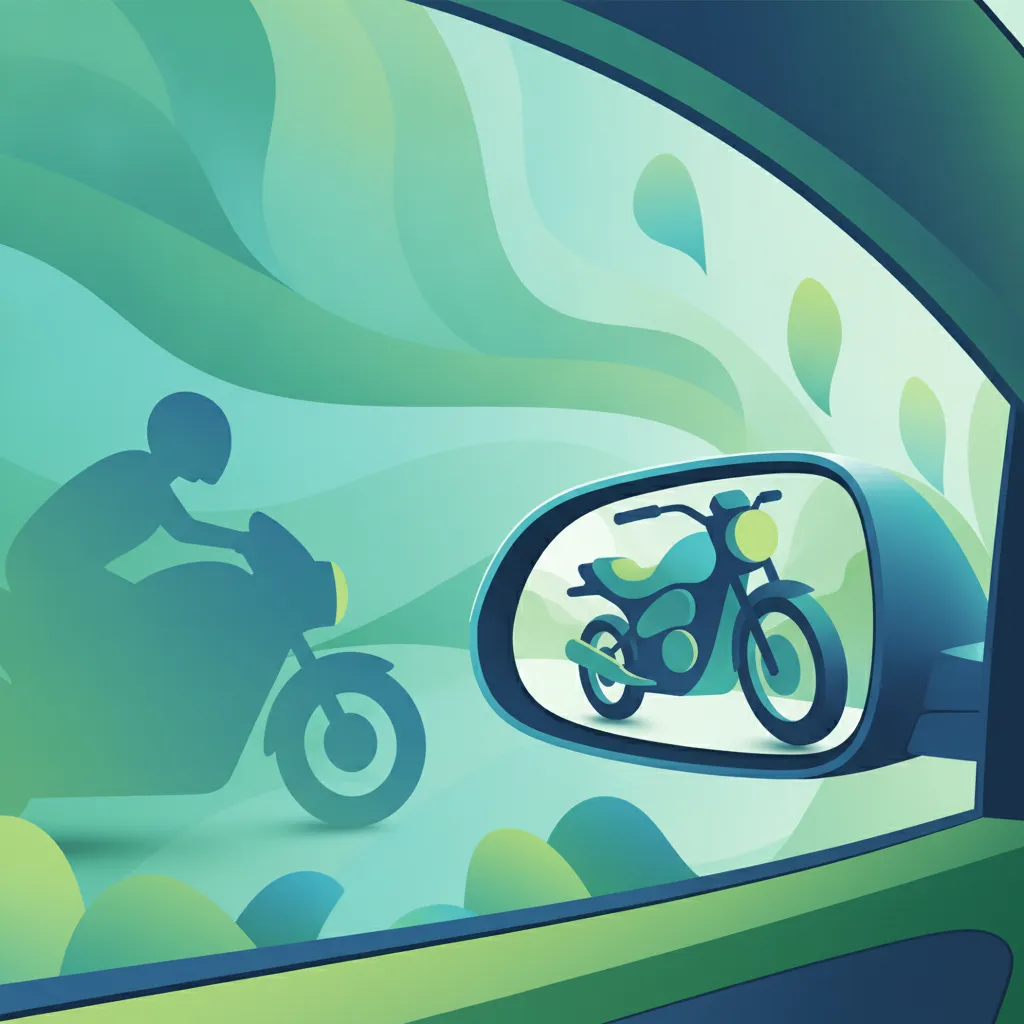
This lesson focuses on the correct use of mirrors to maintain situational awareness and the techniques required to manage blind spots. It explains how to adjust mirrors for the best possible view of surrounding traffic. You will also learn why shoulder checks are critical before changing lanes or turning to detect vehicles hidden in blind zones.
This lesson explains the principles of maintaining proper lane discipline and strategic positioning in an urban context. It covers how to adapt your position within the lane to enhance visibility, avoid road surface hazards, and prepare for turns or lane changes. The content also provides awareness of specific urban features like restricted traffic zones (ZTL) and how to navigate them legally and safely.
This lesson focuses on the specific regulatory and warning signs that Patente AM riders must understand and obey. It details signs related to speed limits, no-entry zones, and mandatory directions that directly impact moped operation. You will also learn to recognize warning signs for potential hazards like sharp curves, slippery surfaces, and pedestrian areas.

This lesson details the essential protective equipment required for legal and safe moped operation in Italy. It covers legal standards for helmets, the benefits of wearing protective gloves and boots, and the importance of high-visibility clothing. You will also learn the correct use of your vehicle's lighting system for visibility during both day and night.
This lesson equips riders to safely manage the challenges posed by road construction zones. It explains how to interpret temporary signage, navigate lane closures or diversions, and maintain heightened awareness for surface hazards like gravel or steel plates. The content emphasizes the need to reduce speed and increase following distances to safely share the road with large construction vehicles and workers.
This lesson explains how to execute left turns, right turns, and U-turns safely while maintaining correct lane discipline. It covers interpreting road markings and arrows, selecting the proper vehicle position, and using signals in a timely manner. Performing shoulder checks to monitor blind spots before and during a turn is a key focus for preventing collisions.

This lesson addresses the increased complexity of overtaking in urban environments with dense traffic and frequent intersections. It stresses the importance of thorough observation, including mirror and blind spot checks, to ensure a safe gap is available. The content covers judging speed differentials and the necessity of clear signalling to execute the maneuver without causing conflict with other road users.

This lesson provides an in-depth focus on sharing the road with the most vulnerable users. It teaches drivers to be acutely aware of pedestrians at crossings, cyclists filtering through traffic, and motorcyclists who may be in blind spots. The lesson emphasizes the importance of leaving extra space, signaling intentions clearly, and exercising extreme caution at junctions, where the majority of serious incidents occur.
Identify and understand common mistakes made by moped riders regarding road positioning and visibility in Italian traffic. Learn theory-based strategies to correct these errors and enhance your safety on the road.
This lesson addresses the specific challenges of sharing the road with two-wheeled motor vehicles like motorcycles and scooters. It highlights their reduced visibility and stability compared to cars, requiring drivers to double-check blind spots and maintain a greater following distance. The content also discusses common behaviors like lane filtering and the need for drivers to be predictable and signal intentions clearly.
This lesson details the essential protective equipment required for legal and safe moped operation in Italy. It covers legal standards for helmets, the benefits of wearing protective gloves and boots, and the importance of high-visibility clothing. You will also learn the correct use of your vehicle's lighting system for visibility during both day and night.
This lesson focuses on the specific regulatory and warning signs that Patente AM riders must understand and obey. It details signs related to speed limits, no-entry zones, and mandatory directions that directly impact moped operation. You will also learn to recognize warning signs for potential hazards like sharp curves, slippery surfaces, and pedestrian areas.
This lesson explains how to execute left turns, right turns, and U-turns safely while maintaining correct lane discipline. It covers interpreting road markings and arrows, selecting the proper vehicle position, and using signals in a timely manner. Performing shoulder checks to monitor blind spots before and during a turn is a key focus for preventing collisions.
This lesson explains the principles of maintaining proper lane discipline and strategic positioning in an urban context. It covers how to adapt your position within the lane to enhance visibility, avoid road surface hazards, and prepare for turns or lane changes. The content also provides awareness of specific urban features like restricted traffic zones (ZTL) and how to navigate them legally and safely.
This lesson explains the concept of using lane positioning as a proactive safety tool. It details how to select a position within the lane to maximize visibility to other drivers, especially at junctions, and to create a buffer of space from potential dangers. The content emphasizes the 'see and be seen' principle, teaching riders to constantly adjust their position based on traffic, road conditions, and potential escape routes.
This lesson focuses on the correct use of mirrors to maintain situational awareness and the techniques required to manage blind spots. It explains how to adjust mirrors for the best possible view of surrounding traffic. You will also learn why shoulder checks are critical before changing lanes or turning to detect vehicles hidden in blind zones.
This lesson focuses on the vital systems for visibility and communication: mirrors, lighting, and signals. It provides instruction on the proper adjustment of mirrors to minimize blind spots and the correct use of headlamps, indicators, and brake lights as per Italian regulations. The content underscores how maintaining these systems in full working order is crucial for being seen and signalling intentions clearly in traffic.
This lesson focuses on the legal obligations that first-time riders must meet to operate an AM vehicle safely and legally. It details the mandatory use of certified helmets and appropriate protective clothing. Furthermore, it outlines fundamental traffic laws new riders must know and the legal repercussions of non-compliance, such as fines and penalty points.
This lesson addresses high-risk behaviors often associated with young and inexperienced riders. It highlights the dangers of distractions like mobile phone use, the influence of peer pressure, and the severe consequences of speeding or riding under the influence of substances. Understanding these risks is the first step toward developing a mature and responsible approach to riding.
Find clear answers to common questions learners have about Positioning for Maximum Visibility in Mixed Traffic. Learn how the lesson is structured, which driving theory objectives it supports, and how it fits into the overall learning path of units and curriculum progression in Italy. These explanations help you understand key concepts, lesson flow, and exam focused study goals.
Because mopeds and scooters are smaller than cars, they are harder to see. Correct positioning ensures you stay out of the blind spots of larger vehicles and remain visible to drivers at intersections.
You should position yourself in the part of the lane where you are most visible to other drivers, ensuring you are not hidden by large vehicles while maintaining a safe distance from turning traffic.
Yes, while the law requires you to stay to the right, you must also adapt your position for your own safety, such as avoiding the gutter where debris often collects or staying visible to vehicles preparing to overtake.
The exam often tests your ability to identify hazards in visual scenarios. Understanding where to place your vehicle is the foundation for correctly answering these 'how would you react' questions.
Start searching now to pinpoint exactly which Italian driving theory topics, road signs, or traffic rules you need to master. Use our advanced filters to build a custom practice session and ensure you're fully prepared for every aspect of your official driving licence exam.