
This lesson teaches you the critical techniques for maintaining a safe following distance and managing your moped's grip on various road surfaces. As part of our Patente AM curriculum, you will learn how to adjust your riding for weather conditions and tire state to ensure maximum safety. Mastering these concepts is essential for both your theory exam success and for becoming a responsible, defensive rider on Italian roads.

Lesson content overview
Maintaining a safe following distance and understanding how to manage your vehicle's grip are fundamental skills for any rider, especially those operating Patente AM category vehicles such as mopeds and light quadricycles. These concepts are not merely suggestions; they are critical for anticipating hazards, preventing collisions, and ensuring your safety and the safety of others on Italian roads. This lesson delves into the physics and practical application of these principles, equipping you with the knowledge to react effectively in diverse driving conditions.
To truly understand safe following distances, it's essential to first grasp the two main components of stopping a vehicle: reaction time and braking distance. Together, these determine the total distance your vehicle will travel from the moment you perceive a hazard until you come to a complete stop.
Reaction time is the period that elapses from when a rider perceives a hazard to when they initiate an appropriate response, such as applying the brakes. This is not instantaneous; the human brain needs time to process information and instruct the body to act.
The interval between a rider's perception of a hazard and the initiation of a physical response, typically assumed to be 1.5 to 2.5 seconds under normal conditions.
Several factors can influence your reaction time, including alertness, fatigue, distraction, age, and even the consumption of certain medications or alcohol. For the purpose of driving safety, it is generally assumed that an average rider's reaction time is around 1.5 to 2.5 seconds. During this time, your Patente AM vehicle continues to travel at its current speed, covering what is known as the "reaction distance." For example, at 50 km/h (approximately 13.9 meters per second), a 1.5-second reaction time means your vehicle will travel nearly 21 meters before you even begin to brake. This significant distance highlights why constant vigilance and an adequate following gap are paramount.
Once you initiate braking, the vehicle begins to slow down and eventually stops. The distance covered during this deceleration is known as the braking distance. Unlike reaction distance, which is linearly proportional to speed, braking distance increases quadratically with speed. This means if you double your speed, your braking distance quadruples.
The distance a vehicle travels from the point of brake application until it comes to a complete stop.
The primary factors influencing braking distance are:
The simplified formula for braking distance is:
Braking distance = (v²) / (2 μ g)
Where:
v is speed in meters per second (m/s)μ (mu) is the coefficient of friction between the tyres and the road surfaceg is the gravitational acceleration (approximately 9.81 m/s²)This formula demonstrates the critical influence of both speed and road surface friction on your ability to stop safely.
The total stopping distance is the sum of your reaction distance and your braking distance. It represents the absolute minimum distance required to bring your vehicle to a complete halt after perceiving a hazard.
Understanding this combined distance is the foundation for establishing a safe following distance. If your following distance is less than your total stopping distance, you will inevitably collide with the vehicle ahead should they stop suddenly.
The two-second rule is a simple yet effective method to ensure you maintain a safe following distance at any speed and in most normal driving conditions. It provides a consistent time buffer that accounts for your reaction time and a significant portion of your braking distance.
The two-second rule requires you to stay at least two seconds behind the vehicle directly in front of you. This isn't a fixed measurement in meters but rather a time-based gap, which automatically adjusts for your speed.
A method to estimate a safe following distance by ensuring that you take at least two seconds to reach a fixed point on the road after the vehicle ahead of you has passed it.
Applying this rule is straightforward and requires constant observation:
Identify a fixed point: As the vehicle in front of you passes a stationary object on the side of the road (e.g., a sign, a lamppost, a shadow, a specific road marking).
Start counting: Begin counting "one-thousand-and-one, one-thousand-and-two."
Check your position: If you reach the same fixed point before or as you finish counting "two," you are following too closely. You need to drop back and increase your following distance.
Adjust as needed: If you reach the point after you've finished counting "two," your distance is safe.
This method ensures that the time gap remains constant, meaning at higher speeds, the physical distance between you and the vehicle ahead naturally increases, providing the necessary buffer for longer stopping distances.
The Codice della Strada (Italian Highway Code) reinforces the importance of maintaining a safe following distance. Article 141 specifically mandates that drivers must keep a safe distance from the vehicle in front, adjusting for speed, road conditions, and vehicle characteristics. This legal requirement underscores that the responsibility for avoiding a rear-end collision rests with the trailing driver.
Beyond simply maintaining distance, understanding and managing the grip between your tyres and the road surface is crucial for safe riding. Grip, or traction, directly affects your ability to accelerate, brake, and steer effectively.
Your tyres are the only part of your vehicle that touches the road, making their condition paramount for safety.
Tyre Tread Depth: The grooves in your tyre tread are designed to channel water away from the contact patch, maintaining grip on wet surfaces. As tyres wear, tread depth decreases, significantly reducing their effectiveness, especially in rain. While the legal minimum tread depth is 1.6 mm, a depth of at least 3 mm is highly recommended for optimal performance on wet roads. Worn tyres increase the risk of hydroplaning, where the tyre loses contact with the road due to a layer of water.
Tyre Inflation Pressure: Correct tyre pressure, as specified by your vehicle manufacturer, ensures the optimal contact patch between the tyre and the road.
Always check your tyre pressure at least once a month and before any long journey. Consult your vehicle's manual for the correct pressure settings for both front and rear tyres, and adjust for passenger or cargo load if specified.
The coefficient of friction (μ) is a dimensionless number that quantifies the amount of grip available between your tyres and the road surface. A higher μ value indicates more grip, while a lower μ value means less grip.
A dimensionless numerical value representing the level of friction (grip) between the tyre tread and the road surface.
Different road surfaces and conditions have varying coefficients of friction:
μ typically ranging from 0.7 to 0.8.μ to 0.5 or 0.6. This can increase braking distances by as much as 50% or more.μ values as low as 0.1 to 0.2, making stopping and steering extremely difficult.μ to near zero, posing extreme hazards.Understanding how μ changes is crucial for adapting your riding style and following distance. A dramatic drop in μ means a dramatic increase in braking distance, even at the same speed.
Wet asphalt is one of the most common conditions that significantly impacts grip for Patente AM riders. Rain mixes with oil, dust, and other debris on the road to create a slippery film, especially during the first few minutes of a downpour. This not only reduces braking efficiency but also makes cornering and steering more challenging.
Beyond wetness, other conditions such as loose gravel, sand, leaves, or even painted road markings (especially when wet) can reduce grip unexpectedly. Riders must constantly scan the road surface for these potential hazards and adjust their speed and following distance accordingly.
While the two-second rule serves as a good baseline, it is imperative to adjust your following distance when conditions are less than ideal. Failure to do so is a common cause of accidents.
Never use high beam headlights in fog or heavy rain, as the light will reflect off the water droplets or fog, making visibility worse for you and dazzling oncoming traffic.
The Italian Highway Code, the Codice della Strada, explicitly outlines the legal obligations for drivers regarding safe following distances and vehicle maintenance, which directly impacts grip. These articles are critical for Patente AM riders to understand.
Mandates drivers to keep a safe distance from the vehicle in front, adjusting for speed, road conditions, and vehicle characteristics, to ensure the ability to stop safely and avoid collisions.
This article is broad but clear: you are legally responsible for ensuring you can stop without hitting the vehicle in front of you. This means the onus is on you to correctly assess conditions and maintain an appropriate gap. Failure to comply with Article 141 can result in fines and points deducted from your driving license.
Obliges drivers to maintain their vehicle's tyres in good condition, ensuring sufficient tread depth, proper inflation pressure, and suitability for the vehicle load and season.
This article directly relates to grip management. It's not enough to have a safe following distance; your vehicle must also be in a condition that allows it to stop. This means your tyres must have adequate tread, be correctly inflated, and be suitable for the load you are carrying. Forgetting to check your tyres can lead to not only dangerous situations but also legal penalties.
Requires drivers to adapt their speed to various factors, including visibility, road conditions, traffic density, and the state of their vehicle, to maintain control and safety.
While not directly about following distance, Article 150 is intrinsically linked. If you fail to adapt your speed to conditions (e.g., driving too fast in rain), you will require a much longer stopping distance. This, in turn, necessitates a greater following distance. By adhering to Article 150, you reduce your stopping distance requirements, making it easier to maintain a safe gap.
Even experienced riders can make mistakes regarding following distance and grip. Awareness of these common pitfalls can help Patente AM riders avoid dangerous situations.
To further enhance your understanding of vehicle control and road safety, explore related topics that build upon these fundamental concepts.
Put your knowledge of safe following distances and grip management to the test with practice questions designed to reinforce your learning.
This lesson covers the physics and practical application of safe following distances and grip management for Patente AM riders. You learned that total stopping distance equals reaction distance (based on 1.5-2.5 second reaction time) plus braking distance (which increases quadratically with speed). The two-second rule provides a speed-adaptive time gap that must be extended to three or four seconds in adverse conditions like rain, fog, or night riding. Grip management depends on tyre condition and road surface friction, quantified by the coefficient of friction (μ), which drops substantially on wet or icy surfaces. Under Articles 141 and 149 bis of the Codice della Strada, riders are legally required to maintain appropriate following distances and keep tyres in proper condition.
A short set of high-value points that capture the most important learning from this lesson.
Safe following distance must exceed your total stopping distance, which is the sum of reaction distance and braking distance.
The two-second rule provides a consistent time-based gap that automatically adjusts for speed, ensuring adequate safety margins.
Braking distance increases quadratically with speed, meaning doubling your speed quadruples stopping distance.
Grip is quantified by the coefficient of friction (μ), which drops significantly on wet asphalt (from 0.7-0.8 to 0.5-0.6) and dramatically on ice (0.1-0.2).
Under Italian law (Article 141 Codice della Strada), the trailing driver bears legal responsibility for maintaining a safe following distance.
Explore all units and lessons included in this driving theory course.
Always apply the two-second rule on dry roads; extend to three seconds in rain and four seconds in fog, heavy rain, or night riding.
Tyre tread depth below 3 mm significantly reduces wet-weather grip; legal minimum is 1.6 mm but 3 mm is recommended for safety.
Formula for braking distance is (v²) / (2μg), where μ varies by road condition and directly determines stopping capability.
Overloaded vehicles require longer stopping distances; compensate by increasing following gap by at least one additional second.
Article 149 bis Codice della Strada requires tyres to be in good condition with proper inflation and adequate tread depth.
Tailgating in urban traffic, assuming lower speeds make close following safe when sudden stops at traffic lights remain hazardous.
Visually estimating following distance without using the two-second counting method, leading to insufficient gaps at higher speeds.
Failing to extend following distance in adverse conditions, continuing to use the two-second rule in rain, fog, or darkness.
Riding with under-inflated, over-inflated, or worn tyres that compromise grip and extend braking distance beyond calculations.
Over-relying on ABS as a substitute for proper following distance; ABS helps with control but does not shorten overall stopping distance.
Lesson content overview
A short set of high-value points that capture the most important learning from this lesson.
Safe following distance must exceed your total stopping distance, which is the sum of reaction distance and braking distance.
The two-second rule provides a consistent time-based gap that automatically adjusts for speed, ensuring adequate safety margins.
Braking distance increases quadratically with speed, meaning doubling your speed quadruples stopping distance.
Grip is quantified by the coefficient of friction (μ), which drops significantly on wet asphalt (from 0.7-0.8 to 0.5-0.6) and dramatically on ice (0.1-0.2).
Under Italian law (Article 141 Codice della Strada), the trailing driver bears legal responsibility for maintaining a safe following distance.
Explore all units and lessons included in this driving theory course.
Always apply the two-second rule on dry roads; extend to three seconds in rain and four seconds in fog, heavy rain, or night riding.
Tyre tread depth below 3 mm significantly reduces wet-weather grip; legal minimum is 1.6 mm but 3 mm is recommended for safety.
Formula for braking distance is (v²) / (2μg), where μ varies by road condition and directly determines stopping capability.
Overloaded vehicles require longer stopping distances; compensate by increasing following gap by at least one additional second.
Article 149 bis Codice della Strada requires tyres to be in good condition with proper inflation and adequate tread depth.
Tailgating in urban traffic, assuming lower speeds make close following safe when sudden stops at traffic lights remain hazardous.
Visually estimating following distance without using the two-second counting method, leading to insufficient gaps at higher speeds.
Failing to extend following distance in adverse conditions, continuing to use the two-second rule in rain, fog, or darkness.
Riding with under-inflated, over-inflated, or worn tyres that compromise grip and extend braking distance beyond calculations.
Over-relying on ABS as a substitute for proper following distance; ABS helps with control but does not shorten overall stopping distance.
Explore search topics learners often look for when studying Safe Following Distances and Grip Management. These topics reflect common questions about road rules, driving situations, safety guidance, and lesson level theory preparation for learners in Italy.
Browse additional driving theory lessons that cover connected traffic rules, road signs, and common driving situations related to this topic. Improve your understanding of how different rules interact across everyday traffic scenarios.
Understand how speed limits, braking distances, and safe following distances are interconnected in Italian driving theory for Patente AM. Learn to manage your speed and space effectively to prevent collisions and ensure road safety.
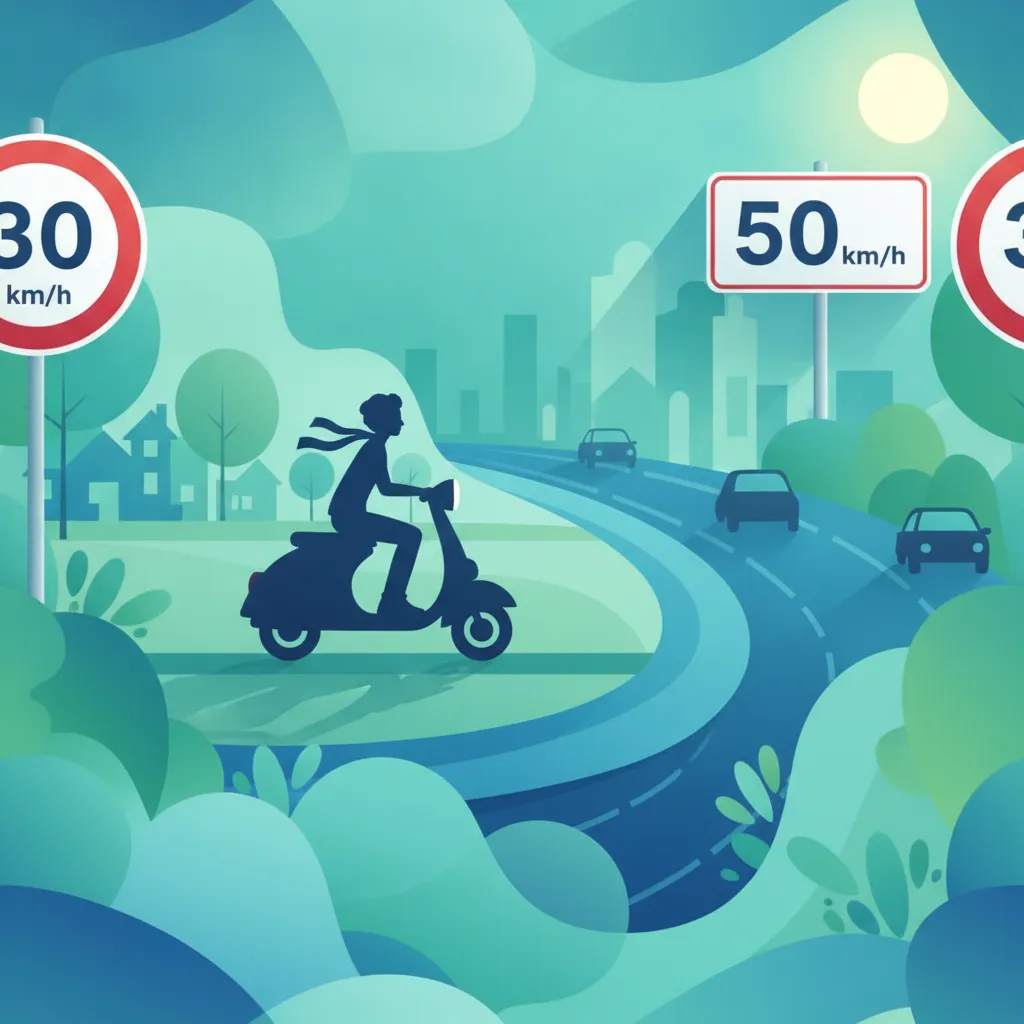
This lesson explores the specific speed limits applicable to AM vehicles across various zones, including urban, residential, and rural roads. Emphasis is placed on understanding the signage that indicates both permanent and temporary speed restrictions. Learners will also examine the rationale behind these limits and the importance of adapting speed to road conditions and traffic density.
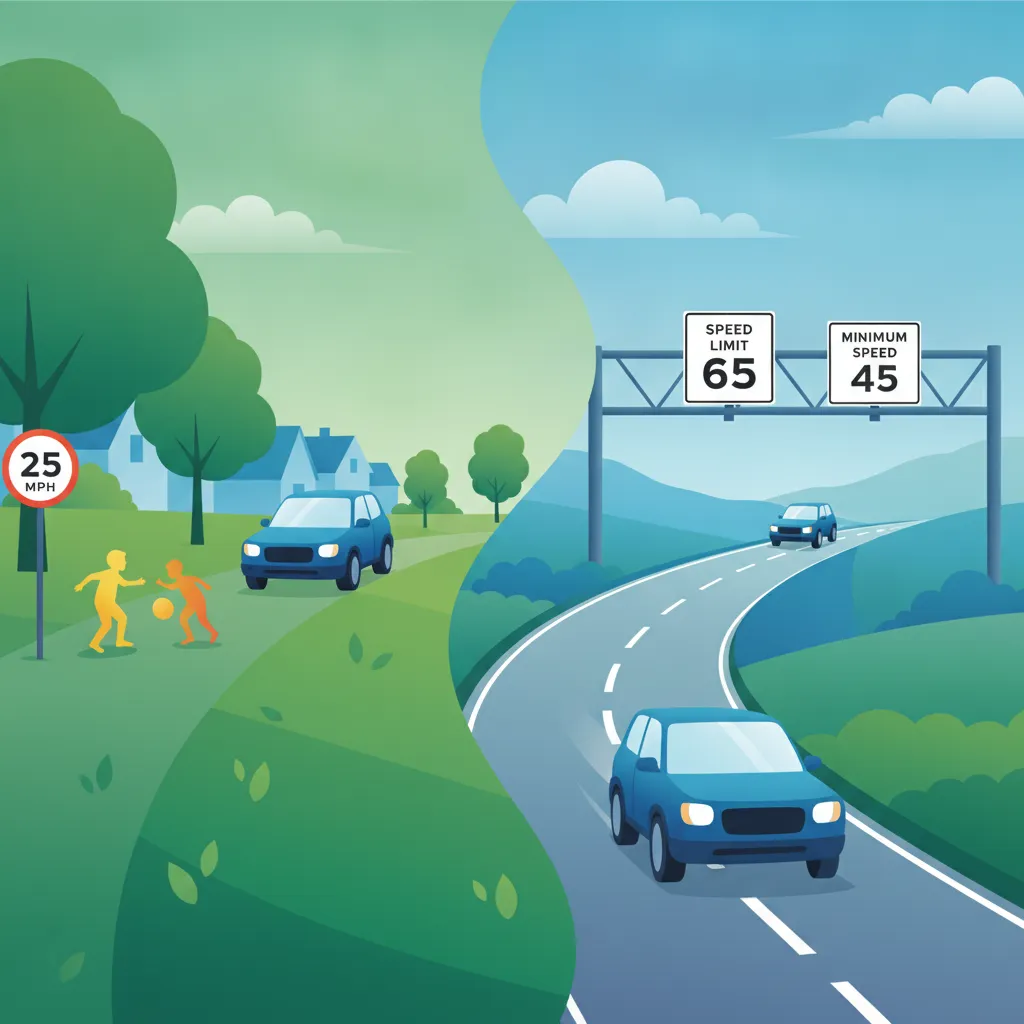
This lesson details the legal speed limits applicable to different road classifications in Italy. It covers the standard limits for urban centers, extra-urban secondary roads, main extra-urban roads, and motorways (autostrade). The content also highlights the lower speed limits that apply to beginner drivers and in specific conditions such as adverse weather or road construction zones.
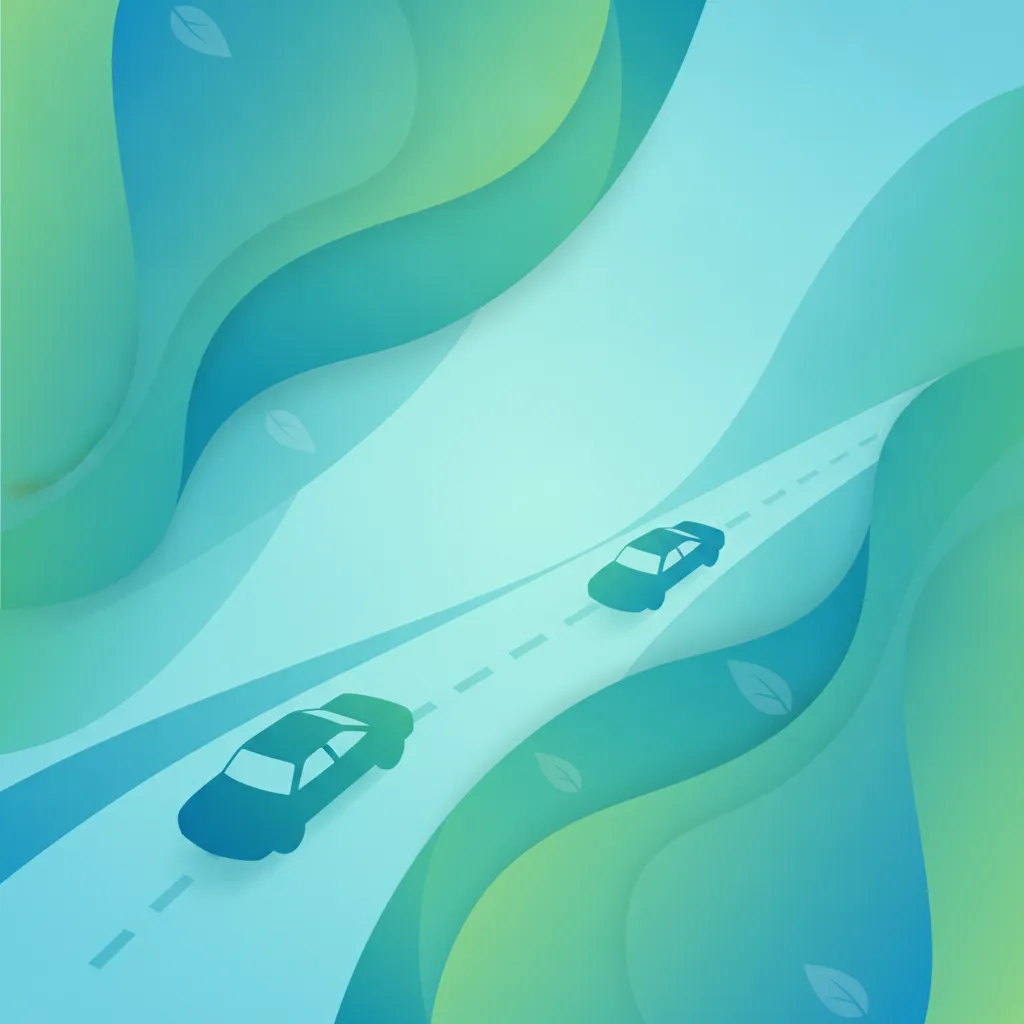
This lesson is dedicated to the vital concept of 'distanza di sicurezza', the safe following distance required to avoid a rear-end collision. It explains how this distance is not fixed but varies with speed and conditions, covering practical methods like the 'two-second rule' to help judge it accurately. Maintaining this space cushion provides the necessary time to react and brake safely if the vehicle ahead stops suddenly.
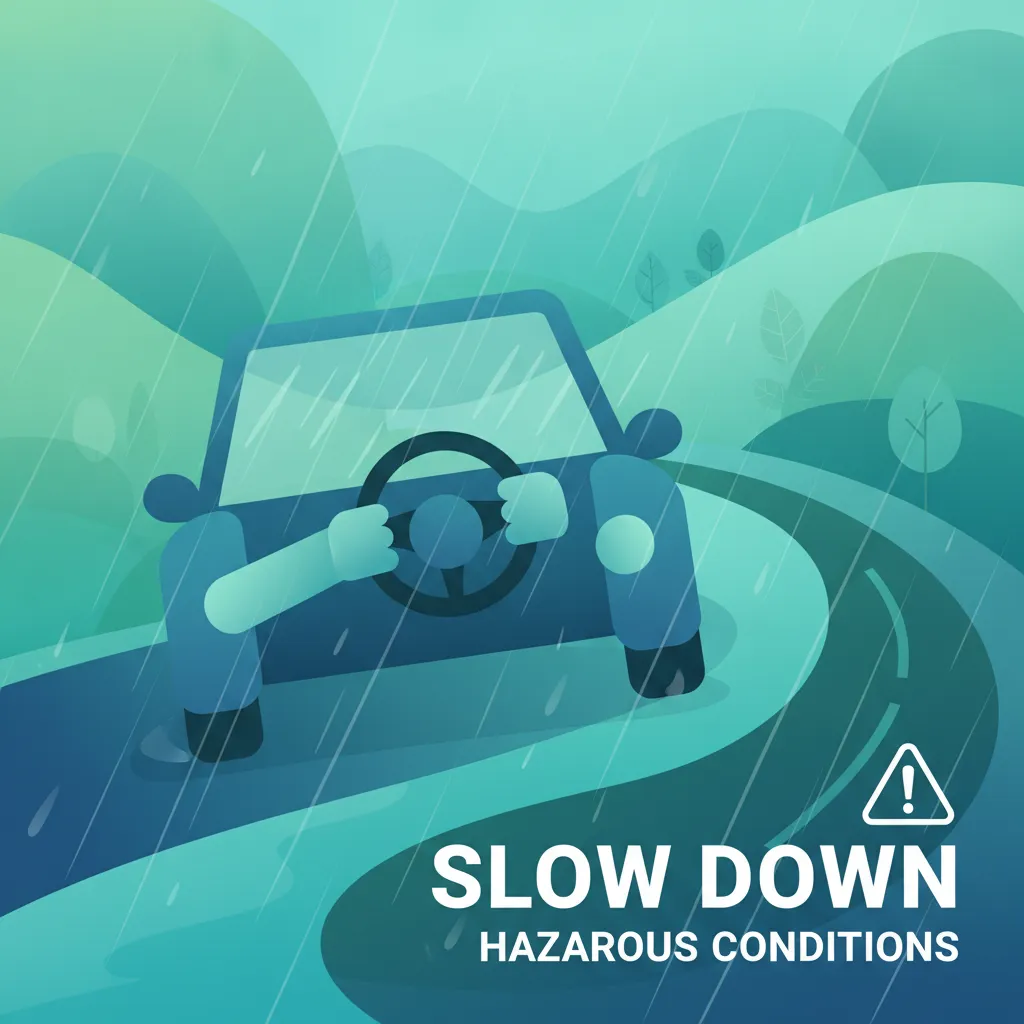
This lesson teaches the crucial skill of selecting a safe and appropriate speed that may be lower than the legal limit, based on prevailing conditions. It explains how to assess factors such as traffic flow, weather, visibility, and road surface quality to make prudent speed choices. The goal is to always maintain full control of the vehicle and have sufficient time to react to unexpected hazards.
This lesson provides essential rules and techniques for driving on Italian motorways (autostrade) and major extra-urban roads. It explains how to safely merge onto the motorway from an entry ramp, the strict lane discipline required (drive right, overtake left), and how to exit correctly. The content also covers speed regulations, maintaining a safe following distance at high speed, and procedures for using service areas and handling emergencies.

This lesson explains the function of Italian traffic light systems and the meaning of various road markings. You will learn the rules for red, amber, and green signals, including flashing lights and directional arrows. It also covers how to interpret lane lines, stop lines, and other surface markings that dictate correct vehicle positioning and movement.

This lesson explains how to execute left turns, right turns, and U-turns safely while maintaining correct lane discipline. It covers interpreting road markings and arrows, selecting the proper vehicle position, and using signals in a timely manner. Performing shoulder checks to monitor blind spots before and during a turn is a key focus for preventing collisions.
This lesson clarifies the precise scope of the Patente AM license, defining the vehicle categories it permits based on technical specifications. It details the legal limits on power, engine displacement, and maximum speed for mopeds and similar vehicles. You will also learn about the minimum age, registration process, and mandatory insurance needed to operate on public roads.
This lesson focuses on the specific regulatory and warning signs that Patente AM riders must understand and obey. It details signs related to speed limits, no-entry zones, and mandatory directions that directly impact moped operation. You will also learn to recognize warning signs for potential hazards like sharp curves, slippery surfaces, and pedestrian areas.
This lesson focuses on the specific regulations applicable to beginner drivers (neopatentati) during their first three years of holding a Patente B. It outlines the stricter speed limits on motorways and main roads, as well as the restrictions on vehicle power-to-weight ratios. Furthermore, it details the absolute zero-tolerance policy for alcohol consumption and the increased penalties for traffic violations during this probationary period.
Explore the relationship between various road surfaces, tire condition, and vehicle grip in Italian driving theory for Patente AM. Learn how to adjust your riding to maintain traction and control in different weather and road conditions.
This lesson details correct braking techniques, emphasizing progressive application of both front and rear brakes for optimal stopping power. It explains the function of ABS in preventing wheel lock-up on slippery surfaces like wet roads or gravel. You will learn how different surfaces affect braking distance and how to adjust braking force to maintain control.
This lesson focuses on how to adapt riding techniques to maintain traction on compromised surfaces. It identifies common hazards such as wet leaves, manhole covers, gravel, and painted lines that can reduce the tyre's grip. Learners will understand how to use smooth and gentle throttle, brake, and steering inputs to prevent traction loss and maintain control in these challenging situations.
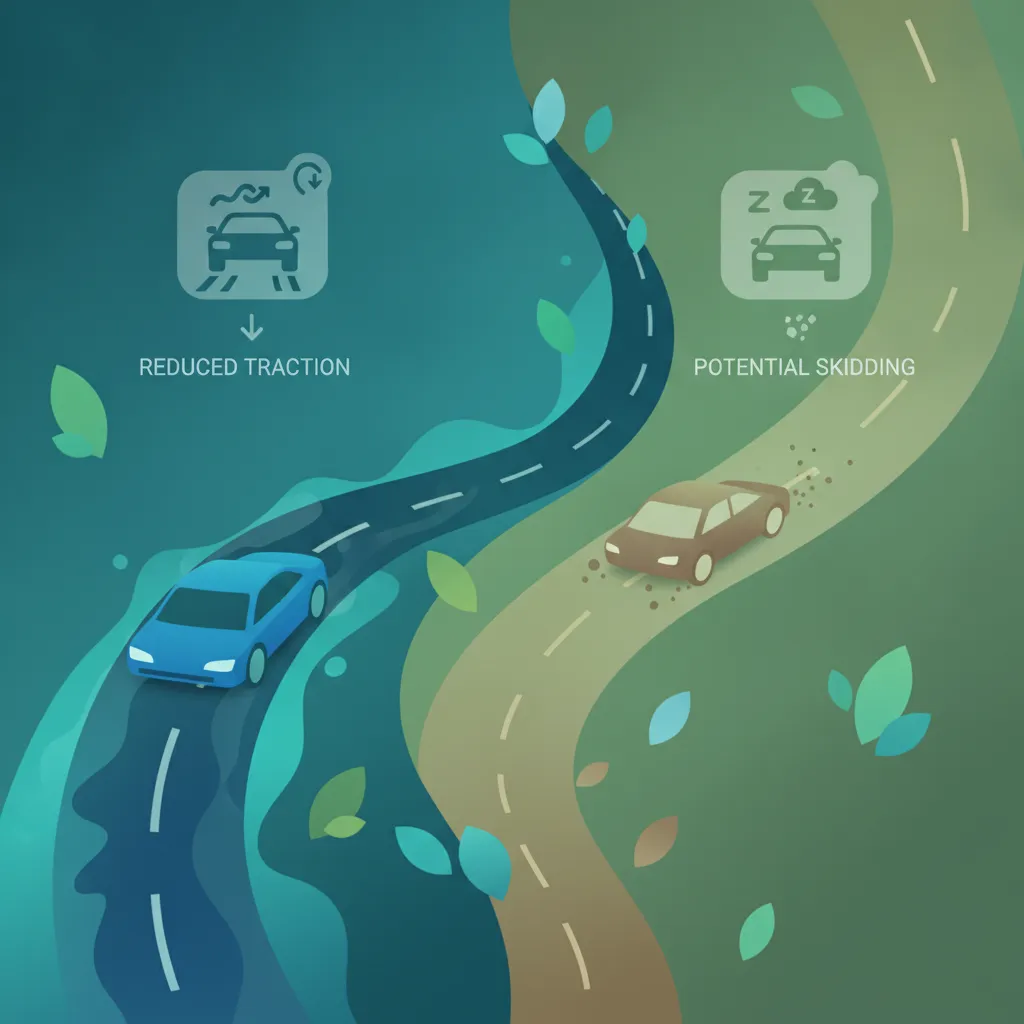
This lesson teaches riders to recognize and adapt to various road surfaces and their inherent risks. It covers the specific challenges posed by surfaces like gravel, sand, and metal tram tracks, which can significantly reduce traction. You will learn to adjust your speed, braking, and cornering techniques to safely navigate these and other hazards like potholes.
This lesson trains riders to recognize and safely negotiate common road surface hazards that can suddenly reduce traction. It covers the risks posed by elements like loose gravel, wet leaves, painted lines, and manhole covers, especially when wet. The content provides strategies for scanning the road ahead to identify these dangers early and using smooth control inputs to maintain stability when crossing them.
This lesson explains the physical effects of different weather conditions on motorcycle safety. It details how rain reduces tyre adhesion and increases the risk of hydroplaning, while fog severely limits visibility, requiring a significant reduction in speed. The content also covers how extreme heat and cold can affect tyre pressure and compound performance, necessitating adjustments from the rider.

This lesson addresses the dynamics of cornering and maintaining stability on an AM vehicle, especially at lower speeds. It explains the importance of selecting an appropriate entry speed, using the correct lean angle, and smoothly accelerating out of a turn. You will also learn how factors like road camber and tire pressure affect grip and control while navigating curves.
This lesson provides critical guidance on how to safely share the road with vulnerable users, including pedestrians, cyclists, motorcyclists, and children. It highlights the importance of increased awareness in specific areas like school zones and crosswalks. The content teaches techniques for maintaining a safe lateral distance when overtaking, checking blind spots thoroughly, and anticipating the often unpredictable movements of these users.
This lesson explains how to execute left turns, right turns, and U-turns safely while maintaining correct lane discipline. It covers interpreting road markings and arrows, selecting the proper vehicle position, and using signals in a timely manner. Performing shoulder checks to monitor blind spots before and during a turn is a key focus for preventing collisions.

This lesson provides a detailed guide to understanding road markings and pavement symbols in Italy. It explains the critical difference between continuous and broken lane lines regarding overtaking, the function of stop lines and yield markings at intersections, and the meaning of directional arrows painted in lanes. The content also covers markings for pedestrian crossings, bus lanes, and designated parking areas.

This lesson teaches drivers how to adapt their technique for various adverse weather conditions. It explains the risks of reduced grip and visibility in rain, fog, snow, and ice, and the need to significantly increase following distances and reduce speed. The content covers how to avoid and correct skids, the proper use of lights in poor visibility, and the legal requirements for winter tyres or snow chains in certain areas.
Find clear answers to common questions learners have about Safe Following Distances and Grip Management. Learn how the lesson is structured, which driving theory objectives it supports, and how it fits into the overall learning path of units and curriculum progression in Italy. These explanations help you understand key concepts, lesson flow, and exam focused study goals.
The two-second rule is a simple way to maintain a safe gap between you and the vehicle ahead. It provides enough time to react and brake if the lead vehicle stops suddenly, which is crucial for preventing rear-end collisions on mopeds and scooters.
Water on the road creates a thin layer that significantly reduces friction between your tires and the tarmac. This increases your braking distance and makes cornering more dangerous, requiring you to reduce speed and increase your following distance.
Yes, understanding that worn tires lack the tread depth to displace water is essential. The exam frequently tests your knowledge of how vehicle condition directly impacts your ability to maintain grip and safety.
While the two-second rule is a baseline, you should increase your following distance in poor visibility, heavy traffic, or on surfaces with less grip. Always adjust your buffer based on the specific hazards present in your current environment.
Start searching now to pinpoint exactly which Italian driving theory topics, road signs, or traffic rules you need to master. Use our advanced filters to build a custom practice session and ensure you're fully prepared for every aspect of your official driving licence exam.