
This lesson covers the critical non-verbal communication skills required for safe riding on a moped or scooter. You will learn how to effectively signal your intentions to other road users, ensuring your actions are predictable and clear to help prevent accidents in everyday traffic.

Lesson content overview
Driving, especially on a moped or scooter, is a dynamic and collaborative activity that requires constant interaction with other road users. Effective non-verbal communication is not merely a courtesy; it is a fundamental aspect of road safety. By clearly conveying your intentions, you reduce ambiguity, help others anticipate your actions, and significantly lower the risk of accidents. This lesson delves into the essential techniques for communicating effectively, ensuring smoother traffic flow and enhancing your safety on Italian roads.
On a moped or scooter, your vulnerability in traffic is inherently higher compared to larger vehicles. This makes clear and unambiguous communication with drivers, pedestrians, and cyclists paramount. When you communicate your intentions effectively, you bridge the gap between your desired maneuver and other road users' expectations. This proactive approach allows others to react appropriately, giving you the space and time needed to execute maneuvers safely. It is the foundation for predictable behaviour, which is key to preventing collisions and navigating complex traffic situations with confidence.
Always assume other road users might not have seen you. Proactive communication helps ensure your presence and intentions are acknowledged, even when you believe you are clearly visible.
Eye contact is one of the most direct and effective forms of non-verbal communication, establishing mutual recognition between road users. It's a quick, silent way to confirm that another driver, pedestrian, or cyclist has seen you and is aware of your presence and potential intentions.
Direct eye contact involves briefly focusing your gaze on another road user's eyes to ensure they have noticed you. This mutual gaze confirms awareness and can help you gauge their readiness to react. For instance, before proceeding at a potentially blind intersection or when preparing to overtake, seeking eye contact can confirm that the other driver acknowledges your position.
However, direct eye contact isn't always feasible or necessary. Peripheral acknowledgment, where you focus on drivers in your peripheral vision to ascertain their attention, is also a valuable skill. This allows you to monitor their head movements or vehicle orientation, indicating where their attention lies.
When riding a scooter, you should actively seek eye contact, especially in situations where your presence might be unexpected or obscured. For example, before merging onto a busy road or making a turn at an uncontrolled intersection, glance at oncoming or cross-traffic drivers. If they meet your gaze, it's a strong indication they've seen you.
A common misunderstanding is assuming eye contact is unnecessary in bright daylight or when you are clearly visible. Even under ideal conditions, a driver's attention might be elsewhere. Failing to confirm where a driver's attention lies can lead to dangerous assumptions and increase the risk of accidents. Always confirm, never assume.
Your vehicle’s headlights are more than just illumination; they are powerful tools for non-verbal communication. Utilizing high/low beams, flashing, or directional light can compensate for your smaller profile and provide early warnings to other road users, especially when your intentions might otherwise be unclear.
According to the Italian Codice della Strada, high beams must be dimmed to low beams when approaching oncoming traffic or when following another vehicle within 150 metres. This is critical to prevent blinding other drivers, which can lead to dangerous situations. Flashing low beams is permitted as a warning signal to alert other road users of your presence, but it must never be misused to signal turning intentions, which is the exclusive role of indicator lights.
Continuously using high beams in well-lit areas or when facing/following other vehicles is illegal and dangerous, causing significant glare and reducing other drivers' visibility.
Hand signals are universally recognizable arm gestures that convey specific intentions such as turning or stopping. They are a vital backup system, especially when your vehicle's indicator lights fail or are otherwise ambiguous due to bright sunlight or the angle of other road users.
The Codice della Strada outlines specific hand signals that must be used if your vehicle's indicators are not functional or clearly visible. These include:
Hand signals must be performed well in advance of the maneuver, allowing other road users ample time to react. The Codice della Strada (Art. 149) specifies that these signals must be clearly visible and given before beginning the maneuver. Delaying your signal until you are already turning or stopping reduces the reaction time for others, which can lead to dangerous situations. Practice these signals until they become second nature, ensuring they are fluid and unambiguous.
Your riding position within the lane significantly impacts your visibility to other road users and your ability to observe the surrounding environment. Strategic positioning is a continuous communication method, informing others of your presence and intentions without requiring explicit signals.
Choosing a riding position that maximises your visibility means placing yourself where you are most likely to be seen by drivers in front, behind, and alongside you. This often means riding slightly to the left within your lane (in countries with right-hand traffic), which puts you closer to drivers' line of sight in their rear-view and side mirrors. This position also provides a buffer zone from parked cars and potential opening doors on the right.
Regularly performing shoulder checks is essential. These quick glances over your shoulder are crucial for verifying that your blind spots are clear before changing lanes or making turns. Always combine shoulder checks with diligent mirror usage, checking your rear-view and side mirrors frequently to monitor traffic behind and beside you.
To avoid being hidden in other vehicles' blind spots, especially those of larger vehicles like trucks or buses, adjust your speed and lane position. If you can't see a driver's face in their mirror, they likely can't see you. Move to a position where you are clearly visible. Maintaining a safe following distance also ensures you are not tailgating, allowing other drivers to see your front lights and providing you with more time to react to sudden changes in traffic flow.
Consider the "two-second rule" for following distance: choose a fixed point ahead, and when the vehicle in front passes it, you should count "one-thousand-one, one-thousand-two." If you pass the point before completing the count, you are too close. Increase this distance in poor conditions.
Predictable actions are the bedrock of safe driving. Consistently using signals and behaviors that align with legal expectations and common road norms enhances trust among all road users and drastically reduces the element of surprise. When your actions are predictable, others can anticipate your next move, allowing them to adjust their speed and position accordingly.
A critical aspect of predictable riding is adhering to a consistent sequence for any maneuver. A widely accepted and safe sequence is:
Signal: Activate your indicator lights or give the appropriate hand signal well in advance.
Mirror Check: Check your rear-view and side mirrors to assess traffic conditions behind and beside you.
Shoulder Check: Perform a quick glance over your shoulder to confirm your blind spot is clear.
Execute Maneuver: Only once you have confirmed it is safe, smoothly execute the turn, lane change, or stop.
Cancel Signal: Once the maneuver is complete, ensure your indicators are switched off.
Maintaining a consistent speed that is appropriate for the traffic flow and road conditions also contributes to predictability. Sudden, unexplained changes in speed can confuse other drivers. Similarly, staying within your designated lane and not weaving unnecessarily helps others understand your intended path. Adhering to these principles fosters a safer, more harmonious traffic environment for everyone.
The Codice della Strada (Italian Road Code) provides specific regulations concerning the use of signals and lights, which Patente AM riders must strictly follow. Adherence to these rules is not only a legal requirement but also a critical component of safe riding.
Codice della Strada Article 150 mandates the activation of indicator lights (frecce) at least 30 metres before any lane change, turn, or deviation from your current path. This rule applies universally to all road changes, regardless of vehicle type, and is crucial for giving other road users adequate notice of your intentions.
As outlined in Codice della Strada Article 149, hand signals are mandatory when your vehicle's indicator lights are not functional. They must be given clearly and unequivocally before the commencement of the maneuver, ensuring that other road users can understand your intent.
Codice della Strada Article 152 governs the use of high beams (abbaglianti). High beams must be dimmed to low beams (anabbaglianti) when:
Approaching oncoming traffic,
Following another vehicle within 150 metres. The rationale is to prevent blinding other drivers and ensure their continued visibility.
Correct Example: A rider on a rural road switches from high beams to low beams as a car approaches from the opposite direction.
Incorrect Example: A rider keeps high beams on while closely following another car, causing glare for the driver ahead.
Flashing low beams is explicitly permitted as a means to warn other road users of your presence or to signal a brief warning. However, it must not be used to signal turning intentions. This specific use helps increase awareness, especially in situations where a rider might be less visible.
Codice della Strada Article 140 dictates that riders must operate their vehicle as far to the right as practicable on multi-lane roads, while maintaining a safe distance from parked vehicles and other hazards. This promotes predictable lane usage and avoids conflict with pedestrians or obstacles that might appear on the far right.
Even experienced riders can sometimes make mistakes in communication, leading to misunderstandings and increased risk. Being aware of these common pitfalls can help you consciously avoid them.
Effective communication isn't static; it must adapt to varying environmental and traffic conditions. Being flexible in your approach ensures your messages are always received clearly, regardless of the challenges.
The consistent and correct application of communication techniques has profound cause-and-effect relationships on overall road safety. Understanding these connections underscores the importance of every signal and every glance.
Effective communication is therefore a loop: clear signals enable anticipation, anticipation prevents accidents, and consistent, safe behavior reinforces a predictable and safer road environment for everyone.
Understanding the theory is one thing; applying it in real-world scenarios is another. Here are practical examples demonstrating effective communication for Patente AM riders.
Effective non-verbal communication is paramount for Patente AM riders, significantly enhancing safety and promoting smooth traffic flow. It encompasses:
Always adapt your communication methods to varying conditions such as weather, lighting, road type, and the presence of vulnerable road users. Strict adherence to Italian traffic laws, particularly regarding indicator use (30 metres in advance, Art. 150), hand signals (Art. 149), and headlight regulations (Art. 152), forms the legal foundation for safe and effective communication on the road. Remember, early and clear signals provide other road users with the crucial reaction time needed to prevent accidents.
Effective non-verbal communication is essential for Patente AM riders to ensure safety and smooth traffic flow. Key techniques include using eye contact to confirm other road users have seen you, activating indicators at least 30 metres before maneuvers, and using Codice della Strada-prescribed hand signals when indicators fail. Headlight flashing signals presence but never turning intentions, while high beams must be dimmed within 150 metres of other vehicles. Consistent, predictable signaling allows others to anticipate your actions and significantly reduces collision risk at intersections and during lane changes.
A short set of high-value points that capture the most important learning from this lesson.
Indicator lights must be activated at least 30 metres before any lane change, turn, or deviation according to Codice della Strada Art. 150
Eye contact establishes mutual recognition with other road users and confirms they have seen you before critical maneuvers
Flashing low beams signals your presence but must never be used to indicate turning intentions, which is the exclusive role of indicators
Hand signals are legally mandatory when vehicle indicators are not functional or clearly visible, as specified in Codice della Strada Art. 149
Safe maneuvers follow a consistent sequence: Signal, Mirror Check, Shoulder Check, then Execute
Explore all units and lessons included in this driving theory course.
Activate indicators at least 30 metres before any maneuver (Codice della Strada Art. 150)
Dim high beams when approaching oncoming traffic or following another vehicle within 150 metres (Codice della Strada Art. 152)
Hand signals must be given clearly and unequivocally before beginning the maneuver when indicators fail
If you cannot see a driver's face in their mirrors, they likely cannot see you - you are in their blind spot
Shoulder checks combined with mirror usage are essential before changing lanes or making turns to verify blind spots are clear
Signaling too late or too close to the maneuver point, reducing other road users' reaction time
Assuming a driver has seen you without actively seeking eye contact to confirm mutual awareness
Keeping high beams on when they should be dimmed, causing dangerous glare for other drivers
Failing to give hand signals when indicators malfunction, creating confusion for surrounding traffic
Riding in another vehicle's blind spot for extended periods without adjusting position or speed
Lesson content overview
A short set of high-value points that capture the most important learning from this lesson.
Indicator lights must be activated at least 30 metres before any lane change, turn, or deviation according to Codice della Strada Art. 150
Eye contact establishes mutual recognition with other road users and confirms they have seen you before critical maneuvers
Flashing low beams signals your presence but must never be used to indicate turning intentions, which is the exclusive role of indicators
Hand signals are legally mandatory when vehicle indicators are not functional or clearly visible, as specified in Codice della Strada Art. 149
Safe maneuvers follow a consistent sequence: Signal, Mirror Check, Shoulder Check, then Execute
Explore all units and lessons included in this driving theory course.
Activate indicators at least 30 metres before any maneuver (Codice della Strada Art. 150)
Dim high beams when approaching oncoming traffic or following another vehicle within 150 metres (Codice della Strada Art. 152)
Hand signals must be given clearly and unequivocally before beginning the maneuver when indicators fail
If you cannot see a driver's face in their mirrors, they likely cannot see you - you are in their blind spot
Shoulder checks combined with mirror usage are essential before changing lanes or making turns to verify blind spots are clear
Signaling too late or too close to the maneuver point, reducing other road users' reaction time
Assuming a driver has seen you without actively seeking eye contact to confirm mutual awareness
Keeping high beams on when they should be dimmed, causing dangerous glare for other drivers
Failing to give hand signals when indicators malfunction, creating confusion for surrounding traffic
Riding in another vehicle's blind spot for extended periods without adjusting position or speed
Explore search topics learners often look for when studying Communication with Other Road Users. These topics reflect common questions about road rules, driving situations, safety guidance, and lesson level theory preparation for learners in Italy.
Browse additional driving theory lessons that cover connected traffic rules, road signs, and common driving situations related to this topic. Improve your understanding of how different rules interact across everyday traffic scenarios.
Explore the specific legal requirements for non-verbal communication in Italian traffic, focusing on signals, headlight use, and hand gestures as defined by the Codice della Strada for Patente AM riders.

This lesson details the proper and legal application of a vehicle's horn, lights, and signals as primary communication tools. It explains the specific circumstances for using high beams, low beams, and fog lights to maximize visibility without dazzling other drivers. The content also clarifies the rules for using the horn, turn indicators, and hazard lights to signal intentions, warn of danger, or indicate an emergency situation.

This lesson provides a comprehensive guide to a vehicle's lighting systems and their correct use according to the Codice della Strada. It explains the functions of low beams, high beams, fog lights, and daytime running lights, detailing when each should be used to ensure visibility for the driver and by other road users. Proper use of lighting is critical for safety during night driving and in conditions of poor visibility.
This lesson focuses on the vital systems for visibility and communication: mirrors, lighting, and signals. It provides instruction on the proper adjustment of mirrors to minimize blind spots and the correct use of headlamps, indicators, and brake lights as per Italian regulations. The content underscores how maintaining these systems in full working order is crucial for being seen and signalling intentions clearly in traffic.

This lesson explains how motorcyclists can effectively communicate their intentions to other road users beyond just using indicators. It covers the use of deliberate body language, clear hand signals, and strategic lane positioning to make actions predictable and reduce ambiguity. Establishing eye contact with other drivers is also highlighted as a powerful tool for confirming that you have been seen and understood.
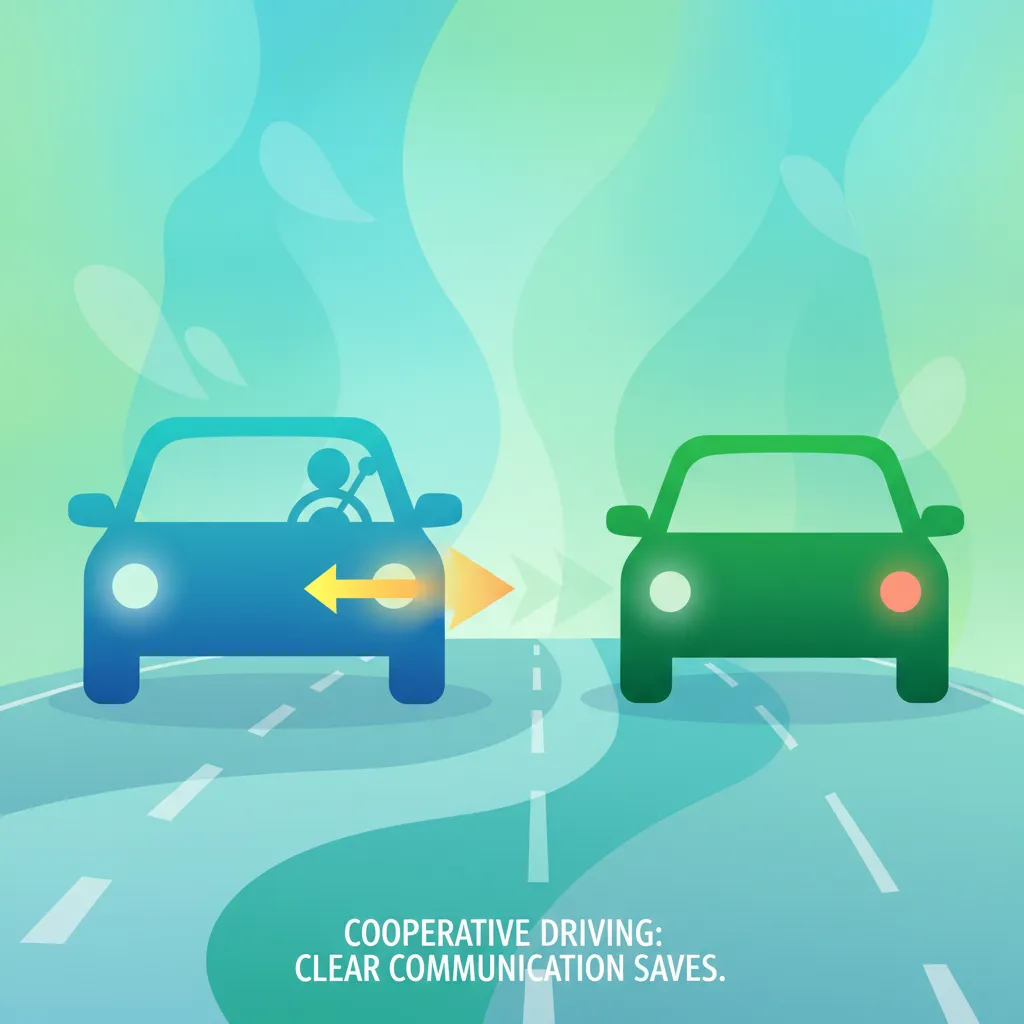
This lesson emphasizes the importance of clear communication and cooperative behavior among all road users to prevent conflicts and enhance safety. It details the proper and legal use of vehicle signals, such as turn indicators and hazard lights, as well as the appropriate use of the horn. The content also explores the role of non-verbal cues like eye contact and courtesy gestures in creating a predictable and safe driving environment.
This lesson details the essential protective equipment required for legal and safe moped operation in Italy. It covers legal standards for helmets, the benefits of wearing protective gloves and boots, and the importance of high-visibility clothing. You will also learn the correct use of your vehicle's lighting system for visibility during both day and night.
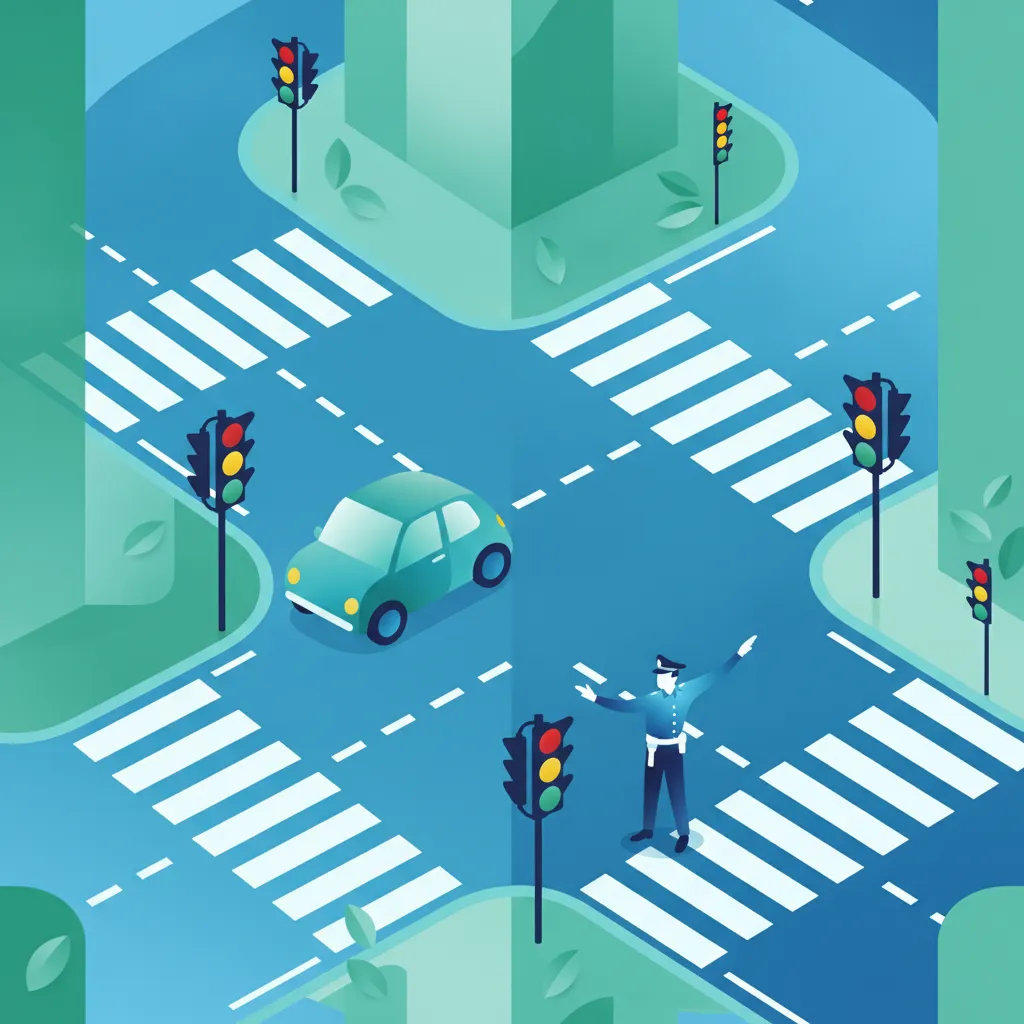
This lesson explains the function of Italian traffic light systems and the meaning of various road markings. You will learn the rules for red, amber, and green signals, including flashing lights and directional arrows. It also covers how to interpret lane lines, stop lines, and other surface markings that dictate correct vehicle positioning and movement.
This lesson delivers a comprehensive explanation of right-of-way regulations at Italian intersections. It covers the interpretation of traffic light signals, the absolute requirement to stop at stop signs, and yielding at give-way signs. Furthermore, it details the default priority rules for unmarked intersections and the specific obligations a rider has towards pedestrians on crossings.
This lesson provides detailed instruction on performing effective shoulder checks to supplement mirror use, ensuring a clear path before turning or changing lanes. It covers the proper and timely use of electronic indicators and hand signals to communicate your intentions to other drivers. Correct signaling is crucial for preventing misunderstandings and collisions on the road.
Learn about frequent non-verbal communication mistakes made by scooter and moped riders in Italy. Understand how to prevent misunderstandings with eye contact, signals, and positioning to improve road safety and meet exam requirements.
This lesson addresses high-risk behaviors often associated with young and inexperienced riders. It highlights the dangers of distractions like mobile phone use, the influence of peer pressure, and the severe consequences of speeding or riding under the influence of substances. Understanding these risks is the first step toward developing a mature and responsible approach to riding.
This lesson emphasizes the importance of clear communication and cooperative behavior among all road users to prevent conflicts and enhance safety. It details the proper and legal use of vehicle signals, such as turn indicators and hazard lights, as well as the appropriate use of the horn. The content also explores the role of non-verbal cues like eye contact and courtesy gestures in creating a predictable and safe driving environment.
This lesson details how to safely approach and enter intersections by correctly interpreting traffic lights, stop signs, and give-way rules. It emphasizes the importance of scanning for hazards, checking blind spots, and anticipating the actions of other road users. You will learn to adjust your speed and position your vehicle correctly to navigate crossings without incident.
This lesson focuses on the specific regulatory and warning signs that Patente AM riders must understand and obey. It details signs related to speed limits, no-entry zones, and mandatory directions that directly impact moped operation. You will also learn to recognize warning signs for potential hazards like sharp curves, slippery surfaces, and pedestrian areas.
This lesson explains the function of Italian traffic light systems and the meaning of various road markings. You will learn the rules for red, amber, and green signals, including flashing lights and directional arrows. It also covers how to interpret lane lines, stop lines, and other surface markings that dictate correct vehicle positioning and movement.
This lesson provides detailed instruction on performing effective shoulder checks to supplement mirror use, ensuring a clear path before turning or changing lanes. It covers the proper and timely use of electronic indicators and hand signals to communicate your intentions to other drivers. Correct signaling is crucial for preventing misunderstandings and collisions on the road.
This lesson outlines the proper conduct when encountering emergency vehicles on the road or interacting with responders at an incident. It details the rules for yielding the right-of-way to ambulances, police, and fire services, ensuring they have a clear path. You will also learn how to provide clear and concise information to authorities to facilitate an effective emergency response.
This lesson provides critical guidance on how to safely share the road with vulnerable users, including pedestrians, cyclists, motorcyclists, and children. It highlights the importance of increased awareness in specific areas like school zones and crosswalks. The content teaches techniques for maintaining a safe lateral distance when overtaking, checking blind spots thoroughly, and anticipating the often unpredictable movements of these users.

This lesson addresses the significant risk posed by parked vehicles, particularly the hazard of drivers opening their doors into traffic. You will learn to maintain a safe lateral distance when passing parked cars and to actively scan for signs of occupancy. This proactive approach helps prevent dangerous "dooring" incidents and ensures safe passage in urban environments.
This lesson details the proper and legal application of a vehicle's horn, lights, and signals as primary communication tools. It explains the specific circumstances for using high beams, low beams, and fog lights to maximize visibility without dazzling other drivers. The content also clarifies the rules for using the horn, turn indicators, and hazard lights to signal intentions, warn of danger, or indicate an emergency situation.
Find clear answers to common questions learners have about Communication with Other Road Users. Learn how the lesson is structured, which driving theory objectives it supports, and how it fits into the overall learning path of units and curriculum progression in Italy. These explanations help you understand key concepts, lesson flow, and exam focused study goals.
In Italy, you should primarily use your vehicle's integrated indicators. However, hand signals are useful as a secondary measure in heavy traffic or if your electronic signals are obscured, and they are frequently referenced in safety-focused exam questions.
Eye contact is a crucial defensive tool. Establishing it with a driver ensures they have seen you, which is particularly vital for moped riders who are more vulnerable and less visible in heavy traffic.
The best way to signal to non-motorized users is through consistent speed, clear positioning, and signaling your intentions early. Never rely on sudden movements, as this confuses other road users.
Yes, you may encounter questions regarding the proper use of headlights during the day or in poor visibility to increase your presence and communicate your movement to oncoming traffic.
Start searching now to pinpoint exactly which Italian driving theory topics, road signs, or traffic rules you need to master. Use our advanced filters to build a custom practice session and ensure you're fully prepared for every aspect of your official driving licence exam.