
This lesson teaches you the essential rules for navigating uncontrolled intersections in Italy, where the principle of yielding to the right (precedenza a destra) applies. Mastering this fundamental concept is critical for both your Patente B theory exam and your future safety on the road. By understanding how to assess traffic flow without signals, you will build the confidence needed for urban driving.
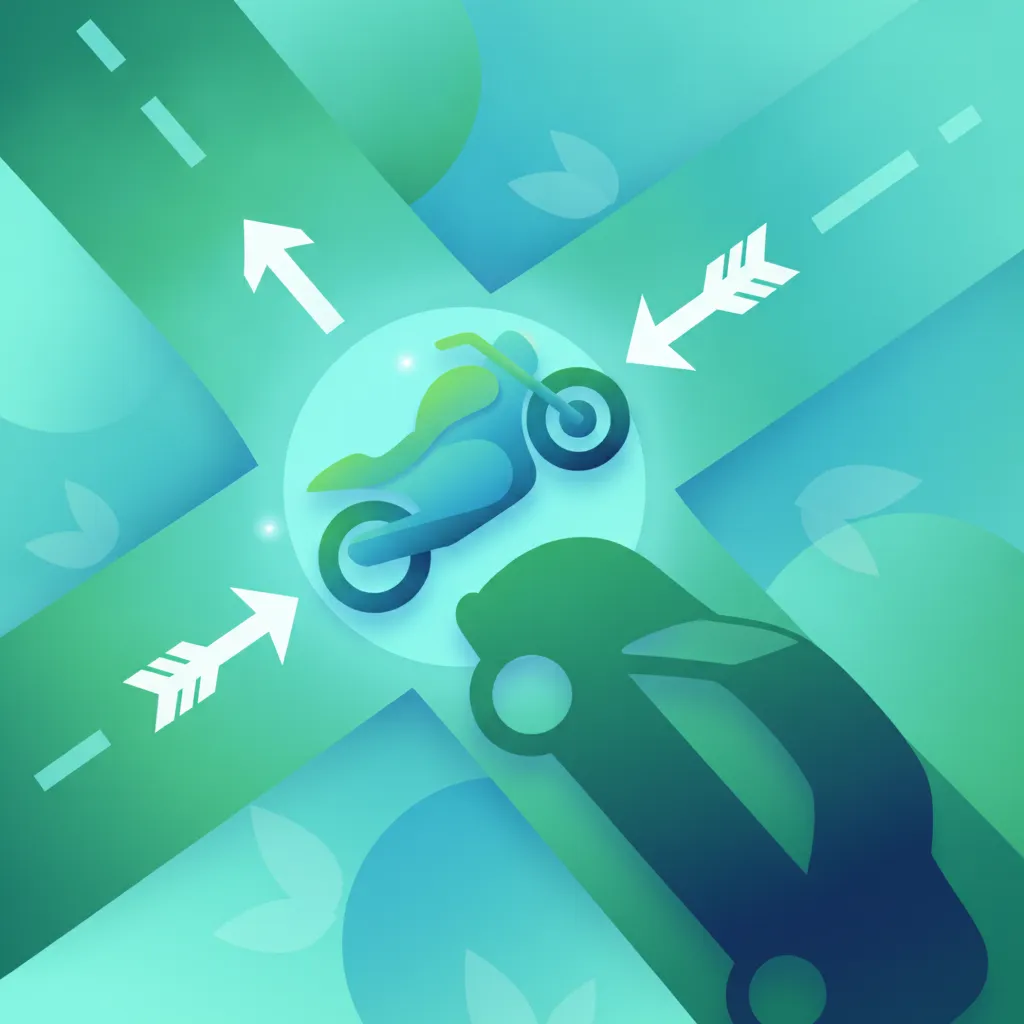
Lesson content overview
Understanding right-of-way rules is paramount for safe driving, especially when approaching intersections. In Italy, navigating intersections without explicit traffic control devices can be a source of confusion for new drivers. This lesson delves into the fundamental principle governing these junctions: the "Precedenza a Destra," or yield-to-the-right rule, which is a cornerstone of Italian traffic law. Mastering this rule is essential for preventing collisions, ensuring smooth traffic flow, and passing your Patente B theory test.
An intersection where no traffic signs (such as Stop or Give Way), traffic lights, or road markings are present to explicitly dictate which vehicle has priority. In these situations, drivers must apply the default right-of-way rules.
Uncontrolled intersections are common throughout Italy, particularly in residential areas, rural settings, and smaller towns where traffic volume does not warrant more complex control mechanisms. Unlike intersections equipped with traffic lights, stop signs, or yield signs, drivers must rely on a universally understood default rule to determine who proceeds first. The absence of specific signage means that you, as the driver, are solely responsible for assessing the situation and applying the correct priority rule. Misinterpreting these junctions is a leading cause of traffic accidents, making a thorough understanding of their navigation critical for every driver.
At the heart of navigating uncontrolled intersections in Italy is the principle of "Precedenza a Destra." This rule establishes a clear hierarchy of movement, reducing ambiguity where no explicit controls exist. It is a fundamental aspect of the Italian Highway Code (Codice della Strada) and applies uniformly across the country.
The legal rule at uncontrolled intersections requiring a driver to yield to any vehicle approaching from their immediate right.
The primary purpose of Precedenza a Destra is to create a predictable traffic flow. By consistently applying this rule, drivers can anticipate the actions of others, fostering a safer and more efficient road environment. It means that even if a vehicle is approaching slowly or appears to be stopping, if it is on your right, you must be prepared to yield to it.
Applying the Precedenza a Destra rule correctly requires a combination of observation, judgment, and cautious execution. As you approach any intersection, your first step should always be to scan for traffic signs, signals, or road markings. If none are present, you must immediately default to the yield-to-the-right rule.
Reduce Speed: Begin to slow down well in advance of the intersection. This gives you more time to observe and react to approaching traffic.
Observe All Approaches: Systematically scan left, right, and straight ahead for any vehicles. Pay particular attention to traffic coming from your right.
Identify Priority: Determine if any vehicle is approaching from your right. If so, that vehicle has priority.
Prepare to Yield: If a vehicle has priority, be ready to slow further, or come to a complete stop, to allow it to proceed safely. Your intention to yield should be clear to other drivers.
Proceed Safely: Only when the path is clear, and it is safe to do so, should you proceed through the intersection. Always maintain a safe speed and be aware of potential hazards.
It's crucial not to assume that another driver will yield to you, even if you believe you have the right-of-way. Defensive driving means always being prepared for unexpected actions from other road users. This constant vigilance is vital, especially where specific controls are absent.
Situations can arise where two or more vehicles arrive at an uncontrolled intersection at precisely the same time. The Precedenza a Destra rule still applies here, establishing the "rightmost vehicle principle."
When two or more vehicles arrive simultaneously at an uncontrolled intersection, the vehicle positioned furthest to the right has priority, and all other vehicles must yield to it.
This principle provides a logical method for resolving potential conflicts. For example, at a four-way uncontrolled intersection where four vehicles arrive simultaneously, the vehicle coming from the direction that has no other vehicle to its right would have the initial priority. Once that vehicle proceeds, the rule recalculates for the remaining vehicles until all have safely passed through. This scenario demands clear communication (often through eye contact or slight adjustments in speed) and mutual understanding among drivers.
While Precedenza a Destra is the default, it is critically important to understand that this rule is superseded by any explicit traffic control devices. The hierarchy of controls dictates that signs and signals always take precedence over the default right-of-way rule.
The presence of a Stop sign or a Give Way sign (also known as a Yield sign) fundamentally alters the priority at an intersection. These signs are used to assign priority where traffic conditions, visibility, or safety concerns require a deviation from the default yield-to-the-right rule.
When you encounter a Stop sign, you must bring your vehicle to a complete stop before the stop line (a solid white line across your lane) or, if no line is present, before the edge of the intersecting road where you have a clear view of traffic. This stop is mandatory, even if no other vehicles are approaching from the right or left. After stopping, you must yield to all traffic on the main road before proceeding.
A Give Way sign (CEDI PRECEDENZA) indicates that you must yield to traffic on the intersecting road. Unlike a Stop sign, a complete stop is not always required; you may proceed without stopping if the way is clear and you can do so safely without impeding priority traffic. However, you must be prepared to stop if necessary. This means slowing down sufficiently to assess traffic and being ready to stop if a vehicle with priority is approaching.
Never assume you have priority if there is a Stop or Give Way sign for your approach, even if you perceive traffic coming from your right. The sign always dictates your action.
Another significant sign that overrides Precedenza a Destra is the "Priority Road" sign. This sign indicates that traffic on your road has priority over traffic from all intersecting roads until another sign indicates otherwise.
When you are driving on a road marked as a priority road, vehicles entering from side roads will have Stop or Give Way signs, or explicit markings, obliging them to yield to you. Conversely, if you are entering a priority road from a side street, you will almost certainly encounter a Stop or Give Way sign, requiring you to yield to traffic already on the priority road. It is crucial to be vigilant for the "End of Priority Road" sign, which will cancel your priority and reinstate the default Precedenza a Destra rule for subsequent uncontrolled intersections.
While Precedenza a Destra and priority signs cover most scenarios, certain situations require additional consideration or exceptions to the default rule.
A critical exception to vehicle priority rules involves pedestrians, particularly at marked crossings (zebra crossings). Pedestrians always have absolute priority over vehicles when crossing at a designated crosswalk, regardless of any other priority rules for vehicles.
A marked area on the road, often indicated by white stripes (zebra crossing), where pedestrians have the legal right-of-way to cross the street.
When approaching any intersection, controlled or uncontrolled, you must be especially attentive to pedestrians. If a pedestrian is at, or entering, a marked crosswalk, you must slow down and be prepared to stop to allow them to cross safely. Failure to yield to pedestrians at a marked crossing is a serious violation and can lead to significant penalties, not to mention posing a severe risk to vulnerable road users.
Even if you have the right-of-way from the right, you must always yield to pedestrians on a marked crosswalk. Pedestrian priority is paramount.
Visibility plays a crucial role in safe driving, especially at uncontrolled intersections. In adverse conditions such as heavy rain, fog, snow, or at night, your ability to spot approaching vehicles from the right is significantly reduced. In such scenarios, drivers must exercise extra caution, regardless of the stated priority rules.
Similarly, the type of road can influence how you approach an uncontrolled junction. On high-speed rural roads, an uncontrolled intersection might catch you by surprise, necessitating immediate and significant speed reduction. Conversely, in a quiet urban area, while the rule still applies, the lower speeds generally allow for more relaxed, but still attentive, navigation.
While the Precedenza a Destra rule applies to most vehicles, there are specific categories of road users or situations that inherently demand greater caution or have their own priority rules.
Developing excellent observation skills and a defensive driving mindset is crucial for safely navigating uncontrolled intersections. Here are some key techniques:
Mistakes at uncontrolled intersections are a frequent cause of accidents and traffic violations in Italy. Being aware of these common pitfalls can help you avoid them.
Violations of right-of-way rules at intersections, particularly at Stop signs or in situations leading to collisions, carry significant penalties under the Codice della Strada, including fines and penalty points on your license.
Mastering the rules for uncontrolled intersections is a critical skill for any driver in Italy.
By consistently applying these principles, you will be well-equipped to navigate uncontrolled intersections safely and confidently, contributing to a safer road environment for everyone.
This lesson covers the fundamental Italian right-of-way rule at uncontrolled intersections: Precedenza a Destra, which requires yielding to vehicles approaching from your right. The rule applies only where no signs or signals are present; Stop signs require a mandatory complete halt, Give Way signs require yielding without always stopping, and Priority Road signs grant priority until cancelled. Pedestrians at marked crossings have absolute priority over all vehicles. When multiple vehicles arrive simultaneously, the rightmost vehicle proceeds first. Defensive driving and continuous observation are essential because other drivers may not follow the rules correctly.
A short set of high-value points that capture the most important learning from this lesson.
At uncontrolled intersections in Italy, yield to any vehicle approaching from your right (Precedenza a Destra) unless a sign explicitly states otherwise.
Stop signs (B2) always require a complete stop at the stop line before proceeding, regardless of other traffic.
Give Way signs (D1) require you to yield to intersecting traffic but allow proceeding without stopping if the way is clear.
Pedestrians at marked crossings have absolute priority over all vehicle traffic at all times.
When multiple vehicles arrive at an uncontrolled intersection simultaneously, the vehicle furthest to the right has priority.
Explore all units and lessons included in this driving theory course.
Traffic signs and signals always override the default Precedenza a Destra rule - look for Stop, Give Way, and Priority Road signs first.
A Priority Road (D4) gives you priority over intersecting roads until an End of Priority Road sign cancels it.
In reduced visibility (rain, fog, night), slow down significantly and be prepared to stop even if you technically have right-of-way.
Never assume other drivers will yield correctly - defensive driving means always being prepared for unexpected actions.
At a four-way simultaneous arrival, recalculate priority after each vehicle proceeds until all have cleared the junction.
Failing to check for vehicles approaching from the right, leading to 'T-bone' collisions at uncontrolled intersections.
Treating Stop or Give Way signs as suggestions rather than mandatory actions based on the sign type.
Proceeding through a marked pedestrian crossing without yielding when pedestrians are present.
Approaching uncontrolled intersections too quickly, especially where visibility is limited.
Assuming road size or appearance determines priority - without signs, Precedenza a Destra always applies regardless of road importance.
Lesson content overview
A short set of high-value points that capture the most important learning from this lesson.
At uncontrolled intersections in Italy, yield to any vehicle approaching from your right (Precedenza a Destra) unless a sign explicitly states otherwise.
Stop signs (B2) always require a complete stop at the stop line before proceeding, regardless of other traffic.
Give Way signs (D1) require you to yield to intersecting traffic but allow proceeding without stopping if the way is clear.
Pedestrians at marked crossings have absolute priority over all vehicle traffic at all times.
When multiple vehicles arrive at an uncontrolled intersection simultaneously, the vehicle furthest to the right has priority.
Explore all units and lessons included in this driving theory course.
Traffic signs and signals always override the default Precedenza a Destra rule - look for Stop, Give Way, and Priority Road signs first.
A Priority Road (D4) gives you priority over intersecting roads until an End of Priority Road sign cancels it.
In reduced visibility (rain, fog, night), slow down significantly and be prepared to stop even if you technically have right-of-way.
Never assume other drivers will yield correctly - defensive driving means always being prepared for unexpected actions.
At a four-way simultaneous arrival, recalculate priority after each vehicle proceeds until all have cleared the junction.
Failing to check for vehicles approaching from the right, leading to 'T-bone' collisions at uncontrolled intersections.
Treating Stop or Give Way signs as suggestions rather than mandatory actions based on the sign type.
Proceeding through a marked pedestrian crossing without yielding when pedestrians are present.
Approaching uncontrolled intersections too quickly, especially where visibility is limited.
Assuming road size or appearance determines priority - without signs, Precedenza a Destra always applies regardless of road importance.
Explore search topics learners often look for when studying Priority at Uncontrolled Intersections. These topics reflect common questions about road rules, driving situations, safety guidance, and lesson level theory preparation for learners in Italy.
Browse additional driving theory lessons that cover connected traffic rules, road signs, and common driving situations related to this topic. Improve your understanding of how different rules interact across everyday traffic scenarios.
Learn about special situations and vehicle types that modify the standard 'priority to the right' rule at Italian uncontrolled intersections. Essential driving theory for navigating complex junctions safely.
This lesson delivers a comprehensive explanation of right-of-way regulations at Italian intersections. It covers the interpretation of traffic light signals, the absolute requirement to stop at stop signs, and yielding at give-way signs. Furthermore, it details the default priority rules for unmarked intersections and the specific obligations a rider has towards pedestrians on crossings.
This lesson covers the general principles of priority at intersections governed by traffic signs and signals. It explains how to identify a priority road and the obligation to yield to traffic when encountering a 'dare la precedenza' (yield) or stop sign. The content also reviews the hierarchy of authority, where signals from a traffic officer override all other signs and lights.

This lesson explains the fundamental principles of right of way that govern interactions between different types of road users in Italy. It clarifies the legal precedence at intersections, pedestrian crossings, and when interacting with public transport like buses and trams. The content also details the absolute priority given to emergency vehicles and how to safely yield in accordance with the Codice della Strada.
This lesson details how to safely approach and enter intersections by correctly interpreting traffic lights, stop signs, and give-way rules. It emphasizes the importance of scanning for hazards, checking blind spots, and anticipating the actions of other road users. You will learn to adjust your speed and position your vehicle correctly to navigate crossings without incident.

This lesson provides a detailed explanation of the priority rules that govern Italian intersections and roundabouts. You will learn to identify priority roads and correctly apply the rules for stop and give way signs. It also covers the specific procedures for entering, navigating, and exiting roundabouts, emphasizing when to yield to circulating traffic.
This lesson focuses on the driver's responsibility to protect pedestrians, especially at designated crossings (strisce pedonali). It reinforces the legal requirement to yield to pedestrians who are on or about to enter a crosswalk. The content also covers the importance of reducing speed and increasing vigilance in urban areas, school zones, and other places with high pedestrian activity.

This lesson clarifies the special priority rules for emergency vehicles and public transport. It explains the legal obligation to safely pull over and clear a path for any vehicle with active sirens and flashing lights. The content also details the absolute right-of-way that trams have in most situations and the requirement to yield to public buses signaling to pull out from a stop.

This lesson addresses the increased complexity of overtaking in urban environments with dense traffic and frequent intersections. It stresses the importance of thorough observation, including mirror and blind spot checks, to ensure a safe gap is available. The content covers judging speed differentials and the necessity of clear signalling to execute the maneuver without causing conflict with other road users.
This lesson explains the concept of 'Zone a Traffico Limitato' (ZTL), common in Italian city centers, which restricts vehicle access at certain times. It covers how to identify ZTL boundaries, understand the operating hours, and the procedures for obtaining permits for commercial deliveries. The lesson also touches on environmental zones that may restrict access based on a vehicle's emission standards.
This lesson provides essential rules and techniques for driving on Italian motorways (autostrade) and major extra-urban roads. It explains how to safely merge onto the motorway from an entry ramp, the strict lane discipline required (drive right, overtake left), and how to exit correctly. The content also covers speed regulations, maintaining a safe following distance at high speed, and procedures for using service areas and handling emergencies.
Understand typical mistakes and violations drivers make at various types of intersections in Italy. Learn how to avoid these pitfalls for safer driving and to pass your theory test.
This lesson details how to safely approach and enter intersections by correctly interpreting traffic lights, stop signs, and give-way rules. It emphasizes the importance of scanning for hazards, checking blind spots, and anticipating the actions of other road users. You will learn to adjust your speed and position your vehicle correctly to navigate crossings without incident.
This lesson covers the general principles of priority at intersections governed by traffic signs and signals. It explains how to identify a priority road and the obligation to yield to traffic when encountering a 'dare la precedenza' (yield) or stop sign. The content also reviews the hierarchy of authority, where signals from a traffic officer override all other signs and lights.
This lesson delivers a comprehensive explanation of right-of-way regulations at Italian intersections. It covers the interpretation of traffic light signals, the absolute requirement to stop at stop signs, and yielding at give-way signs. Furthermore, it details the default priority rules for unmarked intersections and the specific obligations a rider has towards pedestrians on crossings.
This lesson focuses on the driver's responsibility to protect pedestrians, especially at designated crossings (strisce pedonali). It reinforces the legal requirement to yield to pedestrians who are on or about to enter a crosswalk. The content also covers the importance of reducing speed and increasing vigilance in urban areas, school zones, and other places with high pedestrian activity.

This lesson provides an in-depth focus on sharing the road with the most vulnerable users. It teaches drivers to be acutely aware of pedestrians at crossings, cyclists filtering through traffic, and motorcyclists who may be in blind spots. The lesson emphasizes the importance of leaving extra space, signaling intentions clearly, and exercising extreme caution at junctions, where the majority of serious incidents occur.

This lesson is dedicated to fostering awareness and safe interaction with vulnerable road users commonly found in cities. It details the legal priority of pedestrians at crossings and the importance of giving ample space to cyclists. Additionally, it covers the specific hazards associated with tram tracks and the need to be vigilant around public transport vehicles like buses and taxis.
This lesson addresses the increased complexity of overtaking in urban environments with dense traffic and frequent intersections. It stresses the importance of thorough observation, including mirror and blind spot checks, to ensure a safe gap is available. The content covers judging speed differentials and the necessity of clear signalling to execute the maneuver without causing conflict with other road users.
This lesson provides critical guidance on how to safely share the road with vulnerable users, including pedestrians, cyclists, motorcyclists, and children. It highlights the importance of increased awareness in specific areas like school zones and crosswalks. The content teaches techniques for maintaining a safe lateral distance when overtaking, checking blind spots thoroughly, and anticipating the often unpredictable movements of these users.
This lesson provides a detailed explanation of the priority rules that govern Italian intersections and roundabouts. You will learn to identify priority roads and correctly apply the rules for stop and give way signs. It also covers the specific procedures for entering, navigating, and exiting roundabouts, emphasizing when to yield to circulating traffic.
This lesson provides a step-by-step guide to safely and efficiently navigating roundabouts (rotatorie). It explains the primary rule of yielding to traffic already circulating within the roundabout before entering. The content covers correct lane positioning based on the intended exit, the proper use of turn signals when entering and exiting, and how to handle multi-lane roundabouts.
Find clear answers to common questions learners have about Priority at Uncontrolled Intersections. Learn how the lesson is structured, which driving theory objectives it supports, and how it fits into the overall learning path of units and curriculum progression in Italy. These explanations help you understand key concepts, lesson flow, and exam focused study goals.
When no signs, lights, or traffic police are present, you must apply the general rule of giving priority to vehicles coming from your right. You must slow down and prepare to stop if necessary.
Yes, common exceptions include priority given to trams, vehicles on rails, and emergency vehicles with sirens and flashing lights active. Always be vigilant for these road users.
Look for images showing a junction without stop signs, give way signs, or traffic lights. If the image shows no indicators of priority, the default right-of-way rule applies.
Not necessarily. If the road is clear and there are no vehicles approaching from your right, you can proceed with caution. However, you must always be ready to stop if a vehicle appears.
Start searching now to pinpoint exactly which Italian driving theory topics, road signs, or traffic rules you need to master. Use our advanced filters to build a custom practice session and ensure you're fully prepared for every aspect of your official driving licence exam.