This lesson explores the fundamental rules for navigating intersections within the Italian road network. You will learn to correctly identify right-of-way obligations dictated by traffic signs, signals, and the general principles of the Codice della Strada to ensure safe and predictable driving.
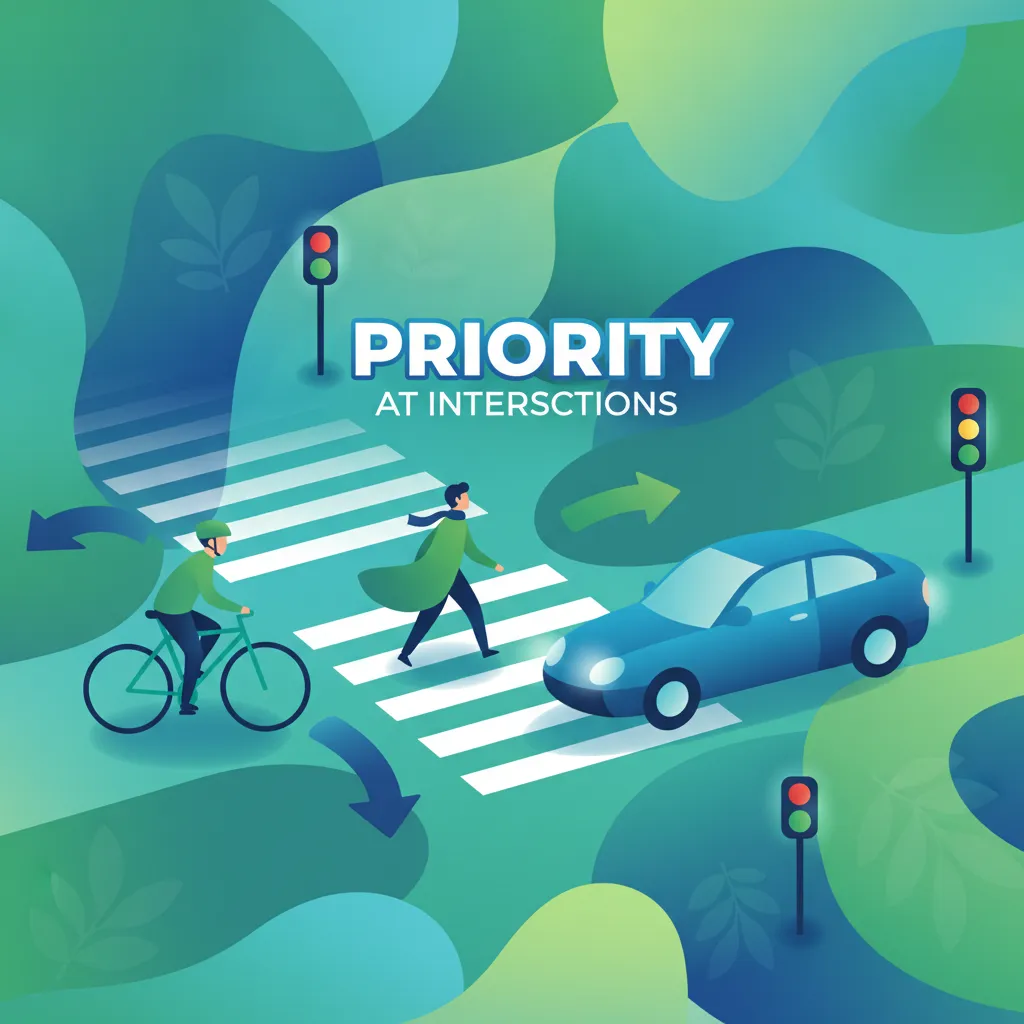
Lesson content overview
Navigating intersections safely is a cornerstone of responsible driving and a critical component of the Italian Patente B theory examination. Intersections are complex areas where multiple vehicles, pedestrians, and sometimes cyclists converge, making clear rules of priority (or "right-of-way") essential to prevent collisions and ensure smooth traffic flow. This comprehensive lesson delves into the fundamental principles that govern priority at intersections across Italy, focusing on how traffic signs, signals, and the directives of traffic officers determine who proceeds first.
Mastering these general priority rules is not merely about passing your Patente B test; it's about developing the foundational understanding necessary for safe and confident driving on Italian roads. From recognizing a priority road to understanding the absolute authority of a traffic officer, this guide will equip you with the knowledge to make correct decisions at every junction.
When approaching an intersection in Italy, drivers must understand that the determination of priority follows a strict hierarchy. This hierarchy ensures that even in situations where multiple control devices are present or conflicting, there is always a clear order of precedence for drivers to follow. This is crucial for avoiding confusion and dangerous situations.
The established hierarchy for controlling traffic and assigning priority is as follows:
Understanding this hierarchy is paramount. A driver might encounter a green traffic light but simultaneously see a traffic officer signaling them to stop. In this scenario, the officer's instruction must be obeyed, overriding the traffic light. Similarly, if traffic lights are not functioning, drivers must then refer to any existing priority signs.
A priority road (in Italian, strada con precedenza) is a designated route where traffic has the right-of-way over vehicles on intersecting roads. The purpose of a priority road is to facilitate continuous movement on main arteries, reducing the need for vehicles to stop unnecessarily.
A main road or route designated by specific signs, indicating that traffic on this road has the right-of-way over vehicles on any intersecting roads.
Traffic on a priority road can generally proceed through intersections without stopping or yielding, provided there are no other overriding controls like traffic lights or officer directions. This privilege, however, comes with a responsibility: drivers on priority roads must still exercise caution, observe surrounding traffic, and be prepared for unexpected situations.
The primary sign indicating a priority road is easily recognizable.
This sign, a yellow square rotated 45 degrees (resembling a diamond or rhombus) with a white border, signals to drivers that they are on a priority road. It may be repeated after intersections to reconfirm the priority status.
Even on a priority road, drivers should never assume absolute right-of-way without checking. Always glance left and right at intersections, especially in urban areas, as pedestrians, cyclists, or other drivers might unexpectedly enter your path.
Sometimes, supplementary panels are used with the priority road sign to indicate a branching priority road. This is common at complex intersections where the priority road does not continue straight but turns. These panels show the actual layout of the intersection with a thick line indicating the priority route and thinner lines showing the non-priority roads. Drivers must follow the thick line to determine their priority.
When encountering such a sign:
This precise guidance helps drivers understand the flow of priority even when the main route deviates from a straight path.
The yield sign (in Italian, dare la precedenza, literally "give precedence") is one of the most common and crucial priority signs. It instructs drivers to give way to traffic on the intersecting road, but unlike a stop sign, it does not always require a complete stop.
An inverted triangular sign indicating that drivers must slow down and be prepared to stop to give way to traffic on the intersecting road before proceeding.
The yield sign ensures that traffic from a minor road safely merges or crosses a major road, or simply that drivers cede priority at specific junctions where a full stop isn't always necessary.
This sign is an inverted white triangle with a red border. Its unique shape makes it recognizable even if obscured or covered in snow.
Upon encountering a yield sign, a driver must:
A common mistake is treating a yield sign as merely advisory, proceeding without adequately checking or reducing speed. This can lead to dangerous situations and collisions, as you are legally at fault if you fail to yield and cause an incident.
Often, a yield sign is accompanied by a give-way line (a linea di dare la precedenza) painted on the road surface. This is typically a dashed white line across the width of the lane, indicating where you should yield. If you need to stop, you must stop before this line.
The stop sign is an unambiguous directive requiring a complete halt before proceeding into an intersection. It is used at junctions where visibility may be poor, traffic volumes are high, or the intersecting road carries significant priority traffic, necessitating a definite pause to ensure safety.
An octagonal red sign with the word "STOP" in white, requiring drivers to come to a complete halt before the stop line, assess traffic, and only proceed when it is safe.
The stop sign is one of the most critical regulatory signs, designed to eliminate any ambiguity about priority.
The stop sign is universally recognized as an octagonal red sign with white lettering. Its distinct shape and color ensure high visibility and immediate recognition.
When you encounter a stop sign, your obligations are absolute:
Failing to make a complete stop at a stop sign (a "rolling stop") is a serious violation of the Codice della Strada. It not only carries legal penalties but also significantly increases the risk of collisions, as you may not have sufficient time to react to approaching traffic.
In Italy, as in most countries, a uniformed traffic officer (or agente del traffico) on duty at an intersection holds the highest authority over all other traffic control devices. Their directions must be obeyed without question, even if they contradict traffic lights or road signs.
Hand signals, whistle commands, or gestures given by a duly authorized traffic officer on site, which drivers must obey regardless of existing signs or signals.
Traffic officers are typically deployed in situations such as:
Traffic officers use a standardized set of hand signals and body positions:
The rationale for an officer's absolute authority is practical:
When you see a traffic officer directing traffic, shift your focus from traffic lights and signs to the officer's gestures. Be attentive, anticipate their signals, and respond promptly and safely.
Let's consolidate the key rules governing priority at intersections in Italy, which are essential for your Patente B success and safe driving:
Driving conditions are rarely static. Various factors can influence how you perceive and react to priority rules at intersections. Responsible drivers always adapt their approach based on the context.
Mistakes at intersections are a leading cause of collisions. Being aware of common violations can help you avoid them:
Violating priority rules has serious implications, both in terms of safety and legal penalties under the Codice della Strada.
The severity of fines and points can vary based on the specific violation, repeat offenses, and any aggravating circumstances, such as causing an accident.
Understanding and correctly applying general priority rules at intersections is fundamental to safe driving and a mandatory requirement for obtaining your Italian Patente B. This lesson has covered the essential elements:
Remember that cautious and proactive driving, coupled with a thorough knowledge of these rules, will ensure your safety and the safety of others on the road. Always anticipate potential hazards, adjust your driving to conditions, and prioritize the rules that keep traffic moving smoothly and safely through every intersection.
This lesson covers the fundamental priority rules governing Italian intersections, essential for passing the Patente B theory exam and driving safely. It establishes a clear hierarchy of authority where traffic officer directions take absolute precedence, followed by traffic signals, then permanent road signs, and finally general priority rules. The lesson explains how to recognize and correctly respond to priority road signs (yellow diamond), yield signs (inverted red-bordered triangle), and stop signs (octagonal red with white STOP lettering), including the specific obligations each creates. Understanding this hierarchy and the correct procedures at each sign type is critical, as priority violations are a leading cause of intersection collisions and carry substantial fines and penalty points under Italian law.
A short set of high-value points that capture the most important learning from this lesson.
Italian traffic priority follows a strict hierarchy: officers > traffic signals > road signs > general rules
A priority road (strada con precedenza) is marked by a yellow diamond sign (B1) and grants right-of-way to traffic on that road
Yield signs (dare la precedenza) require slowing and giving way without necessarily stopping if the road is clear
A complete stop at a stop sign is legally mandatory before the stop line, not a rolling stop
Traffic officer directions override all other traffic controls, including traffic lights and permanent signs
Explore all units and lessons included in this driving theory course.
The priority road sign is a yellow square rotated 45 degrees (diamond shape) with a white border
At a stop sign you must stop before the solid white stop line and can creep forward only if visibility is blocked
At a yield sign you must be able to stop if necessary, even though a complete stop is not required when the road is clear
Officers use standardized arm signals: horizontal arms mean stop for traffic in front/behind; raised palm means stop for all
In adverse weather or with heavy vehicles, increase stopping distance and reduce speed earlier at yield and stop signs
Performing a rolling stop instead of a complete halt at a stop sign, which is a violation of the Codice della Strada
Treating a yield sign as advisory and failing to adequately slow down or check for intersecting traffic
Misinterpreting branching priority road panels and assuming the main route continues straight when it actually turns
Following another driver's courtesy wave without independently verifying the intersection is safe to enter
Overlooking vulnerable road users such as pedestrians at zebra crossings or cyclists when proceeding from a yield or stop sign
Lesson content overview
A short set of high-value points that capture the most important learning from this lesson.
Italian traffic priority follows a strict hierarchy: officers > traffic signals > road signs > general rules
A priority road (strada con precedenza) is marked by a yellow diamond sign (B1) and grants right-of-way to traffic on that road
Yield signs (dare la precedenza) require slowing and giving way without necessarily stopping if the road is clear
A complete stop at a stop sign is legally mandatory before the stop line, not a rolling stop
Traffic officer directions override all other traffic controls, including traffic lights and permanent signs
Explore all units and lessons included in this driving theory course.
The priority road sign is a yellow square rotated 45 degrees (diamond shape) with a white border
At a stop sign you must stop before the solid white stop line and can creep forward only if visibility is blocked
At a yield sign you must be able to stop if necessary, even though a complete stop is not required when the road is clear
Officers use standardized arm signals: horizontal arms mean stop for traffic in front/behind; raised palm means stop for all
In adverse weather or with heavy vehicles, increase stopping distance and reduce speed earlier at yield and stop signs
Performing a rolling stop instead of a complete halt at a stop sign, which is a violation of the Codice della Strada
Treating a yield sign as advisory and failing to adequately slow down or check for intersecting traffic
Misinterpreting branching priority road panels and assuming the main route continues straight when it actually turns
Following another driver's courtesy wave without independently verifying the intersection is safe to enter
Overlooking vulnerable road users such as pedestrians at zebra crossings or cyclists when proceeding from a yield or stop sign
Explore search topics learners often look for when studying General Priority Rules at Intersections. These topics reflect common questions about road rules, driving situations, safety guidance, and lesson level theory preparation for learners in Italy.
Browse additional driving theory lessons that cover connected traffic rules, road signs, and common driving situations related to this topic. Improve your understanding of how different rules interact across everyday traffic scenarios.
Explore complex intersection scenarios in Italian driving theory beyond general rules. Understand priority in multi-lane junctions, special road layouts, and challenging urban environments to enhance your safe driving knowledge.
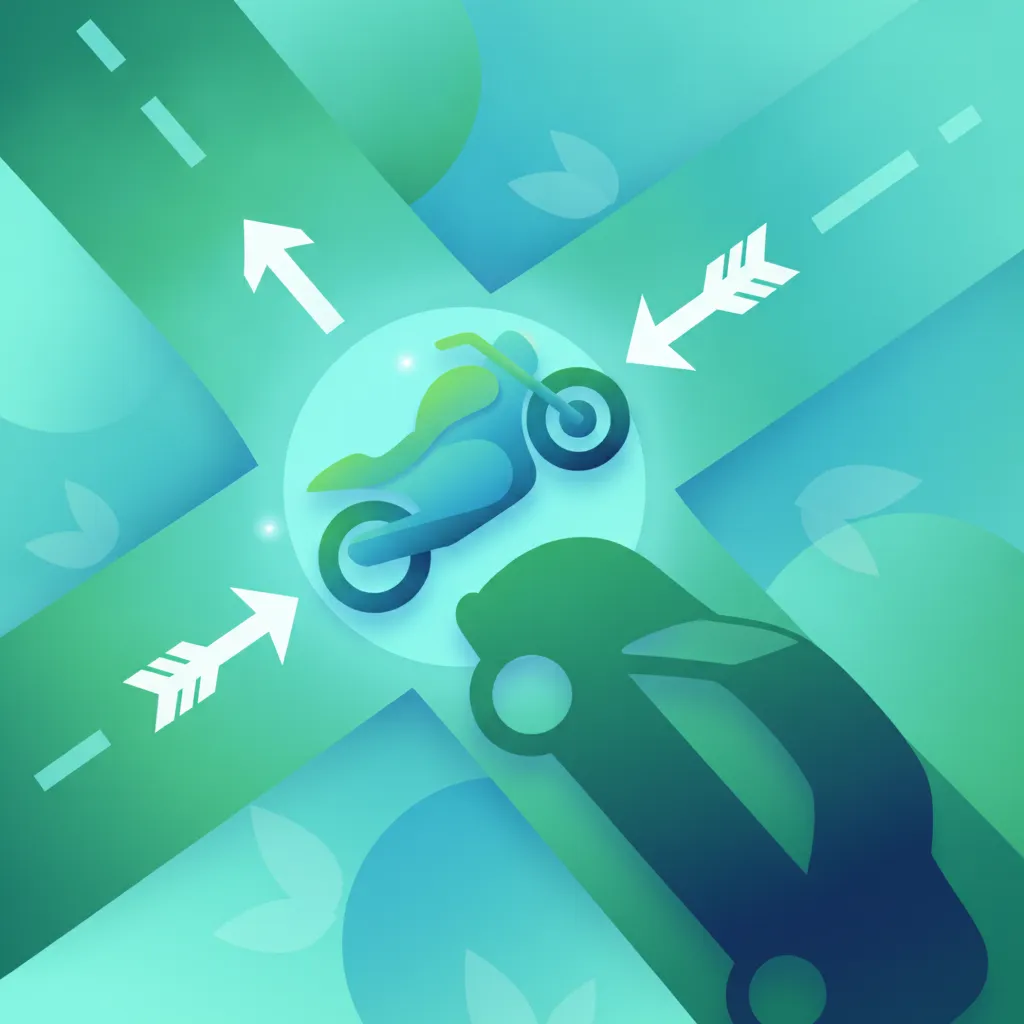
This lesson focuses on the crucial rule for navigating uncontrolled intersections in Italy: yielding to vehicles approaching from the right (precedenza a destra). It explains how to apply this default rule when no signs or signals are present to direct traffic flow. Learners will understand how to approach these junctions with caution, assess traffic, and proceed safely, while also learning about the few exceptions to this rule.
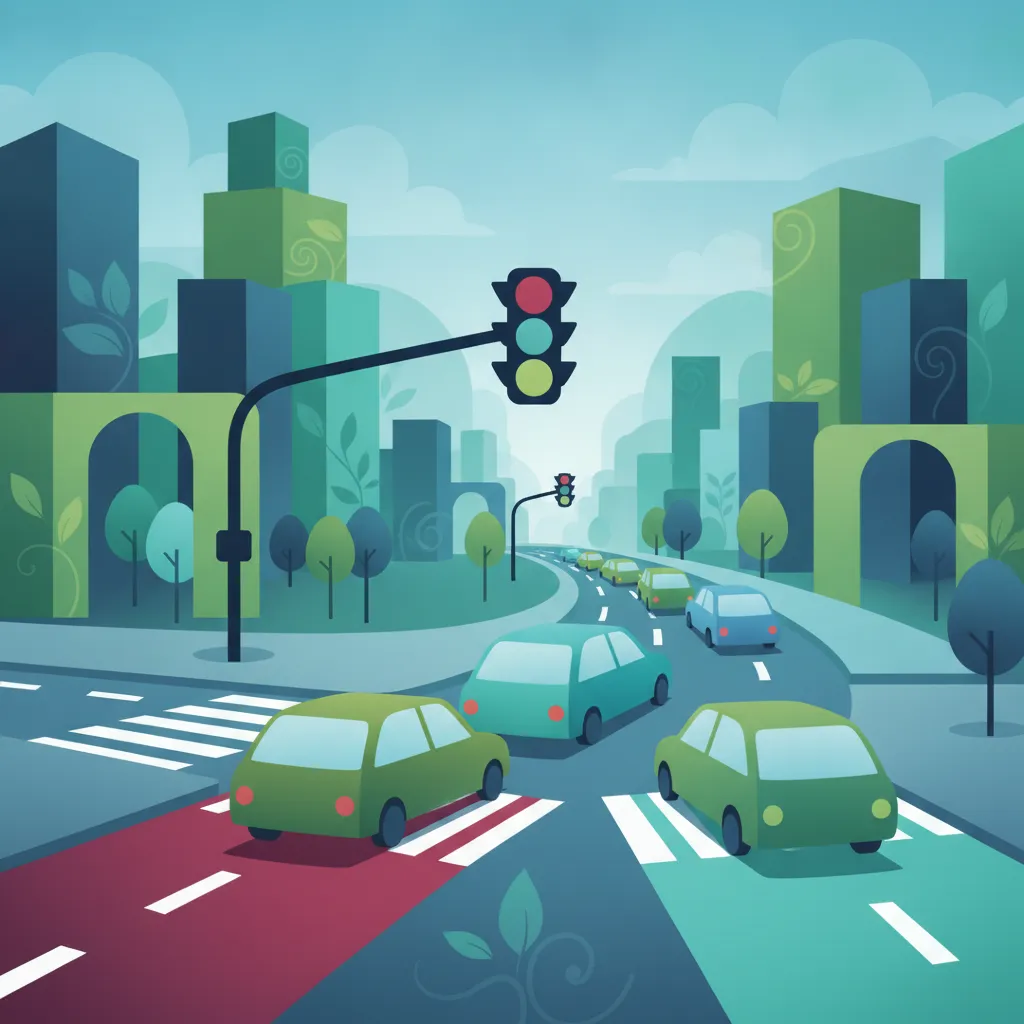
This lesson delivers a comprehensive explanation of right-of-way regulations at Italian intersections. It covers the interpretation of traffic light signals, the absolute requirement to stop at stop signs, and yielding at give-way signs. Furthermore, it details the default priority rules for unmarked intersections and the specific obligations a rider has towards pedestrians on crossings.

This lesson provides a detailed explanation of the priority rules that govern Italian intersections and roundabouts. You will learn to identify priority roads and correctly apply the rules for stop and give way signs. It also covers the specific procedures for entering, navigating, and exiting roundabouts, emphasizing when to yield to circulating traffic.

This lesson clarifies the special priority rules for emergency vehicles and public transport. It explains the legal obligation to safely pull over and clear a path for any vehicle with active sirens and flashing lights. The content also details the absolute right-of-way that trams have in most situations and the requirement to yield to public buses signaling to pull out from a stop.
This lesson details how to safely approach and enter intersections by correctly interpreting traffic lights, stop signs, and give-way rules. It emphasizes the importance of scanning for hazards, checking blind spots, and anticipating the actions of other road users. You will learn to adjust your speed and position your vehicle correctly to navigate crossings without incident.
This lesson explains the fundamental principles of right of way that govern interactions between different types of road users in Italy. It clarifies the legal precedence at intersections, pedestrian crossings, and when interacting with public transport like buses and trams. The content also details the absolute priority given to emergency vehicles and how to safely yield in accordance with the Codice della Strada.
This lesson details the correct procedures for interacting with public transport and school buses. It explains the rules for dedicated bus lanes, the absolute priority of trams, and the legal requirement to yield to buses pulling out from a stop. The content also covers the specific laws requiring drivers to stop when a school bus is loading or unloading passengers, to ensure child safety.
This lesson focuses on the driver's responsibility to protect pedestrians, especially at designated crossings (strisce pedonali). It reinforces the legal requirement to yield to pedestrians who are on or about to enter a crosswalk. The content also covers the importance of reducing speed and increasing vigilance in urban areas, school zones, and other places with high pedestrian activity.
This lesson provides an in-depth focus on sharing the road with the most vulnerable users. It teaches drivers to be acutely aware of pedestrians at crossings, cyclists filtering through traffic, and motorcyclists who may be in blind spots. The lesson emphasizes the importance of leaving extra space, signaling intentions clearly, and exercising extreme caution at junctions, where the majority of serious incidents occur.
This lesson outlines the proper conduct when encountering emergency vehicles on the road or interacting with responders at an incident. It details the rules for yielding the right-of-way to ambulances, police, and fire services, ensuring they have a clear path. You will also learn how to provide clear and concise information to authorities to facilitate an effective emergency response.
Learn the specific hand signals and directives used by Italian traffic officers. Master how to interpret and obey these signals, which override all other traffic controls for safe navigation.
This lesson explains the function of Italian traffic light systems and the meaning of various road markings. You will learn the rules for red, amber, and green signals, including flashing lights and directional arrows. It also covers how to interpret lane lines, stop lines, and other surface markings that dictate correct vehicle positioning and movement.
This lesson emphasizes the importance of clear communication and cooperative behavior among all road users to prevent conflicts and enhance safety. It details the proper and legal use of vehicle signals, such as turn indicators and hazard lights, as well as the appropriate use of the horn. The content also explores the role of non-verbal cues like eye contact and courtesy gestures in creating a predictable and safe driving environment.
This lesson details the proper and legal application of a vehicle's horn, lights, and signals as primary communication tools. It explains the specific circumstances for using high beams, low beams, and fog lights to maximize visibility without dazzling other drivers. The content also clarifies the rules for using the horn, turn indicators, and hazard lights to signal intentions, warn of danger, or indicate an emergency situation.
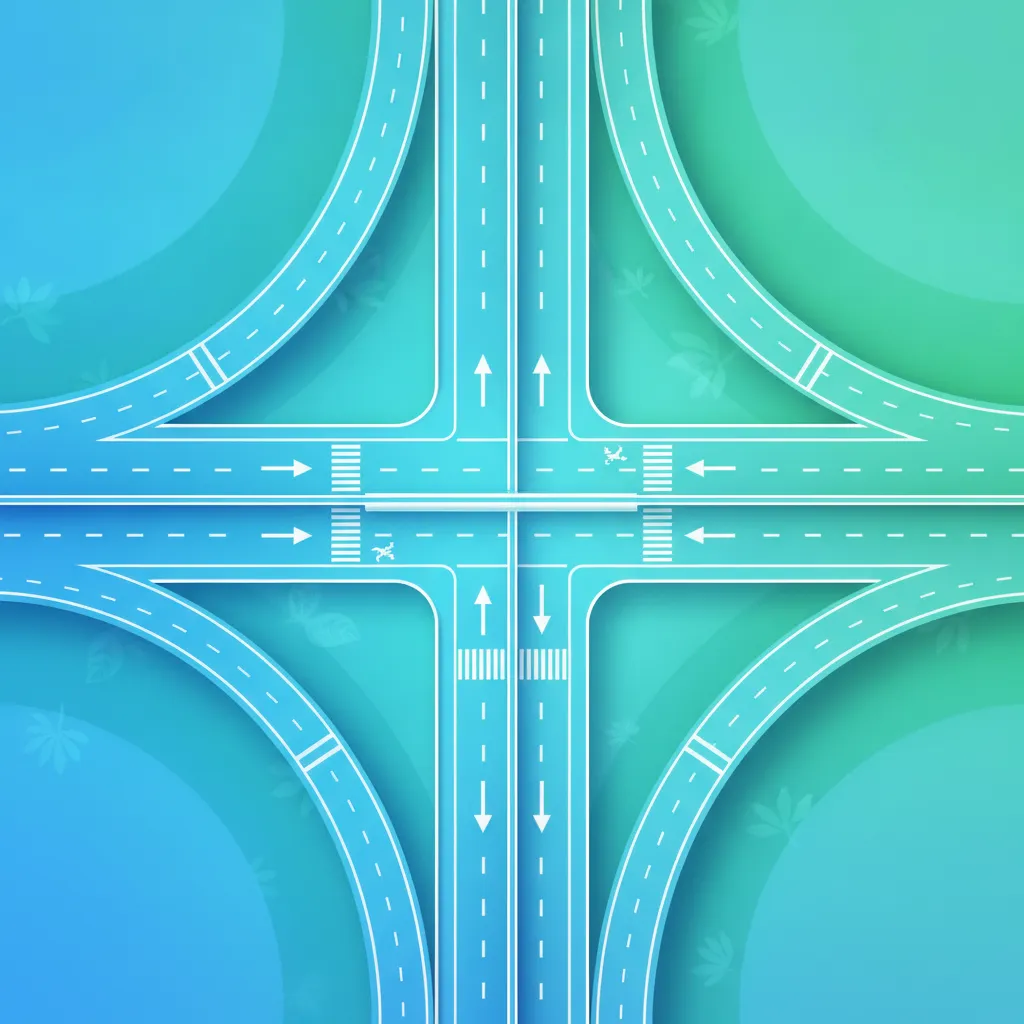
This lesson provides a detailed guide to understanding road markings and pavement symbols in Italy. It explains the critical difference between continuous and broken lane lines regarding overtaking, the function of stop lines and yield markings at intersections, and the meaning of directional arrows painted in lanes. The content also covers markings for pedestrian crossings, bus lanes, and designated parking areas.
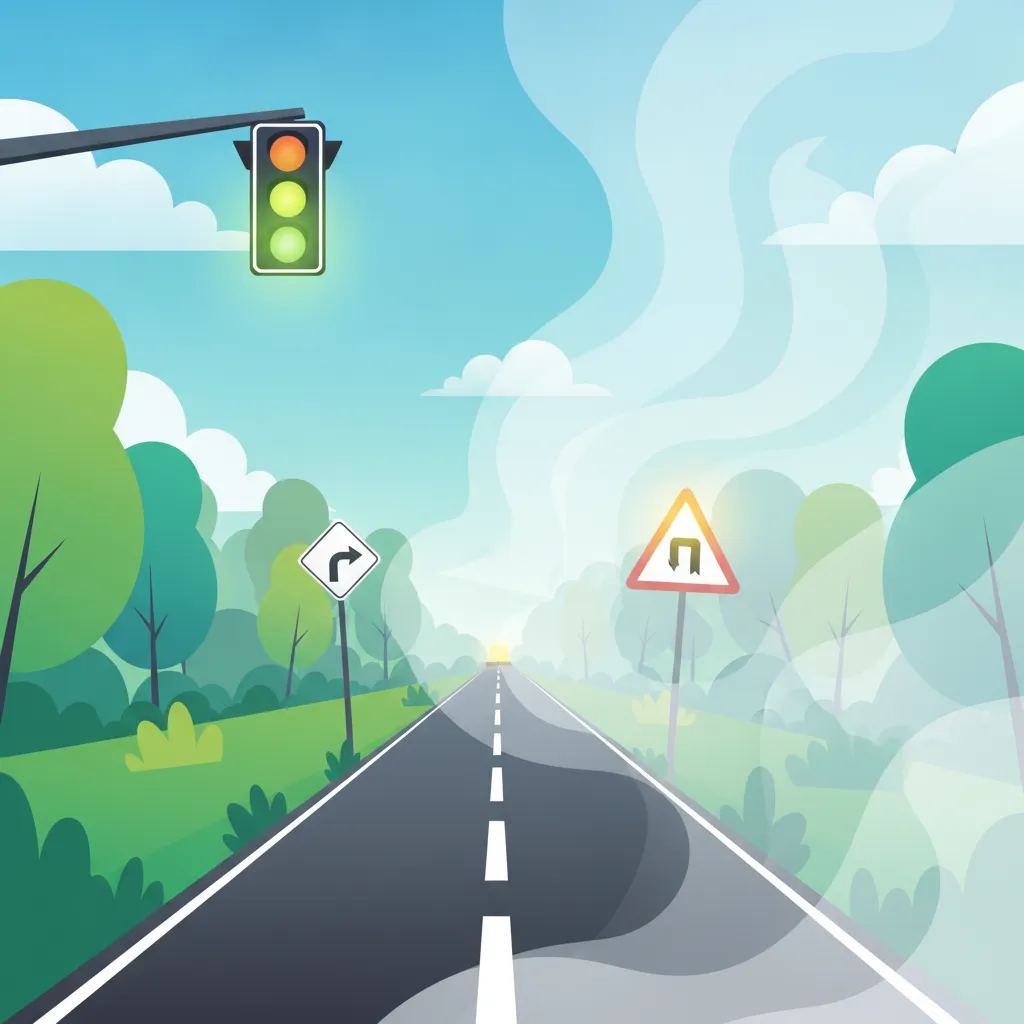
This lesson is dedicated to warning signs, which are designed to alert drivers to potential dangers or changes in road conditions ahead. It covers the interpretation of signs indicating sharp bends, steep inclines or declines, slippery surfaces, and the potential presence of animals or pedestrians. Understanding these signs allows drivers to anticipate hazards and adjust their speed and driving style accordingly for safety.
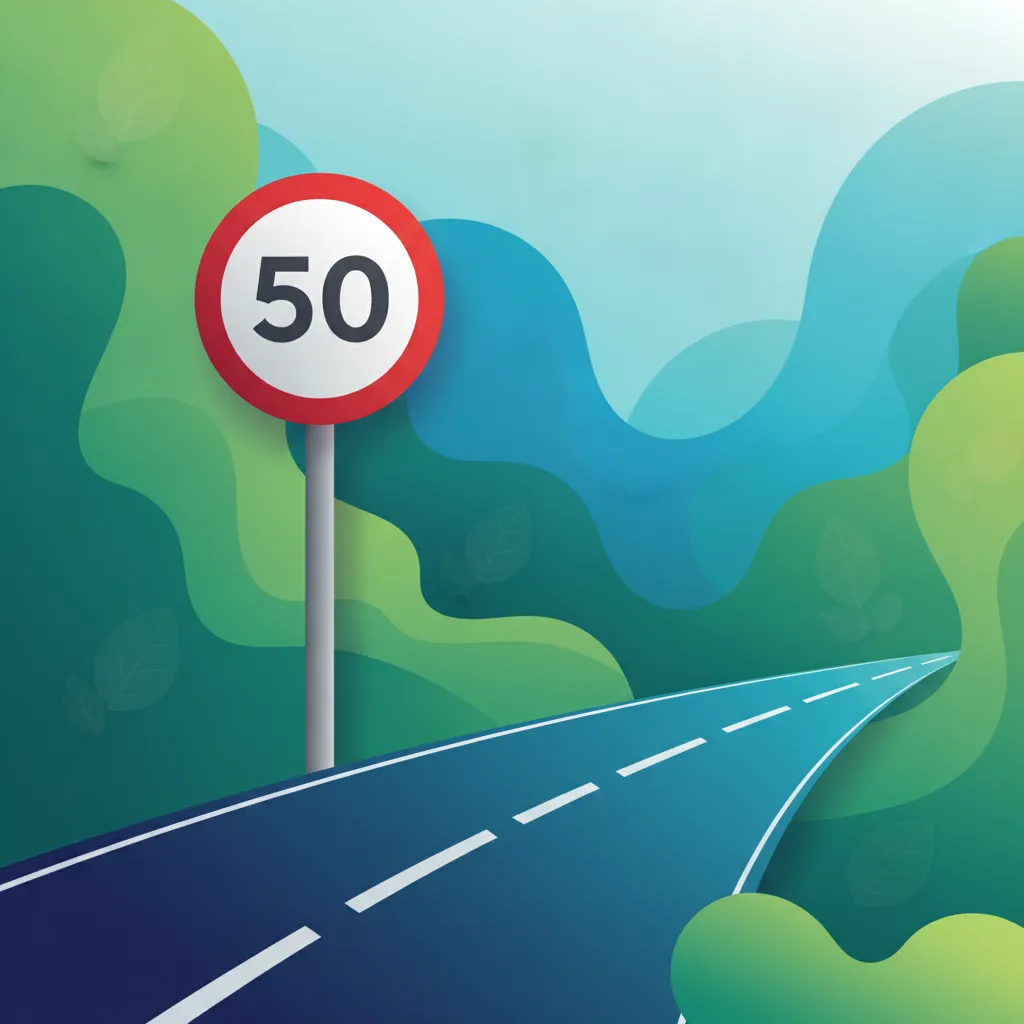
This lesson focuses on regulatory signs, which impose legal obligations and prohibitions on drivers. It explains the meaning of critical signs such as 'Stop', 'Yield' (dare la precedenza), and various speed limit signs. The content also covers signs that prohibit certain actions like overtaking, parking, or entry, as well as those that mandate a specific direction of travel or lane usage.
This lesson provides detailed instructions on how to correctly execute various turning maneuvers, including right turns, left turns, and U-turns where permitted. It emphasizes the importance of early signaling to communicate intentions, selecting the correct lane in advance, and adjusting speed before entering the turn. The content also covers the visual checks required before and during the maneuver to ensure it is safe to proceed.
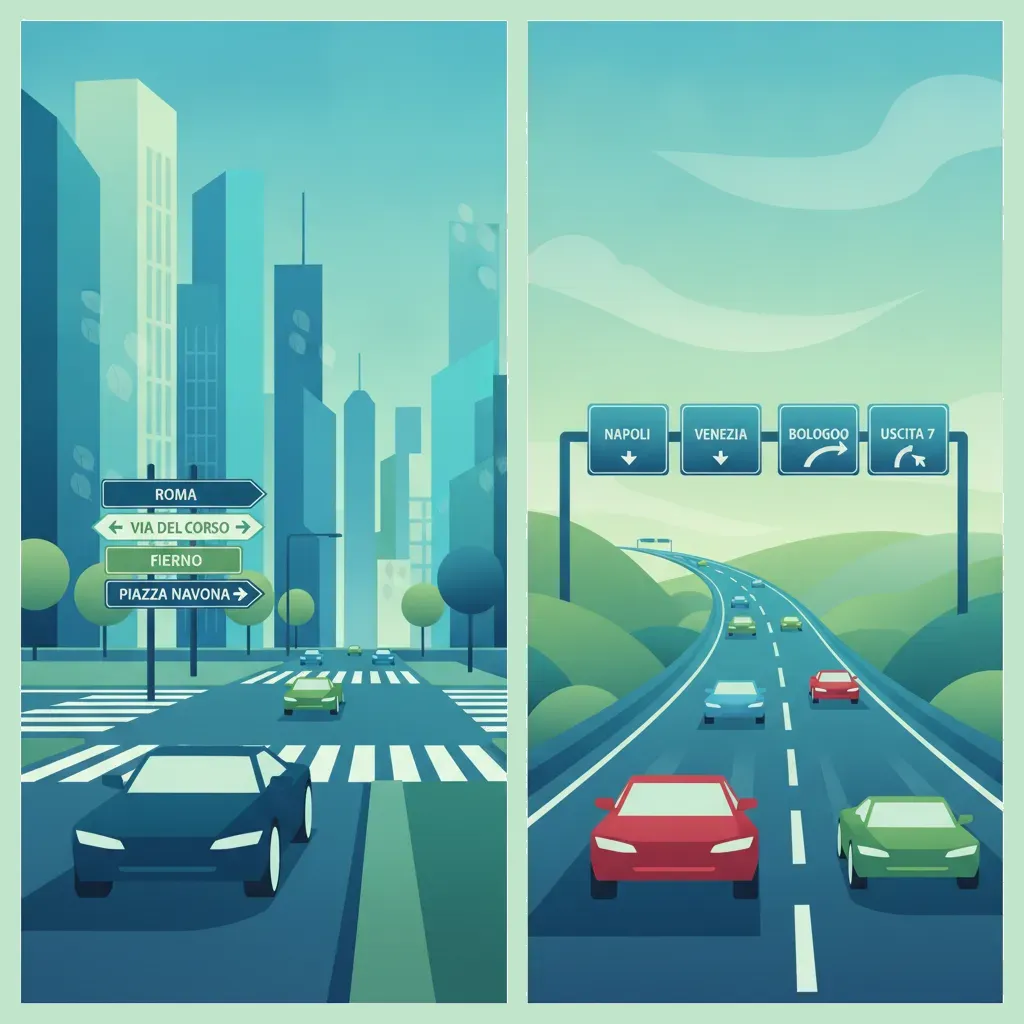
This lesson explains the function of informational and directional signs used for navigation and guidance on Italian roads. It covers how to read signs indicating upcoming cities, motorway exits, and the location of services like fuel stations, parking, and rest areas. The content also details the color-coding system used to differentiate between motorways (green), state roads (blue), and urban roads (white).

This lesson reinforces the correct procedures for interacting with emergency vehicles that are responding to a call with sirens and lights active. It explains the legal obligation to yield the right-of-way by safely moving to the side of the road and stopping if necessary. The content emphasizes making smooth, predictable movements to create a clear path, allowing emergency responders to proceed without delay.
This lesson delivers a comprehensive explanation of right-of-way regulations at Italian intersections. It covers the interpretation of traffic light signals, the absolute requirement to stop at stop signs, and yielding at give-way signs. Furthermore, it details the default priority rules for unmarked intersections and the specific obligations a rider has towards pedestrians on crossings.
Find clear answers to common questions learners have about General Priority Rules at Intersections. Learn how the lesson is structured, which driving theory objectives it supports, and how it fits into the overall learning path of units and curriculum progression in Italy. These explanations help you understand key concepts, lesson flow, and exam focused study goals.
In Italy, at an uncontrolled intersection, the general rule is to yield to traffic coming from the right unless otherwise indicated by signs or specific road conditions.
Yes, traffic lights are a primary signal. If traffic lights are functioning and show a green light, you follow them; if they are flashing yellow or turned off, you must then observe the secondary regulatory signs like stop or yield.
The hierarchy is: 1) Traffic officers (vigili), 2) Temporary signals, 3) Traffic lights, 4) Vertical signs (Stop, Yield), 5) Horizontal road markings.
This sign requires you to slow down and be ready to stop if necessary to allow vehicles on the intersecting road with the right-of-way to pass safely. It does not always require a full stop like a STOP sign.
Start searching now to pinpoint exactly which Italian driving theory topics, road signs, or traffic rules you need to master. Use our advanced filters to build a custom practice session and ensure you're fully prepared for every aspect of your official driving licence exam.