
This lesson explores how adverse weather conditions significantly impact the stability and visibility of your moped. By understanding these environmental factors, you will learn to adjust your riding techniques to maintain control and ensure you remain visible to other drivers, a key component of your Patente AM theory exam preparation.
Lesson content overview
Riding a moped offers freedom and efficiency, but it also demands a high level of responsibility, especially when facing adverse weather conditions. The elements, from a light drizzle to dense fog, can drastically alter road safety by affecting two critical aspects: tire grip and rider visibility. For holders of an Italian Patente AM, comprehending these effects and knowing how to mitigate the associated risks is not just a safety recommendation, but a legal obligation under the Codice della Strada (Italian traffic code).
This lesson will delve into how various weather phenomena directly influence the interaction between your moped, the road, and other road users. We will explore the dangers posed by wet roads, the phenomenon of hydroplaning, and the critical importance of tire maintenance. Furthermore, we will examine how rain, fog, and nighttime riding diminish visibility, and discuss the mandatory lighting and reflective gear requirements designed to keep you safe and visible. By mastering these principles, you will be better equipped to make informed decisions, adapt your riding technique, and ultimately enhance your safety on the road, ensuring compliance with the Italian Driving License Theory – Patente AM curriculum.
Weather conditions are dynamic and can change rapidly, presenting unique challenges for moped riders. Unlike drivers in enclosed vehicles, moped riders are directly exposed to the elements, which amplifies the impact of reduced grip and visibility. A seemingly minor change in weather can significantly increase stopping distances, reduce maneuverability, and make it harder to spot hazards or be seen by others. Ignoring these changes can lead to severe consequences, including loss of control, skidding, and collisions. Therefore, developing a keen awareness of how weather affects your riding environment is fundamental to responsible moped operation.
Safe riding in challenging weather hinges on a few core principles. Firstly, tire grip, the friction between your tires and the road surface, is essential for accelerating, braking, and steering. Adverse weather, particularly wet conditions, dramatically reduces this grip. Secondly, visibility is your ability to see and be seen by other road users and to perceive the road ahead. Rain, fog, and darkness significantly impair visibility. Finally, speed adaptation is paramount; your speed must always be appropriate for the prevailing conditions, not just the posted speed limit. These principles form the foundation of safe moped riding and are supported by specific articles within the Codice della Strada.
The frictional force between a vehicle's tires and the road surface, which is essential for acceleration, braking, and steering.
The ability of a rider to perceive their surroundings, including other road users, obstacles, and road features, and equally important, the ability of other road users to see the rider and their vehicle.
Wet road conditions are among the most common and hazardous weather-related challenges faced by moped riders. Even a light rain can significantly reduce the available grip, making it harder to control your vehicle. Understanding the mechanics behind this reduction in friction is crucial for anticipating risks and adjusting your riding style accordingly.
When a road surface is dry, your moped's tires have a large contact patch with the asphalt, maximizing friction. Water acts as a lubricant, reducing this friction coefficient. The more water on the road, the less direct contact your tires have with the surface, leading to a considerable decrease in grip. This means that both your braking distance and your ability to lean into turns are compromised.
The initial moments of a rain shower are often the most dangerous. Rain mixes with oil, dust, and rubber particles that have accumulated on the road, creating a greasy film. This film is highly slippery and can be even more treacherous than heavy rain, which tends to wash away these contaminants. As a Patente AM rider, you must always assume that wet roads will reduce your ability to accelerate, brake, and steer effectively.
One of the most extreme consequences of reduced grip on wet roads is hydroplaning, also known as aquaplaning. This dangerous phenomenon occurs when a layer of water builds up between your moped's tires and the road surface, causing the tire to lose contact with the road entirely. When hydroplaning, your moped essentially "floats" on the water, resulting in a complete loss of steering, braking, and acceleration control.
Hydroplaning can occur even at moderate speeds, especially if there is standing water on the road or your tires are worn. A rider experiencing hydroplaning might feel a sudden lightness in the steering or notice that the engine speed increases without a corresponding increase in road speed. This loss of control can be extremely disorienting and dangerous, particularly for a two-wheeled vehicle like a moped.
Preventing hydroplaning is far easier than trying to recover from it. The primary preventive measure is to reduce your speed significantly when the road is wet or when you encounter puddles. Higher speeds increase the likelihood of hydroplaning because the tires have less time to displace the water. Maintaining adequate tire tread depth is also critical, as deep treads are designed to channel water away from the tire's contact patch.
If you do feel your moped beginning to hydroplane:
Do not brake suddenly or make any sudden steering inputs. Abrupt actions can worsen the situation or cause you to skid once grip is regained.
Ease off the throttle gently to allow your speed to decrease naturally.
Keep your handlebars as straight as possible, looking in the direction you want to go.
Maintain a light, steady grip and wait for the tires to regain contact with the road.
A dangerous condition where a layer of water builds up between a vehicle's tires and the road surface, causing a complete loss of traction and control.
The design of your moped's tires plays a vital role in its performance on wet surfaces. The grooves and channels in the tire tread are specifically engineered to displace water from beneath the tire, allowing the rubber to maintain direct contact with the road. As tires wear down, the tread depth decreases, diminishing their ability to channel water effectively.
Worn tires are significantly more susceptible to hydroplaning and offer drastically reduced grip on wet roads. A tire with insufficient tread depth cannot clear water quickly enough, increasing the risk of losing control. This makes regular inspection of your moped's tires a crucial safety check for any Patente AM rider.
Under the Codice della Strada, specifically Article 165, all vehicles, including mopeds, must be equipped with tires that have an adequate tread depth and are suitable for the prevailing road conditions. While specific legal minimums may vary slightly by jurisdiction, a general guideline for mopeds in Italy, aligning with EU standards, is a minimum tread depth of 1.6 mm.
Riding with tires below the minimum legal tread depth is not only illegal but extremely dangerous. It compromises your safety and can lead to fines and penalties. Always check your tire tread regularly and replace worn tires promptly.
The measured height of the grooves on a tire, which are essential for channeling water away from the contact patch and maintaining grip on wet surfaces.
Beyond maintaining grip, another paramount concern for moped riders in adverse weather is visibility. Your ability to see the road, traffic, and potential hazards, and crucially, your ability to be seen by other road users, is severely compromised by rain, fog, and darkness. Proactive measures are essential to compensate for these reduced visual capabilities.
Rain not only makes the road slippery but also significantly reduces visibility. Raindrops on your helmet visor or eyeglasses can distort your vision, making it difficult to judge distances and identify objects clearly. Furthermore, the overall gloom and spray from other vehicles reduce the clarity of your surroundings. Headlights from oncoming vehicles can also create glare, further impairing your vision.
To enhance visibility while riding in the rain:
Fog is one of the most challenging weather conditions for any road user, and particularly for moped riders. It drastically reduces visibility, often to just a few meters, making road signs, markings, and other vehicles almost impossible to see until you are very close. Dense fog can create a disorienting "white-out" effect, where depth perception is severely impaired.
When riding in fog, your speed must be drastically reduced to match your reduced visibility range. Article 150 of the Codice della Strada mandates extra caution in conditions of reduced visibility. Even if your lights are on, the light can reflect off the fog droplets, creating a glare that further obscures your vision.
A common misunderstanding is that using high-beam (anti-glare) headlights will improve visibility in fog. In reality, high beams are counterproductive in fog. Their upward-angled light reflects off the dense water droplets directly back into your eyes, creating a blinding glare and worsening visibility.
Instead, always use your dipped beam (low beam) headlights in fog. These lights are angled downwards, illuminating the road surface directly in front of your moped and reducing glare. If your moped is equipped with fog lights, these should also be used. Fog lights are designed to be positioned low on the vehicle and emit a wide, flat beam that cuts under the fog, providing better illumination of the road surface. Never use fog lights alone; they must always be paired with your dipped beam headlights.
A headlamp setting that provides a downward-aimed light cone, designed to illuminate the road directly in front of the vehicle without dazzling oncoming drivers.
A headlamp setting that projects a higher-intensity, upward-aimed light cone, providing maximum forward illumination but capable of dazzling other drivers.
Auxiliary lights, typically positioned low on the vehicle, designed to emit a wide, flat beam that cuts beneath fog, smoke, or heavy rain to improve forward visibility.
Nighttime riding, as well as riding during dawn and dusk (twilight hours), presents inherent visibility challenges, even without adverse weather. The absence of natural light, combined with the glare of artificial lights from street lamps and other vehicles, can make it difficult to perceive details, judge distances, and spot hazards. Mopeds, being smaller, are inherently less visible to other road users, making adequate lighting and reflective gear absolutely crucial.
Under Article 154 of the Codice della Strada, headlights must be turned on not only at night but also during conditions of reduced visibility such as rain, fog, and during dawn and dusk. For mopeds, this primarily means the continuous use of your dipped beam headlights. Even if you believe there is sufficient ambient light during twilight, turning on your dipped beam ensures that other road users can see you more easily, significantly reducing the risk of a collision.
It is important to ensure all your moped's lights are functioning correctly:
Regularly check these lights, especially before riding at night or in predicted poor weather.
Beyond your moped's lighting system, your personal visibility is equally important. Article 162 of the Codice della Strada mandates that vehicles and riders must be equipped with reflective devices, particularly for nighttime riding or in low-visibility conditions. This typically refers to reflective elements on your helmet, jacket, and other riding gear.
Reflective materials work by bouncing light from other vehicles' headlights directly back to the source, making you appear brighter and more noticeable. Even a small reflective strip can make a significant difference in how quickly other drivers perceive you. Opt for helmets and jackets that incorporate reflective panels, or consider wearing a reflective vest over your riding gear, especially at night or in heavy rain and fog. This greatly enhances your conspicuity to other road users, providing an additional layer of safety.
Apparel or accessories made with retroreflective material that reflects light back to its source, significantly increasing the wearer's visibility to others, especially in low-light conditions.
The single most effective measure a moped rider can take to enhance safety in adverse weather conditions is to adapt their speed and riding technique. Regardless of the posted speed limit, your speed must always be appropriate for the prevailing conditions of the road, traffic, visibility, and weather.
Reducing your speed in rain, fog, or at night provides several critical safety benefits:
Abrupt braking on a wet or slippery surface is a common cause of skidding and loss of control for moped riders. With reduced tire grip, sudden application of brakes can easily cause the wheels to lock up, leading to a skid. Article 149-bis of the Codice della Strada specifically advises drivers to adjust their braking technique according to road conditions, recommending gentle braking on wet surfaces.
When braking on wet roads, apply the brakes gently and progressively. Gradually increase pressure until you feel the deceleration you need, avoiding any sudden jerking motions. Distribute braking pressure between both front and rear brakes, but be particularly cautious with the front brake on wet surfaces, as locking the front wheel is often harder to recover from.
The Italian Codice della Strada contains several articles that directly address driving behavior in adverse weather and low-visibility conditions. As a Patente AM rider, understanding and complying with these regulations is mandatory.
Statement: "Speed must be adapted to road, traffic, visibility, and weather conditions." Applicability: This article applies to all road users and is particularly critical for mopeds in rain, fog, snow, or at night. Rationale: It ensures that drivers maintain a safe speed that allows them sufficient reaction time and a reasonable stopping distance under prevailing circumstances, even if below the posted speed limit. Example: Reducing your speed from 50 km/h to 30 km/h during a sudden downpour, even if the urban speed limit is 50 km/h.
Statement: "The driver must use extra caution in conditions of reduced visibility or slippery surfaces." Applicability: Whenever visibility is poor (e.g., less than 100 meters due to fog) or the road surface is wet or otherwise slippery. Rationale: This article emphasizes the need for increased vigilance and careful maneuvering when perception of the environment is impaired or vehicle control is compromised. Example: Activating dipped beam headlights and significantly slowing down when entering a foggy area.
Statement: "Headlights must be turned on at night and in conditions of reduced visibility (rain, fog)." Applicability: Mandatory during actual nighttime, and during any period of reduced natural light (dusk, dawn), rain, fog, or any other condition that significantly reduces visibility. Rationale: Ensures that vehicles are visible to other road users, preventing collisions that result from a lack of detection. Example: Switching on your moped's dipped beam headlights when it starts raining during the day.
The legal requirement to adjust a vehicle's speed according to prevailing road, traffic, visibility, and weather conditions, often necessitating speeds below the posted maximum limit.
Statement: "Vehicles must be equipped with reflective devices on helmets, clothing, and the vehicle." Applicability: Especially relevant for mopeds and riders during nighttime or in low-visibility conditions. Rationale: Increases the conspicuity of both the moped and its rider to other road users, reducing the risk of them being overlooked. Example: Wearing a jacket or helmet with integrated reflective strips when riding after dark.
Statement: "Vehicles must have tires with adequate tread depth and be suitable for road conditions." Applicability: Applies to all vehicles, particularly critical for mopeds where tire condition directly impacts safety on wet surfaces. Rationale: Prevents hydroplaning and ensures sufficient grip for safe handling, braking, and steering. Example: Regularly inspecting your moped tires to ensure they meet the minimum legal tread depth of 1.6 mm.
Statement: "Drivers must adjust braking technique according to the road condition; gentle braking on wet surfaces is recommended." Applicability: Specifically when roads are wet, icy, or otherwise slippery. Rationale: Prevents wheel lock-up and loss of control by promoting controlled, progressive braking, which is essential for maintaining stability on low-friction surfaces. Example: Applying gradual, smooth pressure to the brake levers on a rain-soaked road, rather than sudden, hard braking.
Even with a solid understanding of the rules, specific errors are frequently observed in adverse weather. Being aware of these common pitfalls can help Patente AM riders avoid dangerous situations.
Safe riding in adverse weather also requires consideration of the specific environment and vehicle state.
In adverse weather, pedestrians and cyclists are also at greater risk. Their visibility may be reduced, and they may be rushing or distracted. As a moped rider, you must be extra vigilant, reduce speed further, and ensure your lighting and reflective gear are optimized to be seen by them, giving them ample space and time.
Mastering the effects of weather on grip and visibility is a cornerstone of safe moped riding and a fundamental part of obtaining your Italian Patente AM. The principles discussed in this lesson — maintaining optimal tire grip, maximizing your visibility to others, seeing clearly yourself, and adapting your speed and technique — are not merely suggestions but critical survival strategies.
Remember that wet roads reduce friction, increasing stopping distances and the risk of hydroplaning. Your tire tread depth is your first line of defense against this. Reduced visibility from rain, fog, and darkness demands the mandatory use of your moped's dipped beam headlights and, where equipped, fog lights. Furthermore, wearing reflective clothing and ensuring your helmet visor is clean are personal responsibilities that significantly enhance your safety.
Always adjust your speed to the prevailing conditions, regardless of the posted speed limit, and practice gentle, progressive braking on slippery surfaces. By consistently adhering to the Codice della Strada and adopting these proactive safety practices, you will significantly reduce your risk of accidents and contribute to safer roads for everyone. Regular maintenance of your moped's tires, brakes, and lighting systems is also paramount to ensure your vehicle is always ready to perform safely under all conditions.
This lesson covers how weather conditions—particularly rain, fog, and darkness—directly impact moped safety by reducing tire grip and rider visibility. Wet roads dramatically decrease friction, doubling stopping distances and creating hydroplaning risk, making adequate tire tread depth (minimum 1.6 mm per Article 165) essential. Fog requires the use of dipped beam headlights, never high beams, along with fog lights if equipped. Nighttime and reduced-visibility riding mandates continuous headlight use and reflective gear under Articles 154 and 162. The core principle is speed adaptation: regardless of posted limits, your speed must always match the prevailing road, traffic, visibility, and weather conditions as required by Article 149.
A short set of high-value points that capture the most important learning from this lesson.
Wet roads reduce tire grip, increasing stopping distances and making hydroplaning possible even at moderate speeds.
Dipped beam headlights are mandatory in rain, fog, twilight, and darkness under Article 154 of the Codice della Strada.
Always use low beam (dipped) lights in fog; high beams reflect off fog droplets and worsen visibility.
Tire tread depth below the legal minimum of 1.6 mm dramatically increases hydroplaning risk and is illegal under Article 165.
Speed must always be adapted to prevailing conditions regardless of posted limits, as required by Article 149.
Explore all units and lessons included in this driving theory course.
The initial moments of rain are most dangerous because oil and dust create a slippery film on the road surface.
If hydroplaning begins, ease off the throttle, keep the handlebars straight, and wait for tires to regain contact.
Fog lights must always be used together with dipped beam headlights, never alone.
On wet surfaces, apply brakes gently and progressively to avoid wheel lock-up and skidding.
Reflective gear is mandatory under Article 162 for nighttime and low-visibility riding to increase conspicuity.
Riding at posted speed limits during heavy rain instead of reducing speed to match reduced grip and visibility.
Using high-beam headlights in fog, which causes glare by reflecting light back from fog droplets.
Following other vehicles too closely when visibility is reduced, not accounting for longer stopping distances.
Assuming light rain is safe; the first minutes of rain create the most slippery road conditions.
Neglecting to check tire tread depth, leading to inadequate water channeling and increased hydroplaning risk.
Lesson content overview
A short set of high-value points that capture the most important learning from this lesson.
Wet roads reduce tire grip, increasing stopping distances and making hydroplaning possible even at moderate speeds.
Dipped beam headlights are mandatory in rain, fog, twilight, and darkness under Article 154 of the Codice della Strada.
Always use low beam (dipped) lights in fog; high beams reflect off fog droplets and worsen visibility.
Tire tread depth below the legal minimum of 1.6 mm dramatically increases hydroplaning risk and is illegal under Article 165.
Speed must always be adapted to prevailing conditions regardless of posted limits, as required by Article 149.
Explore all units and lessons included in this driving theory course.
The initial moments of rain are most dangerous because oil and dust create a slippery film on the road surface.
If hydroplaning begins, ease off the throttle, keep the handlebars straight, and wait for tires to regain contact.
Fog lights must always be used together with dipped beam headlights, never alone.
On wet surfaces, apply brakes gently and progressively to avoid wheel lock-up and skidding.
Reflective gear is mandatory under Article 162 for nighttime and low-visibility riding to increase conspicuity.
Riding at posted speed limits during heavy rain instead of reducing speed to match reduced grip and visibility.
Using high-beam headlights in fog, which causes glare by reflecting light back from fog droplets.
Following other vehicles too closely when visibility is reduced, not accounting for longer stopping distances.
Assuming light rain is safe; the first minutes of rain create the most slippery road conditions.
Neglecting to check tire tread depth, leading to inadequate water channeling and increased hydroplaning risk.
Explore search topics learners often look for when studying Effects of Weather on Grip and Visibility. These topics reflect common questions about road rules, driving situations, safety guidance, and lesson level theory preparation for learners in Italy.
Browse additional driving theory lessons that cover connected traffic rules, road signs, and common driving situations related to this topic. Improve your understanding of how different rules interact across everyday traffic scenarios.
Understand mandatory Italian traffic laws and essential techniques for safe moped riding in rain, fog, and low-light conditions. Essential for Patente AM theory.
This lesson details the essential protective equipment required for legal and safe moped operation in Italy. It covers legal standards for helmets, the benefits of wearing protective gloves and boots, and the importance of high-visibility clothing. You will also learn the correct use of your vehicle's lighting system for visibility during both day and night.
This lesson explains the physical effects of different weather conditions on motorcycle safety. It details how rain reduces tyre adhesion and increases the risk of hydroplaning, while fog severely limits visibility, requiring a significant reduction in speed. The content also covers how extreme heat and cold can affect tyre pressure and compound performance, necessitating adjustments from the rider.
This lesson teaches drivers how to adapt their technique for various adverse weather conditions. It explains the risks of reduced grip and visibility in rain, fog, snow, and ice, and the need to significantly increase following distances and reduce speed. The content covers how to avoid and correct skids, the proper use of lights in poor visibility, and the legal requirements for winter tyres or snow chains in certain areas.

This lesson teaches riders how to maintain a safe following distance using the two-second rule, which accounts for reaction time and braking distance. It covers grip management, explaining how tire condition and road surfaces like wet asphalt affect traction. Mastering these concepts is essential for anticipating hazards and preventing rear-end collisions.
This lesson teaches riders how to strategically position their vehicle within a lane for maximum visibility to others. It explains how to avoid riding in the blind spots of larger vehicles and how to maintain a safe buffer zone. Proper positioning enhances a rider's presence on the road and is a key component of defensive driving in mixed traffic.
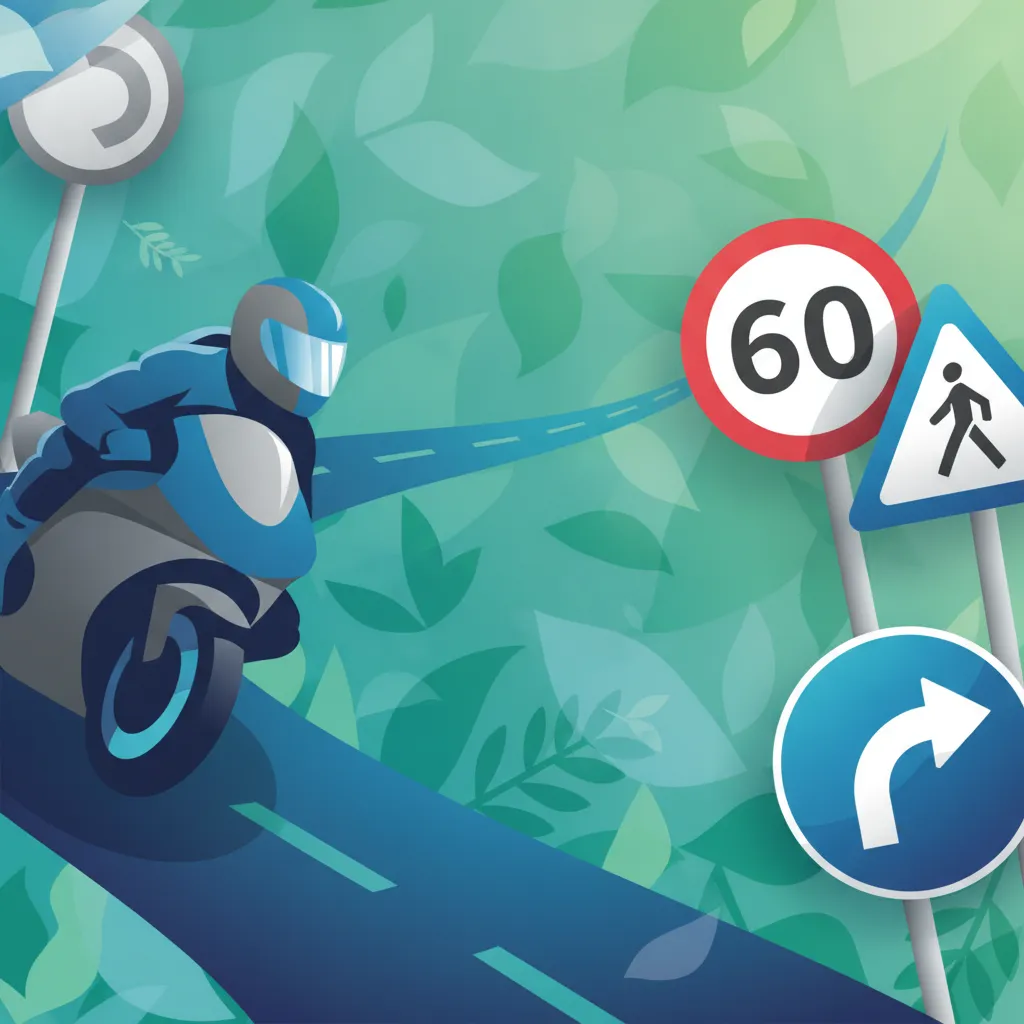
This lesson focuses on the specific regulatory and warning signs that Patente AM riders must understand and obey. It details signs related to speed limits, no-entry zones, and mandatory directions that directly impact moped operation. You will also learn to recognize warning signs for potential hazards like sharp curves, slippery surfaces, and pedestrian areas.
This lesson emphasizes the rider's responsibility to ensure their vehicle is in safe, working order through regular maintenance and pre-ride checks. It outlines a simple yet effective routine for inspecting critical components like tires, brakes, lights, and mirrors. Performing these checks helps prevent mechanical failures and ensures the vehicle is always compliant and roadworthy.
This lesson focuses on the unique demands of mountain riding, from handling steep inclines and declines to understanding the impact of altitude on the motorcycle's engine performance. It covers the effective use of engine braking on descents to prevent brake overheating. The content also prepares riders for the rapidly changing weather conditions, such as wind and fog, that are common at higher elevations.
This lesson provides essential guidance on how to adjust driving techniques for a range of hazardous weather conditions. It covers reducing speed and increasing following distances in rain to prevent aquaplaning, using lights correctly in fog, and understanding the vehicle's reduced traction on snow and ice. It also explains how to anticipate and counteract the effects of strong crosswinds on high-sided vehicles.
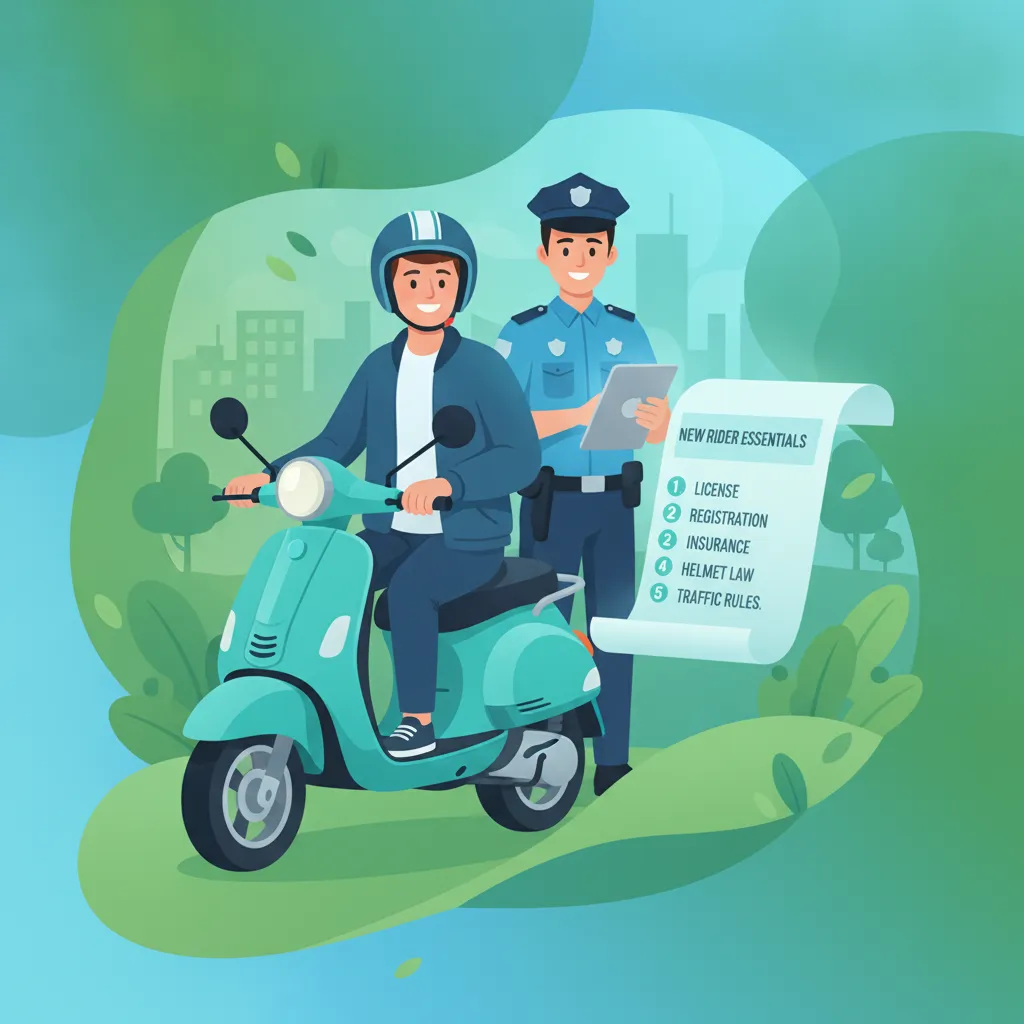
This lesson focuses on the legal obligations that first-time riders must meet to operate an AM vehicle safely and legally. It details the mandatory use of certified helmets and appropriate protective clothing. Furthermore, it outlines fundamental traffic laws new riders must know and the legal repercussions of non-compliance, such as fines and penalty points.
Learn the critical interplay between weather phenomena like rain and fog, and their direct impact on tire grip and rider visibility for your Patente AM theory.
This lesson explains the physical effects of different weather conditions on motorcycle safety. It details how rain reduces tyre adhesion and increases the risk of hydroplaning, while fog severely limits visibility, requiring a significant reduction in speed. The content also covers how extreme heat and cold can affect tyre pressure and compound performance, necessitating adjustments from the rider.
This lesson details the essential protective equipment required for legal and safe moped operation in Italy. It covers legal standards for helmets, the benefits of wearing protective gloves and boots, and the importance of high-visibility clothing. You will also learn the correct use of your vehicle's lighting system for visibility during both day and night.
This lesson teaches riders how to maintain a safe following distance using the two-second rule, which accounts for reaction time and braking distance. It covers grip management, explaining how tire condition and road surfaces like wet asphalt affect traction. Mastering these concepts is essential for anticipating hazards and preventing rear-end collisions.
This lesson is focused on strategies to increase a motorcyclist's conspicuity in traffic. It explains the benefits of using high-visibility clothing in fluorescent colors for daytime riding and the critical role of reflective materials at night. The content also covers how proper use of lighting, including daytime running lights, can significantly reduce the risk of accidents by making the rider more noticeable to others.
This lesson teaches drivers how to adapt their technique for various adverse weather conditions. It explains the risks of reduced grip and visibility in rain, fog, snow, and ice, and the need to significantly increase following distances and reduce speed. The content covers how to avoid and correct skids, the proper use of lights in poor visibility, and the legal requirements for winter tyres or snow chains in certain areas.
This lesson provides essential guidance on how to adjust driving techniques for a range of hazardous weather conditions. It covers reducing speed and increasing following distances in rain to prevent aquaplaning, using lights correctly in fog, and understanding the vehicle's reduced traction on snow and ice. It also explains how to anticipate and counteract the effects of strong crosswinds on high-sided vehicles.
This lesson focuses on the specific regulatory and warning signs that Patente AM riders must understand and obey. It details signs related to speed limits, no-entry zones, and mandatory directions that directly impact moped operation. You will also learn to recognize warning signs for potential hazards like sharp curves, slippery surfaces, and pedestrian areas.
This lesson teaches riders how to strategically position their vehicle within a lane for maximum visibility to others. It explains how to avoid riding in the blind spots of larger vehicles and how to maintain a safe buffer zone. Proper positioning enhances a rider's presence on the road and is a key component of defensive driving in mixed traffic.
This lesson focuses on the vital systems for visibility and communication: mirrors, lighting, and signals. It provides instruction on the proper adjustment of mirrors to minimize blind spots and the correct use of headlamps, indicators, and brake lights as per Italian regulations. The content underscores how maintaining these systems in full working order is crucial for being seen and signalling intentions clearly in traffic.
This lesson focuses on how to adapt riding techniques to maintain traction on compromised surfaces. It identifies common hazards such as wet leaves, manhole covers, gravel, and painted lines that can reduce the tyre's grip. Learners will understand how to use smooth and gentle throttle, brake, and steering inputs to prevent traction loss and maintain control in these challenging situations.
Find clear answers to common questions learners have about Effects of Weather on Grip and Visibility. Learn how the lesson is structured, which driving theory objectives it supports, and how it fits into the overall learning path of units and curriculum progression in Italy. These explanations help you understand key concepts, lesson flow, and exam focused study goals.
Mopeds and scooters have only two contact patches with the road, making them much more susceptible to slipping on wet surfaces, oil deposits, or manhole covers. Riders must brake more gently and avoid sudden maneuvers to maintain stability.
Yes, you must ensure your dipped headlights and rear position lights are on to maximize your visibility to other drivers. It is a critical safety practice that often appears in theory exam scenarios involving poor visibility.
The first few minutes of rain are often the most dangerous because the water mixes with accumulated dust, oil, and grime on the road surface, creating a very slippery 'greasy' layer before it is washed away.
Wearing high-visibility clothing or reflective gear, keeping your lights on even during the day, and avoiding the blind spots of larger vehicles are essential strategies to ensure you are seen by other road users.
Start searching now to pinpoint exactly which Italian driving theory topics, road signs, or traffic rules you need to master. Use our advanced filters to build a custom practice session and ensure you're fully prepared for every aspect of your official driving licence exam.